How Smart Are Turtles? (This May Come Unexpected to You)

This post was created with help from AI tools and carefully reviewed by a human (Muntaseer Rahman). For more on how we use AI on this site, check out our Editorial Policy.
Most people look at a turtle and think “cute, slow, probably not much going on upstairs.”
Wrong.
Turtles have been around for over 250 million years. They survived the asteroid that wiped out the dinosaurs. They navigate thousands of miles of open ocean without a GPS. And recent research is showing that their brains are way more impressive than scientists ever gave them credit for.
So how smart are turtles, really?
Turtles show both instinctual and learned intelligence. They can solve mazes, remember training for up to 9 years, learn by watching other turtles, navigate using Earth’s magnetic field, recognize their owners, and even count. They’re not going to fetch your slippers, but calling them dumb is way off base.
Let’s break it all down.
The Turtle Brain: Small But Capable
Turtle brains are small compared to their body size. That’s just a fact.
But small doesn’t mean useless. A turtle’s brain has a three-layered cerebral cortex, similar in structure to what mammals have. This is the region responsible for decision-making, memory, and sensory processing.
Their brains are more developed than those of fish and amphibians, with especially strong areas for vision, smell, and spatial processing. That combination lets them do things that would surprise most people.
Here’s how turtles stack up against other animals in terms of key cognitive skills:
| Cognitive Skill | Turtles | Fish | Birds | Mammals |
|---|---|---|---|---|
| Problem-solving | Moderate | Basic | High | High |
| Long-term memory | Strong (years) | Limited | Strong | Strong |
| Social learning | Yes (some species) | Limited | Yes | Yes |
| Spatial navigation | Excellent | Moderate | Excellent | Excellent |
| Owner recognition | Yes (learned) | No | Some species | Yes |
| Tool use | Not documented | Rare | Some species | Some species |
Turtles won’t win a trivia night against a crow or a dolphin. But for a reptile? They’re punching way above their weight.

The Smartest Turtle: Wood Turtles
If turtles had a class valedictorian, it would be the North American wood turtle (Glyptemys insculpta).
Back in 1932, a researcher named Tinklepaugh put wood turtles through maze tests. The result? They solved them about as quickly as laboratory rats.
Let that sink in. A turtle. Keeping pace with a mammal that’s been the gold standard for maze testing for over a century.
Wood turtles also learn from observation. They watch what happens around them, store that information, and use it later. That’s not just instinct. That’s actual learning.
Researchers think their intelligence may be linked to their lifestyle. Wood turtles move between aquatic and terrestrial habitats regularly, which demands more mental flexibility than a turtle that just hangs out in one spot.
This Hilarious Turtle Book Might Know Your Pet Better Than You Do

Let’s be real—most turtle care guides feel like reading a textbook written by a sleep-deprived zookeeper.
This one’s not that.
Told from the snarky point of view of a grumpy, judgmental turtle, 21 Turtle Truths You’ll Never Read in a Care Guide is packed with sarcasm, sass, and surprisingly useful insights.
And hey—you don’t have to commit to the whole thing just yet.
Grab 2 free truths from the ebook and get a taste of what your turtle really thinks about your setup, your food choices, and that weird plastic palm tree.
It’s funny, it’s honest, and if you’ve ever owned a turtle who glares at you like you’re the problem—you’ll feel seen.
They Remember Things For YEARS
Here’s where it gets really wild.
In 2019, a research team from the Okinawa Institute of Science and Technology published a landmark study in the journal Animal Cognition. They trained Galapagos and Aldabra giant tortoises to bite a specific colored ball on a stick. Correct color? Food reward. Wrong color? Nothing.
All the tortoises learned the task.
Then the researchers waited 95 days and tested them again. Every single tortoise remembered the training.
But here’s the kicker. The researchers came back 9 years later and tested the same tortoises. And they still remembered.
Nine. Years.
“When first discovered, giant land tortoises were viewed as stupid because explorers could simply collect and store them on ships as a supply of fresh meat,” said Dr. Tamar Gutnick, the study’s lead author. That stereotype? Completely wrong.
The study also found something unexpected. Tortoises trained in groups learned faster than those trained alone. That’s the first documented evidence of social learning in giant tortoises, animals that aren’t exactly known for being social butterflies.

Sea Turtles Have A Built-In GPS
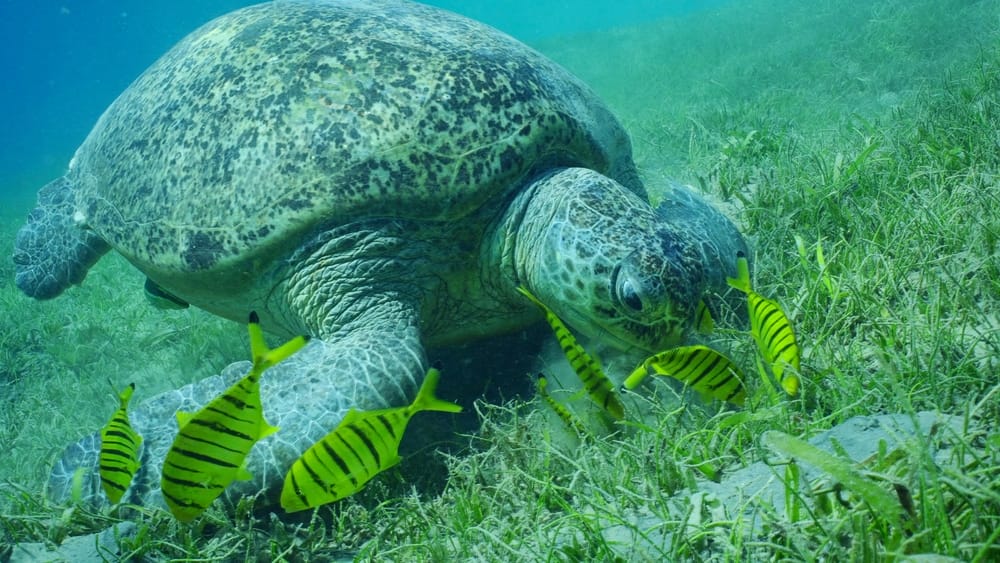
If you want to talk about turtle intelligence, you can’t skip sea turtles.
A 2025 study published in the journal Nature by researchers at the University of North Carolina at Chapel Hill provided the first hard evidence that loggerhead sea turtles can learn and memorize the magnetic signatures of specific locations.
Think about that. They’re reading invisible magnetic fields the way you read street signs.
Sea turtles use two separate magnetic senses to navigate. One works like a compass, giving them direction. The other works like a map, telling them their position based on the intensity and angle of Earth’s magnetic field at that location.
A loggerhead turtle named Adelita once swam 9,000 miles from Mexico to Japan across the entire Pacific Ocean. Without any technology. Just her brain and the planet’s magnetic field.
And female sea turtles return to the exact beach where they hatched, sometimes 30 years later, to lay their own eggs. The leading theory is that they imprint on the unique magnetic signature of their birth beach as hatchlings and carry that memory for life.
“It is amazing that sea turtles have access to a wealth of invisible information that they use to navigate in ways that are hard for us to even imagine,” said Dr. Catherine Lohmann, one of the researchers.
Recent research has also revealed that these turtles communicate acoustically during nesting — mothers actually call out to hatchlings and guide them to safety using low-frequency vocalizations.
Turtles Can Learn From Watching Others
Social learning is usually associated with “smart” animals like primates, dolphins, and crows.
But turtles do it too.
A study on red-footed tortoises found that individuals performed significantly better on navigation tasks after watching another tortoise complete the task first. They weren’t just mimicking. They were processing another animal’s movements and applying that information to their own situation.
Similarly, research on the Florida red-bellied cooter showed that turtles can learn how to get food in new ways just by watching other turtles do it.
This kind of observational learning takes real cognitive processing. You have to pay attention, understand what’s happening, and then reproduce it in a different context. That’s not simple stuff.
They Can Count (Sort Of)
A 2024 study published in Animal Cognition tested the quantity discrimination ability of red-eared slider turtles.
The results? They could tell the difference between groups of objects as close as 9 versus 10. That’s a ratio of 0.9, which is comparable to what many mammals and birds can do.
The researchers pointed out that this kind of cognitive flexibility may actually help explain why red-eared sliders are one of the most successful invasive species on the planet. Smarter animals adapt faster to new environments.

Your Pet Turtle Knows Who You Are
This one comes up a lot, and the answer is yes. Turtles can recognize their owners.
They’re not recognizing you the way your dog does, with emotional attachment and tail wags. Turtles learn to associate you with food.
While they may not feel love in the human sense, research shows turtles do experience real emotions like stress, fear, and contentment — so the relationship isn’t purely mechanical.
They recognize your appearance, scent, and the sound of your movements. That’s why your turtle goes crazy when you walk into the room but ignores your friends.
Some turtles can even learn:
- When feeding time is. Feed at the same time daily and they’ll start waiting for it.
- Their name. Rare, but it happens with consistent training.
- To participate in vet procedures. Some captive turtles have been trained to voluntarily give blood samples and tolerate nail clipping.
It’s not love. It’s learned association. But it’s still intelligence, and it still counts.
The Visual Cliff Experiment
This is one of my favorite turtle intelligence studies because it splits them into two camps.
Researchers created a fake cliff by putting a deep hole in the floor and covering it with a clear glass sheet. Then they placed different animals near the edge to see what they’d do.
Lizards walked right across without a care in the world. Zero spatial awareness.
Rats refused to cross. They could tell something was wrong.
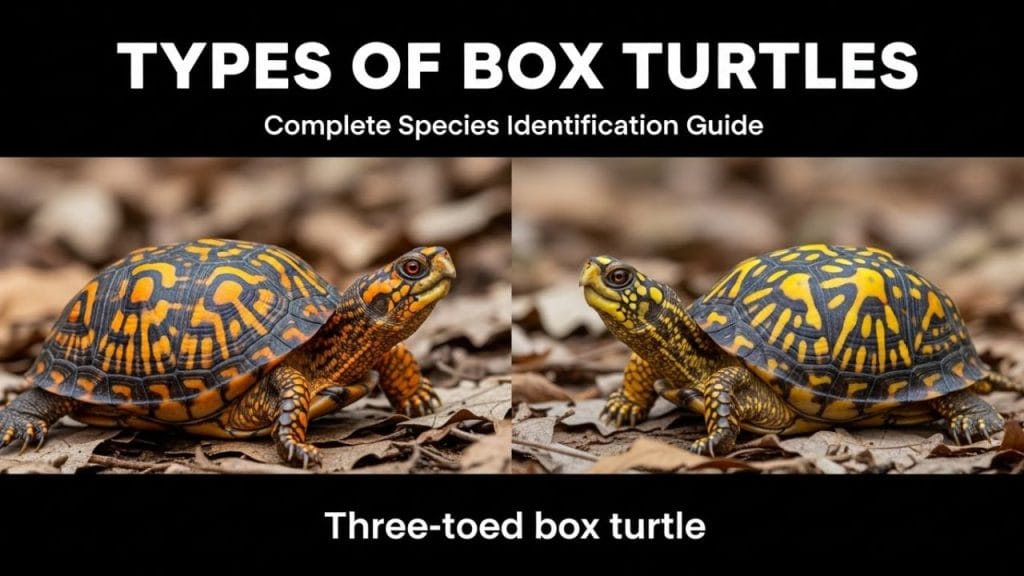
Now here’s where it gets interesting with turtles. Aquatic turtles like painted turtles walked right over the glass, just like the lizards. But land turtles like box turtles stopped at the edge, just like the rats.
Why the difference? Aquatic turtles are used to jumping off basking spots into water. Heights don’t scare them because dropping into water is part of their daily routine. Land turtles have no such safety net, so they’ve developed a much stronger sense of spatial danger.
Same animal family, completely different cognitive responses based on their environment.
Do Turtles Play?
This is still being debated, but the short answer is: probably yes.
Juvenile pond turtles have been observed engaging in play-like behavior in captivity, including repetitive object exploration and movements that mimic courtship behavior even when no mating context exists.
Researchers are cautious about labeling it “play” because that word carries a lot of weight scientifically. But when a behavior is repeated for its own sake, without a food reward or survival purpose, it fits the scientific definition pretty well.
At Disney’s Animal Kingdom, cognitive research sessions with eastern box turtles showed that the turtles engaged actively with novel tasks. Keepers who worked with the turtles on these sessions reported stronger bonds with the animals over time.
So if your turtle seems to enjoy pushing things around the tank for no reason, it might actually be having fun.
How Smart Are Turtles Compared To Other Animals?
Let’s just put this all in one place.
| Comparison | Verdict |
|---|---|
| Turtles vs Fish | Turtles are smarter. They have a more developed cerebral cortex, better long-term memory, and can learn through observation. Fish rely more heavily on instinct. |
| Turtles vs Dogs | Dogs are smarter in most measurable ways. They have larger, more complex brains, higher social intelligence, and can learn hundreds of commands. Turtles win on long-term memory though. |
| Turtles vs Cats | Cats are generally smarter. More advanced reasoning, faster learning, and better problem-solving. But turtles have shown comparable memory skills in some studies. |
| Turtles vs Birds | Depends on the bird. Crows and parrots blow turtles out of the water. But turtles outperform many less cognitive bird species in spatial memory tasks. |
| Turtles vs Other Reptiles | Turtles are among the smartest reptiles. They outperform most lizards and snakes in learning tasks, though monitor lizards give them a run for their money. |
Turtles aren’t going to win any interspecies IQ competitions. But within the reptile world, they’re some of the sharpest around.
What About Turtle IQ?
You might have seen claims online that turtles have an IQ of 3 to 10. That’s completely made up.
IQ tests are designed for humans. You can’t give a standardized IQ test to a turtle. The concept doesn’t translate across species.
What scientists can measure is specific cognitive abilities like memory, spatial reasoning, problem-solving, and learning speed. And on those measures, turtles do surprisingly well.
There’s no single number that captures turtle intelligence. But if someone asks you “are turtles smart?” you now have a lot of science-backed reasons to say yes.
How To Keep Your Pet Turtle Mentally Stimulated
A bored turtle isn’t using its brain, and that’s a waste.
Here are some simple ways to provide mental enrichment:
- Change up the environment. Rearrange tank decorations every few weeks. New layouts force your turtle to re-learn its surroundings. You’ll also want to make sure the setup supports natural behaviors like digging, which turtles do for multiple important reasons beyond just boredom.
- Use feeding puzzles. Hide food in different spots or use feeders that require your turtle to work for its meal.
- Add live prey. Feeder fish or live insects give your turtle something to hunt, activating its natural problem-solving instincts.
- Offer novel objects. A new rock, a floating log, or a ping pong ball can keep a turtle occupied for hours. Just make sure everything is safe and non-toxic.
- Interact consistently. Turtles learn to recognize you through repeated, predictable interactions. Spend time near the tank. Hand-feed occasionally. Be a reliable presence.
Two to three short enrichment sessions per week is plenty for most pet turtles. You don’t need to build an obstacle course. Just keep things interesting.
Final Thoughts
Turtles have been quietly outsmarting our expectations for millions of years.
They solve mazes like rats. They remember training for nearly a decade. They navigate oceans using an invisible magnetic map. They learn from watching each other. They recognize the people who feed them. And they’ve survived every mass extinction event this planet has thrown at them.
Are they as smart as dogs? No. Are they as smart as crows? Not even close. But are they intelligent, adaptive, and a lot more aware of the world around them than most people think?
Absolutely.
Next time someone calls turtles slow or stupid, hit them with the 9-year memory study. That usually shuts it down pretty fast.

About Author
Muntaseer Rahman started keeping pet turtles back in 2013. He also owns the largest Turtle & Tortoise Facebook community in Bangladesh. These days he is mostly active on Facebook.