10 Tortoise Garden Ideas So Good, Your Pet Might Never Come Inside Again
This post was created with help from AI tools and carefully reviewed by a human (Muntaseer Rahman). For more on how we use AI on this site, check out our Editorial Policy.
Creating the perfect outdoor space is hard enough—for humans.
But designing one for a tortoise?
That’s a whole different kind of Pinterest board. Whether you’re a longtime tort keeper or just got your first slow-moving roommate, these garden ideas are equal parts adorable and genius.
What These Garden Photos Don’t Show
These 10 garden ideas are beautiful. But garden photos rarely show the equipment that keeps tortoises safe.
Every Outdoor Garden Needs:
| What You See | What You Don’t See |
|---|---|
| Beautiful plants | Heated shelter for cool nights |
| Decorative rocks | Temperature monitoring |
| Charming hides | Predator-proof fencing (buried) |
| Natural layouts | Backup indoor setup for winter/emergencies |
The Climate Reality:
These gardens work beautifully in warm weather. But unless you live in a year-round warm climate:
- Spring nights can drop below safe temperatures
- Summer storms require bringing tortoise inside
- Fall means transitioning to indoor care
- Winter requires complete indoor setup
Your tortoise garden is a warm-weather habitat. Your heated indoor enclosure is their year-round home.
Equipment You’ll Need Regardless of Garden Style:
- Heated shelter setup – For overnight warmth
- Temperature monitoring – Know when it’s too cold
- Complete indoor backup – For emergencies and winter
Perfect Wooden Tortoise House (my pick: Aivituvin Wooden Tortoise Habitat) For Outdoor & Indoor!
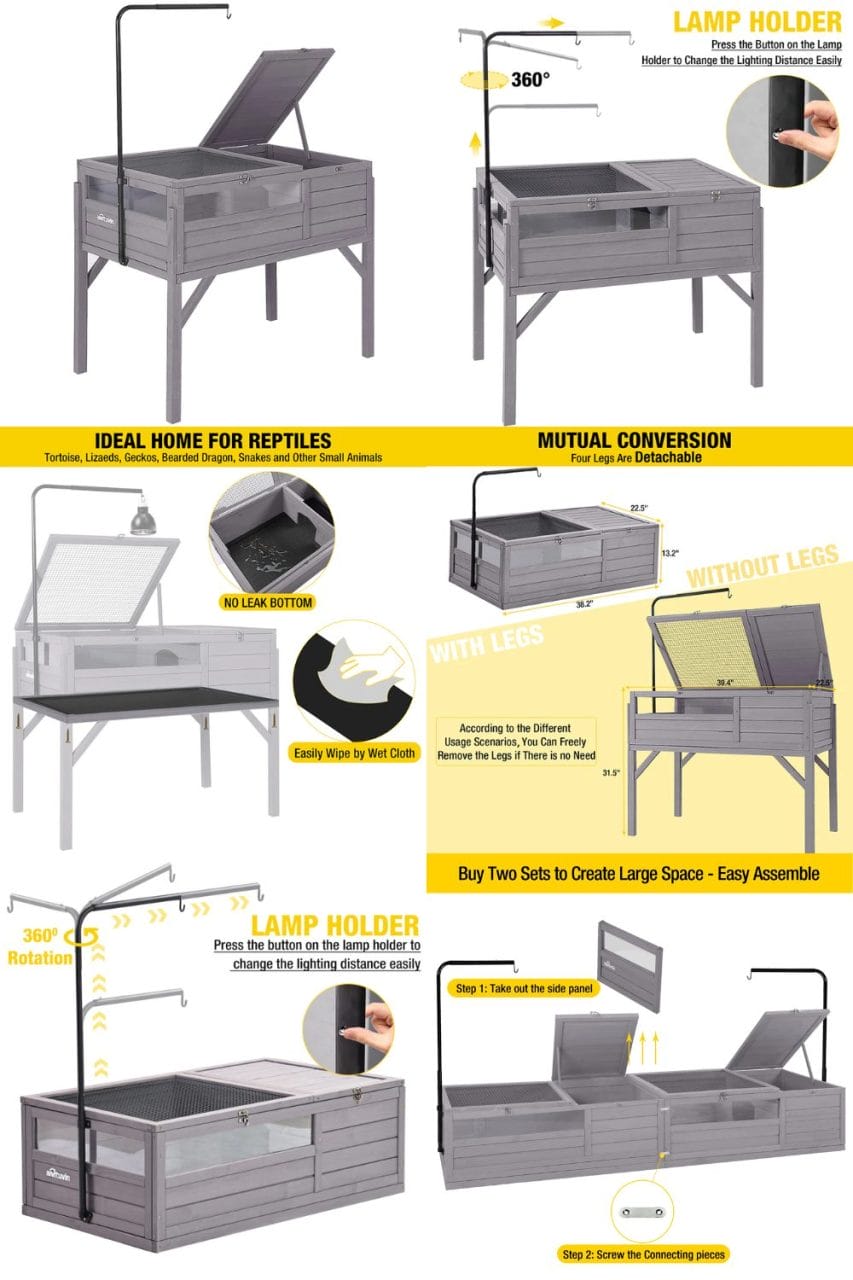
This tortoise house isn’t cheap — but that’s because it’s not your average wooden box.
Built with durable wood, a waterproof liner, and smart design features like a sunbathing area and a hideout zone, the Aivituvin Large Wooden Habitat is made to last.
It’s perfect for tortoises or box turtles, indoors or out. And yep, it even has detachable legs.
If you’re serious about giving your tortoise a safe, comfy home without building one from scratch, this is the one.
👉 Grab the Aivituvin Tortoise House here — it’s currently $10 off.
Tort-Safe Plants for Your Garden
Garden photos rarely show what’s safe to eat. Tortoises will nibble most low-growing plants in their reach, so every plant you add must be non-toxic.
Safe staples that work across nearly all the layouts below:
- Lamb’s ear (Stachys byzantina)
- Spider plant (Chlorophytum comosum)
- Hibiscus (flowers and leaves)
- Creeping thyme (Thymus serpyllum)
- Dwarf clover (Trifolium repens cultivars)
- Dandelion — the “weed” tortoises actually prefer
- Plantain (Plantago lanceolata)
- Hen-and-chicks (Sempervivum)
For a full feeding-grade list, see 44 Tortoise-Safe Plants That Are Perfect For Feeding.
Avoid: ivy, oleander, rhododendron, foxglove, lily of the valley, daffodil bulbs, tomato leaves, and any plant treated with pesticides.
Predator-Proofing Basics
Most photos show beautiful gardens, not what’s stopping a raccoon at 2 a.m. Predators that target garden tortoises include raccoons, foxes, dogs, hawks, crows, and rats (the last two especially go after hatchlings and eggs).
Three layers do most of the work:
- Top cover. Hardware cloth or welded wire mesh with half-inch openings — not chicken wire (chicken wire stops chickens, not raccoons).
- Buried perimeter. Bury fencing 8–12 inches below the surface, then bend the bottom 6 inches outward in an L-shape. Stops digging predators and tortoise escape attempts in one move.
- Solid walls 12+ inches tall. Smooth wood or plastic. Tortoises climb wire mesh more easily than people expect.
For full year-round setups, see Complete Tortoise Owner Essentials and 30 DIY Tortoise Enclosure Ideas For A Natural Haven.
Now let’s explore these garden ideas!
10 Genius Tortoise Garden Ideas (Including 3 Miniature Styles)
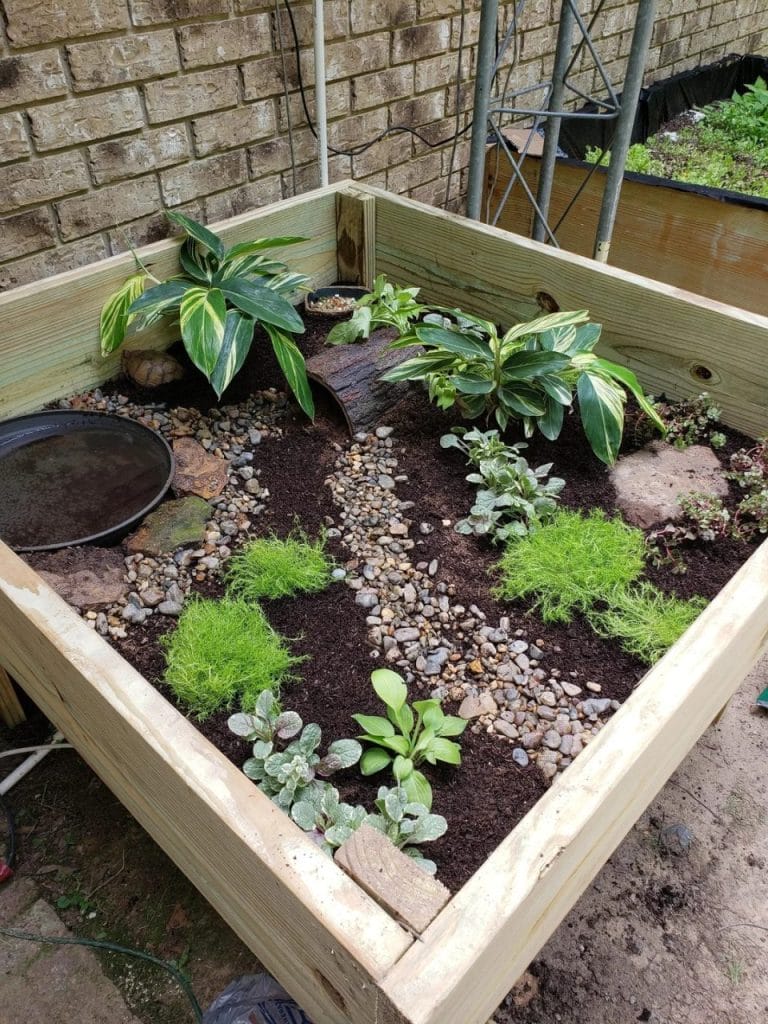
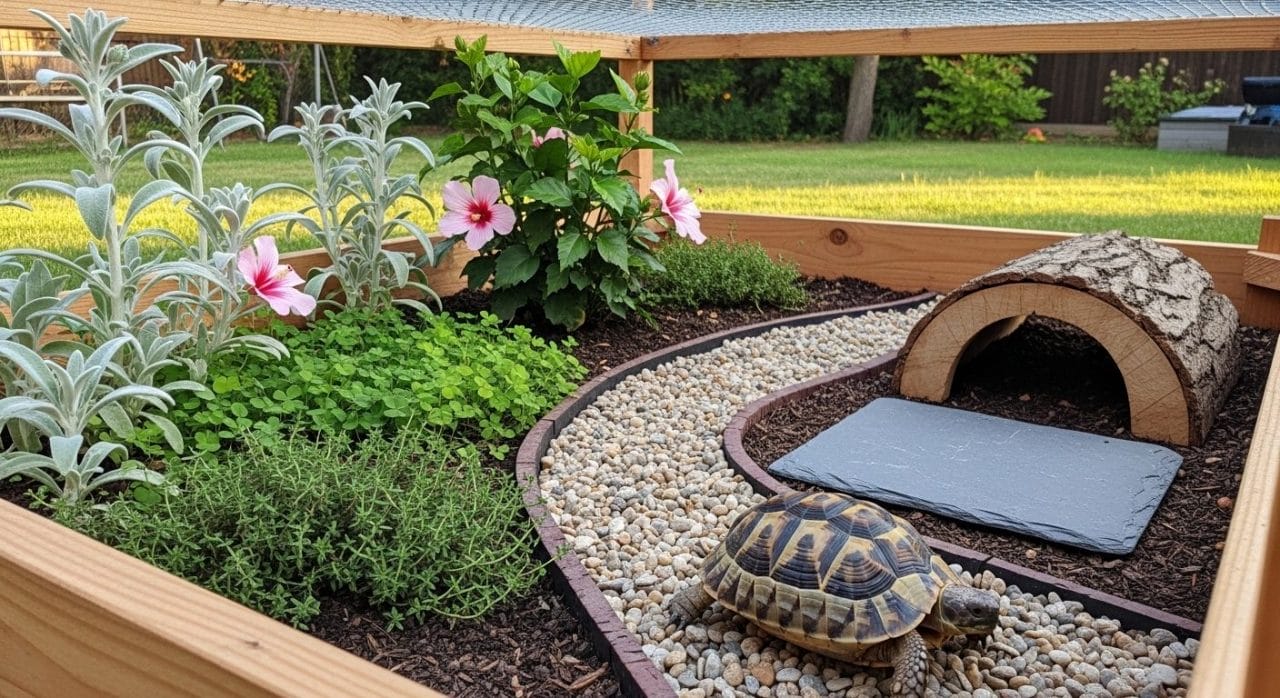
The Zen Box Garden
This setup is neat, organized, and ideal for small or young tortoises. The layout includes:
- A raised wooden bed that keeps it protected and compact
- Pebble path in the middle for walking and drainage
- Mix of safe plants like lamb’s ear and spiderwort for cover and nibbling
- A half log hide and a shallow water dish
How to copy this style:
Use untreated wood to build a raised bed. Fill it with a mix of topsoil and coconut coir. Add a shallow dish for water, some flat rocks, a small tunnel, and low-growing tortoise-safe plants. The key is balance: half greenery, half open space.
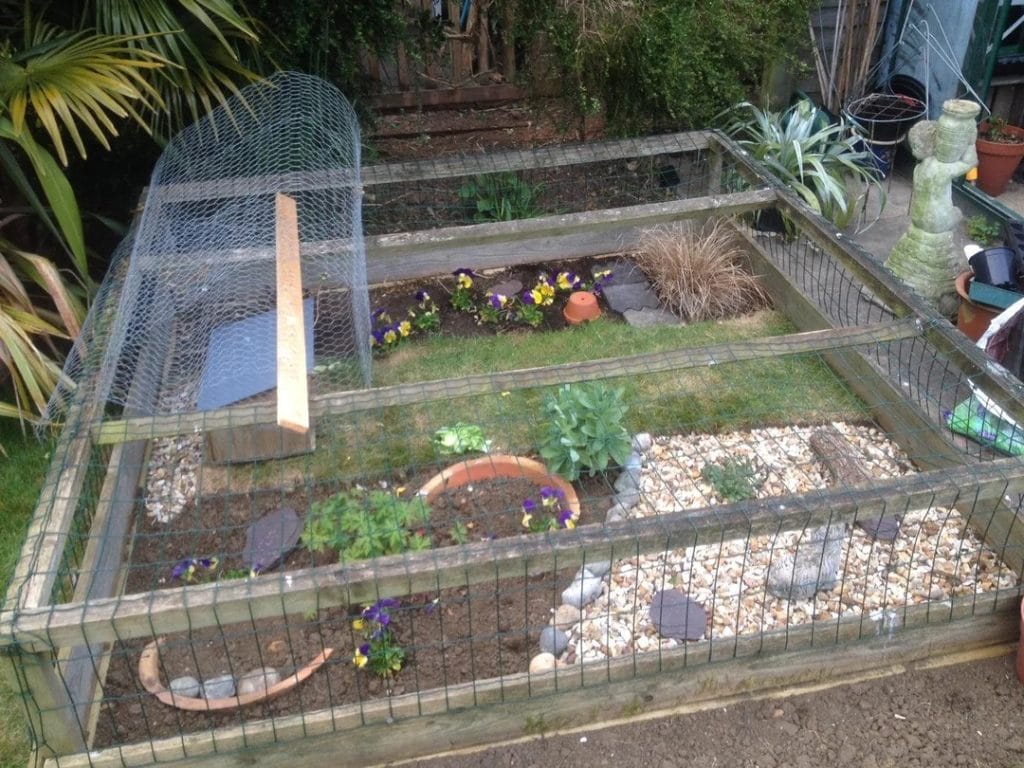
The Cottage Meadow Enclosure
This one is spread out and full of textures. It looks like a little natural field for the tortoise to explore. Highlights:
- Ground-level pen with full wire cover (good for predator protection)
- Sections with grass, soil, rocks, and flowers
- Ceramic pots turned into hides
- Flowering plants that double as visual interest and snack options
How to copy this style:
Use garden fencing and wire mesh to frame and cover a ground area. Create different zones inside: a grassy patch, a flower bed, a stone path. Toss in broken pots and flat stones to make hides and basking spots. Think “mini wild meadow.”
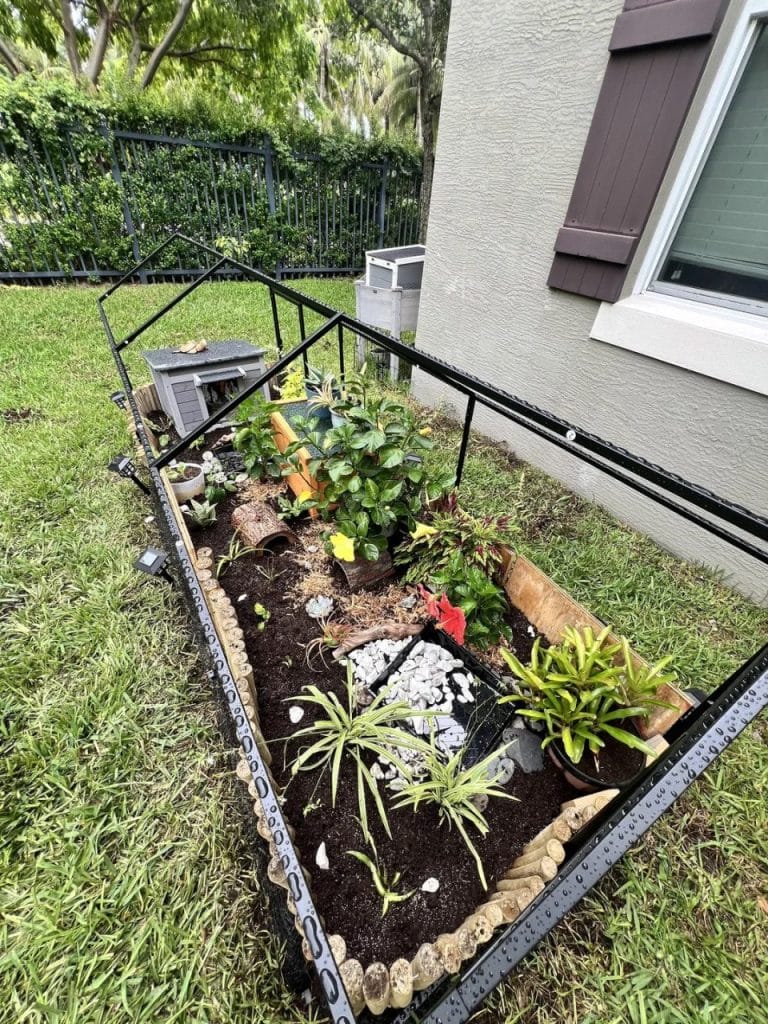
The Tropical Patio Jungle
This one leans more lush and decorative. Perfect if you want something that blends into your garden nicely. What stands out:
- Rich soil base with potted and planted tropicals
- Mix of shade and sun plants
- Decorative rocks and wood pieces
- A tortoise house with a ramp for sleeping
How to copy this style:
Use a corner near your house or fence. Build a low border with wood or edging logs. Choose tropical but tortoise-safe plants like hibiscus or spider plants. Add a small hide and a shaded area. Use white stones and bark chunks for contrast and texture.
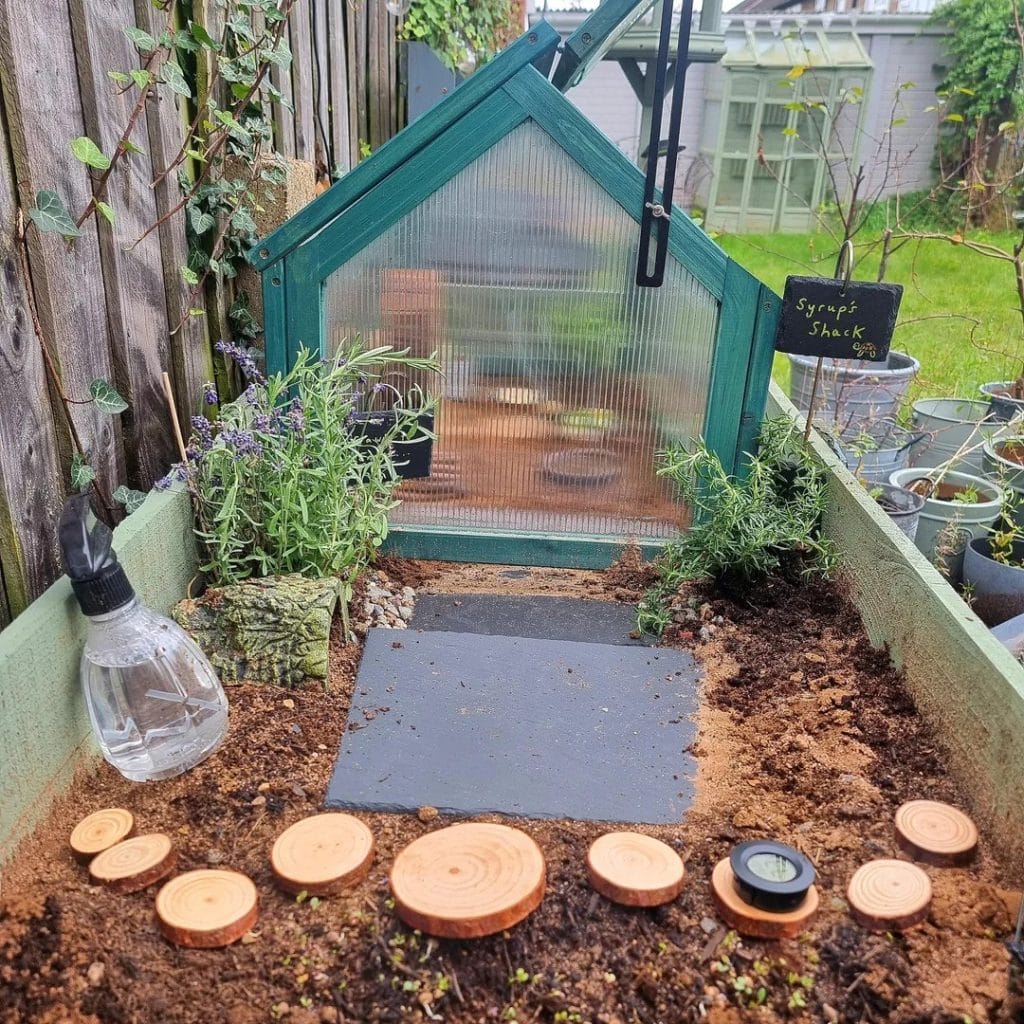
The Greenhouse Retreat
This one feels like a tiny tortoise resort. It uses a small greenhouse for warmth and herb-growing.
- Mini greenhouse adds extra heat and humidity
- Wood slices form a playful walking path
- Slate tile gives a warm basking spot
- Herbs like lavender and rosemary add scent and nibbling options
- Decorative sign and spray bottle add charm and care
How to copy this:
Place a small greenhouse at one end of a raised garden bed. Add slate tiles or dark rocks for warmth. Plant tort-safe herbs like thyme, basil, or lavender. Include a shaded hide and a fun path with wood slices or pavers.
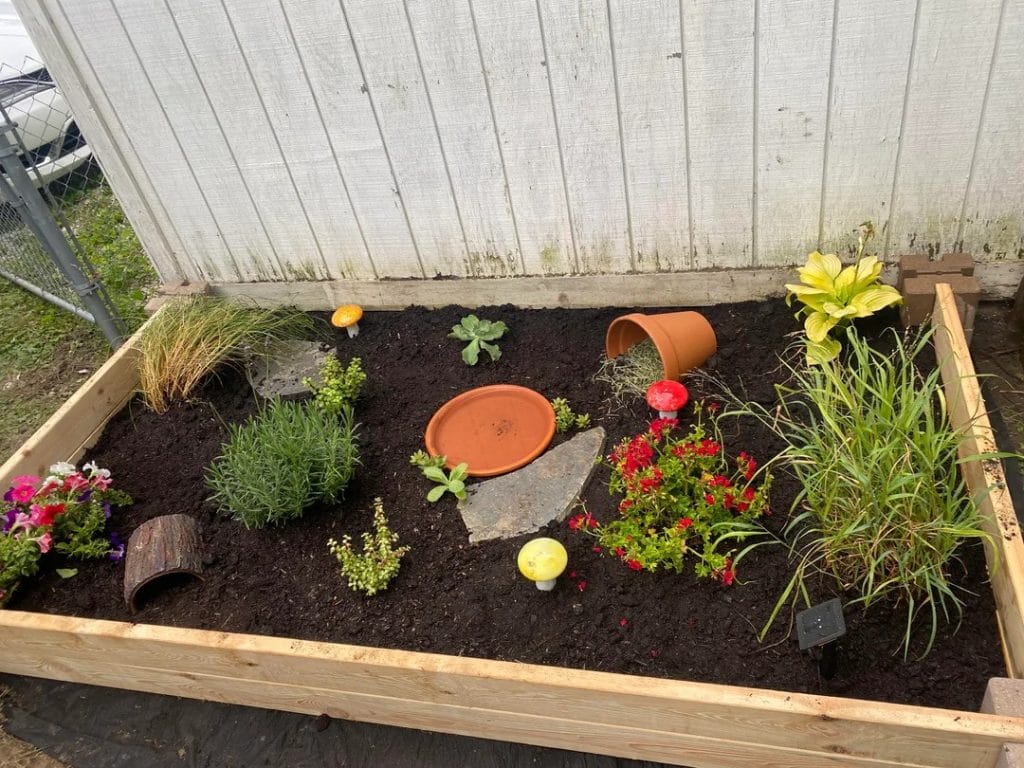
The Cottage Bed Mix
This one looks like a blooming flower bed with cozy tortoise touches.
- Raised wooden frame with lots of soil
- Bright flowers and grassy patches for a soft, lively feel
- Two hides made from logs and tilted flowerpots
- Terracotta saucer used as a water dish
- Little garden mushrooms as decoration
How to copy this:
Use a deep raised bed and fill it with dark, rich soil. Mix in flowering plants (only tort-safe ones). Add tilted pots with hay as hides, and flat rocks for basking. Keep the layout informal and cheerful.
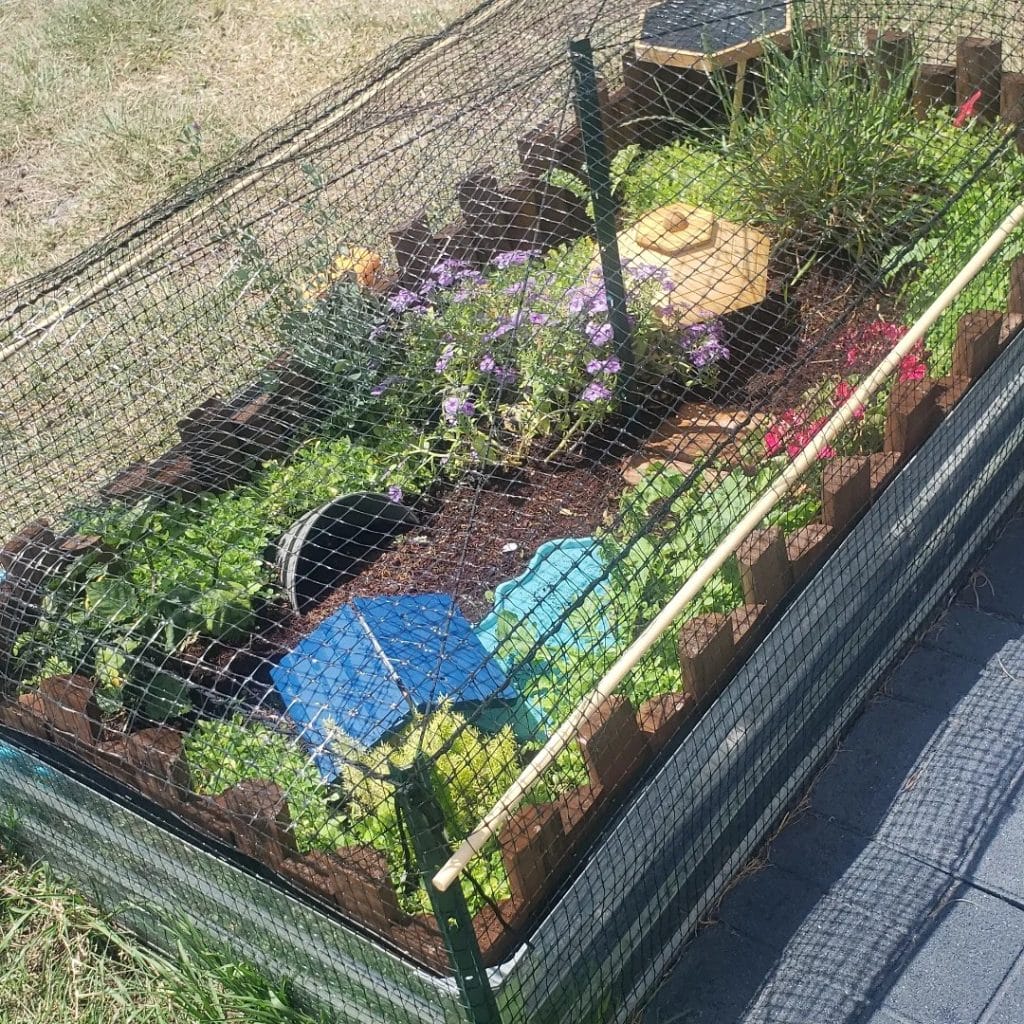
The Jungle Playpen
This garden is full and colorful with a safe netting top. Great for an active tortoise that loves to dig and explore.
- Dense mix of plants: flowers, shrubs, and ground cover
- Protective mesh netting to keep predators out
- Multiple hides made from flower pots and small houses
- Plenty of shade and sun spots
- Raised border to stop escapees
How to copy this:
Plant a dense variety of safe greenery. Build a low wooden or brick border, then cover the top with flexible netting or fencing. Add a few overturned containers and shady spots using logs or fake shelters. Keep it wild and packed.
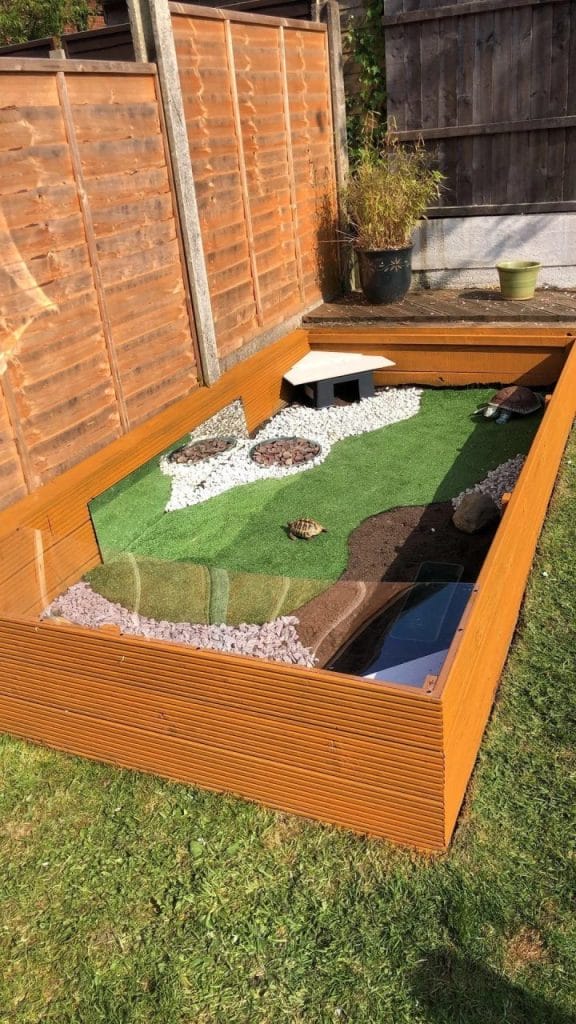
The Minimalist Sun Deck
This setup is clean and simple, built for sun-lovers. Best for tortoises who like a dry, open space.
- Divided zones with fake turf, gravel, and dirt
- White and purple rocks for texture
- Small house shelter for shade
- Simple modern layout—easy to clean and manage
- Entire setup placed against a warm fence for sun
How to copy this:
Use wood or composite boards to build a wide low box. Divide it into zones: one with turf or grass mat, one with gravel, and one with dirt. Add a sturdy hide and basking tiles. This setup is all about function and clean space.
This Hilarious Turtle Book Might Know Your Pet Better Than You Do

Let’s be real—most turtle care guides feel like reading a textbook written by a sleep-deprived zookeeper.
This one’s not that.
Told from the snarky point of view of a grumpy, judgmental turtle, 21 Turtle Truths You’ll Never Read in a Care Guide is packed with sarcasm, sass, and surprisingly useful insights.
And hey—you don’t have to commit to the whole thing just yet.
Grab 2 free truths from the ebook and get a taste of what your turtle really thinks about your setup, your food choices, and that weird plastic palm tree.
It’s funny, it’s honest, and if you’ve ever owned a turtle who glares at you like you’re the problem—you’ll feel seen.
3 Bonus Miniature Tortoise Garden Ideas
Miniature gardens are the Pinterest-favorite angle: tiny scenes built around (not just for) your tortoise. Scaled-down decor, dwarf plants, and storybook touches turn a small enclosure into a photogenic landscape — perfect for indoor-outdoor hybrid setups and small-space keepers.
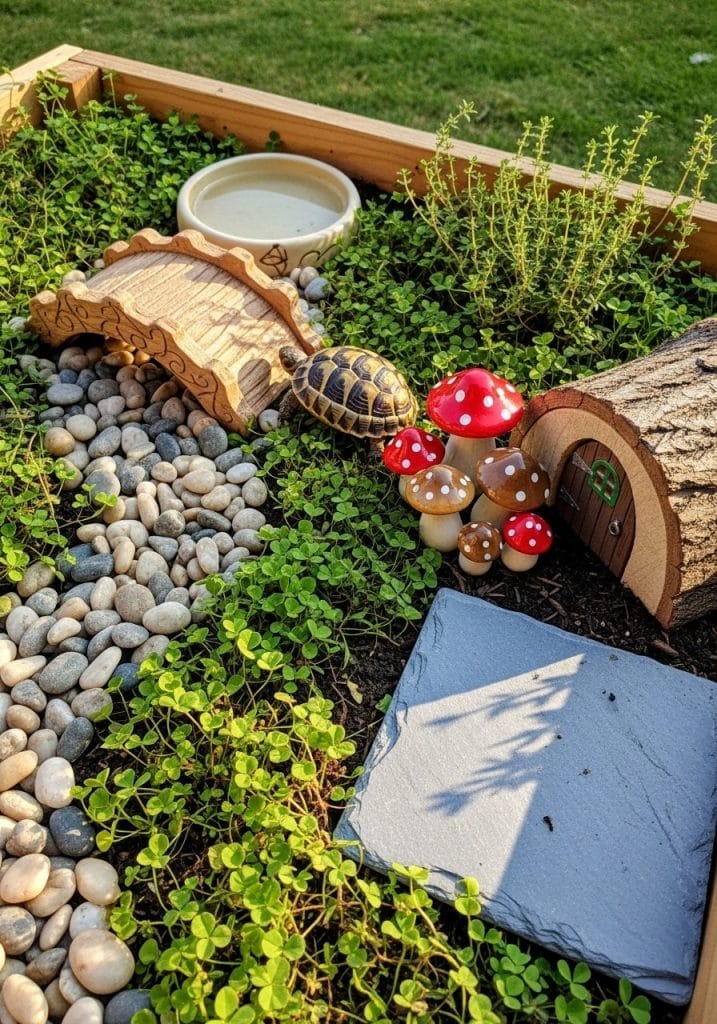
The Fairy Garden Hideaway
A whimsical scaled-down landscape your tortoise wanders through. Built around dwarf ground covers and tiny decor, not flashy plantings.
- Pebble paths winding between low ground cover
- A tiny wooden bridge over the water dish
- Cluster of small ceramic mushrooms and a fairy door tucked into a hide
- Dwarf clover and creeping thyme as the main planting
- Flat slate basking tile dressed up as a “fairy stage”
How to copy this style:
Use a shallow raised bed and plant low-growing tort-safe ground cover. Mix in tiny decorative elements: pebble paths, a wooden bridge, ceramic mushrooms. Anchor every decor piece — anything light enough for your tortoise to flip or eat does not belong inside the enclosure. Keep mushrooms ceramic only (plastic ones can chip and get swallowed) and skip glitter or painted accents.
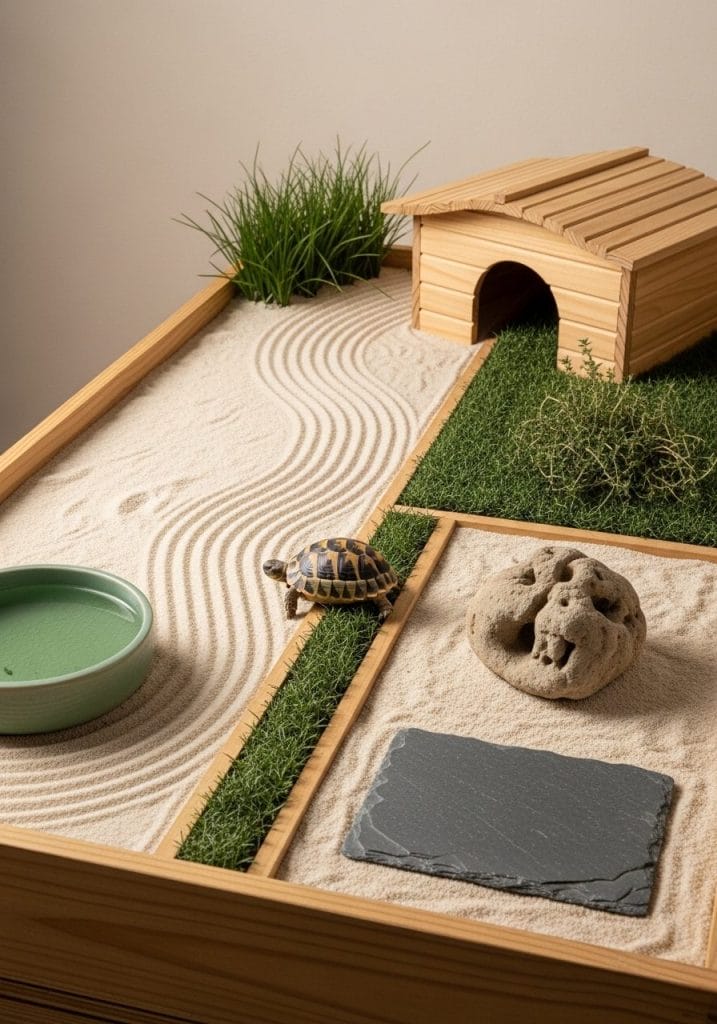
The Bonsai Zen Miniature
A calm, sculpted look with raked sand patches and dwarf plants. Best for keepers who want a tortoise garden that doubles as a meditation corner.
- Small areas of fine sand or pea gravel with raked patterns
- Dwarf grasses (mondo grass, dwarf fescue) and creeping thyme
- A flat slate basking stone and one feature rock
- Low ceramic dish styled like a koi pond
- Compact wooden hide with a curved roof
How to copy this style:
Use a wide shallow bed and divide it into zones: a sand or gravel patch, a planted patch, and a stone basking area. Use only tort-safe dwarf plants. Keep colors neutral and the layout sparse — this style is about negative space, not abundance. Re-rake the sand after each tortoise pass; that’s part of the look.
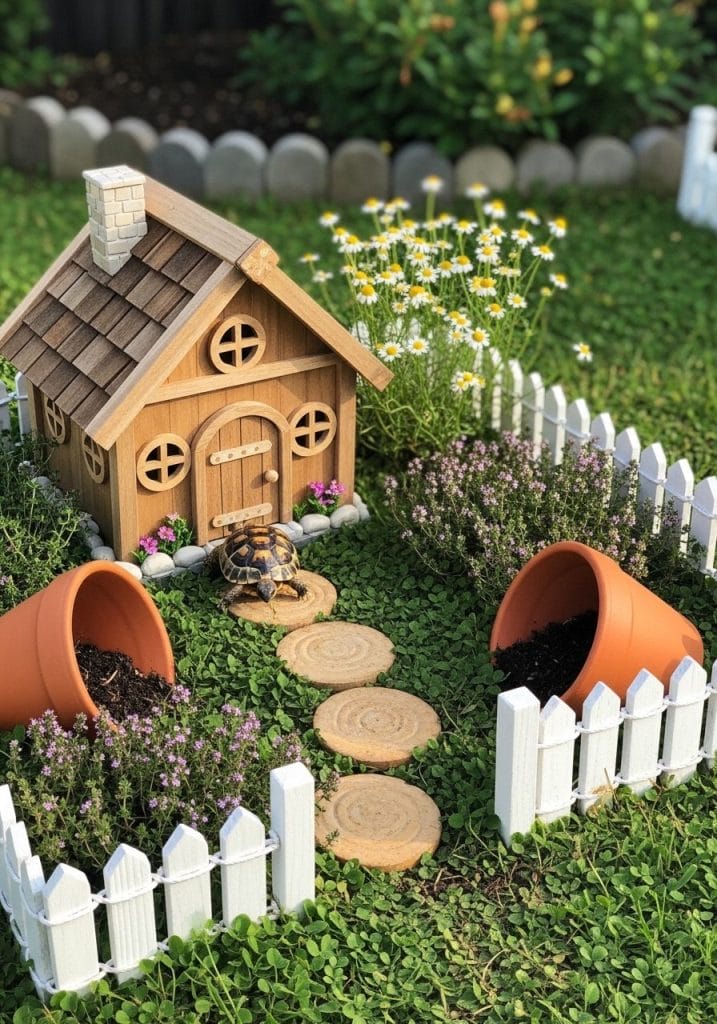
The Storybook Cottage Miniature
A cottage-core mini garden built around a small wooden tortoise house. Reads like a scene from a children’s book and photographs beautifully for Pinterest.
- Wooden cottage hide with a peaked roof as the centerpiece
- Stepping-stone path from the cottage to a flower patch
- Tort-safe dwarf herbs like creeping thyme and Roman chamomile
- Small terracotta pots tipped on their sides as side hides
- Low decorative picket-fence pieces marking out garden “zones”
How to copy this style:
Start with a wooden cottage-style hide as your centerpiece. Lay a stepping-stone path leading to a planted patch. Use low decorative picket-fence pieces to separate zones — never enclose your tortoise inside them; they’re decorative, not structural. Plant tort-safe dwarf herbs like creeping thyme and Roman chamomile.

About Author
Muntaseer Rahman started keeping pet turtles back in 2013. He also owns the largest Turtle & Tortoise Facebook community in Bangladesh. These days he is mostly active on Facebook.