Loggerhead Sea Turtle: The Complete Species Profile

This post was created with help from AI tools and carefully reviewed by a human (Muntaseer Rahman). For more on how we use AI on this site, check out our Editorial Policy.
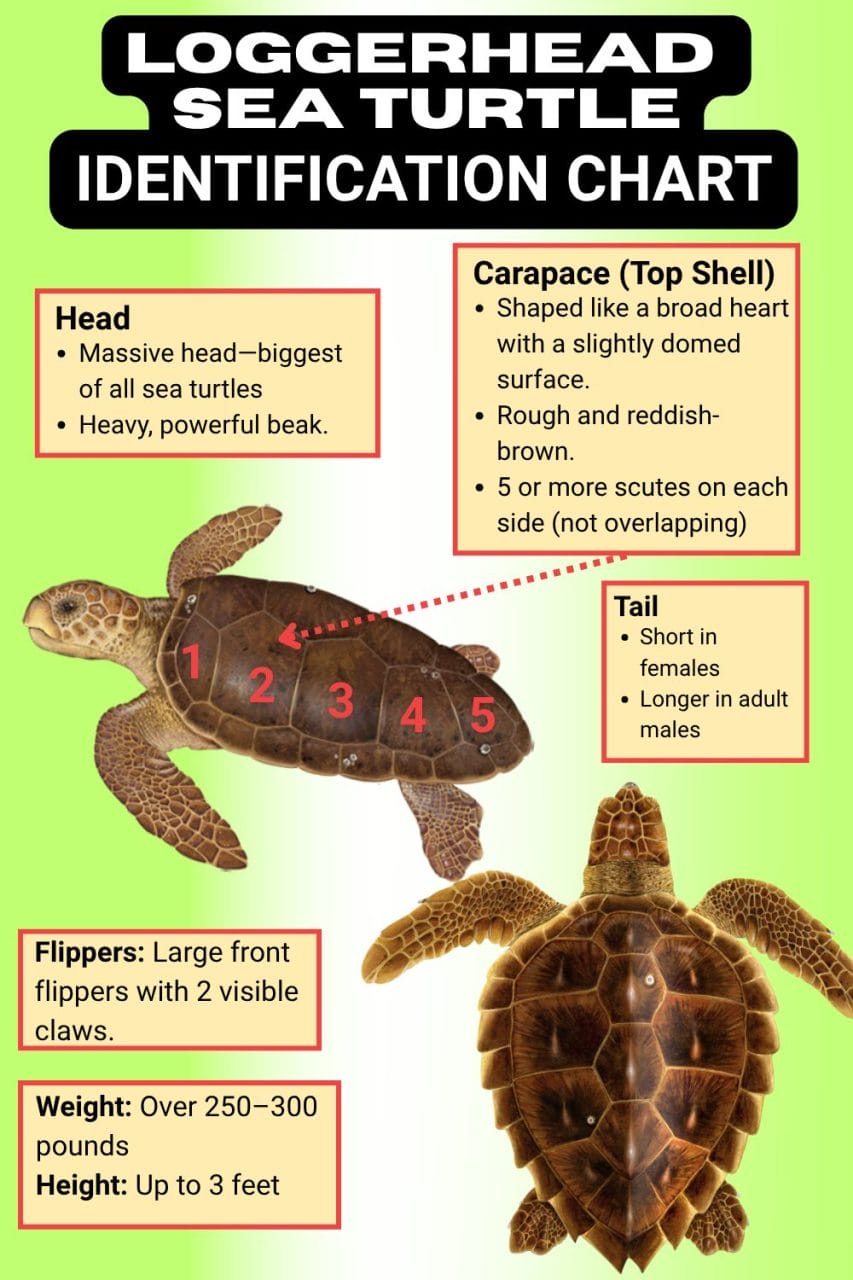
Picture a turtle with a head so massive it looks like someone photoshopped it on.
That’s the loggerhead sea turtle.
These big-headed ocean wanderers are the most common sea turtles in U.S. waters, and they’ve got jaw muscles that could crush a conch shell like you’d crush a potato chip.
But here’s the thing — they also cry.
Well, sort of. More on that later.
What Makes Loggerheads Special
The name says it all.
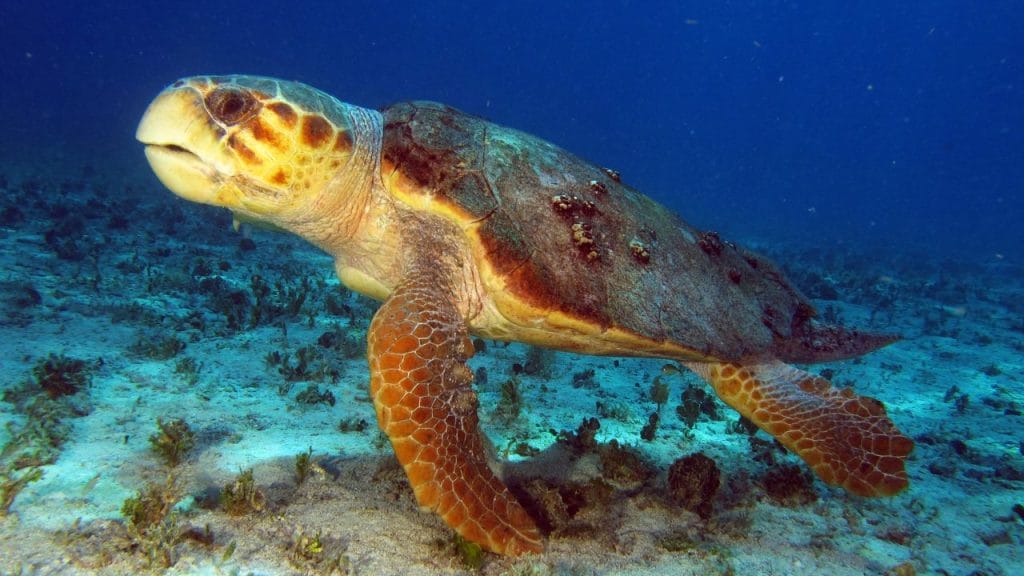
Loggerheads have enormous heads that look like, well, logs. But those oversized noggins aren’t just for show.
Inside that big head are some of the most powerful jaw muscles in the turtle world.
We’re talking about an animal that eats whelks, conchs, and horseshoe crabs for breakfast. Shells and all. Their own shell is another story — shell patterns tell a surprisingly detailed story about each turtle’s age, health, and identity.
The Largest Hard-Shelled Turtle
Loggerheads hold the title for the world’s largest hard-shelled sea turtle.
(Leatherbacks are bigger, but their shells are soft and leathery — hence the name.)
| Feature | Measurement |
|---|---|
| Average Shell Length | 35 inches (90 cm) |
| Average Adult Weight | 250-300 pounds (113-135 kg) |
| Maximum Weight | Over 1,000 pounds (454 kg) |
| Hatchling Size | About 1 inch (2.5 cm) |
The heaviest loggerhead ever recorded tipped the scales at a whopping 1,202 pounds.
That’s heavier than a grand piano.
Those “Crying” Eyes
Here’s something that throws people off.
When female loggerheads come ashore to nest, they appear to be crying. Big tears rolling down their faces while they dig in the sand.
Heartbreaking, right?
Not really.
Those “tears” are actually salt. Loggerheads have special glands near their eyes that let them drink seawater and excrete the extra salt.
It’s basically their built-in desalination system.
So when you see a loggerhead “crying” on the beach, she’s not sad — she’s just getting rid of excess salt while handling the stressful business of laying eggs.
Track A Real Sea Turtle With Each Bracelet!


Learn Name
You get to learn your sea turtle’s name, size, age. Also a picture!
Enjoy Stories
Enjoy the story of your sea turtle, where it came from, where is it going?
Follow Me
You get to follow the sea turtle’s journey on an interactive tracking map!
Click Here & Use Coupon Code: THETURTLEHUB20 For A 20% Discount!
The Adelita Story: One Turtle Changed Everything
In 1996, a loggerhead named Adelita did something no one thought possible.
She swam across the entire Pacific Ocean.
Adelita had been caught as a juvenile off Mexico and spent years in a research facility. When scientists attached a satellite tag to her shell and released her, they expected to learn about local movements.
Instead, she took off.
Over 368 days, Adelita swam more than 9,000 miles from Baja California, Mexico to Japan.
She was the first animal ever tracked across an ocean basin by satellite.
And she proved something scientists had only suspected — that the loggerheads feeding off Mexico’s coast were the same population that nested in Japan.
Think about that for a second.
Baby turtles hatching on Japanese beaches somehow find their way across the entire Pacific Ocean to feed in Mexican waters. Then, decades later, they swim all the way back to Japan to breed.
That’s a round trip of nearly 15,000 miles.
Adelita’s journey sadly ended near Japanese fishing waters, where she likely got caught in nets. But her trip changed sea turtle conservation forever.
Today, Pacific loggerheads are the most satellite-tracked animals on Earth, with nearly 400 turtles followed since Adelita’s historic swim.
This Hilarious Turtle Book Might Know Your Pet Better Than You Do

Let’s be real—most turtle care guides feel like reading a textbook written by a sleep-deprived zookeeper.
This one’s not that.
Told from the snarky point of view of a grumpy, judgmental turtle, 21 Turtle Truths You’ll Never Read in a Care Guide is packed with sarcasm, sass, and surprisingly useful insights.
And hey—you don’t have to commit to the whole thing just yet.
Grab 2 free truths from the ebook and get a taste of what your turtle really thinks about your setup, your food choices, and that weird plastic palm tree.
It’s funny, it’s honest, and if you’ve ever owned a turtle who glares at you like you’re the problem—you’ll feel seen.
Where Do Loggerheads Live?
Loggerheads have one of the widest ranges of any sea turtle.
You’ll find them in the Atlantic, Pacific, and Indian Oceans, plus the Mediterranean Sea.
Major Nesting Hotspots
| Location | Annual Nests |
|---|---|
| Florida, USA | 67,000+ nests per year |
| Oman | Major nesting site |
| Australia | Significant population |
| Japan | Only North Pacific nesting site |
| Greece & Turkey | Mediterranean’s largest populations |
| Cape Verde Islands | Eastern Atlantic’s main site |
Florida is the loggerhead capital of the Western Hemisphere.
In 2024, surveyors counted almost 58,000 nests just on Florida’s 27 core monitoring beaches. And that’s not even the full count. For a smaller Gulf cousin in worse trouble, see the Kemp’s ridley — the world’s most endangered sea turtle.
The record year was 2023, with over 70,000 nests on those same beaches.
The Three-Habitat Life
Loggerheads cycle through three different ecosystems during their lives.
Stage 1: The Open Ocean Years
Hatchlings make a beeline for the sea and spend their first years drifting in floating mats of Sargassum seaweed.
These golden-brown rafts are basically floating buffets, containing up to 100 different species of small animals for baby loggerheads to munch on.
Stage 2: Coastal Development
After 7-12 years of open ocean life, juveniles move to shallower coastal waters and estuaries.
Here they start eating bigger prey and bulking up for adulthood.
Stage 3: Adult Life
Adults stick to continental shelves and coastal waters, returning to nesting beaches every few years.
Snuggle a Plush. Track a Turtle.
🧸 + 🌊 = 🐢 A toy that connects you to real sea turtles in the wild.


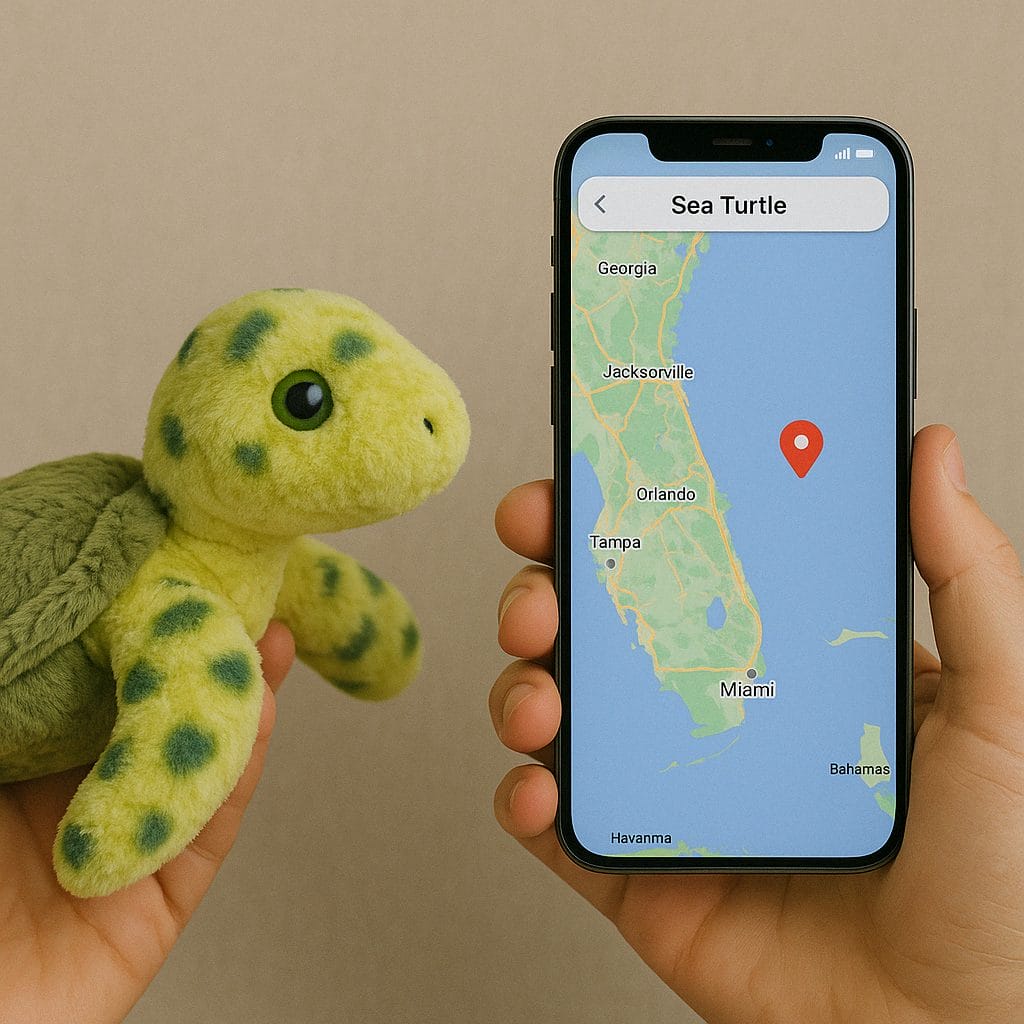
Meet Your Turtle
Scan the tag to meet your real sea turtle. Learn its name, species, and see a real photo!
Follow the Journey
Watch your turtle swim across the ocean using the 3D tracking map. It’s like a sea adventure in your pocket.
Support Wildlife
Every plush supports turtle conservation efforts through the Sea Turtle Conservancy.
Click Here & Use Coupon Code: THETURTLEHUB20 For A 20% Discount! (Your hug helps a turtle.)
What Do Loggerheads Eat?
Remember those crushing jaws I mentioned?
They’re designed for one thing: destroying hard-shelled prey.
The Menu
- Whelks and conchs (their favorites)
- Horseshoe crabs
- Clams and mussels
- Sea urchins
- Crabs
- Jellyfish
- Occasionally fish and seaweed
Loggerheads are basically the ocean’s garbage disposals for anything with a shell. Meanwhile, the hawksbill uses its pointed beak to pull sponges from reef crevices — same ocean, very different menu.
Their beaks are made of keratin — the same stuff as your fingernails — so they don’t feel the sting when they chomp down on jellyfish tentacles either.
Fun fact: the shells loggerheads eat pass through their digestive system and end up back on the ocean floor. Other animals then use these calcium-rich fragments as a food source.
It’s recycling, turtle style.
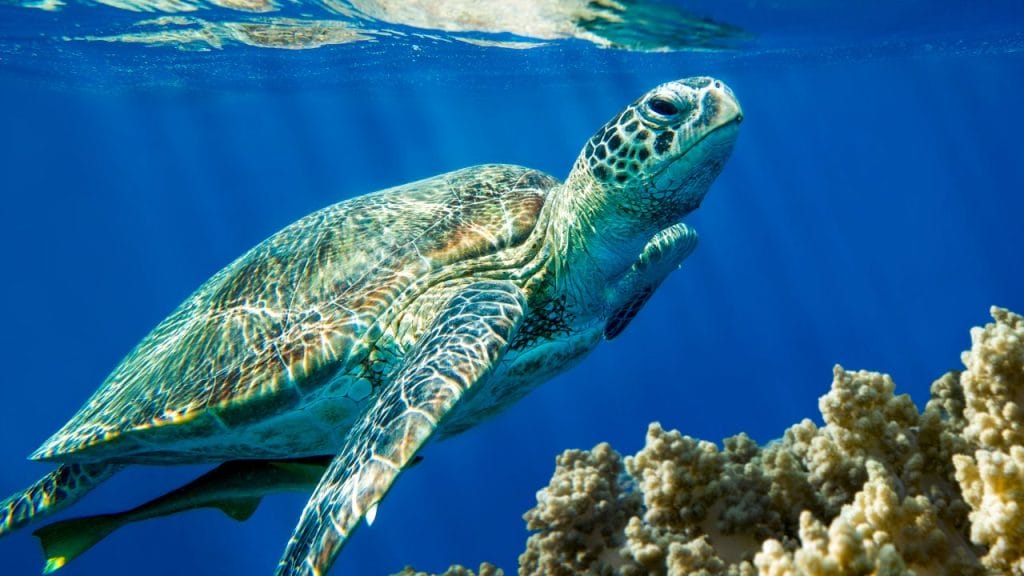
The Walking Ecosystem
Here’s something wild about loggerheads.
Their shells are basically mobile apartment complexes.
Scientists have documented over 100 species living on a single loggerhead turtle. Barnacles, algae, crabs, small fish — all hitching a ride on one turtle.
This is why loggerheads are considered a “keystone species.”
Remove them from the ecosystem, and a whole chain of other species suffers.
Reproduction and Life Cycle
Loggerheads are in no rush to grow up.
Females don’t reach sexual maturity until they’re 28-35 years old.
Let that sink in. A loggerhead turtle born today won’t lay her first eggs until sometime around 2055.
Nesting Behavior
Every 2-3 years, mature females return to the exact beach where they hatched.
Sometimes they travel thousands of miles to get there.
How do they find it? Earth’s magnetic field.
Each stretch of coastline has its own unique magnetic signature, and loggerheads somehow memorize and remember theirs from birth.
| Nesting Fact | Details |
|---|---|
| Nesting Season | April to September (peak in June) |
| Nests Per Season | Average of 4 clutches |
| Eggs Per Clutch | 100-120 eggs |
| Time Between Nests | About 14 days |
| Incubation Period | ~60 days |
The Temperature Problem
Here’s where things get concerning.
Sand temperature determines whether hatchlings become male or female.
Under 85°F (29.4°C) = mostly males Over 85°F (29.4°C) = mostly females
With climate change heating up beaches worldwide, loggerhead populations are skewing heavily female.
Some recent studies have found nests producing 90% or more females.
That’s a problem for a species that needs males to, you know, reproduce.
Hatchling Survival
The odds aren’t great for baby loggerheads.
Only about 1 in 1,000 hatchlings survives to adulthood.
From the moment eggs are laid, they face raccoons, crabs, birds, and wild pigs. Once hatched, the dash to the ocean is a gauntlet of predators.
And that’s before they even hit the water, where fish and seabirds are waiting.
How Long Do Loggerheads Live?
Current estimates put loggerhead lifespan at 47-67 years in the wild.
That’s a solid human lifetime of swimming, eating shellfish, and migrating across oceans.
Conservation Status: The Good News and Bad News
Let’s start with the good news.
Loggerhead populations are actually recovering in many areas.
A 2024 global analysis found that sea turtle population increases were six times more common than decreases across monitoring sites.
Cape Verde’s loggerhead nests skyrocketed from around 500 in 2008 to 35,000 in 2020.
Florida’s numbers have rebounded significantly since the concerning decline between 1999-2007.
Conservation works.
The Bad News
Loggerheads are still classified as Vulnerable globally by the IUCN.
The species has declined an estimated 47% since long-term monitoring began.
Some populations are doing terribly. The South Pacific population dropped from 3,500 nesting females in 1977 to around 500 today.
And the North Pacific population (Adelita’s kin) has declined 50-90% over the last 60 years.
The Biggest Threats
1. Fishing Bycatch
This is the #1 killer of adult loggerheads.
They get caught in trawl nets, tangled in longlines, and trapped in gillnets. Since they need to breathe air, getting stuck underwater means drowning.
Turtle Excluder Devices (TEDs) have helped in U.S. waters, but internationally? It’s still a massive problem.
2. Climate Change
Beyond the sex ratio issue, warming oceans are forcing loggerheads to shift their ranges.
A 2025 Stanford study found that North Pacific loggerheads are moving their foraging grounds northward by 125 miles per decade — six times faster than most marine species.
They’re chasing their food as it moves, which brings them into unfamiliar waters with different hazards.
Last year, record numbers of “cold-stunned” loggerheads washed up on Oregon beaches — too far north, too cold to swim.
3. Coastal Development
Nesting beaches are disappearing under hotels, condos, and seawalls.
Artificial lighting disorients hatchlings, drawing them away from the ocean and toward roads and parking lots.
4. Plastic Pollution
Loggerheads mistake floating plastic bags for jellyfish.
The result: intestinal blockages, malnutrition, and slow death.
An estimated 11 million metric tons of plastic enter the oceans every year. That number is projected to hit 29 million by 2040.
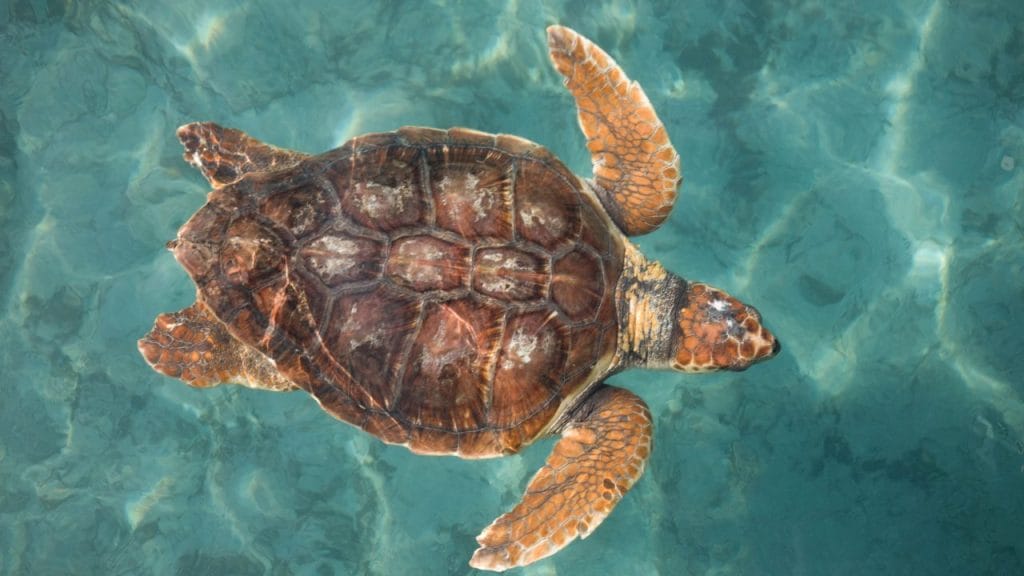
Conservation Wins Worth Celebrating
Despite the challenges, loggerheads have some real success stories.
The TED Revolution
Turtle Excluder Devices changed the game.
Since 1987, U.S. shrimp trawlers have been required to install these escape hatches in their nets. Turtles hit the metal bars and get funneled out through a flap, while shrimp pass through.
It’s estimated that TEDs have saved hundreds of thousands of sea turtles from drowning.
Community-Based Protection
Across Florida, Georgia, and South Carolina, coastal communities have enacted lighting ordinances to help hatchlings reach the sea.
Volunteers patrol beaches during nesting season, protecting nests from predators and documenting every turtle that comes ashore.
International Cooperation
Because loggerheads cross international waters constantly, saving them requires countries to work together.
Japan and Mexico now collaborate on Pacific loggerhead research.
Mediterranean nations coordinate nest protection across Greece, Turkey, and Cyprus.
It’s not perfect, but it’s progress.
Loggerheads in Culture
These turtles have made their mark beyond the ocean.
- South Carolina’s state reptile (since 1988)
- Florida’s state saltwater reptile
- Featured on Colombia’s $1,000 peso coin
- Star of the PBS documentary “Voyage of the Lonely Turtle” (Adelita’s story)
Quick Facts Summary
| Fact | Details |
|---|---|
| Scientific Name | Caretta caretta |
| Conservation Status | Vulnerable (IUCN) |
| Global Trend | Recovering in many areas |
| Lifespan | 47-67 years |
| Time to Maturity | 28-35 years |
| Primary Diet | Hard-shelled invertebrates |
| Notable Achievement | First animal tracked across an ocean (Adelita) |
| Main Threat | Fishing bycatch |
How You Can Help
Loggerhead conservation isn’t just for scientists and policymakers.
Choose sustainable seafood — look for fisheries that use turtle-safe gear.
Reduce plastic use — every bag that doesn’t reach the ocean is one less fake jellyfish.
Turn off beach lights — if you’re near nesting beaches during season (April-September), keep it dark at night.
Fill in holes and knock down sandcastles — seriously. Female loggerheads can get trapped in holes, and sand structures block their path to nest.
Report stranded turtles — if you find one, call your local sea turtle rescue center. Don’t touch or move it yourself.
Support conservation organizations — groups like the Sea Turtle Conservancy, Loggerhead Marinelife Center, and local wildlife agencies do the hands-on work.
Final Thoughts
Loggerheads have been cruising Earth’s oceans for about 40 million years.
They watched continents shift, survived ice ages, and somehow figured out how to navigate across entire ocean basins using nothing but magnetic fields.
Adelita showed us that one turtle’s journey can change how we see an entire species.
And the numbers are starting to prove that when humans actually try to help, it works.
Nesting populations are rebounding. Conservation tech is getting smarter. International cooperation is improving.
But these turtles still face fishing nets, plastic pollution, and a warming planet that’s messing with their reproduction.
The question isn’t whether loggerheads can survive. They’ve proven they’re survivors.
The question is whether we’ll give them the chance.

About Author
Muntaseer Rahman started keeping pet turtles back in 2013. He also owns the largest Turtle & Tortoise Facebook community in Bangladesh. These days he is mostly active on Facebook.