Hawksbill Sea Turtle: The Complete Species Profile
This post was created with help from AI tools and carefully reviewed by a human (Muntaseer Rahman). For more on how we use AI on this site, check out our Editorial Policy.
Ever seen a turtle that literally glows in the dark?
Meet the hawksbill sea turtle — a marine turtle so striking that humans have hunted it to near extinction just for its shell.
But there’s way more to these animals than their good looks.
Quick Facts Summary
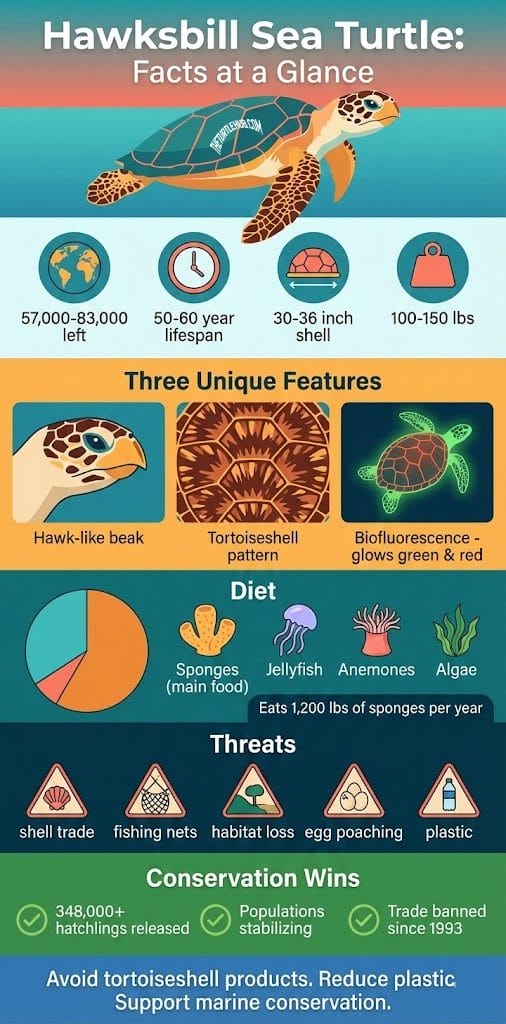
| Fact | Details |
|---|---|
| Scientific Name | Eretmochelys imbricata |
| Conservation Status | Critically Endangered |
| Global Population | 57,000-83,000 individuals |
| Nesting Females | ~8,000 worldwide |
| Lifespan | 50-60 years |
| Time to Maturity | 20-35 years |
| Primary Diet | Sponges |
| Special Ability | Biofluorescence (glows green and red) |
| Main Threat | Tortoiseshell trade and habitat loss |
Track A Real Sea Turtle With Each Bracelet!


Learn Name
You get to learn your sea turtle’s name, size, age. Also a picture!
Enjoy Stories
Enjoy the story of your sea turtle, where it came from, where is it going?
Follow Me
You get to follow the sea turtle’s journey on an interactive tracking map!
Click Here & Use Coupon Code: THETURTLEHUB20 For A 20% Discount!
What Makes Hawksbills Different From Other Sea Turtles
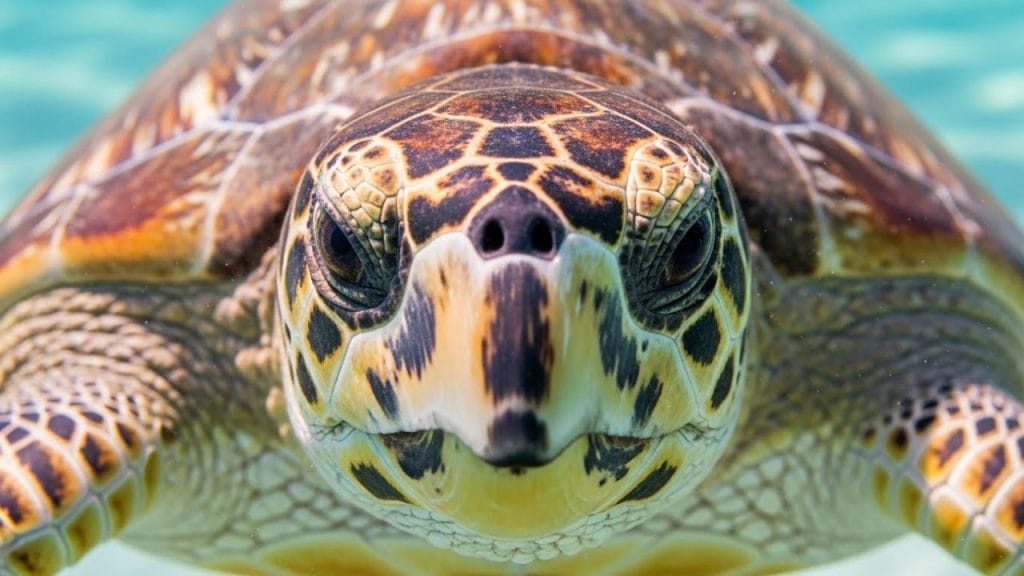
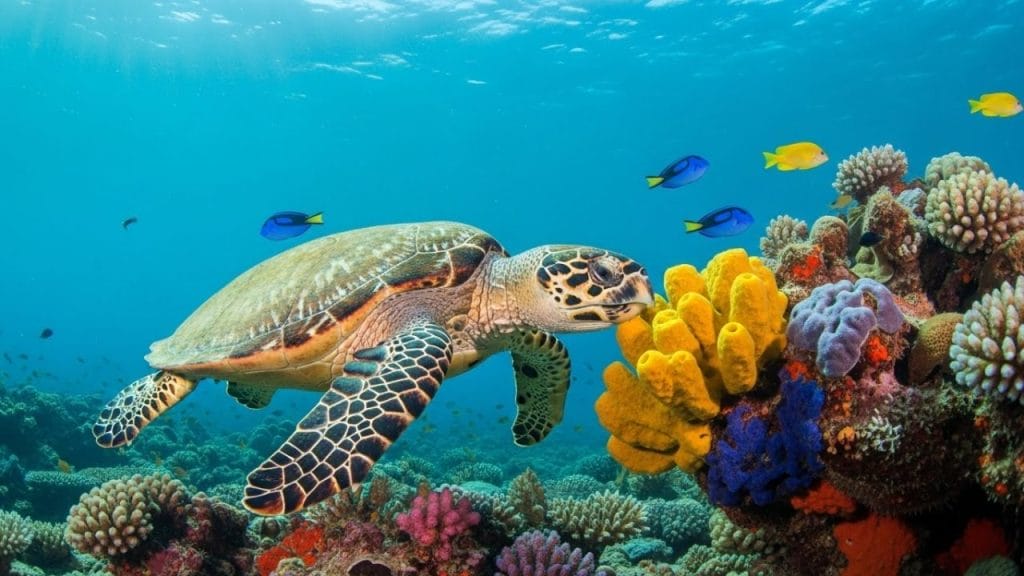
The hawksbill gets its name from that sharp, curved beak that looks exactly like a hawk’s.
And honestly? It’s one of the coolest adaptations in the turtle world.
That pointy mouth isn’t just for show — it’s a precision tool for prying sponges out of tiny cracks in coral reefs.
The Shell Everyone Wants
Here’s the thing about hawksbill shells: they’re absolutely gorgeous.
Amber and gold patterns mixed with streaks of orange, red, and brown create what people call “tortoiseshell.”
The rear edge looks like someone took a saw to it — all jagged and overlapping.
This pattern is so beautiful that it nearly killed off the entire species.
More on that later.
Size and Weight
Hawksbills are actually on the smaller side for sea turtles.
| Feature | Measurement |
|---|---|
| Shell Length | 30-36 inches (76-91 cm) |
| Adult Weight | 100-150 pounds (45-68 kg) |
| Heaviest Ever Recorded | 280 pounds (127 kg) |
| Hatchling Size | 1-2 inches (2.5-5 cm) |
Not exactly tiny, but compared to a leatherback that can hit 2,000 pounds? These guys are the compact SUV of sea turtles.
This Hilarious Turtle Book Might Know Your Pet Better Than You Do

Let’s be real—most turtle care guides feel like reading a textbook written by a sleep-deprived zookeeper.
This one’s not that.
Told from the snarky point of view of a grumpy, judgmental turtle, 21 Turtle Truths You’ll Never Read in a Care Guide is packed with sarcasm, sass, and surprisingly useful insights.
And hey—you don’t have to commit to the whole thing just yet.
Grab 2 free truths from the ebook and get a taste of what your turtle really thinks about your setup, your food choices, and that weird plastic palm tree.
It’s funny, it’s honest, and if you’ve ever owned a turtle who glares at you like you’re the problem—you’ll feel seen.
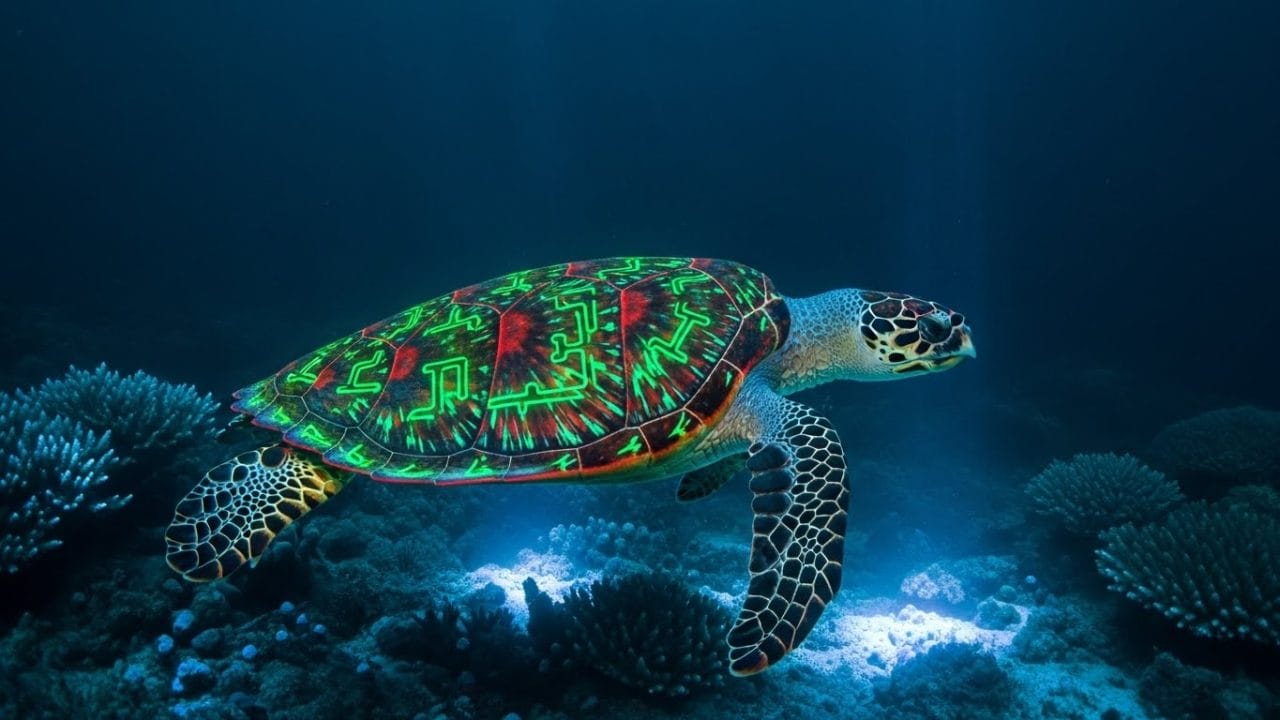
The Glowing Turtle Discovery
Okay, this is where things get wild.
In 2015, marine biologist David Gruber was diving near the Solomon Islands, filming biofluorescent sharks and corals.
Then out of nowhere, this turtle just swims into frame.
And it’s glowing.
Neon green and red, like a spaceship from a sci-fi movie.
Turns out, hawksbills are the first reptile ever discovered with biofluorescence — the ability to absorb blue light and emit it back as different colors.
Scientists still aren’t 100% sure why they glow. Could be for camouflage on fluorescent coral reefs, or maybe for communication.
Either way, these turtles just got a whole lot more interesting.
Snuggle a Plush. Track a Turtle.
🧸 + 🌊 = 🐢 A toy that connects you to real sea turtles in the wild.
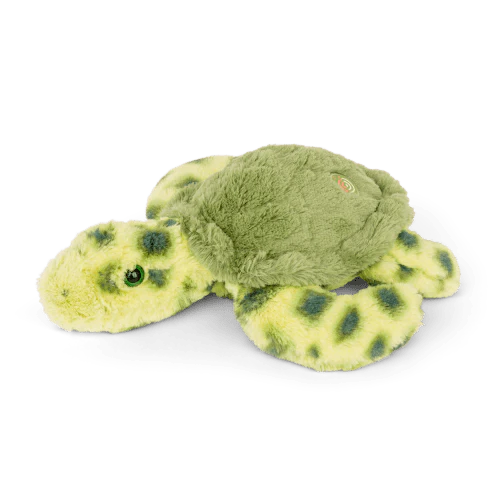
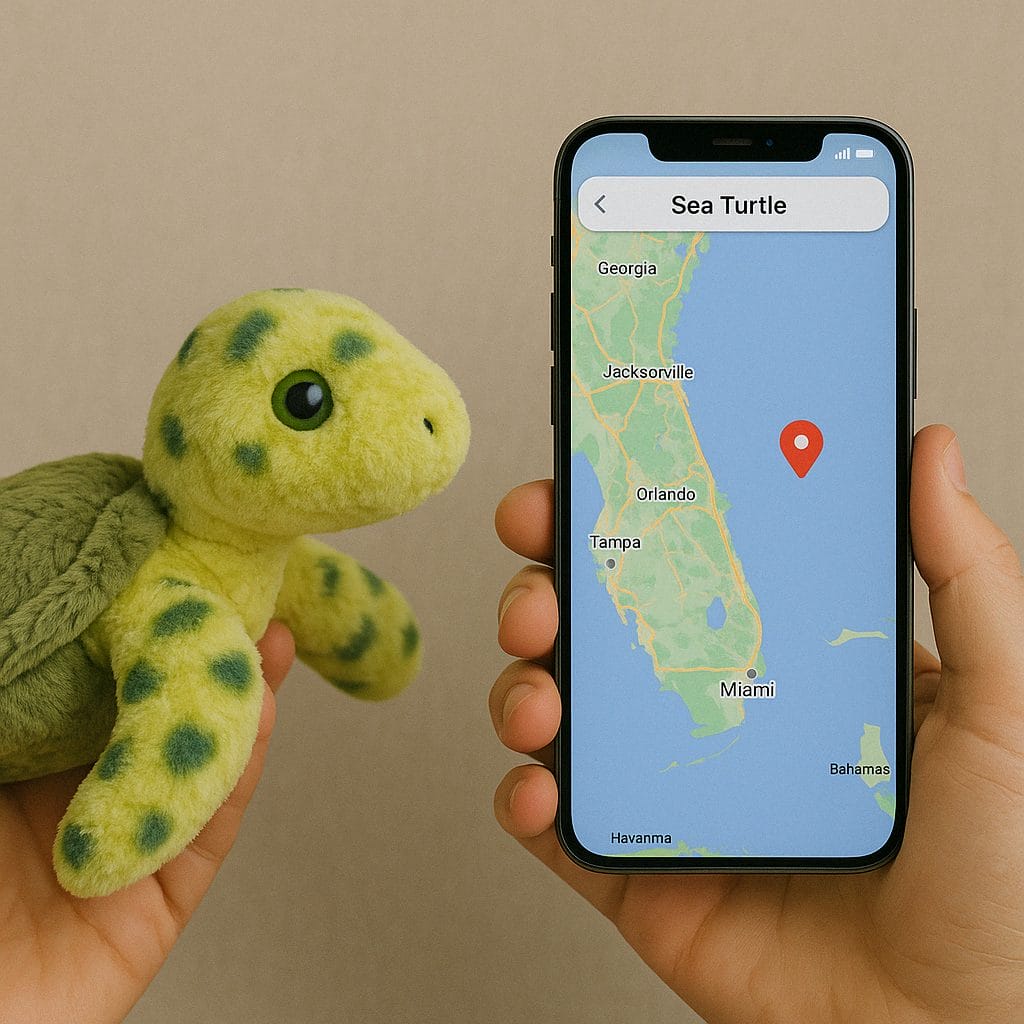
Meet Your Turtle
Scan the tag to meet your real sea turtle. Learn its name, species, and see a real photo!
Follow the Journey
Watch your turtle swim across the ocean using the 3D tracking map. It’s like a sea adventure in your pocket.
Support Wildlife
Every plush supports turtle conservation efforts through the Sea Turtle Conservancy.
Click Here & Use Coupon Code: THETURTLEHUB20 For A 20% Discount! (Your hug helps a turtle.)
Where Do Hawksbills Live?
Hawksbills stick to warm, tropical waters in the Atlantic, Pacific, and Indian Oceans.
They’re the most tropical of all sea turtle species — you won’t find them hanging out in cold water.
Favorite Hangouts
- Coral reefs (their main spot)
- Rocky coastal areas
- Shallow lagoons
- Mangrove-lined estuaries
Fun fact: hawksbills are creatures of habit. They’ll pick the same sleeping spot on the reef and return to it night after night.
Kind of like how I always sit in the same spot at coffee shops.
Global Distribution
| Region | Notable Locations |
|---|---|
| Atlantic | Caribbean, Gulf of Mexico, Florida Keys, Brazil |
| Pacific | Great Barrier Reef, Solomon Islands, Philippines, Hawaii |
| Indian Ocean | Maldives, Seychelles, Persian Gulf, Red Sea |
The largest nesting populations are found near Australia’s Great Barrier Reef, with 6,000-8,000 turtles nesting in that region alone.
What Do Hawksbills Eat?
Here’s where that hawk-like beak really shines.
Hawksbills are basically sponge-eating machines.
They’re the only sea turtle species that survives mainly on sponges — and we’re talking about sponges loaded with tiny glass needles called spicules.
Yeah, glass. In their food.
Most animals would look at that menu and walk away. Hawksbills somehow handle it just fine. Compare that to the loggerhead, whose massive jaws are built for crushing whelks and conchs instead.
The Full Diet
- Sponges (the main course — up to 1,200 pounds per year in the Caribbean)
- Sea anemones
- Jellyfish
- Sea urchins
- Mollusks
- Algae
- Small crustaceans
Some of these sponges are actually toxic to other animals. The toxins build up in the hawksbill’s fat, which is why their meat can be poisonous to humans.
Nature’s own revenge system, really.
Reproduction and Life Cycle
Hawksbills take their sweet time growing up.
We’re talking 20-35 years to reach sexual maturity. That’s longer than many humans take to figure out their lives.
Nesting Behavior
Female hawksbills return to the same beaches where they hatched — sometimes traveling thousands of miles to get there.
| Nesting Fact | Details |
|---|---|
| Nesting Season | April to November (varies by location) |
| Nests Per Season | 3-6 clutches |
| Eggs Per Clutch | 130-160 eggs |
| Incubation Period | About 60 days |
| Time Between Nesting Years | 1-5 years |
They prefer small, isolated beaches and often nest under vegetation. Unlike other sea turtles that pick wide, open beaches, hawksbills are picky about their spots.
The Hatchling Journey
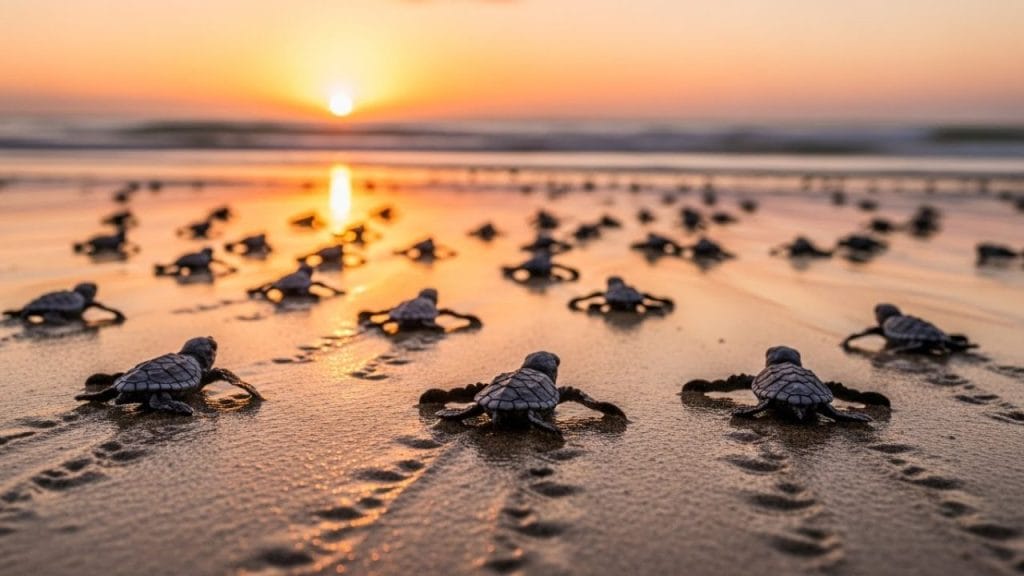
When those babies finally emerge, it’s go time.
They dig themselves out at night, guided by the bright horizon over the ocean. Then they make a mad dash for the water before predators snag them.
Here’s the scary part: sand temperature determines whether hatchlings become male or female. Warmer sand = more females.
With climate change heating things up, this is becoming a real problem.
How Long Do Hawksbills Live?
Current estimates put their lifespan at 50-60 years in the wild.
But honestly? We’re still learning about these turtles.
Their “lost years” — that period after hatching when juveniles disappear into the open ocean — remain largely a mystery even today.
Why Are Hawksbills Critically Endangered?
Let’s not sugarcoat this.
Hawksbill populations have crashed by over 80% in the last century.
The IUCN lists them as Critically Endangered, and there are estimated to be only 57,000-83,000 individuals left worldwide.
Only about 8,000 nesting females remain globally, with just five populations having more than 1,000 females nesting each year.
The Biggest Threats
1. The Tortoiseshell Trade
This is the big one.
For thousands of years, humans have killed hawksbills for their beautiful shells. Ancient Egyptians, Romans, Chinese — everyone wanted tortoiseshell jewelry, combs, and decorations.
International trade was banned in 1993, but illegal trafficking continues. In some places, you can still find hawksbill products being sold openly.
2. Fishing Bycatch
Hawksbills get tangled in fishing nets and caught on longline hooks. Since they need to surface to breathe, getting trapped underwater is a death sentence.
Ghost gear — abandoned fishing equipment floating in the ocean — keeps killing turtles indefinitely.
3. Habitat Loss
Coastal development destroys nesting beaches. Rising sea levels erode what’s left.
And here’s the kicker: hawksbills depend on healthy coral reefs for food. Climate change is bleaching and killing reefs worldwide.
No reefs = no sponges = no hawksbills.
4. Egg Collection
In many countries, people still collect hawksbill eggs for food despite protections. Old habits die hard.
5. Plastic Pollution
Turtles mistake plastic for food. A stomach full of plastic bags isn’t exactly nutritious.
Conservation Efforts That Are Actually Working
Okay, time for some good news.
Because there actually is good news.
The El Salvador Success Story
In 2007, hawksbills were basically considered gone from the eastern Pacific. Nearly 100% of nests were being poached.
Then a conservation group called ProCosta stepped in.
They recruited former egg poachers to become turtle protectors instead. These “careyeros” now patrol beaches, protect nests, and move eggs to hatcheries.
The results?
Over 4,114 nests protected and 348,415 hatchlings released since they started.
Community members now earn 16% more household income through conservation than they did from poaching.
Turns out, live turtles are worth more than dead ones.
Abu Dhabi’s Progress
In 2024, Abu Dhabi recorded 247 hawksbill nests — up from 193 in 2022 — with a 72% hatching success rate.
One turtle even returned to nest after being tagged 12 years earlier.
Global Trends
A major 2024 study found that sea turtle populations are actually recovering in many areas.
Increases in turtle numbers were occurring six times more often than declines across monitoring sites.
Of the seven hawksbill populations studied, 100% showed stable or upward trends.
This doesn’t mean they’re safe. But it means conservation works when we actually do it.
Why Hawksbills Matter to Coral Reefs
Hawksbills aren’t just pretty faces — they’re ecosystem engineers.
By eating sponges, they prevent sponges from overgrowing and smothering coral. This opens up space for reef fish to feed and coral to thrive.
Remove hawksbills from the equation, and reef ecosystems start to fall apart.
Scientists call them a “keystone species” — take them out, and the whole structure wobbles. The green sea turtle plays the mirror role as the reef’s seagrass lawn-mower, another keystone species keeping tropical ecosystems in balance.
How You Can Help
Look, I’m not going to hit you with a guilt trip here.
But if you made it this far, you probably care. So here are some actual things that make a difference:
Avoid tortoiseshell products — even antiques. Buying them keeps the market alive.
Reduce plastic use — every plastic bag that doesn’t reach the ocean is a win.
Support marine conservation organizations — groups like Sea Turtle Conservancy, WWF, and local projects do the actual ground work.
Choose sustainable seafood — look for fisheries that use turtle-safe practices.
Reduce beach lighting — if you live near nesting beaches, turn off lights during nesting season. Artificial light disorients hatchlings.
Final Thoughts
Hawksbills have survived for over 100 million years.
They watched the dinosaurs come and go. They adapted to ice ages and warming periods.
But in the last century, we’ve pushed them closer to extinction than any natural disaster ever did.
The good news? We know how to save them. Community-based conservation works. Legal protections work. Marine protected areas work.
The question is whether we care enough to keep doing it.
These glowing, sponge-eating, coral reef guardians deserve a fighting chance.
And honestly? We’d be pretty foolish to let them disappear now.

About Author
Muntaseer Rahman started keeping pet turtles back in 2013. He also owns the largest Turtle & Tortoise Facebook community in Bangladesh. These days he is mostly active on Facebook.