10 Surprising Facts About Turtle Shell Patterns You Never Knew
This post was created with help from AI tools and carefully reviewed by a human (Muntaseer Rahman). For more on how we use AI on this site, check out our Editorial Policy.
Turtle shells look simple. They’re not.
Those swirls, rings, and blotches on a turtle’s back are doing real work — telling stories, hiding the animal from predators, and leaving clues about its health, age, and history. Scientists literally use them like fingerprints.
I used to think shells were just brown and bumpy. Then I started paying attention. Once you learn what you’re looking at, every turtle shell pattern starts to make sense.
Here are 10 surprising facts about turtle shell patterns that’ll change how you look at every turtle from now on.
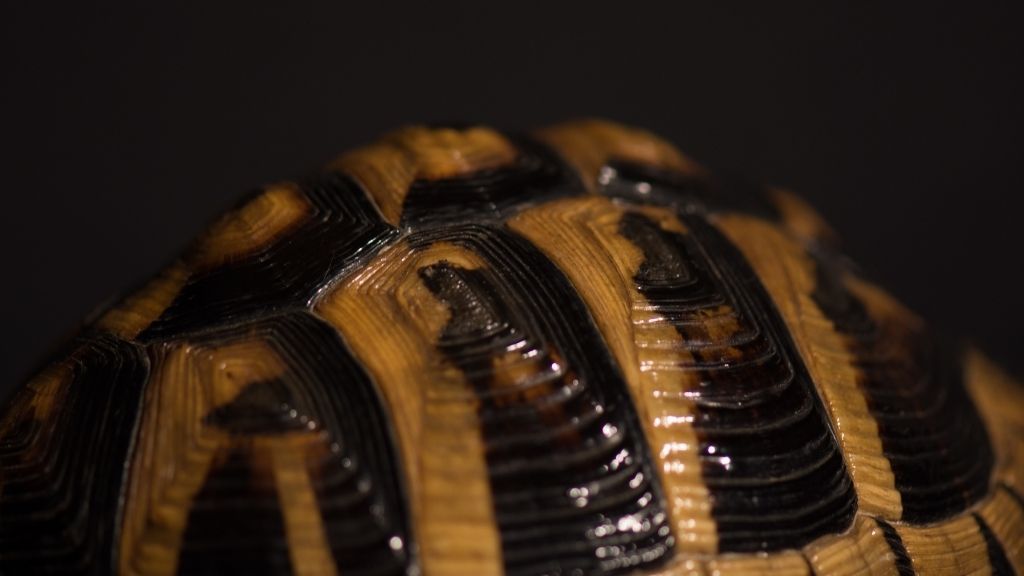
1. No Two Turtle Shells Are Exactly Alike
Every turtle carries a one-of-a-kind design on its back.
The mix of colors, scute shapes, ring counts, and blotches is so specific that researchers use shell photos the same way police use fingerprints. Hatchlings from the same clutch often look wildly different from each other.
You’ll see clean rings on one turtle. Messy swirls on the next. Fades, spots, paint-splatter blotches — sometimes all on the same animal.
The differences come from genes, growth rate, sunlight exposure, diet, injuries, and even water chemistry. That’s why shell pattern is used in mark-recapture conservation studies — no two wild turtles produce the same image.
So if your pet turtle has weird shell markings, don’t panic. That’s just its personal signature.
2. The Shell Is Built From Individual Scutes
A turtle shell isn’t one solid dome. It’s a mosaic. That mosaic took hundreds of millions of years to evolve — our prehistoric turtle guide tracks how shells grew from fused ribs in Eunotosaurus to the modern design.
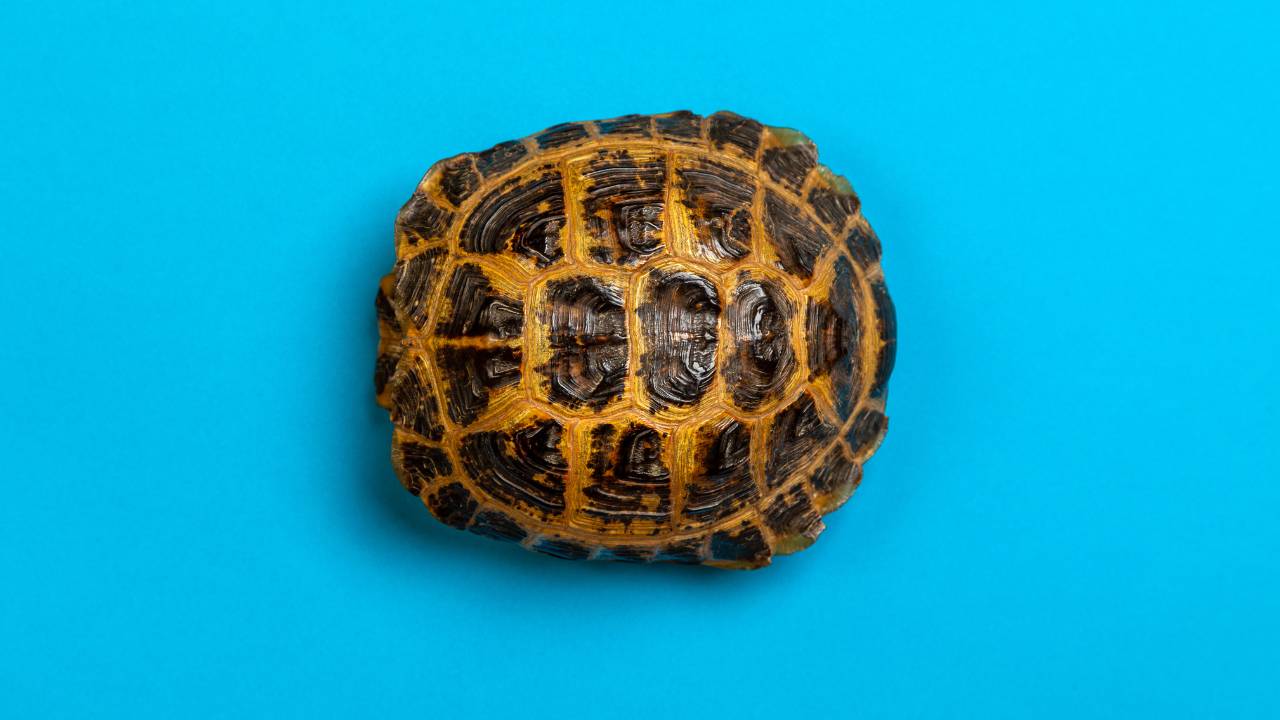
The outer layer is made of keratin plates called scutes — the same stuff as your fingernails and rhino horn. These scutes sit on top of fused bony plates underneath, creating a two-layer armor system.
A typical carapace (top shell) has four major scute groups:
| Scute type | Location | Typical count |
|---|---|---|
| Nuchal | Front center, near neck | 1 |
| Vertebral | Midline running down the back | 5 |
| Costal (pleural) | Flanking the vertebrals on each side | 4 pairs |
| Marginal | Around the outer rim | 12 pairs |
The plastron (bottom shell) has its own set: gular, humeral, pectoral, abdominal, femoral, and anal scutes.
Each scute carries its own piece of the pattern. When you see a “design” on the shell, you’re really looking at scute patterns stitched together. Want the full anatomy breakdown? Our turtle anatomy guide covers every bone and plate.
This Hilarious Turtle Book Might Know Your Pet Better Than You Do

Let’s be real—most turtle care guides feel like reading a textbook written by a sleep-deprived zookeeper.
This one’s not that.
Told from the snarky point of view of a grumpy, judgmental turtle, 21 Turtle Truths You’ll Never Read in a Care Guide is packed with sarcasm, sass, and surprisingly useful insights.
And hey—you don’t have to commit to the whole thing just yet.
Grab 2 free truths from the ebook and get a taste of what your turtle really thinks about your setup, your food choices, and that weird plastic palm tree.
It’s funny, it’s honest, and if you’ve ever owned a turtle who glares at you like you’re the problem—you’ll feel seen.
3. Shell Patterns Change as a Turtle Grows
Your turtle’s shell is not frozen in time. It evolves.
Baby turtles usually start with sharp, vivid patterns — bright yellows, clean rings, crisp contrast. As they age, those lines often blur, darken, or fade completely.
A few things drive the change:
- Growth spurts stretch existing scutes and add new keratin layers.
- Shedding (in aquatic species) reveals fresh scute underneath.
- UVB (my pick: Zoo Med ReptiSun 10.0) exposure supports proper pigmentation and keratin structure.
- Diet and water chemistry affect how colors deposit.
- Age — older turtles almost always look darker or duller than juveniles.
Confused about whether your turtle is shedding or something worse? Read our shell rot vs. shedding guide — the difference matters.
4. Shell Rings Aren’t a Reliable Age Indicator
This one kills the campfire myth.
A lot of people think you can count shell rings like tree growth rings. You can’t — not with any real accuracy. Shell rings (called annuli) form during growth spurts, not on a yearly schedule.
A well-fed turtle in a warm climate can add several rings in a single year. A stressed or sick turtle might skip rings for years. Older turtles also wear down the outer layers, erasing rings completely.
So a 5-year-old red-eared slider might have 12 rings. A 20-year-old box turtle might show 4. Rings are a rough clue, not a birth certificate.
Scientists use bone density scans, skeletochronology, and long-term mark-recapture for real age estimates. The ring trick is a kids’ story.

5. Carapace Patterns Reflect the Turtle’s Habitat
Nature doesn’t waste paint. Every carapace pattern matches a job in a specific environment.
| Habitat | Typical shell look | Why it works |
|---|---|---|
| Desert | Tan, sandy, low contrast | Blends into dry soil and rocks |
| Forest floor | Dark base with yellow/orange blotches | Mimics leaf litter and dappled light |
| Grassland | Star or radial patterns | Breaks up outline against grass shadows |
| Murky water | Dark, often olive or black | Disappears against silt and debris |
| Rocky streams | Mottled olive-green | Matches algae-covered rocks |
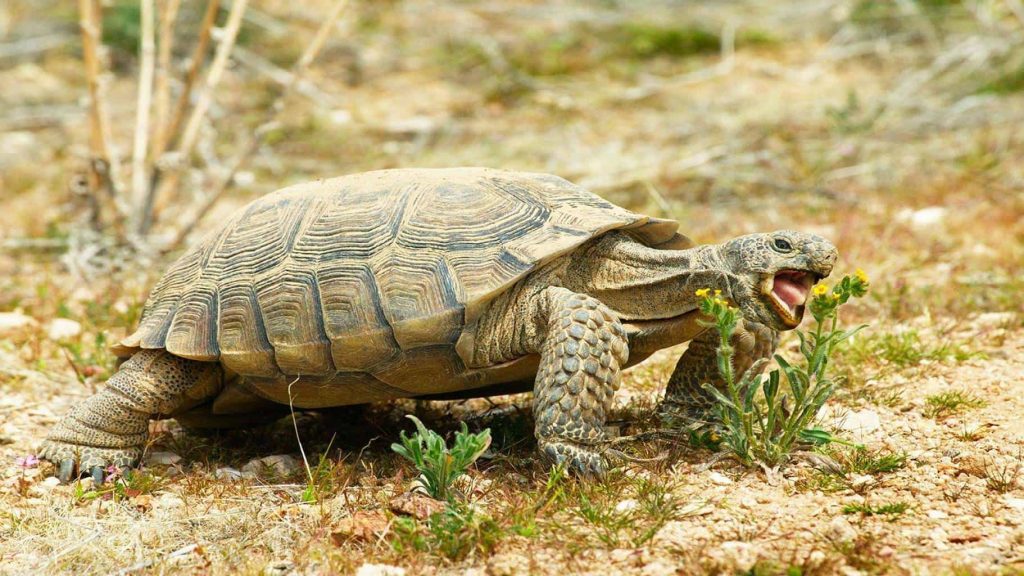
A desert tortoise looks like the ground it walks on. A wood turtle looks like damp bark. A musk turtle disappears into pond sludge. If the turtle lived somewhere else, it’d be lunch.
6. Some Species Are Absolute Camouflage Masters
A few turtles have taken shell camouflage to another level.
Mata Mata turtle (Chelus fimbriata) — Looks like a drowning pile of dead leaves. Its shell is ridged, brown, and rough, and the head adds fringes and flaps. Fish swim right up to its mouth. If you’ve never seen one, our Mata Mata care guide has photos that prove nature has a sense of humor.

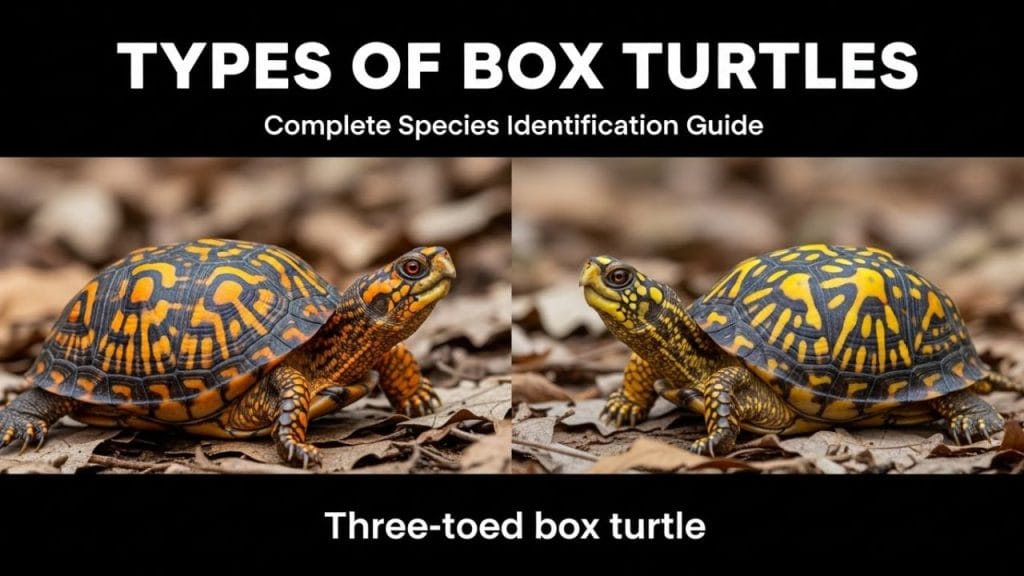
Eastern box turtle (Terrapene carolina) — Dark high-domed shell with yellow or orange radiating turtle shell markings. On a forest floor, it vanishes.
Indian star tortoise (Geochelone elegans) — Black shell with bright yellow star patterns. The stars break up the turtle’s outline against grass shadows, making predators walk right past.
Radiated tortoise (Astrochelys radiata) — Even finer yellow star lines on a smooth carapace. Critically endangered, native to southern Madagascar’s dry scrub.
Diamondback terrapin (Malaclemys terrapin) — Concentric diamond-shaped rings with raised whorls on each scute. Every single terrapin’s whorl pattern is unique. They also help with thermoregulation — light rings absorb less heat than the dark grooves. See our diamondback terrapin care guide for setup info.
Map turtles (Graptemys spp.) — Shells carry contour-line patterns that look like topographic maps, which is exactly how they got the name. Yellow and olive lines trace across each scute like roads on a paper map. See our map turtle care guide. One sea turtle breaks every rule here: the leatherback has leathery skin over a ribbed framework instead of hard keratin scutes.
7. Injuries and Illness Leave Permanent Marks
Turtle shells remember almost everything.
A past infection, a bad fall, calcium deficiency, or a run-in with a lawnmower can leave behind scars, pits, dents, or faded spots. The shell is living tissue — once keratin grows wrong, that deformation stays until enough new growth covers it. Some shell anomalies are developmental rather than environmental — see how embryonic biology goes sideways in two-headed turtles.
Common shell scars include:
- Shell rot pits — rough, often darkened craters where bacteria ate the keratin. Our shell rot treatment guide covers what those look like and how to fix them.
- Pyramiding — dome-shaped scute growth from poor humidity or diet in tortoises.
- Fracture scars — smooth seams where a cracked shell healed.
- White patches — often a calcium or keratin issue tied to poor UVB.
These marks don’t all fade. As long as the turtle’s healthy now, they’re just history — a visible record of what the animal survived.
8. Pale or Dull Shells Often Signal UVB Problems (Not a Good “Tan”)
Here’s one a lot of care blogs still get wrong.
You’ll sometimes see the claim that UV light “tans” a turtle’s shell darker. That’s not really what’s happening. Turtles don’t have the melanin-tanning response humans do.
What’s actually going on:
- Proper UVB exposure lets a turtle synthesize vitamin D3, absorb calcium, and build healthy keratin and bone. Result: a firm, richly colored shell.
- UVB deficiency causes metabolic bone disease (MBD). The shell goes soft, dull, discolored, sometimes translucent in patches. Color fades because keratin and pigmentation both suffer.
So if your turtle’s shell is bright and firm, it’s not “tanned” — it’s just well-lit and well-fed. If it’s pale, soft, or patchy, that’s a warning sign you need to check UVB bulbs, diet, and calcium.
White patches, soft spots, or deformed scutes = vet visit. Not a fashion statement.
9. Scientists Use Shell Patterns Like Fingerprints
Researchers have turned the “no two shells alike” rule into a real conservation tool.
The method is called photo-identification (sometimes just photo-ID). Biologists snap a high-resolution shot of the carapace, feed it into pattern-matching software, and can re-identify that specific turtle years later — no tags, no chips, no drilled shells.
A few programs that use it in the field:
- Wild-ID — pattern recognition software used on eastern box turtles.
- Footprint Identification Technology (FIT) — adapted to box turtle carapace patterns with very high accuracy.
- Plastron photo-ID for wood turtles — the dark rectangular blotches on their yellow plastron never repeat between individuals.
For long-lived species like box turtles (which can live 80+ years), this matters. It lets researchers track the same animal across decades with zero stress to the turtle.
10. Hybrids and Genetic Morphs Break Every Pattern Rule
Sometimes the rules go out the window.
When two species cross-breed — which happens in captivity and in wild overlap zones — the resulting hybrid shell can look like neither parent. A red-eared slider × river cooter hybrid might carry half-slider stripes, half-cooter patterns, and sometimes an entirely new combination.
Then there are morphs — turtles born with rare genetic pattern mutations:
- Albino — zero dark pigment, shell looks yellow or cream.
- Leucistic — reduced pigmentation, often patchy white.
- Pied — blotches of missing pigment, like a paint splatter.
- Melanistic — extra-dark pigmentation, especially common in older male painted turtles.
Breeders chase these unusual shell patterns the same way exotic fish keepers chase rare koi. None of it means the turtle is unhealthy. It just means the pigmentation lottery rolled an unusual number.
For the bigger picture of how turtle species split into families and genera — which is where all these pattern differences originate — check our turtle taxonomy guide.
Quick Reference: Pattern Types by Turtle Group
| Group | Common pattern style | Example species |
|---|---|---|
| Aquatic sliders | Yellow stripes, concentric rings | Red-eared slider, cooter |
| Pond turtles | Olive to black, subtle markings | European pond turtle |
| Map turtles | Contour-line “map” designs | Northern map, Mississippi map |
| Box turtles | Radiating yellow/orange on dark base | Eastern, ornate, three-toed |
| Tortoises (dry) | Tan, radial stars, or plain | Desert tortoise, radiated, Indian star |
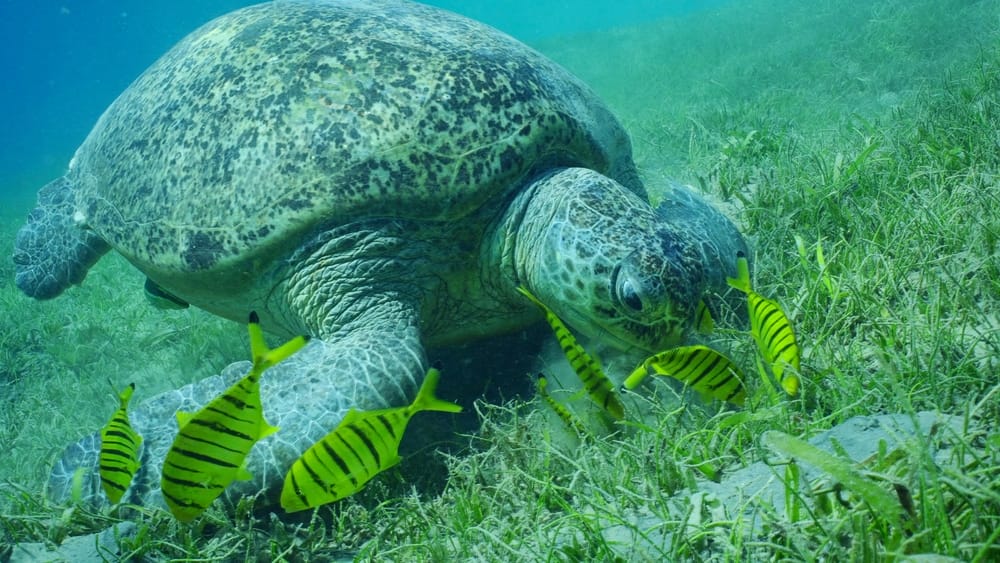
| Sea turtles | Smooth, streamlined, often plain | Green, loggerhead, hawksbill |
| Weird specialists | Leaf-mimic, ridged, disguised | Mata Mata, snapping turtle |
FAQ About Turtle Shell Patterns
Why do turtles have patterns on their shells?
Turtle shell patterns exist mostly for camouflage and thermoregulation. Patterns break up the turtle’s outline against its background so predators walk right past, and the mix of light and dark areas helps manage heat absorption during basking.
Can you tell a turtle’s age from its shell rings?
Not accurately. Shell rings form during growth spurts, not yearly like tree rings. A well-fed turtle may add several rings in one year, while a sick or cold-stressed turtle may skip years entirely. Rings are a rough clue, not a reliable age measure.
Do turtle shell patterns fade with age?
Yes, often. Most turtles start with bright, vivid patterns as hatchlings and darken or fade as they mature. Older males of some species (painted turtles especially) can go almost completely black — a process called melanism.
Why is my turtle’s shell turning pale or white?
Pale or white patches on a turtle shell usually mean UVB deficiency, calcium problems, or early shell rot. It’s rarely a good sign. Check your UVB bulb age (they need replacing every 6–12 months), diet, and basking setup, and get a vet to look at soft or patchy areas.
Are all turtles in the same species pattern-identical?
No. Even hatchlings from the same clutch can look noticeably different. Genetic variation, growth conditions, diet, and UV exposure all shape the final pattern. That’s why individual photo-ID works so well in turtle research.
Do turtle shells “tan” in the sun?
Not really. Turtles don’t have the melanin-based tanning response humans do. UVB light supports healthy keratin and pigmentation, so a well-lit turtle usually keeps its richest shell color — but the shell isn’t “darkening from sun exposure” like human skin.
What’s the most unique turtle shell pattern in the world?
Most people point to the radiated tortoise or the Indian star tortoise for sheer visual detail. The Mata Mata wins for weirdest shape. The diamondback terrapin has the most visually distinct individual-level patterns — no two terrapins look the same.
The Takeaway
Turtle shells aren’t decorations. They’re working gear — camouflage, thermoregulation, skeletal support, and a visible health log all in one package.
Once you know what the turtle shell patterns mean, you start reading turtles like a book. You spot the species from 20 feet away. You catch early warning signs before they get serious. You notice the individual differences between turtles you’d have sworn were identical last week.
Look closer next time you pass one. Every swirl is there for a reason.

About Author
Muntaseer Rahman started keeping pet turtles back in 2013. He also owns the largest Turtle & Tortoise Facebook community in Bangladesh. These days he is mostly active on Facebook.