Can You Keep A Diamondback Terrapin As A Pet?

This post was created with help from AI tools and carefully reviewed by a human (Muntaseer Rahman). For more on how we use AI on this site, check out our Editorial Policy.
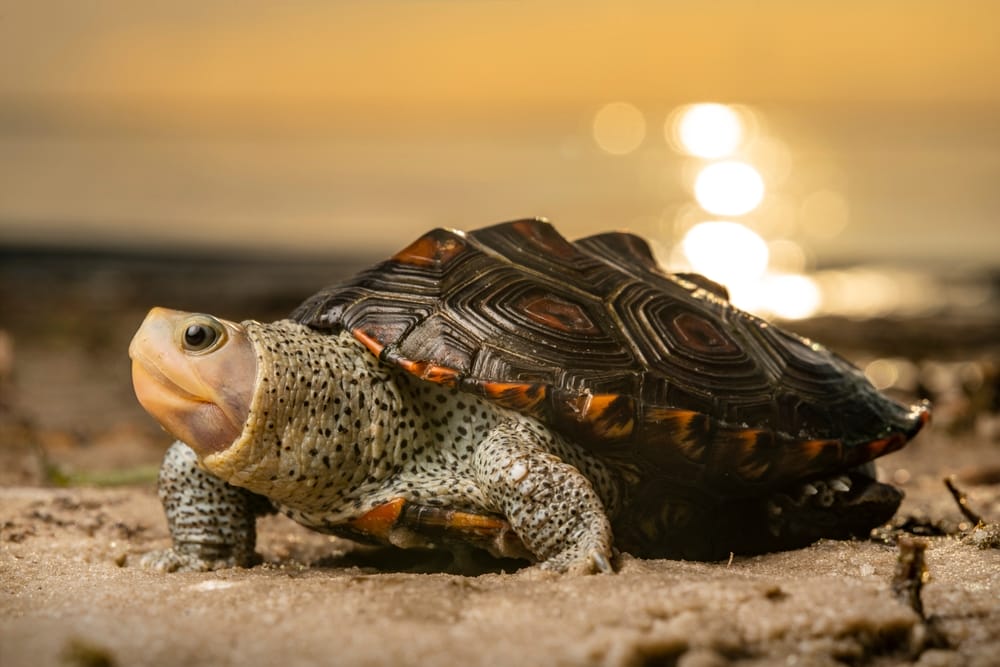
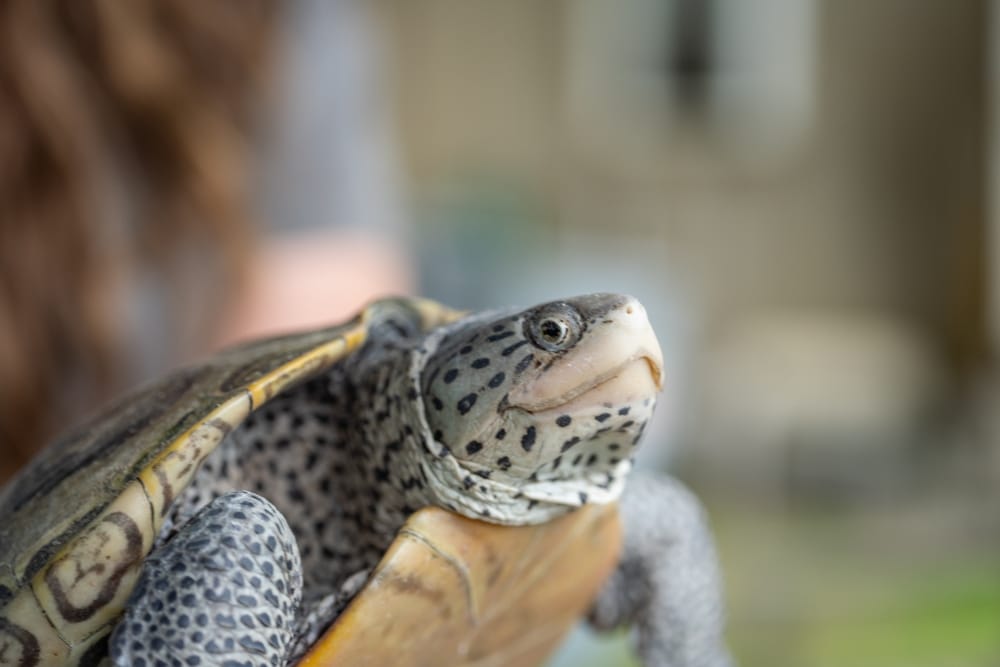
Have you seen those diamond-shaped patterns carved into a terrapin’s shell? They look like someone hand-etched them with a tiny chisel.
And that’s exactly why so many people want one sitting in their living room.
Yes, you can keep a diamondback terrapin as a pet in most US states. But the rules are tightening. Several states now ban or restrict ownership due to declining wild populations, and the IUCN classifies diamondback terrapins as Vulnerable with numbers still going down.
Before you rush to a breeder, you need to know what you’re signing up for. These are not your regular red-eared sliders. They need brackish water, specific salinity levels, and a setup that’s honestly closer to maintaining a mini saltwater aquarium.
Let me walk you through everything, the good stuff and the headaches, so you can decide if this turtle is right for you.

Are Diamondback Terrapins Legal As Pets?
This is where things get complicated. The legality of owning a diamondback terrapin varies wildly depending on where you live.
In most states, owning a captive-bred diamondback terrapin is perfectly legal. States like New York allow it with a special license. New Jersey reclassified them as non-game species back in 2016, meaning you can’t hunt them anymore.
But some states have gone much further.
Florida basically shut the door in 2022. The Florida Fish and Wildlife Conservation Commission made it illegal to newly acquire a diamondback terrapin as a pet. If you already had one before March 1, 2022, you needed a free Personal Possession Permit by May 31, 2022. Miss that deadline? Tough luck.
Texas flat out bans possession of diamondback terrapins. No exceptions for pet owners. You’d need a scientific, educational, or zoological permit.
Rhode Island lists them as endangered. Massachusetts classifies them as threatened. Georgia, Delaware, Alabama, Louisiana, North Carolina, and Virginia all consider them a species of concern.
Here’s the bottom line. Always check your state’s fish and wildlife regulations before buying a diamondback terrapin. Laws are changing fast as conservation pressure mounts. What was legal two years ago might land you a fine today.
And one more thing. Selling or buying any turtle hatchling under 4 inches is illegal across the entire United States. That federal law has been around for decades because baby turtles carry a higher risk of spreading salmonella.
How Big Do Diamondback Terrapins Get?
Diamondback terrapins are medium-sized turtles, but there’s a massive size gap between males and females.
| Feature | Males | Females |
|---|---|---|
| Adult carapace length | 5 to 5.5 inches | 7 to 9 inches |
| Average weight | Around 11 oz (300g) | Around 18 oz (500g), up to 2.2 lbs |
| Sexual maturity | 2 to 4 years | 4 to 7 years |
| Hatchling size | 1 to 1.5 inches | 1 to 1.5 inches |
The largest female diamondback terrapin ever recorded had a carapace length just over 9 inches. So these turtles aren’t going to take over your apartment.
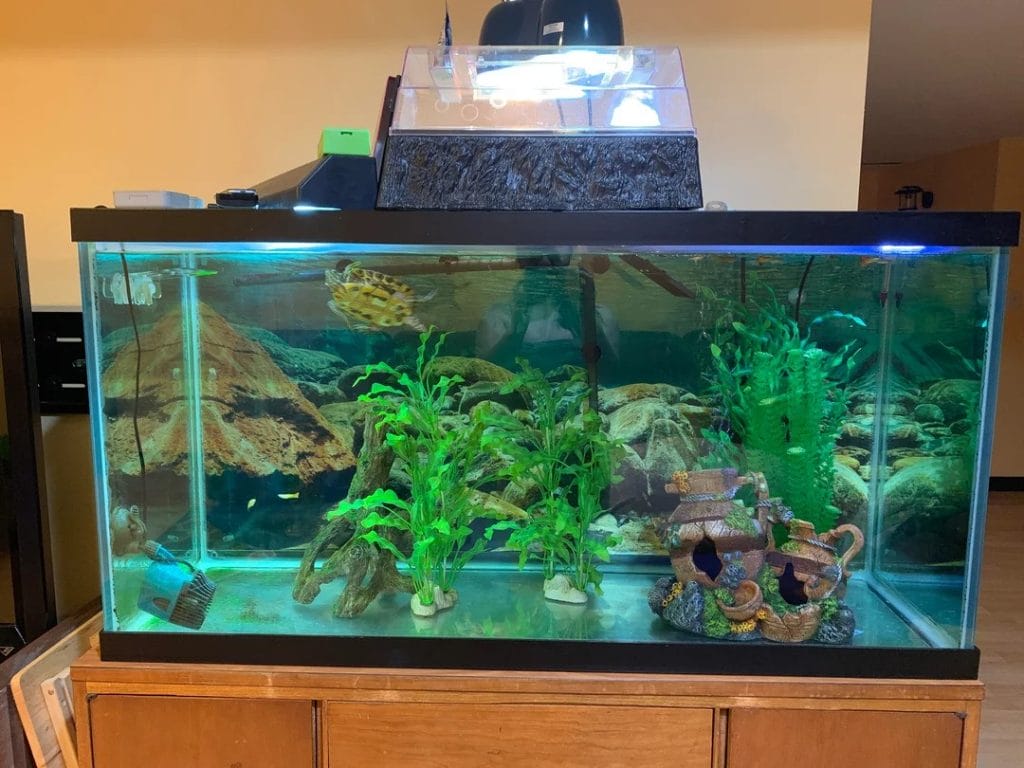
Males are actually the better option if space is tight. A 75-gallon tank works well for an adult male, while females need at least 100 to 125 gallons.
Baby terrapins can start in a 20-gallon long aquarium. But don’t get too comfortable with that small setup. These guys grow fast and you’ll be upgrading sooner than you think.
This Hilarious Turtle Book Might Know Your Pet Better Than You Do

Let’s be real—most turtle care guides feel like reading a textbook written by a sleep-deprived zookeeper.
This one’s not that.
Told from the snarky point of view of a grumpy, judgmental turtle, 21 Turtle Truths You’ll Never Read in a Care Guide is packed with sarcasm, sass, and surprisingly useful insights.
And hey—you don’t have to commit to the whole thing just yet.
Grab 2 free truths from the ebook and get a taste of what your turtle really thinks about your setup, your food choices, and that weird plastic palm tree.
It’s funny, it’s honest, and if you’ve ever owned a turtle who glares at you like you’re the problem—you’ll feel seen.
How Long Do Diamondback Terrapins Live?
Here’s where you need to be honest with yourself.
Diamondback terrapins live 25 to 40 years in captivity. Some have pushed past 40. That’s not a pet. That’s a life commitment.
Think about where you were 25 years ago. Now imagine a turtle that’s been with you that entire time, still going strong and still demanding fresh shrimp.
Wild terrapins live slightly shorter lives, mostly because of threats like crab traps, road mortality, and predators. In captivity, with proper care, they can outlive your car, your career, and possibly your marriage.
The silver lining? Terrapins are tough. They don’t get sick easily. They can handle environmental swings better than most aquatic turtles. So while the commitment is long, the vet bills tend to stay low.
The Brackish Water Situation
This is the single biggest difference between a diamondback terrapin and every other pet turtle you’ve probably looked at. If you’re still deciding between species, my guide on turtle vs tortoise vs terrapin explains why terrapins are a unique category.
Diamondback terrapins are the only turtles in North America that live exclusively in brackish water in the wild. Brackish water is that halfway point between freshwater and saltwater, the kind you find in coastal marshes and estuaries.
In captivity, you need to recreate this.
Most experienced keepers add about 1 tablespoon of marine aquarium salt per gallon of water. The target specific gravity is roughly 1.014 to 1.018. You’ll need a hydrometer or refractometer to measure it. Never use regular table salt.
Can you keep them in freshwater? Technically, some captive-bred terrapins have been raised in freshwater their whole lives. But long-term freshwater housing has been linked to shell problems, fungal infections, and skin issues. The salt actually helps inhibit bacterial growth and keeps their shell healthy.
You should also give your terrapin access to fresh drinking water. In the wild, they drink rainwater that collects on the surface. In captivity, a weekly soak in a separate tub of fresh water does the trick.
Diamondback Terrapin Tank Setup
Setting up a diamondback terrapin habitat is not a weekend project. It’s more like planning a small ecosystem.
Tank Size
Bigger is always better with terrapins. They’re active swimmers and produce a lot of waste.
Males: Minimum 75 gallons. Females: Minimum 100 to 125 gallons.
A pair or trio of adults? You’re looking at large stock tanks or custom setups.
Filtration
This is non-negotiable. Diamondback terrapins are messy eaters and heavy waste producers.
A canister filter (my pick: Penn-Plax Cascade) rated for 2 to 3 times your tank volume is the standard recommendation. Partial water changes of 30 to 50% should happen twice a week to keep water chemistry stable.
Poor water quality is the number one cause of health problems in captive terrapins. Shell rot, eye infections, fungal issues — they all trace back to dirty water.
Basking Area
Terrapins are serious baskers. They need a dry platform where they can completely leave the water and soak up heat.
Floating docks, stacked rocks, or commercial basking platforms (my pick: floating basking platform) all work. Just make sure it can hold your turtle’s weight and has a ramp for easy access.
Lighting And Temperature
| Parameter | Recommended Range |
|---|---|
| Water temperature (juveniles) | 78 to 82°F (25 to 28°C) |
| Water temperature (adults) | 75 to 80°F (24 to 27°C) |
| Basking spot temperature | Around 90°F (32°C) |
| Water pH | 6.8 to 7.0 |
| UVB (my pick: Zoo Med ReptiSun 10.0) lighting | On for 10 to 12 hours daily |
| UVB bulb replacement | Every 6 months |
UVB lighting is not optional. Without it, your terrapin can develop metabolic bone disease, weakened immune function, and shell deformities. The bulbs keep producing visible light long after they stop emitting useful UVB, so replace them on schedule even if they look fine.
Turn all lights off at night. No red or black nightlights. Terrapins need a normal day/night cycle.
Substrate
Bare-bottom tanks are the easiest to clean and the most commonly recommended option.
If you want substrate, crushed coral is actually a great choice. Terrapins like to chew on it, which gives them extra calcium and helps naturally wear down their beaks. Just avoid anything small enough to swallow.
What Do Diamondback Terrapins Eat?
Diamondback terrapins are primarily carnivorous. Their diet in the wild consists mostly of shellfish, crabs, snails, and other invertebrates. They have powerful jaws designed to crush hard-shelled prey.
In captivity, a good diet looks something like this:
| Food Type | Examples |
|---|---|
| Commercial pellets (40-50% of diet) | High-quality turtle pellets (my pick: Mazuri Aquatic Turtle Diet) (Reptomin, etc.) |
| Shellfish and crustaceans | Shrimp, crab, clams, mussels, crayfish |
| Snails | Periwinkle snails, pond snails |
| Fish | Small feeder fish, smelts |
| Insects and worms | Earthworms, crickets, marine worms |
| Vegetables (small portion) | Leafy greens, aquatic plants, seaweed |
A few important feeding rules.
Don’t feed beef, chicken, or other land animal meats. Their digestive system isn’t built for it. Stick to aquatic protein sources.
Use the 20-minute rule. Offer as much food as your terrapin can eat in 20 minutes, then remove the leftovers. This prevents overfeeding and keeps the water cleaner.
Feed babies daily. Once they hit adulthood, switch to 3 times per week.
Supplements matter. A cuttlebone (my pick: natural cuttlefish bone) or calcium block should be in the tank at all times. Dust food with calcium powder (my pick: Rep-Cal Calcium with D3) and multivitamins (my pick: HERPTIVITE Multivitamin) periodically to fill nutritional gaps.
Do Diamondback Terrapins Bite?
Let’s not sugarcoat this. Diamondback terrapins have seriously strong jaws.
Those jaws are designed to crush snail shells and crab exoskeletons. A bite from a large female could absolutely draw blood and hurt like crazy.
But here’s the thing. They rarely bite.
Diamondback terrapins are among the most docile turtle species you can own. They’re social, they recognize their owners, and many will swim up to the glass when they see you coming. Some even learn to beg for food like a little aquatic puppy.
That said, don’t get careless. Large females with their bigger heads and wider jaws can deliver a nastier bite than males. Handle them gently, avoid sudden movements, and never stress them out. A stressed terrapin is a bitey terrapin.
Baby and juvenile terrapins are even more chill. But watch out for nipping when you house multiple hatchlings together, especially if they’re different sizes or hungry.
Do Diamondback Terrapins Carry Salmonella?
Yes. Like every other reptile on the planet.
Diamondback terrapins shed salmonella bacteria through their feces. The germs spread through the water and across every surface the turtle touches. The turtle itself? Perfectly fine. It’s humans who get the short end of the stick.
Salmonella symptoms include stomach cramps, diarrhea, fever, nausea, and vomiting. For most healthy adults, it’s miserable but not dangerous. For children, elderly people, pregnant women, and anyone with a weakened immune system, it can be serious.
Prevention is simple:
- Wash your hands thoroughly after handling your terrapin or anything in its tank
- Don’t let young children handle the turtle unsupervised
- Keep the turtle’s habitat out of the kitchen
- Consider wearing gloves during tank maintenance
This is exactly why the federal government banned the sale of turtles under 4 inches. Small turtles were ending up in kids’ hands and mouths, and salmonella outbreaks followed.
Is it a dealbreaker? Not really. Basic hygiene solves the problem entirely.
Do Diamondback Terrapins Make Good Pets?
Alright, let’s lay it all out. Here’s the honest comparison.
| Pros | Cons |
|---|---|
| Stunning, unique appearance — no two look alike | Brackish water setup is more complex than freshwater |
| Docile and social, recognize their owners | Higher initial and ongoing costs than most turtles |
| Medium-sized — don’t need a pond-sized setup | 25 to 40 year commitment |
| Hardy and rarely get sick | Messy eaters, need powerful filtration |
| Can house multiple terrapins together | Laws are tightening — may need permits |
| Easy to handle, low bite risk | Still carry salmonella like all reptiles |
| Active swimmers and baskers, fun to watch | Wild-caught specimens adapt very poorly to captivity |
If you’re an experienced turtle keeper who’s excited by the idea of managing a brackish water system, a diamondback terrapin is one of the most rewarding species you can own. They’re gorgeous, they have personality, and they’ll be with you for decades.
If you’re a beginner looking for something low-maintenance, this probably isn’t the right turtle for you. Start with a red-eared slider or a painted turtle and work your way up.
Where To Buy A Diamondback Terrapin
Only buy captive-bred diamondback terrapins from licensed, reputable breeders. This is a hill worth dying on.
Wild-caught terrapins are stressed, often carry parasites, and adapt very poorly to captivity. They tend to be nervous, refuse food, and develop shell problems from the sudden change in water conditions.
Captive-bred hatchlings, on the other hand, are tame from day one. They eat readily, grow fast, and rarely have health issues.
Never buy from black market sellers or unlicensed dealers. The illegal pet trade is one of the reasons terrapin populations are declining in the first place. If you care enough about these turtles to want one as a pet, care enough to buy one responsibly.
And I’ll say it one more time: check your local and state laws before purchasing. The legal landscape is shifting, and ignorance won’t protect you from a fine.
Conclusion
Diamondback terrapins are some of the most beautiful turtles in North America. Those diamond-patterned shells, the spotted skin, the way they stack on top of each other while basking — it’s hard not to fall in love.
But they need more than love. They need brackish water, solid filtration, proper lighting, and an owner who’s ready for a 30-plus-year relationship.
Do your homework. Check the laws. Buy captive-bred. And if you go through with it, you’ll have one of the most engaging and visually stunning pets in the reptile hobby.
Just don’t blame me when your terrapin learns your feeding schedule and starts staring you down every morning at 8 AM.

About Author
Muntaseer Rahman started keeping pet turtles back in 2013. He also owns the largest Turtle & Tortoise Facebook community in Bangladesh. These days he is mostly active on Facebook.