25 Red-Eared Slider Questions Every Owner Asks (Answered)
This post was created with help from AI tools and carefully reviewed by a human (Muntaseer Rahman). For more on how we use AI on this site, check out our Editorial Policy.
Red-eared sliders are the most common pet turtle in the United States.
And honestly, it makes sense. They look cool, they’re relatively easy to find, and watching them swim around is oddly relaxing.
But here’s the thing — most people buy one on impulse and then realize they have no idea what they just signed up for.
So I put together this massive FAQ to answer every single question I’ve been asked (and seen asked) about red-eared sliders over the years.
Whether you already own one or you’re thinking about getting one, this should cover it.
Let’s get into it.
Are Red-Eared Sliders Good Pets?
It depends entirely on you.
If you’re the type of person who did zero research and just bought a turtle because the baby at the pet store was cute — you’re going to have a rough time.
Red-eared sliders are not goldfish. They need space, clean water, proper lighting, and a commitment that could last 20 to 40 years.
But if you’ve actually done your homework and you’re ready for the responsibility, they’re fantastic pets. They’re interactive, they have real personalities, and they don’t need constant attention like a dog.
Here’s what you need to be prepared for before getting one:
They Don’t Stay Small
That adorable quarter-sized baby is going to grow fast.
Adult females typically reach 10-12 inches in shell length. Males are smaller, averaging 8-10 inches.
You’ll need a tank that grows with them. A lot of new owners buy a 20-gallon tank thinking it’ll work forever. It won’t.
You Need Serious Filtration
Turtles are messy. Like, really messy.
They eat in the water, they poop in the water, and they somehow make it look like a swamp within days.
You need a powerful canister filter (my pick: Penn-Plax Cascade) rated for 2-3 times your tank’s water volume. And even with a great filter, you’re still doing partial water changes every week.
The Costs Add Up
The turtle itself is cheap — usually around $20 from a pet store.
Everything else? Not so much.
A proper setup with a 75-100 gallon tank, canister filter, UVB light (my pick: Zoo Med ReptiSun 10.0), heat lamp (my pick: heat lamp), basking platform (my pick: floating basking platform), and thermometer will run you $300-$800 upfront. Then there’s food, electricity, water conditioner (recommended: reptile water conditioner), and vet visits on top of that.
Reptile Vets Are Hard to Find
Not every vet treats reptiles. In some areas, the closest herp vet could be an hour away.
And when your turtle does need medical attention — and eventually it will — the bills aren’t cheap. Expect to pay about the same as you would for a cat or dog visit.
It’s a Decades-Long Commitment
Red-eared sliders typically live 20 to 30 years in captivity with good care. Some have been documented living past 40 years.
That’s not a pet. That’s a roommate.
So before you bring one home, ask yourself if you’ll still want this turtle when you’re in a completely different stage of life. If you’re still on the fence, here’s what nobody tells you about keeping turtles as a beginner.
How Big Do Red-Eared Sliders Get?
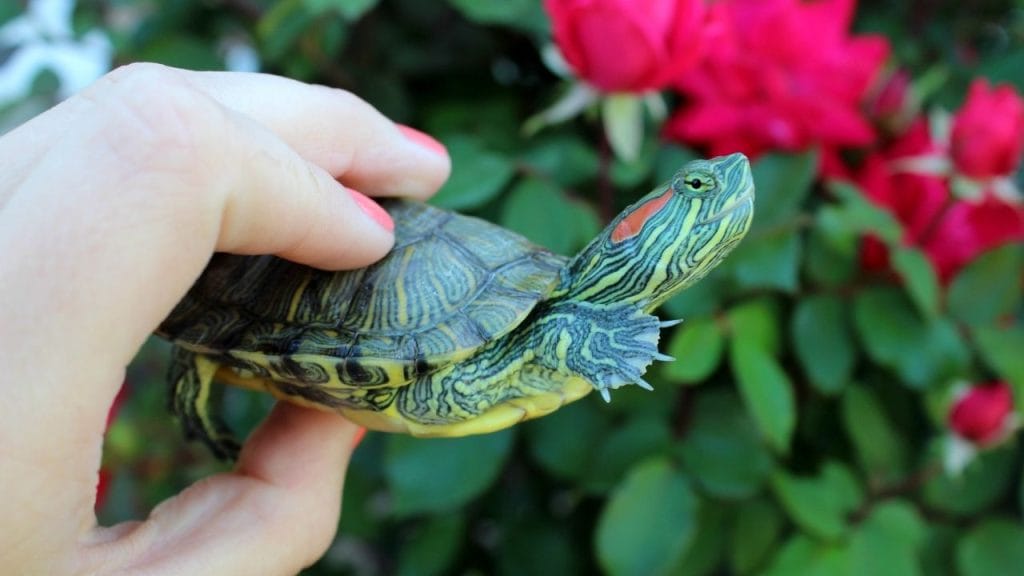
Here’s a quick size breakdown:
| Age | Approximate Shell Length |
|---|---|
| Hatchling | 1 – 1.5 inches |
| 1 year | 2 – 3 inches |
| 2 years | 3 – 4 inches |
| 3 years | 4 – 5 inches |
| 5 years (male adult) | 8 – 10 inches |
| 8 years (female adult) | 10 – 12 inches |
Males stop growing around age 5. Females keep growing until about age 8.
The fastest growth happens in the first two years. During that phase, they can increase their shell length by 50-75% per year if they’re well-fed and properly cared for.
After that, growth slows down to roughly an inch per year until they hit their adult size.
This Hilarious Turtle Book Might Know Your Pet Better Than You Do

Let’s be real—most turtle care guides feel like reading a textbook written by a sleep-deprived zookeeper.
This one’s not that.
Told from the snarky point of view of a grumpy, judgmental turtle, 21 Turtle Truths You’ll Never Read in a Care Guide is packed with sarcasm, sass, and surprisingly useful insights.
And hey—you don’t have to commit to the whole thing just yet.
Grab 2 free truths from the ebook and get a taste of what your turtle really thinks about your setup, your food choices, and that weird plastic palm tree.
It’s funny, it’s honest, and if you’ve ever owned a turtle who glares at you like you’re the problem—you’ll feel seen.
How Fast Do Red-Eared Sliders Grow?
Baby sliders grow surprisingly fast.
A hatchling that starts at about 1 inch can hit 2-3 inches within its first year. By year two, you’re looking at 3-4 inches. By year five, males are already at their adult size.
Growth rate depends on three things: diet, water temperature, and UVB exposure.
A well-fed juvenile in warm, clean water with proper lighting will grow faster than one in a cold, dirty tank with a bad diet. It’s that simple.
If your slider seems to be growing slowly, check those three things first.
Are Red-Eared Sliders Smart?
Smarter than most people give them credit for.
Each one has its own personality. Some are bold and curious, some are shy and cautious. I’ve had sliders that swim up to the glass every time I walk into the room, and others that hide the second they see movement.
You can actually train them to a degree. Many owners have gotten their sliders to come when called, respond to hand signals for feeding, and even follow a target stick.
They definitely recognize their owners. They’ll beg for food the moment they see you — but act like a stranger is a predator.
They’re not dogs. But they’re not rocks either.
Are Red-Eared Sliders Friendly or Aggressive?
Most of them are pretty chill once they get used to you.
In general, red-eared sliders are considered one of the friendlier pet turtle species. Many owners hand-feed theirs without any issues.
But every turtle is different.
Some don’t like being handled at all. If you pick them up and they start hissing, kicking, or trying to bite — put them down. That’s not a mean turtle, that’s a scared turtle.
If your slider bites your finger during feeding, don’t take it personally. Your finger was just in the wrong place at the wrong time. They’re not exactly precision eaters.
Wild-caught sliders tend to be more defensive than captive-bred ones. If you’re buying one, go captive-bred whenever possible.
Do Red-Eared Sliders Recognize Their Owners?
Yes, they do.
They won’t greet you at the door like a dog. But they absolutely learn who feeds them and who doesn’t.
Most sliders will swim to the front of the tank, stick their head out of the water, and do a little “feed me” dance when their owner walks by.
Put a stranger in front of the tank, and they’ll usually retreat or just stare suspiciously.
It’s not affection the way we think of it. But it’s recognition, and it’s real.
Are Red-Eared Sliders Illegal?
This is more complicated than most people realize.
At the federal level, the FDA prohibits the sale of any turtle with a shell length under 4 inches (21 CFR 1240.62). This applies to all turtle species, not just red-eared sliders. The rule exists because small turtles are more likely to be handled by children, who are more vulnerable to salmonella.
But that’s just the baseline. Individual states are getting stricter.
Red-eared sliders are listed as one of the world’s 100 worst invasive species by the IUCN. They outcompete native turtles everywhere they’re released.
Because of this:
- Vermont banned the sale of new pond sliders (including red-eared sliders) starting July 1, 2025 under Act 47.
- New York has introduced legislation to prohibit the breeding, sale, and importation of red-eared sliders entirely.
- Oregon bans the sale of red-eared sliders.
- Florida prohibits releasing them and has restrictions on ownership.
- Several other states have varying rules.
Check your state’s specific regulations before buying one.
And please — never release a pet red-eared slider into the wild. It’s illegal in most states, harmful to native wildlife, and often a death sentence for the turtle anyway.
Are Red-Eared Sliders Invasive?
Extremely.
Red-eared sliders are native to the southeastern United States and northern Mexico. But thanks to the pet trade, they’ve been introduced on every continent except Antarctica.
They’re bigger, more aggressive, and reproduce faster than most native freshwater turtles. When released into non-native habitats, they dominate basking spots, outcompete for food, and can spread diseases to local turtle populations.
This is exactly why the IUCN put them on the 100 worst invasive species list.
If you can’t keep your slider anymore, contact a turtle rescue or adoption center. Don’t dump it in a pond.
Are Red-Eared Sliders Social?
Not really. At least not in the way we think of social.
Red-eared sliders are solitary animals. In the wild, they don’t seek out companionship. They’ll bask on the same log as another turtle, but that’s not friendship — that’s just the best sunny spot.
They do engage in group behaviors like communal basking, nesting, and mating rituals. But outside of those situations, they’re perfectly content being alone.
In captivity, a single red-eared slider is a happy red-eared slider. You don’t need to get it a friend.
Can You Keep Two Red-Eared Sliders Together?
You can, but it’s risky and requires a lot more space.
Here’s the reality:
- Two males together will almost certainly fight. Don’t do it.
- A male and female — the male will relentlessly chase and harass the female for mating. This stresses the female out badly.
- Two females have the best chance of coexisting peacefully, but even then, there are no guarantees.
If you do house two together, you need at minimum 125 gallons for two adults, two separate basking spots, and you need to watch closely for aggression, biting, or one turtle preventing the other from eating.
If you see bullying, separate them immediately. No exceptions.
Are Red-Eared Sliders Nocturnal?
No. They’re diurnal — active during the day, sleeping at night.
They spend their days swimming, eating, and basking under their heat lamp. At night, they find a spot (usually underwater or tucked in a corner) and sleep.
You should give them 10-12 hours of light per day and then let it go dark. A consistent light cycle is important for their health and stress levels.
Do Red-Eared Sliders Need to Be in Water All the Time?

No. They need both water and a dry basking area.
Red-eared sliders are aquatic turtles, so they spend most of their time in water. But basking is absolutely essential for their health.
When they bask, they:
- Dry their shell completely (prevents shell rot and fungal infections)
- Absorb UVB light (needed for calcium metabolism and shell growth)
- Regulate their body temperature
Your basking spot should be completely dry, easy to climb onto, and have both a UVB light and a heat lamp positioned above it.
Basking area temperature should be 85-95 degrees Fahrenheit. If the basking spot isn’t warm enough, your turtle won’t use it.
What Should Red-Eared Sliders Eat?

Their diet changes as they grow.
Juveniles (under 2 years) are mostly carnivorous — about 70-80% protein, 20-30% vegetables.
Adults flip that ratio — about 50-70% vegetables and plant matter, 30-50% protein.
Good protein sources:
- Commercial turtle pellets (my pick: Mazuri Aquatic Turtle Diet) (should be the staple)
- Earthworms
- Crickets and mealworms
- Feeder fish (occasionally)
- Dried shrimp (as a treat)
Good plant and veggie options:
- Romaine lettuce and red leaf lettuce
- Dandelion greens
- Duckweed and water hyacinth
- Collard greens
- Squash and zucchini (shredded)
Avoid: Iceberg lettuce (no nutritional value), raw meat, dairy, processed human food, and anything with seasoning.
Feeding schedule: Juveniles should eat daily. Adults can be fed every other day or even every 2-3 days. A good rule is to offer an amount roughly the size of the turtle’s head per feeding.
How Long Can a Red-Eared Slider Go Without Food?
Longer than you’d think.
A healthy adult red-eared slider can safely go 1-2 weeks without food with no real problems, as long as it has clean water.
In extreme cases — like during brumation in the wild — they can survive several months without eating. Their metabolism slows way down, and they basically run on reserves.
That said, don’t use this as an excuse to skip feedings. Just because they can survive without food doesn’t mean they should.
If you’re going on vacation for a week, your adult slider will be fine. For longer trips, have someone feed it or use an automatic feeder for pellets.
Baby turtles are different. They should not go more than a few days without food. Their growth and immune systems depend on consistent nutrition.
Do Red-Eared Sliders Bite?
Yes, they can bite. And it hurts more than you’d expect.
They’ll usually only bite if they feel scared, threatened, or if they mistake your finger for food (which happens more often than you’d think during hand-feeding).
An adult red-eared slider has a strong jaw. It won’t break bones, but it can definitely draw blood, especially on fingers.
Tips to avoid getting bitten:
- Don’t grab them from above (mimics a predator)
- Don’t wiggle your fingers in front of their face
- Use feeding tongs instead of your fingers
- Approach slowly and let them see you coming
Keep small children away from turtle handling. Their tiny fingers are at much higher risk.
How Can You Tell If a Red-Eared Slider Is Male or Female?

You can reliably sex them once they’re about 4 inches in shell length (usually around 2-3 years old). Before that, it’s basically a guessing game.
Here are the key differences:
| Feature | Male | Female |
|---|---|---|
| Size | 8-10 inches | 10-12 inches |
| Front claws | Long and curved | Short and stubby |
| Tail | Long, thick, with cloaca near the tip | Short, thin, with cloaca near the base |
| Plastron (belly shell) | Slightly concave (curves inward) | Flat |
| Overall body | Smaller and slimmer | Larger and rounder |
The front claws are usually the easiest tell. I wrote a more detailed guide on 7 subtle clues to tell if your red-eared slider is male or female with photos for each method. If the turtle has long, dramatic nails on its front feet, it’s almost certainly a male. Those claws are used in mating displays.
Can Red-Eared Sliders Breathe Underwater?
Not exactly. But they have a pretty cool workaround.
Red-eared sliders are air-breathers. They have lungs, not gills. They need to surface to take a proper breath.
However, they can supplement their oxygen through a process called cloacal respiration. Basically, they absorb small amounts of dissolved oxygen through their cloaca (the opening under their tail).
This doesn’t replace real breathing. Think of it more like a snorkel assist — it extends how long they can stay submerged, but it’s not a substitute for surfacing.
During active swimming, they typically surface every 20-30 minutes to breathe.
During brumation in cold water, their metabolism drops so low that cloacal respiration alone can keep them going for extended periods — potentially months. But that’s an extreme survival state, not normal behavior.
How Long Do Red-Eared Sliders Live?
In captivity with proper care: 20 to 30 years is typical. Some live past 40.
In the wild, their lifespan is often shorter — around 20 years on average — due to predators, disease, and environmental hazards.
The biggest factors that determine lifespan in captivity are:
- Diet quality — Varied, nutritious food vs. pellets-only
- Water quality — Clean, filtered water vs. dirty, stagnant water
- UVB exposure — Proper lighting vs. no lighting
- Vet care — Regular checkups vs. ignoring health issues
- Tank size — Adequate space vs. cramped quarters
A red-eared slider in a well-maintained 75+ gallon tank with proper lighting, filtration, and diet has every chance of outliving your car, your phone, and probably a few of your houseplants.
Do Red-Eared Sliders Hibernate?
Technically, no. They brumate.
Brumation is the reptile version of hibernation. The turtle doesn’t fully sleep — it slows way down. Heart rate drops, metabolism tanks, and they stop eating. They’ll bury themselves in mud at the bottom of a pond and basically just… exist for a few months.
In the wild, this happens every winter when water temperatures drop below 50 degrees Fahrenheit.
In captivity, most red-eared sliders don’t brumate — and they don’t need to. If you keep their water temperature between 75-80 degrees Fahrenheit and maintain consistent lighting, they’ll stay active year-round.
Some breeders induce brumation to trigger mating behavior, but that’s an advanced technique that carries real risks if done incorrectly. Don’t try it unless you really know what you’re doing.
Do Red-Eared Sliders Carry Salmonella?
Yes. All turtles can carry salmonella bacteria in their digestive tract and shed it through their feces.
This doesn’t mean your turtle is dirty or sick. It’s just part of their biology.
Salmonella is mainly a risk if ingested. You’re not going to get it from touching your turtle — you’ll get it from touching your turtle and then touching your face or food without washing your hands.
How to stay safe:
- Wash your hands with soap every single time after handling your turtle or anything in its tank
- Don’t kiss your turtle (yes, people do this)
- Keep turtle equipment out of the kitchen
- Don’t let turtles roam freely where food is prepared
- Supervise children around turtles — kids under 5 are at the highest risk
The CDC and FDA both recommend that children under 5, elderly adults, and people with weakened immune systems avoid handling turtles entirely.
This is also the reason behind the 4-inch rule — smaller turtles are more likely to be held by children, put near faces, and handled carelessly.
What Are the Most Common Red-Eared Slider Diseases?
Here are the big ones to watch for:
Shell Rot
A bacterial or fungal infection on the shell. Looks like soft, discolored patches, pitting, or white fuzzy spots. Often smells bad.
Cause: Usually dirty water, inadequate basking, or shell injuries.
Signs: Soft spots on the shell, foul smell, flaking or pitting, discolored patches.
Respiratory Infection
One of the most common and dangerous illnesses in pet turtles.
Cause: Cold water temperatures, drafty enclosures, or poor water quality.
Signs: Bubbling from the nose or mouth, wheezing, lopsided swimming (tilting to one side), lethargy, loss of appetite, open-mouth breathing, puffy eyes.
If your turtle is swimming tilted, that’s a sign fluid has built up in one lung. That needs a vet visit immediately.
Metabolic Bone Disease (MBD)
Caused by insufficient UVB light or calcium in the diet.
Signs: Soft, rubbery shell. Deformed growth. Lethargy. Swollen limbs.
This is 100% preventable with proper UVB lighting and a balanced diet with calcium supplementation.
Vitamin A Deficiency
Common in turtles fed a pellets-only diet with no vegetables.
Signs: Swollen, puffy eyelids. Respiratory issues. Loss of appetite.
Fix: Add more leafy greens and vitamin A-rich foods to the diet.
Eye Infections
Signs: Swollen eyes, cloudy eyes, discharge, turtle constantly rubbing eyes.
Cause: Usually poor water quality or vitamin deficiency.
Bottom line: If your turtle is acting lethargic, not eating, has swollen eyes, or is making unusual sounds — get to a reptile vet. Don’t try to diagnose it yourself on Reddit.
Do You Need a Heat Lamp for a Red-Eared Slider?
Absolutely. Non-negotiable.
You need two types of lighting:
- Heat lamp — Creates a warm basking spot of 85-95 degrees Fahrenheit so the turtle can thermoregulate and dry off completely.
- UVB lamp — Provides ultraviolet B radiation, which is essential for calcium absorption and healthy shell growth. Without UVB, your turtle will develop metabolic bone disease.
Both lights should be on for 10-12 hours per day and replaced on a regular schedule (UVB bulbs lose effectiveness after 6-12 months even if they still look like they’re working).
No amount of window sunlight replaces a proper UVB bulb. Glass filters out most UVB.
Can a Red-Eared Slider Drown?
Yes. It’s rare, but it happens.
Red-eared sliders are excellent swimmers, but they can drown if they get trapped underwater and can’t reach the surface to breathe.
Common drowning scenarios:
- Getting stuck under a decoration or rock
- Wedged between the filter intake and the tank wall
- Tank water too deep for a hatchling with no resting spots
- Entangled in aquarium plants or netting
Prevention is simple: Make sure your turtle always has an easy way to get out of the water, check for potential entrapment spots, and make sure hatchlings have shallow areas or ramps.
What Temperature Should the Water Be?
| Zone | Temperature |
|---|---|
| Water | 75-80°F (24-27°C) |
| Basking area | 85-95°F (29-35°C) |
| Ambient air | 75-85°F (24-29°C) |
Water temperature should never drop below 72 degrees Fahrenheit. Cold water suppresses the immune system and can trigger respiratory infections.
Invest in a submersible aquarium heater (recommended: submersible aquarium heater) with a built-in thermostat and a separate digital thermometer to verify the temperature. Don’t trust the heater’s dial alone — they’re often inaccurate.
What Size Tank Does a Red-Eared Slider Need?

The general rule is 10 gallons of water per inch of shell length.
So:
| Turtle Size | Minimum Tank Size |
|---|---|
| 4 inches (juvenile) | 40 gallons |
| 6 inches | 60 gallons |
| 8 inches | 80 gallons |
| 10 inches (adult female) | 100 gallons |
| 12 inches (large female) | 120 gallons |
Most adult sliders need a 75-100 gallon tank at minimum.
Bigger is always better. If you have the space and budget, go larger than the minimum. Your turtle will be healthier, the water will stay cleaner longer, and you won’t have to upgrade again in two years.
Stock tanks, large plastic tubs, and even outdoor ponds work great as alternatives to glass aquariums.
What Fish Can Live With Red-Eared Sliders?
Honestly? Most fish are just expensive turtle snacks.
Red-eared sliders will try to eat any fish they can catch. Small fish like guppies, neon tetras, and goldfish will get hunted down eventually.
If you really want fish in the tank, your best options are:
- Large koi — Too big to eat, but need a huge tank or pond
- Large plecos — Bottom-dwellers that mostly stay out of the way
- Feeder guppies — Accept that they’re part of the food chain and let them reproduce
The fish will be stressed, and some will get eaten. That’s just the reality of housing prey animals with a predator.
My honest recommendation: if you want a fish tank, keep it separate.
How Much Does a Red-Eared Slider Cost?
The turtle itself is the cheapest part.
| Item | Cost Range |
|---|---|
| Red-eared slider (pet store) | $15 – $30 |
| Red-eared slider (breeder or morph) | $50 – $500+ |
| Tank (75-100 gallon) | $150 – $400 |
| Canister filter | $80 – $200 |
| UVB + heat lamp setup | $50 – $100 |
| Basking platform | $20 – $60 |
| Heater + thermometer | $30 – $60 |
| Total first-year setup | $400 – $1,000+ |
| Annual upkeep (food, electricity, supplies) | $200 – $500 |
Special morphs like albinos, pastels, and leucistics can run into the hundreds of dollars from specialty breeders.
The takeaway: a $20 turtle is going to cost you hundreds in setup and ongoing care every year. Budget for the whole picture, not just the animal. For a side-by-side comparison with other species, check out my full pet turtle cost breakdown.
Do Red-Eared Sliders Like Being Held?
Most don’t, honestly.
Some tolerate it after years of gentle handling. A few might even seem to enjoy sitting on your lap for a bit.
But the majority would prefer you just admire them from outside the tank and keep the food coming.
Signs your turtle doesn’t want to be held:
- Kicking and flailing
- Hissing
- Trying to bite
- Pulling completely into its shell
- Peeing on you (yes, this is a defensive move)
If you do handle your turtle, support its body fully, keep sessions short, and wash your hands before and after.
Don’t chase your turtle around the tank to grab it. That’s just stressful for both of you.
How Often Should You Clean a Red-Eared Slider Tank?
With a good filter running:
- 25-50% water change: Every 1-2 weeks
- Full tank clean: Every 4-6 weeks (scrub walls, rinse substrate, clean filter media)
- Filter maintenance: Monthly — rinse media in old tank water, never tap water (chlorine kills beneficial bacteria)
Without a filter… you’ll be changing water every few days. Just get a filter.
Pro tip: If you can smell the tank from across the room, you’ve waited too long.
Can Red-Eared Sliders Live Outside?

Yes, but only if you live in the right climate.
Red-eared sliders do great in outdoor ponds in areas where temperatures stay above 50 degrees Fahrenheit for most of the year. In the southern US, they can live outside year-round.
In colder climates, outdoor setups work in spring and summer, but you’ll need to bring them inside for winter — unless you have a deep enough pond (at least 18-24 inches) that won’t freeze solid, and the turtle is a healthy adult capable of brumating safely.
Outdoor setup essentials:
- Secure fencing (they will try to escape and they’re surprisingly good at it)
- Predator protection from raccoons, birds, and cats
- Basking area with sun exposure
- Clean, filtered water or a large enough pond to stay stable
Never put a baby or juvenile slider outdoors. They’re too vulnerable to predators and temperature swings.
That covers the big ones. If you still have a question I didn’t answer, drop it in the comments and I’ll add it to the list.
And if you’re just starting out with your first slider, check out the full red-eared slider care guide and the tank setup walkthrough for step-by-step help.

About Author
Muntaseer Rahman started keeping pet turtles back in 2013. He also owns the largest Turtle & Tortoise Facebook community in Bangladesh. These days he is mostly active on Facebook.