Mud Turtle Vs. Musk Turtle: Which One Is A Better Pet?
This post was created with help from AI tools and carefully reviewed by a human (Muntaseer Rahman). For more on how we use AI on this site, check out our Editorial Policy.
If you’re shopping for a small, low-maintenance turtle that won’t take over your entire living room, you’ve probably landed on two options: mud turtles and musk turtles.
And then you realized they look almost identical. And have almost identical care needs. And now you’re stuck.
I get it. These two are basically the twins of the turtle world. Same family (Kinosternidae), similar size, similar attitude, similar “I will release a horrible smell if you annoy me” defense mechanism.
But they’re not the same turtle. There are real differences that matter when you’re picking your first (or next) pet.
Let me break it all down so you can actually make a decision instead of going back and forth for another three weeks.
The Quick Answer
Both mud turtles and musk turtles are great pets. If you forced me to pick one winner, musk turtles have a slight edge for most keepers — they’re more aquatic, slightly more active and entertaining to watch, and the common musk turtle (stinkpot) is one of the easiest turtles to care for in the entire hobby.
But mud turtles aren’t far behind. They’re a little more terrestrial, a little calmer, and their hinged plastron is genuinely cool.
The real answer? It depends on what you want. And that’s what this whole article is for.
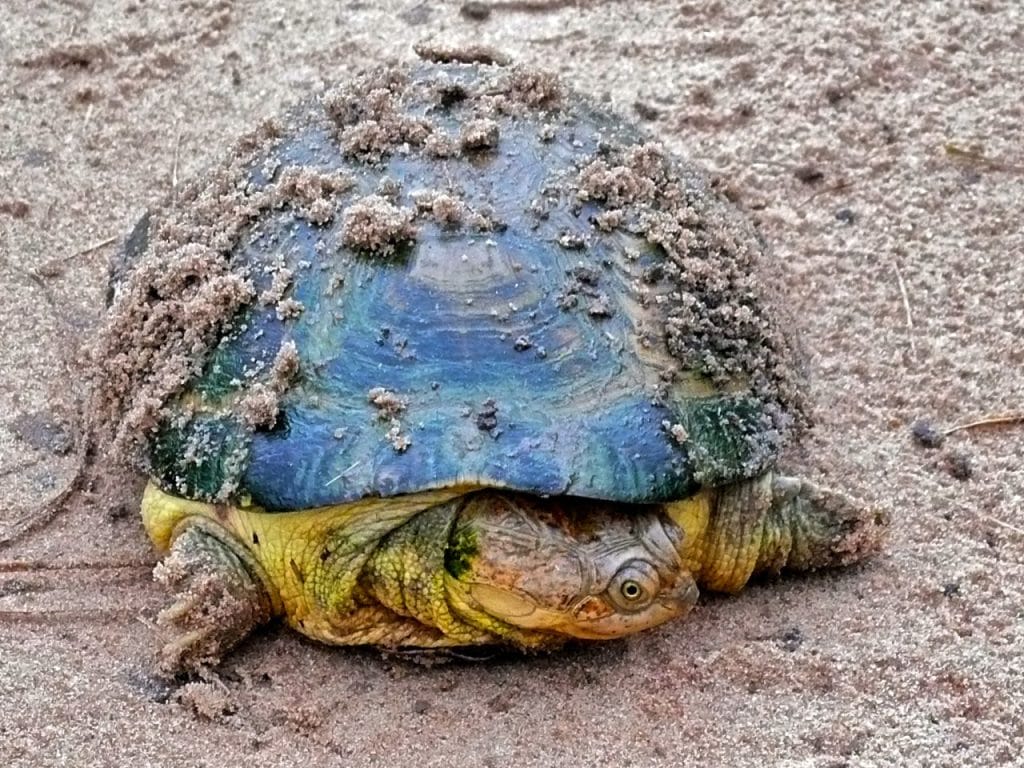
Mud Turtle Vs. Musk Turtle: Side-By-Side Comparison
Before we get into the details, here’s the cheat sheet:
| Feature | Mud Turtle | Musk Turtle |
|---|---|---|
| Scientific Name | Kinosternon spp. | Sternotherus spp. |
| Popular Pet Species | Eastern, Striped, Yellow, Mississippi | Common (Stinkpot), Razorback, Loggerhead |
| Adult Size | 3-5 inches | 2-6 inches (varies by species) |
| Lifespan | Up to 50 years | 30-50+ years |
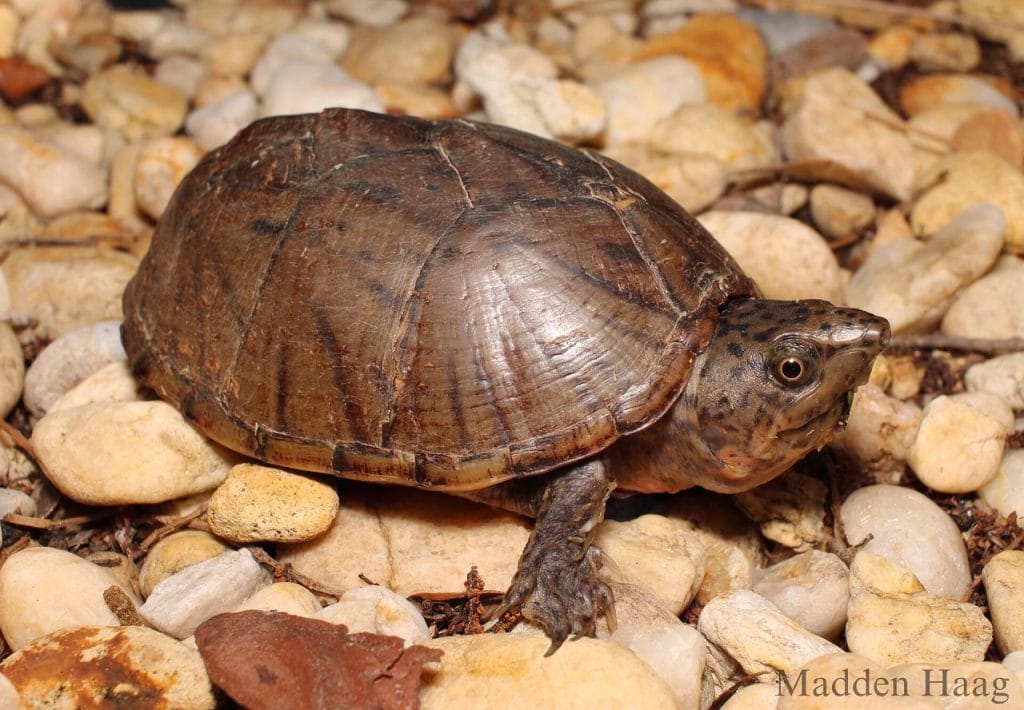
| Shell Shape | Flatter, oval | Higher dome, more rounded |
| Plastron | Large, double-hinged (can partially close) | Smaller, narrow, no functional hinge |
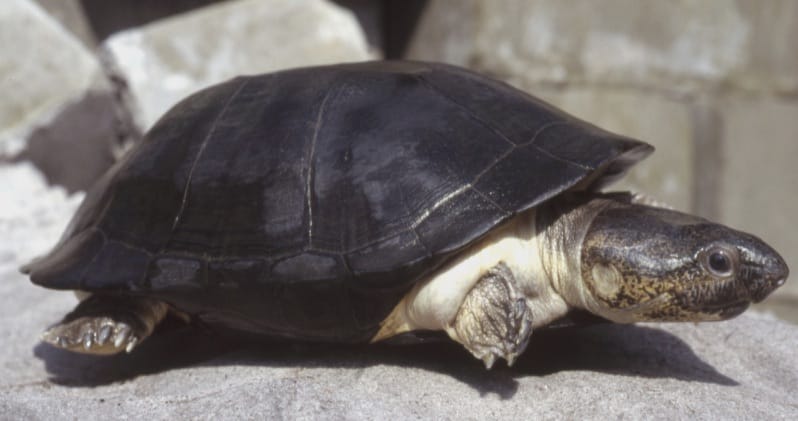
| Swimming Ability | Poor — bottom walker | Better — still mostly bottom walker |
| Water Depth | Shallow preferred | Can handle slightly deeper water |
| Land Usage | Semi-terrestrial, needs land area | Almost fully aquatic |
| Tank Size | 40+ gallons | 20-40+ gallons |
| Smell Defense | Yes (musk glands) | Yes (stronger, hence “stinkpot”) |
| Beginner Friendly | Yes | Yes |
| Price | $25-$50 | $20-$70 |
| Temperament | Shy, nocturnal, can be nippy | More active, can be nippy |
| Availability | Common | Very common |
Now let’s dig into each category properly.
This Hilarious Turtle Book Might Know Your Pet Better Than You Do

Let’s be real—most turtle care guides feel like reading a textbook written by a sleep-deprived zookeeper.
This one’s not that.
Told from the snarky point of view of a grumpy, judgmental turtle, 21 Turtle Truths You’ll Never Read in a Care Guide is packed with sarcasm, sass, and surprisingly useful insights.
And hey—you don’t have to commit to the whole thing just yet.
Grab 2 free truths from the ebook and get a taste of what your turtle really thinks about your setup, your food choices, and that weird plastic palm tree.
It’s funny, it’s honest, and if you’ve ever owned a turtle who glares at you like you’re the problem—you’ll feel seen.
What Even Is The Difference Between Mud And Musk Turtles?
People mix these two up constantly. And honestly, even some pet store employees can’t tell them apart.
Both belong to the family Kinosternidae. Mud turtles fall under the genus Kinosternon, while musk turtles belong to the genus Sternotherus.
The easiest way to tell them apart? Flip them over.
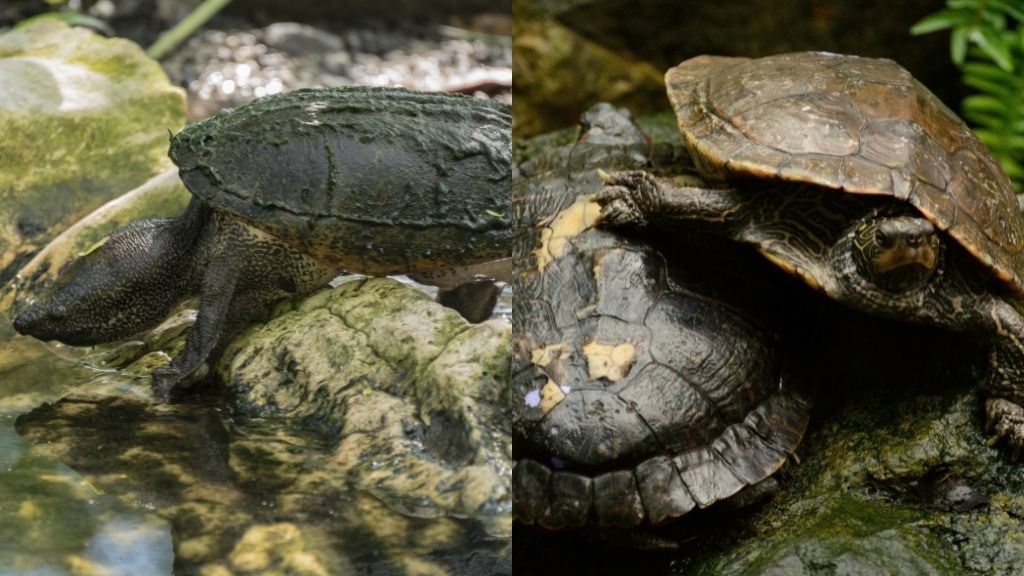
Mud turtles have a large, double-hinged plastron — that’s the bottom shell. It’s wide and has two hinges that allow the turtle to partially close up, kind of like a box turtle. Not completely sealed, but close enough to give predators a hard time.
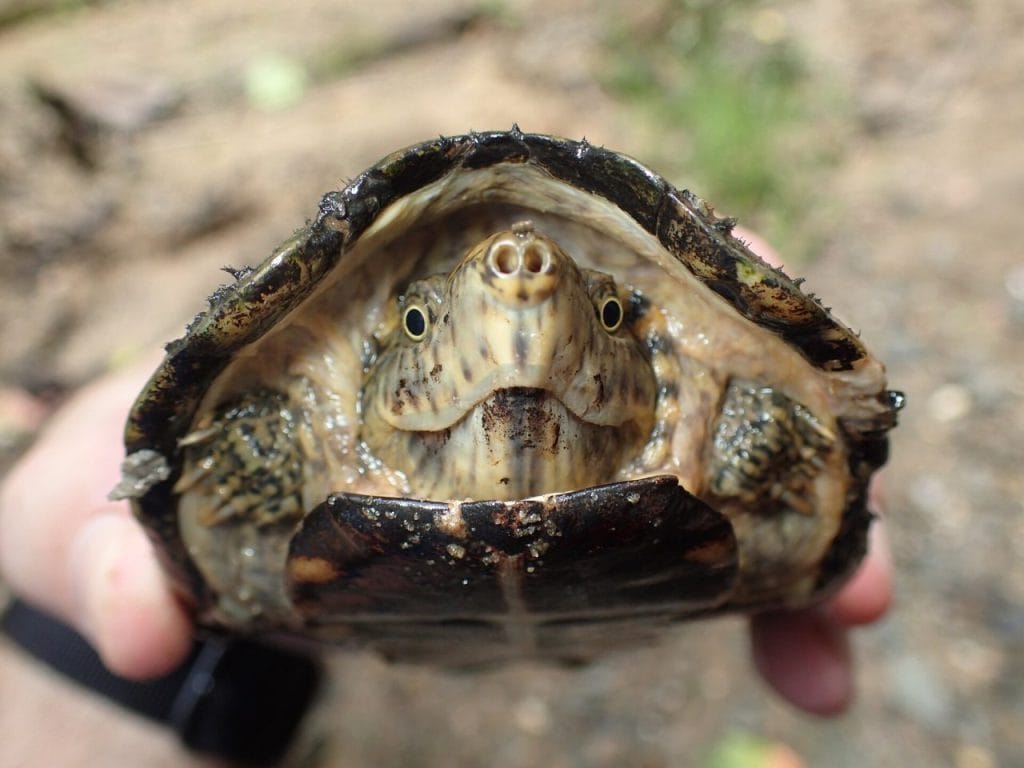
Musk turtles have a small, narrow plastron with no functional hinge. It looks almost like a snapping turtle’s plastron — way too small to offer any real protection on the underside. Their legs and skin are very visible from below.
That’s the dead giveaway. If the belly shell is big and can move, it’s a mud turtle. If it’s tiny and fixed, it’s a musk turtle.
Size Comparison
Both of these are small turtles. That’s literally the whole reason most people want them — they don’t need a 200-gallon tank like a red-eared slider or a stock pool like a softshell.
Mud Turtle Size
Most mud turtles max out at 3 to 5 inches in carapace length.
The Eastern mud turtle and Striped mud turtle are the smallest, usually staying around 3 to 4 inches. The Yellow mud turtle can push closer to 5 inches.
These are genuinely tiny turtles. You can hold a full-grown adult in the palm of your hand.
Musk Turtle Size
Here’s where it gets interesting. Size varies more depending on the species.
The common musk turtle (stinkpot) is the smallest, staying between 2 to 4.5 inches. Some never even hit 4 inches. It’s basically the smallest turtle you can legally buy.
The razorback musk turtle is the biggest of the bunch at 5 to 6 inches. Still small, but noticeably larger than a stinkpot.
The loggerhead musk turtle sits in between at 4 to 5 inches, with a disproportionately large head that makes it look bigger than it actually is.
Verdict On Size
Mud turtles are slightly smaller overall. But the difference is so small — we’re talking about an inch or two — that it shouldn’t really be a deciding factor unless you’re extremely tight on space.
Lifespan
Here’s where a lot of people get surprised.
These cute little turtles that fit in your hand? They can outlive your mortgage.
Mud turtles can live up to 50 years with proper care. Some sources report even longer in the wild.
Musk turtles are in the same ballpark. The common musk turtle has been recorded living 50+ years in captivity. Razorback musk turtles typically hit 20 to 50 years. Loggerhead musk turtles average around 23 years.
Either way, you’re signing up for a multi-decade commitment. This is not a goldfish situation.
If you’re buying one of these for a kid, just know that this turtle might be attending their college graduation. And possibly their retirement party.
Tank And Habitat Requirements
This is where the two species actually differ in a meaningful way.
Mud Turtle Habitat
Mud turtles are semi-terrestrial. They spend time in water, but they also like to walk around on land, bask, and burrow in substrate.
Your mud turtle tank needs to be split — part water, part land. Think of it like a paludarium setup. The water section should be shallow (these are terrible swimmers), and the land section should have substrate deep enough for them to dig into.
Minimum tank size: 40 gallons for one adult. Bigger is always better.
Water depth should be kept shallow — they should be able to stand on the bottom and stretch their neck up to breathe. For adults, that’s usually around 6 to 8 inches of water, depending on the turtle’s size.
A Waterland tub or similar setup works perfectly for mud turtles because it gives them a built-in land ramp and shallow water area.
Musk Turtle Habitat
Musk turtles are almost fully aquatic. They rarely leave the water, and when they do, it’s usually just to bask briefly.
Your setup will be mostly water with a small basking platform (my pick: floating basking platform). Much more like a traditional aquatic turtle tank.
Minimum tank size: 20 gallons for a single common musk turtle. For larger species like the razorback, aim for 40 to 55 gallons.
Musk turtles can handle slightly deeper water than mud turtles, but they’re still bottom walkers. They walk along the bottom rather than swimming through open water like a slider. So you still need lots of driftwood, plants, and decorations that they can climb to reach the surface for air.
Don’t fill the tank to the brim unless you have plenty of climbing structures. These turtles can drown if they can’t reach the surface easily.
Tank Setup Essentials (Both Species)
Both mud and musk turtles need the same core equipment:
| Equipment | Details |
|---|---|
| Filter | Rated for double your tank size. These turtles are messy. |
| Water Heater | Maintain 74-78°F water temperature |
| Basking Light | Basking spot at 85-92°F |
| UVB (my pick: Zoo Med ReptiSun 10.0) Lamp | Essential for calcium metabolism and shell health |
| Substrate | Fine sand for burrowing (especially mud turtles) |
| Thermometer | Digital probe for basking, aquarium thermometer for water |
Water changes of about 25-50% weekly are recommended for both species. Dirty water is the number one cause of skin infections, eye problems, and shell rot in these turtles.
Verdict On Habitat
Musk turtles are easier to set up because you’re basically making a fish tank with a basking spot. Mud turtles need a more complex land-and-water setup, which takes a bit more planning.
If you want a simpler tank, go musk. If you enjoy creating naturalistic paludarium-style habitats, mud turtles give you a more interesting project.
Diet
Good news. These two eat basically the same stuff.
Both mud and musk turtles are omnivores with a heavy lean toward protein. In the wild, they eat snails, insects, worms, crayfish, small fish, and some plant matter.
In captivity, a solid diet includes:
- Commercial turtle pellets (my pick: Mazuri Aquatic Turtle Diet) (Reptomin, Zoo Med, Mazuri)
- Earthworms and red worms
- Feeder fish (guppies, minnows — not goldfish)
- Snails (they go crazy for these)
- Crickets and other insects
- Occasional leafy greens (romaine, duckweed, water lettuce)
- Calcium supplements (my pick: Rep-Cal Calcium with D3) and vitamin D3
Feed adults every other day. Juveniles should eat daily. Only offer as much food as they can eat in about 15 minutes, then remove the leftovers.
One small difference: mud turtles are slightly more omnivorous and will eat more plant matter than musk turtles. Musk turtles lean heavier on the carnivore side, especially species like the loggerhead musk which specializes in crushing snails and mollusks with its oversized jaws.
Both species prefer to eat in the water. This makes their tanks messy fast, which is why good filtration is non-negotiable.
Verdict On Diet
Basically a tie. Same food, same feeding schedule, same mess. No advantage either way.
Temperament And Personality
Neither of these turtles is going to cuddle with you on the couch. Let’s get that out of the way.
But they do have distinct personality traits.
Mud Turtle Temperament
Mud turtles are shy and nocturnal. They spend a lot of time hiding, burrowing, and sitting at the bottom of their tank doing absolutely nothing.
They’re the introverts of the turtle world.
When they do feel threatened, they can bite — and their curved beaks can deliver a surprisingly painful pinch for such a small animal. They can also release a foul-smelling musk from glands near their shell, though captive-bred turtles rarely do this.
Over time, they can learn to recognize their owner and will come to the front of the tank at feeding time. But don’t expect them to be social butterflies.
Musk Turtle Temperament
Musk turtles are more active and slightly more interactive than mud turtles. The common musk turtle, in particular, is known for walking around the bottom of the tank all day, investigating things, and being generally entertaining to watch.
They earned the nickname “stinkpot” for a reason though. When stressed or scared, they release a yellow, musky liquid from glands under their shell. It’s not pleasant. But in a comfortable home environment, they rarely feel the need to do this.
Like mud turtles, musk turtles can and will bite. Their jaws are strong for their size. Handle with care, and ideally, keep your fingers at the back of the shell.
Verdict On Temperament
Musk turtles are more fun to watch. They’re more active during the day, more exploratory, and more likely to interact with you (on their terms). Mud turtles are calmer and more reclusive, which is fine if you prefer a low-key pet.
Handling
Let me save you some pain. Literally.
Neither of these turtles enjoys being handled. Both can bite, scratch, and release musk when picked up. They’re observation pets, not lap pets.
If you want a turtle you can pick up and interact with, neither the mud turtle nor the musk turtle is the right choice. Honestly, most aquatic turtles aren’t great for handling. If that’s important to you, look into box turtles instead.
The best way to bond with a mud or musk turtle is through feeding by hand or tong-feeding. They’ll learn to associate you with food, and you get to watch them eat without risking your fingers.
Popular Species Compared
Not all mud turtles are the same, and not all musk turtles are the same. Here’s a quick look at the most popular pet species within each group:
Popular Mud Turtle Species
| Species | Size | Key Feature |
|---|---|---|
| Eastern Mud Turtle | 3-4 inches | Most common pet mud turtle, dark shell, no markings |
| Striped Mud Turtle | 3-4 inches | Three light stripes on shell, very easy to care for |
| Yellow Mud Turtle | 4-5 inches | Yellow coloring on head and throat |
| Mississippi Mud Turtle | 3-4 inches | Two light lines on sides of head |
Popular Musk Turtle Species
| Species | Size | Key Feature |
|---|---|---|
| Common Musk Turtle (Stinkpot) | 2-4.5 inches | Smallest, most popular, strong musk |
| Razorback Musk Turtle | 5-6 inches | Sharp raised keel on shell, prehistoric look |
| Loggerhead Musk Turtle | 4-5 inches | Oversized head, powerful jaws for crushing snails |
| Stripe-Necked Musk Turtle | 3-4 inches | Subspecies of loggerhead, striped pattern |
If you want the tiniest turtle possible, the common musk turtle wins. If you want the coolest-looking shell, the razorback musk turtle is hard to beat — it looks like a tiny dinosaur.
For mud turtles, the striped mud turtle is probably the best all-around pet. It’s small, hardy, easy to care for, and those three stripes on the shell make it easy to identify.
Price And Availability
Both turtles are easy to find and affordable.
Mud turtles typically cost $25 to $50 depending on species and age.
Musk turtles range from $20 to $70. Common musk turtles are on the cheaper end, while razorbacks and loggerheads cost a bit more.
You can find both at reptile expos, online breeders, and even some pet stores. Reputable online sources include The Turtle Source, Tortoise Town, and MorphMarket.
Always buy captive-bred. Wild-caught turtles are more stressed, more likely to carry parasites, and removing them from the wild hurts local populations. Plus, it’s illegal to sell any turtle under 4 inches in shell length except for scientific or educational purposes — just so you know. For a deeper look at all the costs involved, check out my full pet turtle cost breakdown.
Who Should Get A Mud Turtle?
A mud turtle is right for you if:
- You enjoy building naturalistic land-and-water habitats
- You prefer a calmer, more reclusive pet
- You want a turtle that uses both land and water areas
- You don’t mind that your turtle hides most of the day
- You like the look of a double-hinged plastron (it’s genuinely cool to see them close up)
Who Should Get A Musk Turtle?
A musk turtle is right for you if:
- You want a simple, mostly-aquatic setup
- You prefer a more active, entertaining turtle
- You want the smallest possible turtle (go with a stinkpot)
- You want something that looks like a tiny prehistoric creature (go with a razorback)
- You’re okay with a turtle that might stink-bomb you during the first few weeks until it settles in
Can You Keep Mud Turtles And Musk Turtles Together?
Technically, yes. They come from similar habitats and have similar care needs.
But it’s not recommended for most keepers.
Both species can be territorial, especially males. You might see aggression during feeding, competition for basking spots, and general stress that leads to health problems.
If you really want to try it, use a large tank (75+ gallons minimum), provide multiple hiding spots and basking areas, and watch them closely for the first few weeks. Separate them at the first sign of trouble.
A safer bet? Keep one mud turtle and one musk turtle in separate tanks side by side. You get the best of both worlds without the drama.
The Final Verdict
Here’s the honest truth: you can’t go wrong with either one.
Both mud and musk turtles are small, hardy, affordable, and beginner-friendly. They eat the same food, need similar care, and will outlive most other pets you’ve ever owned.
If I had to pick one recommendation for a first-time turtle owner, I’d say go with a common musk turtle. It’s the smallest, requires the simplest setup, and is the most widely available and well-documented species in the hobby.
But if you want something a little different — a turtle that uses land and water, with that cool hinged plastron — grab a striped mud turtle and build it a sweet paludarium setup.
Either way, you’re getting a tiny tank-dwelling roommate that’ll be with you for the next 30 to 50 years.
Choose wisely. Or just get both. I won’t judge.

About Author
Muntaseer Rahman started keeping pet turtles back in 2013. He also owns the largest Turtle & Tortoise Facebook community in Bangladesh. These days he is mostly active on Facebook.