Can Turtles Actually Jump?

This post was created with help from AI tools and carefully reviewed by a human (Muntaseer Rahman). For more on how we use AI on this site, check out our Editorial Policy.
“Make sure you have a lid on that tank, or your turtle will jump out.”
I heard this warning about a hundred times when I first got Sheldon, my red-eared slider.
And honestly? I laughed it off.
I mean, look at turtles. They’re basically walking tanks with stubby legs.
But then one morning, I found Sheldon on the floor.
He’d somehow launched himself over the edge of his enclosure.
So yeah. Turtles can actually jump.
The Short Answer: Yes, Turtles Can Jump
Turtles can jump, but we’re not talking kangaroo-level athletics here.
Most medium-sized turtles can hop about 2 to 4 inches off the ground.
Smaller turtles like box turtles usually manage around 2 inches.
Large turtles and tortoises? Tortoises cannot jump at all. Their dome shells and stumpy legs make it physically impossible.
Their bodies are just too heavy and their legs aren’t built for it.
How Do Turtles Jump?
The mechanics are actually pretty interesting.
Turtles bend their back legs and slightly extend their front legs while keeping them bent.
Then they push off with all four limbs at once to propel themselves forward.
It’s more of a lunge than a leap.
Their bodies are completely airborne for a split second, which technically counts as a jump.
The problem is that turtles can’t bend their torsos like other animals.
When a cat jumps, it arches its back to get extra distance.
Turtles can’t do that because their spine is fused to their shell.
So they’re stuck with whatever thrust their legs can generate from a relatively straight position.
This Hilarious Turtle Book Might Know Your Pet Better Than You Do

Let’s be real—most turtle care guides feel like reading a textbook written by a sleep-deprived zookeeper.
This one’s not that.
Told from the snarky point of view of a grumpy, judgmental turtle, 21 Turtle Truths You’ll Never Read in a Care Guide is packed with sarcasm, sass, and surprisingly useful insights.
And hey—you don’t have to commit to the whole thing just yet.
Grab 2 free truths from the ebook and get a taste of what your turtle really thinks about your setup, your food choices, and that weird plastic palm tree.
It’s funny, it’s honest, and if you’ve ever owned a turtle who glares at you like you’re the problem—you’ll feel seen.
How Far Can Each Turtle Species Jump?
Not all turtles are created equal when it comes to jumping ability.
| Turtle Species | Jump Distance | Notes |
|---|---|---|
| Common Snapping Turtle | 3-4 inches | Best jumpers among turtles |
| Red-Eared Slider | 2-4 inches | Will definitely try to escape your tank |
| Painted Turtle | 2-3 inches | Medium jumping ability |
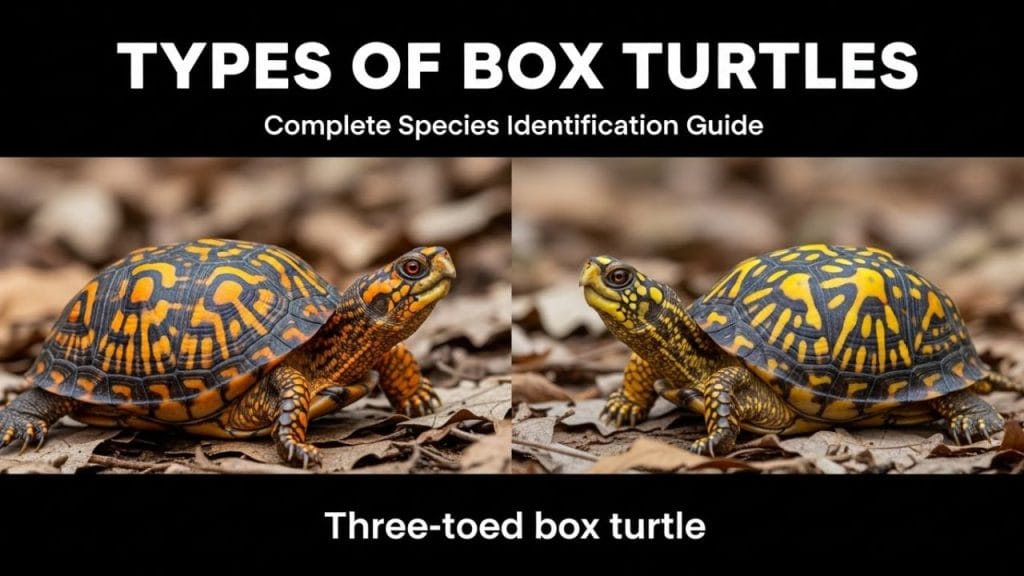
| Box Turtle | 1-2 inches | Better at climbing than jumping |
| Softshell Turtle | 2-4 inches | Also fast runners at 3-4 mph |
| Musk Turtle | 1-2 inches | Small but can jump surprisingly well |
| Tortoises | 0 inches | Cannot jump at all |
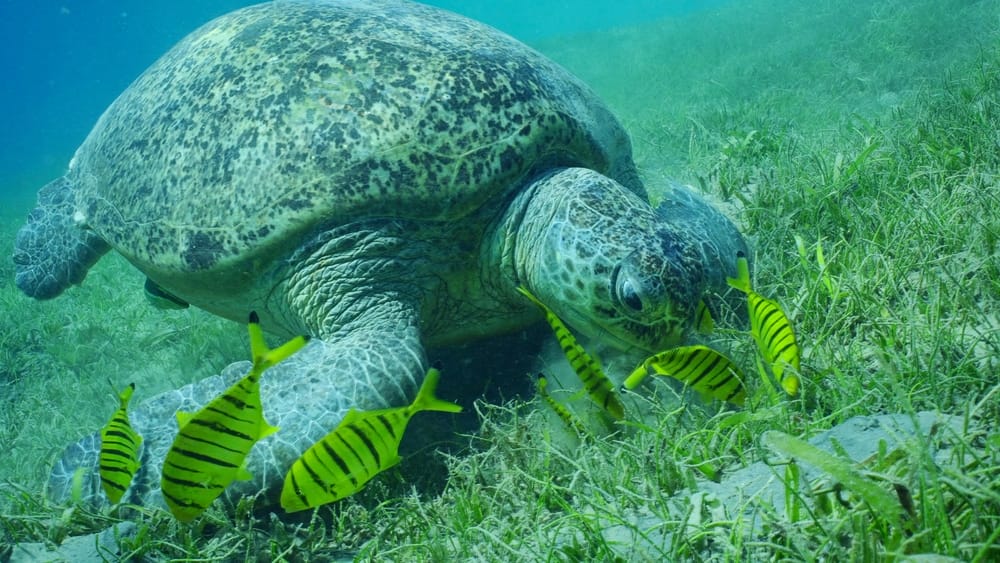
| Sea Turtles | 0 inches | Built for swimming, not jumping |
| Alligator Snapping Turtle | 0 inches | Too heavy at 70-80 kg |
The common snapping turtle is the champion jumper of the turtle world.
They can lunge forward with surprising speed when they feel threatened.
Wait, Isn’t The Shell Too Heavy?
This is what most people assume stops turtles from jumping.
But here’s the thing: a turtle’s shell only accounts for about 25-35% of its total body weight.
That’s not as heavy as you’d think.
For turtles like red-eared sliders, box turtles, and snapping turtles, the shell isn’t the main problem.
The real issue is their inflexible bodies.
Turtles can’t bend or twist their torsos because their spine is literally attached to the inside of the shell.
Their legs also don’t bend very far at the knees.
So even though they have muscles strong enough to carry their weight, they just can’t generate the explosive force needed for big jumps. This same body structure is why turtles max out at about 1 mph on land—they’re built for endurance, not speed.
Why Would A Turtle Even Want To Jump?
Turtles don’t jump very often because they usually don’t need to.
Their shells protect them from most predators, so running away isn’t their main survival strategy.
But there are a few situations where jumping makes sense:
To dive into water. Turtles basking on rocks or logs will often jump off to get into the water quickly if they sense danger.
To escape predators. A quick lunge can give them a head start when they need to run.
To reach higher surfaces. Sometimes they need to get onto a basking spot or over an obstacle.
To get out of your tank. If your turtle is unhappy with its living conditions, it will absolutely try to escape.
The Snapping Turtle: Master Jumper (And Biter)
Snapping turtles deserve their own section because they’re genuinely impressive.
Common snapping turtles can lunge forward 3-4 inches in an instant.
But that’s not the scary part.
Their strike speed is what gets you. A snapping turtle can snap its jaws closed in less than 0.02 seconds. They’re also surprisingly fast swimmers at 8-12 mph—don’t underestimate these guys in water either.
Some sources report strike speeds up to 174 mph.
Their striking distance extends about two-thirds of their shell length.
So if you see a snapping turtle on land and think you’re at a safe distance… you might not be.
Wildlife officials recommend giving them plenty of space and never picking them up by the sides.
If you need to move one, push it gently into a box from behind using a broom.
The alligator snapping turtle, on the other hand, can barely hop at all.
They weigh 70-80 kg (compared to about 10 kg for a common snapper), so jumping just isn’t in the cards for them.
Tortoises Cannot Jump (Here’s Why)
Tortoises cannot jump. Not even a little.
Their bodies are built completely differently from aquatic turtles, and the dome shell plus stumpy legs combo makes a true jump physically impossible.
They have heavy, dome-shaped shells and thick, stumpy legs designed for walking on land.
They don’t have the fast-twitch muscles needed for explosive movements like jumping.
But here’s where people get confused.
Tortoises are actually decent climbers.
They’ll climb up rocks, logs, and even fences.
Then they’ll just fall off the other side.
This looks like jumping, but it’s really just falling with extra steps.
One tortoise owner on the Tortoise Forum shared that their Russian tortoise walked right off a 4-inch sidewalk and did a face-plant onto the pavement.
Tortoises apparently don’t always understand the concept of “that’s too high.”
The Real Athletes: Turtles That Climb
If you think jumping is impressive, wait until you hear about turtle climbing.
Musk turtles have been spotted climbing cypress trees up to 2 meters (6.5 feet) high.
Box turtles have been found in blackberry bushes 6+ feet off the ground in Arkansas.
The Indochinese box turtle has large front claws specifically designed for climbing trees to find fruit.
Red-eared sliders are notorious for climbing out of tanks if there’s anything they can use as a ladder.
Pet turtle owners know this well.
If there’s a filter, a heater cord, or any texture on the tank wall, your turtle will try to climb it.
Why Does My Turtle Keep Trying To Jump Out Of Its Tank?
This is actually a really common problem.
Turtles don’t escape for fun. They do it because something is wrong.
Here are the main reasons:
The Tank Is Too Small
Turtles need a lot of space.
The rule is 10 gallons of water per inch of shell length.
A 4-inch turtle needs a 40-gallon tank minimum.
If your turtle is constantly swimming into the glass or climbing the walls, it’s probably feeling cramped.
Bad Water Quality
Dirty water will absolutely make your turtle want to leave.
High ammonia, nitrate, or nitrite levels are uncomfortable and unhealthy.
If your turtle is avoiding the water and hanging out on the basking area all day, check your water parameters.
Wrong Temperature
Water should be around 75-78°F for most aquatic turtles.
The basking spot should be 90-95°F.
If it’s too cold, your turtle will try to find warmth somewhere else.
If it’s too hot, it’ll try to escape the heat.
No Proper Basking Area
Turtles need UV light and heat to stay healthy.
Without a good basking spot, they’ll start looking for sunlight elsewhere.
Stress
New turtles are especially prone to escape attempts.
They’re scared, they don’t know their environment, and they want to go back to wherever they came from.
Loud noises, other pets staring at them, or too much handling can all cause stress.
She’s Pregnant
Female turtles lay eggs even without a male present. You might also notice strange behaviors like claw fluttering if there are multiple turtles—this is normal courtship or dominance behavior.
When they’re ready to lay, they get extremely restless and will try everything to get out and find a place to dig.
If your female turtle is suddenly scratching at the glass and trying to escape, she might need a nesting area.
How To Stop Your Turtle From Escaping
The good news is that turtle “jumps” are more like climb-and-falls.
You don’t need a maximum-security prison.
Here are some simple solutions:
Lower the water level. If your turtle can’t reach the top edge, it can’t climb out.
Add a lid. Egg crate panels (light diffuser panels from hardware stores) work great. They let light through and keep turtles in.
Remove climbing aids. Make sure filters and heaters don’t create a ladder to the edge.
Fix whatever’s wrong. If your turtle keeps trying to escape, something about its environment needs to change.
Fun Facts About Turtle Movement
Since we’re talking about how turtles get around, here are some bonus facts:
- Snapping turtles run at 2.4 mph on land. That’s actually slower than the average human walking speed (3-4 mph). You can literally walk away from one.
- In water, snapping turtles swim 10-12 mph. That’s about twice as fast as Olympic swimmers.
- Softshell turtles are the fastest on land at 3-4 mph. They’re the speedsters of the turtle world.
- Turtles can feel through their shells. Their shells have nerve endings, so they know when something touches them.
- Some turtles can breathe through their butts. Some species have thin skin near their cloaca that can absorb oxygen from water. Not relevant to jumping, but I thought you should know.
The Bottom Line
Turtles can jump, but just barely.
Most manage 2-4 inches, with snapping turtles being the best jumpers of the bunch.
Their inflexible bodies and fused spines make high jumps impossible, but they’ve still got enough leg power to escape a poorly secured tank or lunge at a predator.
Tortoises can’t jump at all. They just climb and fall.
If your turtle keeps trying to escape, don’t just add a lid and call it a day.
Figure out what’s making it unhappy and fix that.
A comfortable turtle is a turtle that stays where you put it.
Well, mostly.
Sheldon still gives me that look sometimes, like he’s plotting something.
I’m pretty sure he is.

About Author
Muntaseer Rahman started keeping pet turtles back in 2013. He also owns the largest Turtle & Tortoise Facebook community in Bangladesh. These days he is mostly active on Facebook.