Map Turtle Eggs: When They Lay, How to Incubate & Hatch Them

This post was created with help from AI tools and carefully reviewed by a human (Muntaseer Rahman). For more on how we use AI on this site, check out our Editorial Policy.
There is a special kind of thrill the first time your map turtle starts acting weird and you realize eggs might be coming.
Then the thrill turns into a question. When will she actually lay? What do you do with the eggs once she does? And how do you get them all the way to healthy hatchlings? For timing, our turtle egg hatch calculator estimates your hatch window by species.
I have raised map turtles for years and hatched my own clutch, so I will walk you through the whole thing. From the laying season, to the nesting box, to incubation, right up to raising the babies.
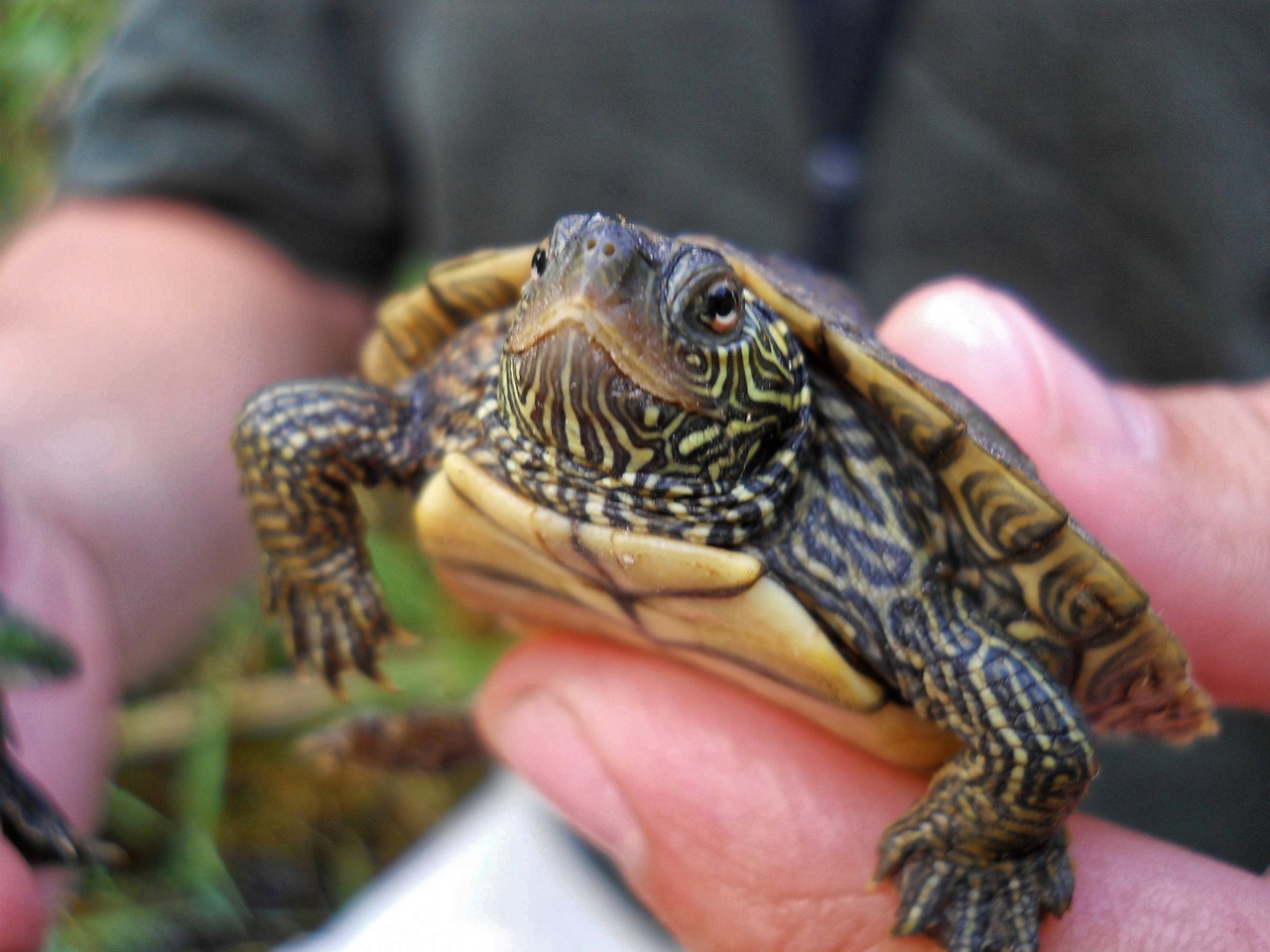
Not sure when your turtle eggs will hatch? Try our free Turtle Egg Hatch Calculator for instant predictions!
When Do Map Turtles Lay Eggs?
Most map turtle species mate twice a year, in spring and fall, and the females lay their eggs from mid-May through mid-July. The eggs then hatch in late summer.
After a fall mating in October or November, a female can hold onto viable sperm over winter and nest the following spring. That is why nesting season lands months after you last saw them mate.
A single female can lay 2 to 3 clutches per year, with 8 to 22 eggs per clutch, depending on the species and her size. Bigger, older females lay more.
What Do Map Turtle Eggs Look Like?
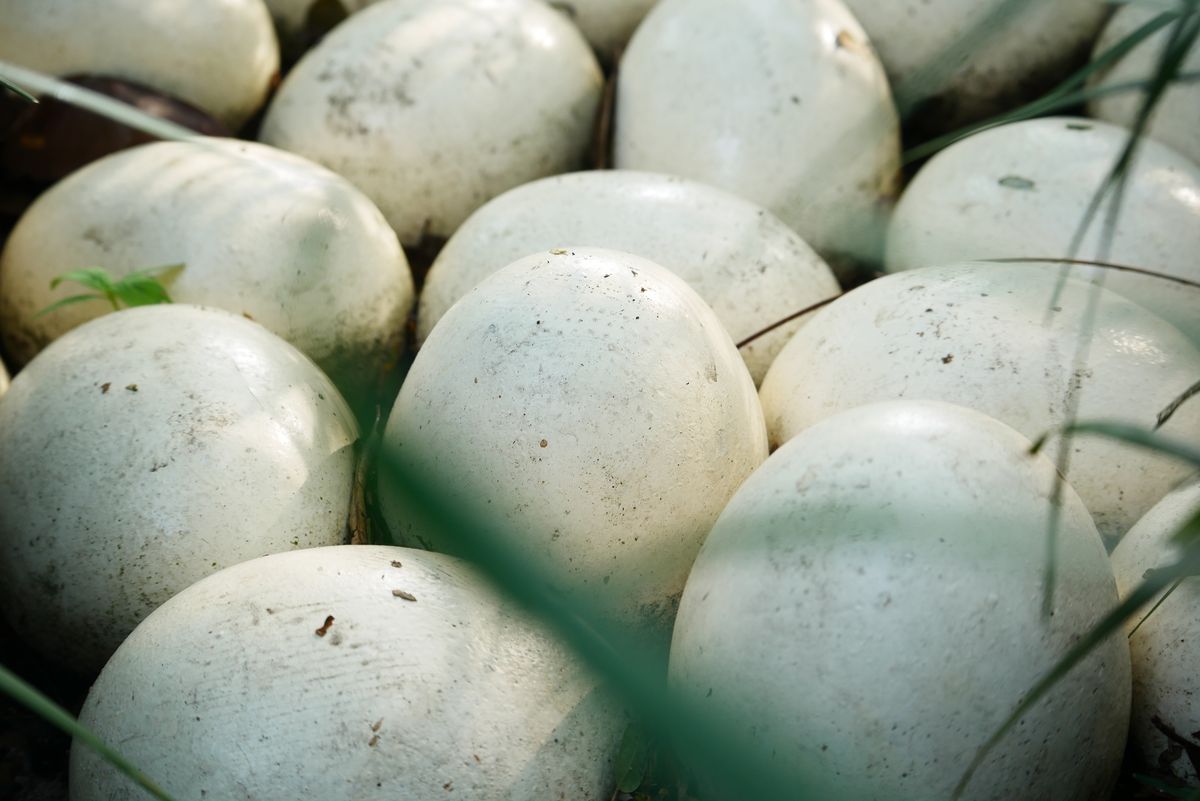
Map turtle eggs are small, off-white, and oval, usually about 1.2 to 1.5 inches long. Think of a stretched-out grape.
The shell is thin and a little leathery, not hard and glossy like a chicken egg. A slight give is normal, so do not panic if one flexes when you gently lift it.
Freshly laid eggs often look damp and slightly translucent. Within a few days, fertile ones start to firm up and change color, which is your first clue that something is developing inside.
This Hilarious Turtle Book Might Know Your Pet Better Than You Do

Let’s be real—most turtle care guides feel like reading a textbook written by a sleep-deprived zookeeper.
This one’s not that.
Told from the snarky point of view of a grumpy, judgmental turtle, 21 Turtle Truths You’ll Never Read in a Care Guide is packed with sarcasm, sass, and surprisingly useful insights.
And hey—you don’t have to commit to the whole thing just yet.
Grab 2 free truths from the ebook and get a taste of what your turtle really thinks about your setup, your food choices, and that weird plastic palm tree.
It’s funny, it’s honest, and if you’ve ever owned a turtle who glares at you like you’re the problem—you’ll feel seen.
Are Your Map Turtles Even Old Enough To Breed?
Here is something new keepers miss. You cannot breed immature map turtles no matter how hard you try, so age matters before anything else.
A male map turtle usually matures around 4 to 6 years old. Females take much longer and are typically ready between 8 and 14 years old.
Females are also noticeably bigger than males, which is the easiest way to tell them apart. If you are still unsure, our guide on how to identify map turtle gender breaks it down.
Signs Your Map Turtle Is About To Lay
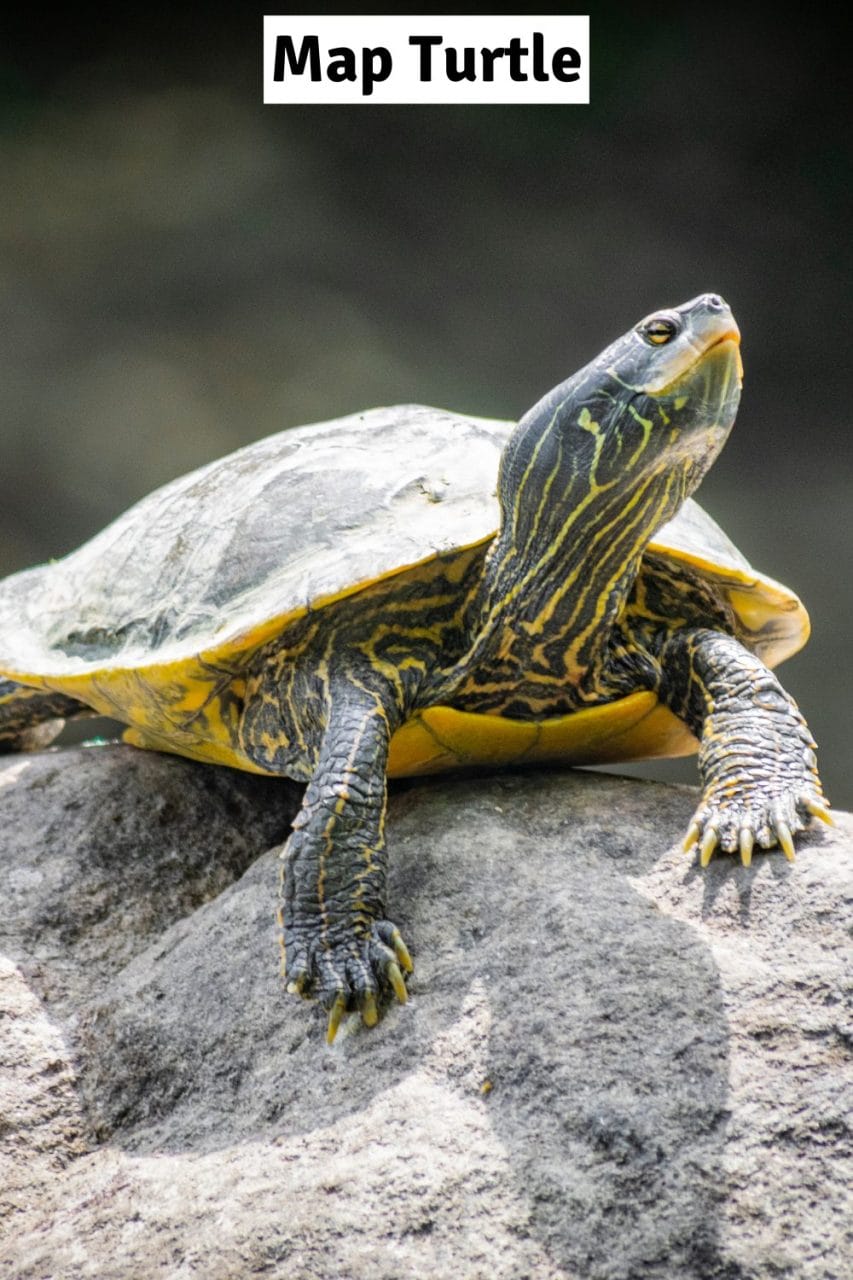
A gravid (egg-carrying) female tells you what is coming if you watch her closely. Your observation is the biggest asset here.
- She spends far more time on land, exploring the basking or nesting area for a spot
- Her walk looks different, stiffer and more restless than usual
- She starts digging test holes with her front claws, then her rear claws
- The final hole is deep enough to hide the whole clutch, then she covers it and walks away
You can also gently check if she is gravid by slipping a finger between the carapace and plastron just in front of a back leg. If you feel firm little lumps, she is carrying eggs.
Where Map Turtles Lay: The Nesting Box
This is the part that trips people up. Map turtles are aquatic, but they cannot lay eggs in the water. They have to climb onto land to nest.
If she has no proper nesting site, she may dump one or two eggs at a time in the tank over a week, which can make her seriously sick. So a real nesting spot is not optional.
Attach a nesting box to her tank and fill it with loamy, damp, sandy soil. Make the soil layer 12 to 14 inches deep so she can dig a full nest chamber.
If your turtles live in an outdoor habitat, you usually do not need a separate box. She will pick a sandy, sunny patch near the water on her own.
Egg-Bound? When A Female Can’t Pass Her Eggs
Sometimes a female is ready to lay but the eggs will not come out. This is called egg binding, or dystocia, and it is a genuine emergency.
Watch for these warning signs:
- She digs and strains for days but never produces eggs
- She goes off her food, turns lethargic, or stops basking
- Swelling near the tail, or tissue protruding from the cloaca
- She lays a couple of eggs, then stalls with more clearly still inside her
Most cases trace back to husbandry: no proper nest site, low calcium, weak temperatures, or missing UVB (my pick: Zoo Med ReptiSun 10.0). Deformed or oversized eggs can also jam the works.
First, make sure she actually has a warm, deep, private nesting box, because a stressed female will hold her eggs in. If she is still straining after a day or two, or she looks weak, get her to a reptile vet right away.
The vet can take an X-ray, give calcium or a hormone injection to help her pass the eggs, and in stubborn cases remove them surgically. Do not wait this one out. A retained clutch can kill her.
You Found The Eggs: Your Two Choices
Once the eggs are laid, you have two paths.
Option one is to let them hatch naturally. This can work in a warm outdoor setup, but a captive nest rarely matches the wild for temperature, moisture, and safety.
If you do leave an outdoor nest in place, cage it. Raccoons, skunks, foxes, and crows dig up turtle nests constantly, so a staked wire mesh cover over the spot gives the clutch a fighting chance while still letting rain and sun through.
Option two is to incubate them yourself. For most indoor keepers this is the reliable choice, and it is what gives the clutch the best odds. Here is how I do it.
Are The Eggs Fertile?
Before you commit two months to a clutch, it helps to know whether anything is growing inside. There are two easy checks and neither needs fancy gear.
The first is chalking, sometimes called banding. A few days after laying, a fertile egg develops a chalky white band around its middle that slowly spreads until the whole shell looks bright white. An egg that stays clear and translucent is very likely infertile.
The second is candling. Shine a small bright flashlight through the egg in a dark room. A fertile egg shows a web of pink or red blood vessels and a dark spot. A dud looks evenly yellow with no veins.
Do not toss an egg just because it looks off early on, and once an egg has chalked up, handle it as little as possible. Our full turtle egg care guide covers fertility testing in more depth.
The Golden Rule: Never Rotate The Egg
Before you move a single egg, understand this. Within a day or two of being laid, the embryo attaches to the top inside of the shell. After that, the egg must never be flipped or rotated.
Turn it over and you tear the embryo loose, which kills it. Turtle eggs are not like chicken eggs.
So gently lift each egg out, brush off the dirt with a soft paintbrush, and mark a small cross or dot on top with a pencil. That mark stays facing up the entire time.
How To Incubate Map Turtle Eggs
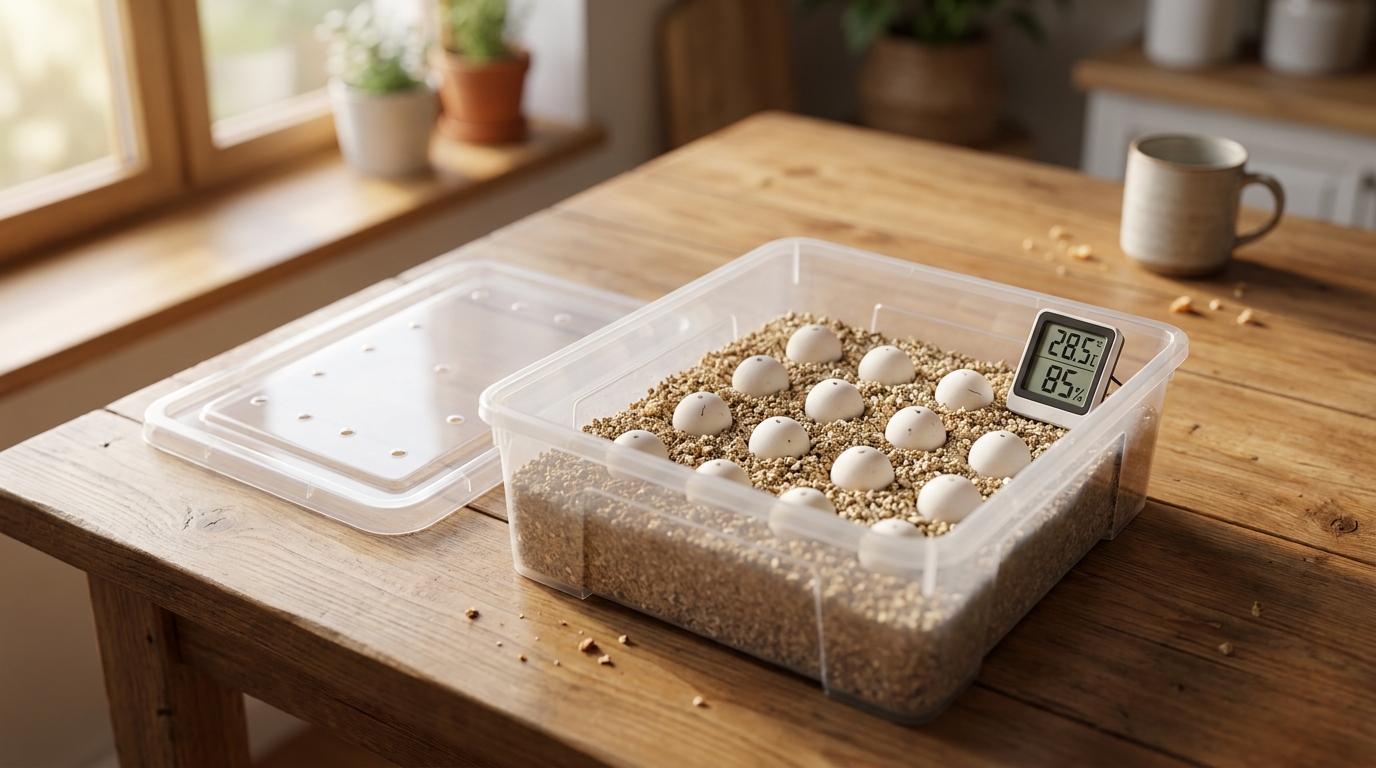
A basic incubator is cheap to build. You need a sturdy plastic container, a substrate, and a warm, stable spot.
Fill the container with vermiculite, or peat moss mixed with cactus and succulent potting soil. Poke a few small holes for drainage and airflow, then half-bury the eggs with the marked top still exposed.
Keep the substrate damp but never soggy, and never let it dry out. If you use a commercial incubator, clean it, add substrate, and run it empty for 24 hours before the eggs go in.
Here are the targets for map turtle eggs:
| Setting | Target | Notes |
|---|---|---|
| Temperature | 78°F to 84°F (26°C to 29°C) | Around 82°F is a safe middle |
| Humidity | 75% to 85% | Aim for about 80% |
| Substrate | Damp vermiculite or peat mix | Moist, never soaking |
| Egg position | Marked side up, never turned | Check gently every 2 days |
Incubation Troubleshooting: Dents, Mold & Bad Eggs
Even a good clutch will throw you a scare or two. Here is how to read the common ones.
Dented or dimpled eggs
A dent early in incubation almost always means the air is too dry. Bump up the humidity and lightly dampen the substrate, and a healthy egg will often plump back out.
A dent that shows up right near the hatch date is different. That is usually the baby absorbing the last of its yolk, and it is a good sign, not a bad one.
Mold
A little fuzzy white mold just means high humidity. Gently wipe it off with a cotton swab and add a couple more air holes for circulation.
Green, black, or gray mold, or an egg that has gone soft and mushy, means that egg has died. Carefully remove any rotten or collapsed egg so it does not spoil the healthy ones around it.
Temperature Decides Boy Or Girl
Here is the strange part. Map turtles have no sex chromosomes. The incubation temperature, not genetics, decides whether a hatchling is male or female.
Cooler eggs, around 77°F (25°C), mostly produce males. Warmer eggs, around 86°F (30°C), mostly produce females. The crossover sits near 82°F.
So if you hold a steady low temperature, do not be shocked when the whole batch comes out male. A slight gradient across the box gives you a mix.
How Long Until Map Turtle Eggs Hatch?
Warmth is the dial that speeds things up or slows them down.
| Incubation temp | Rough hatch time |
|---|---|
| Warm (~83°F) | About 50 days |
| Moderate (~78°F) | 55 to 60 days |
| Cooler setups | Up to 70 to 90 days |
Most clutches land in the 50 to 75 day range. Whatever you do, do not help a hatchling out of its shell. Wait until it cracks the egg and leaves on its own.
Map Turtle Hatchlings: Special Care
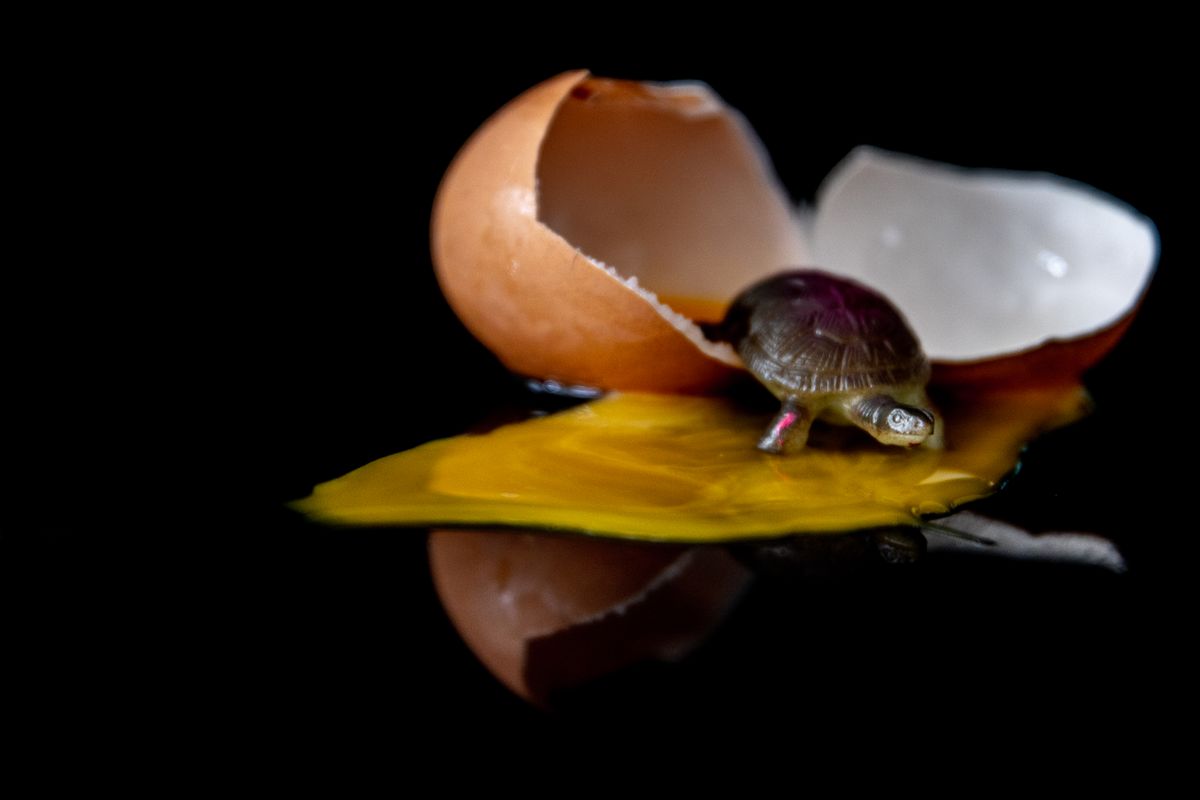
A newborn map turtle needs more care than an adult. When it hatches, you will notice two things: an egg tooth and a yolk sac.
The egg tooth is the little point it used to crack the shell, and it falls off on its own. The yolk sac hanging from its belly is its food supply for the first days, so never try to remove it.
A hatchling shell is very soft, and a little pressure can damage it. Handle them as little as possible. When you must, hold the baby by the top and bottom of the shell with your finger and thumb, never by the edges.
The Hatchling Enclosure
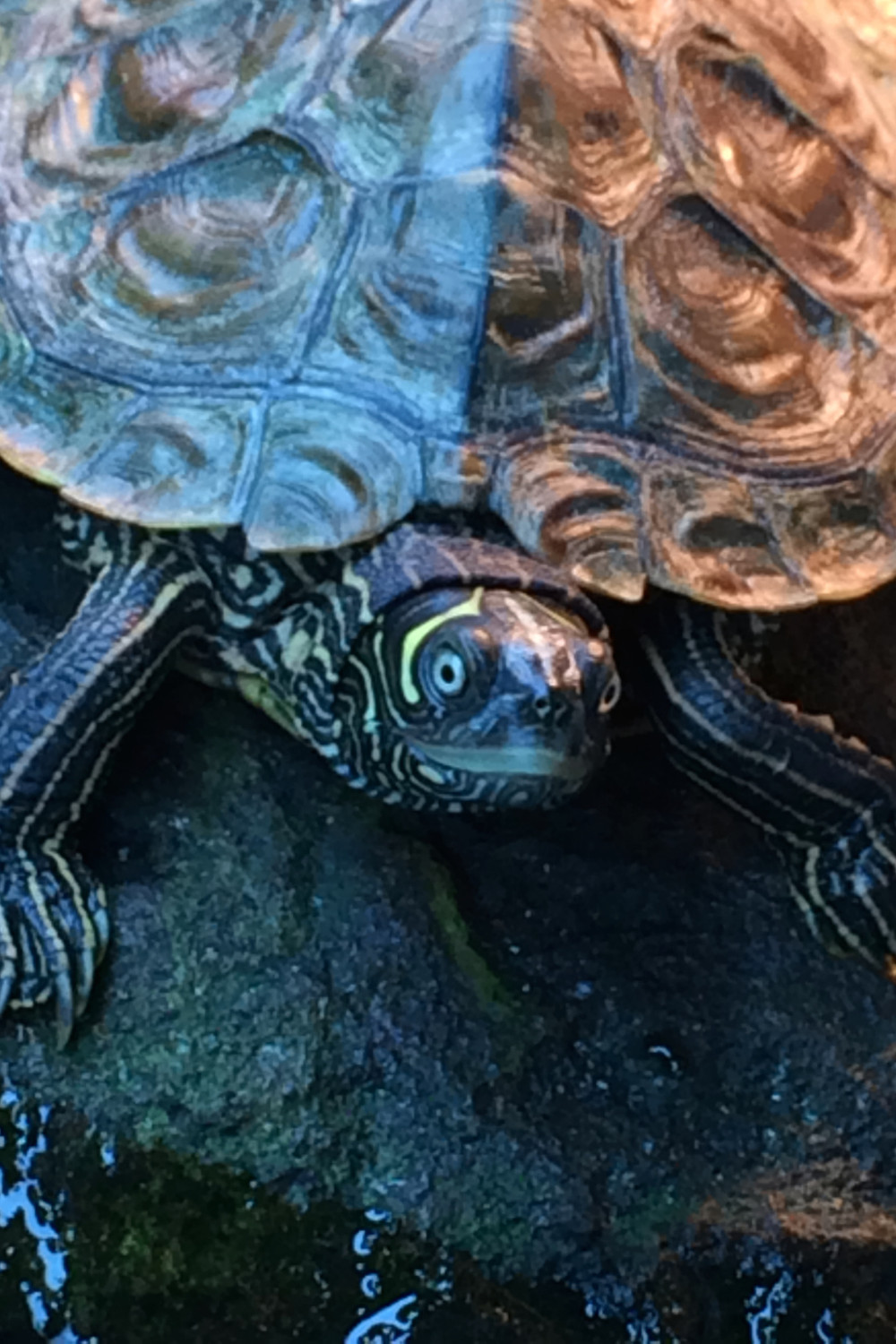
Babies need the same gear as adult map turtles, just scaled down. Never house them with adults. Keep hatchlings in their own container.
Map turtle babies actually swim well and do not want a puddle. Still, start shallow for safety and build up:
- Week 1: about 1 inch of water, no filter
- Week 2: about 2 inches, still no filter
- At 2.5 inches deep: add a gentle filter
- After ~4 months: around 3 inches, increasing as they grow
Keep the water temperature between 78°F and 80°F, and keep the water clean with a pH of 7.0 to 8.0 to hold germs down. Use a gentle power or foam filter so the current cannot trap a tiny turtle.
Add a UVB light so they can make vitamin D3 for strong bones and shells, plus a basking dock (my pick: floating basking platform) and a couple of hiding spots.
Feeding The Hatchlings
Map turtles are omnivores, but babies actually eat more plants than protein. A varied diet keeps them healthy and disease-resistant.
- Commercial hatchling pellets
- Feeder insects
- Green leafy vegetables
Dust their food with calcium and vitamin supplements. For the full breakdown, see our map turtle diet guide.
What You Need To Raise Map Turtle Hatchlings
A quick shopping list to raise a small group of 2 to 5 hatchlings:
- A 20-gallon (minimum) tank
- Fluorescent light and a UVB bulb
- An air-passing enclosure cover
- A clamp lamp with a ceramic fixture
- A 200-watt aquarium heater (recommended: submersible aquarium heater) and a thermometer
- A gentle water filter
- Hatchling pellets, small rocks, and hiding spots
Do The Different Map Turtle Species Vary?
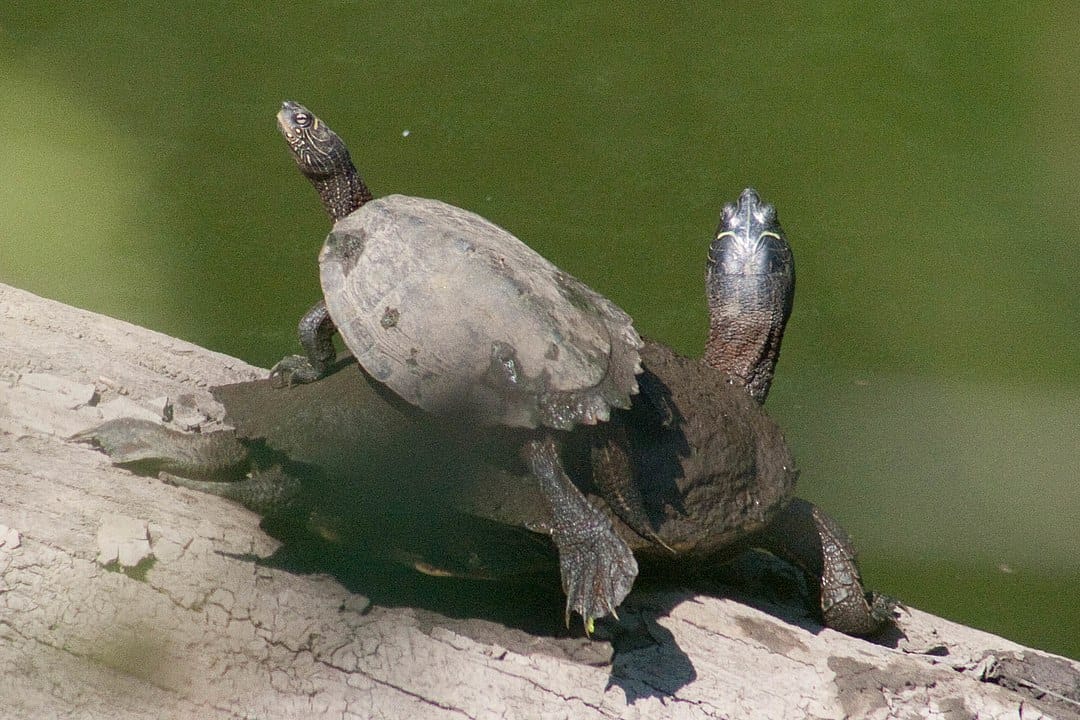
There are more than a dozen map turtle species in the genus Graptemys, and the egg basics are the same across all of them. The small differences are worth knowing.
Clutch size and exact timing shift a little by species and by how far north the turtle lives. Northern populations tend to nest later and their eggs can take longer to hatch outdoors.
Warm-climate species like the Mississippi map turtle may not brumate at all, while northern species usually do. Either way, incubate the eggs the same and you are on solid ground.
Frequently Asked Questions
When do map turtles lay eggs?
Map turtles nest from mid-May through mid-July after mating in spring and fall. Eggs are laid in that window and usually hatch in late summer.
How many eggs do map turtles lay?
Each clutch holds 8 to 22 eggs, and a female may lay 2 to 3 clutches per year depending on the species and her size.
How long do map turtle eggs take to hatch?
Usually 50 to 75 days. Warm incubation around 83°F can hatch them in about 50 days, while cooler setups can stretch toward 70 to 90 days.
How do I know if a map turtle egg is fertile?
Look for a chalky white band spreading across the shell a few days after laying, or candle the egg with a flashlight in a dark room. Fertile eggs show pink or red veins inside. Clear, veinless eggs are likely infertile.
Can map turtles lay eggs in water?
No. Map turtles are aquatic but must come onto land to nest. Without a proper nesting site a female may drop eggs in the tank, which can make her sick.
What if my map turtle can’t pass her eggs?
That is egg binding (dystocia) and it is an emergency. Make sure she has a warm, deep nesting box first. If she keeps straining with no eggs or turns lethargic, see a reptile vet right away.
Do map turtles hibernate?
Most do brumate in winter, slowing right down and eating little. Some warmer-climate species do not need to, while northern species usually do.
The Bottom Line
Map turtle eggs are not as scary as they first seem. Know the season, give her a real nesting box, and never rotate the eggs once they are laid.
From there, hold your incubator steady, watch for dents and mold, wait out the 50 to 75 days, and let each hatchling leave its shell on its own. Do that and you will be raising a tank of baby map turtles before the winter is out.
Hatching a clutch right now? Drop a comment with your species and how many eggs you got, and check our full map turtle care guide for the next stage.

About Author
Muntaseer Rahman started keeping pet turtles back in 2013. He also owns the largest Turtle & Tortoise Facebook community in Bangladesh. These days he is mostly active on Facebook.