How To Socialize Your Turtle: 5 Steps To A Friendlier Pet
This post was created with help from AI tools and carefully reviewed by a human (Muntaseer Rahman). For more on how we use AI on this site, check out our Editorial Policy.
If caring for a turtle is hard, wait until you try to befriend one.
Turtles are not exactly running to the door to greet you after a long day. They don’t fetch. They don’t wag anything. They just… stare at you like you owe them rent.
But here’s the thing. You absolutely can socialize with a pet turtle. It just takes patience, the right approach, and a solid understanding of what makes your turtle tick (or hide).
Set up a spacious tank with plenty of hiding spots and a solid basking dock (my pick: floating basking platform). Learn how to pet them gently. And reward them every time they don’t treat your hand like a threat.
A healthy, stress-free turtle is way easier to win over. But that’s only step one.
The full process can take weeks or even months. I am going to walk you through all five steps in this article. Let’s get into it.
Do Turtles Make Friendly Pets?
Your turtle stares at you from the tank with the same dead expression it’s had since the day you brought it home.
You feed it. You clean its tank. You even talk to it sometimes. Nothing.
Meanwhile, your neighbor’s golden retriever practically does backflips every time someone walks through the door. And there you are, wondering if your turtle even knows you exist.
Good news: it does.
Bad news: it’s going to take actual effort to prove it.
Socializing a turtle is nothing like befriending a dog or a cat. There is no tail wagging. No purring. No excited greetings at the door. But that doesn’t mean turtles are emotionless rocks with legs.
In fact, a 2025 study published in Animal Cognition by researchers at the University of Lincoln gave red-footed tortoises cognitive bias tests (the same kind used on humans) and found that tortoises in enriched environments displayed genuine optimistic mood states and lower anxiety. They weren’t just surviving. They were actually in a good mood.
So yeah. Your turtle has feelings. It just shows them differently.
This article is going to teach you how to work with that. Five steps, no fluff, and by the end, you’ll know exactly how to turn that stone-faced reptile into a pet that actually comes to you when you walk into the room.
We explore the full science behind turtle-owner relationships, including how turtles recognize you through sight, smell, and sound, in our article on whether turtles get attached to their owners.

Your Turtle Is Not Ignoring You. It Just Doesn’t Trust You Yet.
Let’s get something straight before we start.
Turtles are solitary animals. In the wild, they don’t form packs. They don’t raise their babies. They don’t hang out with other turtles for fun. The only time they really seek each other out is to mate.
So when your turtle hides from you, it’s not being rude. It’s doing exactly what millions of years of evolution told it to do. You are big. You are loud. And from its perspective, you could be a predator.
The goal here isn’t to make your turtle love you the way a dog does. That’s biologically impossible. What you are actually building is a learned association. Your turtle will come to associate you with food, safety, and positive experiences. And over time, that association becomes something that honestly looks and feels a lot like trust.
Turtles can recognize their owners by sight, sound, and smell. They can tell you apart from a stranger. Some turtle owners report their pets swimming toward them excitedly while hiding from unfamiliar people. That is real recognition.
But earning it? That takes patience.
This Hilarious Turtle Book Might Know Your Pet Better Than You Do

Let’s be real—most turtle care guides feel like reading a textbook written by a sleep-deprived zookeeper.
This one’s not that.
Told from the snarky point of view of a grumpy, judgmental turtle, 21 Turtle Truths You’ll Never Read in a Care Guide is packed with sarcasm, sass, and surprisingly useful insights.
And hey—you don’t have to commit to the whole thing just yet.
Grab 2 free truths from the ebook and get a taste of what your turtle really thinks about your setup, your food choices, and that weird plastic palm tree.
It’s funny, it’s honest, and if you’ve ever owned a turtle who glares at you like you’re the problem—you’ll feel seen.
Step 1: Fix The Environment First (Or Nothing Else Will Work)
Here’s a mistake I see constantly.
Someone buys a turtle, sticks it in a tiny tank with no hiding spots and a desk lamp for basking, and then wonders why the turtle won’t interact with them.
Think about it from the turtle’s perspective. You’re anxious. You’re cold. The water smells wrong. There’s nowhere to hide. And some giant hand keeps reaching into your home trying to touch you.
Would you be friendly?
Socializing starts with the habitat, not with handling. A stressed turtle will never warm up to you. Period.
Get The Tank Size Right
This is where most people mess up first.
The standard rule among reptile vets and experienced keepers is 10 gallons of tank space for every inch of shell length. A 5-inch turtle needs at least a 50-gallon tank. A 10-inch turtle? You’re looking at 100 gallons minimum.
| Shell Length | Minimum Tank Size |
|---|---|
| 4 inches | 40 gallons |
| 6 inches | 60 gallons |
| 8 inches | 80 gallons |
| 10 inches | 100 gallons |
| 12 inches | 120 gallons |
I know. That’s bigger than most people expect. But cramped turtles are stressed turtles. And stressed turtles don’t want to be your friend.
Nail The Water Parameters
Different species have different needs. This matters more than most people think.
Most freshwater pet turtles do well with water temperatures between 75-82°F and a pH between 6.0 and 8.0. But you need to check the requirements for your exact species.
Temperature swings are a huge stressor. Even a sudden change of a few degrees can send a turtle into panic mode. Invest in a reliable aquarium heater (recommended: submersible aquarium heater) and a submersible thermometer. Check it daily.
Ammonia and nitrite levels should always be at zero. Use a canister filter (my pick: Penn-Plax Cascade) rated for at least 4 times your tank’s water volume per hour. Turtles produce way more waste than fish, so the filter you’d use for a fish tank the same size is not going to cut it.
Set Up A Proper Basking Area
Basking isn’t optional. It’s a biological need.
Turtles are ectotherms. They can’t regulate their own body temperature. They need an external heat source, and basking under UV light is how they process calcium, digest food, and keep their immune system working.
The basking spot should be between 85-95°F, with UVB (my pick: Zoo Med ReptiSun 10.0) lighting placed within 18 inches. Without this, your turtle will get sick. Metabolic bone disease, respiratory infections, shell rot. All linked to inadequate basking setups.
But here’s the socializing angle most people miss: basking time is when turtles are most relaxed and most open to interaction. If their basking setup is great, they’ll be in a better mood. And that’s your window to start building trust.
If you’re on a budget, our guide to 4 DIY turtle basking areas walks you through building your own above-tank, hanging, pond, and floating platforms step by step.
Add Hiding Spots And Enrichment
A tank with nothing in it is boring and stressful. Turtles need places to hide, things to explore, and textures to interact with.
Add driftwood, rocks, live or silk plants, and varied substrate. Turtles will dig, investigate, and rearrange things. This is how they stay mentally stimulated.
A bored turtle is an anxious turtle. And an anxious turtle is going to treat your hand like a threat every single time.
For a hands-on project, check out our guide to 3 DIY turtle hideouts you can build with materials you probably already have at home.

Step 2: Let The Turtle Get Used To You (Without Touching It)
This is the step everyone skips.
People get a turtle and immediately try to pick it up. That is exactly the wrong move.
Before you ever touch your turtle, it needs to get comfortable just seeing you around. This is called desensitization, and it is the foundation of every successful turtle socialization.
How To Do It
Spend time near the tank every day. Sit next to it while you read, work, or scroll your phone. Don’t stare at the turtle. Don’t tap the glass. Don’t reach in. Just exist in the same space.
Talk softly near the tank. Turtles can hear, and they will learn to recognize your voice over time. Some owners report their turtles reacting differently to their voice compared to a stranger’s.
Move slowly around the tank. Fast movements trigger a prey response. You’re big and you move fast? That’s a predator in turtle logic. Slow, predictable movements tell the turtle you’re not a threat.
Do this for at least a week. Maybe two. Maybe longer depending on the turtle.
You’ll know it’s working when the turtle stops hiding every time you approach. It might even start watching you. That’s curiosity. That’s progress.

Step 3: Use Food To Build Trust (This Is The Real Game-Changer)
If there is one thing that every turtle cares about, it’s food.
You can use this to your advantage. Hand-feeding is the single most effective method for building a relationship with your turtle. Nothing else comes close.
The Feeding Progression
Don’t just shove your hand in the water on day one. Build up to it.
- Week 1-2: Drop food in the tank while the turtle can see you doing it. Stand close. Let it associate your presence with mealtime.
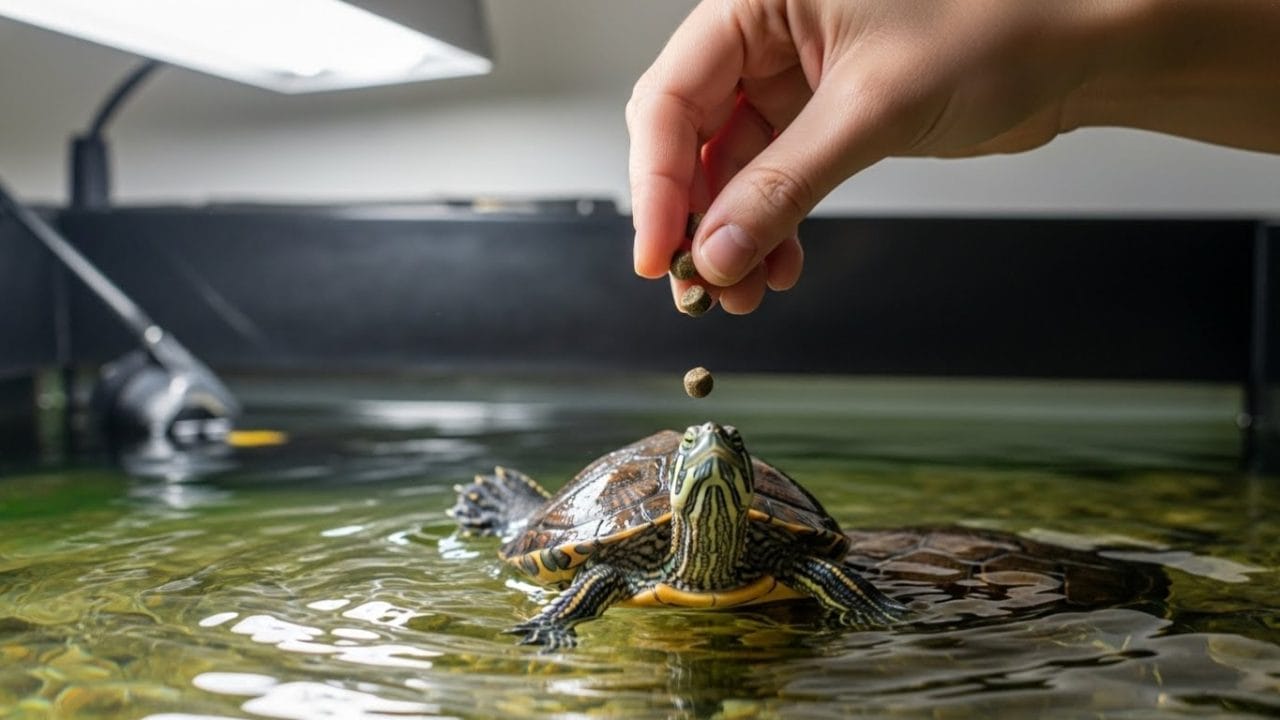
- Week 3-4: Use feeding tongs or chopsticks to hold food just above the water surface. The turtle will approach the food and, by extension, you.
- Week 5+: If the turtle is consistently taking food from tongs without flinching, try placing food on your open palm near the water surface. Let the turtle come to you.
Some turtles will take food from your hand within a week. Others might take months. The speed depends entirely on the individual turtle, its species, and how it was raised. Captive-bred turtles tend to be friendlier and more comfortable around humans than wild-caught ones.
Why This Works So Well
When you hand-feed consistently, something shifts in the turtle’s brain.
Your face becomes a signal that food is coming. This is basic classical conditioning. The same thing happens with dogs and dinner time, but it takes longer with turtles because they process things at their own pace.
Eventually, you’ll notice the turtle swimming toward the glass when you walk into the room. Not because it loves you in the way a dog does. But because it has learned that you = food = good thing happening.
And honestly? Watching a turtle swim excitedly toward you is one of the most satisfying things in reptile keeping. You earned that reaction.
A Quick Hygiene Note
Always wash your hands before and after handling your turtle or its food.
This isn’t optional. The CDC has documented multiple Salmonella outbreaks linked to pet turtles, including a 2024 outbreak that sickened 63 people across 22 states. Turtles can carry Salmonella bacteria without showing any symptoms. You cannot tell by looking at them.
Don’t kiss your turtle. Don’t let it roam on kitchen surfaces. And if you have kids under 5 or anyone with a weakened immune system in the house, be extra cautious.

Step 4: Learn How To Handle Them (And How Not To)
Once your turtle is comfortable eating from your hand, you can start introducing gentle physical contact.
But you need to get this right. Bad handling doesn’t just set back progress. It can permanently destroy the trust you’ve built.
The Golden Rules
Always approach from the front or side. The turtle needs to see you coming. Grabbing from above or behind triggers a predator reflex. Think about it: in the wild, the things that grab turtles from above are hawks and eagles.
Never grab just the shell from the top. This is how most people pick up turtles, and it’s wrong. The turtle feels insecure with its legs dangling in the air.
Support from underneath. Place your palm under the plastron (the flat belly part of the shell). This gives the turtle a solid surface to stand on and makes it feel safe.
Keep them low. Hold your turtle close to a surface. If it squirms and falls from a height, the shell can crack. And a cracked shell is a medical emergency.
Where They Like Being Touched
Not every turtle enjoys being touched. But the ones that do tend to prefer:
- Top of the head – gentle, slow strokes with your thumb work best.
- Under the chin – some turtles lean into this like a cat getting chin scratches.
- The shell – despite what some people think, turtles can feel pressure on their shells. Some enjoy gentle rubbing. Others hate it. Watch the reaction.
Reading Their Body Language
This is where you need to pay close attention.
| What You See | What It Means |
|---|---|
| Turtle retreats into shell | “I don’t want to be touched right now” |
| Opens mouth (especially snapping turtles) | “Back off or I’m going to bite you” |
| Legs kicking frantically | “Put me down, I’m scared” |
| Relaxed body, neck extended | “I’m comfortable, you can continue” |
| Swimming toward you at the glass | “Hey, is it food time? I recognize you” |
| Follows your finger along the glass | Curiosity and positive recognition |
| Stays basking calmly when you’re near | High level of trust |
If the turtle says no, respect it. Put it back. Try again tomorrow. Forcing interaction does more harm than good.
If you keep multiple turtles and notice aggressive body language between them rather than toward you, that may be bullying — read our guide on why turtles bully each other to understand the difference.

Step 5: Reward The Behavior You Want To See More Of
This is where everything comes together.
Every time your turtle does something friendly, reward it immediately. This is positive reinforcement, and it works on just about every animal on the planet, including turtles.
Figure Out Their Favorite Treat
Regular pellets don’t count. You need the good stuff.
Common high-value treats for turtles include: live or dried shrimp, mealworms, earthworms, bloodworms, small feeder fish, or pieces of fresh leafy greens like romaine lettuce or red leaf lettuce (depending on species).
Every turtle has a preference. Some go crazy for shrimp. Others will sell their soul for a worm. Figure out what your turtle’s “thing” is and keep it reserved specifically for reward moments.
Timing Is Everything
The treat must come within seconds of the desired behavior. If you wait too long, the turtle won’t connect the food to the action.
Turtle sits calmly on your palm? Treat. Right now.
Turtle approaches you at the glass? Drop food in. Immediately.
Turtle lets you rub its head without retreating? Treat. That second.
Over time, you are literally programming a positive feedback loop. The turtle learns that interacting with you leads to something good. And it starts seeking those interactions out on its own.
The Lap Test
Once your turtle is comfortable being handled and has a strong positive association with you, try this.
Sit on a soft surface (bed, carpet, mat). Place the turtle on your lap. Let it explore.
Some turtles will climb around you like a miniature mountain. Others will just sit there soaking up your body heat. Both are signs of trust.
Stay alert though. Turtles can slip and fall. Never do this on a hard surface, and never zone out while a turtle is on your body.
This kind of supervised play strengthens the bond more than almost anything else.

How Long Does All Of This Take?
Honestly? It depends.
Some turtles warm up within a few weeks. Others take 6 months or more. Species matters, age matters, and how the turtle was raised matters.
A few general patterns:
- Red-eared sliders tend to be one of the more social pet turtle species. Many owners report them recognizing faces and swimming to greet them relatively quickly.
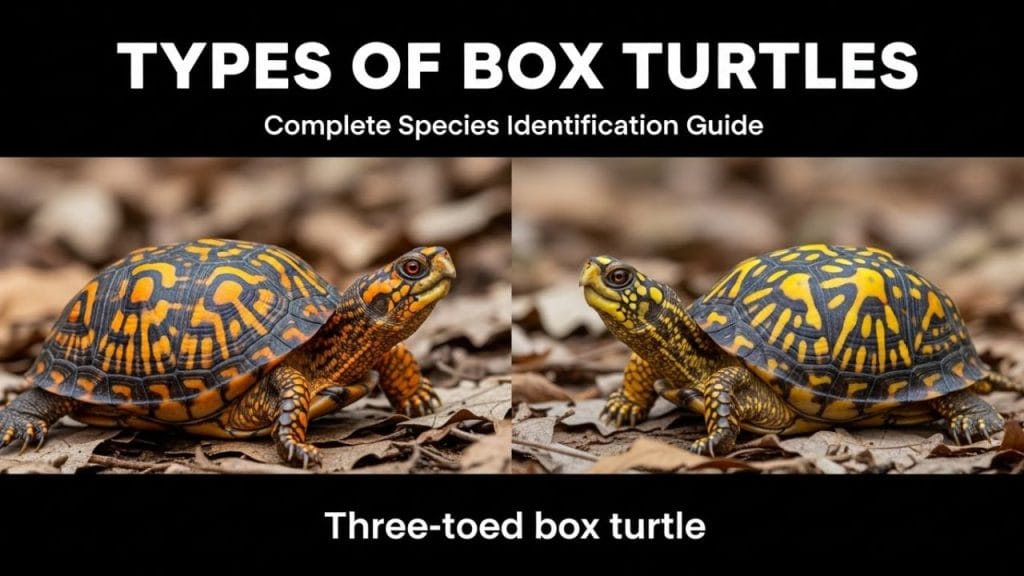
- Box turtles can become quite personable with consistent handling. They are land turtles, so you have more direct interaction time.
- Snapping turtles are not socialization projects for beginners. They can be unpredictable and their bites are no joke.
- Musk turtles are tiny and often feisty. They can come around, but it takes patience.
The point is: don’t compare your turtle’s progress to what you see on social media. Those videos of turtles climbing into their owner’s lap and nuzzling their hand? That probably took months or years of consistent effort.
The Commitment Behind The Bond
One thing I need to say before wrapping up.
Most pet turtles live 20 to 50 years. Some species live even longer. That’s not a pet. That’s a roommate for a significant portion of your life.
Too many people adopt turtles on a whim, get bored after a year or two, and release them into a random pond. That’s essentially a death sentence. A captive-raised turtle doesn’t know how to find food in the wild, doesn’t know how to avoid predators, and might introduce diseases into local ecosystems.
If you are not ready for a multi-decade commitment, don’t get a turtle. Seriously.
But if you are?
If you are willing to set up the right environment, show up consistently, hand-feed patiently, handle gently, and reward the small victories?
You’ll end up with a pet that recognizes your face, comes to you across the tank, sits calmly in your hand, and maybe even tilts its head up for a scratch.
And the best part? You’ll know you earned every bit of that trust. Because with turtles, nothing comes for free. That’s what makes it worth it.

About Author
Muntaseer Rahman started keeping pet turtles back in 2013. He also owns the largest Turtle & Tortoise Facebook community in Bangladesh. These days he is mostly active on Facebook.