Prehistoric and Ancient Turtles: The Complete Guide to Turtles That Lived Before Us
This post was created with help from AI tools and carefully reviewed by a human (Muntaseer Rahman). For more on how we use AI on this site, check out our Editorial Policy.
Turtles have been around for over 260 million years.
Let that sink in for a moment.
When the first turtle-like creatures appeared, dinosaurs hadn’t even evolved yet.
These ancient reptiles watched the rise and fall of the dinosaurs, survived the mass extinction that wiped out 75% of all life on Earth, and kept on going.
Today’s turtles are basically living fossils that have barely changed their winning design.
But the prehistoric turtles that came before them? Some of those were absolute monsters.
We’re talking car-sized sea turtles, freshwater giants with battle horns, and tortoises that could look you in the eye while standing on all fours.
Let me take you on a journey through time to meet these incredible creatures.
Quick Facts: Prehistoric Turtle Timeline
| Era | Time Period | Notable Turtles |
|---|---|---|
| Permian | 260 million years ago | Eunotosaurus (first turtle ancestor) |
| Middle Triassic | 240 million years ago | Pappochelys |
| Late Triassic | 220-210 million years ago | Odontochelys, Proganochelys |
| Late Cretaceous | 80-66 million years ago | Archelon, Protostega, Leviathanochelys |
| Paleocene | 60 million years ago | Carbonemys |
| Miocene | 13-5 million years ago | Stupendemys, Megalochelys |
How Did Turtles Get Their Shells?
This is one of the biggest mysteries in evolutionary biology.
For over a century, scientists had no idea how turtles ended up with their unique armor.
The shell isn’t like anything else in the animal kingdom.
It’s literally made from their ribs and backbone that fused together and expanded outward. For a closer look at modern shells, see our guide to turtle shell patterns and scute anatomy.
Imagine if your rib cage somehow grew over your entire body and hardened into a protective dome.
That’s essentially what happened.
Eunotosaurus: The Great-Great-Grandfather of Turtles
The story begins 260 million years ago in what is now South Africa.
A small lizard-like creature called Eunotosaurus africanus roamed the beaches of an ancient sea called the Karoo.
This little guy was only about 30 cm long.
It looked nothing like a modern turtle.
But it had one peculiar feature that changed everything.
Its ribs were unusually wide and arched backward, forming a slight dome beneath its skin.
Eunotosaurus had no idea it was laying the groundwork for all tortoises, sea turtles, and terrapins that would ever exist.
Pappochelys: The Link Between Lizard and Turtle
Fast forward about 20 million years to 240 million years ago.
In what is now Germany, a creature called Pappochelys rosinae was scurrying around.
Its name literally means “grandfather turtle.”
Pappochelys still had those widened, T-shaped ribs like Eunotosaurus.
But it also had something new: large, paired gastralia (abdominal bones) that would eventually become the plastron, the bottom part of a turtle’s shell.
Scientists believe Pappochelys was a digger.
Those broad ribs gave it stability and leverage for burrowing into the ground.
Odontochelys: The Turtle in a Half-Shell
In 2008, paleontologists in China made a groundbreaking discovery.
They found Odontochelys semitestacea, which translates to “toothed turtle with half a shell.”
This 220-million-year-old creature lived in what is now Guizhou Province.
Here’s what made it special: Odontochelys had a complete plastron (bottom shell) but no carapace (top shell).
Just expanded ribs pointing upward like the beginnings of something more.
This proved that turtle shells evolved from the bottom up.
The plastron came first, the carapace came later.
And yes, Odontochelys still had teeth, unlike modern turtles that have beaks.
| Feature | Odontochelys | Modern Turtles |
|---|---|---|
| Age | 220 million years | Present |
| Teeth | Yes | No (beak instead) |
| Plastron | Complete | Complete |
| Carapace | Incomplete | Complete |
| Size | ~35 cm | Varies widely |
Proganochelys: The First “Real” Turtle
By 210 million years ago, we finally see something that looks like a proper turtle.
Proganochelys quenstedti had the full package: a complete carapace, a complete plastron, and a horned beak.
It was about 1 meter long.
But Proganochelys was basically a medieval knight compared to modern turtles.
It had spikes on its tail that it could use as a club for defense.
Its shell had extra armor plates protecting the neck and legs.
And while it had a beak like modern turtles, it still had small teeth on the roof of its mouth.
Those teeth would disappear as turtles continued evolving.
Proganochelys lived alongside dinosaurs during the Late Triassic.
By the time T. rex showed up 140 million years later, Proganochelys was already ancient history.
This Hilarious Turtle Book Might Know Your Pet Better Than You Do

Let’s be real—most turtle care guides feel like reading a textbook written by a sleep-deprived zookeeper.
This one’s not that.
Told from the snarky point of view of a grumpy, judgmental turtle, 21 Turtle Truths You’ll Never Read in a Care Guide is packed with sarcasm, sass, and surprisingly useful insights.
And hey—you don’t have to commit to the whole thing just yet.
Grab 2 free truths from the ebook and get a taste of what your turtle really thinks about your setup, your food choices, and that weird plastic palm tree.
It’s funny, it’s honest, and if you’ve ever owned a turtle who glares at you like you’re the problem—you’ll feel seen.
The Giants of the Prehistoric Seas
Once turtles developed their iconic shell, some of them decided to go big.
Really, really big.
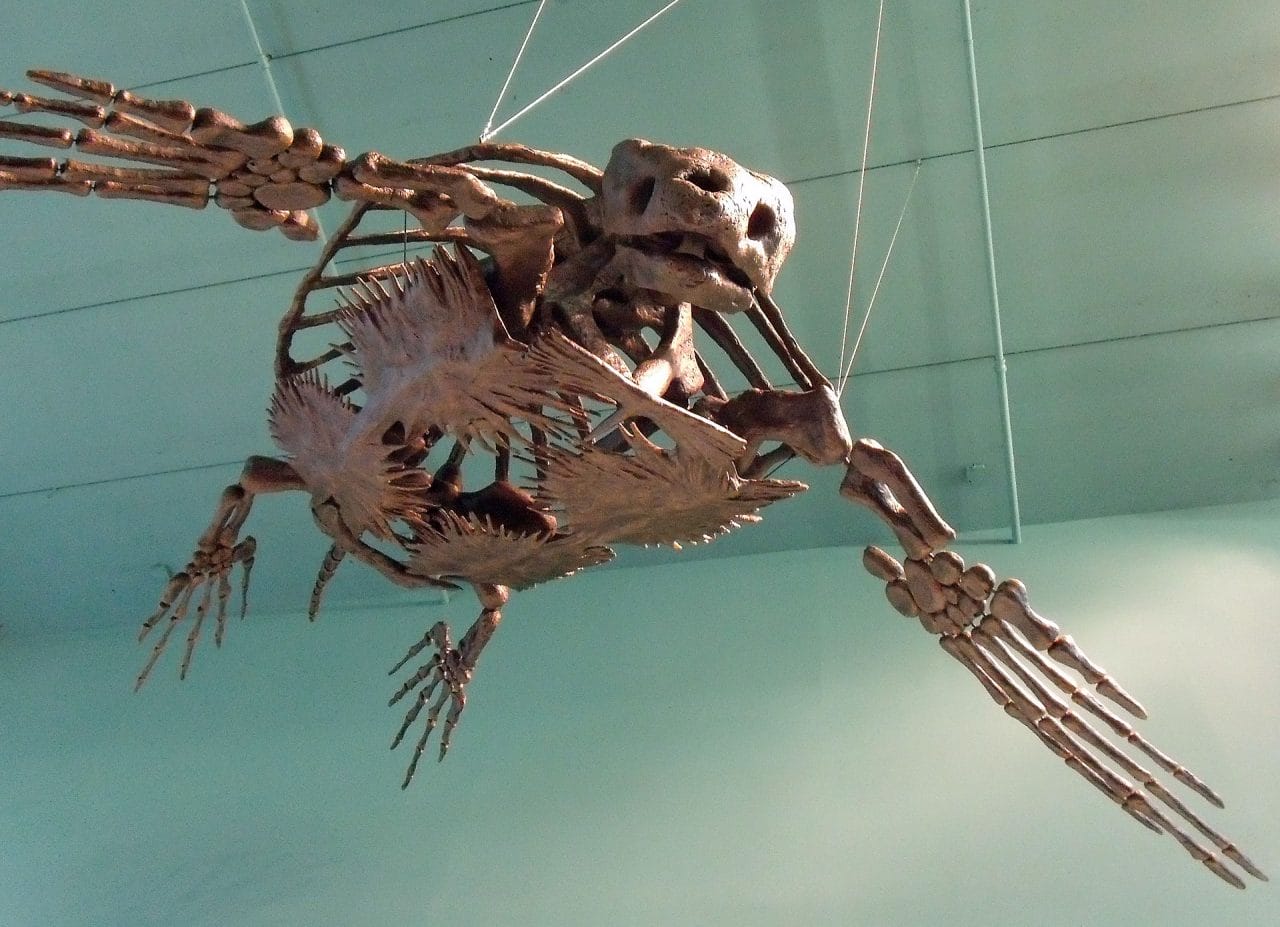
Archelon: The Largest Turtle Ever
If you’ve ever seen a leatherback sea turtle and thought “wow, that’s huge,” you haven’t seen anything yet.
Archelon ischyros makes the leatherback look like a toy.
This absolute unit swam the Western Interior Seaway about 75 million years ago.
The Western Interior Seaway was a massive inland sea that split North America in half, stretching from the Gulf of Mexico to the Arctic Ocean.
Size comparison:
| Measurement | Archelon | Modern Leatherback |
|---|---|---|
| Length (head to tail) | 4.6 m (15 ft) | 1.8 m (6 ft) |
| Flipper span | 4 m (13 ft) | 2.7 m (9 ft) |
| Weight | 2,200-3,200 kg (4,850-7,000 lbs) | 250-700 kg (550-1,540 lbs) |
The largest Archelon specimen ever found is nicknamed “Brigitta.”
She’s on display at the Natural History Museum in Vienna, Austria.
Her skull alone was 1 meter (3.3 ft) long.
That’s about the length of a baseball bat.
Archelon had several unique features:
Leathery shell, not hard: Like modern leatherbacks, Archelon didn’t have a typical hard shell. Instead, it had a framework of bones covered in leathery skin.
Hooked beak: Its jaws were shaped like a bird of prey’s beak, perfect for snatching jellyfish, squid, and mollusks.
Nostrils on top: Its elongated nostrils sat on top of its skull, making it easy to breathe at the surface.
Scientists believe Archelon was a slow-moving bottom feeder that preferred shallow coastal waters.
It would cruise along the seafloor, snapping up whatever it could find.
Despite its massive size, Archelon wasn’t safe from predators.
Mosasaurs (giant marine lizards) and prehistoric sharks likely hunted these turtles.
The only way Archelon survived was by being too big and tough for most predators to bother with.
Protostega: Archelon’s Smaller Cousin
Protostega gigas was basically Archelon’s little brother.
At 3 meters (10 ft) long and over 900 kg (2,000 lbs), it was still enormous by any modern standard.
Protostega lived in the same Western Interior Seaway as Archelon.
Some fossils have been found with shark teeth embedded in them.
Apparently, their shells weren’t always enough protection.
Leviathanochelys: Europe’s Sea Monster
Until 2022, scientists thought giant sea turtles only lived in North American waters.
Then a hiker stumbled across some bones in the Pyrenees mountains of Spain.
Oops. Turns out Europe had its own giants.
Leviathanochelys aenigmatica lived 80 million years ago during the Cretaceous Period.
Its name means “enigmatic leviathan turtle,” which is pretty much the coolest name ever.
| Measurement | Leviathanochelys | Archelon |
|---|---|---|
| Estimated body length | 3.74 m (12 ft) | 4.6 m (15 ft) |
| Pelvis width | 88.9 cm (35 in) | 81 cm (32 in) |
Here’s the weird part: Leviathanochelys had a bony protrusion on its pelvis that no other turtle, living or extinct, has ever had.
Scientists think it might have been an attachment point for muscles that helped the turtle breathe at great depths.
This discovery proved that giant turtles evolved independently on both sides of the Atlantic.
They weren’t related to each other; they just both decided that being massive was a good survival strategy.
Freshwater Giants: The River Monsters
The oceans weren’t the only place with giant turtles.
South America’s ancient rivers and swamps were home to some truly terrifying freshwater species.
Stupendemys: The Stupendous Turtle
The name says it all.
Stupendemys geographica was the largest freshwater turtle that ever existed.
It lived in the wetlands of what is now Venezuela and Colombia between 13 and 5 million years ago.
Back then, this region wasn’t the Amazon we know today.
It was a massive system of swamps and mega-wetlands called the Pebas System.
Size stats:
| Measurement | Stupendemys |
|---|---|
| Shell length | Up to 2.86 m (9.4 ft) |
| Estimated weight | 1,145 kg (2,524 lbs) |
| Comparison | 100x heavier than its closest living relative |
That shell alone was almost 3 meters long.
You could fit a grown adult inside it with room to spare.
Kind of like a very uncomfortable bathtub.
But the most surprising discovery came in 2020.
Scientists found that male Stupendemys had horns.
Actual bony horns growing from the front edges of their shells.
No other side-necked turtle, living or dead, has anything like this.
Researchers believe the males used these horns for combat, fighting each other for territory or mates.
Some fossils show deep scars on the horns, evidence of brutal battles between rival males.
Despite their massive size, Stupendemys wasn’t at the top of the food chain.
Many shells have been found with bite marks and puncture wounds.
The culprit? Purussaurus, a prehistoric caiman that grew 12 meters (40 ft) long and weighed over 8 tons.
That thing could bite through Stupendemys shells like they were made of crackers.
Carbonemys: The Crocodile Eater
If you thought Stupendemys was scary, meet Carbonemys cofrinii.
This turtle appeared 60 million years ago, just 5 million years after the dinosaurs went extinct.
It lived in the same Colombian coal deposits that produced Titanoboa, the largest snake ever discovered (45 feet long).
Carbonemys was “only” 1.72 meters (5 ft 8 in) long.
But don’t let that fool you.
This turtle had jaws like a snapping turtle on steroids.
| Feature | Carbonemys |
|---|---|
| Shell length | 1.72 m (5 ft 8 in) |
| Skull size | 24 cm (about the size of an NFL football) |
| Diet | Omnivore (plants, mollusks, smaller turtles, small crocodiles) |
Yes, you read that right.
Carbonemys ate crocodiles.
The smaller ones, anyway.
Scientists found bite marks on many turtle shells at the same site, showing that crocodilians preyed on turtles.
But nobody would have messed with an adult Carbonemys.
One researcher described it as “having one big snapping turtle living in the middle of a lake that survives because it has eaten all of the major competitors for resources.”
Land Giants: The Volkswagen Tortoises
While giant turtles were dominating the waters, their land-dwelling cousins weren’t slacking off.
Megalochelys: The Largest Tortoise Ever
Imagine a tortoise the size of a Volkswagen Beetle.
That was Megalochelys atlas.
This monster tortoise roamed across Asia from the late Miocene to the Pleistocene (about 5 million to 100,000 years ago).
| Measurement | Megalochelys atlas | Galápagos Tortoise |
|---|---|---|
| Shell length | 2+ m (6.5+ ft) | 1.2 m (4 ft) |
| Total length | 2.5-2.7 m (8-9 ft) | 1.5 m (5 ft) |
| Height | 1.8 m (5 ft 9 in) | 0.9 m (3 ft) |
| Weight | 1,000-2,000 kg (2,200-4,400 lbs) | 250 kg (550 lbs) |
Megalochelys could literally look a person in the eye.
Its humerus (upper arm bone) was larger than the same bone in an Indian rhinoceros.
These tortoises had massive, forked structures at the front of their plastron, which they probably used for shoving contests between males.
Kind of like how rams butt heads, but slower and with shells.
Megalochelys lived across a huge range, from India and Pakistan to Indonesia.
Different species lived on different islands, similar to the Galápagos tortoises today.
So what killed them?
Us.
The decline of Megalochelys perfectly correlates with the arrival of Homo erectus in each region.
Giant tortoises are slow, easy to catch, and provide a lot of meat.
They didn’t stand a chance against early human hunters.
The only reason giant tortoises still exist today is that the Galápagos and Seychelles islands were isolated enough to avoid human contact until relatively recently.
Why Did Prehistoric Turtles Get So Big?
This is actually a great question that scientists are still debating.
Several factors probably contributed:
1. Predator Pressure
The bigger you are, the fewer things can eat you.
During the Cretaceous, the oceans were full of massive predators like mosasaurs and sharks.
Growing to enormous sizes was one way to survive.
2. Warm Climates
Reptiles are cold-blooded, meaning their body temperature depends on their environment.
Warmer climates allow reptiles to grow larger and stay active for longer periods.
During many periods of turtle gigantism, global temperatures were much higher than today.
3. Abundant Food
Giant animals need giant amounts of food.
The prehistoric wetlands of South America and the rich seas of the Cretaceous provided plenty of resources to support these massive creatures.
4. Fewer Competitors
After the dinosaurs went extinct, many ecological niches were empty.
This allowed various animals, including turtles, to grow into sizes and roles that were previously unavailable.
5. Longer Lifespans
Turtles are famous for their longevity.
If you keep growing your entire life (which many reptiles do) and you live for centuries, you can get pretty big.
How Turtles Survived the Extinction That Killed the Dinosaurs
Here’s one of the most impressive facts about turtles.
66 million years ago, an asteroid slammed into what is now Mexico’s Yucatan Peninsula.
The impact triggered a mass extinction that wiped out 75% of all species on Earth, including all non-avian dinosaurs.
But turtles? They kept on trucking.
How?
Scientists have a few theories:
They could burrow: Many turtles can dig into mud or soil to escape extreme conditions.
They could go without food: Turtles have slow metabolisms and can survive for months without eating.
Freshwater habitats were buffered: Rivers and lakes were somewhat protected from the worst effects of the impact.
They were generalists: Turtles eat a wide variety of foods, so when some food sources disappeared, they could switch to others.
Of course, not all turtles survived.
The giant Archelon and its relatives went extinct.
But enough species made it through to eventually give rise to all 356 species of turtles we have today.
A Timeline of Turtle Giants
| Turtle | Time Period | Size | Habitat | Status |
|---|---|---|---|---|
| Eunotosaurus | 260 mya | 30 cm | Land (South Africa) | Extinct |
| Odontochelys | 220 mya | 35 cm | Marine (China) | Extinct |
| Proganochelys | 210 mya | 1 m | Semi-aquatic (Germany) | Extinct |
| Archelon | 75 mya | 4.6 m | Marine (North America) | Extinct |
| Protostega | 85-75 mya | 3 m | Marine (North America) | Extinct |
| Leviathanochelys | 80 mya | 3.7 m | Marine (Europe) | Extinct |
| Carbonemys | 60 mya | 1.7 m | Freshwater (South America) | Extinct |
| Stupendemys | 13-5 mya | 2.9 m | Freshwater (South America) | Extinct |
| Megalochelys | 5 mya – 100,000 ya | 2.7 m | Land (Asia) | Extinct |
| Leatherback | Present | 1.8 m | Marine (Global) | Vulnerable |
What We Can Learn From Prehistoric Turtles
Studying ancient turtles teaches us several important lessons:
Evolution is creative: The turtle shell is one of the most unique structures in the animal kingdom, and it evolved in a completely unexpected way.
Size matters, but not always: Being big helped prehistoric turtles survive predators, but it also made them vulnerable to changing conditions and human hunting.
Survivors are adaptable: Turtles have survived multiple mass extinctions by being generalists that can thrive in many different environments.
Climate affects everything: Many giant turtles thrived during warm periods and declined when temperatures dropped.
Humans are powerful: Even without modern technology, early humans hunted giant tortoises to extinction across most of the world.
Where Can You See Prehistoric Turtle Fossils?
If you want to see these ancient giants for yourself, here are some museums with impressive collections:
| Museum | Location | Notable Specimens |
|---|---|---|
| Natural History Museum Vienna | Austria | “Brigitta” – largest Archelon |
| American Museum of Natural History | New York, USA | Megalochelys atlas mount |
| Field Museum | Chicago, USA | Various marine turtle fossils |
| Smithsonian National Museum of Natural History | Washington D.C., USA | Carbonemys specimens |
| Yale Peabody Museum | Connecticut, USA | Archelon holotype |
FAQs About Prehistoric Turtles
What was the largest turtle ever?
Archelon ischyros holds the record at 4.6 meters (15 ft) long and weighing up to 3,200 kg (7,000 lbs). It lived about 75 million years ago in the Western Interior Seaway of North America.
Did turtles live with dinosaurs?
Yes! Turtles first appeared before dinosaurs (about 260 million years ago) and lived alongside them for over 170 million years. Modern turtles are survivors of the same extinction event that killed the dinosaurs.
When did turtles first appear?
The earliest turtle ancestor, Eunotosaurus, lived about 260 million years ago. The first turtle with a complete shell, Proganochelys, appeared about 210 million years ago.
Why were prehistoric turtles so big?
Several factors contributed: warm climates that allowed reptiles to grow larger, abundant food sources, fewer predators (or the need to be too big for predators to eat), and open ecological niches after mass extinctions.
Are any giant turtles still alive?
The largest living turtle is the leatherback sea turtle, which can grow up to 1.8 meters (6 ft) and weigh up to 700 kg (1,540 lbs). The largest living tortoise is the Galápagos giant tortoise, reaching about 1.2 meters (4 ft) and 250 kg (550 lbs).
Did prehistoric turtles have teeth?
Early turtles like Odontochelys (220 million years ago) still had teeth. Proganochelys (210 million years ago) had a beak but still had small teeth on the roof of its mouth. Modern turtles are completely toothless.
What killed the giant prehistoric turtles?
Different causes for different species. Marine giants like Archelon went extinct during the Cretaceous-Paleogene extinction event (the asteroid impact). Giant tortoises like Megalochelys were likely hunted to extinction by early humans.
Conclusion
Turtles are living proof that slow and steady really does win the race.
For over 260 million years, these incredible reptiles have adapted, evolved, and survived everything the planet has thrown at them.
From the earliest shell-less ancestors scraping by on ancient beaches to the massive sea monsters of the Cretaceous to the river giants of prehistoric South America, turtles have taken on countless forms.
They’ve outlasted the dinosaurs, survived ice ages, and weathered mass extinctions.
The turtles we share the planet with today are the descendants of those ancient survivors — though occasionally embryonic biology still produces surprises, like two-headed turtles.
When you see a turtle basking on a log or a sea turtle swimming through the ocean, you’re looking at an animal whose ancestors witnessed the rise and fall of the dinosaurs.
That’s pretty incredible if you ask me.

About Author
Muntaseer Rahman started keeping pet turtles back in 2013. He also owns the largest Turtle & Tortoise Facebook community in Bangladesh. These days he is mostly active on Facebook.