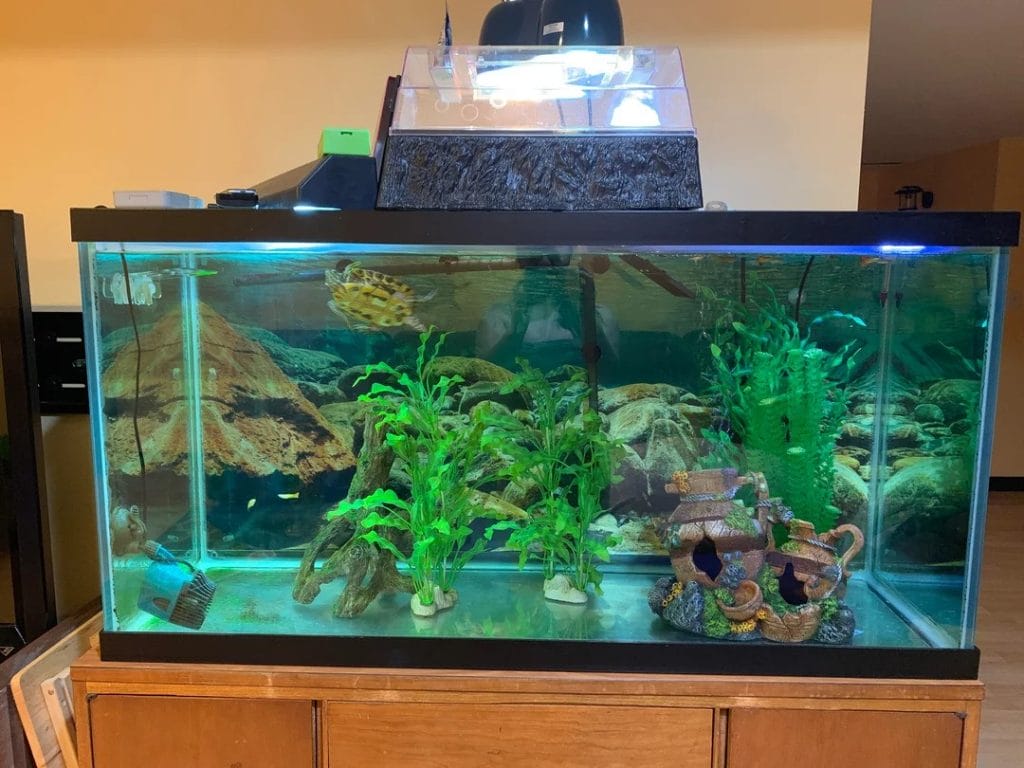
Types of Box Turtles: The Ultimate ID Guide
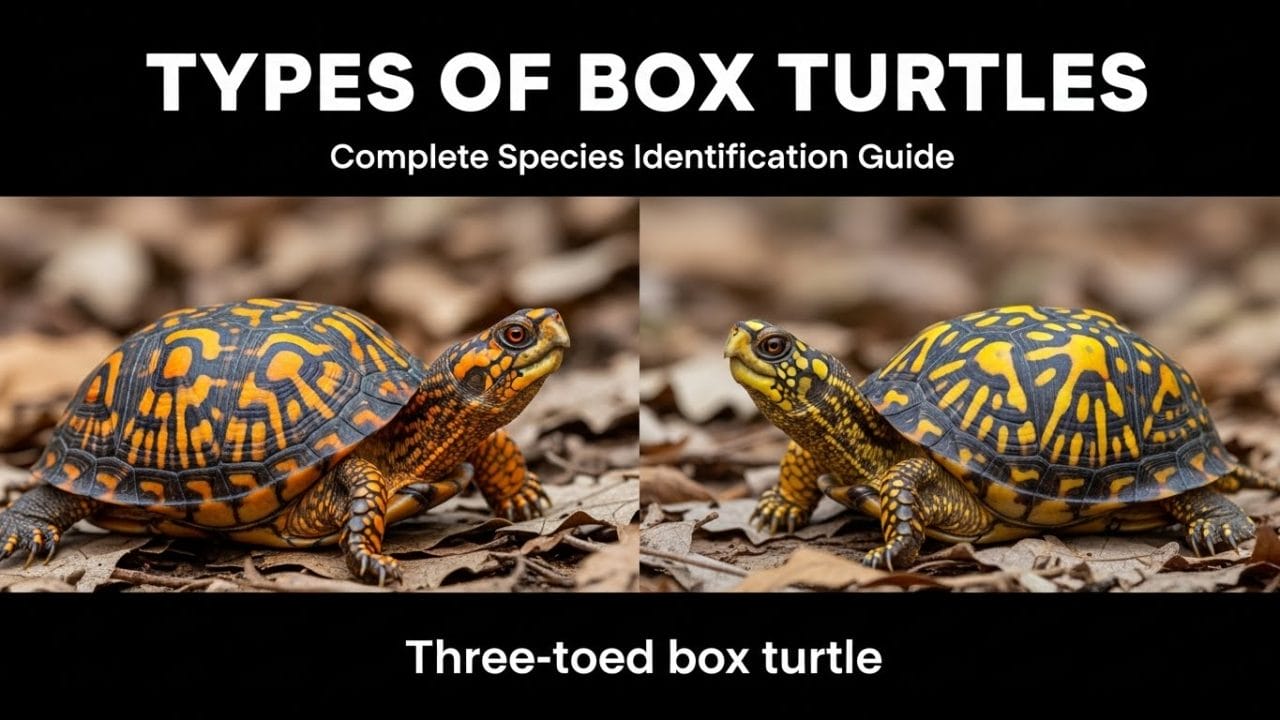
This post was created with help from AI tools and carefully reviewed by a human (Muntaseer Rahman). For more on how we use AI on this site, check out our Editorial Policy.
You found a box turtle and now you’re staring at it like it’s gonna introduce itself.
Spoiler: it won’t.
But here’s the thing – knowing what type of box turtle you’ve got isn’t just cool trivia. It actually matters for their box turtle care, their indoor habitat setup, and whether you should even be handling them in the first place.
Let me break down all the major types of box turtles in North America, from the common backyard species to the ones that basically never leave the water (yeah, that’s a thing).
Want to look beyond box turtles? Browse our full world turtle and tortoise database of 392 species.
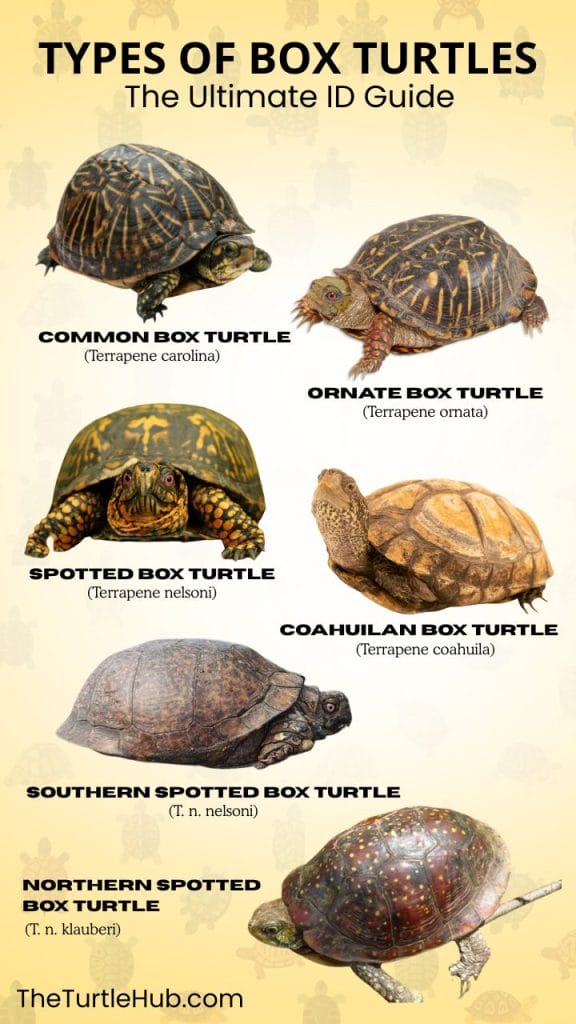
What Makes a Box Turtle a Box Turtle?
Before we dive into the specific types, let’s talk about what makes these guys special.
All box turtles have one killer feature: a hinged bottom shell (called a plastron) that lets them close up like a lunchbox. Think of it as the ultimate panic room – predator shows up, they just zip themselves inside and wait it out.
They’ve also got that classic domed shell that makes them look like tiny walking helmets.
Unlike their aquatic cousins who need to be in water constantly, most box turtles are land lovers. They might wade into shallow water to cool off, but they’re not trying to live there full-time.
Warning: You Might Spend Hours Here
I’ve built the ultimate turtle and tortoise species database. This isn’t your average turtle list. Filter by genus, conservation status, and more. How many species? Which are endangered? What’s the tiniest one? It’s all there.
Which Type of Box Turtle Makes the Best Pet?
Eastern and Three-toed box turtles are the most commonly kept types in captivity — and the most beginner-friendly.
Three-toed box turtles are generally considered the most adaptable. Eastern box turtles are a close second but need precise humidity, box turtle UV lighting, and temperature conditions to thrive long-term.
Regardless of species, one rule applies: captive-bred only. Wild-caught box turtles carry parasites, stress badly in captivity, and collecting them is illegal in most states. For everything on setup, diet, and daily care, read our complete box turtle care guide.
This Hilarious Turtle Book Might Know Your Pet Better Than You Do

Let’s be real—most turtle care guides feel like reading a textbook written by a sleep-deprived zookeeper.
This one’s not that.
Told from the snarky point of view of a grumpy, judgmental turtle, 21 Turtle Truths You’ll Never Read in a Care Guide is packed with sarcasm, sass, and surprisingly useful insights.
And hey—you don’t have to commit to the whole thing just yet.
Grab 2 free truths from the ebook and get a taste of what your turtle really thinks about your setup, your food choices, and that weird plastic palm tree.
It’s funny, it’s honest, and if you’ve ever owned a turtle who glares at you like you’re the problem—you’ll feel seen.
The Big Four: Main Box Turtle Species in North America
Here’s where it gets interesting – there are 4 main species of box turtles in North America, and some have multiple subspecies.
It’s like a family tree, but with shells.
Common Box Turtle (Terrapene carolina)
This is the celebrity of box turtles. When people picture a box turtle, they’re usually thinking of this one.
The Common box turtle has 6 subspecies, which is more variety than a cereal aisle:

Eastern Box Turtle (T. c. carolina)
The poster child of the bunch.
Where they live: From Maine down to Florida, west to Michigan and the Mississippi River
Shell game: Dark brown shell with yellow or orange markings – could be lines, dots, or random splashes of color. Every Eastern is basically a unique art piece.
Size check: Around 5-6 inches long
The giveaway: 4 toes on the back feet, and males usually rock those bright red eyes like they’re auditioning for a vampire movie
Home sweet home: Moist woodlands where they can dig around in leaves and hide under logs
These guys are the official state reptile of both North Carolina and Tennessee, so they’re kind of a big deal.

Florida Box Turtle (T. c. bauri)
Florida’s answer to the Eastern box turtle, but with more pizzazz.
Where they live: Almost exclusively in Florida (shocking, right?), with occasional sightings in southern Georgia
Shell game: Dark brown or black shell with bright yellow radiating lines – like someone drew sunbeams all over it
Size check: Smaller than their Eastern cousins at about 4-4.5 inches
The giveaway: 3 toes on the back feet (sometimes 4), yellow lines on their head, and here’s the weird part – both males and females can have brown eyes, so the red-eye rule doesn’t work here
Home sweet home: Moist woodlands, but they’re cool with sandy grasslands too
They’re more chill about different habitats than the Eastern variety.

Gulf Coast Box Turtle (T. c. major)
The giants of the box turtle world.
Where they live: Along the Gulf of Mexico from Louisiana to the Florida Panhandle
Shell game: Dark brown to almost black with flared back edges – some have faint yellow spots or stripes, but honestly, they’re pretty understated
Size check: The biggest of all box turtles at 7-8.5 inches long
The giveaway: 4 toes, dark coloring all over (head, limbs, everything), and they’re way more aquatic than other box turtles. You’ll find these guys hanging around swamps and brackish water.
Home sweet home: High humidity areas, marshes, estuaries – basically anywhere wet and warm
Think of them as the semi-aquatic version of box turtles.
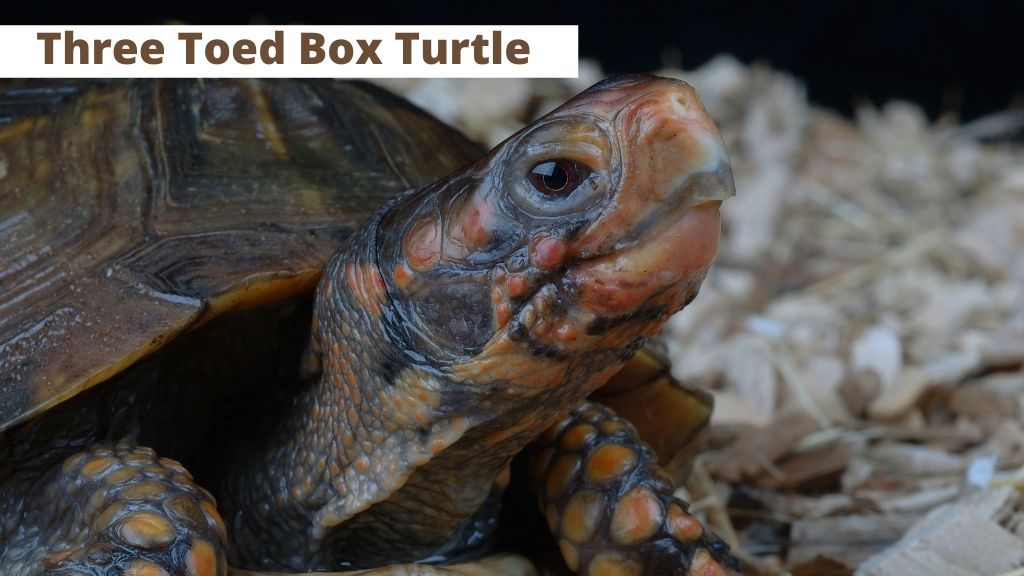
Three-Toed Box Turtle (T. c. triunguis)
Named for the obvious reason.
Where they live: Central US – west of the Mississippi, from Alabama through Missouri, Arkansas, Oklahoma, Kansas, and into Texas
Shell game: Tan, light yellow, or olive shell with a ridge down the center. Markings vary wildly – some have patterns, some look pretty plain.
Size check: Around 5-6 inches
The giveaway: 3 toes on the back feet (sometimes 4, because nature likes to mess with us). Males often have a red head, especially during breeding season.
Home sweet home: Moist forested areas with patchy sunlight
Fun fact: They’re supposedly more adaptable to captivity than other subspecies, but that doesn’t mean you should snag one from the wild.

Mexican Box Turtle (T. c. mexicana)
The rare one you probably won’t run into.
Where they live: Endemic to Mexico – northeastern parts near the Gulf Coast
Shell game: Similar to other Common box turtles with variations in brown tones and yellow markings
Size check: Around 5-6 inches
The giveaway: Geographic location is your best bet here
Home sweet home: Forests and scrublands in their limited Mexican range
There are export laws protecting them, so they’re basically never seen in the pet trade.

Yucatan Box Turtle (T. c. yucatana)
The southern mystery turtle.
Where they live: Only in the Yucatan Peninsula of Mexico
Shell game: Similar patterns to other Common box turtles
Size check: Around 5-6 inches
The giveaway: Location, location, location
Home sweet home: The Yucatan’s unique forest environments
Locals say they’re seeing fewer of these guys, which is concerning. They’re separated from US subspecies by a gap in western Texas, so they’ve been doing their own thing for a while.
Ornate Box Turtle (Terrapene ornata)
The artist of the group.
This species is split into 2 subspecies, and both are gorgeous.
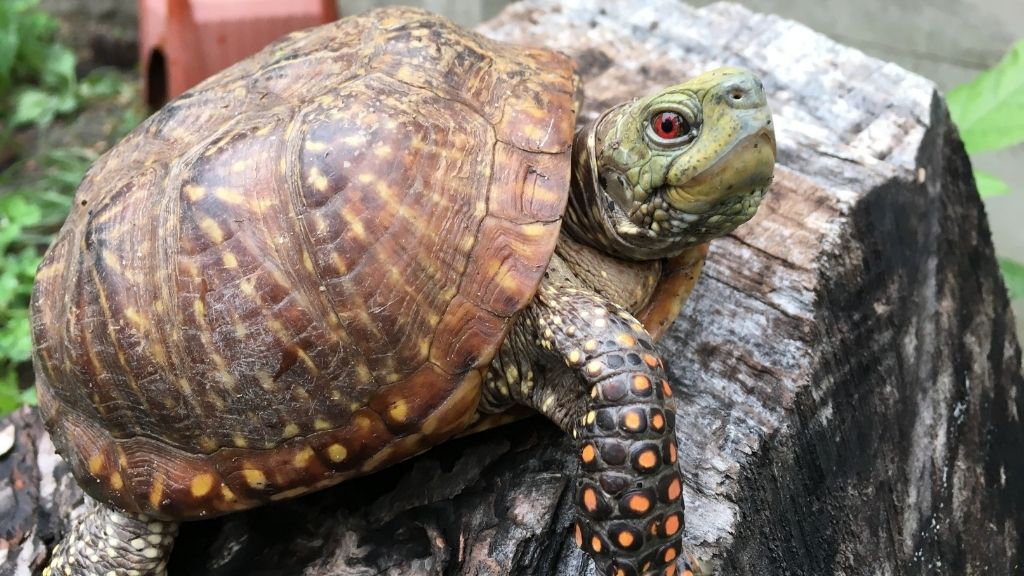
Ornate Box Turtle (T. o. ornata)
The one that looks like someone went wild with yellow highlighters.
Where they live: Great Plains states – from South Dakota down to Texas, west through Kansas, Nebraska, Oklahoma, and parts of New Mexico and Arizona
Shell game: Dark brown or black shell with bright yellow or orange radiating lines forming star or sun patterns. It’s like looking at a fancy tile floor.
Size check: 4-5 inches
The giveaway: That wild starburst pattern, plus they usually have 4 toes. Males often have greenish or yellowish heads.
Home sweet home: Prairies, grasslands, sandy areas – they’re way more tolerant of dry conditions than the woodland-loving Common box turtles
They’re Kansas’s state reptile, proving that even prairie states appreciate a good-looking turtle.
Desert Box Turtle (T. o. luteola)
The Ornate’s desert-adapted cousin.
Where they live: Southwestern US (Texas, New Mexico, Arizona) and northern Mexico – true to the name, they like it dry
Shell game: Yellowish-brown shell with thinner lines than the regular Ornate. As they age, the pattern fades, so old-timers can look pretty plain.
Size check: 4-5 inches
The giveaway: The patterns are less intense, and they live in straight-up desert areas
Home sweet home: Desert and semi-desert regions – these guys are built for heat and limited water
They’re basically the minimalist version of the Ornate.
Spotted Box Turtle (Terrapene nelsoni)
The mysterious rare one that scientists haven’t fully figured out yet.
This species has 2 subspecies, but honestly, there’s debate about whether they’re actually different enough to be separate.
Northern Spotted Box Turtle (T. n. klauberi)
Where they live: Western Mexico (Sonora and Sinaloa states)
Shell game: Dark shell covered in small yellow or white spots – imagine someone flicked paint at it
Size check: Around 4-5 inches
The giveaway: Those spots are pretty distinctive, plus geographic location
Home sweet home: Mexican tropical deciduous forests
Southern Spotted Box Turtle (T. n. nelsoni)
Where they live: Western Mexico, south of the Northern subspecies
Shell game: Similar spotting pattern to the Northern variety
Size check: Around 4-5 inches
The giveaway: Location is key here since they look so similar to their Northern cousins
Home sweet home: Tropical forests in their range
Real talk: We don’t know much about these turtles. They haven’t been studied as thoroughly as the other species, so a lot about them is still a mystery.
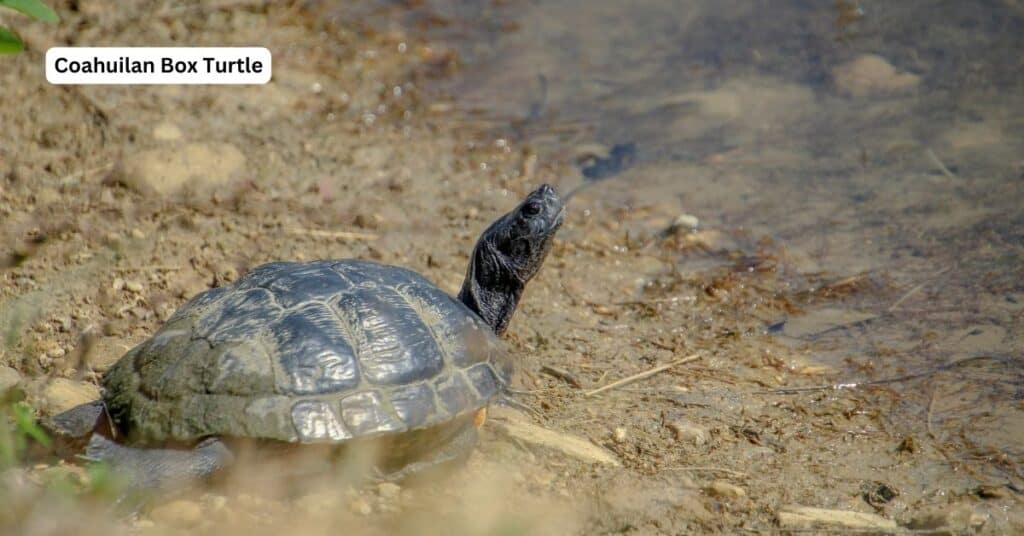
Coahuilan Box Turtle (Terrapene coahuila)
The weird one that breaks all the box turtle rules.
Where they live: Only in the Cuatro Ciénegas region of Coahuila, Mexico – 360 square kilometers of desert marshes. That’s it. Nowhere else on Earth.
Shell game: Dark brown to black with virtually no markings. Often covered in algae because they’re in the water so much.
Size check: Around 5-7 inches
The giveaway: They’re almost completely aquatic, which is wild for a box turtle. You’ll find them in desert springs and marshes, not wandering around on land.
Home sweet home: Permanent water sources in the Chihuahuan Desert
Conservation status: Endangered – they’re the most threatened box turtle species
These turtles evolved from land-dwelling ancestors to survive in desert springs, which is like the ultimate adaptation story. Scientists think they developed from the Common box turtle line and went full aquatic to deal with the harsh desert environment.
Box Turtle ID Cheat Sheet
Let me make this ridiculously simple.
| Turtle Type | Shell Pattern | Toes | Size | Location | Habitat |
|---|---|---|---|---|---|
| Eastern | Yellow/orange on brown, varied | 4 | 5-6″ | Eastern US | Moist woods |
| Florida | Yellow lines radiating | 3-4 | 4-4.5″ | Florida | Woods & grasslands |
| Gulf Coast | Dark, flared edges | 4 | 7-8.5″ | Gulf Coast | Swamps, marshes |
| Three-Toed | Tan/olive with ridge | 3 | 5-6″ | Central US | Forests |
| Mexican | Brown with yellow marks | 4 | 5-6″ | Mexico | Forests |
| Yucatan | Similar to Mexican | 4 | 5-6″ | Yucatan | Forests |
| Ornate | Yellow starburst lines | 4 | 4-5″ | Great Plains | Grasslands |
| Desert | Faded yellow lines | 4 | 4-5″ | Southwest | Deserts |
| Spotted (both) | Small yellow/white spots | 4 | 4-5″ | W. Mexico | Tropical forests |
| Coahuilan | Dark, algae-covered | 4 | 5-7″ | Coahuila | Aquatic |
How to Tell Males from Females
Now that you know what species you’ve got, let’s figure out if it’s Mr. or Ms. Turtle.
Eye Color (Usually Reliable)
Male box turtles typically have bright red, orange, or pink eyes. Females have brown or dark red eyes.
But here’s the catch: Florida box turtles don’t follow this rule. Both sexes can have brown eyes, so you’ll need other clues.
Also, female Easterns occasionally have red eyes (just darker than males), so eye color alone isn’t bulletproof.
Shell Shape (Pretty Reliable)
Flip that turtle over carefully (near the tail so they can’t bite you).
Males: Concave (curved inward) plastron. It’s like a shallow bowl. This helps them stay balanced during mating, which is honestly more than I needed to know, but here we are.
Females: Flat or slightly convex plastron. They need that flat belly for carrying eggs.
This is one of the most reliable indicators once they’re adults.
Shell Edge (Very Reliable)
Look at the back edge of the top shell (carapace).
Males: Shell flares outward, especially at the back. There’s often a small V-shaped notch to accommodate the tail during mating.
Females: Shell lies flat, no flaring.
This is actually one of the best ways to tell them apart if you know what to look for.
Tail Size (Reliable)
Males: Long, thick tails. The cloaca (vent opening) is farther from the body, closer to the tail tip.
Females: Short, thin tails. The cloaca is right near where the tail meets the body.
Males need that extra tail real estate for their reproductive organs.
Claw Situation (Somewhat Reliable)
Males: Thick, curved back claws, especially on Eastern and Three-toed box turtles. They use these to grip the female’s shell during mating.
Females: Straighter, thinner back claws. They use them for digging nests, so they need them more for digging than gripping.
Front claws can also differ – males tend to have longer front claws.
Coloring (Helpful But Not Definitive)
Males: Usually more colorful. Brighter head markings, more vibrant shell patterns. They’re basically showing off.
Females: More subdued colors. Browns and darker tones dominate.
This is especially obvious in Eastern box turtles where males look like they raided a paint store.
Size (Tricky)
Males: Often slightly larger than females of the same age.
Females: Can be bigger in some species (like Ornates), so this isn’t reliable on its own.
You need to see them at the same age to make any size comparison, which makes this the least useful identifier.
Pro Tips for Box Turtle Identification
Here’s what actually works when you’re trying to ID a box turtle in the wild.
Location Matters Most
Seriously, where you found the turtle tells you more than anything else.
Found in Florida? Probably a Florida box turtle. Great Plains? Likely an Ornate. Gulf Coast swamp? Bet on the Gulf Coast variety.
There’s some overlap in ranges where subspecies meet and interbreed, but geography is your best starting point.
Count Those Toes
Three toes = Three-toed (or possibly Florida)
Four toes = Probably everything else
It’s not perfect (some Three-toeds have 4, and some Floridas have 4), but it’s a quick check that helps narrow things down.
Look at the Habitat
Where was the turtle hanging out?
- Grassland/prairie: Probably Ornate or Desert
- Moist woodland: Likely Eastern or Three-toed
- Swampy/wet area: Could be Gulf Coast or Florida
- Desert spring: You found a Coahuilan (also, you’re in Mexico)
Box turtles are picky about their habitats, so environment tells you a lot.
Check Multiple Features
Don’t rely on just one characteristic.
Yeah, those red eyes suggest male, but if the plastron is flat and the claws are thin, you might have a female with unusual eye color.
Mix and match at least 3-4 indicators to be sure.
Young Turtles Are Hard
Baby and juvenile box turtles can be tough to sex. They don’t develop obvious sexual characteristics until they’re 3-4 inches long, which can take 5-10 years.
So if you’ve got a youngster, you might just have to wait it out.
When in Doubt, Photograph and Ask
Take clear photos of:
- Top of the shell
- Bottom of the shell
- Head and eye color
- The feet (especially back toes)
- The tail
Post in a box turtle group online or ask a reptile vet. There are people who can ID these guys from photos way better than any field guide.
The Asian Box Turtle Confusion
Quick note: There are also Asian box turtles (genus Cuora), but they’re completely different.
If someone’s talking about a Malaysian, Chinese, or Indonesian box turtle, that’s not what we’re covering here. Those are a whole different branch of the turtle family tree with different care requirements.
12 subspecies of Asian box turtles exist, mostly in Southeast Asia, China, and parts of India and the Philippines.
They usually have reddish to brown or black shells with three distinctive ridges (keels) running down the length.
But this article is focused on North American species, so I’ll leave Asian box turtles for another day.
Conservation Reality Check
Here’s the part nobody wants to hear.
Box turtle populations are declining across the board. The Common box turtle is listed as Vulnerable by the IUCN, the Ornate box turtle as Near Threatened, and the Coahuilan is straight-up Endangered.
Why They’re in Trouble
Habitat loss: Development, agriculture, and urban sprawl are eating up their territory.
Road mortality: Box turtles are slow. Cars are fast. You can see the problem. Thousands die crossing roads every year.
Pet trade: People still catch wild box turtles for pets or to sell, despite laws protecting them in many states.
Long life = slow recovery: Box turtles can live 50-100+ years in the wild (some records go past 100), but they don’t reach sexual maturity until 8-11 years old. They only lay a few eggs per year. When populations drop, they can’t bounce back quickly.
Climate change: Messes with their habitats, food sources, and even the sex ratios of hatchlings (temperature determines sex in turtle eggs).
What Actually Helps
Never take wild box turtles as pets. Just don’t. Even if it’s legal in your state (and it often isn’t), taking them out of their territory seriously messes with population genetics.
Help them cross roads. If you see one crossing, move it to the side it was heading toward – they have a destination in mind and will just turn around if you put them back where they started.
Report sightings. Apps like iNaturalist help scientists track box turtle populations.
Protect habitat. Support conservation areas and wildlife corridors.
Buy captive-bred only. If you’re set on having a box turtle as a pet, buy one that was bred in captivity, not plucked from the wild. Check our complete care guide and feeding guide to get set up right.
If You Find a Box Turtle
Here’s your action plan.
Step 1: Leave It Alone
Seriously. Box turtles have small home ranges (1 square mile or less) that they live in their entire lives. Moving them messes up everything they know.
Take photos, observe, then let them go about their business.
Step 2: Road Rescue Exception
If they’re crossing a road, you can help them across in the direction they were already heading.
Don’t relocate them somewhere “safer.” They know where they’re going, and displaced box turtles will spend months trying to get back.
Step 3: Injured? Call Wildlife Rehab
If the turtle’s injured, contact a licensed wildlife rehabilitator. They’ll know what to do. For reference, our box turtle health guide covers common injuries and illnesses to watch for.
Don’t try to keep it as a pet or “help” it yourself unless you know what you’re doing.
Step 4: Check Local Laws
Many states have laws protecting box turtles. In some places, even possessing one without a permit is illegal.
Before you do anything, know your state’s regulations.
The Bottom Line on Box Turtle ID
Identifying the different types of box turtles isn’t rocket science once you know what to look for.
Start with location – that eliminates like 80% of possibilities right there.
Then check shell pattern, number of toes, size, and habitat type. Mix in some eye color and tail length if you’re trying to determine sex.
Most importantly, remember these turtles are dealing with enough problems without us adding to them. Appreciate them from a distance, help them cross roads safely, and let them live their ridiculously long lives in peace.
They were here way before us (box turtles date back 15 million years in the fossil record), and if we’re smart about it, they’ll be here way after we’re gone.
That’s the kind of staying power we should all respect.
Found a box turtle you can’t ID? Drop photos in the comments or hit up a local herpetology group. There’s a whole community of turtle nerds (affectionate) who live for this stuff.
And hey, if you’re still not sure what you’ve got after reading this whole guide, that’s okay. Even experts sometimes need a second opinion when subspecies overlap or individuals have unusual markings.
The important part is you cared enough to find out.

About Author
Muntaseer Rahman started keeping pet turtles back in 2013. He also owns the largest Turtle & Tortoise Facebook community in Bangladesh. These days he is mostly active on Facebook.