How To Breed Painted Turtles: Step-by-Step Guide (Sexing, Brumation & Eggs)
This post was created with help from AI tools and carefully reviewed by a human (Muntaseer Rahman). For more on how we use AI on this site, check out our Editorial Policy.
The first time two of my painted turtles actually mated, I missed it completely.
I came out one morning, saw the male doing this weird little dance with his claws in front of the female, and figured he was just being annoying. Turns out that “annoying” claw-flutter is the whole courtship routine. A few weeks later I had a female digging frantically in the corner of the enclosure, and that’s when it clicked that I was about to have eggs.
So if you’re wondering how to breed painted turtles, here’s the honest version. You don’t really make them breed. You build the right conditions and then get out of the way.
Let me walk you through exactly what that looks like.
Can You Actually Breed Painted Turtles At Home?
Yes, and it’s more doable than most people think.
Painted turtles breed readily in captivity as long as you nail three things: a true pair, a proper winter cool-down, and a place for the female to nest.
Miss any one of those and you’ll get a lot of chasing and zero eggs. Get all three right and nature handles the rest.
Step 1: Start With a Sexually Mature Male and Female
This sounds obvious, but it trips people up constantly. You need both sexes, and they both need to be old enough.
Here’s where the old advice gets it wrong. Maturity takes longer than you’d guess, especially for females.
| Reaches maturity | Telltale signs | |
|---|---|---|
| Male | Around 2 to 6 years | Longer front claws, longer/thicker tail, smaller body |
| Female | Around 6 to 10 years | Larger overall, shorter claws, flatter plastron |
If you’ve ever read that females are ready at 5, bump that up. Most female painted turtles need 6 to 10 years to mature, and in some populations it stretches even longer.
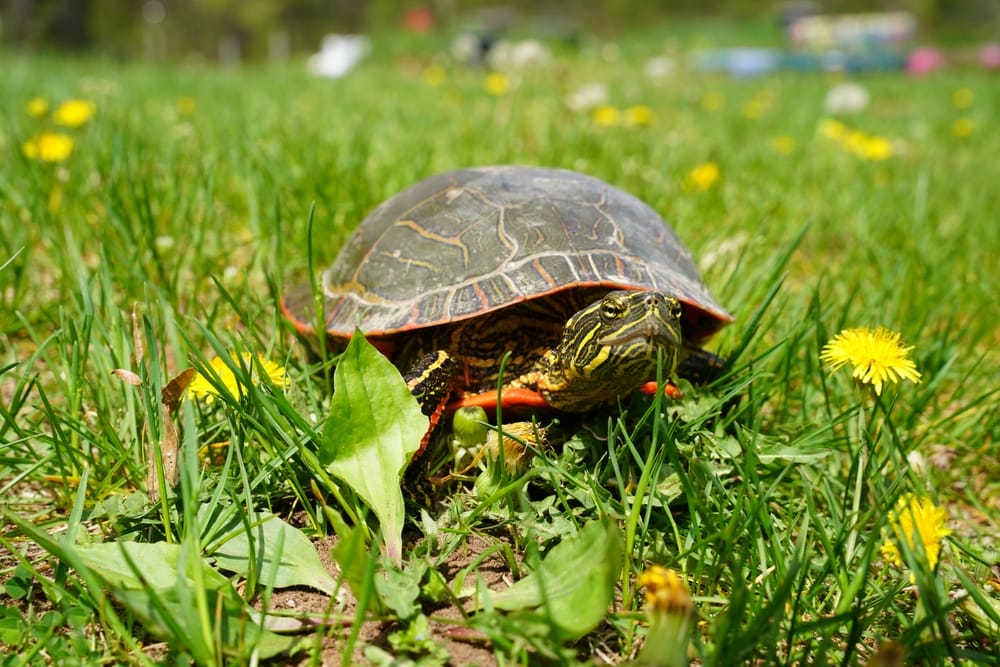
Not sure what you’re working with? I wrote a full breakdown on how to tell if a turtle is male or female that covers the claw and tail tests.
A couple of quick sexing cues for painted turtles specifically:
- Claws: Males have noticeably longer front claws. They use them in that courtship dance I mentioned.
- Size: Females are the bigger ones. If you want the full size ranges by subspecies, check my guide on how big painted turtles get.
- Plastron: The male’s bottom shell is slightly concave so he can mount. The female’s is flat to make room for eggs.
One more thing. Make sure you actually have painted turtles and not a lookalike, because the four painted turtle subspecies all interbreed but other species won’t cooperate.
This Hilarious Turtle Book Might Know Your Pet Better Than You Do

Let’s be real—most turtle care guides feel like reading a textbook written by a sleep-deprived zookeeper.
This one’s not that.
Told from the snarky point of view of a grumpy, judgmental turtle, 21 Turtle Truths You’ll Never Read in a Care Guide is packed with sarcasm, sass, and surprisingly useful insights.
And hey—you don’t have to commit to the whole thing just yet.
Grab 2 free truths from the ebook and get a taste of what your turtle really thinks about your setup, your food choices, and that weird plastic palm tree.
It’s funny, it’s honest, and if you’ve ever owned a turtle who glares at you like you’re the problem—you’ll feel seen.
Step 2: Give Them a Winter (The Cooling Phase)
This is the step everyone wants to skip, and it’s the one that matters most.
Painted turtles are wired to breed after a cold season. No cool-down, no hormonal trigger, no eggs. In the hobby we call this brumation.
The natural rhythm looks like this:
- Brumation: December to February
- Breeding: March to June
You’re basically tricking their bodies into thinking a real winter just passed.
If your turtles live outdoors
Let nature do the heavy lifting. As long as the pond doesn’t freeze solid, they’ll brumate on their own.
Leave them alone, keep a little food available on warmer days, and don’t fuss over them.
If your turtles live indoors
You’ll need to drop the temperature yourself. Ease them down to a steady 50 to 60 degrees Fahrenheit for the winter window.
Only brumate healthy, well-fed adults. A sick or underweight turtle should never go through a cool-down, full stop.
When spring “arrives,” slowly warm them back up to their normal basking setup. That temperature swing is the green light their bodies are waiting for.
Step 3: Feed Them Like They’re Building Eggs (Because She Is)
Once they warm up, food becomes fuel for reproduction.
The female especially needs to load up, because she’s about to turn calcium into eggshells.
Prioritize these:
- Calcium and Vitamin D3 for the female. This is non-negotiable. Without it she can develop soft-shelled eggs or get egg-bound.
- Protein like earthworms, snails, and the occasional bit of fish.
- Greens and produce such as butter lettuce, dandelion greens, peas, melon, and squash.
If your turtles live outdoors, sunlight handles their D3 for them. Indoor turtles need a good UVB bulb (my pick: Zoo Med ReptiSun 10.0) plus a D3 supplement, or none of that calcium gets absorbed.
For a fuller menu, here’s my guide on what painted turtles eat in captivity.
Step 4: Set the Ratio, Then Leave Them Alone
Here’s the part that feels counterintuitive. Your job now is mostly to do nothing.
You can’t force turtles to mate. You just put mature, conditioned turtles together and let it happen.
But the ratio matters a lot.
Keep more females than males. Two or more males in a small space will spend all their energy fighting each other instead of courting. A lone male with a couple of females is the calm setup you want.
Never house two males together long-term during breeding season. One will dominate, and the loser gets bullied relentlessly.
Once you’re confident they’ve mated, it’s smart to pull the male out. He’ll keep harassing a gravid female, and that stress works against you. If you want to know what the actual act looks like, I broke it down in how turtles mate in a tank.
Step 5: Build Her a Nesting Area
No nesting spot means no eggs, or worse, eggs dropped in the water where they’re ruined.
A gravid female needs somewhere that feels safe to dig.
Here’s what works for me:
- 6 to 12 inches of soft, lightly moist soil or a sand-soil mix she can actually dig into.
- A private, shaded corner with a couple of rocks or logs for cover so she feels hidden.
- Build it inside the enclosure so she doesn’t have to travel and stress out looking for a site.
If she’s pacing, digging test holes, and going off her food, she’s house-hunting. Give her quiet and space.
For the bigger picture on timing and seasons, my post on when turtles lay eggs covers the whole nesting calendar.
What Painted Turtle Mating Actually Looks Like
Understanding the behavior helps you read what’s happening in your enclosure instead of panicking.
The claw dance
A courting male swims in front of the female and flutters those long front claws against her face. It looks bizarre. It’s completely normal.
Territorial males
A male that’s mated will guard his patch and chase off rivals. This is exactly why a female-heavy group keeps the peace.
Females are picky
Females choose their mates, and they’re choosy. A female-heavy ratio gives her options, which makes successful mating more likely.
She can store sperm for years
This one blew my mind. Female painted turtles can store viable sperm for up to about three years.
Genetic studies have confirmed females using stored sperm to fertilize eggs across multiple nesting seasons. So a female can lay fertile eggs a year or two after she last saw a male.
Multiple mating is a feature, not a flaw
Females often mate with several males on purpose. It boosts genetic diversity and raises hatching success, which means hardier babies.
Don’t be alarmed if your female mates more than once. She’s stacking the odds.
How Many Eggs To Expect
Once she nests, clutch size depends mostly on her age and size.
A typical painted turtle clutch is 4 to 11 eggs, though it can run anywhere from 2 to 20 in a big, mature female. Younger first-time mothers lay on the small end.
She may also lay more than one clutch in a season, spaced a few weeks apart. In warmer climates two clutches a year is common; in cooler regions, usually just one.
Each nesting session takes her several hours, so don’t interrupt once she starts.
After the Eggs: What Comes Next
Once the eggs are down, you’ve got a choice. Leave them with stable temperatures and humidity, or move them to an incubator for better control.
Whatever you do, never rotate the eggs. Turtle embryos attach to the top of the shell, and flipping an egg can drown the developing baby.
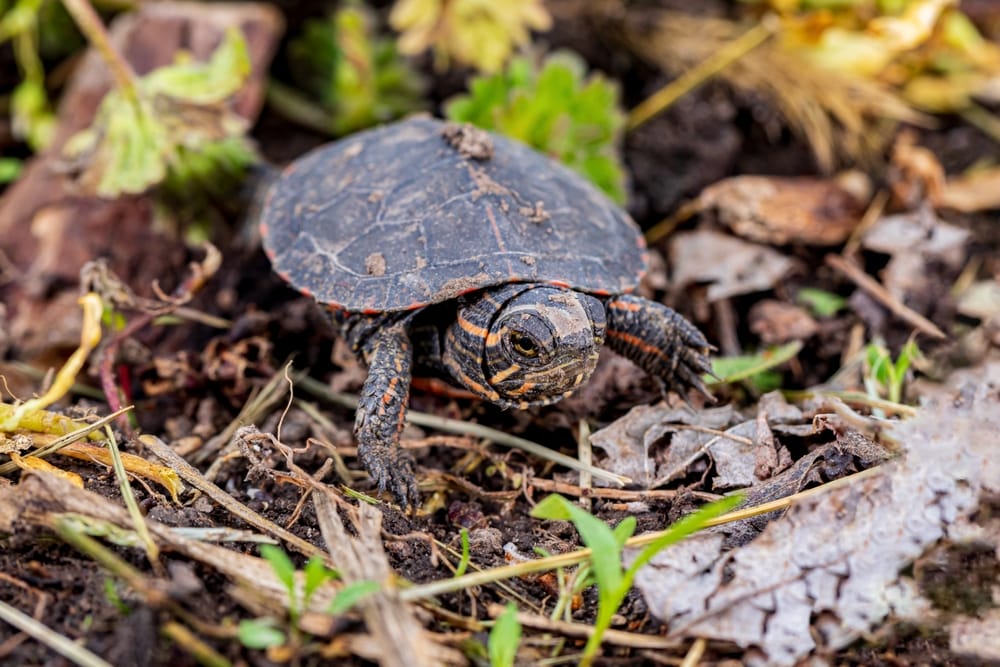
Incubation usually runs 60 to 80 days. When those tiny turtles finally pip, head straight to my guide on taking care of a baby painted turtle so you’re ready for them.
Final Thoughts
Breeding painted turtles isn’t about doing a ton. It’s about setting the stage and trusting their instincts.
Give them a real winter, a true pair, good food, and a place to dig. Then step back and let them be turtles.
Get those basics right and one spring morning you’ll catch that ridiculous claw dance too, and you’ll know exactly what’s coming next.

About Author
Muntaseer Rahman started keeping pet turtles back in 2013. He also owns the largest Turtle & Tortoise Facebook community in Bangladesh. These days he is mostly active on Facebook.