10 Tortoise Table Ideas (DIY, Indoor & Custom Setups)
This post was created with help from AI tools and carefully reviewed by a human (Muntaseer Rahman). For more on how we use AI on this site, check out our Editorial Policy.
A tortoise table (my pick: Aivituvin Wooden Tortoise Habitat) is basically an open-top enclosure that gives your tortoise room to roam, proper airflow, and easy access to heat and UVB (my pick: Zoo Med ReptiSun 10.0) lighting. Think of it like a raised garden bed, but for your tortoise.
The problem? Most people just buy a generic plastic tub and call it a day.
That works, but it’s not great. A well-designed tortoise table makes a real difference in your tortoise’s activity level, appetite, and overall health.
I’ve pulled together 10 real setups from actual tortoise owners to give you ideas that range from simple weekend projects to full custom builds. Every one of these has something worth stealing for your own setup.
What Makes a Good Tortoise Table?
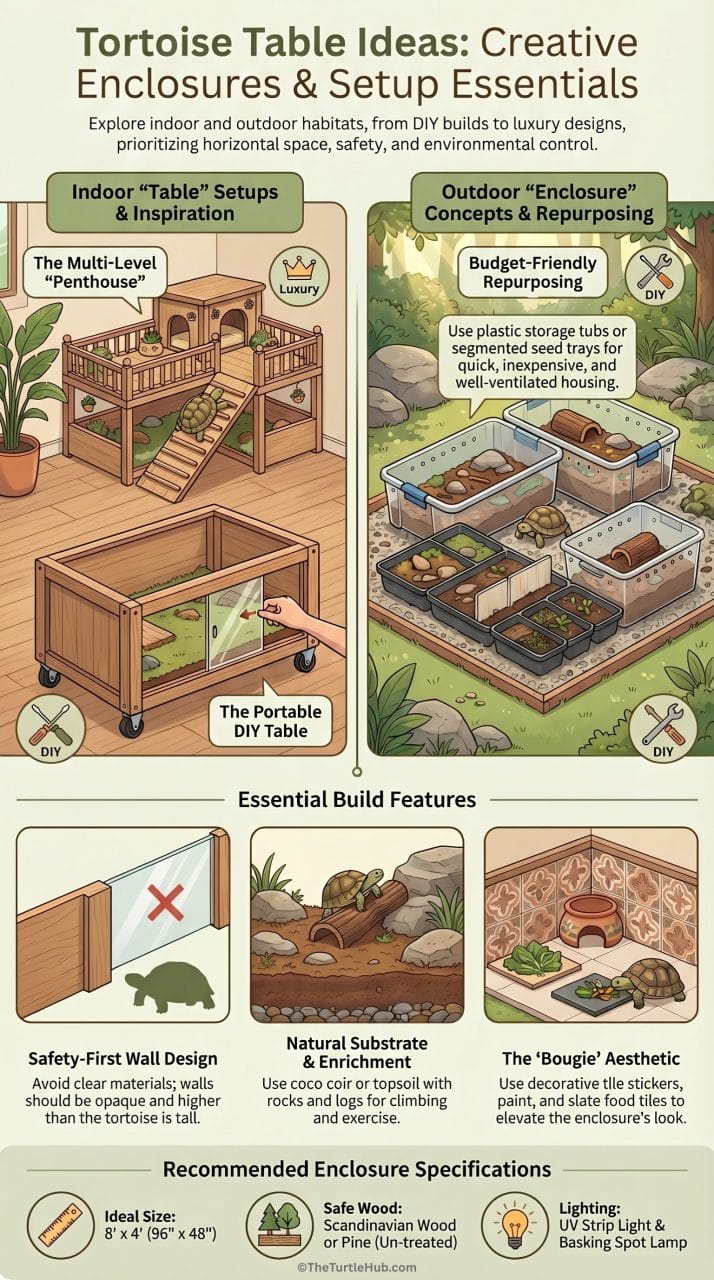
Before we get into the ideas, here’s what every tortoise table needs to get right:
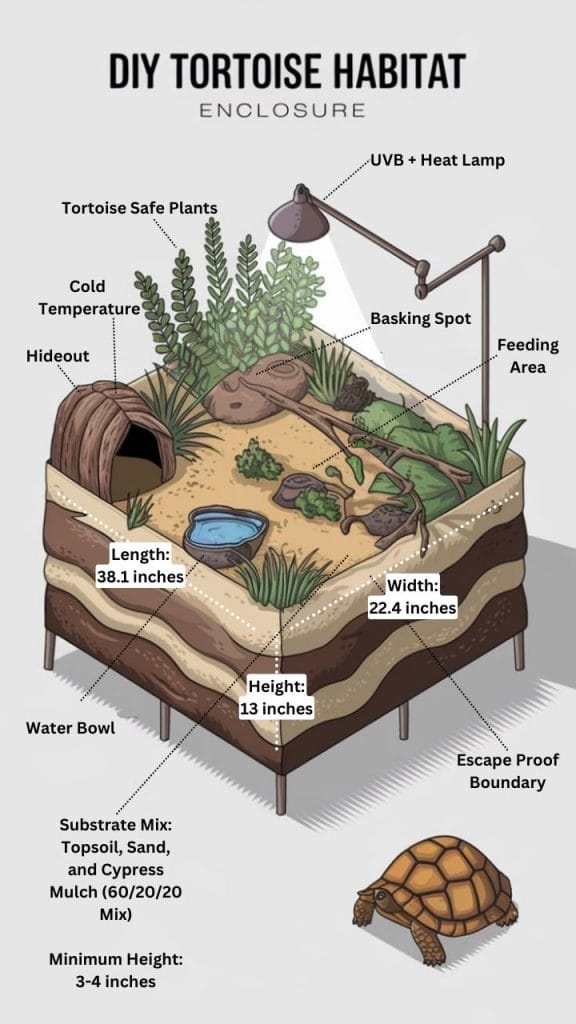
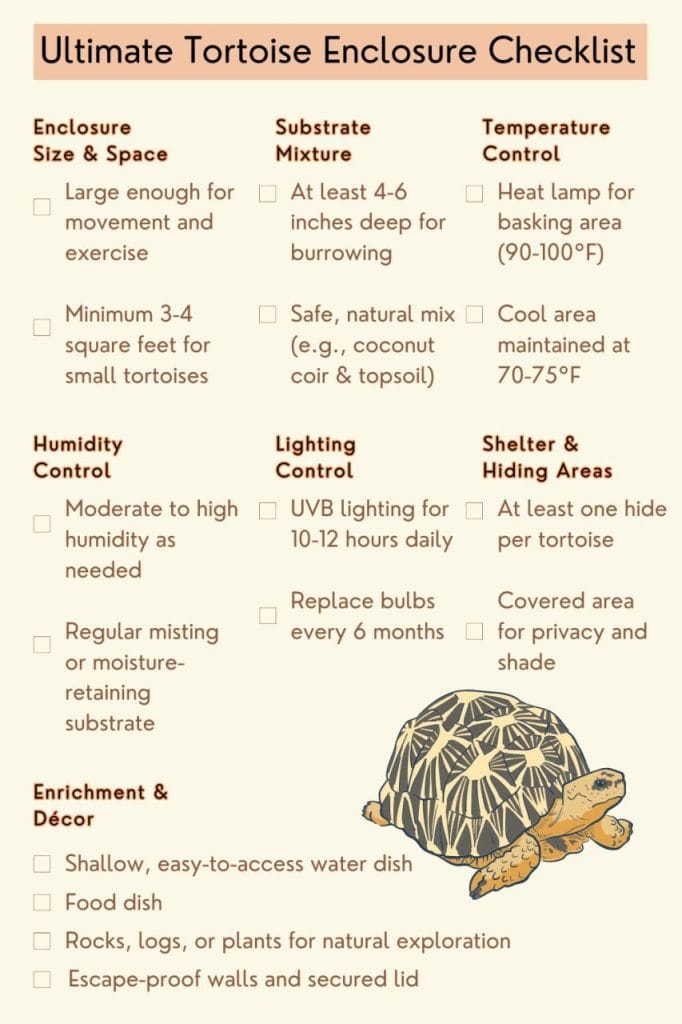
- Size. Bigger is always better. Minimum 4x the shell length of your tortoise in both directions. For a Hermann’s or Russian tortoise, that means at least 3-4 feet long.
- Depth. Walls should be at least 8-10 inches tall to prevent escapes, taller for climbers.
- Substrate depth. At least 2-3 inches of substrate so your tortoise can dig and burrow.
- Temperature gradient. A warm basking spot on one end (90-100F) and a cooler side (70-80F).
- UVB coverage. A tube-style UVB light covering about 2/3 of the table is ideal.
- Hides. At least one enclosed hide on the cool side so your tortoise can retreat.
Tortoise Table Size by Species
The right tortoise table design starts with the right footprint. Undersized tables stress your tortoise and stunt activity.
Use this as a minimum sizing guide by species:
| Species | Min Length | Min Width | Wall Height | Notes |
|---|---|---|---|---|
| Hermann’s / Greek | 4 ft | 2 ft | 10 in | Good starter species |
| Russian | 4 ft | 2 ft | 12 in | Climbers — raise the walls |
| Horsfield | 4 ft | 2 ft | 12 in | Active diggers |
| Red-footed | 5 ft | 3 ft | 12 in | Needs humidity |
| Leopard | 6 ft | 3 ft | 10 in | Outgrows indoor tables fast |
| Sulcata | 8 ft+ | 4 ft+ | 12 in | Outdoor pen better long-term |
Hatchlings and juveniles can start smaller, but plan ahead — a Sulcata hatchling that fits on your palm will outgrow any indoor tortoise table inside 2-3 years.
Apartment dweller? Pair this guide with these 20 indoor tortoise enclosure ideas for space-saving options.
Now let’s look at the builds.
This Hilarious Turtle Book Might Know Your Pet Better Than You Do

Let’s be real—most turtle care guides feel like reading a textbook written by a sleep-deprived zookeeper.
This one’s not that.
Told from the snarky point of view of a grumpy, judgmental turtle, 21 Turtle Truths You’ll Never Read in a Care Guide is packed with sarcasm, sass, and surprisingly useful insights.
And hey—you don’t have to commit to the whole thing just yet.
Grab 2 free truths from the ebook and get a taste of what your turtle really thinks about your setup, your food choices, and that weird plastic palm tree.
It’s funny, it’s honest, and if you’ve ever owned a turtle who glares at you like you’re the problem—you’ll feel seen.
1. The Naturalistic Garden Table
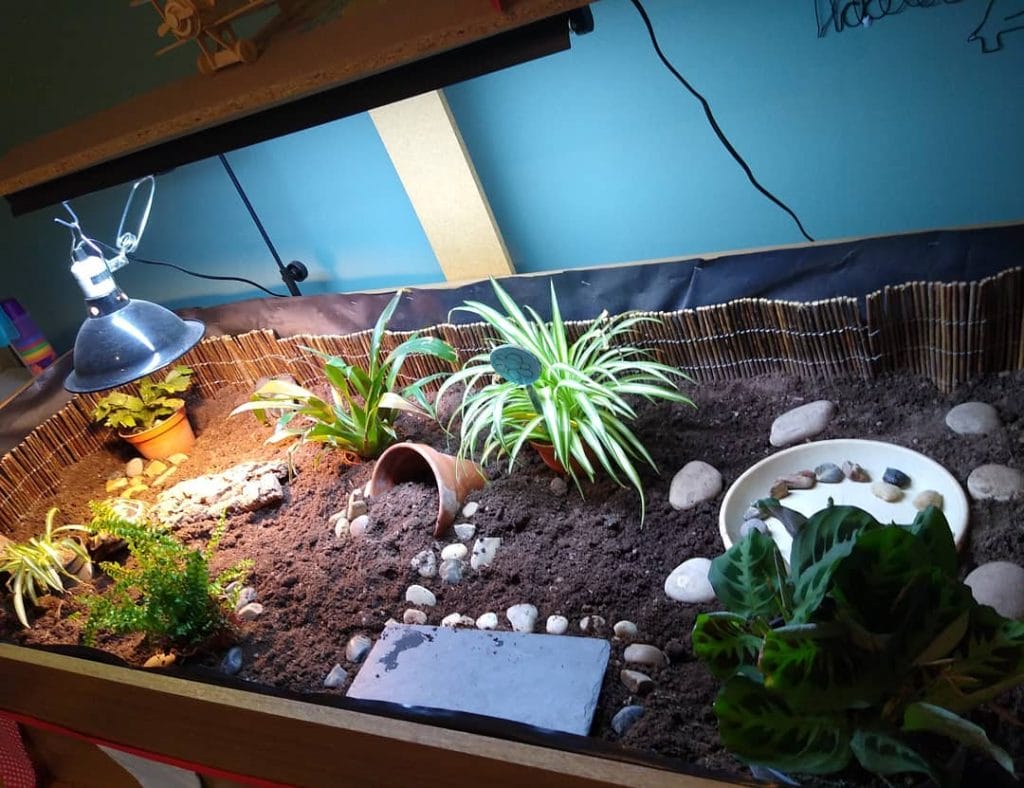
This one looks like someone shrunk a garden and dropped it into a wooden frame. Live plants (spider plants, ferns), real soil substrate, river rocks, a flat slate basking area, and a ceramic water dish tucked into the corner.
The heat lamp (my pick: heat lamp) is clamped to one end, creating a clear warm-to-cool gradient across the table. The blue wall behind it actually helps — tortoises can see colors, and a natural-looking backdrop reduces stress compared to staring at blank white walls.
Why it works: The mix of textures (soil, rock, slate, plants) gives the tortoise different surfaces to walk on, which is great for nail wear and foot health. Live plants double as snacks and enrichment.
Best for: Hermann’s tortoises, Greek tortoises, or any small-to-medium species that thrives in a Mediterranean-style setup. Check out the best plants for tortoise habitats if you want to go the live plant route.
Tip: Stick to tortoise-safe plants only. Spider plants, hibiscus, and certain grasses are safe. Avoid anything from the lily family.
Perfect Wooden Tortoise House For Outdoor & Indoor!
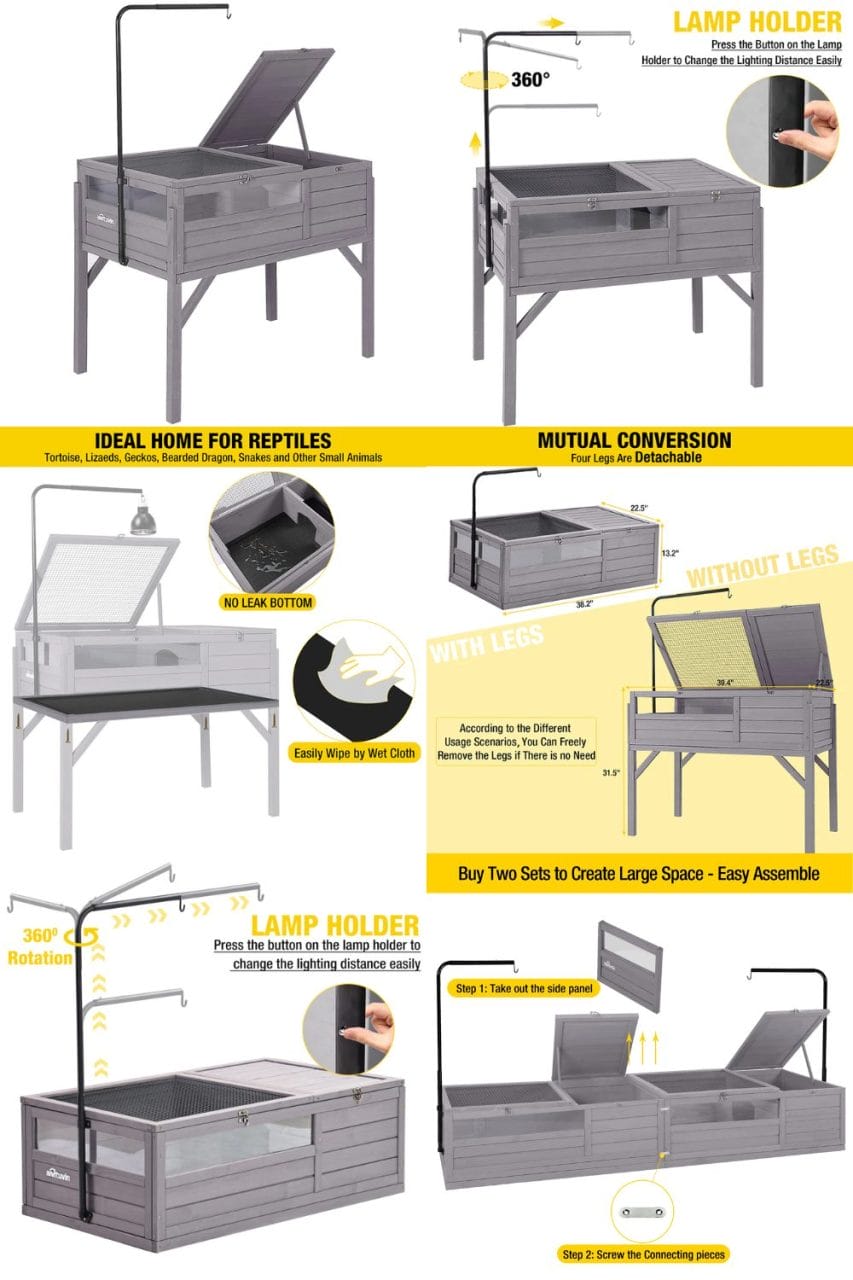
This tortoise house isn’t cheap — but that’s because it’s not your average wooden box.
Built with durable wood, a waterproof liner, and smart design features like a sunbathing area and a hideout zone, the Aivituvin Large Wooden Habitat is made to last.
It’s perfect for tortoises or box turtles, indoors or out. And yep, it even has detachable legs.
If you’re serious about giving your tortoise a safe, comfy home without building one from scratch, this is the one.
👉 Grab the Aivituvin Tortoise House here — it’s currently $10 off.
2. The Clean Minimalist Table
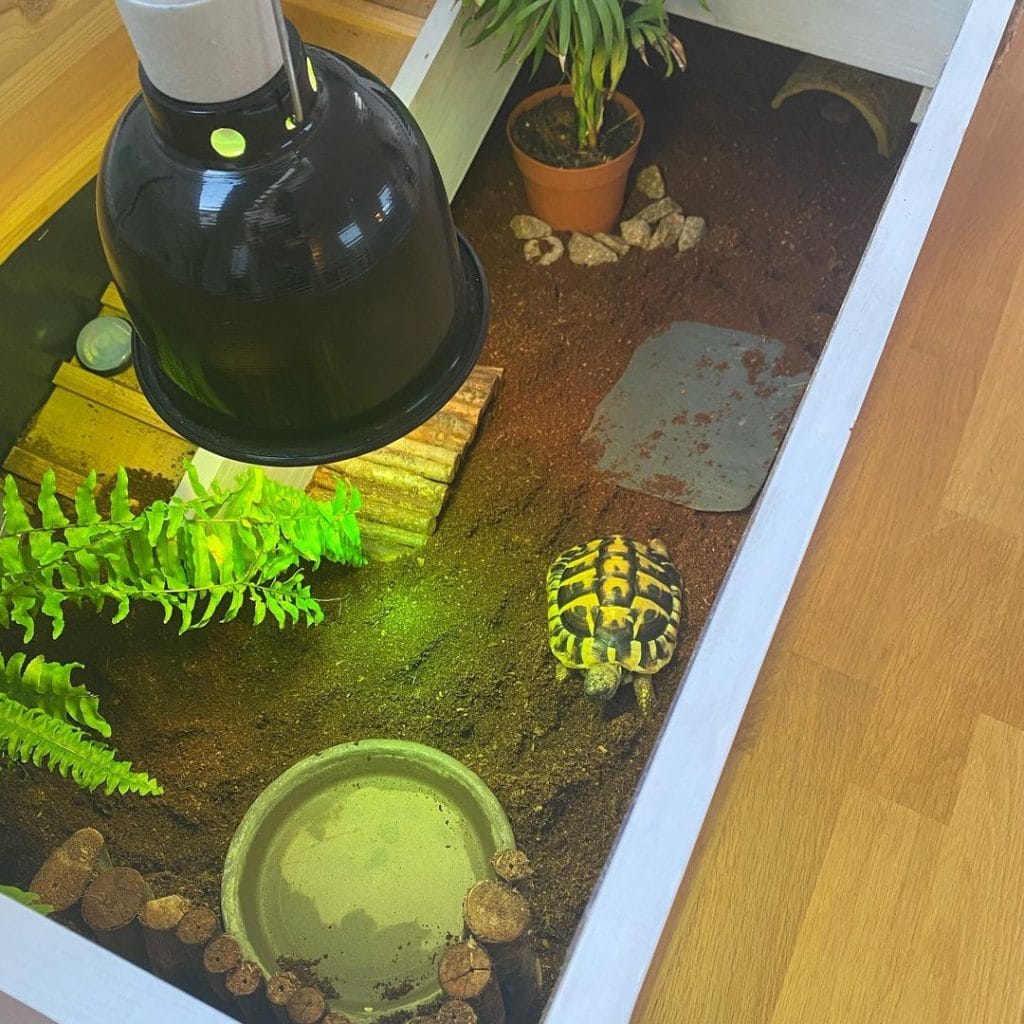
White-framed open table with a simple layout: soil and moss substrate, one potted fern, a shallow ceramic water dish, and a few scattered rocks. A dome heat lamp sits on one end.
No clutter, no fuss. The tortoise has clear sightlines across the whole enclosure, which some species actually prefer over heavily planted setups where they can’t see what’s around them.
Why it works: Easy to clean, easy to maintain, and the open design makes it simple to monitor your tortoise. The moss patches hold humidity in specific zones without making the whole table damp.
Best for: First-time tortoise owners who want something functional without the complexity of a bioactive setup. Also works well for species that prefer drier conditions.
3. The Multi-Level Ramp Table
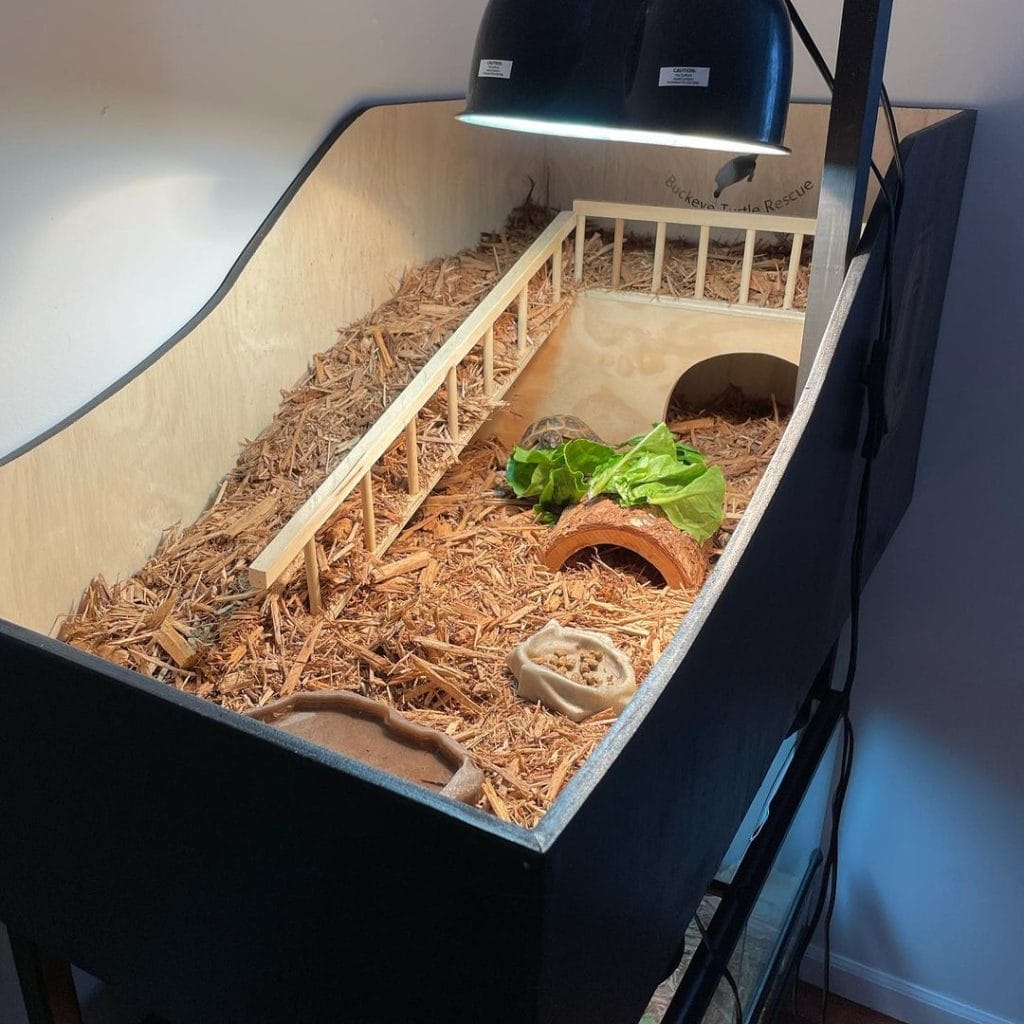
This is where it gets creative. A dark-finished enclosure with a full second level connected by a wooden ramp with grip slats. The upper platform has a food station, while the lower level has bark chip substrate and a clay hide.
The ramp has horizontal slats nailed across it so the tortoise can actually climb without sliding. That detail matters — smooth ramps are useless for tortoises.
Why it works: Vertical space is underrated in tortoise tables. Adding a second level effectively doubles your usable area without taking up more floor space.
The climbing also provides exercise and mental stimulation.
Best for: Active species like Russian tortoises that love to explore and climb. Not ideal for larger or heavier species that might struggle with the ramp.
Watch out: Make sure the ramp isn’t too steep. A 30-degree angle or less is the sweet spot. Anything steeper and your tortoise might flip over trying to climb.
4. The Custom Furniture-Grade Table
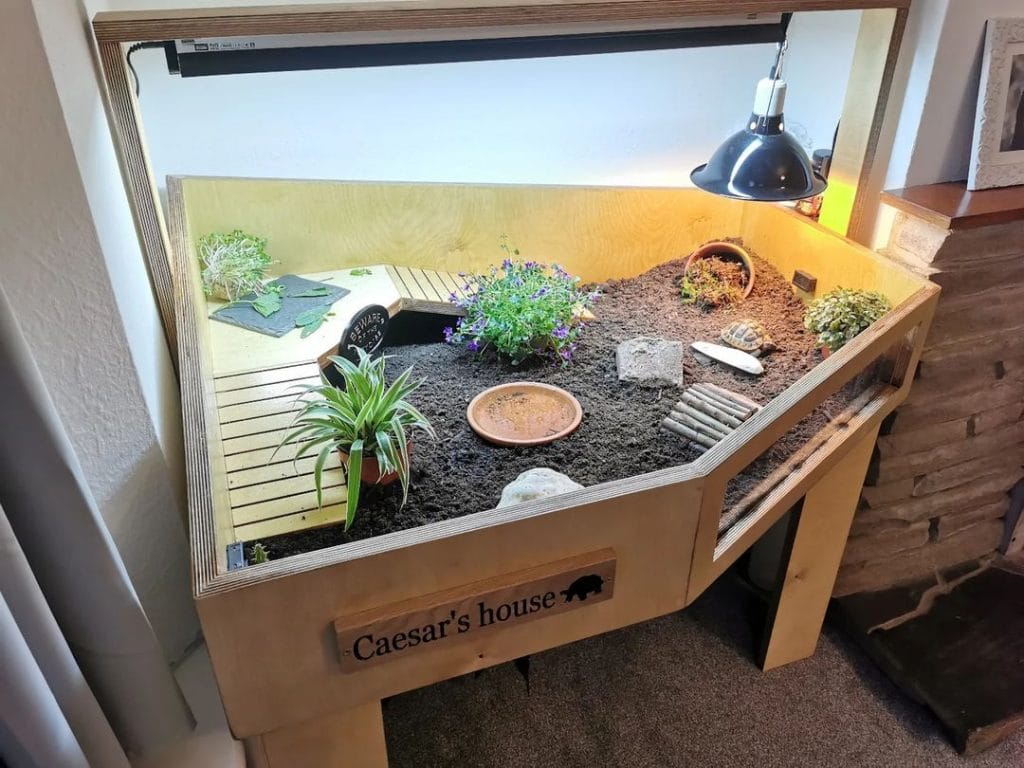
This is the one that makes everyone jealous. A proper piece of furniture with “Caesar’s house” engraved on the front drawer, raised on sturdy legs, with a clear acrylic front panel so you can see in at eye level.
Inside, it’s got multiple substrate zones — soil with live flowers on one side, dry sandy substrate on the other. A terracotta dish, basking lamp (my pick: Zoo Med PowerSun), and even a small built-in shelf for plants above the enclosure.
Why it works: When the tortoise table looks like actual furniture, it fits into your living space instead of looking like a science project in the corner. The raised height also means less bending over for feeding, cleaning, and interaction.
Best for: Anyone who wants their tortoise setup to be a conversation piece. If your enclosure is in a living room or bedroom, this approach keeps things looking intentional.
Build note: The drawer underneath is genius for storing substrate, supplements, and cleaning supplies. If you’re building from scratch, add storage.
5. The Multi-Tortoise Ramp House
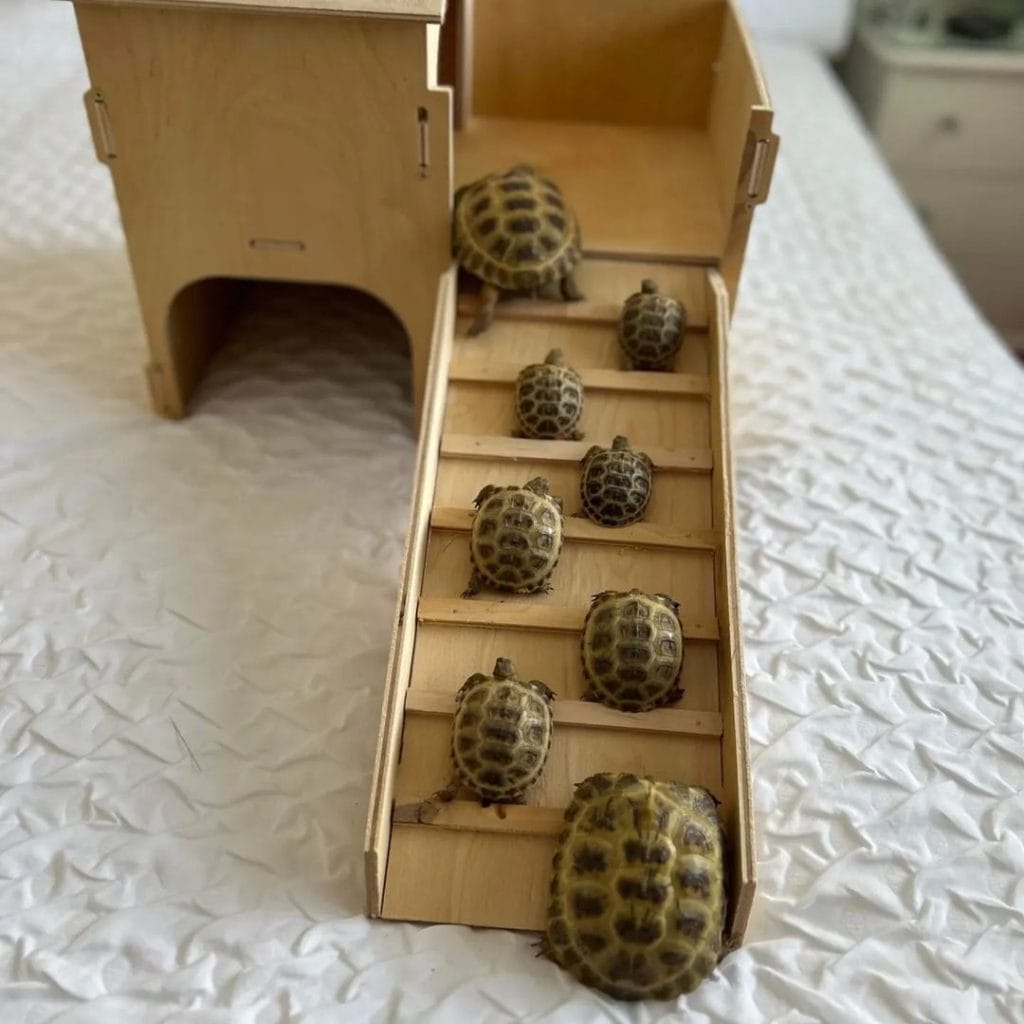
This one’s more of an enclosure accessory than a full table, but it’s too good to skip. A wooden hide box with a wide ramp, and about seven baby tortoises spread across it like they’re heading to school.
The ramp is wide enough for multiple tortoises to pass without shoving each other off. The hide box on top gives them a dark, enclosed space to retreat to.
Why it works: If you keep multiple baby tortoises, you need hides and structures they can all use without competing. A single-entry hide leads to territorial standoffs. A wide ramp with a spacious top box avoids that problem.
Best for: Breeders or anyone keeping a group of hatchlings together. Scale it up for adults by using thicker wood and wider dimensions.
6. The Rustic Workshop Build
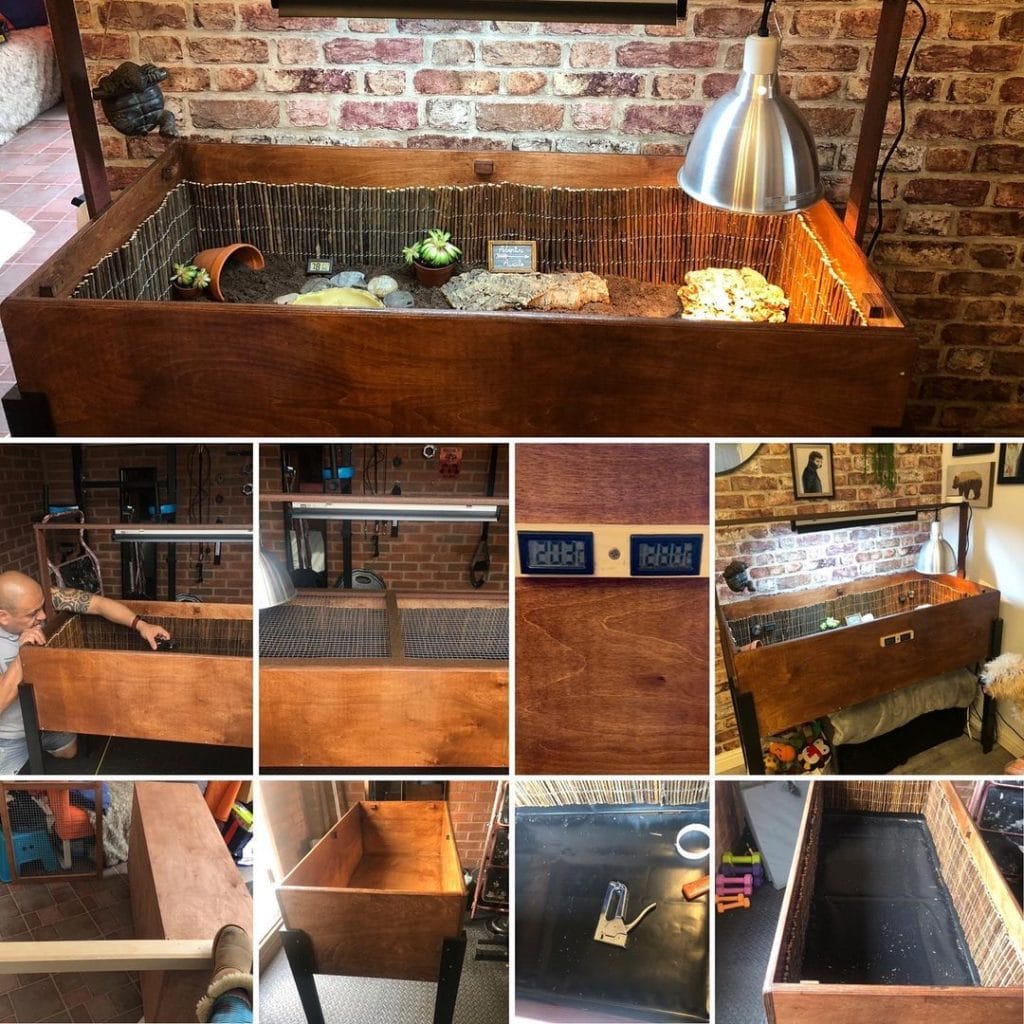
This one screams DIY in the best way. A collage of build photos showing the full process: raw wood being cut, stained dark walnut, assembled with screws, and finished with a wire mesh lid on top.
The end result is a deep, sturdy enclosure with rich dark wood that looks like it belongs in a cabin. Wire mesh on top keeps other pets out while allowing full airflow and overhead lighting.
Why it works: Dark-stained wood is naturally moisture-resistant when sealed properly, so this table will last years. The wire mesh lid is a smart addition if you have cats, dogs, or curious kids in the house.
Best for: Anyone with basic woodworking tools who wants a weekend project. The materials (plywood, wood stain, wire mesh, hinges) run about $50-80 total. Need more DIY inspiration? See these 30 DIY tortoise enclosure ideas.
Tip: Seal the interior with a pet-safe waterproof sealant. Tortoise substrate (my pick: coconut tortoise substrate) holds moisture, and unsealed wood will warp and rot within a year.
7. The Compact Workshop Box
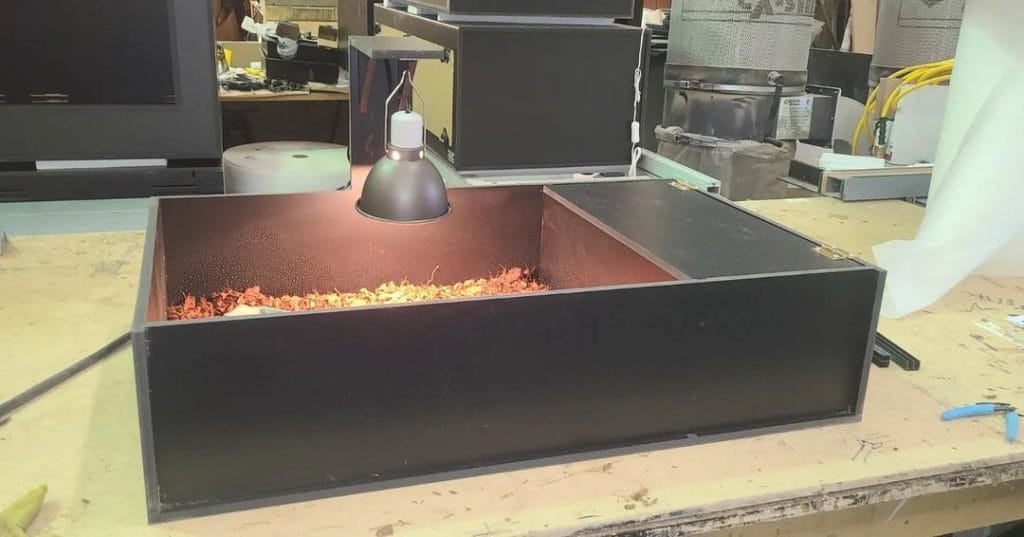
A no-frills black-painted box built in what looks like a garage workshop. Simple square design, bark substrate, single heat lamp. That’s it.
Looks aren’t the point here. Function is.
Why it works: Sometimes you just need something that works right now.
This takes an afternoon to build, costs almost nothing, and does everything a tortoise needs. No Instagram awards, but the tortoise doesn’t care.
Best for: Quarantine setups, temporary enclosures, or anyone who wants to keep costs as low as possible while still providing proper care.
8. The Living Room Showpiece
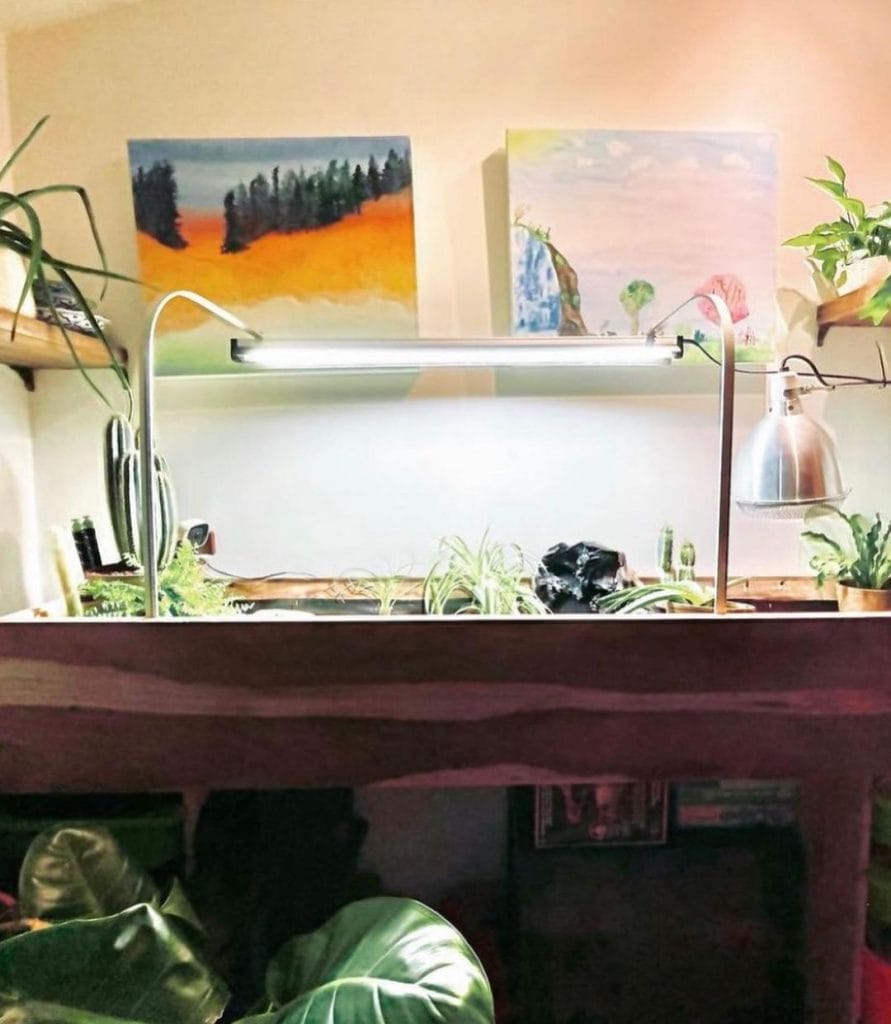
This setup sits on what appears to be a mantle or raised shelf, surrounded by houseplants and artwork.
A tube UVB light runs across the top, and a dome basking lamp sits on one end. The enclosure itself is packed with live plants, making it look more like a terrarium than a tortoise table.
Why it works: This is what happens when you treat the tortoise table as part of your interior design, not something you hide in a spare room. The combination of overhead UVB tube and spot basking lamp is textbook-correct lighting.
Best for: Small tortoise species in apartments or small homes where the enclosure needs to double as decor. The raised placement also keeps the tortoise away from floor-level drafts.
Note: If you go this route, make sure the shelf or surface can handle the weight. A 4-foot tortoise table with substrate, rocks, and water can easily weigh 40-60 lbs.
9. The Tropical Bioactive Table
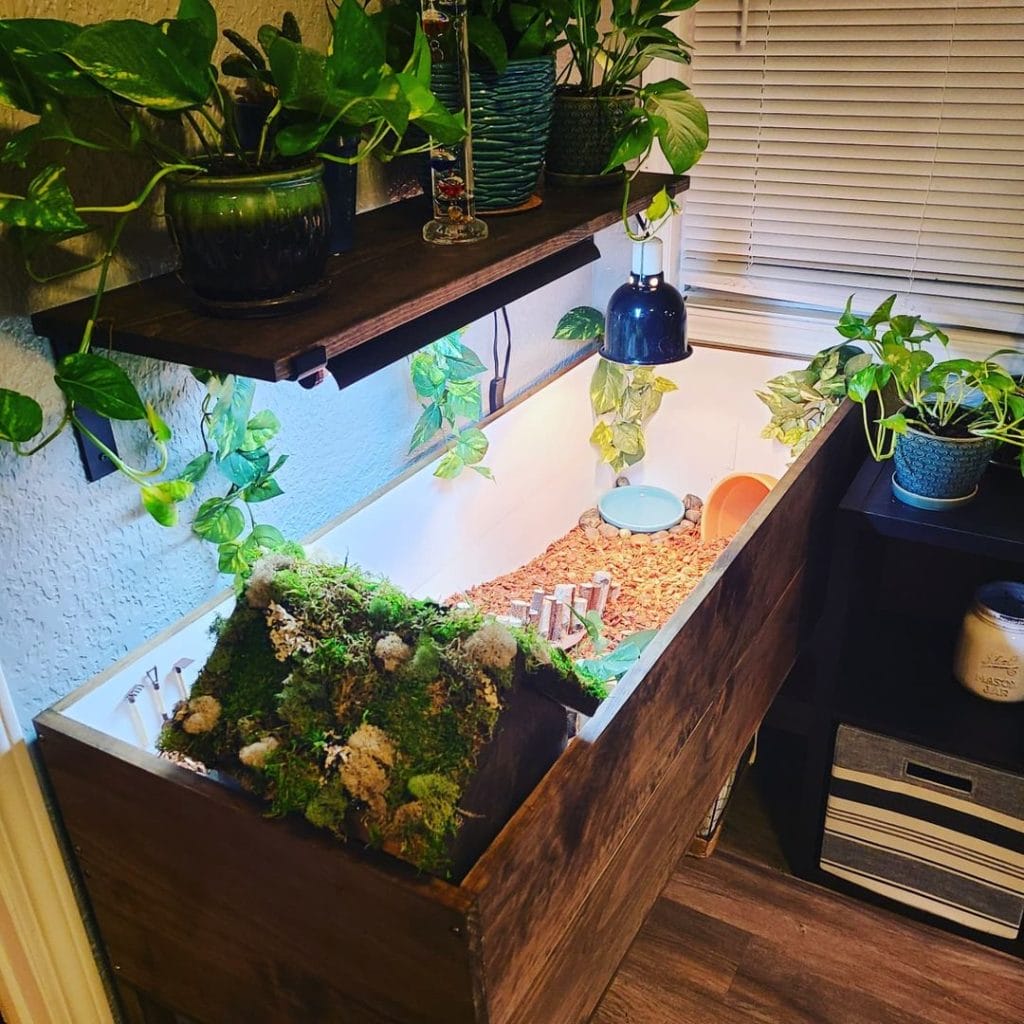
Dark wood frame with trailing pothos and other tropical plants growing over the edges. Inside, there’s live moss, scattered rocks, a water area, and overhead lighting. It looks like a tiny rainforest.
This is a bioactive setup, meaning the substrate has a cleanup crew (springtails, isopods) that breaks down waste and keeps the enclosure self-cleaning.
Why it works: Bioactive setups are lower maintenance once established.
The plants filter air, the cleanup crew handles waste, and the tortoise gets a living environment that mimics its natural habitat.
The trailing plants also provide shade zones without needing separate hides.
Best for: Red-footed tortoises, yellowfoot tortoises, or any tropical species that needs higher humidity. Not great for Mediterranean species like Hermann’s that prefer drier conditions.
10. The Simple Hay Floor Table
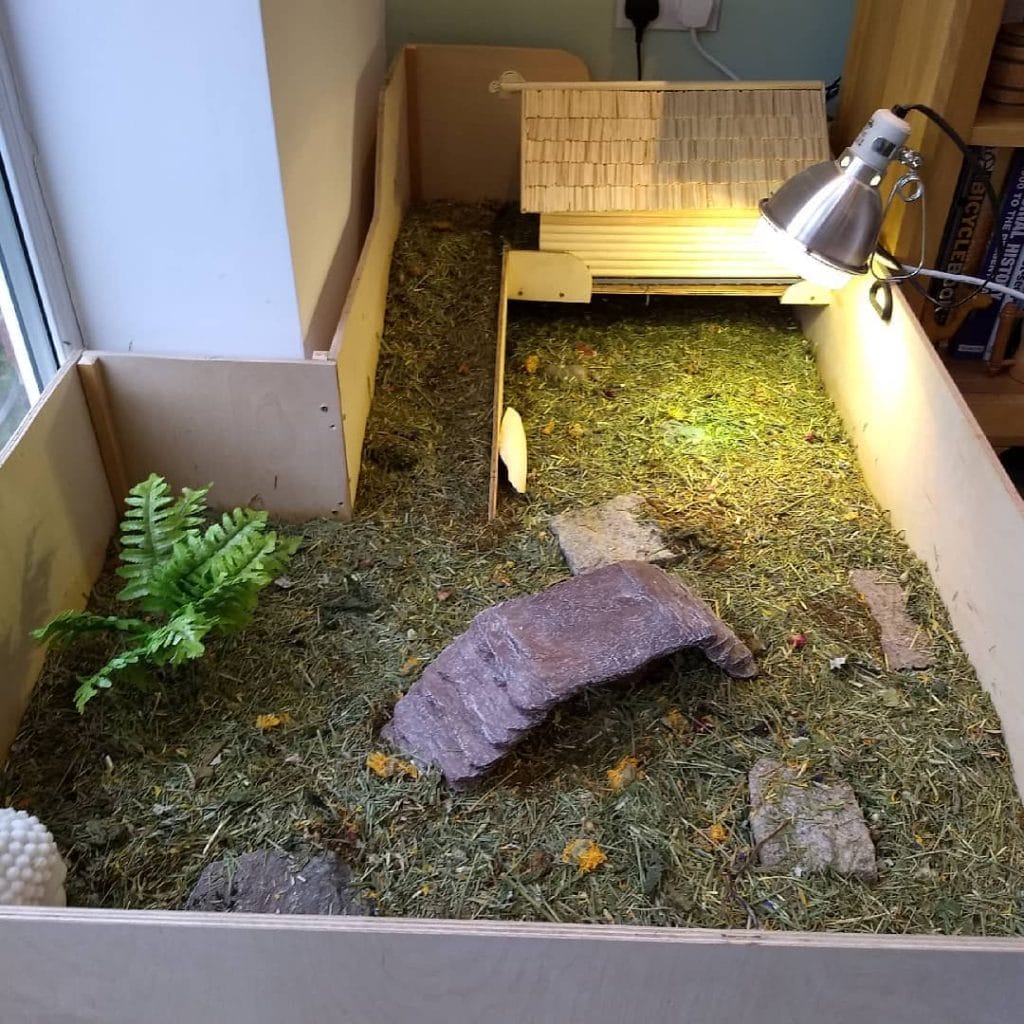
Plywood walls, hay/dried grass substrate, one flat rock for basking, a small fern in the corner, and a heat lamp overhead. Clean, minimal, effective.
Why it works: Hay is an excellent substrate for grassland tortoise species.
It’s cheap, easy to replace, and tortoises will actually eat it (which is fine and adds fiber to their diet).
The flat rock under the basking lamp absorbs heat and gives the tortoise a warm surface to sit on.
Best for: Sulcata tortoises, leopard tortoises, or any grassland species. Also the easiest and cheapest table on this list to set up and maintain.
Swap tip: Mix hay with topsoil for a more natural look while keeping the benefits of both substrates.
Which Tortoise Table Style Is Right for You?
| Style | Budget | Difficulty | Best Species | Maintenance |
|---|---|---|---|---|
| Naturalistic garden | Medium | Medium | Hermann’s, Greek | Medium |
| Clean minimalist | Low | Easy | Any small species | Low |
| Multi-level ramp | Medium | Medium | Russian, active species | Medium |
| Custom furniture | High | Hard | Any | Low |
| Rustic workshop | Low-Med | Medium | Any | Low |
| Compact box | Low | Easy | Any (temp setups) | Low |
| Living room showpiece | Medium | Medium | Small species | Medium |
| Tropical bioactive | High | Hard | Red-foot, yellowfoot | Low (once set) |
| Simple hay floor | Low | Easy | Sulcata, leopard | Low |
Final Tips for Any Tortoise Table
No matter which style you go with, keep these basics in mind:
Substrate matters. Avoid reptile carpet, sand-only, or newspaper.
Go with a soil/coco coir mix for most species, or hay/grass for grassland tortoises. Your tortoise needs to dig.
Lighting is non-negotiable. Every tortoise table needs both a basking lamp (heat) and UVB lighting.
Without UVB, your tortoise can’t metabolize calcium, and that leads to metabolic bone disease.
A tube-style UVB running across 2/3 of the table is the best approach.
Ventilation beats glass. This is why tortoise tables beat glass terrariums.
Open tops mean natural airflow, which prevents respiratory infections.
If you need a lid (cats, dogs), use wire mesh, not glass.
Location matters. Keep the table away from windows (direct sunlight can overheat one side), air vents (drafts), and high-traffic areas (stress). A quiet corner with stable temperatures is ideal.
The best tortoise table is the one you’ll actually maintain.
Pick a design that fits your space, your budget, and your species.
Your tortoise doesn’t need perfection. It needs clean substrate, proper temps, UVB, food, and water.
Everything else is a bonus.
Tortoise Table FAQs
Is a tortoise table better than a glass terrarium?
Yes, for most species.
Open-top tortoise tables give you natural airflow, which prevents the respiratory infections that glass tanks encourage. Glass also reflects the tortoise’s image and stresses them out.
The only case for a glass terrarium is a very humid tropical species as a juvenile — and even then, a bioactive wooden table with a mesh lid usually does the job better.
What’s the cheapest DIY tortoise table?
A plywood box with hay substrate, one flat rock, and a clamp-on heat lamp. Total materials run $40-60 depending on prices in your area.
Setup #10 on this list (the hay floor build) is the cheapest tortoise table design that still checks every care box.
Can a tortoise table fit in a small apartment?
Yes, if you pick a small species and use vertical space.
Hermann’s, Russian, and Greek tortoises all thrive in a 4×2 ft indoor tortoise table. Setup #8 (the living room showpiece) shows how a raised shelf placement keeps floor space free.
Sulcatas, leopards, and other large species won’t work long-term in an apartment — they outgrow indoor tables fast.
What’s the best tortoise table for beginners?
Setup #2 (the clean minimalist build) or setup #7 (the compact workshop box).
Both are easy to clean, easy to monitor, and cheap to set up. You can always add plants, substrates, and a second level later once you know what your tortoise prefers.
Does a tortoise table need a lid?
Only if you have other pets or young kids.
Tortoises can’t climb out of a proper-height wall, so a lid isn’t needed for the tortoise. If you do add one, use wire mesh — never glass or solid wood — so airflow and UVB aren’t blocked.

About Author
Muntaseer Rahman started keeping pet turtles back in 2013. He also owns the largest Turtle & Tortoise Facebook community in Bangladesh. These days he is mostly active on Facebook.