8 Fascinating Turtle Behaviors Explained (That Most Owners Get Wrong)

This post was created with help from AI tools and carefully reviewed by a human (Muntaseer Rahman). For more on how we use AI on this site, check out our Editorial Policy.
Turtles have been around for over 200 million years.
Let that sink in. They were here before the dinosaurs went extinct, before flowers even existed on Earth, and they’re still going strong.
And yet, most people think they’re boring.
I get it. They don’t wag their tails. They don’t purr. They stare at you with an expression that could mean anything from “I love you” to “you’re dead to me.”
But once you actually understand what’s going on behind that blank face, turtles become one of the most interesting pets you can own. I’ve been keeping turtles since 2013, and I’m still learning new things about their behavior.
Here are eight turtle behaviors that confuse most owners — and what they actually mean.
1. They Climb Out of the Water Constantly (And It’s Not an Escape Attempt)
New turtle owners panic the first time they see their pet climbing out of the water onto a rock.
“Is it trying to escape? Does it hate the tank? Is something wrong with the water?”
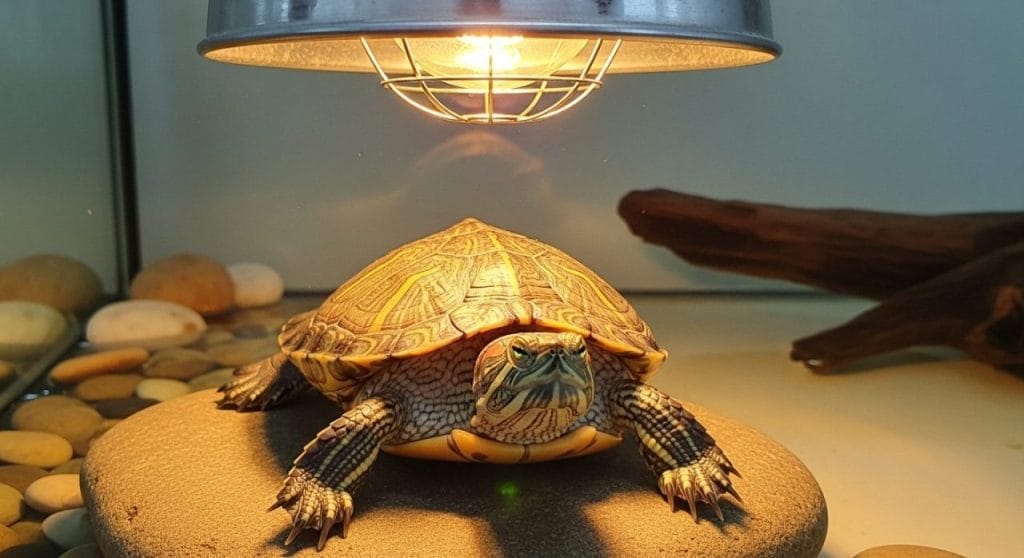
Relax. Your turtle is basking. And it’s one of the most important things they do.
Why Basking Matters
Turtles are ectothermic, which means they can’t generate their own body heat. They depend entirely on their environment to regulate their temperature.
When a turtle climbs onto a dry surface under a heat lamp (my pick: heat lamp) (or sunlight), it’s doing several things at once. It’s absorbing UV-B radiation to produce vitamin D3, which is essential for calcium absorption and shell health. It’s raising its body temperature to boost its metabolism and digestion. And it’s drying off its shell to kill bacteria, fungi, and parasites that thrive in wet environments.
Here’s a detail most people miss: turtles don’t have hands to scratch off algae or grime from their shells. Basking under UV light is literally their only hygiene option for shell maintenance.
What Happens If They Don’t Bask
A turtle that doesn’t bask enough will eventually develop soft shell, metabolic bone disease, shell rot, or a weakened immune system. If your turtle is avoiding its basking spot, the problem is almost always the setup — lamp too close, too hot, or not enough privacy on the basking platform (my pick: floating basking platform).
The basking area should sit around 85-90°F for most species, with UVB (my pick: Zoo Med ReptiSun 10.0) coverage from a quality bulb. Get this right, and you’ll see your turtle basking confidently every day.
2. They’re Shockingly Good at Solving Mazes
If someone told you a turtle could outsmart a rat in a maze, you’d probably laugh.
But that’s exactly what happened.
The Moses Experiment
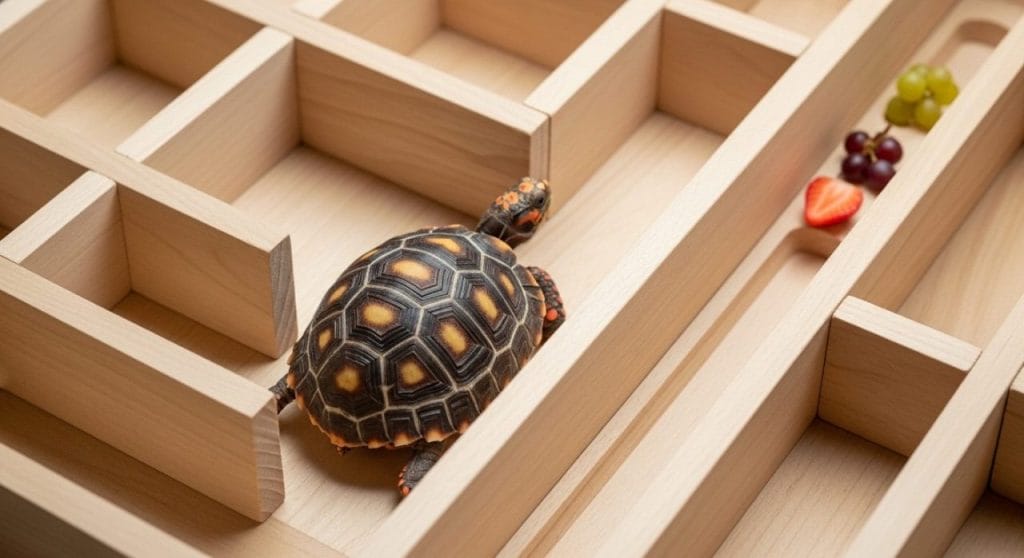
Dr. Anna Wilkinson at the University of Lincoln ran a now-famous study using a red-footed tortoise named Moses. She put Moses in an eight-armed radial maze — the same type used to test spatial memory in rats — with a food reward at the end of each arm.
Moses completed every arm, collected every treat, and never revisited one he’d already been to. That requires remembering where you’ve been and making decisions based on that memory. When the researchers removed the visual landmarks Moses was using to navigate, he didn’t give up. He switched strategies and started systematically visiting the arm next to the one he’d just left.
That kind of flexible problem-solving had never been documented in mammals in the same scenario. A rat, when its landmarks are removed, just gets confused. Moses adapted.
How Long Do They Remember?
This is where it gets even more impressive.
A follow-up study at the same university trained tortoises to associate specific colors with food rewards. After 18 months of zero exposure to the test, the tortoises still remembered which colors meant better food. They walked straight to the higher-value option without hesitation.
A separate study at the University of Tennessee found that red-bellied cooters retained learned behaviors for over 2 years without any retraining.
So when your turtle seems to recognize you at feeding time, it’s not a coincidence.
They remember faces, routines, and food associations for months or even years — which is exactly why enrichment activities like puzzle feeders and obstacle mazes are so effective at keeping them mentally stimulated.
This Hilarious Turtle Book Might Know Your Pet Better Than You Do

Let’s be real—most turtle care guides feel like reading a textbook written by a sleep-deprived zookeeper.
This one’s not that.
Told from the snarky point of view of a grumpy, judgmental turtle, 21 Turtle Truths You’ll Never Read in a Care Guide is packed with sarcasm, sass, and surprisingly useful insights.
And hey—you don’t have to commit to the whole thing just yet.
Grab 2 free truths from the ebook and get a taste of what your turtle really thinks about your setup, your food choices, and that weird plastic palm tree.
It’s funny, it’s honest, and if you’ve ever owned a turtle who glares at you like you’re the problem—you’ll feel seen.
3. Adult Turtles Often Go Vegetarian
This one trips up a lot of new owners.
You bring home a juvenile turtle, and it’s an absolute carnivore. Crickets, shrimp, mealworms — it’ll attack anything that moves. You think, “Great, feeding this thing is easy.”
Then your turtle hits adulthood and suddenly turns its nose up at pellets. It only wants lettuce. Maybe some cucumber if you’re lucky.
Why This Happens
It’s not your turtle being difficult. It’s biology.
Juvenile turtles need a high-protein diet to support rapid growth. Their bodies are building shell, bone, and muscle at a fast rate, so they need the amino acids from animal-based foods.
But once they reach maturity — which happens around age 2-5 for males and 5-7 for females in red-eared sliders — their metabolism slows down significantly. They don’t need as much protein anymore. Too much protein at this stage can actually cause pyramiding (abnormal shell growth) and kidney problems.
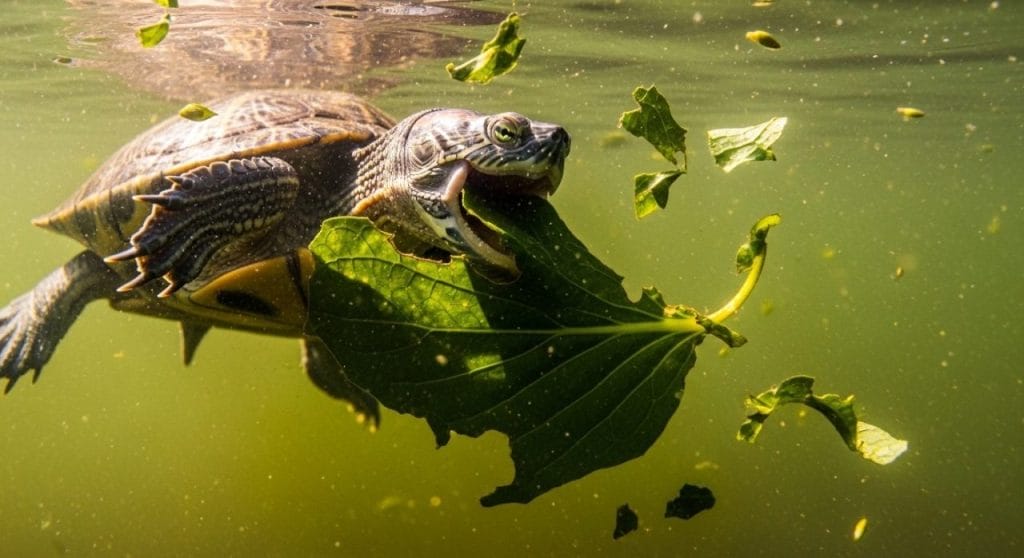
Adult turtles naturally shift toward a diet that’s 50-75% plant-based. Collard greens, dandelion greens, red leaf lettuce, and occasional treats like berries or shredded carrot are all solid options.
Foods to Avoid
Skip the iceberg lettuce — it’s basically crunchy water with zero nutrition. Avoid spinach too, as it contains oxalates that bind to calcium and prevent absorption. That’s the opposite of what your turtle needs.
4. They Can Only Eat Underwater (Mostly)
If you’ve ever tried feeding your aquatic turtle outside the tank, you’ve probably noticed it stares at the food and does absolutely nothing.
It’s not being stubborn. Most aquatic turtles physically cannot swallow food on dry land.
Here’s Why
Aquatic turtles don’t have salivary glands. They also don’t have teeth sharp enough to chew food into small pieces. Instead, they use water pressure to push food down their throat. Every bite is followed by a gulp of water that acts like a built-in swallowing mechanism.
Without water, the food just sits in their mouth. Some turtles will grab food on land, carry it back to the water, and eat it there. It looks goofy, but it’s actually smart problem-solving.
Exceptions
Not all turtles need water to eat. Box turtles and snapping turtles have strong beaks and long tongues that let them eat on land without issues. They can also extract moisture from their food.
But if you have a red-eared slider, painted turtle, or any other common aquatic species, always feed them in the water. Trying to force dry feeding is a choking risk.
5. They Make an Unbelievable Mess
There’s a saying among turtle keepers: “The only turtles that don’t make a mess are the plastic ones.”
It’s painfully accurate.
The Eating Situation
Turtles are sloppy eaters. I’ve watched my turtle tear apart a piece of lettuce into a dozen pieces, eat three of them, and then swim away like the job was done. The rest just floats around the tank, slowly rotting.
Uneaten food breaks down into ammonia and nitrates, which are toxic to your turtle. This is why turtle tanks get dirty so much faster than fish tanks. A turtle produces significantly more waste than a fish of similar size, both from uneaten food and from their own waste.
The Destruction Situation
Beyond the eating mess, turtles are surprisingly destructive. They’ll dig up substrate, knock over decorations, shred live plants, and rearrange rocks like they’re remodeling.
Box turtles are probably the worst offenders. They’ll excavate their entire enclosure if given the chance.
What You Can Do
Get a filter rated for 2-3 times your tank’s actual volume. A filter designed for a 50-gallon fish tank will barely keep up with a turtle in a 50-gallon tank. You need the extra capacity.
Regular water changes are also non-negotiable. Partial water changes of 25-30% weekly will keep things manageable.
6. They Can Drown (Yes, Really)
This shocks people every time.
“But… they live in water?”
Yes. And they can still drown in it.
Turtles Have Lungs, Not Gills
Unlike fish, turtles breathe air. They have lungs, not gills. Every breath has to come from the surface. When a turtle dives, it’s holding its breath — not extracting oxygen from the water.
How long they can hold their breath depends on the species. A red-eared slider can stay under for 30-45 minutes during normal activity. During brumation (the reptile version of hibernation), some species can go hours by slowing their metabolism to near-zero.
But during active swimming? They need to surface regularly.
When Drowning Happens
Drowning usually occurs when a turtle can’t reach the surface. This happens when the water is too deep without resting spots, when a turtle gets trapped under a decoration or between rocks, or when a weak or sick turtle doesn’t have the energy to swim up.
Baby turtles are especially at risk. They’re weaker swimmers and tire out faster.
Safety Rules
Always provide multiple ways for your turtle to reach the surface easily — ramps, rocks, platforms, or shallow areas. Make sure no decorations can trap your turtle underwater. If you have a hatchling, keep the water depth shallow enough that it can easily reach the surface without exhausting itself.
And one more thing: never put a tortoise in deep water. Tortoises are land animals. They cannot swim. Placing one in a tank of water can be fatal.
Box turtles are especially vulnerable — learn the critical safety rules to prevent box turtle drowning before setting up their water area.
7. They Don’t Show Affection (The Way You Want Them To)
If you got a turtle expecting it to cuddle with you like a dog, I have some bad news.
Turtles are not affectionate pets. At least not in the traditional sense.
They won’t run to greet you at the door. They won’t snuggle on your lap. Most of them actively dislike being picked up.
Why They React to Handling
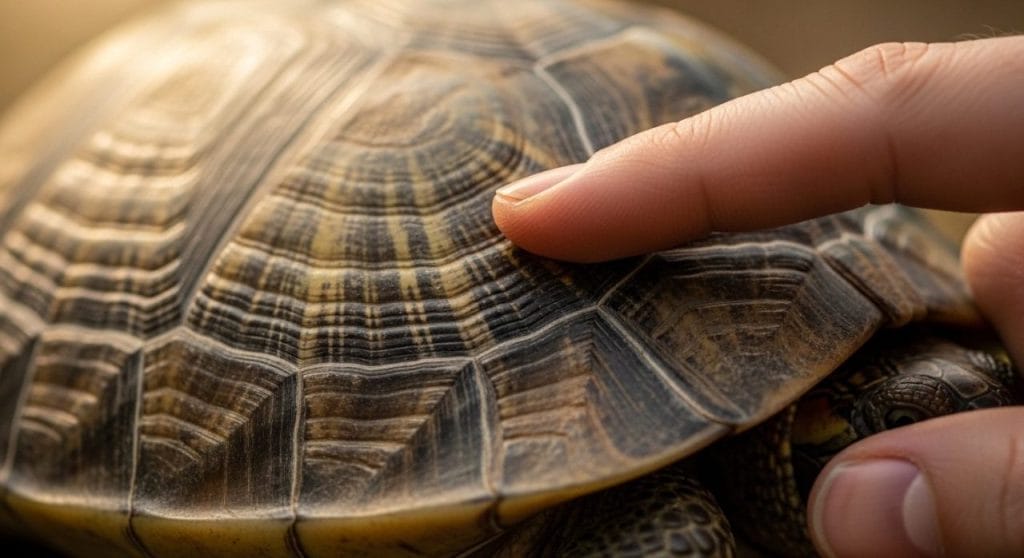
A turtle’s shell isn’t just a hard case it lives inside. The shell is fused to its skeleton — it’s made of around 60 bones, including modified ribs, spine, and pelvis, all covered by a layer of keratin scutes. And the entire thing is laced with nerve endings.
Your turtle can feel every touch, tap, and scratch on its shell. When you pick it up and grip the sides, it can feel the pressure. For a prey animal that’s been hardwired over 200 million years to associate being grabbed with being eaten, that’s not a fun experience.
What “Affection” Actually Looks Like in Turtles
That said, turtles do recognize their owners. A 2025 study from the University of Lincoln even found that red-footed tortoises experience long-term mood states, similar to mammals and birds. They’re not emotionless robots.
Here’s what turtle affection actually looks like:
Your turtle swims toward you when you approach the tank. It extends its neck when you’re near, instead of hiding. It eats confidently in your presence instead of waiting until you leave. Over time, it stops flinching when you reach into the tank.
That’s a turtle trusting you. It’s subtle, but if you’ve earned it, you’ll notice.
Building that trust takes patience — start by understanding what commonly scares turtles so you can avoid accidentally breaking the bond you’ve built.
8. They’re Extremely Picky Eaters
You’d think an animal that eats bugs, plants, and pretty much anything it can fit in its mouth would be easy to feed.
You’d be wrong.
Turtles can be unbelievably stubborn about food. And they’ll happily go on a hunger strike if they don’t get what they want.
The Juvenile Problem
Baby and juvenile turtles want protein. Lots of it. If you offer them a plate of greens and nothing else, some will flat-out refuse to eat. They’ll stare at the lettuce, look at you, and then swim away as if you’ve insulted them.
This is normal. Juveniles are growing fast and their bodies are screaming for animal-based protein. Offer them a balanced diet with pellets, dried shrimp, and occasional live insects, and they’ll usually cooperate.
The Adult Problem
Adult turtles swing the other direction. Many will develop a strong preference for one or two foods and reject everything else. I’ve heard of turtles that would only eat if fresh shrimp was on the menu. No shrimp, no meal.
This is where it gets tricky. If you give in and only feed them their favorite food, you’ll end up with a nutritionally deficient turtle. It’s like letting a kid eat nothing but chicken nuggets.
How to Deal With Picky Eaters
The best approach is introducing variety early. If you’re raising a hatchling, rotate through different foods so it doesn’t fixate on one thing.
For adopted adult turtles with established preferences, the slow-switch method works best. Mix a small amount of new food in with their favorite, and gradually increase the ratio over several weeks. Most turtles will eventually accept the new food if it’s introduced alongside something they already trust.
And if your turtle refuses to eat for a few days? Don’t panic. A healthy adult turtle can go a week or more without food. They’re stubborn, but they won’t starve themselves.
A Few More Things Worth Knowing
Before I wrap up, here are some quick facts that didn’t fit neatly into the sections above but are still worth mentioning.
Turtles can live a very long time. A pet red-eared slider can easily live 20-30 years with proper care, and some have made it past 40. This is a decades-long commitment. Don’t get a turtle on impulse.
Sea turtles navigate using Earth’s magnetic field. They can detect the planet’s magnetic signature and use it like a built-in GPS to travel thousands of miles across open ocean. Scientists still don’t fully understand how this works.
Hissing isn’t aggression. When a turtle pulls its head into its shell quickly, air gets forced out of its lungs, producing a hissing sound. It’s not trying to intimidate you. It’s scared.
Turtles have been shown to learn from watching other turtles. A study by Wilkinson found that tortoises who watched another tortoise solve a detour task could replicate the solution on their first try. Tortoises who didn’t watch another animal couldn’t figure it out reliably. That’s social learning — something scientists once thought was limited to mammals and birds.
Final Thoughts
Turtles aren’t boring. They’re just quiet about how interesting they are.
They solve mazes, remember things for years, switch up their diets as they age, and can feel every touch through their shells. They’re not cuddly, but they’re watching you, learning your routine, and deciding whether or not you’ve earned their trust.
If you’re thinking about getting a turtle, go in with realistic expectations. They’re messy, they’re picky, and they’ll live longer than most of your other pets combined. But if you put in the effort to understand them, you’ll get a front-row seat to watching one of the oldest surviving animal designs on the planet do its thing.
And honestly, that’s pretty cool.

About Author
Muntaseer Rahman started keeping pet turtles back in 2013. He also owns the largest Turtle & Tortoise Facebook community in Bangladesh. These days he is mostly active on Facebook.