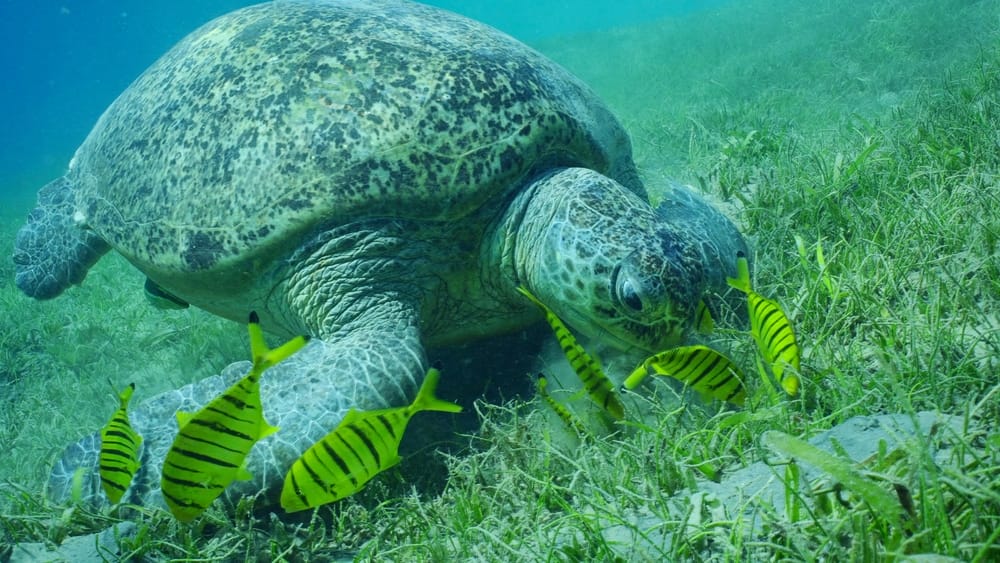
The Hidden Language of Turtles: How These “Silent” Reptiles Actually Talk
This post was created with help from AI tools and carefully reviewed by a human (Muntaseer Rahman). For more on how we use AI on this site, check out our Editorial Policy.
For decades, scientists assumed turtles were basically deaf and dumb.
No vocal cords. No external ears. Just silent little tanks cruising through life without a word to say.
Turns out, we were dead wrong.
Turtles Talk. A Lot.
In 2022, researchers recorded 53 species of turtles that were previously thought to be completely mute. Every single one was making sounds.
Chirps. Clicks. Grunts. Croaks. Even meows.
One species, the oblong turtle from Australia, has a vocal range that includes clacks, clicks, squawks, hoots, chirps, wails, grunts, growls, howls, and drum rolls.
That’s more variety than some birds.
Why Didn’t We Know This Before?
Here’s the thing about turtle sounds: they’re really hard to hear.
Most turtle vocalizations are low-frequency sounds between 200 and 400 Hz. That’s right at the edge of human hearing, especially if you’re over 40.
They’re also quiet. And underwater, which muffles everything even more.
“The sounds are at the lower end of the human audible range, so hard for people over 40 to hear,” explains turtle researcher Richard Vogt. “The sounds besides being low frequency are also low in volume and infrequent, thus easy to overlook.”
Scientists only started catching these sounds when they deployed specialized underwater microphones called hydrophones.
This Hilarious Turtle Book Might Know Your Pet Better Than You Do

Let’s be real—most turtle care guides feel like reading a textbook written by a sleep-deprived zookeeper.
This one’s not that.
Told from the snarky point of view of a grumpy, judgmental turtle, 21 Turtle Truths You’ll Never Read in a Care Guide is packed with sarcasm, sass, and surprisingly useful insights.
And hey—you don’t have to commit to the whole thing just yet.
Grab 2 free truths from the ebook and get a taste of what your turtle really thinks about your setup, your food choices, and that weird plastic palm tree.
It’s funny, it’s honest, and if you’ve ever owned a turtle who glares at you like you’re the problem—you’ll feel seen.
The Vocabulary of Turtles
Different turtle species make different sounds for different reasons. Here’s what we know so far:
| Sound Type | What It Means | Species Examples |
|---|---|---|
| Hiss | “Back off, I’m scared” | Most species – defensive response |
| Grunt | Mating calls, physical effort | Tortoises, sea turtles |
| Chirp | Social contact, excitement | Red-eared sliders, hatchlings |
| Click | Breathing, underwater communication | Softshell turtles, snapping turtles |
| Low-frequency calls | Long-distance communication | Giant Amazon river turtles |
| Croaks/Squawks | Various social interactions | Flatback sea turtles, oblong turtles |
Baby Turtles Start Talking Before They’re Born
This is wild.
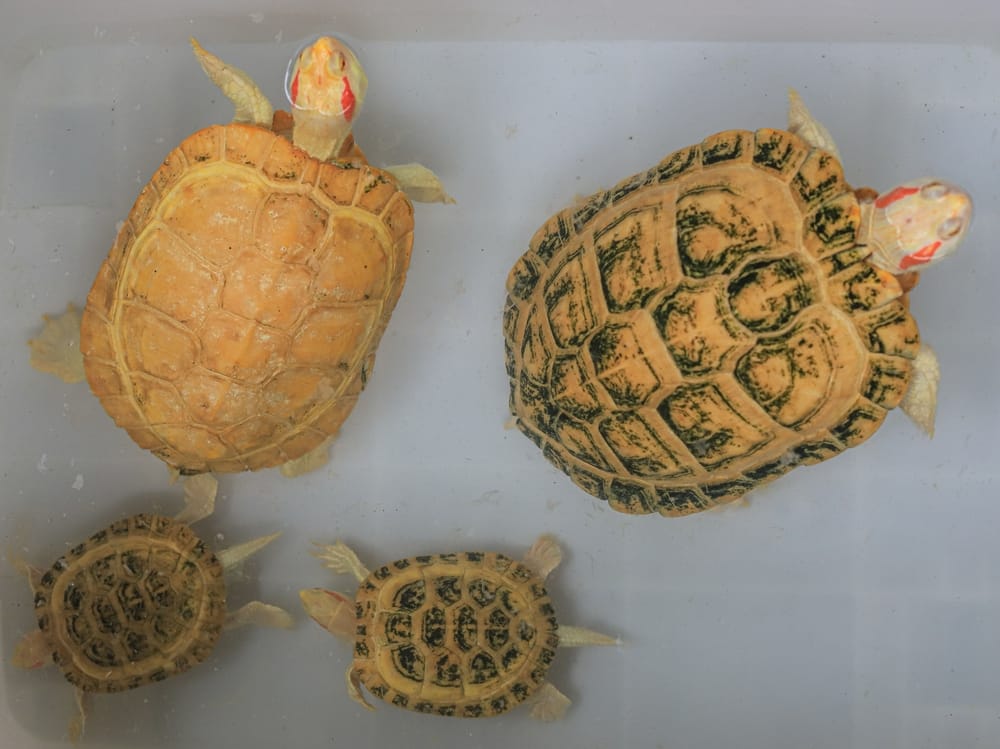
Turtle embryos communicate with each other while still inside their eggs.
Scientists discovered that hatchlings make sounds before they even break through the shell. These pre-hatching chirps and clicks help siblings coordinate when to hatch so they all emerge together.
Why does this matter? Safety in numbers.
When all the babies pop out at once, predators get overwhelmed. A lone hatchling is an easy snack. A hundred of them scrambling at the same time? Much better odds.
This synchronized hatching is also why female turtles are so particular about where they dig their nests — the right conditions mean the entire clutch develops at the same rate.
Research on snapping turtles identified six different types of vocalizations just during the hatching and emergence process. These include short chirp-like sounds with multiple harmonic bands that increase in complexity as the hatchlings prepare to leave the nest.
The Discovery That Changed Everything
Remember how I said turtles don’t do parental care?
That’s what everyone believed until researchers in the Brazilian Amazon proved otherwise.
The Giant South American river turtle does something no other turtle species has been documented doing: mothers call out to their babies and guide them to safety.
Here’s how it works:
Females wait in the water near the nesting beach. When the hatchlings emerge and make their squeaky little calls, the mothers respond with their own low-frequency vocalizations.
The babies follow the sound.
Using tracking transmitters, researchers found that hatchlings and mothers migrate together for more than two months after hatching.
This was the first evidence of post-hatching parental care ever recorded in any turtle species.
How Turtles Make Sounds Without Vocal Cords
Turtles don’t have vocal cords like mammals do. So how do they produce all these sounds?
They’ve got a workaround.
Turtles have folded structures in their larynx or glottis that vibrate when air passes through. Some species also have elastin-rich bands that function similarly to vocal cords.
The most common sound, hissing, happens automatically. When a turtle yanks its head into its shell, it compresses its lungs and forces air out through the glottis.
That “hiss” isn’t aggression. It’s just physics. The turtle is startled and its body is literally deflating.
Mating Sounds: Turtle Love Songs
If you’ve ever wondered what turtle romance sounds like, the answer is: surprisingly loud.
Male tortoises are the most vocal during mating. They grunt, moan, and make sounds that conservation biologist James Gibbs describes as lasting “10 or 20 minutes and traveling for miles.”
Larger tortoises produce deeper, more guttural sounds. Smaller species make higher-pitched squeaks.
Aquatic turtles are more subtle, using low-frequency clicks and chirps that are often below human hearing range.
Male sea turtles have been known to vocalize during courtship with grunts and moans to get a female’s attention.
Body Language: The Other Half of Turtle Communication
Sounds are only part of the story.
Turtles are masters of non-verbal communication too.
Head Bobbing
This is the big one.
Head bobbing means different things depending on the situation:
- Slow, relaxed bobbing = “I’m chill, everything’s cool”
- Fast, vigorous bobbing toward another turtle = “This is my territory, back off”
- Bobbing directed at a female = “Hey there, interested in mating?”
- Bobbing while dispersing pheromones = Chemical signals spreading to attract mates
Males generally bob more frequently and aggressively than females. During mating season, the bobbing gets intense, sometimes 2 cycles per second.
Shell Posture and Body Position
A confident turtle holds its head high and extended.
A scared turtle retracts into its shell.
A dominant turtle will puff itself up, stand tall on its legs, and make itself look as big as possible.
Some tortoise species will actually ram, bite, and even flip rivals during territorial disputes. Gopher tortoises, ploughshare tortoises, and African angulate tortoises are especially known for these aggressive showdowns.
Touch and Physical Contact
Turtles communicate through contact more than you’d expect.
Nose touching is basically a turtle handshake. It’s how they introduce themselves and possibly identify each other by scent.
During courtship, male aquatic turtles will flutter their claws near a female’s face. Male red-eared sliders touch the female’s neck and head with their claws as part of their mating ritual.
These behaviors are driven by instinct rather than emotion — though turtles do experience a surprisingly complex range of feelings that influence how they interact.
Some males squirt water in the female’s face. Romantic.
Chemical Communication: The Invisible Messages
Turtles have glands on their chin, neck, and head that produce pheromones.
These chemical signals communicate:
- Reproductive readiness — “I’m ready to mate”
- Individual identity — “It’s me”
- Territory markers — “This area is claimed”
When turtles rub against objects in their environment, they’re essentially leaving scent messages for other turtles to find.
What This Means for Pet Owners
If you have a pet turtle, here’s the deal:
That hissing when you pick them up? Not aggression. They’re just startled and air is escaping.
Persistent clicking or wheezing sounds? Could be a respiratory infection. Worth a vet visit.
Soft chirps or grunts? Probably normal communication, especially during feeding or if you have multiple turtles.
You can even communicate back. Turtle owners have found that slow head bobbing can signal relaxation and friendliness to their pets.
Some turtles will bob back. Turtles are smarter than most people give them credit for — they can recognize their owners and learn to associate specific people with food and safety.
Why This Research Matters
Understanding turtle communication isn’t just cool science trivia. It has real conservation implications.
If turtles rely on acoustic signals to coordinate nesting, find mates, and guide hatchlings to safety, then noise pollution could be a serious threat we never considered before.
Underwater noise from boats, construction, and other human activities might be disrupting crucial turtle communications in ways we’re only beginning to understand.
“We must ask ourselves if we are disrupting important transference of learned behaviors from mother to offspring,” notes the Turtle Survival Alliance.
For the Giant Amazon river turtle, where mothers literally call their babies to safety, this could be devastating.
The Bigger Picture
Here’s what blows my mind about all this.
Turtles have been around for over 200 million years. They watched the dinosaurs come and go.
And for all that time, they’ve been talking to each other.
We just weren’t listening.
The 2022 study that recorded 53 “mute” species didn’t just add to our knowledge of turtle behavior. It pushed back the estimated origin of vocal communication in vertebrates to 407 million years ago, at least 100 million years earlier than previously thought.
Turtle vocalizations might share the same evolutionary roots as our own ability to speak.
Next time you see a turtle sitting silently on a log, remember: it’s probably got something to say.
You just can’t hear it.

About Author
Muntaseer Rahman started keeping pet turtles back in 2013. He also owns the largest Turtle & Tortoise Facebook community in Bangladesh. These days he is mostly active on Facebook.