Discover How Old Your Snapping Turtle Is Just by Measuring Its Size!

This post was created with help from AI tools and carefully reviewed by a human (Muntaseer Rahman). For more on how we use AI on this site, check out our Editorial Policy.
You just got a snapping turtle and you’re dying to know how old it is.
Maybe you found it crossing the road, or bought it from someone who had no clue about its age.
Either way, you’re stuck wondering if your new buddy is a teenager or pushing retirement age.
Here’s the truth: figuring out a snapping turtle’s exact age is basically impossible unless you know its hatch date.
But don’t worry—there are some clever ways to make a pretty good guess.
Why Can’t We Just Know Their Age?
Think about it like this: when you meet someone at a party, you can’t tell if they’re 28 or 34 just by looking at them.
Same deal with snapping turtles, except way harder.
They don’t come with birth certificates, and pet shops definitely aren’t keeping detailed records.
Scientists have been trying to crack this code for years, and while they’ve made progress, there’s still no perfect method.
The Size Method: Pretty Good for Young Turtles, Useless for Old Ones
Here’s what most people try first: measuring the shell and comparing it to a growth chart.
This actually works okay for young turtles—think babies to teenagers.
According to recent research from Texas, size is most useful for estimating age in the first 10 years.
After that? Growth slows down so much that a 30-year-old and a 50-year-old turtle might be the same size.
Common Snapping Turtle Size Chart
| Age | Carapace Length | What This Means |
|---|---|---|
| Hatchling | 1.5 inches | Tiny as a quarter |
| 1 year | 2.5-5 inches | Growing fast |
| 2 years | 5-6.5 inches | Still speedy growth |
| 3 years | 5-8 inches | Starting to slow down |
| 5 years | 6-10 inches | Approaching teenage years |
| 10 years | 7-10 inches | Young adult |
| 15-20 years | 11-14 inches | Fully grown |
| 25+ years | 11-18+ inches | Size barely changes now |
Alligator Snapping Turtle Size Chart
| Age | Carapace Length | Weight |
|---|---|---|
| Hatchling | 1.5 inches | Few ounces |
| 1 year | 2.5-4 inches | 1-2 pounds |
| 3 years | 6-8 inches | — |
| 10 years | 10-12 inches | 10-35 pounds |
| 15-20 years | 12-16 inches | 35+ pounds |
| 40+ years | 16-26+ inches | 46-100+ pounds |
| 100 years | 20-32 inches | 125-175 pounds (males) |
Important note: These charts are estimates based on research and observations from multiple sources.
Your turtle might not follow this pattern exactly, and that’s totally normal.
Why Size Estimates Fall Apart
Let’s say you have a turtle that’s 8 inches long.
Is it 3 years old with amazing genetics and perfect care?
Or is it 5 years old but grew slowly because of a rough winter?
You literally can’t tell.
Diet, temperature, genetics, health issues, location—they all mess with growth rates.
A turtle in Florida grows faster than one in Minnesota because of the longer warm season.
So if you have two identical-sized turtles, the northern one is probably older.
For more detailed methods of aging turtles beyond size, see our complete guide on how to tell the age of a turtle.
This Hilarious Turtle Book Might Know Your Pet Better Than You Do

Let’s be real—most turtle care guides feel like reading a textbook written by a sleep-deprived zookeeper.
This one’s not that.
Told from the snarky point of view of a grumpy, judgmental turtle, 21 Turtle Truths You’ll Never Read in a Care Guide is packed with sarcasm, sass, and surprisingly useful insights.
And hey—you don’t have to commit to the whole thing just yet.
Grab 2 free truths from the ebook and get a taste of what your turtle really thinks about your setup, your food choices, and that weird plastic palm tree.
It’s funny, it’s honest, and if you’ve ever owned a turtle who glares at you like you’re the problem—you’ll feel seen.
The Ring-Counting Method: Like Tree Rings, But Way Less Reliable
You know how you can count tree rings to find out how old a tree is?
Snapping turtles have something similar on their shells.
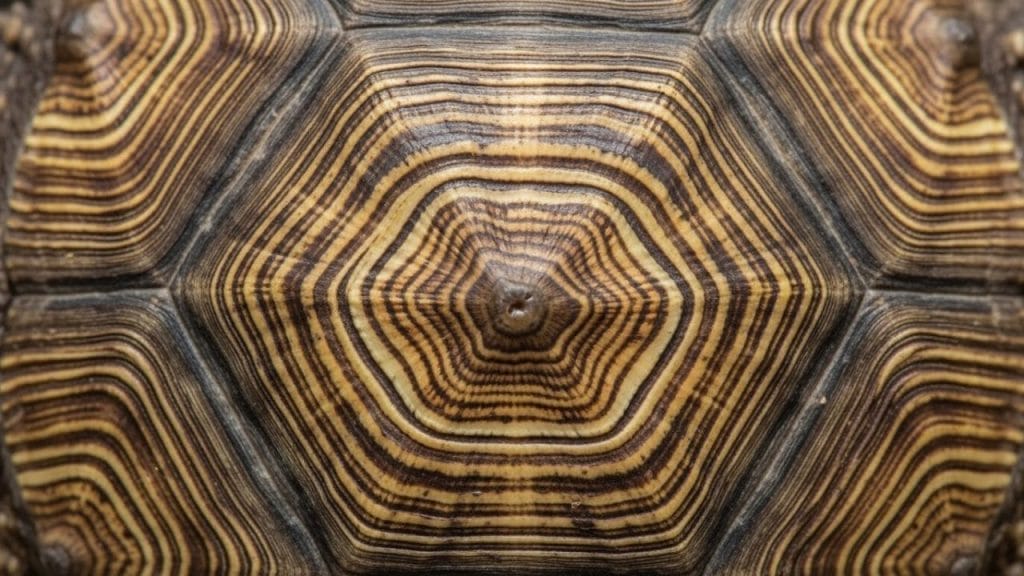
Look closely at the scutes (those individual plates on the shell) and you’ll see rings.
How It’s Supposed to Work
During summer, when food is plentiful and the turtle is active, it grows quickly.
This creates a thick, visible growth ring.
During winter, when the turtle barely eats or even hibernates, growth slows way down.
This creates a narrow, faint ring.
In theory, each pair of rings (one thick, one thin) equals one year.
Count all the rings, divide by 2, and boom—you’ve got the age.
Why This Method Drives Scientists Crazy
Research from Minnesota found that ring counts are frequently wrong, even in turtles as young as 4 years old.
Here’s why this method is so unreliable:
The rings start overlapping. After about 7-8 years, the rings get so close together you can’t count them anymore.
Shell damage messes everything up. Wild turtles get into fights, get hit by predators, and scrape against rocks—all of this makes rings hard to see.
Uneven growth creates extra rings. A really good summer might create two growth spurts instead of one, giving you an extra ring that doesn’t represent a full year.
Bad years skip rings entirely. If a turtle barely eats for a whole year, it might not form a visible ring at all.
How to Try Counting Rings (If You Really Want To)
Pick a scute that looks clean and undamaged.
Clean it gently with a soft brush and water to see the rings more clearly.
Use a magnifying glass—trust me, you’ll need it.
Count the total number of rings you can see, then divide by 2.
This gives you a very rough estimate, and only works well on turtles under 8 years old.
The Shell Appearance Trick: Only Good for Babies
Baby snapping turtles have three distinct ridges running down their backs.
They also sometimes have little white dots on their shells.
As they grow, the ridges flatten out and disappear.
The white dots fade away too.
So if you see a turtle with a completely smooth shell and no dots, you know it’s at least a few years old.
But that’s literally all this method tells you—whether it’s a baby or not.
Pretty useless for adult turtles, honestly.
The Professional Method: Skeletochronology (Which You Can’t Actually Do)
Scientists can examine growth rings in the bones of snapping turtles.
A 2001 Minnesota study tested multiple methods and found that examining curved carapace length combined with bone analysis provided the best age estimates.
The problem? This requires specialized equipment, training, and often involves euthanizing the turtle.
So yeah, not an option for pet owners.
But it’s nice to know the scientists are working on it, I guess.
Regional Differences Matter More Than You Think
Where your turtle lives changes everything about its growth rate.
Northern turtles have shorter growing seasons—maybe 4-5 months of warmth.
Southern turtles can grow year-round in some areas.
This means a 10-year-old turtle from Canada might be the same size as a 6-year-old turtle from Louisiana.
If you’re trying to estimate age, knowing the turtle’s origin helps a lot.

Male vs. Female Growth: Another Complication
Research shows males and females grow differently.
Males grow faster between ages 5-7 and keep growing even after 35 years.
Females slow down significantly after 20 years and stop growing much earlier.
Adult male common snappers average 13.3 inches, while females average 11 inches.
So if you’re comparing sizes to estimate age, you need to know the sex first—here’s our guide on how to determine snapping turtle gender.
What About Those Monster Turtles?
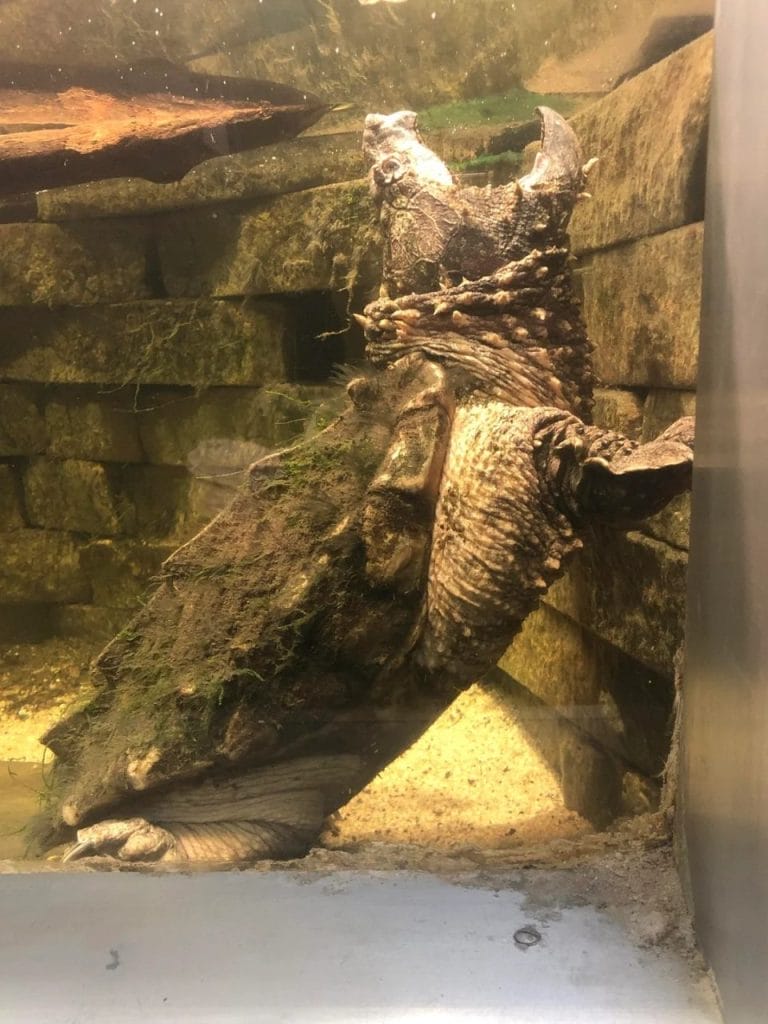
You’ve probably heard stories about 100-pound snapping turtles.
Are they real? Absolutely.
The largest wild-caught alligator snapping turtle on record weighed 211 pounds, and captive ones have exceeded 250 pounds.
Common snapping turtles can get pretty big too—there’s a famous one called “Big Snap Daddy” who weighs about 90 pounds at 93 years old.
But here’s the thing: by the time a turtle is that big, it’s definitely old.
Whether it’s 70, 90, or 100 years old? Pretty much impossible to tell without records.
How Long Do These Things Actually Live?
Common snapping turtles typically live 30-50 years in the wild.
Alligator snapping turtles? They can hit 50-100 years, possibly even longer.
The theoretical maximum lifespan for snapping turtles is around 170 years.
Once they reach adult size, they have almost no natural predators.
Their annual mortality rate is only 1-1.3%, which is insanely low.
Most adult snapping turtles die of old age, unless they meet a car or get harvested by humans.
Curious about how snapping turtles compare in size to other species? We’ve got a comprehensive size comparison across turtle families.
The Bottom Line: It’s All Guesswork
Here’s what the latest science tells us: you can’t accurately determine a snapping turtle’s age without knowing when it hatched.
Every method we have is an educated guess at best.
Size charts work okay for young turtles under 10 years old.
Ring counting might give you a ballpark figure for turtles under 8 years old.
Shell appearance tells you if it’s a baby or not.
Beyond that? You’re basically just guessing.
And honestly, that’s fine.
Does it really matter if your snapping turtle is 15 or 18 years old?
As long as it’s healthy, active, eating well, and not showing signs of illness, the exact age is just a fun fact.
What You Should Actually Focus On
Instead of obsessing over age, pay attention to these things:
- Is your turtle active and alert? Healthy snappers are curious and responsive.
- Is it eating regularly? Loss of appetite is a major warning sign.
- Is the shell in good condition? Look for cracks, soft spots, or unusual discoloration.
- Are the eyes clear and bright? Cloudy or swollen eyes indicate health problems.
- Is it maintaining a healthy weight? You should be able to feel some resistance when pressing on the shell, but it shouldn’t be sunken.
These factors matter way more than knowing if your turtle is 12 or 14 years old.
When to See a Vet
If you really need to know your turtle’s age—maybe for breeding purposes or health assessments—go see a reptile vet.
They can examine the shell, check overall health, and give you their best professional estimate.
It still won’t be exact, but it’ll be better than what you can figure out at home.
Plus, they can check for health issues while they’re at it.

About Author
Muntaseer Rahman started keeping pet turtles back in 2013. He also owns the largest Turtle & Tortoise Facebook community in Bangladesh. These days he is mostly active on Facebook.