Tortoise Behavior Explained: 22 Common Behaviors and What They Actually Mean
This post was created with help from AI tools and carefully reviewed by a human (Muntaseer Rahman). For more on how we use AI on this site, check out our Editorial Policy.
My tortoise went completely stiff one afternoon. Limbs out, head out, not moving, not blinking.
I was fully convinced he was dying. I sat there for twenty minutes working out how to tell my wife.
Then he yawned and walked off to eat a dandelion.
That is the problem with tortoises. They do not have a face that tells you anything, so half of what they do looks like an emergency and is not, and a few things that look like nothing are genuinely urgent.
This guide sorts them out. Every behavior below gets one of three verdicts.
- Normal: leave it alone, this is just tortoise stuff
- Watch: usually fine, but check your setup and keep an eye on it
- Vet: stop reading and call an exotics vet
Quick Verdict Table
If you’re here because your tortoise is doing something specific right now, start here.
| Behavior | Verdict |
|---|---|
| Stretching neck out | Normal (Vet if paired with open mouth) |
| Hissing when you approach | Normal |
| Going stiff and unresponsive | Normal (Vet if over 24 hours) |
| Stomping and shuffling in water | Normal |
| Eating its own droppings | Normal |
| Rubbing shell on rocks | Normal (Watch if shell looks off) |
| Occasional sneeze | Normal |
| Digging and burrowing | Normal |
| Following you around | Normal |
| Head bobbing | Normal (Watch if alone and constant) |
| Splayed-out legs while basking | Normal |
| Ramming another tortoise | Watch |
| Wall climbing all day | Watch |
| Pacing at night | Watch |
| Hiding far more than usual | Watch |
| Restless digging in a female | Watch (Vet if over a week) |
| Walking in circles | Vet |
| Open-mouth breathing, mucus, clicking | Vet |
| Not eating for over a week | Vet |
| Lethargy plus a soft shell | Vet |
| Straining with nothing passing | Vet |
| Swollen or crusted eyes | Vet |

First, Know What Normal Looks Like
You cannot spot a change if you never learned the baseline.
A healthy tortoise eats most days, moves around in bursts rather than constantly, basks under the lamp, digs a bit, and rests a lot. Emphasis on rests a lot. A tortoise sitting still is not a tortoise in trouble.
The rhythm matters more than any single moment. Most tortoises are busiest mid-morning after they have warmed up, and wind down through the afternoon.
Spend a week just watching yours before you worry about anything. What you are building is a personal baseline, because “normal” varies enormously between individuals.
The single most useful habit is writing down what you see. Weight once a month, appetite, and activity. A tortoise losing weight slowly is invisible day to day and obvious in a three-month log.
This Hilarious Turtle Book Might Know Your Pet Better Than You Do

Let’s be real—most turtle care guides feel like reading a textbook written by a sleep-deprived zookeeper.
This one’s not that.
Told from the snarky point of view of a grumpy, judgmental turtle, 21 Turtle Truths You’ll Never Read in a Care Guide is packed with sarcasm, sass, and surprisingly useful insights.
And hey—you don’t have to commit to the whole thing just yet.
Grab 2 free truths from the ebook and get a taste of what your turtle really thinks about your setup, your food choices, and that weird plastic palm tree.
It’s funny, it’s honest, and if you’ve ever owned a turtle who glares at you like you’re the problem—you’ll feel seen.
Behaviors That Look Alarming But Are Normal
1. Stretching The Neck Way Out
Verdict: Normal
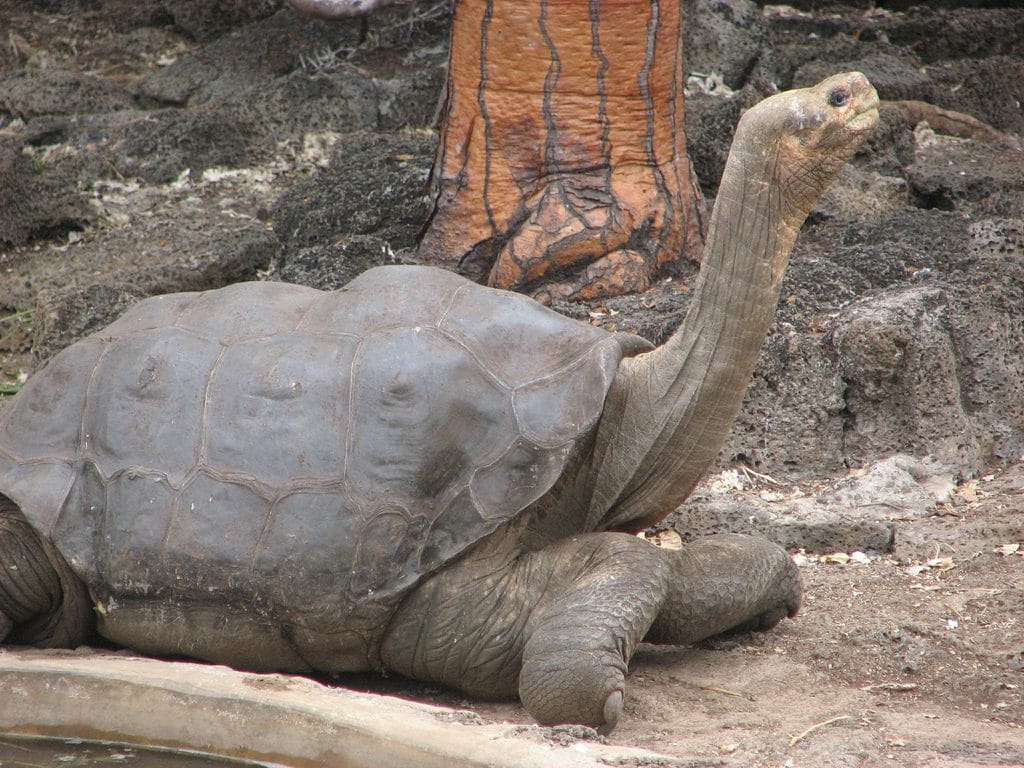
A tortoise extending its neck fully is usually curiosity, or an invitation. The neck is soft and vulnerable, so offering it means the animal feels safe.
Many tortoises stretch specifically to get a neck rub, and will hold the pose while you scratch.
It also happens right before food arrives, and while they are working out what you are.
The exception that flips this to Vet: neck stretching combined with an open mouth, or with the whole body pumping to breathe. That combination is a tortoise struggling to get air, and it points at a respiratory infection. That is a same-day call.
2. Hissing At You
Verdict: Normal
This one insults a lot of new owners, and it should not.
A tortoise has no diaphragm. To pull its head and legs into the shell quickly, it has to force air out of its lungs to make room. That rush of air is the hiss.
It is a mechanical noise, not a threat. Your tortoise is not angry, it is retracting fast.
What it does tell you is that something startled it. Frequent hissing means the enclosure is in a spot with too much noise, movement, or foot traffic.
3. Going Completely Stiff And Unresponsive
Verdict: Normal, unless it lasts
This is the one that scared me, and it has a name: thanatosis, or tonic immobility.
A frightened tortoise may shut down entirely. Limbs rigid, no response to touch, no interest in food. It can hold that for a while.
The logic is simple. Most predators respond to movement, so a completely still animal is a less interesting animal.
It usually resolves on its own, coming back one limb at a time.
Flip to Vet if: the stillness runs past about 24 hours, or comes with sunken eyes, a limp dangling neck, or a head that stays hanging out loosely. That is not thanatosis, that is collapse.
4. Stomping And Shuffling In Water
Verdict: Normal, and delightful
Some tortoises, radiated tortoises especially, will stand up tall and do a rhythmic shuffle when water runs over their shell. It genuinely looks like dancing.
Research on the behavior found the trigger is water moving across the carapace, not raindrops tapping it and not water pooling underneath.
The shell has nerve supply, and tortoises seem to actively seek out sensation on it. Many will deliberately walk under low branches to get a scrape along the back.
No known purpose beyond that. Some tortoises just like how it feels.
5. Eating Its Own Droppings
Verdict: Normal
Unpleasant to watch, biologically sensible.
Tortoises are hindgut fermenters. They rely on gut microbes to break down cellulose, which is most of what they eat. Hatchlings are not born with that microbial population.
Eating adult droppings is how a young tortoise seeds its gut with the bacteria it needs to digest plants at all.
In adults it happens less, and occasional interest is nothing.
Flip to Watch if: an adult is doing it constantly and obsessively. That can point at a diet too low in fiber or short on minerals. Look at whether the greens are varied enough and whether calcium and a cuttlebone (my pick: natural cuttlefish bone) are available.
6. Rubbing Its Shell Against Everything
Verdict: Normal, but look closely
Usually an itch, or scutes loosening ahead of a shed. Rough rocks and log edges are the preferred scratching posts.
Since the shell has feeling, this is genuinely satisfying for them rather than mechanical.
Flip to Watch if: the shell has soft patches, discoloration, weeping, or any smell. Those point at shell rot or a fungal problem, and both get worse fast in damp conditions.
7. The Occasional Sneeze
Verdict: Normal
Tortoises clear dust and substrate from their nostrils, and they also expel salt. A dry sneeze here and there is housekeeping.
Flip to Vet if: it becomes frequent, or produces bubbles, mucus, or crusting around the nose. Clear runny discharge is the early stage of a respiratory infection.
8. Digging And Burrowing
Verdict: Normal
This is species-typical, not a complaint. Russian tortoises are committed burrowers and will excavate constantly given the chance.
Tortoises dig to escape heat, to find humidity, to hide, and sometimes for no visible reason.
Give them substrate deep enough to actually do it. Blocking a natural behavior creates the stress that people then diagnose as a problem.
Flip to Watch if: the digging is frantic and paired with pacing the perimeter, which reads as escape behavior rather than burrowing. Also see the gravid female section below.
9. Following You Around
Verdict: Normal, and a good sign
A tortoise walking toward you and trailing you around the room has decided you are safe and probably associated with food.
That is genuine recognition, built on smell, your voice, your outline and your feeding schedule. Ours covers the evidence for that in whether tortoises recognize their owners.
Enjoy it. Just do not respond by picking them up constantly, which undoes the trust you just earned.
10. Head Bobbing
Verdict: Normal, context decides what it means
Head bobbing is communication, and the meaning depends entirely on who is receiving it.
- At another male: dominance. Faster and harder bobbing is the assertion. This often escalates.
- At a female: courtship, usually followed by ramming and biting at the legs.
- At you: often attention or food seeking, especially in a tortoise that has learned you deliver meals.
Flip to Watch if: a solitary tortoise bobs constantly with no trigger, especially with any breathing noise. Persistent bobbing can be labored breathing rather than communication. There is a full breakdown of why a tortoise bobs its head, including how to tell gular pumping from a real behavioral bob.
11. Basking With Legs Splayed Out
Verdict: Normal
Legs stretched out behind, neck extended, looking flattened and dead to the world.
This is thermoregulation. Spreading the limbs exposes more surface area to the heat and speeds up warming.
It looks worryingly like collapse. It is the opposite.
Behaviors That Mean Check Your Setup
12. Ramming And Flipping Other Tortoises
Verdict: Watch, and act
Two tortoises arguing about territory or a mate do not posture and separate. They push, ram shells, and try to flip each other over.
An upside-down tortoise is helpless, which is exactly why the flip settles the argument.
This is genuinely dangerous. A tortoise left flipped under a heat lamp (my pick: heat lamp) or in the sun can overheat and die within hours.
If you keep more than one and you are seeing this, separate them. Housing adult males together is the most common version of this mistake.
13. Climbing The Walls All Day
Verdict: Watch
Also called glass surfing when it happens in a tank. The tortoise paces the perimeter, rears up against the wall, sometimes flipping itself over in the process.
It usually means one of a short list of things: the enclosure is too small, it is too plain, the temperature is wrong, or the tortoise can see through the walls and does not understand why it cannot get there.
That last one is why glass tanks are a poor choice. A tortoise cannot process transparent barriers and will keep trying to walk through.
Fixes in order of impact: more floor space, opaque walls, visual barriers and hides so the space feels enclosed, and enrichment to break up the pacing.
14. Pacing At Night
Verdict: Watch
Tortoises are diurnal. They should be asleep in the dark.
Activity after lights out usually points at a light cycle problem, a room that stays too bright, temperatures that are wrong overnight, or noise.
Give them a genuinely dark, quiet night. If you are running a light for heat after dark, switch to a source that does not emit visible light.
15. Hiding Far More Than Usual
Verdict: Watch
Hiding is normal. A sudden increase in hiding is a signal.
The usual causes are environmental: temperature off, UVB (my pick: Zoo Med ReptiSun 10.0) inadequate or expired, too much handling, or a newly noisy spot.
Bear in mind UVB tubes stop producing useful output long before they stop producing visible light. If yours is over a year old, that alone can explain a withdrawn tortoise.
There is a seasonal version of this too. A tortoise slowing down and burrowing as autumn arrives is following its biology, not telling you something is wrong.
If the setup checks out and the hiding persists, work through the signs of stress in tortoises, which covers causes and fixes in depth.
16. Restless Digging In A Female
Verdict: Watch, and know the deadline
A female tortoise who suddenly starts test-digging, pacing, refusing food, and wiggling her back legs into the soil is very likely looking for somewhere to lay.
She does not need to have met a male. Females produce eggs regardless, and infertile clutches are normal.
Give her somewhere to do it: a deep, slightly damp substrate area, warm, private, undisturbed. Many females will refuse to lay if they cannot find a site they accept.
Flip to Vet if: she has been at it for more than a week without laying, or she goes quiet and lethargic after all that effort. Egg binding is life-threatening and does not resolve on its own.
Behaviors That Mean Call A Vet
These are the ones where waiting to see what happens is the wrong move.
17. Walking In Circles
Verdict: Vet
A tortoise that repeatedly loops in one direction, tilts its head, or bumps into objects is showing a neurological sign.
Possible causes include inner ear infection, vitamin A deficiency, head trauma, and toxicity.
An occasional odd wander after being startled is nothing. A repeating circular pattern is not a personality quirk.
18. Open-Mouth Breathing, Mucus, Or Clicking
Verdict: Vet, same day
The clearest emergency on this list.
Signs cluster together: mouth held open, bubbles at the nostrils, a wet clicking or crackling with each breath, neck stretched and pumping, foam around the mouth.
Respiratory infections in tortoises escalate quickly and do not clear up on their own. They need an actual diagnosis and usually injectable antibiotics.
Raise the ambient temperature to the top of the safe range while you arrange the appointment. Warmth supports the immune response.
19. Not Eating For More Than A Week
Verdict: Vet, after you check the setup
Check temperature first. A cold tortoise cannot digest and will stop eating, and this is by far the most common cause. Check UVB second, and food freshness third.
Also rule out the seasonal explanation. Appetite dropping as the year cools is expected in species that brumate.
If temperatures are correct, the season does not explain it, and a week has passed, that is a vet visit. Our full breakdown of why tortoises refuse food covers the less obvious causes.
20. Lethargy With A Soft Shell
Verdict: Vet
A shell that gives under gentle pressure, or a jaw that feels rubbery, points at metabolic bone disease.
This is a UVB and calcium failure, and it is common because the causes are invisible. An expired bulb, glass between the tortoise and the light, or a diet without calcium supplementation will all do it.
Early stages are treatable. Advanced deformity is permanent, which is why this one should never be given a wait-and-see period.
21. Straining With Nothing Passing
Verdict: Vet
A tortoise pushing repeatedly with no result may be constipated, impacted, or carrying a bladder stone.
Impaction often follows swallowing substrate, which is a real risk with loose bedding for tortoises that eat off it.
A warm shallow soak is a reasonable first step and sometimes resolves simple constipation. If nothing changes within a day or two, it needs imaging.
22. Swollen Or Crusted Eyes
Verdict: Vet
Puffy, sealed shut, or crusted eyes are usually vitamin A deficiency or an infection, and often travel alongside a respiratory problem.
A tortoise that cannot see will not find food, so this compounds fast.
Do not treat this with over-the-counter drops picked at random. Vitamin A oversupplementation causes its own damage.

Species Changes What Normal Means
The same behavior can mean opposite things depending on what you keep.
| Species | Digging | Activity | Notable quirk |
|---|---|---|---|
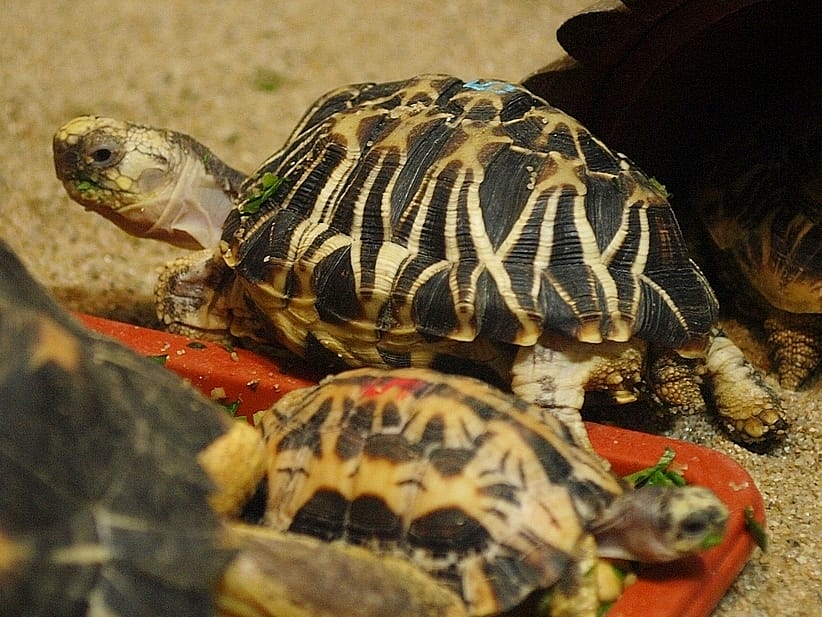
| Russian | Constant, expected | Busy, escape-prone | Wall climbing is near-universal |
| Sulcata | Heavy, destructive | Bold, pushy | Will follow and shove you for food |
| Leopard | Moderate | Calm, steady | Rarely does anything dramatic |
| Red-footed | Light | Curious, active | Most food-motivated, most interactive |
| Hermann’s | Moderate | Alert | Strong seasonal slowdown |
| Greek | Moderate | Reserved | Hides more than most by default |
A Russian tortoise digging nonstop is being a Russian tortoise. A red-footed doing the same thing is worth a second look.
When It Is The Season, Not A Problem
Worth separating out, because it causes a lot of unnecessary panic every autumn.
As days shorten and temperatures fall, most tortoises wind down. Less food, less movement, more time buried.
Species that brumate properly, including Russian, Hermann’s, Greek and box turtles, take this furthest. Tropical species like red-footed and sulcata slow but do not truly brumate.
The test is whether the timing makes sense. Slowing down in October is biology. The identical behavior in June is a problem.
Common Questions
How do I know if my tortoise is stressed or just being a tortoise?
Duration and clustering. One odd behavior for one afternoon is noise. The same behavior for a week, or three behaviors appearing together, is signal.
My tortoise stopped moving and I panicked. How long is too long?
Give it a few hours. Most freezing and tonic immobility resolves well inside a day. Past 24 hours, or alongside sunken eyes and a limp neck, call a vet.
Is head bobbing at me a good sign?
It usually means it wants something, most often food. It is not affection, but it does mean the tortoise has learned to associate you with meals, which is the foundation everything else builds on.
Why does my tortoise walk into walls repeatedly?
If it cannot see the barrier, that is a glass enclosure problem. If it bumps into solid opaque objects it should be able to see, that is a vision or neurological issue and needs a vet.
Should I be worried about hissing?
No. It is air being forced out during retraction. Frequent hissing just tells you the tortoise is being startled a lot, so move the enclosure somewhere calmer.
My tortoise is eating its poop. Do I need to stop it?
No. In young tortoises it establishes the gut bacteria they need to digest plants. In adults, occasional interest is fine. Obsessive adult coprophagy is worth a diet review.
How often should a healthy tortoise be active?
Bursts, not constant motion. Most are busiest mid-morning once warmed through, then rest heavily. A tortoise resting a lot is not a tortoise in trouble.
The Bottom Line
Tortoises do not escalate. They will not cry, pace dramatically, or come find you when something is wrong.
Which means the whole job is noticing. Most of what looks alarming is normal, and a few quiet things are genuinely urgent, and the gap between those two is where tortoises get lost.
Learn your animal’s baseline. Write down weight and appetite. Check temperature and UVB before assuming anything behavioral.
And when something clusters, persists, or lands on the vet list above, do not give it a week to see what happens. Tortoises are very good at hiding illness right up until they cannot.
That stiff, unresponsive tortoise of mine is fine, by the way. Still eating dandelions. Still occasionally scaring me half to death.

About Author
Muntaseer Rahman started keeping pet turtles back in 2013. He also owns the largest Turtle & Tortoise Facebook community in Bangladesh. These days he is mostly active on Facebook.