How To Tell If A Tortoise Is Dead Or Hibernating (7 Checks)

This post was created with help from AI tools and carefully reviewed by a human (Muntaseer Rahman). For more on how we use AI on this site, check out our Editorial Policy.
You lifted the lid, and your tortoise has not moved. Not a twitch, not a breath, nothing.
Your stomach drops. I have been there, and it is the worst feeling in the hobby.
Here is the good news before we go any further. The vast majority of “my tortoise is dead” panics turn out to be a perfectly healthy tortoise doing exactly what evolution told it to do.
A hibernating tortoise runs on almost nothing. Its heart can slow to a beat every few minutes, and it may breathe once every 10 to 15 minutes.
That is not a dying animal. That is a very efficient one.
But you still need an answer right now, so let’s get you one.
Quick Answer: Dead Or Hibernating?
Run this in your head before you touch anything.
| Sign | Alive (hibernating) | Likely dead |
|---|---|---|
| Head and limbs | Pulled inside the shell | Hanging out, limp, often to one side |
| Muscle tone | Some resistance when you lift a leg | Zero resistance, swings like a rope |
| Eyes | Moist, closed, normal socket | Sunken, dry, cloudy, eyelids swollen |
| Cloaca touch | Any twitch, however small | Nothing at all |
| Smell | Normal, earthy | Sour, sweet, rotten |
| Skin colour | Unchanged | Grey, pale, blotchy, or darkened |
| Flies | None | Flies landing, or maggots |
One sign is never enough. Cold and stillness prove nothing in a reptile, so you need three or four of these pointing the same direction before you draw a conclusion.
And if you are still unsure after all seven checks below, skip to the warm-up test. That is the one that settles it.
Before Anything Else: Should Your Tortoise Be Hibernating At All?
This is the question almost every panic post skips, and it changes everything.
Most tortoise species sold as pets must never hibernate. If yours is on the “no” list and it is lying there motionless, you are not looking at hibernation. You are looking at an emergency.
| Species | Hibernates? |
|---|---|
| Hermann’s (Testudo hermanni) | Yes |
| Russian / Horsfield’s (Testudo horsfieldii) | Yes |
| Greek / spur-thighed (Testudo graeca) | Yes |
| Marginated (Testudo marginata) | Yes |
| Egyptian (Testudo kleinmanni) | No, brief cooling only |
| Sulcata / African spurred | Never |
| Leopard | Never |
| Red-footed | Never |
| Yellow-footed | Never |
| Indian star | Never |
| Radiated | Never |
| Pancake | Never |
| Aldabra and Galapagos | Never |
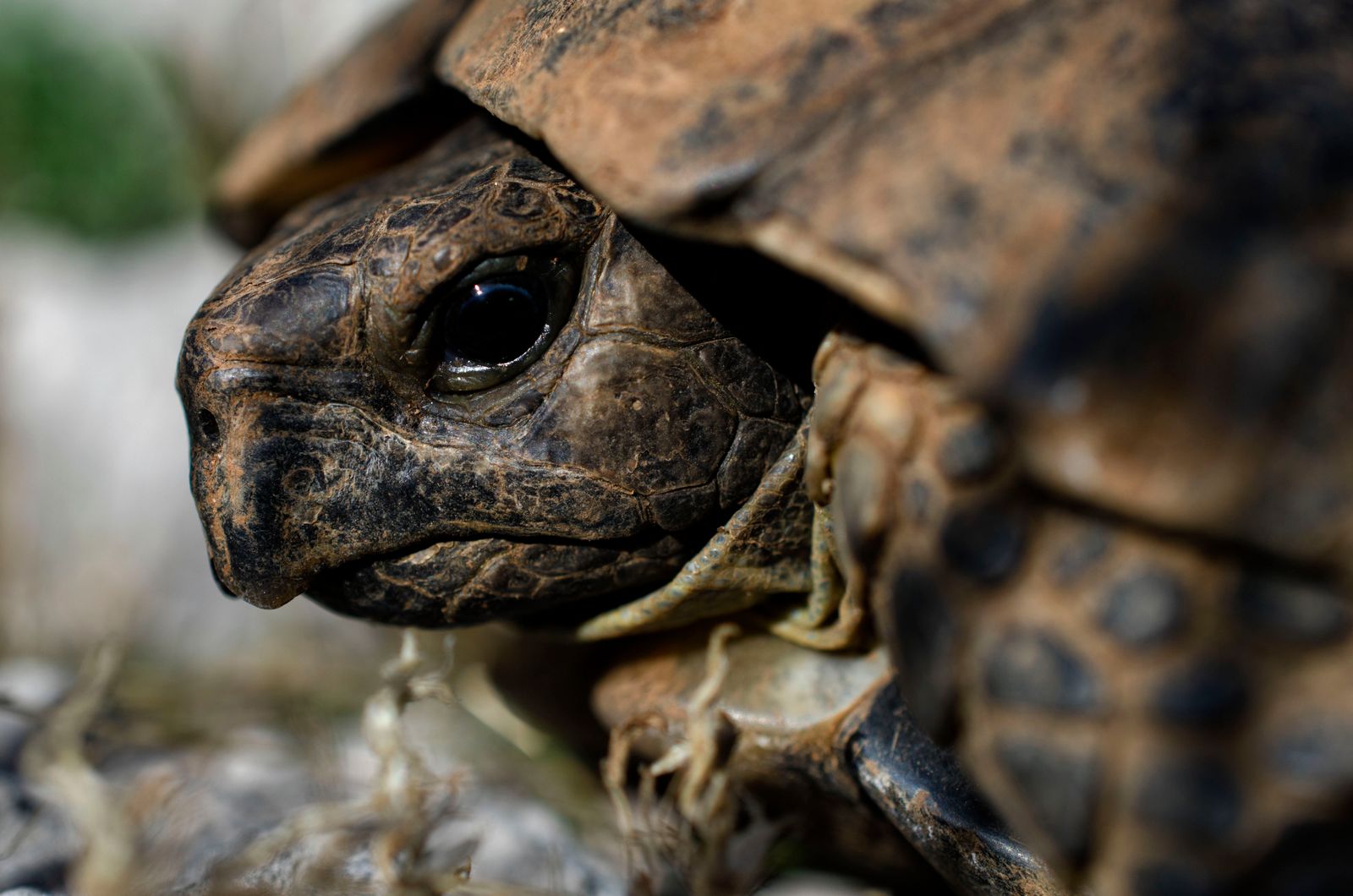
The split is climate. The Mediterranean and Central Asian species evolved with real winters, so hibernation is built into them.
The tropical and desert species never see a cold season. Their bodies have no shutdown program to fall back on.
So if your Sulcata or leopard has gone still and cold, it is not hibernating. It is hypothermic, sick, or both, and it needs warming and a vet today.
If that is you, skip ahead to the section on what to do when it is neither hibernating nor dead. There is a first-aid protocol there and the clock is running.
If you keep a Russian tortoise, on the other hand, a motionless winter tortoise buried in its bedding is completely normal.
Second gate: is it even the season?
Tortoise hibernation runs roughly October through March, depending on your climate.
A tortoise that goes limp and unresponsive in June is not hibernating. Nothing about that is normal, and it needs help the same day.
Third gate: how old is it?
Hatchlings and tortoises under about three years old should generally be kept awake and warm through winter. They have no fat reserves worth the name.
If a baby tortoise appears to be hibernating, treat it as illness until a vet tells you otherwise.
This Hilarious Turtle Book Might Know Your Pet Better Than You Do

Let’s be real—most turtle care guides feel like reading a textbook written by a sleep-deprived zookeeper.
This one’s not that.
Told from the snarky point of view of a grumpy, judgmental turtle, 21 Turtle Truths You’ll Never Read in a Care Guide is packed with sarcasm, sass, and surprisingly useful insights.
And hey—you don’t have to commit to the whole thing just yet.
Grab 2 free truths from the ebook and get a taste of what your turtle really thinks about your setup, your food choices, and that weird plastic palm tree.
It’s funny, it’s honest, and if you’ve ever owned a turtle who glares at you like you’re the problem—you’ll feel seen.
Slowing Down In Autumn: Settling In Or Getting Sick?
Plenty of people find this article a few weeks earlier in the story. The tortoise is not motionless yet, it is just sluggish, off its food, and hiding, and you cannot tell whether winter is arriving or something is wrong.
The two look similar for a reason. Both produce a quiet, uninterested tortoise.
Here is how they separate.
| Normal wind-down | Something is wrong | |
|---|---|---|
| Timing | Autumn, as light and temperature drop | Any time of year |
| Onset | Gradual, over two to four weeks | Sudden, over a day or two |
| Pattern | Same thing it did last year | New behaviour for this animal |
| Appetite | Tapers off slowly | Stops abruptly |
| Behaviour | Digging down, seeking shade and cool | Listless in the open, no attempt to burrow |
| Eyes and nose | Clear | Discharge, bubbles, puffiness, crusting |
| Breathing | Silent | Clicking, wheezing, open mouth, stretched neck |
| Weight | Steady | Dropping |
| Poop | Tapers, then stops after the gut clears | Diarrhoea, or straining with nothing coming |
Refusing food for more than about five days outside autumn is not a hibernation signal. It is a symptom.
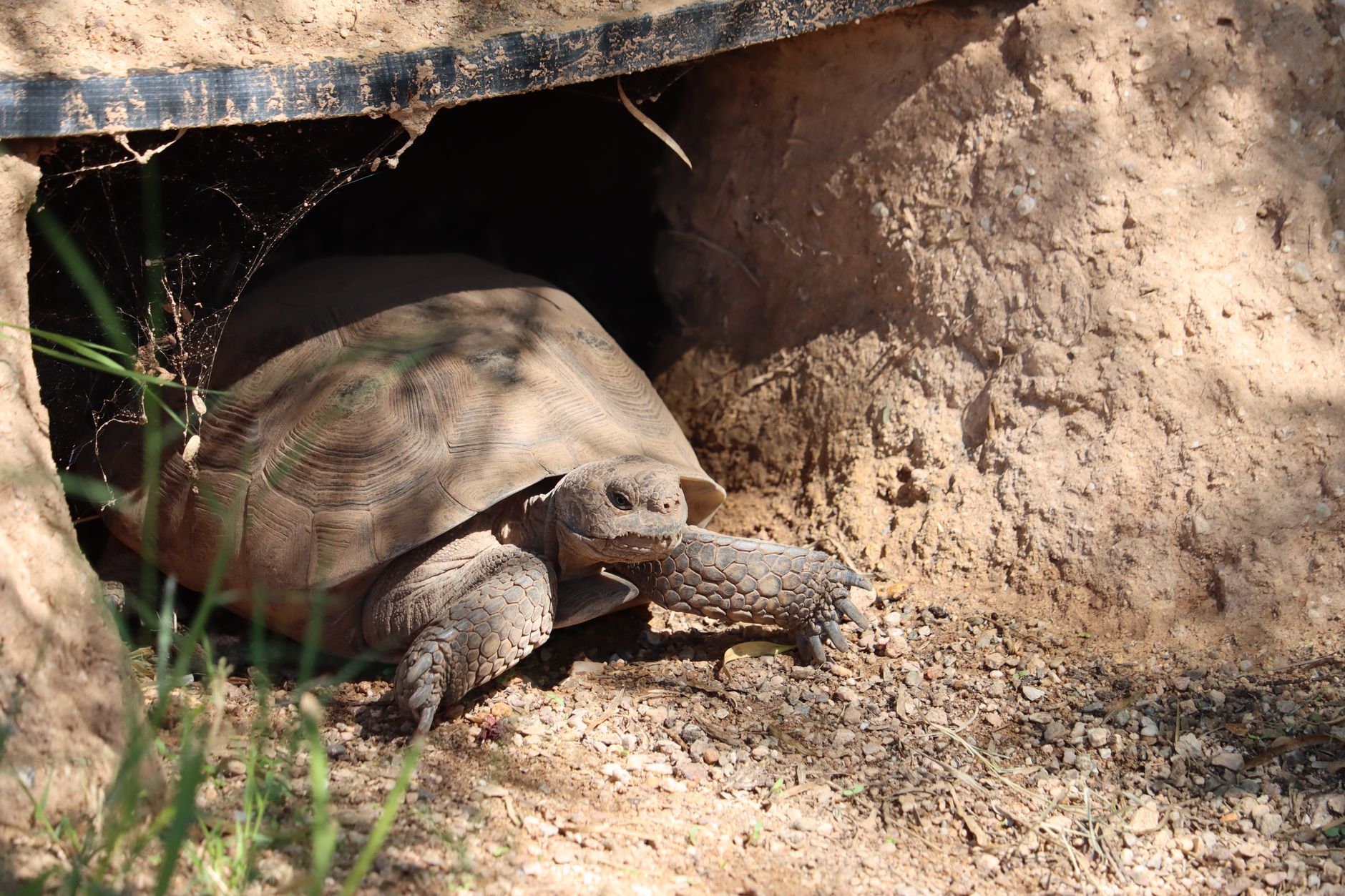
The single loudest alarm in that table is breathing. Any clicking, bubbling, or open-mouth breathing means a respiratory infection, and a respiratory infection is an absolute bar to hibernation.
Getting this call right matters more than any other decision in this article. A tortoise put into hibernation while sick is a tortoise that usually does not come out, and the other common tortoise health problems are worth ruling out before you commit.
The 7 Checks, Safest First
Work down this list in order. The early checks do not disturb your tortoise at all, and that matters, because waking a hibernating tortoise burns reserves it cannot spare.
1. Body Position (The Single Best Sign)
Look at the head and the four legs before you touch anything.
A dead tortoise cannot hold itself together. Muscle control goes, so the head flops out of the shell, usually lolling to one side, and the legs and tail dangle loose.
A hibernating tortoise stays tucked. Head in, legs folded in tight, shell closed up like a fist.
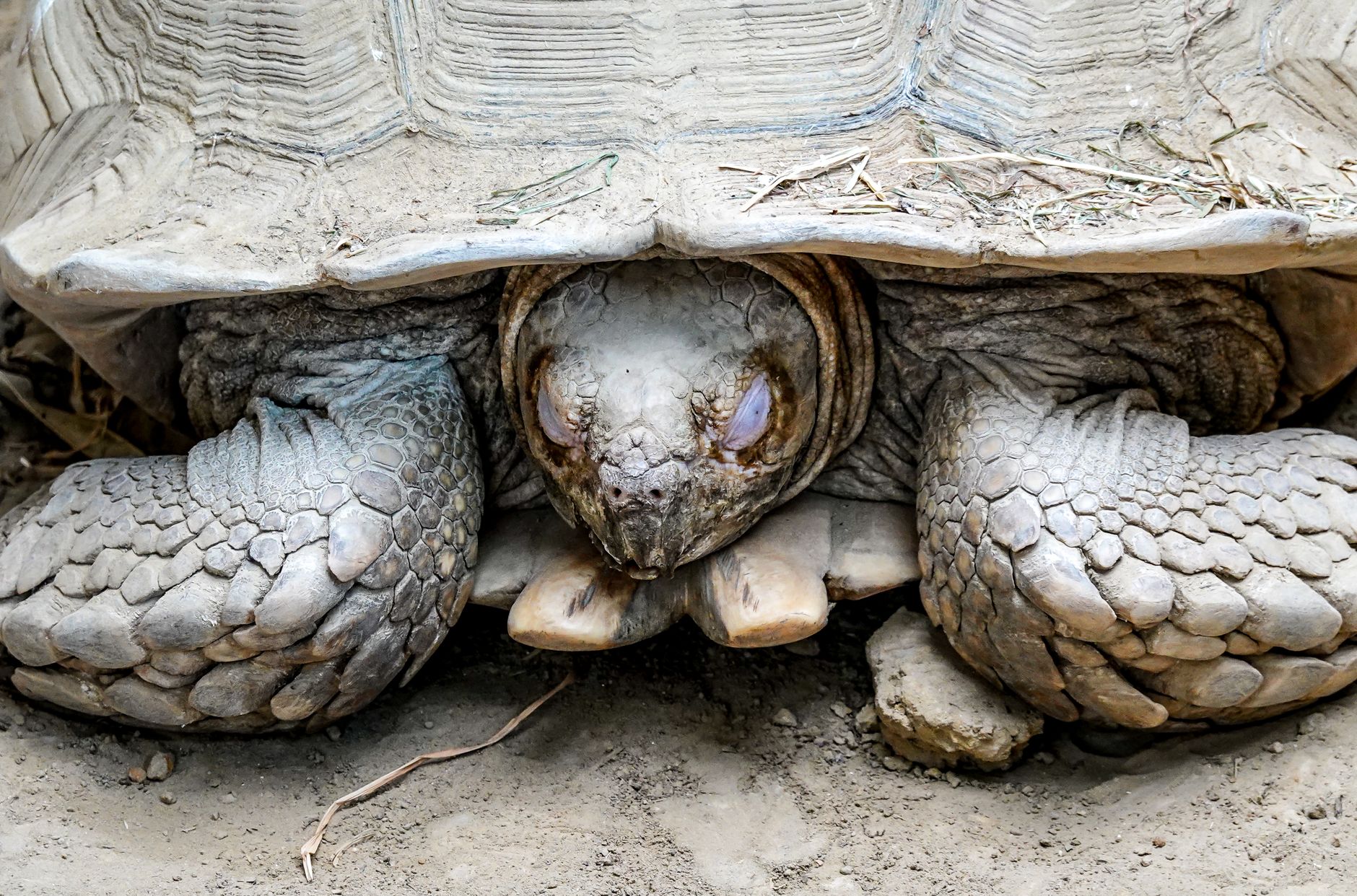
If everything is pulled inside, you can breathe. That is a living animal.
There is one trap here. For the first three to four hours after death, rigor mortis makes a tortoise stiff, and stiff can read as “holding itself in.”
So do not use position alone within a few hours of finding it. Stiffness fades, and a truly dead tortoise goes floppy afterward.
2. Limb Tone
Gently lift one back leg with a fingertip and let it go.
A hibernating tortoise resists. Not much, but you will feel a slight spring, and the leg will pull back toward the shell.
A dead tortoise gives you nothing. The leg hangs there and drops like a wet noodle when you release it.
This is the same information as check 1, felt rather than seen, and together the two are the most reliable pair on the whole list.
3. The Breath Test (Done Properly)
The feather trick is real, but almost everybody does it wrong.
Hold a small feather, a thread, or a strip of tissue paper right at the nostrils. Then wait.
Not thirty seconds. Ten to fifteen full minutes.
A hibernating tortoise may take one single breath every 10 to 15 minutes. If you watch for a minute and see nothing, you have learned absolutely nothing.
Set a timer, sit down, and actually watch. You can also stare at the soft skin in the leg pockets, where a faint pulse or flutter sometimes shows up before you see the feather move.
Good light helps enormously here. Use a phone torch angled from the side.
4. The Eyes
Ease an eyelid open with a clean, gently damp fingertip.
Living eye: moist, sitting normally in the socket, and it may react a little if you shine a light at it.
Dead eye: sunk deep into the skull, dry, dull, sometimes glazed over and open.
There is a catch worth knowing. Sunken eyes are also the calling card of serious dehydration in a very much alive tortoise.
So sunken eyes plus a foul smell is bad news. Sunken eyes with everything else looking normal means get to a vet fast, because you may be able to save this animal.
Swollen or puffy eyelids on a hibernating tortoise are their own red flag. That usually means an infection brewing, and it is a reason to end hibernation.
5. The Cloaca Reflex
The cloaca is the opening under the tail, and it is the most sensitive spot on the whole animal.
Press very lightly with a fingertip. Light. You are not testing pain tolerance, you are looking for a reflex.
Even a deeply hibernating tortoise usually gives you something here when nothing else works. A tail flick, a shift, a small tightening.
Zero response after gentle pressure to the cloaca is one of the strongest signs you will get.
Please skip the old advice about pinching the back legs hard or poking eyeballs. That is unnecessary and you can genuinely injure a sleeping animal.
6. Skin And Shell
Look at colour and texture in daylight if you can.
A hibernating tortoise looks like it always did. Maybe slightly dry skin from the low humidity, but normal colour and a hard, solid shell.
A dead tortoise starts to change. The skin goes grey or blotchy, then shrivels, and soft spots appear where tissue is breaking down.
The shell can turn spongy and pick up white fuzzy growth or dark patches. Those changes take days, so they will not help you in hour one, but they are conclusive when they show up.
7. Smell And Flies
Unpleasant, but this is the one that removes all doubt.
Decomposition produces a smell you will not confuse with anything else. Sour and sweet at the same time, and it does not go away.
Timing depends on temperature. In a warm room you may smell it inside 24 hours, while in a proper 5°C hibernation setup it can take the better part of a week.
Flies are the other tell. Flies find a dead animal within hours, and maggots mean it has been at least a day.
One exception. A hibernating tortoise has a suppressed immune system, so an open wound can attract flies while the tortoise is still alive. Flies around a wound need a vet, not a burial.
The Warm-Up Test: When You Still Cannot Tell
If you have run all seven checks and you are still standing there unsure, this is your answer. It is safe, and it works.
Warming a dead tortoise changes nothing. Warming a living one wakes it up.
- Move your tortoise to a room at normal house temperature, around 20°C or 68°F. Leave it there for two to three hours. Do not rush this part.
- Run a shallow bath of lukewarm water, around 27 to 30°C or 80 to 86°F. Never hot.
- The water should come up to roughly the bottom of the shell, not over the head.
- Sit it in the bath for 20 to 30 minutes and watch closely.
- Then give it another 30 to 60 minutes somewhere warm and quiet.
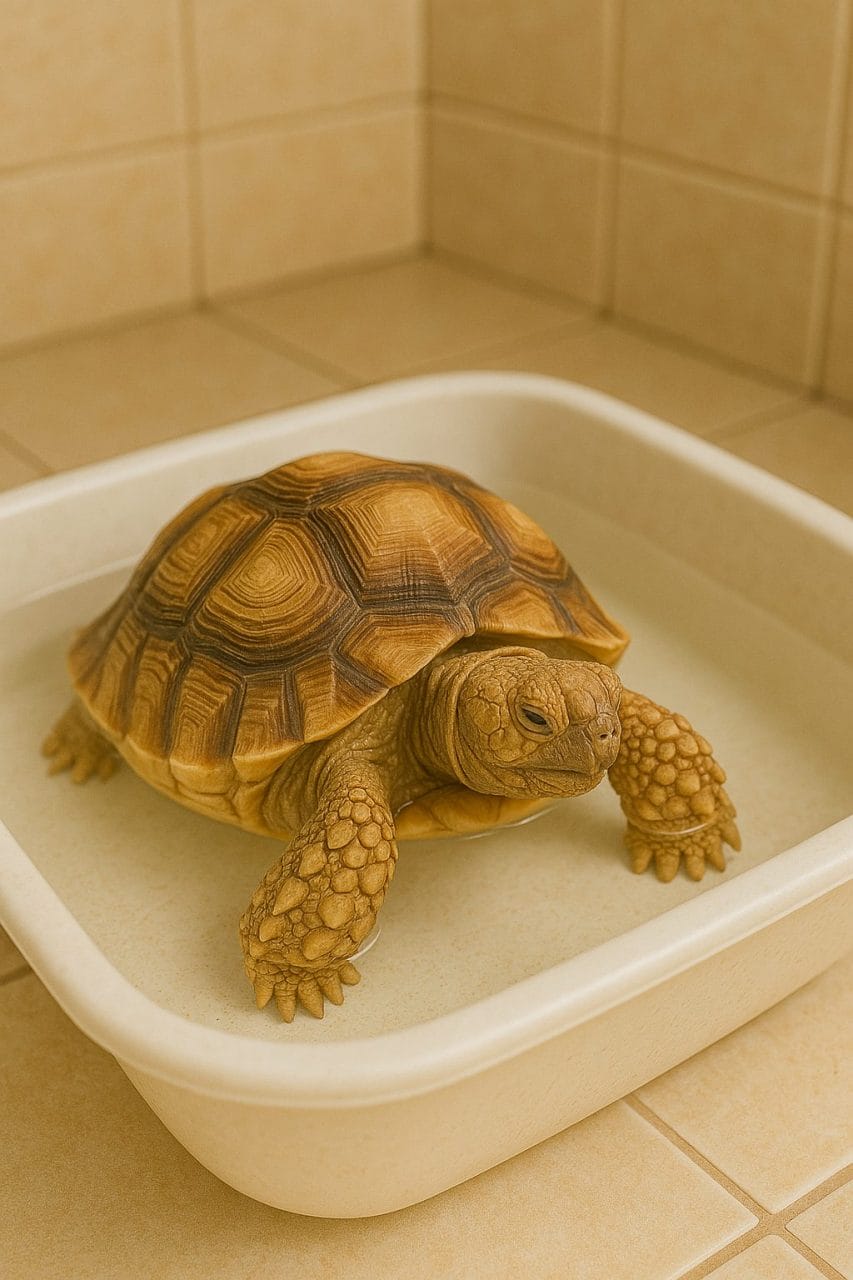
Signs of life to watch for: a leg shifting, the head easing out, eyes opening, a stretch, a urination or a poop in the water. That last one is genuinely great news, because it means the plumbing is still running.
No response at all after a full hour of gradual warming, with cold room-temperature water still clear and no reaction to anything? At that point the odds are very poor.
Never skip straight to hot water. A sudden temperature slam can kill a tortoise that was going to be fine, which is exactly the outcome you were trying to avoid.
It Is Alive, But It Should Not Be Hibernating. Now What?
This is the situation nobody writes about, and it is the most dangerous one on this page.
Your tortoise is breathing. It is also a Sulcata, or a leopard, or a red-foot, or it is July, or it is eight months old. Whatever is happening, it is not hibernation.
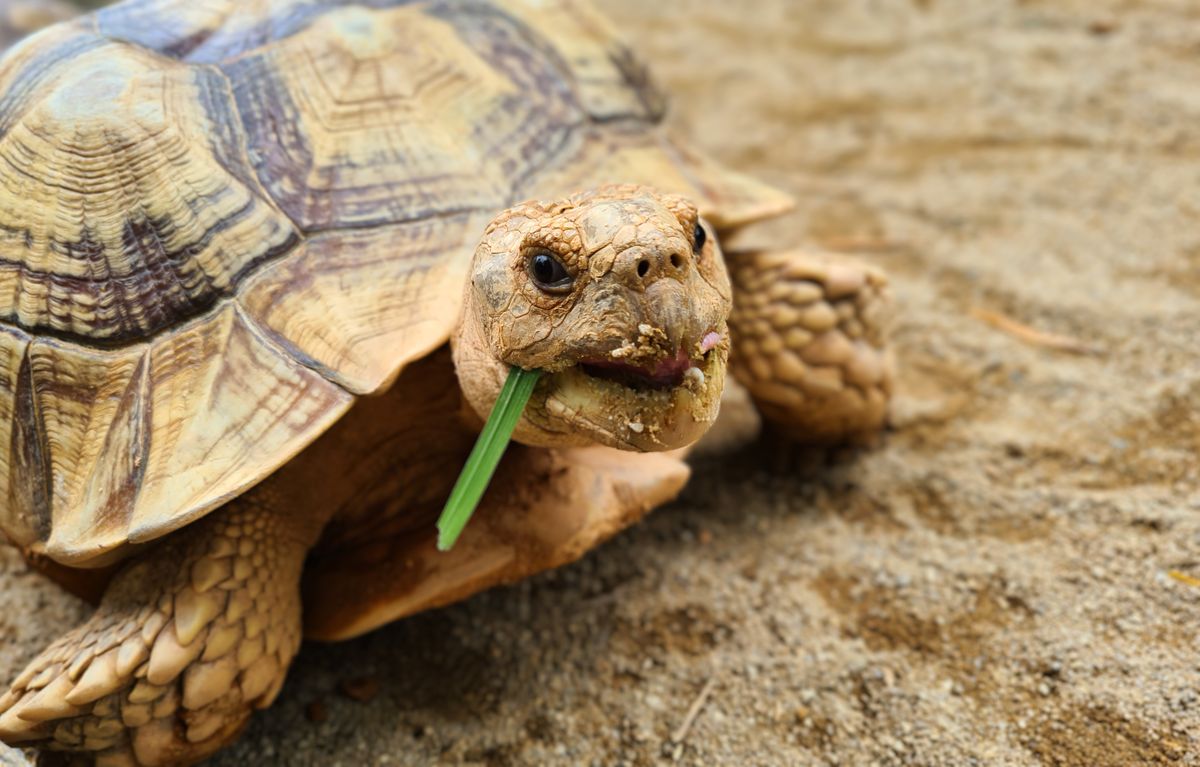
A tropical tortoise that has gone cold and still is shutting down, not resting. Left alone it will keep sliding, and the window here is hours, not days.
First aid for a cold, limp tortoise
- Move it indoors to a warm room, around 24°C or 75°F, and leave it there. That is your starting point, not your destination.
- Raise the temperature slowly across the next several hours toward a normal basking setup, roughly 32 to 35°C or 90 to 95°F at the warm end.
- Offer a shallow lukewarm soak at 30°C or 86°F for 20 minutes to fight dehydration.
- Phone a reptile vet now, while it is warming. Do not wait to see if warming works first.
Never rush it. No hot water, no heat mat pressed against the shell, no hair dryer, no oven, no direct radiator contact.
Warming a chilled reptile too fast causes circulatory collapse, and keepers lose tortoises to the rescue attempt rather than the cold. Slow is the whole technique.
What else looks like death in a tortoise
Once it is warming, it helps to know what you might actually be dealing with. A motionless tortoise that is neither hibernating nor dead is usually one of these.
| Condition | Extra clues |
|---|---|
| Hypothermia / cold stress | Recent cold exposure, cool to touch, floppy limbs |
| Respiratory infection | Nose bubbles, clicking, open-mouth breathing, puffy eyes |
| Severe dehydration | Sunken eyes, loose wrinkled skin, thick white urates |
| Impaction | No poop for weeks, straining, hard belly, often after substrate eating |
| Egg binding | Adult female, restless digging then collapse, straining |
| Metabolic bone disease | Soft or lumpy shell, weak or splayed legs, tremors |
| Poisoning | Recent access to toxic plants, drooling, sudden collapse |
| Injury or shell trauma | Cracks, blood, a fall, a dog, a lawnmower |

You are not expected to diagnose this yourself. The point is that “not moving” has a long list of causes, and most of them are treatable if you act on the same day.
Myths That Will Cost You A Tortoise
“Flip it on its back to see if it reacts.” Do not. A tortoise on its back has the full weight of its organs pressing on its lungs, and for a weak animal that alone can be fatal.
“If it floats, it is dead.” That is an aquatic turtle rule, and it is unreliable even there. Tortoises do not swim, so it means nothing at all for them.
“It feels cold, so it is dead.” Tortoises are ectothermic. A perfectly healthy hibernating tortoise is supposed to feel cold, roughly the temperature of the room it is in.
“It has not moved in six weeks, so it must be dead.” Eight to twelve weeks of near-total stillness is a normal hibernation.
“Stiff means alive.” Backwards. Rigor mortis makes a dead tortoise stiff for the first few hours, and hibernating tortoises are flexible, not rigid.
Why Tortoises Actually Die In Hibernation
Wild tortoises have been doing this for millions of years without our help. In captivity the death rate is much higher, and almost every cause traces back to a keeper decision.
Wrong temperature
This is the big one, and it kills in both directions.
The safe window is 3 to 7°C, which is 37 to 45°F. The target is 5°C or 41°F.
Below 2°C (36°F) the eye tissue starts to freeze, and permanent blindness is a documented outcome. Below 0°C the tortoise freezes to death.
Above 10°C (50°F) is the sneaky killer. The tortoise is too warm to shut down properly but too cold to be active, so it burns through its reserves while asleep and starves.
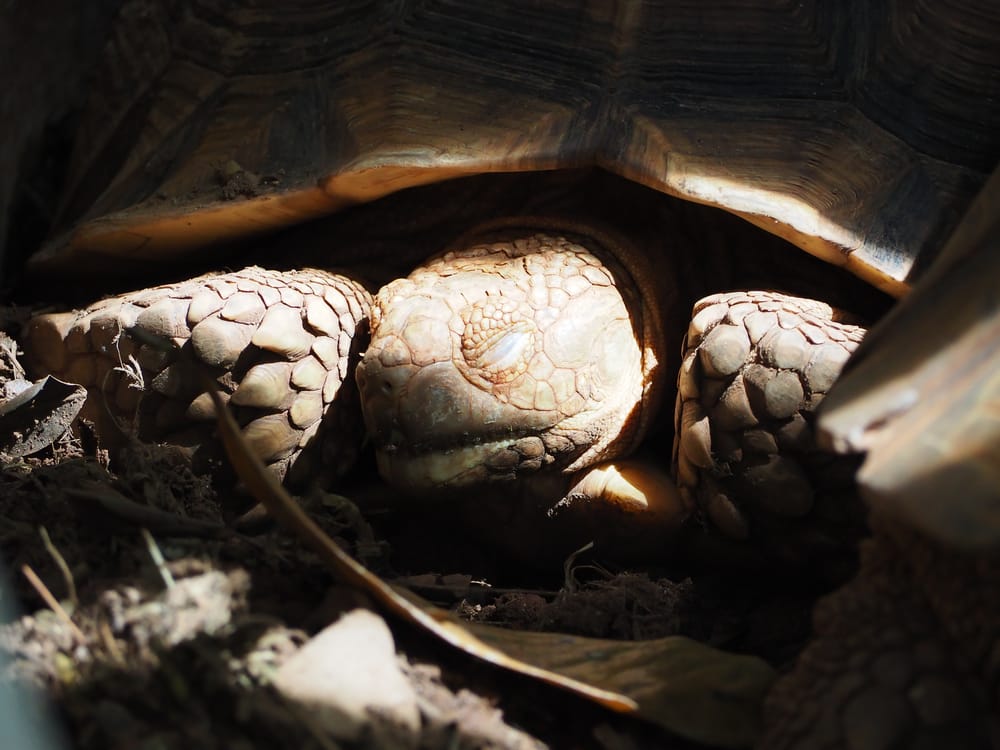
An unheated garage or a shed swings wildly across all three zones over a single winter. That is why so many cold-related tortoise deaths happen in outbuildings.
Food left in the gut
A tortoise put down with a full stomach is in real trouble.
Digestion nearly stops during hibernation, so that food sits and rots inside the gut for months. The result is gas, bacterial overgrowth, bloating, and often death.
Stop feeding four to six weeks before hibernation. Keep offering water and warm soaks the whole time so the gut clears out completely.
Hibernating a sick or underweight tortoise
Hibernation is a stress test, and a tortoise that fails it does not get a second attempt.
A tortoise carrying a respiratory infection, mouth rot, parasites, or a shell injury will not fight it off in the cold. Its immune system is switched off.
Same story with an underweight animal. No reserves means no fuel to reach spring.
Dehydration
The bladder is the point most keepers miss. During hibernation, a tortoise reabsorbs water from its own bladder, which effectively turns it into a built-in canteen.
That is why a tortoise that urinates mid-hibernation has just emptied its water supply. It will dehydrate, and kidney failure follows.
Urination is an immediate, non-negotiable reason to end hibernation.
Rodents
A hibernating tortoise cannot defend itself, and rats will chew on a live one.
Every year keepers open a shed box in February to find gnawed limbs. Boxes in garages and sheds need proper rodent-proofing.
Too much fiddling
Weekly checks are good. Waking your tortoise up “just to be sure” is not.
Every rousing burns energy from a fixed tank that has to last until spring.
Doing It Right: A Safe Hibernation, Step By Step
If you want to avoid this panic next winter, here is the whole process.
1. The health gate
Book a pre-hibernation vet check in early autumn. A tortoise with any active illness stays awake, full stop.
2. The weight gate
For Hermann’s and Greek tortoises specifically, keepers use the Jackson Ratio: weight in grams divided by the cube of carapace length in centimetres.
| Jackson Ratio | Meaning |
|---|---|
| Below 0.16 | Underweight, do not hibernate |
| 0.17 | Light, risky |
| 0.19 | Normal, safe to hibernate |
| 0.21 | Ideal condition |
| 0.18 to 0.22 | Acceptable range |
Two caveats matter. The ratio was built for Testudo graeca and Testudo hermanni only, and body shapes differ enough that applying it to a Russian or a marginated tortoise gives you nonsense.
And it is a screening tool, not a diagnosis. A tortoise can hit 0.21 and still be full of parasites, which is exactly why the vet check comes first. If you want the broader picture, our guide on how much a tortoise should weigh covers the rest.
3. Wind-down
Four to six weeks out, stop the food. Keep the warmth on for the first two to three weeks so the gut can finish working.
Shorten daylight gradually. Soak your tortoise in shallow warm water two or three times a week until it stops passing anything.
Then drop temperatures in stages, not in one jump. Around 15°C for a week, then down toward 5°C.
4. Fridge or box?
Modern practice has flipped on this one, and older guides (including the previous version of this article) had it backwards.
The fridge method is now considered the safer of the two. Not because a fridge is magic, but because the entire problem with hibernation is temperature swing, and a fridge is the only setup that holds a steady 5°C through a whole winter.
| Fridge method | Box method | |
|---|---|---|
| Temperature stability | Excellent, holds 5°C | Poor, swings with the weather |
| Freezing risk | None | Real in a shed or garage |
| Rodent risk | None | Significant |
| Monitoring | Easy, open the door | Awkward, disturbs the tortoise |
| Cost | A dedicated mini fridge | Cheap |
| Main failure mode | Power cut | Weather |
Fridge setup: use a dedicated mini fridge, never the one holding your food, because tortoises carry salmonella. Run it empty with an accurate thermometer for 48 hours first and dial it to a steady 5°C.
Stand a couple of sealed 2 litre water bottles inside as thermal ballast. Put the tortoise in a ventilated box of 50/50 sand and topsoil deep enough to bury itself, and set it on the middle shelf.
Open the door for a minute or two at least three times a week for fresh air. An electronic thermostat controller beats the fridge’s own dial every time.
Plan for the power cut before it happens. A fridge full of thermal ballast holds temperature for a surprisingly long time, so the rule is simple: keep the door shut and leave it alone.
A closed, water-bottle-loaded fridge will stay in range for the better part of a day. If the outage runs past that, move the hibernation box somewhere naturally cool and stable, like an interior cupboard against a north wall, and put a thermometer in with it.
If the box climbs past 10°C and stays there, stop treating it as a hibernation. Wake the tortoise up properly rather than letting it idle in the danger zone.
A min/max thermometer is the cheap insurance here. It tells you what happened while you were at work, which a normal thermometer never will.
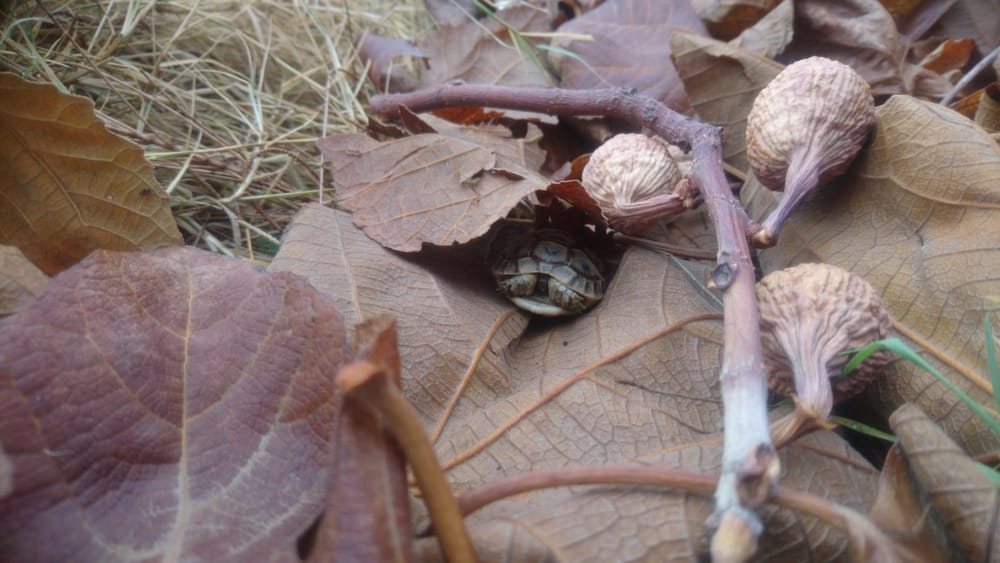
Box setup: if you go this route, use a box inside a bigger box with shredded paper insulation in the gap, both ventilated, both rodent-proofed, in a space that never drops below 10°C ambient.
5. How long
| Age or experience | Hibernation length |
|---|---|
| Under 3 years old | Best kept awake and warm |
| First-ever hibernation | 3 to 4 weeks |
| Second or third year | 6 to 8 weeks |
| Healthy adult | 8 to 12 weeks |
Twelve weeks is the ceiling most vets recommend. Add a week or two per year rather than jumping to a full winter, and wake them late February to early March.
6. The weekly check
Once a week, quietly: weigh it, look at the eyes and nose, sniff the box, check the substrate is dry, and confirm the temperature.
Total weight loss across the whole hibernation should stay under 10%, and it should be gradual. Sudden loss is a problem, not a phase.
Abort Hibernation Immediately If You See Any Of These
Do not wait for spring. Wake the tortoise up, gradually, over several hours.
- It has urinated in the box (the water store is gone)
- More than 10% of body weight lost, or a sudden drop
- Discharge or bubbles from the nose or mouth
- Swollen, puffy, or gummed-up eyes
- It is awake and moving around the box
- Temperature has gone above 10°C or below 2°C
- Any wound, chewing damage, or sign of rodents
- Anything at all that smells wrong
Once you have woken a tortoise early, do not put it back into hibernation that season. Overwinter it warm and awake instead.
Waking Up Safely
Bring it out of the fridge or box to a room around 15°C and give it several hours there.
Then move to normal room temperature, and give it a lukewarm soak to rehydrate. Set it up under a basking lamp (my pick: Zoo Med PowerSun) and UVB (my pick: Zoo Med ReptiSun 10.0) for a full normal day cycle.
It should drink within hours and eat within a week. Offer something tempting and hydrating, like cucumber or a favourite weed, before returning to its regular diet.
It woke up, but it seems wrong
There is a middle outcome between “fine” and “dead” that catches people off guard.
The tortoise responds, so you know it is alive, but it is floppy, its eyes stay shut, it will not stand properly, or it just sits there for days looking hollow.
That is not a slow start. That is a tortoise that came out of hibernation in trouble, and the first 48 hours are when you can still fix it.
Get it warm and keep it warm at proper daytime temperatures. Soak it in shallow lukewarm water for 20 minutes two or three times a day, because dehydration underlies most of these cases.
Then call the vet, and go through this list with them:
- Eyes glued shut, swollen, or weeping
- Any nose discharge, bubbling, or clicking breath
- Not standing, or dragging a back leg
- Not drinking after two or three soaks
- Cold, floppy, and unresponsive to the warmth after a full day
- Visible weight loss well past 10%
- Yellow, thick, or gritty urates when it does finally go
A tortoise that will not drink is a genuine emergency. Rehydration is the single thing that turns most of these cases around, and a vet can give fluids in ways a bath cannot.
Post-hibernation anorexia
If your tortoise will not eat within about a week of waking, that is post-hibernation anorexia, and it is a genuine veterinary condition, not stubbornness.
It usually traces back to dehydration and vitamin A deficiency, and vets treat it with vitamin A injections and aggressive rehydration through frequent short baths.
PHA cases go downhill fast. If it has been a week with no food, book the appointment rather than waiting it out.
Our guide to a tortoise that refuses to eat covers the other causes worth ruling out.
What If It Really Is Dead?
I am sorry. Genuinely.
Call a reptile vet anyway, even now. They can confirm it with a doppler that picks up a heartbeat you have no chance of hearing, and that certainty matters when you are second-guessing yourself at 2am.
For aftercare you have three options: burial at least two to three feet deep and away from water sources, a pet cemetery, or cremation through the vet. Check local rules, because some areas regulate pet burial.
If the death was sudden and unexplained, ask about a necropsy. It is not morbid. If you keep other tortoises, finding out it was a contagious respiratory infection rather than a hibernation accident could save them.
And if you want to know what to watch for next time, the warning signs a tortoise gives before it dies are almost never as sudden as they feel.
Do You Even Have To Hibernate?
No, and this surprises people.
Skipping hibernation entirely is a completely valid choice for a pet tortoise. Keep the enclosure warm and lit through winter, keep feeding, and your tortoise carries on as normal.
You are not being cruel. You are removing the single riskiest event in the tortoise-keeping year.
Breeders often do hibernate, because the cold cycle helps trigger reproductive behaviour. If you are not breeding, that reason does not apply to you.
The one thing you cannot do is a half-measure. A tortoise sitting at 12°C in a cold room all winter is in the worst of both worlds, awake enough to burn energy and too cold to eat.
Frequently Asked Questions
How long can a tortoise stay completely still and still be alive?
Weeks. A healthy adult in a proper hibernation may not visibly move for the full 8 to 12 weeks. Stillness on its own tells you nothing.
My tortoise is breathing but not moving. Is it dying?
Probably not. Breathing means alive, and if it is winter, the species hibernates, and everything else looks normal, this is textbook. Run the weekly check and leave it be.
Can a tortoise wake up in the middle of hibernation?
Yes, and it is usually a signal rather than a whim. Temperature drift is the most common trigger. Check your thermometer first, then check the tortoise, and if it stays awake, end hibernation properly instead of forcing it back down.
Do dead tortoises smell straight away?
No. In a cold hibernation box it can take several days to a week. In a warm room, often within 24 hours. Absence of smell in the first day proves nothing either way.
My tortoise is stiff. Does that mean it is dead?
Not by itself. Rigor mortis makes a dead tortoise stiff for roughly three to four hours after death, then it goes limp. A hibernating tortoise stays flexible with light muscle tone throughout.
My tortoise seems dead in summer. What now?
Treat that as an emergency. Hibernation does not happen in warm months. Heat stress, dehydration, impaction, or serious illness are far likelier, and you should be phoning a reptile vet, not waiting.
Is my aquatic turtle dead or brumating?
Different animal, different rules. Aquatic turtles brumate underwater and have their own set of signs, so use our guide on telling if a turtle is dead instead. Box turtles have their own hibernation process too.
My tortoise buried itself and will not come out. Is that hibernation?
Maybe. Tortoises dig for several reasons, including egg-laying and simple temperature-seeking. If it is autumn, the species hibernates, and the tortoise has been slowing down and refusing food for a few weeks, that is hibernation behaviour.
Can I hibernate my Sulcata if I keep it cool?
No. Sulcatas have no hibernation program at all, and cooling one down produces a sick tortoise, not a sleeping one. The same applies to leopard, red-footed, yellow-footed, star, and radiated tortoises.
Before You Go
If your tortoise is tucked into its shell with any muscle tone at all, put the kettle on. It is almost certainly fine.
If you have run all seven checks and you are still stuck, do the warm-up test properly. Gradual, lukewarm, a full hour. That answers it.
And if something is genuinely wrong, do not sit on it overnight hoping. A reptile vet can tell you in ten minutes what you have been agonising over for two days, and with a hibernation gone wrong, hours actually matter.
Got a tortoise going into its first winter? Read our full breakdown of what happens when a tortoise gets too cold before you set that box up. It is the mistake that costs the most tortoises.

About Author
Muntaseer Rahman started keeping pet turtles back in 2013. He also owns the largest Turtle & Tortoise Facebook community in Bangladesh. These days he is mostly active on Facebook.