Can Tortoises Recognize Their Owners & Express Love?

This post was created with help from AI tools and carefully reviewed by a human (Muntaseer Rahman). For more on how we use AI on this site, check out our Editorial Policy.
The first time my tortoise walked across the whole enclosure to get to me, I genuinely thought it was a coincidence.
Then it happened again. And again. And then a friend came over, and the same tortoise turned around and went the other way.
Yes, tortoises recognize their owners. They learn you by smell, by sight, by the sound of your voice, and by the routine you keep. It takes weeks to months, it runs on food association more than affection, and there is now solid research backing all of it.
What they do not do is love you like a dog. But the gap between “emotionless rock” and what tortoises actually are is way bigger than most people think, and 2025 research made that gap official.
Let’s get into what the science says, what it does not say, and how to tell if your tortoise has actually clocked you as its person.
The Short Answer, With The Receipts
Here is the honest version, sorted by how confident we can be.
| Claim | How solid is it? |
|---|---|
| Tortoises tell familiar people from strangers | Strong. Consistent owner reports plus known sensory ability |
| Tortoises have long-term memory | Very strong. Lab-tested at 3 months and 9 years |
| Tortoises feel moods, not just reflexes | Strong. 2025 cognitive bias study |
| Tortoises can learn, including from each other | Very strong. Touchscreens, mazes, social learning |
| Tortoises recognize your specific face | Unproven. No study has tested this |
| Tortoises feel “love” the way mammals do | No evidence. And probably the wrong question |
That “unproven” row matters. A lot of articles will tell you your tortoise recognizes your face. Nobody has actually tested facial recognition in tortoises. What they recognize is a bundle of cues, and your face is only one small part of it.
How Your Tortoise Actually Identifies You
Your tortoise is not looking at you and thinking “that’s Dave.” It is running a checklist. Here is what is on it.
Smell Does The Heavy Lifting
This is the big one, and it is the one people underestimate most.
Tortoises have a genuinely good sense of smell. Some species lay down scent trails that other tortoises follow to shelters or away from danger, which tells you how much information they can pull out of the air.
You have a smell. Your soap, your laundry, your house, your hands. Your tortoise has been cataloging it since day one.
Plenty of keepers notice their tortoise emerging from its hide the second food hits the dish, before it could possibly have seen anything. That is smell doing the work.
Sound, And Why Your Voice Is Weirdly Perfect
Here is the fact that surprised me most while researching this.
Tortoises hear in a very low range. Research on Hermann’s tortoises put their perceivable frequency range at roughly 10 to 182 Hz, and tortoises generally hear best below about 750 Hz.
For comparison, humans hear up to around 20,000 Hz. Your tortoise is deaf to most of the sound in your house.
But an adult human speaking voice has a fundamental frequency of roughly 85 to 255 Hz. The low rumble underneath your words lands right at the top of what a tortoise can pick up.
So when people say “talk to your tortoise” and it sounds like nonsense advice, it is not. Your voice is close to the only human-made sound in the room your tortoise can properly hear.
They also feel vibration through the ground and through the shell, which is why heavy footsteps register long before you appear.
Sight, With Real Limits
Tortoises see color. They pick up reds and yellows clearly, and some see green and ultraviolet.
That is why a lot of tortoises react to red and yellow food items with obvious enthusiasm. Strawberries and tomatoes are not just tasty, they are visually loud.
What they are working with is shape, size, movement, and color, not fine facial detail. Your tortoise probably knows “the tall thing that moves like that and is often orange on top” better than it knows your nose.
Routine Is The Fourth Sense
This one gets left out of every article and it is arguably the strongest cue of all.
Tortoises are extremely good at time and pattern. Feed at 9am for three weeks and your tortoise will be up and waiting at 9am.
A big chunk of what looks like recognition is your tortoise predicting the schedule and you happening to be the thing that shows up with it. That is not a downgrade. Prediction is memory, and memory is the whole point.

This Hilarious Turtle Book Might Know Your Pet Better Than You Do

Let’s be real—most turtle care guides feel like reading a textbook written by a sleep-deprived zookeeper.
This one’s not that.
Told from the snarky point of view of a grumpy, judgmental turtle, 21 Turtle Truths You’ll Never Read in a Care Guide is packed with sarcasm, sass, and surprisingly useful insights.
And hey—you don’t have to commit to the whole thing just yet.
Grab 2 free truths from the ebook and get a taste of what your turtle really thinks about your setup, your food choices, and that weird plastic palm tree.
It’s funny, it’s honest, and if you’ve ever owned a turtle who glares at you like you’re the problem—you’ll feel seen.
What The Memory Research Actually Found
Recognition is a memory problem. So how good is tortoise memory, really?
Better than almost anyone expected.
They Remembered A Task Nine Years Later
Researchers Tamar Gutnick, Michael Kuba and Anton Weissenbacher worked with Galapagos and Aldabra tortoises at zoos in Vienna and Switzerland, training them to bite a specific colored ball on the end of a stick for a food reward.
All of them learned it.
More than three months later, the tortoises still picked the correct ball. No refresher, no retraining.
Then comes the part that made the study famous. Some individuals were retested nine years after the original training and still responded to the correct color.
Nine years. From a handful of training sessions.
Worth being precise here, because plenty of sites overstate this: it was some individuals at the nine-year mark, not a clean sweep of every tortoise. But even a partial result at that timescale is enormous.
They Can Use A Touchscreen
Dr. Anna Wilkinson at the University of Lincoln trained red-footed tortoises to work a touchscreen, published in Behavioural Processes in 2014.
Two of the four tortoises learned to solve a spatial task by touching a target on the screen. Then they carried what they learned off the screen and into a real physical arena.
Reptiles do not have a hippocampus, the brain structure mammals use for spatial navigation. Tortoises appear to run this on the medial cortex instead, which is a genuinely different piece of hardware getting to a similar answer.
They Learn From Each Other, Which Should Not Be Possible
Wilkinson also ran a detour task, published in Biology Letters. Tortoises had to walk around a wire mesh fence to reach a bowl of strawberries.
Tortoises working it out alone failed. Every time.
Tortoises that first watched another tortoise do it succeeded, some on the very first attempt.
That was the first demonstration of social learning in any reptile, and it came from a species that is not social. The old assumption was that learning-by-watching evolved because animals live in groups. A solitary tortoise doing it broke that idea.
So What Does This Mean For You
Your tortoise associating you with food is not a small, dumb, throwaway link.
It is the same category of memory those researchers measured, and that memory survived nine years of nothing. Two weeks of vacation is not going to erase you.
The 2025 Study That Changed The Conversation
For decades the line was: reptiles run on instinct. Eat, hide, breed, done. No inner life.
That line is now much harder to defend.
A 2019 review in the journal Animals titled “Given the Cold Shoulder” went through the literature and found 37 studies treating reptiles as capable of anxiety, stress, distress, excitement, fear, frustration, pain, and suffering. Four papers found direct evidence for pleasure, emotion, and anxiety.
Then in June 2025, a University of Lincoln team published in Animal Cognition and went further.
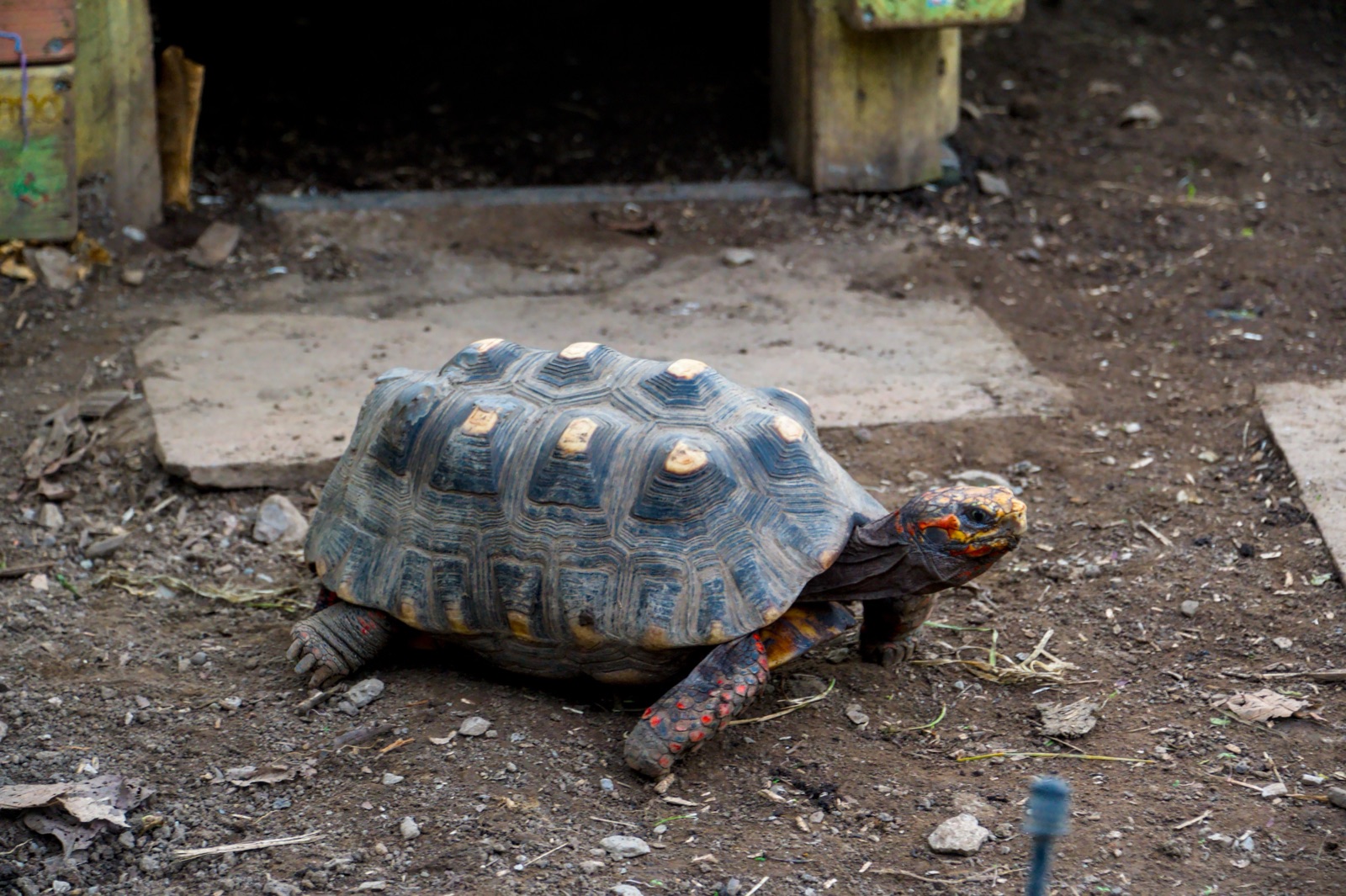
They ran a cognitive bias test on 15 red-footed tortoises. It is the same method used on mammals and birds: you teach an animal that one location means reward and another means nothing, then present an ambiguous middle location and see whether the animal approaches it hopefully or ignores it.
Optimism and pessimism, measured behaviorally.
Tortoises kept in enriched environments judged the ambiguous option optimistically. And the individuals scoring more optimistic also behaved less anxiously when shown something new.
That is a mood. Not a reflex, not a survival instinct firing. A background emotional state that colors how the animal reads an uncertain situation, exactly like it does in us.
The practical takeaway for you is direct: the quality of your setup is not just a welfare box to tick. It measurably changes your tortoise’s baseline mood, which changes how it responds to you.
A bored, cramped tortoise in a bad enclosure is a pessimistic tortoise. It is not going to walk toward you.
Signs Your Tortoise Recognizes You
Tortoise body language is quiet. Here is what to look for, roughly in order of how meaningful it is.
It walks toward you. Tortoises do not spend energy on things they do not care about. Deliberate movement in your direction is the clearest signal there is.
It stays out when you are around but hides for strangers. This is the best single test, because it isolates you specifically rather than just “a human appeared.”
It stretches its neck out. Neck extension is a vulnerability move. That is the part a predator would go for. Offering it to you is a real statement, and often a request for a neck rub.
It tracks you across the room. Head and eyes following you while you move around is active attention.
It eats in front of you. Prey animals do not eat while feeling watched by a threat. Relaxed eating with you standing there means you are not on the threat list.
It takes food from your hand. Same idea, one step further.
It gets active when it hears you. Not the doorbell, not the TV, your voice specifically.
It nudges or climbs on you. Some tortoises push at your hand or leg. It is usually food-motivated, but it still requires having decided you are safe. Some bob their heads at you instead of shoving, which is the same food association showing up as a signal, and what head bobbing at you means covers how to read it.
And The Signs It Has Not Warmed Up Yet
- Pulling into the shell when you approach
- Hissing, which is just the air being forced out as it retracts
- Freezing in place until you leave
- Refusing to eat while you are visible
- Frantic pacing along the walls of the enclosure
Some of these are trust issues that time will fix. Others point at a husbandry problem. It is worth knowing the signs of stress in tortoises so you can tell which one you are looking at.
How Long Does It Take?
There is no published timeline for this, so what follows is the pattern keepers consistently report rather than a lab finding.
| Stage | Rough timeline | What you’ll see |
|---|---|---|
| Settling in | Week 1-2 | Hiding, refusing food, general suspicion |
| Getting used to you | Week 3-8 | Eats while you’re there, stops retreating |
| Recognition | Month 2-6 | Approaches you, ignores or avoids strangers |
| Solid trust | Month 6+ | Neck stretches, hand-feeding, seeks you out |
Big variables: species, age, and whether the tortoise was captive-bred or wild-caught.
Captive-bred hatchlings tend to come around fastest. A wild-caught adult may never fully get there, and that is not a failure on your part.

Does Species Make A Difference?
Yes, though this is keeper consensus rather than controlled research.
| Species | Typical temperament | Recognition speed |
|---|---|---|
| Sulcata | Bold, pushy, food-obsessed | Fast. Famous for following owners around |
| Red-footed | Curious, active, the lab favorite | Fast. The best-studied species by far |
| Leopard | Calm, a bit shy | Moderate |
| Russian | Feisty, busy, big personality | Moderate. Often very interactive |
| Hermann’s | Alert, responsive | Moderate to fast |
| Greek | Reserved, cautious | Slower |
| Box turtle | Shy, easily stressed | Slow, but does happen |
If you have a sulcata, you already know. They will chase you across a yard for a piece of lettuce and they are not subtle about it. That behavior has its own explanation, which we cover in why your tortoise chases you.
Do Tortoises Actually Love You, Or Just Your Food?
Time for the uncomfortable part.
Your tortoise most likely sees you primarily as the source of food and safety. That is the honest read of the evidence.
But I think “just a food dispenser” is a lazy way to describe it, for two reasons.
First, food association is not shallow in a tortoise’s world. In the wild, remembering reliable food sources is the single most important cognitive job it has. That is what shaped this memory system in the first place. Being filed under “reliable food source” is being filed under the most important category the animal has.
Second, the 2025 mood research means there is an emotional layer underneath. Your tortoise is not just running an if-food-then-approach script. It has a background state, and you affect it.
So here is where I land.
Your tortoise does not love you the way a dog does. Dogs were bred for thousands of years specifically to bond with us. Tortoises evolved as solitary animals whose mothers lay eggs and leave.
But an animal whose entire survival strategy is “hide from everything” choosing to walk toward you, in the open, with its neck out, when hiding is right there as an option?
Call it whatever you want. It is not nothing.
Do Tortoises Remember You After You Leave?
Almost certainly yes.
Given the nine-year retention in the giant tortoise study, a two-week holiday is trivially within range.
What owners commonly report after a long absence is a short cautious period, a day or two, then a return to normal behavior. Whether that is the tortoise re-recognizing you or just re-settling into a disrupted routine, nobody can say for sure.
Does your tortoise miss you? No evidence either way. Some keepers report reduced activity when the primary caretaker is gone, but a different person feeding at different times changes the whole routine, and that alone explains it.
I would not claim more than that.
Do Tortoises Know Their Own Name?
Not the way a dog does.
Tortoises do not process language. What is actually happening is pattern recognition: a specific sound shape gets associated with food or attention, and the tortoise responds to the sound.
Which functionally looks identical from where you are standing. If you use the same name consistently in the same context, your tortoise can learn to react to it.
Just do not expect it to work when there is no food involved. If you are still deciding, we have over 100 tortoise name ideas to get you started.
Are Tortoises Smarter Than Turtles?
No study compares them head to head, so anything here is inference.
That said, the evidence leans tortoise, mostly because of a research bias: red-footed tortoises are the standard lab species for reptile cognition, so we simply know far more about what tortoises can do.
Behaviorally, tortoises tend to tolerate and sometimes seek out interaction, while most aquatic turtles are more withdrawn and are separated from you by a pane of glass, which limits the whole relationship.
Aquatic turtles absolutely recognize their owners too. We cover that side in do turtles get attached to their owners and how smart turtles really are.
How To Build Recognition Faster
None of this is complicated. It is mostly patience with a few things that genuinely speed it up.
1. Fix The Enclosure Before Anything Else
This is now the evidence-backed step, not just good practice. The 2025 study found enrichment shifts mood toward optimism, and an optimistic tortoise is one that will approach things.
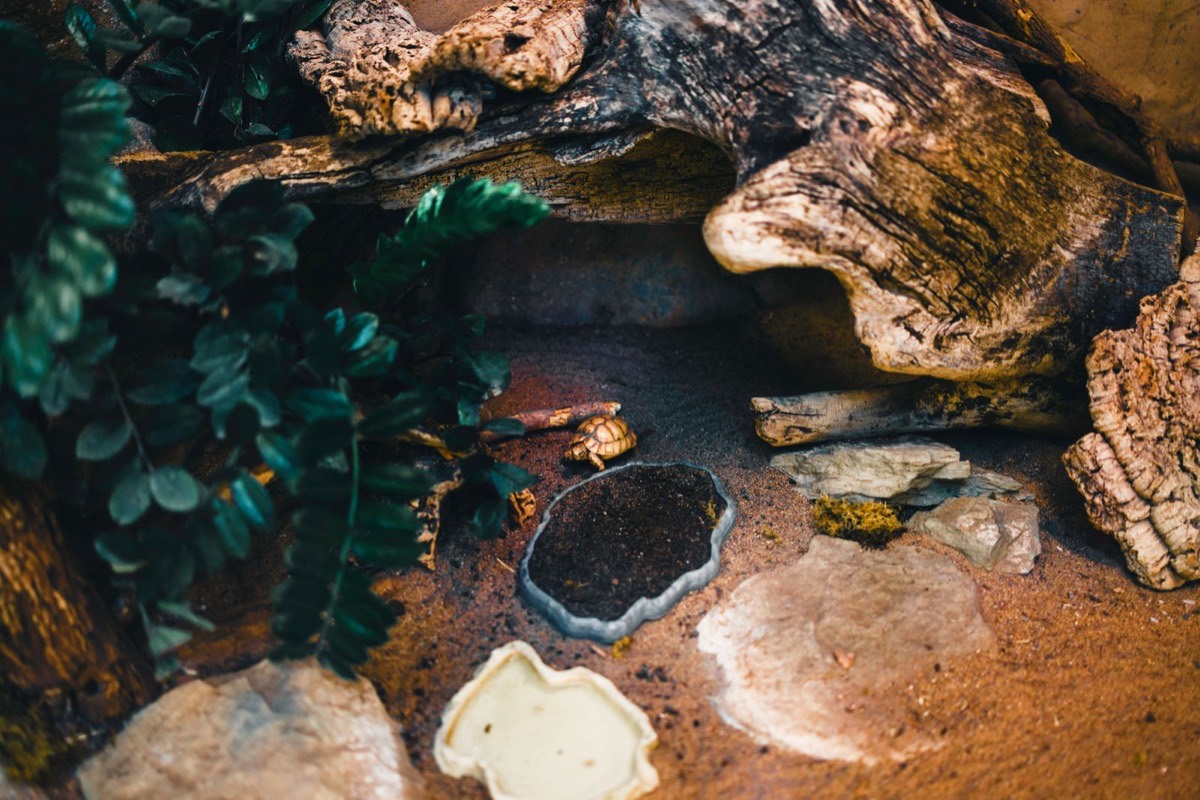
Correct temperature gradient, working UVB (my pick: Zoo Med ReptiSun 10.0), a proper basking spot, deep enough substrate to dig into, hides, and enough floor space to actually walk.
A stressed tortoise will not bond with you. Nothing else on this list works until this one is done.
2. Be The Only One Who Feeds It
Every meal is a training rep. If four people in the house take turns, you are splitting the association four ways.
Take the food job for the first few months.
3. Feed At The Same Time Every Day
Routine is one of the four cues. A predictable schedule builds the association faster than anything except the food itself.
4. Talk To It, Low And Often
Now that you know their hearing tops out around 182 Hz, this stops being sentimental advice.
Speak in a normal low register while you do enclosure maintenance. Do not shout, that is just vibration and stress.
5. Approach From The Front, Slowly
Overhead approaches read as a bird of prey. That is hardwired.
Come in low and from the front where the tortoise can see you.
6. Hand-Feed, But Not Every Time
Hand-feeding is the strongest single trust builder. It is also how you end up with a tortoise that mobs your ankles and refuses to graze normally.
Two or three times a week is plenty. Keep the rest of the meals in the dish. Our tortoise feeding guide covers what to actually offer.
7. Use Enrichment
Rearrange the enclosure occasionally. Hide food so it has to be found. Add tortoise toys (recommended: tortoise enrichment picks) and things to climb over and push around.
This is the 2025 study applied directly. Enrichment changes mood, mood changes behavior toward you. More on this in do pet tortoises need toys.
8. Handle Less Than You Want To
This is the one everybody gets wrong.
Being picked up is, from a tortoise’s point of view, being lifted off the ground by something enormous. It does not become fun with repetition.
Interaction at ground level builds trust. Handling burns it. Keep handling to what husbandry actually requires.
Mistakes That Destroy Trust
- Grabbing from above. Reads as a predator strike, every time.
- Tapping or knocking the shell. The shell is fused to the spine and ribs and carries nerve endings. They feel it.
- Waking a sleeping or brumating tortoise. Big stressor, zero upside.
- Chasing it around the enclosure. You will lose weeks of progress in one afternoon.
- Inconsistent feeding times. Breaks the routine cue, which is doing more work than you realize.
- Too many handlers, too early. Splits the food association four ways and slows the whole thing down. Once your tortoise is solidly recognizing you, introducing other people is fine and actually useful, because a tortoise used only to one person tends to be jumpy with everyone else. Get the bond first, then widen the circle.
- Expecting dog behavior. Then getting frustrated and handling more to force it, which makes it worse.
When Your Tortoise Goes Quiet For The Season
This one panics a lot of new owners, and it is usually nothing.
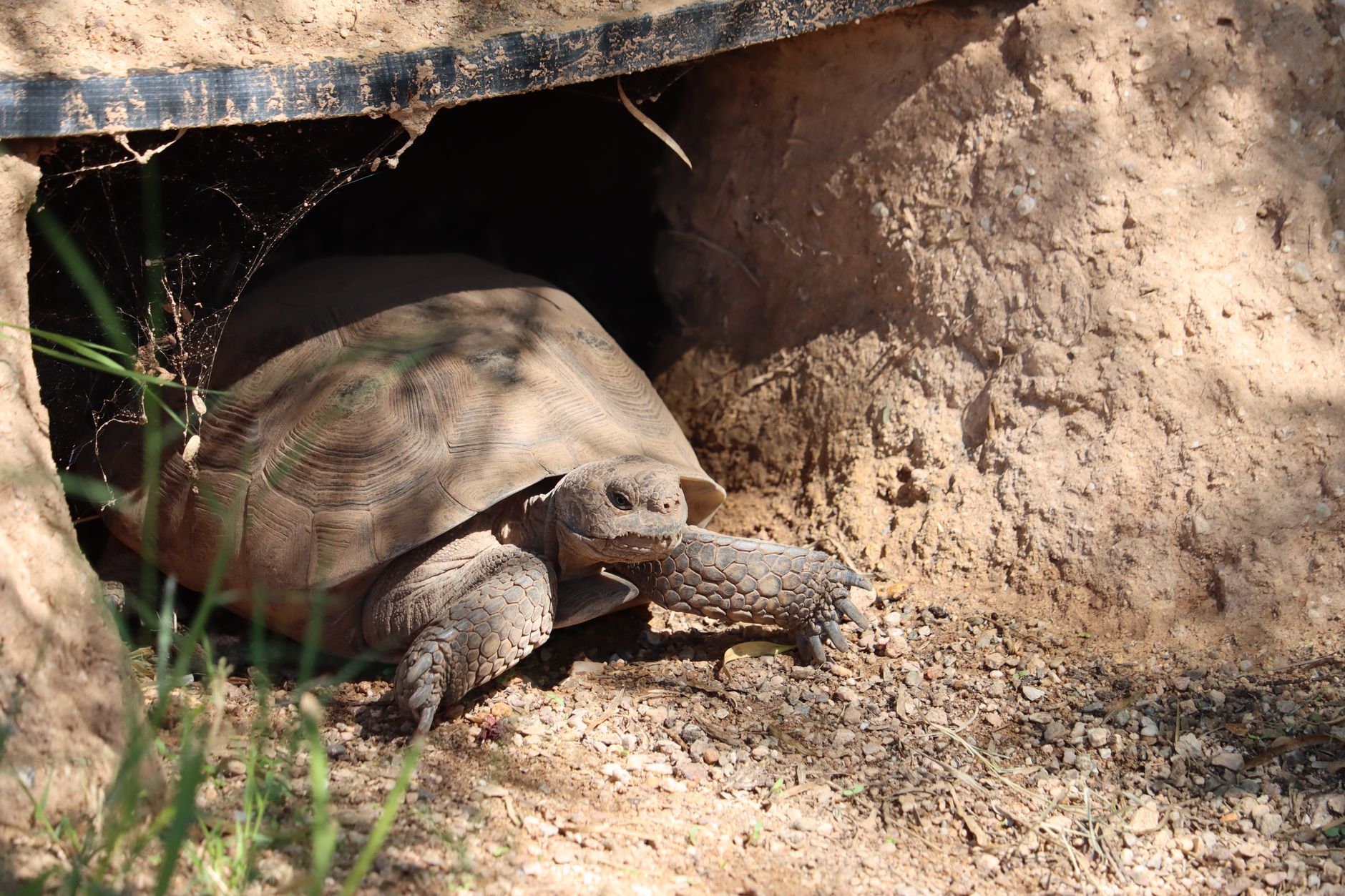
Tortoises are not equally active year round. As temperatures and daylight drop, most species wind down. They eat less, move less, and spend more time buried or hidden.
If your previously friendly tortoise suddenly stops coming over in autumn, you probably did not break anything. You are watching seasonal biology, not a withdrawn relationship.
Species that brumate, including Russian, Hermann’s, Greek, and box turtles, take this furthest and can go months barely moving. Tropical species like red-footed and sulcata slow down but do not brumate properly.
Do not try to push through it. Forcing handling or feeding during a slowdown is stressful and gets you nowhere.
The bond does not reset. Given the memory research above, a few dormant months are trivial. Activity comes back with the temperature, and so does your tortoise.
The thing to watch is whether the timing makes sense. A tortoise slowing down in October is normal. A tortoise slowing down in June is not, and that belongs in the next section.
When It Is Not Trust, It Is A Health Problem
Sometimes a tortoise that will not approach you is not shy. It is unwell.
Behavior is often the first place illness shows up, well before anything looks obviously wrong. It is worth knowing the difference before you spend two months patiently working on a bond with a sick animal.
Treat these as medical, not behavioral:
- Refusing food for more than a week outside a seasonal slowdown
- Wheezing, clicking, bubbling at the nose, or a gaping mouth, which point at a respiratory infection
- Puffy or crusted eyes
- Lethargy paired with unusual softness of the shell
- A sudden behavior change with no husbandry change behind it
- Straining, or not passing anything for an extended stretch
The first move is to check the setup, because temperature, UVB, and humidity problems cause most of this. If you are not sure which bucket a behavior falls into, 22 tortoise behaviors sorted into normal, watch, and vet is the triage list. The second move is a reptile vet, not a forum thread.
An exotics vet is not the same as a regular small-animal vet. Worth finding one before you actually need one.
Common Questions
Can tortoises recognize faces?
Unknown. No study has tested it. They recognize you as a package of smell, shape, movement, voice and timing, and there is no evidence the face is a meaningful part of that.
Can tortoises tell humans apart?
Behaviorally, yes. Owners consistently report their tortoise responding to them and not to visitors. The cue bundle above is enough to make that distinction without needing facial recognition.
Will my tortoise bite a stranger?
It can happen, usually mistaken-for-food or defensive rather than aggressive. Tortoises that are relaxed with their owner are often much less tolerant of unfamiliar hands.
Do tortoises feel it when you touch their shell?
Yes. It is living bone and keratin fused to the skeleton, with nerve supply. They feel pressure and pain through it, and many enjoy a gentle scratch.
Do tortoises get lonely without other tortoises?
No. They are solitary by nature, and housing them together often causes bullying and stress rather than company. Being alone is their normal.
How long do I have to wait?
Weeks for basic comfort, months for real recognition. Species and background matter more than anything you do.
My tortoise ignores me completely. Did I fail?
Probably not. Check husbandry first, because a stressed tortoise shuts down. Some individuals are just reserved, and wild-caught adults especially may never come around. That is temperament, not your fault.
The Bottom Line
Your tortoise knows who you are.
It knows you by smell, by the low rumble of your voice, by your shape and how you move, and by the fact that you show up at the same time every day carrying the good stuff.
It stores that in a memory system that lab-tested at nine years. And thanks to a 2025 study, we now know there is a real mood sitting underneath it, one that gets better when you give the animal a life worth having.
Is that love? Not the version you would recognize from a dog.
But when an animal built entirely around hiding decides to come out, walk over, and stick its neck out toward you, it has told you something true.
Give it a good enclosure, keep the schedule, talk to it, and stop picking it up so much. It will come around.
And when your tortoise crosses the whole enclosure to see you for the first time, you will know exactly what I meant at the top of this article.

About Author
Muntaseer Rahman started keeping pet turtles back in 2013. He also owns the largest Turtle & Tortoise Facebook community in Bangladesh. These days he is mostly active on Facebook.