Sea Turtle Size: How Big Do Sea Turtles Actually Get?

This post was created with help from AI tools and carefully reviewed by a human (Muntaseer Rahman). For more on how we use AI on this site, check out our Editorial Policy.
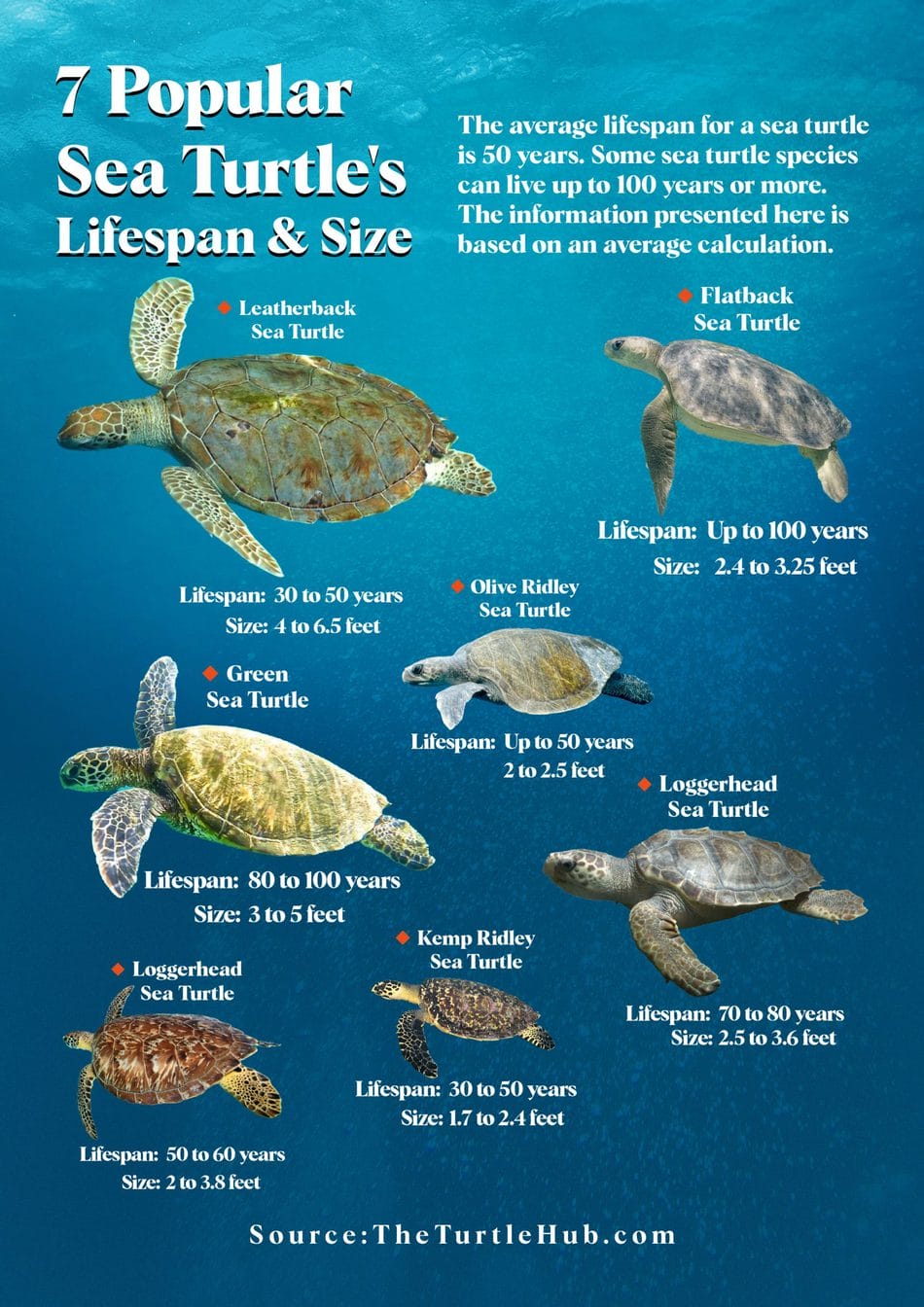
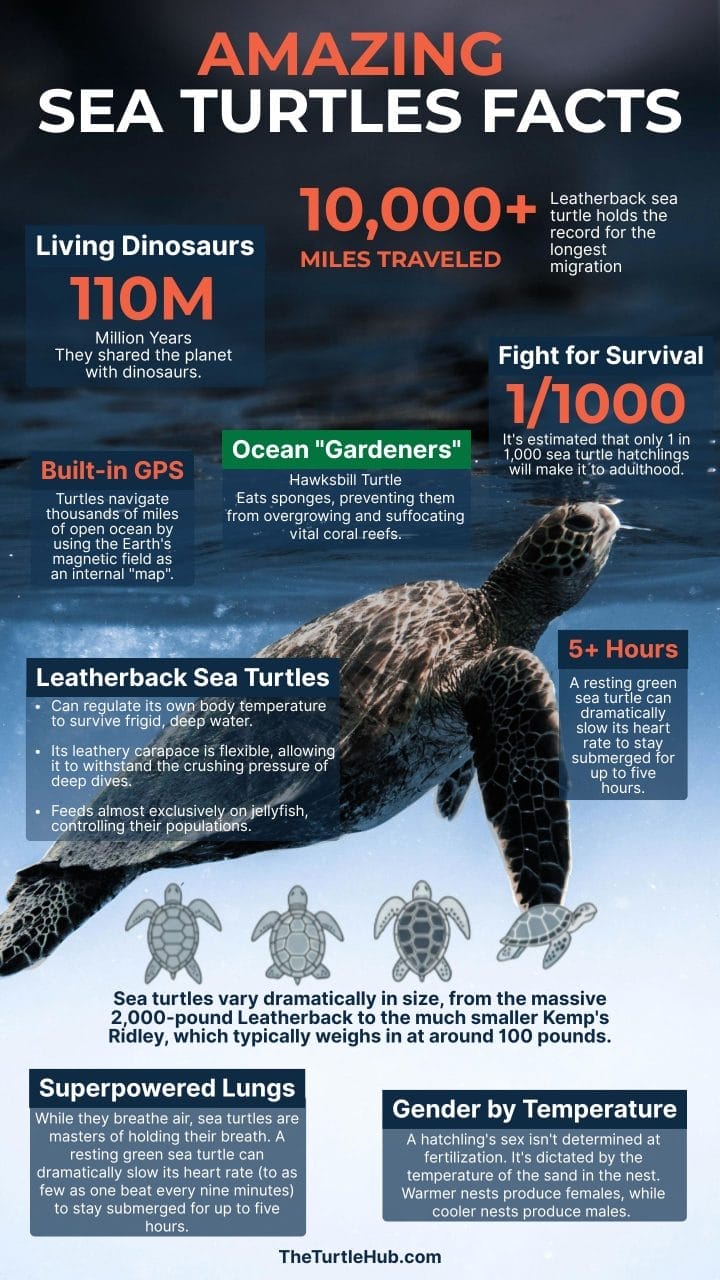
Sea turtles range from 2 feet to 8 feet long and weigh anywhere between 75 to 2,000 pounds. The smallest species, the Kemp’s ridley, is about the size of a dinner plate, while the massive leatherback can grow as large as a golf cart.
Here’s the thing though—not all sea turtles are created equal when it comes to size. Some stay pretty compact, while others grow into absolute giants.
In this guide, you’ll learn exactly how big each of the seven sea turtle species gets, what affects their size, and how these ancient reptiles compare to humans and other marine animals.
Quick Answer: Sea Turtle Size At A Glance
- Smallest Species: Kemp’s ridley and olive ridley (2-2.5 feet, 75-100 lbs)
- Largest Species: Leatherback (6-9 feet, 600-2,000 lbs)
- Most Common Size: Green and loggerhead turtles (3-4 feet, 200-400 lbs)
- Hatchling Size: All species start at just 2 inches long and weigh half a pound
- Growth Timeline: Takes 10-50 years to reach full adult size depending on species
Track A Real Sea Turtle With Each Bracelet!

Learn Name
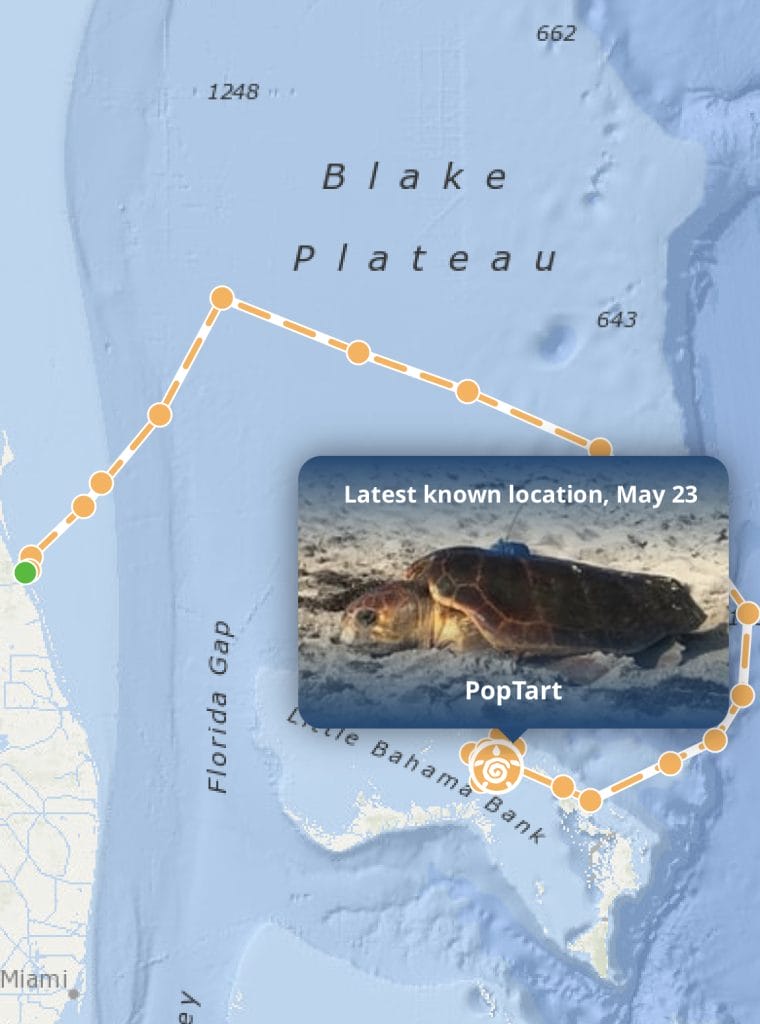
You get to learn your sea turtle’s name, size, age. Also a picture!
Enjoy Stories
Enjoy the story of your sea turtle, where it came from, where is it going?
Follow Me
You get to follow the sea turtle’s journey on an interactive tracking map!
Click Here & Use Coupon Code: THETURTLEHUB20 For A 20% Discount!
How Big Do Sea Turtles Get? Size By Species
Let me break down each of the seven sea turtle species so you can see just how different they are.
Leatherback Sea Turtle: The Absolute Giant
The leatherback is hands down the largest sea turtle on the planet.
These monsters typically measure 6 to 7 feet long and weigh between 600 and 1,100 pounds. But they can get way bigger.
The largest leatherback ever recorded was found washed up in Wales in 1988. It measured 9 feet 5.5 inches and weighed a staggering 2,019 pounds—that’s heavier than 13 adult humans.
What makes leatherbacks unique is their soft, leathery shell instead of the hard shell other sea turtles have. This flexible shell actually helps them dive deeper than any other sea turtle, reaching depths over 3,000 feet.
Green Sea Turtle: The Veggie Giant
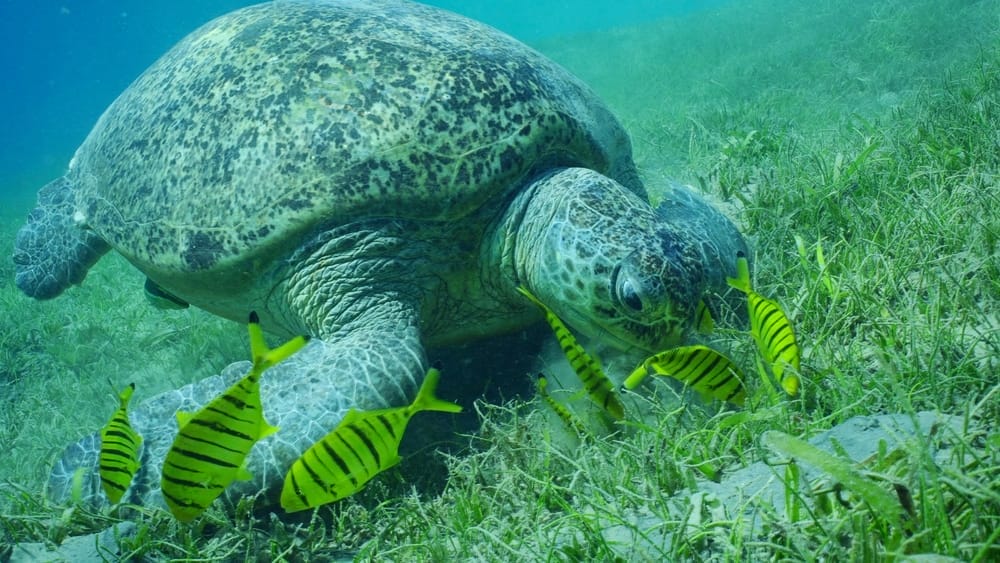
Green sea turtles are the second-largest species and the biggest of the hard-shelled sea turtles.
Adults typically reach 3 to 5 feet in shell length and weigh between 300 and 400 pounds. Some really big females can hit 700 pounds.
They start life as tiny 2-inch hatchlings weighing just half a pound. It takes decades of munching on seagrass and algae to reach their full size.
Fun fact: they’re not named for their shell color (which is usually brown or olive), but for the green fat inside their body from eating so much vegetation.
Loggerhead Sea Turtle: The Big Head
Loggerheads get their name from their massive heads, which house incredibly powerful jaws.
These turtles grow to about 2.5 to 3.5 feet long and typically weigh between 155 and 375 pounds. The largest loggerhead on record weighed 545 pounds.
Their oversized head isn’t just for show—those strong jaw muscles let them crush hard-shelled prey like horseshoe crabs, clams, and mussels.
Hawksbill Sea Turtle: The Tropical Beauty
Hawksbills are medium-sized turtles with absolutely gorgeous shells.
They reach about 2 to 3 feet in length and weigh between 100 and 150 pounds when fully grown.
These turtles are named for their narrow, pointed beak that looks like a hawk’s bill. They use it to reach into reef crevices to grab sponges, which make up most of their diet.
Flatback Sea Turtle: Australia’s Exclusive
Flatbacks are found only in Australian waters, making them pretty unique.
They grow to about 3 to 3.5 feet long and weigh around 200 pounds. Their shell is—you guessed it—unusually flat compared to other species.
Nobody knows as much about flatbacks because they were only identified as a separate species in 1988, and they stick close to Australian and Papua New Guinea shores.
Olive Ridley Sea Turtle: The Tiny Traveler
Olive ridleys are one of the smallest sea turtle species.
Adults reach just 2 to 2.5 feet long and weigh between 75 and 100 pounds. They’re named for the olive-green color of their shell.
Despite their small size, these turtles are famous for massive group nesting events called “arribadas” where thousands of females come ashore at once.
Kemp’s Ridley Sea Turtle: The Smallest Of All
The Kemp’s ridley holds the title as the world’s smallest sea turtle.
Adults max out at about 2 feet long and weigh around 100 pounds. Their shell is almost perfectly round, which makes them easy to identify.
They’re also the most endangered sea turtle species, with only about 7,000-9,000 nesting females left in the world. Most nest along the Gulf of Mexico.
This Hilarious Turtle Book Might Know Your Pet Better Than You Do

Let’s be real—most turtle care guides feel like reading a textbook written by a sleep-deprived zookeeper.
This one’s not that.
Told from the snarky point of view of a grumpy, judgmental turtle, 21 Turtle Truths You’ll Never Read in a Care Guide is packed with sarcasm, sass, and surprisingly useful insights.
And hey—you don’t have to commit to the whole thing just yet.
Grab 2 free truths from the ebook and get a taste of what your turtle really thinks about your setup, your food choices, and that weird plastic palm tree.
It’s funny, it’s honest, and if you’ve ever owned a turtle who glares at you like you’re the problem—you’ll feel seen.
Sea Turtle Size Comparison Table
| Species | Length | Weight | Notable Feature |
|---|---|---|---|
| Leatherback | 6-9 feet | 600-2,000 lbs | Largest turtle; soft shell |
| Green | 3-5 feet | 300-700 lbs | Largest hard-shelled turtle |
| Loggerhead | 2.5-3.5 feet | 155-375 lbs | Massive head |
| Flatback | 3-3.5 feet | ~200 lbs | Only in Australia |
| Hawksbill | 2-3 feet | 100-150 lbs | Beautiful patterned shell |
| Olive Ridley | 2-2.5 feet | 75-100 lbs | Mass nesting events |
| Kemp’s Ridley | 2 feet | ~100 lbs | Smallest and most endangered |
Snuggle a Plush. Track a Turtle.
🧸 + 🌊 = 🐢 A toy that connects you to real sea turtles in the wild.


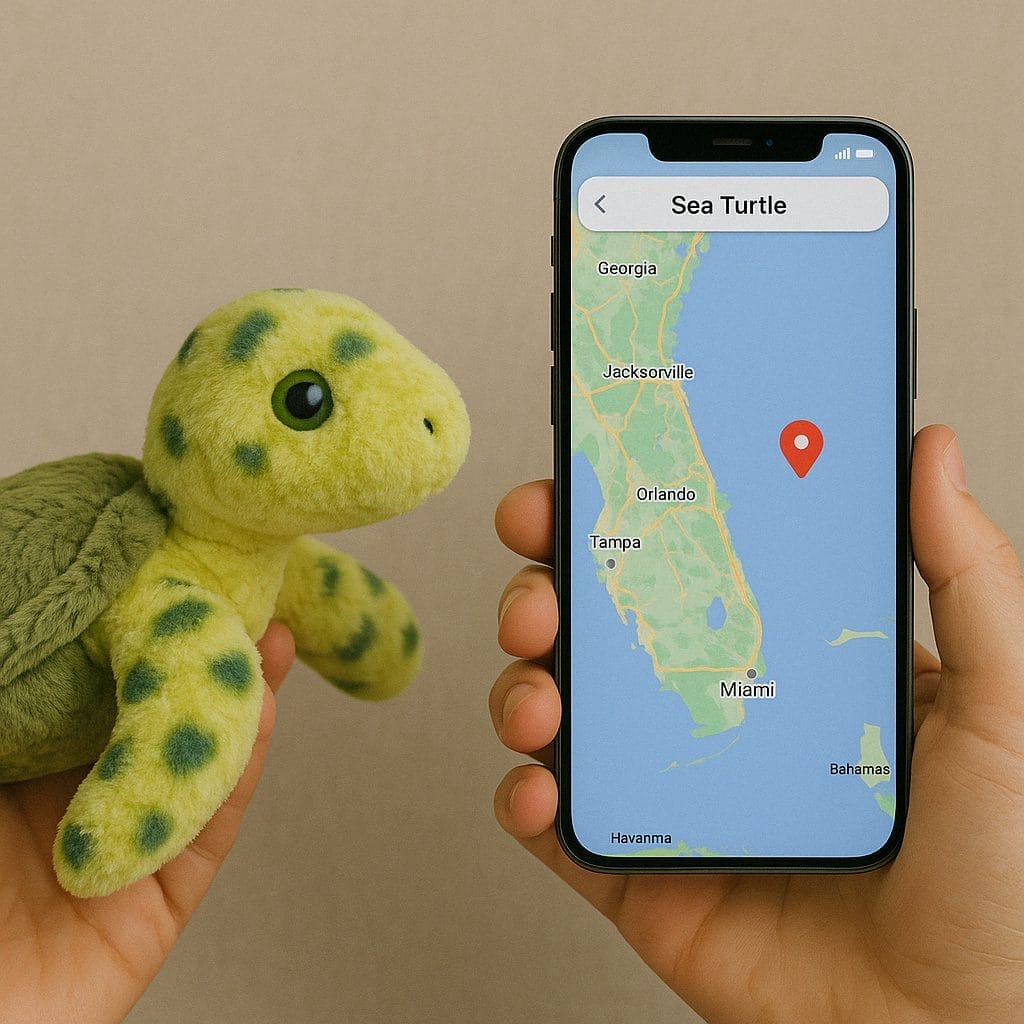
Meet Your Turtle
Scan the tag to meet your real sea turtle. Learn its name, species, and see a real photo!
Follow the Journey
Watch your turtle swim across the ocean using the 3D tracking map. It’s like a sea adventure in your pocket.
Support Wildlife
Every plush supports turtle conservation efforts through the Sea Turtle Conservancy.
Click Here & Use Coupon Code: THETURTLEHUB20 For A 20% Discount! (Your hug helps a turtle.)
How Big Are Baby Sea Turtles?
All sea turtle hatchlings start life incredibly small.
When they first break out of their eggs and scramble to the ocean, they’re only about 2 inches long—roughly the size of a U.S. quarter. They weigh just half a pound.
It’s honestly pretty wild when you think about it. A baby leatherback that’s 2 inches long will eventually grow to be 7 feet and weigh over 1,000 pounds.
That’s like comparing a teacup to a refrigerator.
How Fast Do Sea Turtles Grow?
Sea turtles are slow growers, which is one reason they take so long to reach maturity.
The growth timeline varies by species. Smaller species like Kemp’s ridley reach sexual maturity around 10-15 years. Larger species like leatherbacks and green turtles can take 20-50 years to fully mature.
After hatching, baby turtles enter what scientists call the “lost years.” This is a mysterious period—usually lasting a decade or more—where the young turtles disappear into the open ocean.
Nobody really knows where they go or what they do during this time. They probably drift in ocean currents, hiding in floating mats of sargassum seaweed and feeding on small marine life.
Once they reach about the size of a dinner plate, they return to coastal waters where we can actually study them again.
Sea Turtle Size vs Human: Putting It In Perspective
Want to really grasp how big sea turtles are? Let’s compare them to humans.
The average adult human is about 5 feet 9 inches tall and weighs around 160 pounds.
A leatherback sea turtle at 7 feet long and 1,500 pounds outweighs 9 humans. Even laying down, it’s longer than most people are tall.
Here’s another way to think about it: if you stood next to a fully grown leatherback, its shell would come up past your waist. These things are massive.
Even the “small” species like Kemp’s ridley at 2 feet and 100 pounds are still pretty substantial—about the size and weight of a six-year-old child.
Why Do Sea Turtles Get So Big?
There are actually some solid evolutionary reasons why sea turtles grew to be so large.
Protection from predators: Once a sea turtle reaches a certain size, very few animals can hunt it. Sure, tiger sharks and great whites can take down adults, but most predators avoid full-grown turtles.
Thermoregulation: Larger bodies hold heat better. This is especially important for leatherbacks, which dive into freezing deep water to hunt jellyfish. Their massive size helps them maintain body temperature.
Long lifespan: Sea turtles can live 50-100 years. With that much time, slow and steady growth adds up to some serious size.
Energy efficiency: A larger body is more energy-efficient for long-distance migration. All sea turtles migrate hundreds or thousands of miles between feeding and nesting grounds.
Do Male And Female Sea Turtles Differ In Size?
Nope, not really.
Unlike many reptile species, male and female sea turtles grow to roughly the same size. You can’t tell them apart by looking at their overall dimensions.
The only reliable way to sex an adult sea turtle is by looking at the tail. Males have long, thick tails that extend well past the edge of their shell. Females have shorter, stubbier tails that barely stick out.
Scientists theorize this size equality evolved because both sexes need to be large enough to complete long ocean migrations successfully.
What’s The Biggest Sea Turtle Ever Found?
The record holder is the Harlech leatherback, found on a beach in Wales in 1988.
This absolute unit measured 9 feet 5.5 inches long and weighed 2,019 pounds (916 kilograms). It’s now on display at the National Museum Cardiff.
What’s interesting is that most leatherbacks at that length weigh significantly less. This turtle was unusually heavy, even for its size.
Scientists still debate what allowed this particular turtle to get so massive. Was it extra fat stores? More muscle mass? Ideal feeding conditions? Nobody knows for sure, but it remains the heaviest sea turtle ever documented.
How Do Sea Turtles Compare To Other Marine Animals?
Sea turtles are big, but they’re not the biggest things in the ocean.
A 7-foot leatherback is about the same size as a whitetip reef shark. Both max out around 7 feet and a few hundred pounds.
But compared to other sharks? It’s not even close. A great white shark can grow to 20 feet and weigh over 5,000 pounds—more than double a leatherback.
And then there are whales. A blue whale can reach 100 feet long and weigh 200 tons. That’s like 200 leatherbacks stacked together.
Still, for a reptile that breathes air and lays eggs on beaches, sea turtles are impressively large.
Ancient Sea Turtles Were Even Bigger
If you think modern sea turtles are big, you should see their prehistoric cousins.
Archelon, an extinct sea turtle from the Cretaceous period (roughly 80-66 million years ago), grew to about 13 feet long. That’s nearly 50% longer than the biggest leatherbacks today.
These ancient giants shared the oceans with dinosaurs and marine reptiles like mosasaurs and plesiosaurs.
Archelon fossils have been found in what’s now South Dakota—which was underwater back then. Their massive flippers suggest they were powerful swimmers despite their size.
What Affects Sea Turtle Size?
Several factors influence how large an individual sea turtle will grow.
Genetics: Just like humans, some turtles are genetically programmed to be larger than others. Pacific Ocean leatherbacks tend to grow larger than Atlantic populations.
Food availability: Turtles with access to rich feeding grounds grow faster and larger. Green turtles grazing on abundant seagrass beds typically outgrow those in poorer habitats.
Ocean temperature: Warmer waters can affect metabolism and growth rates. However, scientists are concerned that rapidly warming oceans might disrupt normal development.
Health and injuries: Turtles that get sick, injured, or caught in fishing gear may experience stunted growth.
Species: This is the biggest factor. A Kemp’s ridley will never reach the size of a leatherback, no matter how perfect its environment.
How Long Does It Take To Reach Full Size?
Sea turtles take their sweet time growing up.
Smaller species like Kemp’s ridley reach full adult size around 10-17 years old. Medium species like hawksbills take 20-30 years. The giants—leatherbacks and green turtles—can take 20-50 years to fully mature.
Even after reaching sexual maturity, many species continue growing slowly for the rest of their lives.
This incredibly slow growth rate is one reason sea turtle populations are so vulnerable. When you take 30 years to have your first babies, and only 1 in 1,000 hatchlings survives to adulthood, recovery from population declines takes a long, long time.
What Don’t Sea Turtles Get Bigger?
You might wonder why sea turtles stop growing at all.
Most reptiles exhibit something called “indeterminate growth,” meaning they keep growing throughout their lives (just very slowly after maturity).
Sea turtles do continue growing after reaching sexual maturity, but the rate slows way down. Eventually, the energy cost of getting bigger outweighs the benefits.
Scientists think turtles reach an optimal size where they’re large enough to avoid most predators and complete migrations, but not so large that they require unrealistic amounts of food.
Do Sea Turtles In Captivity Grow Differently?
Yes, but not in the way you’d think.
Captive sea turtles (usually in rehabilitation facilities) often grow faster initially if they’re receiving regular meals and veterinary care. But they don’t grow larger than wild turtles.
In fact, overfeeding captive turtles can cause health problems like excessive shell growth, retained scutes, and metabolic bone disease.
Responsible rehabilitation centers carefully control feeding to ensure recovering turtles grow at a natural rate that mimics wild conditions.
Signs Of Healthy Growth In Sea Turtles
How do scientists know if a sea turtle is growing properly?
- Smooth shell growth: New scutes (shell plates) should form evenly without pyramiding or deformities.
- Proportional body: The head, flippers, and body should all grow in proportion to each other.
- Clear eyes: Healthy turtles have bright, clear eyes without cloudiness or discharge.
- Active behavior: Growing turtles are active swimmers and eager eaters.
- Gradual weight gain: Steady, consistent weight increase rather than sudden spikes or drops.
Researchers track growth by measuring the curved carapace length (the curve along the top of the shell) and weighing the turtle. Comparing these measurements over time shows whether growth is on track.
Common Mistakes People Make About Sea Turtle Size
Let me clear up some misconceptions.
“All sea turtles are huge”: Nope. While leatherbacks are massive, several species max out at just 2-3 feet.
“You can tell age by size”: Not reliably. Growth rates vary too much between individuals and populations.
“Males are bigger than females”: They’re actually the same size. Only the tail differs.
“Sea turtles grow like land turtles”: Sea turtles grow much slower and take decades longer to reach maturity.
“Bigger is always better”: Each species has evolved its optimal size for its specific lifestyle and diet.
When To Be Concerned About Size
If you work with sea turtles or encounter them in the wild, here are red flags:
- A turtle that seems unusually small for its species could be malnourished or sick
- Visible shell deformities or uneven growth patterns need veterinary attention
- A turtle that’s lethargic and not growing might have parasites or disease
- Sudden weight loss is always concerning and requires immediate evaluation
If you find a stranded sea turtle of any size, call your local sea turtle rescue hotline immediately. Don’t try to help it yourself—these are federally protected animals and handling them without permits is illegal.
Frequently Asked Questions
What is the largest sea turtle ever recorded?
The largest was a leatherback found in Wales in 1988 that weighed 2,019 pounds and measured 9 feet 5.5 inches long. Most leatherbacks are smaller, typically ranging from 600-1,100 pounds and 6-7 feet in length.
How big is a sea turtle at birth?
All sea turtle species hatch at roughly the same size—about 2 inches long and weighing half a pound. They’re about the size of a U.S. quarter. Despite starting so small, leatherbacks can grow to over 1,000 times their birth weight.
Do sea turtles ever stop growing?
Not completely. Like most reptiles, sea turtles continue growing slowly throughout their lives. However, growth slows dramatically once they reach sexual maturity. The most rapid growth happens in the first 10-20 years.
Why are leatherback turtles so much bigger than other species?
Leatherbacks evolved to be massive primarily to maintain body temperature during deep dives into cold water. Their large size helps them retain heat while diving 3,000+ feet to hunt jellyfish. The soft, flexible shell also allows for deeper diving than hard-shelled species.
Can you tell a sea turtle’s age by its size?
Not reliably. While size can give you a rough estimate for young turtles, individual growth rates vary too much based on food availability, genetics, and health. Scientists use other methods like bone growth rings (similar to tree rings) to determine age more accurately.
The Bottom Line On Sea Turtle Size
Sea turtles come in a surprising range of sizes, from the dinner-plate-sized Kemp’s ridley to the golf-cart-sized leatherback.
The seven species have evolved different sizes to match their unique diets, habitats, and lifestyles. What they all share is slow growth, long lifespans, and incredible adaptations that have allowed them to survive for over 100 million years.
Next time you see a sea turtle—whether in person or in photos—take a moment to appreciate just how remarkable these animals are. From 2-inch hatchlings making their first dash to the ocean to 1,000-pound adults completing multi-thousand-mile migrations, these ancient reptiles have earned their place as some of the ocean’s most impressive inhabitants.

About Author
Muntaseer Rahman started keeping pet turtles back in 2013. He also owns the largest Turtle & Tortoise Facebook community in Bangladesh. These days he is mostly active on Facebook.