Sea Turtle Eggs: Nesting, Clutch Size, Hatching & How to Help

This post was created with help from AI tools and carefully reviewed by a human (Muntaseer Rahman). For more on how we use AI on this site, check out our Editorial Policy.
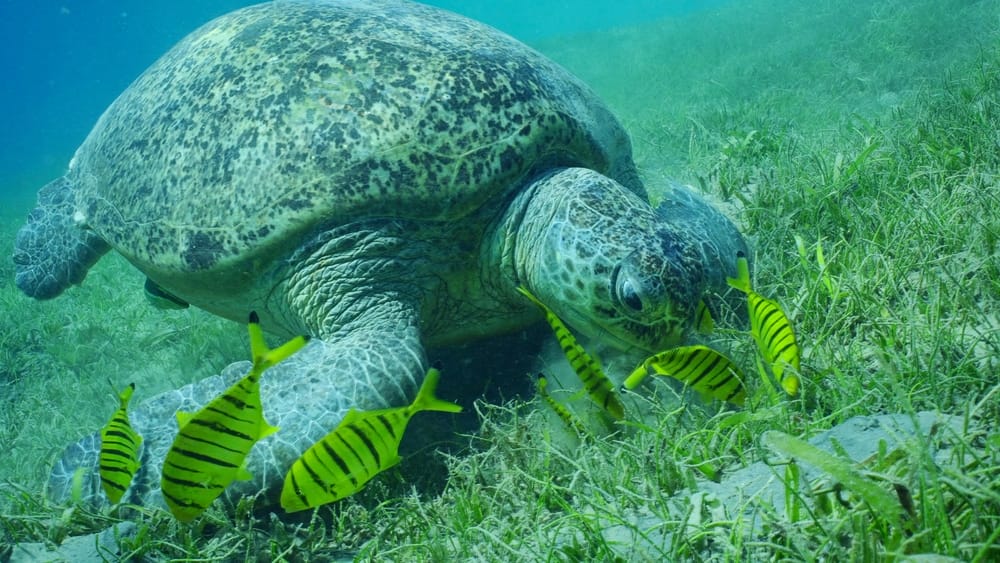
Sea turtles spend almost their entire lives in the ocean. They come ashore for one reason only: to lay their eggs.
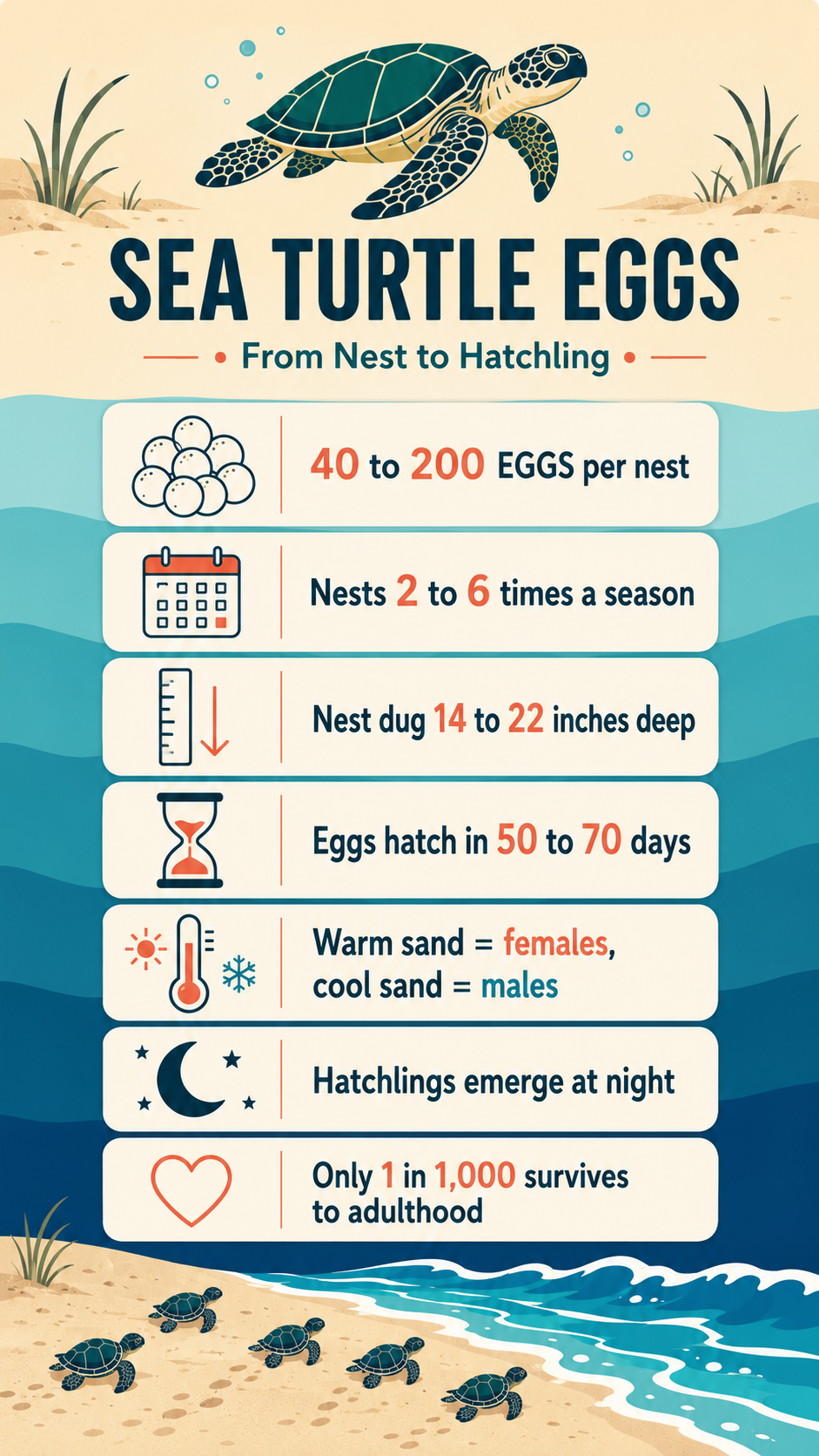
A sea turtle lays 40 to 200 eggs per clutch and nests 2 to 6 times in a single season. The eggs incubate in the warm sand for 50 to 70 days before the hatchlings dig out and race to the sea. Sadly, only about 1 in 1,000 survives to adulthood.
This is the complete guide to sea turtle eggs. We will cover how many they lay, what the eggs look like, when and where they nest, how the nest is built, when the eggs hatch, how many survive, and how you can help protect them.
Not sure when your turtle eggs will hatch? Try our free Turtle Egg Hatch Calculator for instant predictions!
How Many Eggs Does a Sea Turtle Lay?
A female sea turtle lays 40 to 200 eggs in a single clutch. Hawksbills lay the largest clutches, while flatbacks lay the smallest at around 50 eggs.
Sea turtles lay the biggest clutches of any turtle. For comparison, box turtles lay only 8 to 9 eggs and snapping turtles lay 20 to 40.
On average, a healthy sea turtle deposits around 100 eggs at a time. In rare cases, a single clutch can hold more than 200.
There are 7 species of sea turtles, and clutch size varies by species. Here is the breakdown.
Sea Turtle Clutch Size by Species
| Sea Turtle | Clutch Size | Clutches per Season | Notes |
|---|---|---|---|
| Leatherback | 80 to 110 eggs | 3 to 10 | Hatching success around 50%. |
| Loggerhead | 110 to 130 eggs | Multiple | Success rate 60 to 85%. |
| Green | 40 to 120 eggs | 1 to 4 | Record clutch of 219 eggs. Rests 2 weeks between clutches. |
| Hawksbill | 140 to 200 eggs | ~4.5 | Largest clutches of any sea turtle. |
| Kemp’s Ridley | 100 to 120 eggs | ~2.5 | May nest in back-to-back years. |
| Olive Ridley | 90 to 130 eggs | 1 to 3 | Success rate around 78%. |
| Flatback | ~50 eggs | Several | Smallest clutch of all sea turtles. |
Older females tend to lay more eggs. Recent studies show that clutch size links more to age than to body size.
So if a green sea turtle lays 40 eggs one season and 100 the next, that is completely normal. Confused about which species is which? Here is the easiest way to identify a turtle species.
What Do Sea Turtle Eggs Look Like?
Sea turtle eggs are round, white, and about the size of a ping-pong ball. They look a lot like squishy little table-tennis balls.
Unlike bird eggs, the shells are soft and leathery, not brittle. That flexibility is what stops them from cracking as they drop into the nest and pile on top of one another.

How Many Eggs Does a Sea Turtle Lay in a Lifetime?
A single sea turtle can lay 1,900 to 2,300 eggs over her lifetime. Three factors decide the exact number.
- How many clutches and eggs she lays each season
- How often she nests
- How long she lives
Sea turtles also mature late. Depending on the species, they do not breed until they are anywhere from 8 to 50 years old.
- Leatherbacks: 8 to 12 years
- Olive ridleys: 10 to 15 years
- Hawksbills: 15 to 30 years
- Loggerheads: 17 to 33 years
- Green sea turtles: 20 to 50 years
Because they mature so late but live so long, a female nests for decades. That is how the lifetime total climbs into the thousands even though she skips most years.
Why Do Sea Turtles Lay So Many Eggs?
The answer is simple: survival is brutally hard. Laying thousands of eggs is nature’s way of playing the odds.
Most eggs and hatchlings never make it. By flooding the beach with babies, the species guarantees at least a few survive to keep it going.
Sea turtles also play a big role in ocean health. They graze seagrass, control jellyfish, and move nutrients between the sea and the shore, so keeping them around matters far beyond the beach.
Track A Real Sea Turtle With Each Bracelet!


Learn Name
You get to learn your sea turtle’s name, size, age. Also a picture!
Enjoy Stories
Enjoy the story of your sea turtle, where it came from, where is it going?
Follow Me
You get to follow the sea turtle’s journey on an interactive tracking map!
Click Here & Use Coupon Code: THETURTLEHUB20 For A 20% Discount!
When and Where Do Sea Turtles Nest?
When Is Sea Turtle Nesting Season?
In the Northern Hemisphere, sea turtles nest from March through October. Most eggs are laid across the warm spring and summer months.
The timing follows the heat, because the eggs need warm sand to develop. In the tropics, where it stays warm year round, some sea turtles nest all year.
In the Southern Hemisphere the season flips. There, turtles tend to nest from October to February, during that region’s warmest stretch.
Where Do Sea Turtles Nest?
Here is one of the most amazing facts about sea turtles. Females return to the very beach where they hatched to lay their own eggs, a behavior called natal homing.
To get there, adults migrate thousands of miles across open ocean. Most species also nest as a community, so beaches can swarm with gravid turtles during peak season.
Some of the largest nestings happen at Key West and the Gulf Islands in Florida, and at Rancho Nuevo in Mexico. Heron Island and the Great Barrier Reef in Australia are also major grounds, along with beaches in Malaysia, Costa Rica, and Sri Lanka.
Do Sea Turtles Lay Eggs Every Year?
No. Most female sea turtles nest only once every 2 to 4 years. Carrying and laying eggs is exhausting, so they need time to rebuild energy.
Kemp’s ridleys are the exception and may nest in back-to-back years. The resting gap for other species can stretch even longer, up to 9 years in some cases.
Here is the twist. A female can store sperm for years after mating and fertilize her eggs only when her body is finally ready to nest.
This Hilarious Turtle Book Might Know Your Pet Better Than You Do

Let’s be real—most turtle care guides feel like reading a textbook written by a sleep-deprived zookeeper.
This one’s not that.
Told from the snarky point of view of a grumpy, judgmental turtle, 21 Turtle Truths You’ll Never Read in a Care Guide is packed with sarcasm, sass, and surprisingly useful insights.
And hey—you don’t have to commit to the whole thing just yet.
Grab 2 free truths from the ebook and get a taste of what your turtle really thinks about your setup, your food choices, and that weird plastic palm tree.
It’s funny, it’s honest, and if you’ve ever owned a turtle who glares at you like you’re the problem—you’ll feel seen.
How Sea Turtles Build Their Nests
Sea turtles do not have webbed feet like freshwater turtles. Dragging their heavy bodies up the beach with flippers is exhausting work.
Some gravid turtles give up partway and return to the ocean without laying. This wasted trip is called a false crawl.
When a turtle finds a good spot, she clears the debris and digs a shallow body pit to rest in. Then she digs a deeper egg chamber, 14 to 22 inches down, using only her back flippers.
Because she lays 2 to 7 clutches a season, she may dig several separate chambers over the months. Once a chamber is full, she packs sand over it to hide it, then crawls back to the sea and never returns to that nest.

Do Sea Turtles Lay Eggs at Night?
Most sea turtles nest at night, when the beach is cooler, darker, and calmer. The night lowers the risk of overheating and keeps them away from crowds.
Laying a full clutch takes 30 minutes to 7 hours. During this time the mother slips into a half-conscious, trance-like state, which is why she should never be disturbed.
Hawksbills and olive ridleys break the rule and often nest during daylight. But for most species, darkness is the safest cover.
How to Spot a Sea Turtle Nest
A nesting turtle leaves obvious tracks. Look for wide, tractor-like tread marks running from the surf up to a disturbed patch of sand.
These tracks are clearest just before sunrise. Wind and tide erase them as the day goes on.
On protected beaches, officials often stake and rope off nests with a marker board. An empty, hatched nest looks like a small caved-in crater, a bit like a ghost crab burrow, with tiny flipper tracks fanning toward the water.
If you find an unmarked nest, never dig or touch it. Note the spot and report it to your local marine authority instead.
Snuggle a Plush. Track a Turtle.
🧸 + 🌊 = 🐢 A toy that connects you to real sea turtles in the wild.


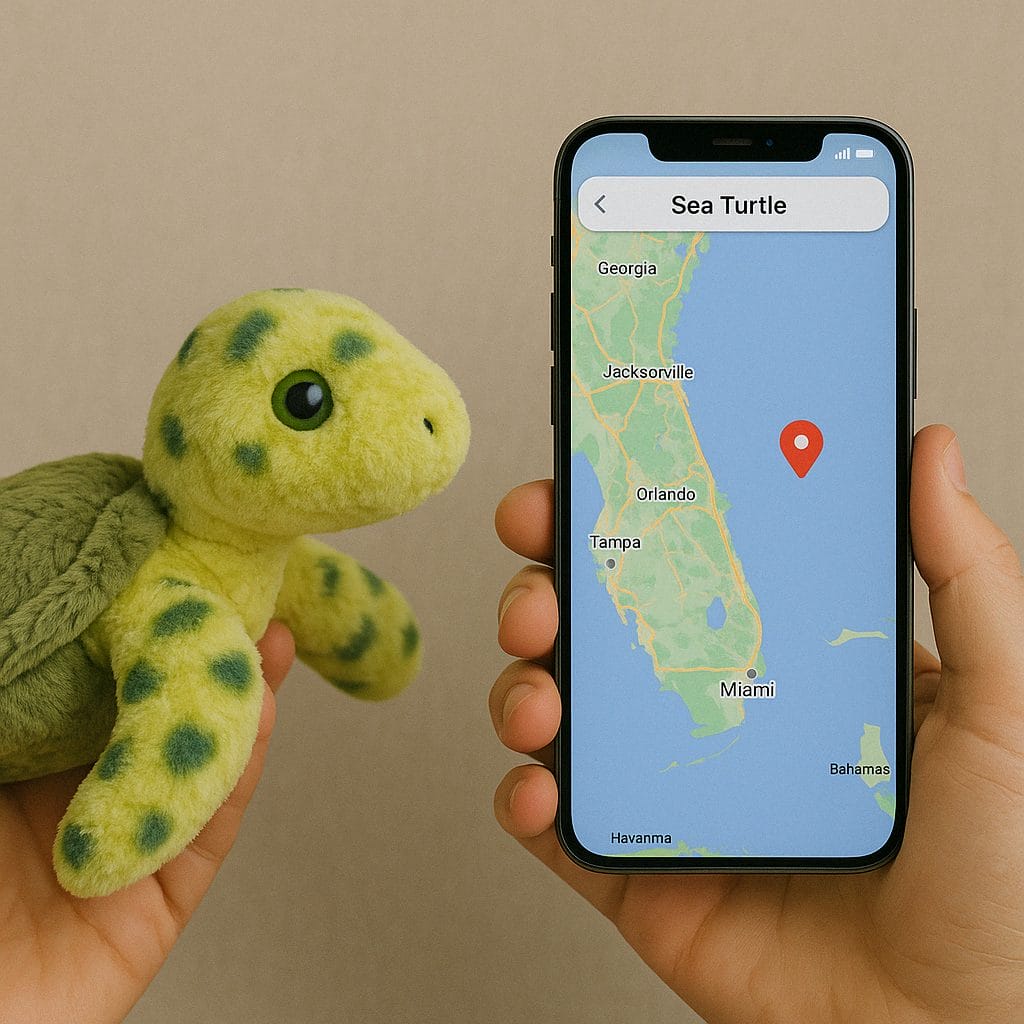
Meet Your Turtle
Scan the tag to meet your real sea turtle. Learn its name, species, and see a real photo!
Follow the Journey
Watch your turtle swim across the ocean using the 3D tracking map. It’s like a sea adventure in your pocket.
Support Wildlife
Every plush supports turtle conservation efforts through the Sea Turtle Conservancy.
Click Here & Use Coupon Code: THETURTLEHUB20 For A 20% Discount! (Your hug helps a turtle.)
When Do Sea Turtle Eggs Hatch?
Sea turtle eggs hatch after 50 to 70 days of incubation. In most regions, eggs laid in spring and summer hatch from July through December.
The sand temperature has to stay warm the whole time. Temperature also decides the babies’ sex: warmer nests produce more females, and cooler nests produce more males.
Exact timing shifts by species and location. A few real-world examples:
- Leatherbacks in Florida nest March to August, so babies hatch May to October.
- Loggerheads nest around June and July, so hatching peaks in August and September.
- Kemp’s ridleys in Texas nest March to May, with hatchlings from late May to July.

What Happens After the Eggs Hatch?
Each hatchling uses a temporary egg tooth, called a caruncle, to slice open its shell. The egg tooth falls off soon after.
The whole clutch then works as a team. Together they push up through the packed sand, a climb that takes 3 to 7 days.
They almost always surface at night, between roughly 9 pm and 5 am. The entire nest tends to erupt at once, so hundreds of babies emerge together and swamp the predators waiting nearby.
How Do Hatchlings Reach the Ocean?
The moment they surface, the babies go into what scientists call the “hatchling frenzy.” Instinct tells them the land is deadly and the water is safety.
They find the sea using natural cues. The downward slope of the beach, the white crests of the waves, and the bright, open horizon over the ocean all pull them the right way.
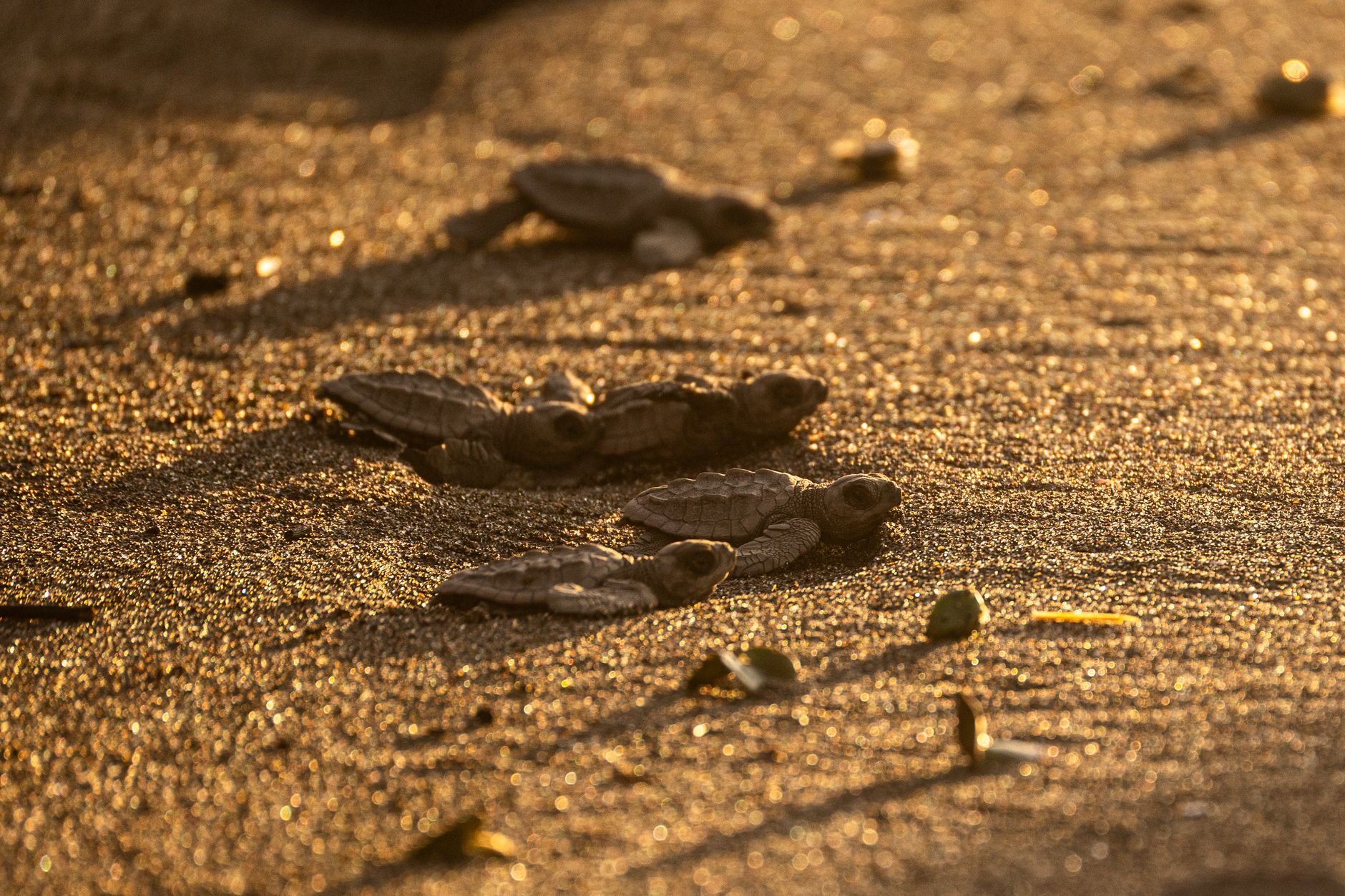
This is exactly why artificial light is so dangerous. Streetlights, houses, and phone flashes can lure hatchlings away from the water and toward roads, where they die.
The dash to the water is the most dangerous moment of their lives. Crabs, raccoons, ants, and seabirds pick off many before they ever get wet.
Do Baby Sea Turtles Reunite With Their Mother?
No. Hatchlings grow up completely alone, with no parent at all.
The mother left long before they hatched, and she never comes back to check the nest. The babies are fully independent from the moment they break the shell.
It sounds harsh, but it is how the species is built. The hatchlings even make faint sounds to coordinate their climb, working together instead of relying on a parent.
How Many Sea Turtle Eggs Survive?
About 50 to 85% of the eggs in a nest hatch. But only 1 in 1,000 hatchlings survives all the way to adulthood.
Plenty goes wrong before the eggs even hatch. The wrong nest temperature, too much humidity, flooding, or a hungry predator can wipe out a whole clutch.
Roughly 7.6% of hatched babies never even reach the water. Those that do still have to survive a gauntlet of fish, birds, and other ocean predators for years.
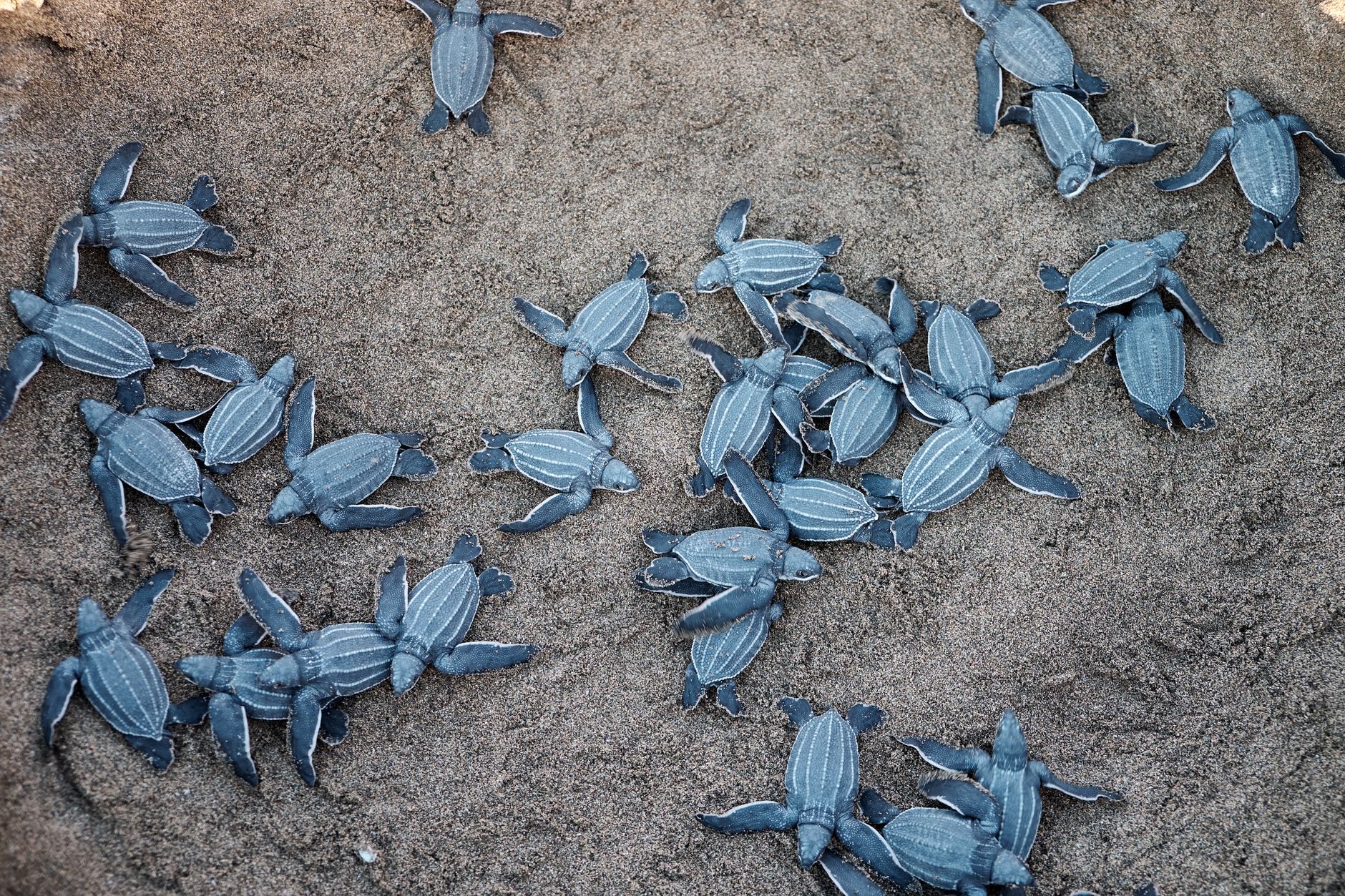
Humans pile on more pressure through poaching, egg harvesting, habitat loss, and plastic pollution. This is why most sea turtle species are endangered today.
The good news is that the law is on the turtles’ side. In Florida, disturbing a nesting turtle or its eggs is a federal offense with fines up to $25,000. You can read more on whether you can legally touch a sea turtle.
Where to Watch Sea Turtle Eggs Hatch
Watching a nest release is unforgettable. These conservation sites run guided, rule-abiding programs where you can see it safely.
- Padre Island, Texas. The top US spot for Kemp’s ridleys, with public releases roughly May to August.
- Melbourne Beach, Florida. Leatherbacks, loggerheads, and greens nest here, hatching July to December. Turtle walks run at Archie Carr National Wildlife Refuge.
- Isle of Palms, South Carolina. Local Turtle Teams protect loggerhead nests, with hatchlings June to October.
- Puerto Vallarta, Mexico. Daily olive ridley releases you can join, August to December.
- Tortuguero National Park, Costa Rica. The “Land of Turtles” and the most important nesting site in the western hemisphere. Releases July to October and March to May.
- Pulau Tioman, Malaysia. Volunteer with the Juara Turtle Project, March to October.
- Kosgoda, Sri Lanka. A green sea turtle hatchery running for 30 years, active November to May.
- Greek Islands. Loggerheads protected by Archelon, hatching August to October.
- Iztuzu (Turtle Beach), Turkey. Mediterranean loggerheads, with releases July to August.
- Tofo Beach, Mozambique. Five species nest here, hatching December to April.
Wherever you go, always follow the local guides and rules. And if you love tracking turtles, see whether sea turtle tracking bracelets are legitimate.
How You Can Help Protect Sea Turtle Nests
You do not need to be a scientist to make a difference. A few simple beach habits protect nesting turtles and their eggs.
- Never approach or crowd a nesting turtle. A frightened female may abandon the nest and return to the sea.
- Keep flashlights, phone lights, and floodlights off near the beach at night. Bright light disorients both mothers and hatchlings.
- Fill in holes and knock down sandcastles before you leave. A tiny hatchling can get trapped in them.
- Clear beach chairs, mats, and trash that block the path from the nest to the sea.
- Stay off the dunes, where turtles often nest, and skip campfires and fireworks during the season.
- Never touch a sea turtle. In the US it is a federal offense unless the animal is injured and needs rescue.
- Report injured turtles or exposed nests to your local marine authority.
- Donate to or sponsor a nest through a marine conservation group.
Frequently Asked Questions
How long do sea turtle eggs take to hatch?
Sea turtle eggs take 50 to 70 days to hatch. Warmer sand speeds it up, while cooler sand slows it down.
Can you eat sea turtle eggs?
In most countries it is illegal. Every sea turtle species is protected, and harvesting their eggs is a serious crime that pushes them closer to extinction.
How deep do sea turtles bury their eggs?
A sea turtle digs an egg chamber about 14 to 22 inches deep. The depth keeps the eggs at a stable temperature and hidden from predators.
Do sea turtles come back to their nest?
No. Once a female covers her nest, she leaves for good and never checks on the eggs or the hatchlings.
What should I do if I find a sea turtle nest?
Leave it untouched and keep your distance. Note the location and call your local marine or wildlife authority so trained volunteers can protect it.
Conclusion
Sea turtle eggs are a small miracle of survival. A mother lays 40 to 200 at a time and thousands over her life, yet only a handful ever become adults.
That is exactly why every nest matters. A little care on the beach goes a long way toward keeping these ancient ocean travelers around for the next generation.

About Author
Muntaseer Rahman started keeping pet turtles back in 2013. He also owns the largest Turtle & Tortoise Facebook community in Bangladesh. These days he is mostly active on Facebook.