How To Tell The Age Of A Turtle? [Illustrated Guide]
This post was created with help from AI tools and carefully reviewed by a human (Muntaseer Rahman). For more on how we use AI on this site, check out our Editorial Policy.
So you’ve got a turtle and you’re dying to know how old it is.
Maybe you just adopted one and the previous owner had no clue. Maybe you found one in your backyard. Or maybe you’re just curious if your pet turtle is going to outlive you (spoiler alert: it probably will).
Here’s the thing though—figuring out a turtle’s age is like trying to guess someone’s age at a party when they refuse to tell you. You can make some educated guesses, but unless you were there when they were born, you’re basically winging it.
Let’s break down every method people use to guess turtle age, what actually works, and what’s complete nonsense.
Why You Probably Don’t Need to Know (But Want to Anyway)
Here’s the thing: knowing your turtle’s exact age only matters in a few situations.
When Age Actually Matters:
- Breeding – You need to know if your turtle is mature enough
- Housing – Young turtles need different enclosures than adults
- Diet – Juveniles need more protein; adults need more greens
For everything else? Knowing if your turtle is “juvenile,” “young adult,” or “old adult” is usually enough.
When Age Doesn’t Matter:
- Planning for the future (they all live ridiculously long anyway)
- Comparing to other pets (your turtle will outlive your dog, your cat, possibly you)
- Bragging rights (nobody’s impressed that your turtle might be 17 or might be 23)
Turtles with good care can live 30-40 years easily for common pet species. Box turtles and tortoises regularly hit 50-100 years.
The current world record holder is Jonathan, a Seychelles giant tortoise, who’s approximately 192 years old and still going strong on the island of Saint Helena.
Think about that for a second. This turtle was born when slavery was still legal in the United States.
The Only 100% Accurate Method (And Why It’s Useless)
Want to know your turtle’s exact age?
Be there when it hatches.
That’s it. That’s the only foolproof method.
If you know the hatch date, you can just count the years like you would with any other pet. Simple, right? Unfortunately, unless you bred the turtle yourself or got it from a breeder who kept records, this method is about as useful as a chocolate teapot.
Researchers have tried everything—from examining bones to analyzing DNA—and they all agree on one thing: without knowing the birth date, everything else is just an educated guess at best.
This Hilarious Turtle Book Might Know Your Pet Better Than You Do

Let’s be real—most turtle care guides feel like reading a textbook written by a sleep-deprived zookeeper.
This one’s not that.
Told from the snarky point of view of a grumpy, judgmental turtle, 21 Turtle Truths You’ll Never Read in a Care Guide is packed with sarcasm, sass, and surprisingly useful insights.
And hey—you don’t have to commit to the whole thing just yet.
Grab 2 free truths from the ebook and get a taste of what your turtle really thinks about your setup, your food choices, and that weird plastic palm tree.
It’s funny, it’s honest, and if you’ve ever owned a turtle who glares at you like you’re the problem—you’ll feel seen.
The Growth Ring Method (The One Everyone Gets Wrong)
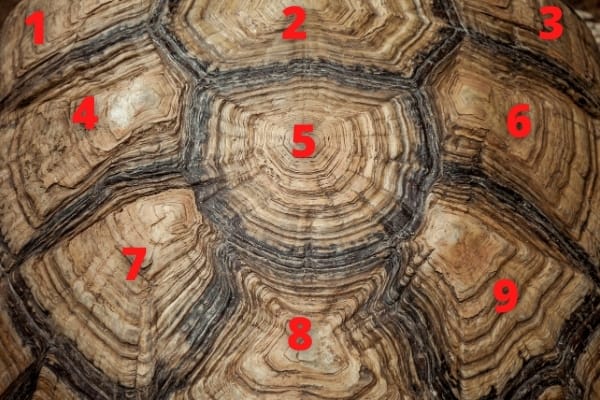
You’ve probably heard this one a million times.
“Just count the rings on the shell, like tree rings!”
Yeah, about that. It’s way more complicated than people think, and honestly, it’s mostly wrong.
What Are Growth Rings Anyway?
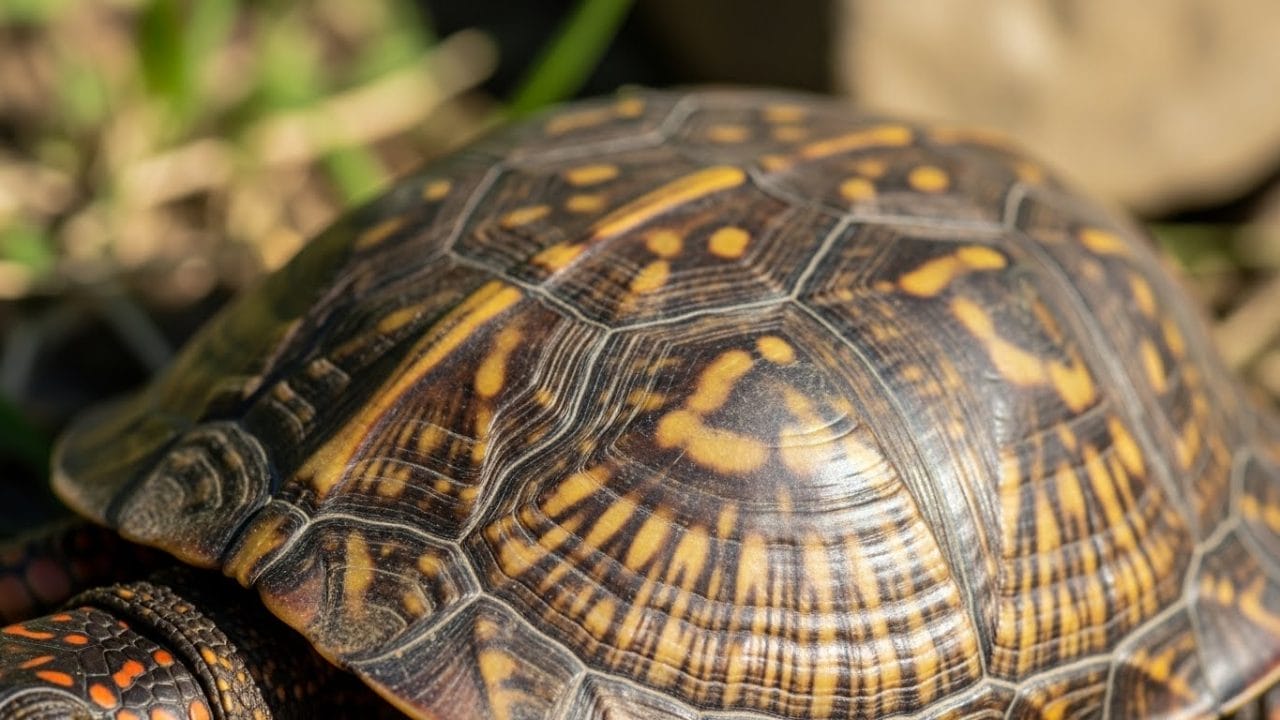
Those rings you see on turtle scutes (the individual plates on the shell) are called “annuli” if you want to get fancy about it.
They look like concentric circles radiating outward from the center of each scute.
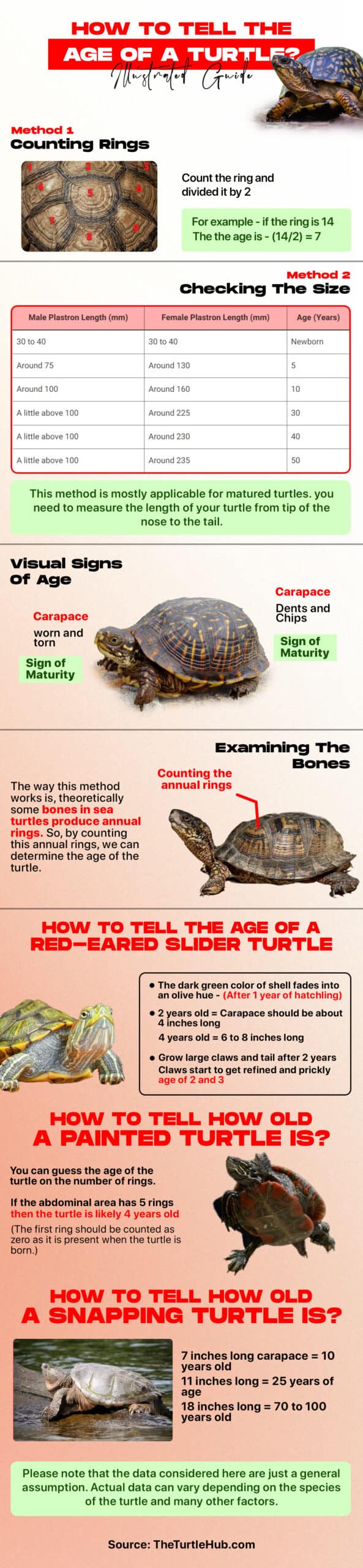
People assumed these formed annually—one ring per year, nice and neat. But modern research has completely debunked this myth.
The Truth About Shell Rings
Here’s what actually happens: those rings form during growth spurts, not on birthdays.
When a turtle has access to tons of food and good conditions, it grows like crazy. That creates a ring. When food is scarce or conditions suck (like during droughts or cold summers), growth slows down or stops. Another ring forms.
So a turtle could easily grow multiple rings in a single year if it has a feast-famine cycle going on.
Or it might go an entire year without adding any rings if conditions are terrible. A well-fed captive turtle might have 12 rings at age 5, while a wild turtle struggling to survive might have only 6 rings at age 15.
A 2003 scientific review looked at 145 research papers about using growth rings to age turtles. Out of 49 case studies that actually tested the method, only 6 found it reliable for aging turtles past sexual maturity.
Most studies concluded it only works (maybe) for young turtles up to about 6-8 years old.
After that, the rings get packed together, wear down, or become impossible to read.
When Shell Rings Might Work
Okay, so growth rings aren’t completely useless.
They can give you a very rough ballpark estimate for young turtles (under 6-8 years old) if:
- You know the species
- The turtle has been in consistent conditions
- The rings are still visible and distinct
- You’re okay with being off by several years
For older turtles? Forget it. The rings wear smooth with age, especially for turtles that burrow a lot or spend time on rough surfaces.
Size Comparison Method (Better, But Still Sketchy)
This one’s more reliable than counting rings, but it still comes with a truckload of problems.
The basic idea: measure your turtle and compare it to adult size charts for the species.
How to Use Size Charts
First, you need to know your turtle’s species. (If you don’t know, that’s a whole other problem.)
Then you measure the carapace length—that’s the top shell, measured in a straight line from front to back.
Red-eared sliders, for example, typically reach full size around 8 years old, ending up somewhere between 5-11 inches depending on their sex. Females grow bigger.
So if you’ve got a 3-inch slider, it’s probably pretty young. An 8-inch one? Could be anywhere from 5 to 50 years old.
The Problems With Size
Here’s where it gets messy.
Nutrition matters. A lot.
A turtle with a perfect diet grows way faster than one that’s been eating garbage. Captive turtles often grow faster than wild ones because they get consistent food and ideal temperatures.
So that 6-inch turtle could be 4 years old if it’s been living the good life, or 10 years old if it’s had a rough time.
Plus, once a turtle hits adult size, this method becomes completely useless. A 10-inch adult slider and a 30-year-old adult slider look exactly the same size-wise.
The Sexual Maturity Clue
This one’s actually somewhat useful for narrowing things down.
Turtles can only breed once they hit sexual maturity, which happens at different ages depending on the species.
Most small to medium pet turtles (like sliders, painted turtles, map turtles) mature around 4-8 years old.
Larger tortoises can take forever—sometimes 15-20 years before they’re ready to breed.
Signs of Maturity
Males often develop:
- Longer claws (especially on front feet)
- Longer, thicker tails
- A concave (curved inward) plastron (bottom shell)
- Courting behaviors and aggression toward other turtles
Females might:
- Grow larger than males
- Show nesting behaviors
- Lay eggs (even without a male present, though these will be infertile)
If your turtle shows these signs, congratulations—it’s at least mature age for its species.
If it doesn’t? It’s still a juvenile, which means it’s younger than the typical maturity age.
This won’t tell you if your turtle is 8 or 38, but it can tell you if it’s under 5 versus over 5 for most common species.
The Wear and Tear Method (Mostly Garbage)
Some people look at shell condition and think they can estimate age.
Chips, scratches, faded colors, smooth worn-down scutes—these must mean the turtle is old, right?
Wrong.
A turtle could get a massive shell injury from one bad fall when it’s 2 years old. An ancient turtle that’s been living in perfect conditions might have a pristine shell at 50.
Shell wear tells you more about what the turtle’s been through than how long it’s been alive.
That said, a completely smooth, worn-down shell with zero visible growth rings is probably from an older turtle. But “older” could mean 15 or 50—you still can’t tell.
The Scientific Methods (Cool But Impractical)
Want to know what scientists use when they really need to know a turtle’s age?
Skeletochronology (Bone Ring Analysis)
This is like counting tree rings, but in bones instead of shells.
Scientists take cross-sections of turtle bones (usually the humerus—that’s the upper arm bone) and look for “Lines of Arrested Growth” or LAGs.
These form annually in many species, and counting them gives a much more accurate age than shell rings ever could.
The problem? The turtle has to be dead. Or you need to take a bone sample, which is invasive and definitely not something you’re doing to your pet turtle.
This method is mostly used on stranded sea turtles or museum specimens. It’s incredibly accurate when done right—researchers can even account for reabsorbed growth lines in older turtles using statistical models.
But yeah, not exactly helpful for figuring out if your pet turtle is 12 or 20.
Other High-Tech Methods
Scientists have tried:
- Telomere analysis (looking at chromosome caps that shorten with age)—turns out it doesn’t work well for turtles
- DNA methylation (epigenetic changes)—promising for “physiological age” but not calendar years
- Radiocarbon dating—only works on dead turtles, obviously
None of these are practical for the average turtle owner.
Ask a Vet (Your Best Real-World Option)
If you really want a semi-accurate estimate, take your turtle to an exotic vet.
They can look at:
- Shell condition and quality
- Scute texture and color
- Skin condition
- Overall body conformation
- Growth patterns
A good reptile vet who sees tons of turtles can make a pretty educated guess based on experience.
But even vets will tell you it’s still just a guess. One vet interviewed said he regularly sees tortoises so badly deformed from old diseases that they look ancient when they’re actually young.
Species-Specific Considerations
Different turtle species age differently, so your approach needs to match your turtle.
Aquatic Turtles (Sliders, Painted Turtles)
These guys mature relatively quickly—usually 4-8 years.
They shed scutes as they grow, which can make counting rings even more useless than usual.
Size comparison works okay for younger individuals.
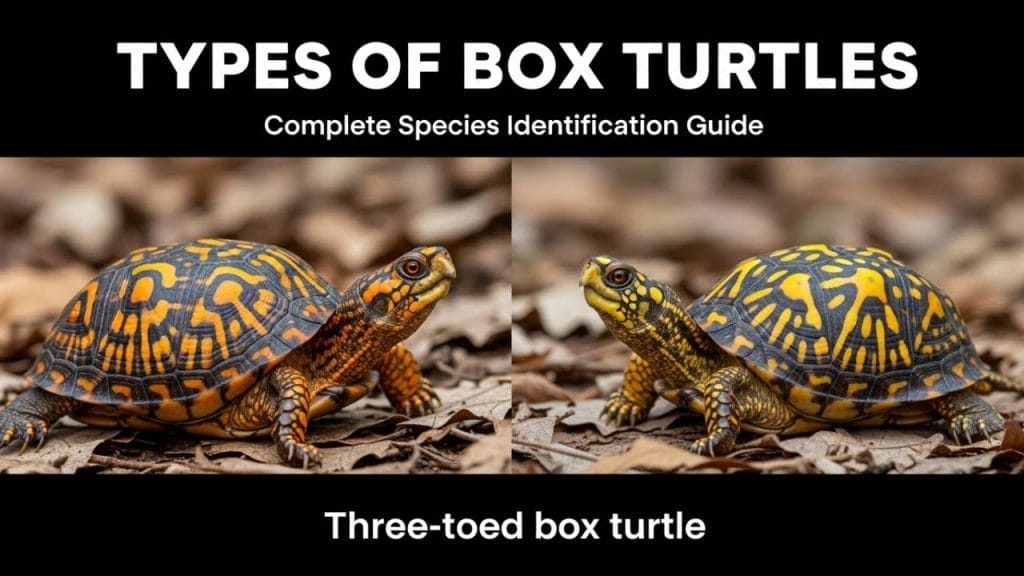
Box Turtles
They live forever (50-100 years easily) and their growth rings become unreadable after about 10-12 years.
After 20 years? Good luck. They’re just “old.”
Tortoises
Many species don’t reach maturity until their late teens or early twenties.
Their shells often pyramid if they had poor nutrition when young, which can confuse age estimates.
Shell wear tends to be more pronounced because they’re terrestrial and scraping against rocks constantly.
Sea Turtles
These are the hardest to age. They don’t retain growth rings like land turtles, and their size varies wildly based on habitat and food availability.
Scientists use mark-recapture studies that can span decades, or skeletochronology on stranded individuals.
For a live sea turtle? You basically can’t tell its age at all without extensive research data.
The Reality Check
Unless you know the hatch date, you’re never getting an exact age.
What you can do:
- Use size charts to get a rough range for juveniles
- Check for sexual maturity signs to know if it’s an adult
- Count shell rings on young turtles (under 6-8 years) for a ballpark guess
- Combine multiple methods for better accuracy
- Accept that “young adult” versus “old adult” might be the best you’ll get
What you can’t do:
- Count rings and get an exact year
- Look at shell wear and know precise age
- Use any single method reliably for turtles over 10 years old

About Author
Muntaseer Rahman started keeping pet turtles back in 2013. He also owns the largest Turtle & Tortoise Facebook community in Bangladesh. These days he is mostly active on Facebook.