The Ultimate Guide to Determining a Turtle’s Gender [For Beginners]
This post was created with help from AI tools and carefully reviewed by a human (Muntaseer Rahman). For more on how we use AI on this site, check out our Editorial Policy.
So you’ve got a turtle, and you’re staring at it like it’s supposed to tell you its name and pronouns.
Yeah, good luck with that.
Unlike your dog who’s very obviously a boy or your cat who definitely acts like she owns the place, turtles keep their gender cards close to their shell.
There’s no obvious external sign screaming “I’m male!” or “Female here!”
But here’s the thing: with some patience and a little detective work, you absolutely can figure it out.
Let’s break down exactly how to tell if your turtle is a boy or a girl, with the latest science backing us up.
Turtle Gender Identification Chart

For a printable version of this amazing visual chart, click here!
Why It’s So Hard to Tell (And Why That’s Totally Normal)
First off, don’t beat yourself up if you’ve been calling your turtle “buddy” for three years only to find out she’s laying eggs.
Turtles don’t have external genitalia like mammals do.
Everything’s tucked away inside, which makes perfect sense from an evolutionary standpoint—imagine trying to swim with external parts dangling around.
Plus, baby turtles and juveniles are basically impossible to sex.
Most species need to be at least 3-5 years old before their gender characteristics become obvious enough to identify.
This Hilarious Turtle Book Might Know Your Pet Better Than You Do

Let’s be real—most turtle care guides feel like reading a textbook written by a sleep-deprived zookeeper.
This one’s not that.
Told from the snarky point of view of a grumpy, judgmental turtle, 21 Turtle Truths You’ll Never Read in a Care Guide is packed with sarcasm, sass, and surprisingly useful insights.
And hey—you don’t have to commit to the whole thing just yet.
Grab 2 free truths from the ebook and get a taste of what your turtle really thinks about your setup, your food choices, and that weird plastic palm tree.
It’s funny, it’s honest, and if you’ve ever owned a turtle who glares at you like you’re the problem—you’ll feel seen.
The Breakthrough Science (This Is Actually Cool)
Here’s where things get wild.
Scientists recently figured out how to determine turtle gender using a simple blood test.
Researchers discovered that a hormone called anti-Müllerian hormone (AMH) appears in the blood of male hatchlings but not females, making it possible to identify sex with nearly 100% accuracy.
This is huge because before this, scientists had to either sacrifice turtles to examine their organs or wait years for them to mature.
Now they can take a tiny blood sample and know immediately.
But unless you’re running a conservation program, you probably don’t have access to a turtle hormone testing lab in your garage.
So let’s get to the practical stuff you can actually use.
The Decision Table Method
Here’s a quick reference to help you determine your turtle’s gender:
| Question | Male Answer | Female Answer |
|---|---|---|
| Is the tail longer than the shell edge? | Yes | No |
| Does the plastron curve inward? | Yes | No |
| Are the front claws noticeably long? | Yes | No |
| Is the turtle notably larger than others of the same age? | No | Potentially Yes |
| During breeding season, does the turtle roam and bite? | Potentially Yes | No |
| Where is the cloaca located? | Near tail tip | Near body/shell |
If most of your answers land in one column, you’ve probably got your answer.
The 7 Best Ways to Identify Your Turtle’s Gender
None of these methods work perfectly on their own.
You need to combine at least 2-3 of them to get an accurate answer.
Think of it like a puzzle where you need multiple pieces to see the full picture.

Check the Tail (Most Reliable Method)
This is your best bet for identifying gender.
Males have longer, thicker tails that taper to a point.
Their tails are beefier because they house the reproductive organs inside.
Females have shorter, stubbier tails that look more like an afterthought.
The difference is pretty obvious once you know what you’re looking for—it’s like comparing a baseball bat to a pencil.

Look at the Cloaca Position
The cloaca is the vent underneath the tail where everything exits—waste, eggs, you name it.
In males, the cloaca is located further down the tail, closer to the tip, while in females it sits much closer to the body at the base of the tail.
If you gently press above the tail near the cloaca on a male, he might extend his reddish-pink penis.
Yeah, it’s as awkward as it sounds.
But it’s also a definitive answer.

Examine the Plastron (Belly Shell)
Flip your turtle over carefully (and quickly, they hate this).
Males have a concave plastron that curves inward.
This isn’t random design—the concave shape helps them mount females during mating without sliding off.
Females have flat plastrons that provide more room for developing eggs inside.
Some females might have a very slight concavity, so don’t rely on this alone.

Check the Front Claws
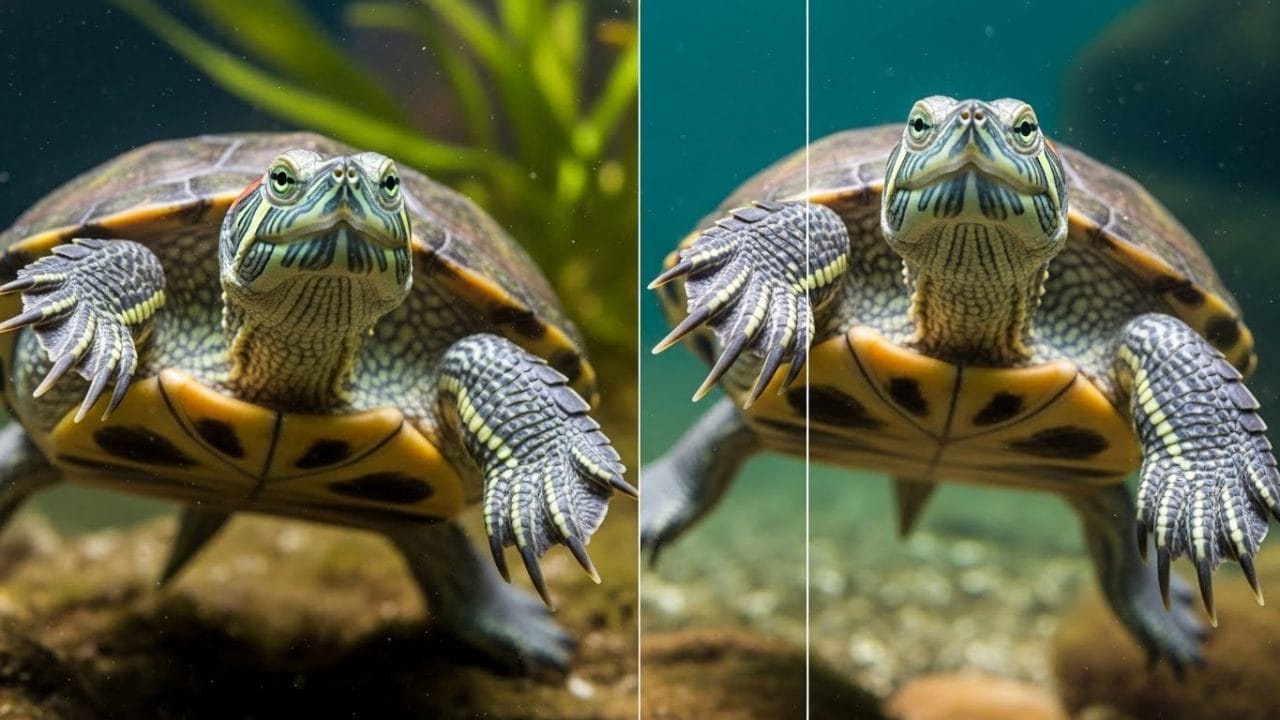
In many species, especially red-eared sliders and painted turtles, males have noticeably longer front claws.
They use these during courtship, stroking the female’s face to see if she’s interested in mating.
It’s basically the turtle version of sliding into someone’s DMs.
Females have shorter, more practical claws since they’re not trying to impress anyone.
Compare Sizes (Only Works with Adults)
In most aquatic turtle species, females grow larger than males.
Female red-eared sliders can reach 10-13 inches, while males max out around 8-10 inches.
The size difference exists because females need more body mass to produce and carry eggs.
But here’s the catch: this only works if you know your turtle’s age and species.
A young female might be smaller than an old male, so size alone tells you nothing.
Species-Specific Color Differences
Some species have gender-specific colors that make identification easier.
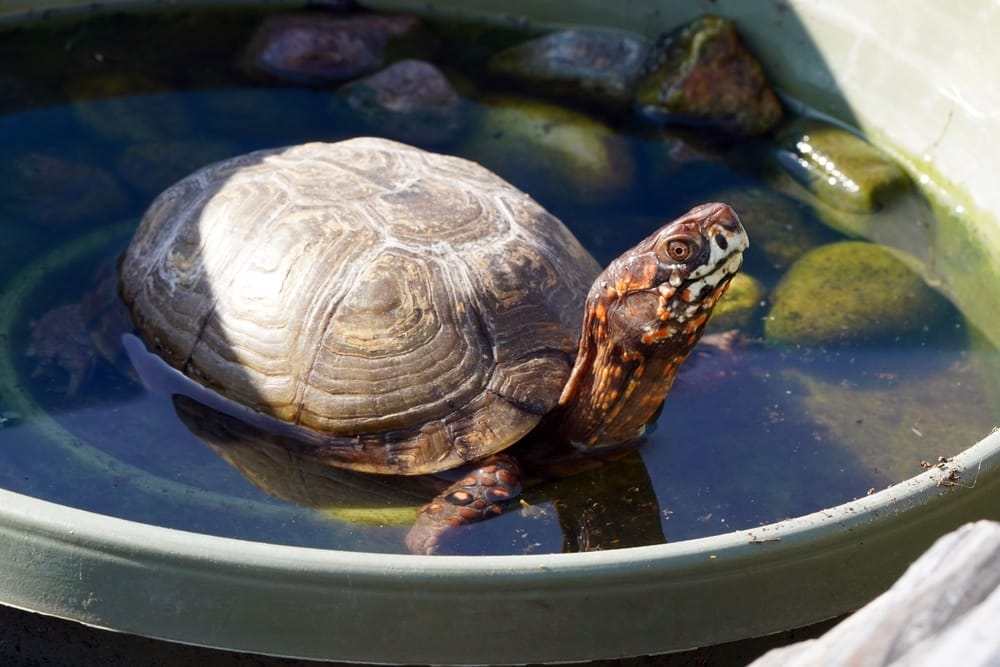
Male American box turtles typically have red or orange eyes, while females have yellow or brown eyes.
But before you start calling your turtle a boy based on eye color alone—stop.
This isn’t reliable across all species, and some females have bright red eyes too.
Male sun turtles have a blue shade on their underbellies that females lack.
As male red-eared sliders mature, they develop a darker, almost blackish coloration that’s more prominent than in females.

Shell Shape and Length
Female turtles generally have slightly longer shells than males when fully grown.
The carapace (top shell) of males might have a small notch at the back that looks like the letter “V.”
This notch helps accommodate the tail during mating.
But honestly, this is one of the subtler differences and shouldn’t be your primary method.

How to Tell Gender in Baby Turtles (Spoiler: You Probably Can’t)
If you’ve got a hatchling or juvenile, I have bad news.
It’s nearly impossible to accurately determine the sex of a baby turtle without laboratory testing.
The physical differences we talked about don’t develop until sexual maturity, which takes years.
You can make educated guesses based on tail length and claw size, but you’ll be wrong a lot.
Your best bet? Name them something gender-neutral and wait it out.
The Climate Change Problem Nobody’s Talking About
Here’s where things get legitimately scary.
Turtle gender is determined by temperature during egg incubation—eggs that incubate below 27.7°C (81.86°F) produce males, while eggs above 31°C (88.8°F) produce females.
This is called temperature-dependent sex determination (TSD).
Recent research from Raine Island, Australia—one of the world’s largest green sea turtle nesting grounds—found that female hatchlings now outnumber males by 116 to 1, with over 99% of young turtles born in the last 20 years being female.
Yeah, you read that right. 116 females for every 1 male.
A global study of 64 nesting sites found that 57 sites showed female-skewed ratios, with 17 sites producing over 90% female hatchlings.
The scary part? This isn’t just a recent phenomenon from climate change.
The study found no direct correlation between recent warming and sex ratios, suggesting these imbalances have persisted at some sites for decades, influenced by factors like nest depth, sand color, rainfall, and shading.
But climate change is definitely making it worse.
Without enough males, these populations can’t sustain themselves long-term.
We’re talking potential extinction for some turtle species if we don’t figure this out.
Scientists are testing solutions like adding shade to nesting beaches and watering nests to cool them down.
Early results look promising, but we need to scale these efforts fast.
Species-Specific Gender Identification
Red-Eared Sliders (The Easy Mode)
These are probably the easiest turtles to sex.
Males have significantly longer front claws that look almost comical.
They also develop darker coloration as they age.
Females grow noticeably larger, reaching 10-13 inches versus the male’s 8-10 inches.
The tail difference is super obvious—males have thick, long tails while females have short, stubby ones.
Painted Turtles
The identification process is almost identical to red-eared sliders.
Females take 6-10 years to reach sexual maturity, while males only need 3-5 years.
Adult females have plastrons measuring 4-5 inches, while males max out at 3-4 inches.
Males have longer front claws and thicker tails.
The concave plastron in males is pretty obvious once they’re mature.
Box Turtles (The Colorful Ones)
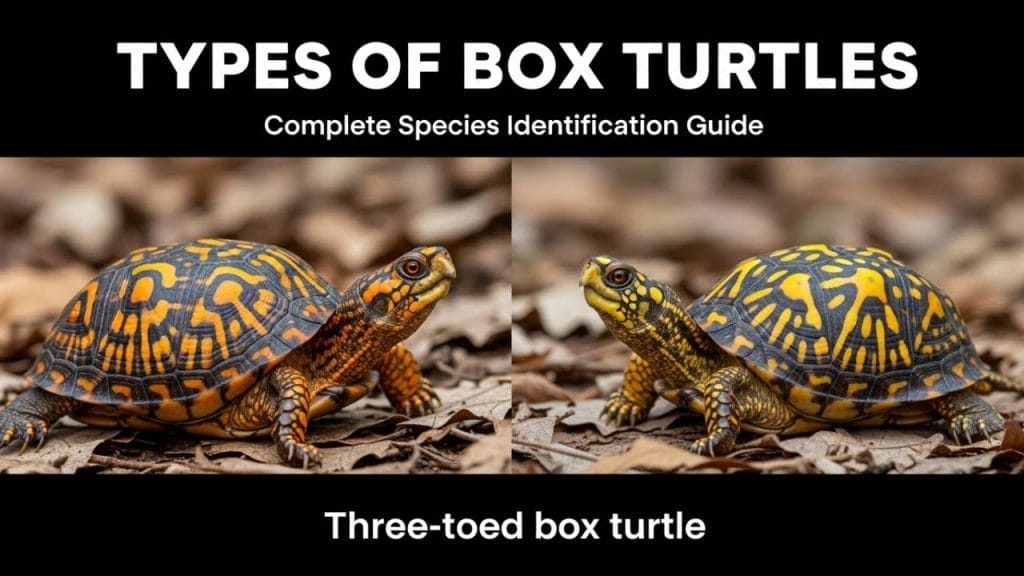
Male box turtles are typically more colorful with vibrant orange, red, white, and black markings.
They usually have red or orange eyes, while females have brown eyes.
But remember—this isn’t 100% reliable since some females have red eyes too.
Males have a concave plastron, while females have flat undersides.
The males’ back toes are wider and more claw-like, almost like small talons.
African Sideneck Turtles
Wait until they’re 7-12 inches long before trying to sex them.
Males have longer, thicker tails with the vent closer to the tail’s end.
Females grow larger overall, reaching 7-12 inches compared to males’ average of 10 inches.
The plastron difference is the same—concave for males, flat for females.
Mississippi Map Turtles
Females absolutely dwarf males in this species.
Females can grow 6-10 inches while males only reach 3.5-5 inches.
Males have longer, sharper claws on their front feet.
The cloaca position and plastron shape follow the same patterns as other species.
Musk Turtles
The most striking difference? Males’ tails are about three times longer than females’.
Males often tuck their tails sideways under their shell because they’re so long.
Females have very short tails that don’t need any tucking.
Common Mistakes People Make
Relying on Eye Color Alone
Stop it. Just stop.
Yes, some male box turtles have red eyes, but so do many females.
Eye color is a terrible single indicator, and you’ll be wrong more often than right.
Assuming Size Equals Gender
Unless your turtle is fully grown AND you know exactly how old it is, size tells you nothing definitive.
A young female will be smaller than an old male.
Trying to Sex Baby Turtles
You’re wasting your time.
Hatchlings don’t have developed gender characteristics yet.
Wait until they’re at least 3-5 years old before attempting identification.
Looking at Just One Characteristic
This is the biggest mistake.
You need to check multiple features—tail, claws, plastron, size—and look for patterns.
One trait might be ambiguous, but three traits pointing the same direction? That’s your answer.
When to See a Vet
If you’ve checked everything and you’re still not sure, take your turtle to a reptile veterinarian.
Vets can perform a procedure called probing where they gently insert a lubricated cotton swab into the cloaca.
Males will often exteriorize their hemipenes (reproductive organs) during this process.
It’s quick, minimally invasive, and gives you a definitive answer.
Plus, a vet check-up is never a bad idea anyway.
Why Knowing Your Turtle’s Gender Actually Matters
This isn’t just about picking the right name (though that’s important too).
If you’re keeping multiple turtles, you need to know genders to avoid aggression issues.
Males can be territorial with other males, leading to stress and injuries.
Female turtles can lay eggs even without a male present, similar to chickens.
If your “male” turtle suddenly starts digging and laying eggs, surprise! She’s been a girl this whole time.
Knowing the gender helps you provide appropriate care during breeding season.
For breeding programs, accurate gender identification is critical for maintaining healthy populations.
And with climate change threatening wild turtle populations, every conservation effort counts.
The Bottom Line
Determining turtle gender takes patience, observation, and usually a combination of methods.
Check the tail length and thickness—that’s your most reliable indicator.
Look at the cloaca position, examine the plastron shape, and compare claw lengths.
Put all these pieces together, and you’ll have your answer.
For baby turtles, save yourself the headache and just wait until they’re older.
And remember, with climate change wreaking havoc on wild turtle populations, understanding gender determination isn’t just academic curiosity.
It’s a critical tool for conservation.
Your pet turtle might be safe in their tank, but their wild cousins are facing a real crisis.
Support turtle conservation efforts when you can, because these ancient creatures have survived for over 100 million years—it would be pretty stupid if we let them vanish on our watch.
Now go check your turtle’s tail and finally settle this mystery.

About Author
Muntaseer Rahman started keeping pet turtles back in 2013. He also owns the largest Turtle & Tortoise Facebook community in Bangladesh. These days he is mostly active on Facebook.