Turtle vs. Tortoise vs. Terrapin: What’s the Actual Difference?

This post was created with help from AI tools and carefully reviewed by a human (Muntaseer Rahman). For more on how we use AI on this site, check out our Editorial Policy.
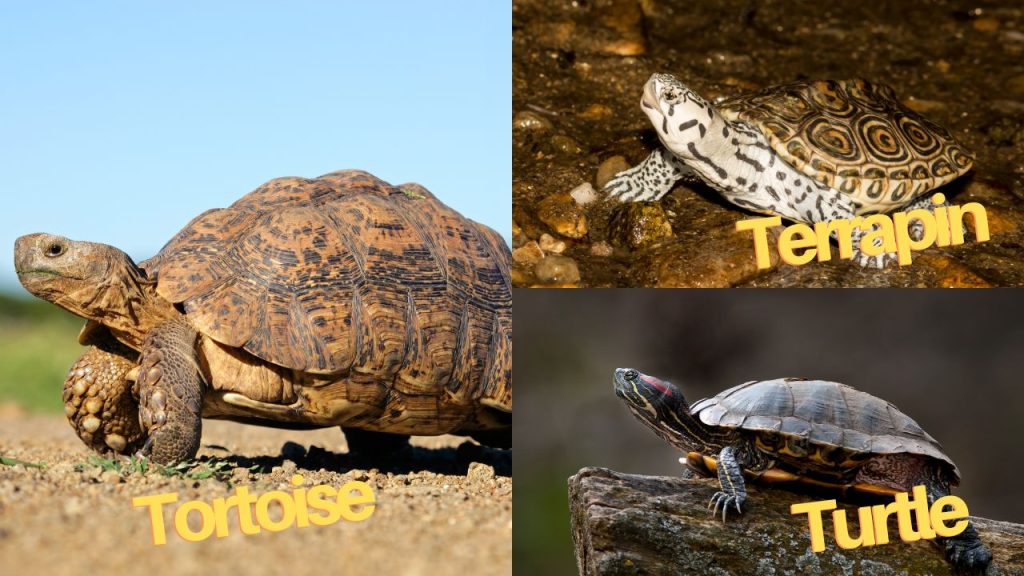
You just saw a shelled reptile at the pet store. You called it a turtle. The guy next to you called it a terrapin. The store label says tortoise. You’re all pointing at the same animal and somehow all wrong.
Welcome to the most confusing naming situation in the reptile world.
Here’s the good news: once you know the three key differences, you’ll never mix them up again. And you’ll also know exactly what kind of enclosure, diet, and care your pet actually needs — because getting this wrong can seriously hurt them.
Let’s sort it out.
The Short Answer (For the Impatient)
| Feature | Turtle | Terrapin | Tortoise |
|---|---|---|---|
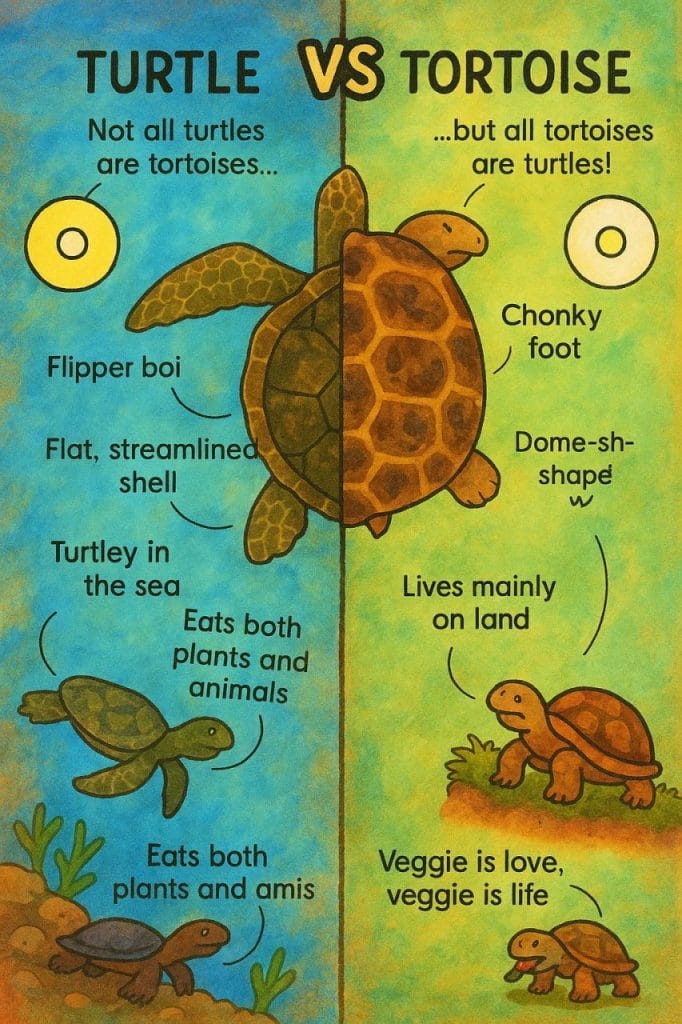
| Habitat | Saltwater/ocean | Freshwater or brackish water | Land only |
| Time in water | Almost all the time | About 50/50 | Rarely (just to drink or soak) |
| Feet/Limbs | Flippers | Webbed feet with claws | Stubby, elephant-like legs |
| Shell shape | Flat and streamlined | Slightly domed, somewhat flat | Tall and dome-shaped |
| Diet | Omnivore | Omnivore | Mostly herbivore |
| Lifespan | ~50–80 years | ~20–40 years | 80–150+ years |
| Size | Can get very large (leatherback up to 700 kg) | Generally small to medium | Small to enormous (Galapagos up to 417 kg) |
| Can they swim? | Yes — built for it | Yes — decent swimmers | No — will drown in deep water |
Wait, Are They Even Different Animals?
Technically? Kind of, but not really.
All three belong to the order Testudines — the scientific family that covers every shelled reptile on the planet. Scientists call all of them chelonians, from the Greek word khelone meaning “interlocking shields.”
Here’s the plot twist that trips everyone up: a tortoise is technically a turtle, but a turtle is not necessarily a tortoise.
Think of it like this. Every tiger is a cat. But not every cat is a tiger. Same logic.
Tortoises belong to a specific subfamily called Testudinidae within the broader turtle order. Terrapins are also technically turtles — just semi-aquatic ones. The names are really about where they live, not entirely separate species.
And to make things messier — the words mean different things depending on where you live.
In the US, “turtle” is used loosely for almost everything aquatic or semi-aquatic. In the UK, “turtle” specifically means sea turtles, “terrapin” means freshwater pet turtles (like red-eared sliders), and “tortoise” means land-dwellers. In Australia, basically everything that isn’t a sea turtle gets called a tortoise.
No wonder people are confused.
This Hilarious Turtle Book Might Know Your Pet Better Than You Do
Let’s be real—most turtle care guides feel like reading a textbook written by a sleep-deprived zookeeper.
This one’s not that.
Told from the snarky point of view of a grumpy, judgmental turtle, 21 Turtle Truths You’ll Never Read in a Care Guide is packed with sarcasm, sass, and surprisingly useful insights.
And hey—you don’t have to commit to the whole thing just yet.
Grab 2 free truths from the ebook and get a taste of what your turtle really thinks about your setup, your food choices, and that weird plastic palm tree.
It’s funny, it’s honest, and if you’ve ever owned a turtle who glares at you like you’re the problem—you’ll feel seen.
So What Actually Makes Them Different?
1. Where They Live
This is the big one. Everything else — their legs, their shell, their diet — follows from where they call home.
Turtles live in the ocean.
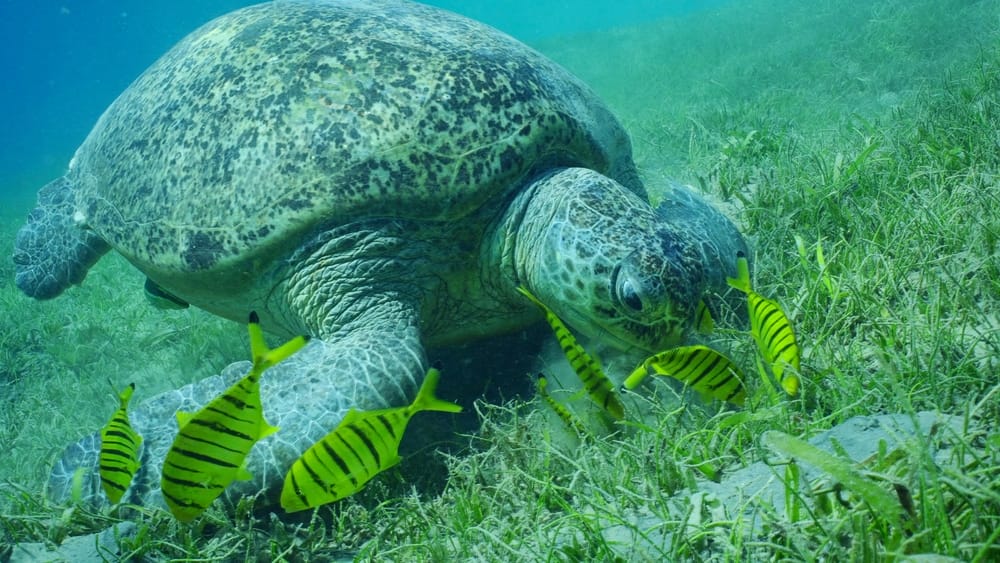
Sea turtles spend almost their entire lives underwater. They only come to land to lay eggs, then go straight back. Their whole body is built for saltwater: flat shells to cut through currents, powerful front flippers for long-distance swimming, and the ability to hold their breath for hours.
The leatherback sea turtle — the largest of them all — can weigh up to 700 kg. For context, that’s heavier than most cars.
Terrapins live in freshwater or brackish water.
Brackish water is that slightly salty mix you find in marshes, estuaries, and coastal swamps — not quite ocean, not quite fresh. Terrapins are the middle child of the chelonian world: at home in the water, but they also spend real time on land basking, moving between water bodies, or nesting.
Expect to find them near ponds, rivers, and tidal creeks. The diamondback terrapin is actually the only turtle species that lives exclusively in brackish water, and it’s Maryland’s official state reptile.
Tortoises live on land. Full stop.
Put a tortoise in deep water and it will drown — it has no flippers, poor buoyancy, and a heavy dome shell that works against it. They’ll soak in a shallow dish or occasionally wade through a puddle, but swimming? Not a chance.
Tortoises live everywhere from deserts to forests to grasslands across Asia, Africa, Europe, and the Americas. Their bodies are entirely adapted for walking, digging, and surviving dry heat.

2. Their Feet and Limbs
You can identify which of the three you’re looking at just by glancing at the feet.
Turtles have flippers.
Sea turtle front limbs are long, powerful, and paddle-shaped. They don’t walk so much as haul themselves onto a beach when absolutely necessary. Their streamlined shape means less drag in the water — they can cover serious distance in the ocean.
Terrapins have webbed feet with claws.
Webbing between the toes helps them swim, but they still have proper legs — not flippers. The claws are sharp and functional for climbing logs, rocks, and getting from one water source to another. And yes, those claws and that jaw can do real damage. People have lost fingers to a properly annoyed terrapin. Not a joke.
Tortoises have thick, stumpy legs.
Think of a tiny elephant foot. Tortoises have round, heavy-duty legs built for walking on hard ground and digging burrows. No webbing, no flippers — just solid legs that can carry their entire body weight across rough terrain.
3. Shell Shape
The shell tells you a lot before you even look at the feet.
Turtle shells are flat and streamlined.
Less drag = faster swimming = more energy-efficient travel across open ocean. The tradeoff is that a flat shell means they can’t fully retract their head and flippers inside it. Their speed is their defense.
Terrapin shells are a mix — slightly domed but still fairly flat. They can partially retract their head, though not as completely as a tortoise can. Some species can only retract sideways rather than straight back.
Tortoise shells are tall, thick, and dome-shaped.
They don’t need to be streamlined. They need to be protective. That high dome creates space inside for the tortoise to fully pull in its head, legs, and tail when threatened. It’s basically a personal fortress.
One important fact that gets overlooked: the shell is part of their body, not a house they live in. It’s made up of 59 to 61 bones fused to their spine and ribcage. They can feel pressure through it — including pain. A cracked shell is a serious injury, not just cosmetic damage.
4. What They Eat
Tortoises are mostly herbivores.
In the wild, they eat whatever plants are available — grasses, shrubs, fruit, cactus pads. Pet tortoises especially can become picky eaters if they’re spoiled, which creates nutritional gaps. They also can’t produce enough vitamin D3 without proper UV exposure, which is why captive tortoises often need supplementation.
A quick note: most tortoises are herbivores, but not all. Redfoot tortoises, for example, are omnivores and will occasionally eat protein. And all chelonians are opportunistic — if food is scarce, they’ll eat what they can, including bones for calcium.
Turtles are omnivores.
Sea turtles eat jellyfish, sea sponges, seaweed, and small invertebrates depending on the species. Freshwater turtles eat a mix of plants, insects, and small fish. Young turtles lean heavier on protein because they need it for muscle and bone development — as they mature, their diet shifts toward more plant matter.
Terrapins are also omnivores, but lean more carnivorous than turtles in many cases. They eat mollusks, small fish, crabs, insects, aquatic plants, and pretty much anything they can catch. The diamondback terrapin, for instance, is primarily carnivorous — mussels, crabs, and clams are its staples.
5. Lifespan
This is where things get genuinely wild.
Terrapins live the shortest of the three — typically 20 to 40 years in good conditions. A well-kept red-eared slider might push past 40 with proper care, but that’s the ballpark.
Sea turtles live around 50 to 80 years, though exact data is hard to confirm given how difficult they are to study in the wild.
Tortoises are in a different league entirely.
Most tortoise species live 80 to 100+ years as a baseline. Giant tortoises regularly exceed 150 years. Jonathan, a Seychelles giant tortoise living on the island of St. Helena, hatched around 1832 — making him roughly 193 years old as of 2025. He is the oldest known living land animal on Earth.
The biological reason for this is legitimately fascinating. Tortoises exhibit something called negligible senescence — their bodies age so slowly that the biological decline is almost unmeasurable. A 90-year-old tortoise can still reproduce. Their cells don’t break down the same way mammal cells do.
Getting a tortoise as a pet is a multigenerational commitment. Your grandchildren might inherit it.
The Box Turtle Problem
You were probably waiting for this one.
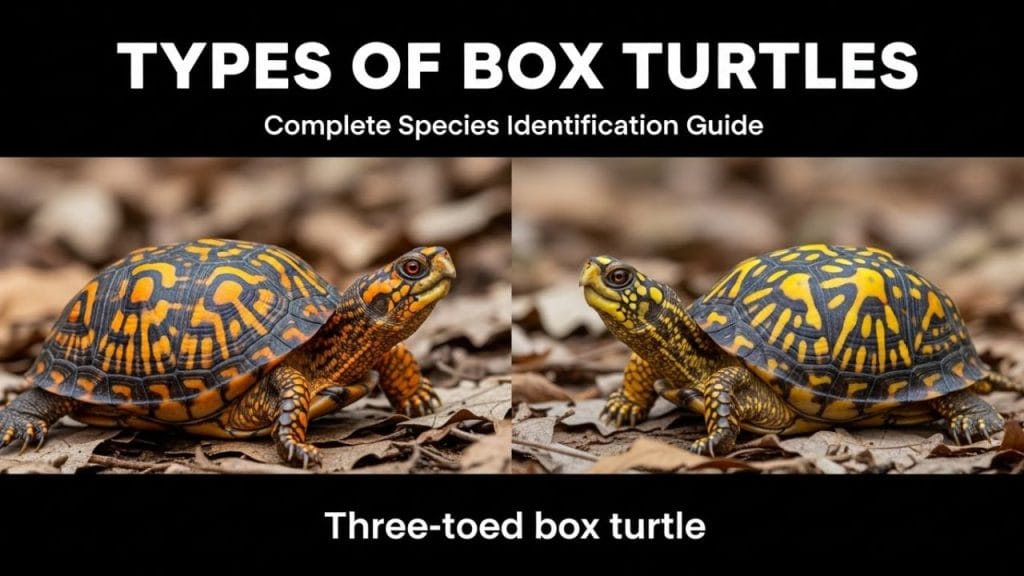
Box turtles look exactly like tortoises. They have a domed shell, they live mostly on land, they’re slow, and they’re found in North America. By every visual cue, you’d call it a tortoise.
But it’s not. It’s a turtle — specifically a freshwater turtle that happens to live on land. It’s more closely related to pond turtles than to any tortoise species.
This is the exception that proves the rule. The water/land rule is a great starting point, but not absolute. When in doubt, look up the exact species rather than relying on appearance alone.
How to Tell Them Apart in Real Life
If you’re standing in front of a chelonian and want to figure out what you’ve got:
Look at the feet first. Flippers = sea turtle. Webbed feet with claws = terrapin. Stumpy, round feet = tortoise.
Look at the shell. Very flat and smooth = sea turtle. Tall dome = tortoise. Somewhere in the middle = probably a terrapin.
Look at where it is. Ocean or beach = turtle. Pond, swamp, or brackish creek = terrapin. Dry land, desert, grassland = tortoise.
Check if it can swim. If it’s panicking in water, it’s probably a tortoise.
Why This Matters If You’re Getting One as a Pet
Getting the identification wrong doesn’t just mean calling it the wrong name. It means building the completely wrong home for it.
A terrapin like a red-eared slider needs a large aquarium with powerful filtration — they produce significantly more waste than fish and need clean water to stay healthy. They also need a basking area with UVB (my pick: Zoo Med ReptiSun 10.0) lighting and a water heater.
A tortoise needs a dry land enclosure with substrate it can dig into, a UVB light, and heat — but no water tank, no deep water, and no filtration system.
Put a tortoise in a water tank and you have a drowning risk. Put a terrapin in a dry terrarium and you have a dehydrated, sick animal within days.
If you’re setting up a habitat, know your species first. Then build accordingly. Not sure where to start? Here’s my guide on whether turtles are good pets for beginners.
The Bottom Line
Here’s what to remember:
- Turtles — ocean, flippers, flat shell, can’t retract their head fully.
- Terrapins — freshwater or brackish, webbed feet, semi-domed shell, spend half their time on land.
- Tortoises — land only, stumpy legs, tall dome shell, will drown in deep water, might outlive your entire family tree.
All three are chelonians. All three have shells fused to their bones. All three are cold-blooded, lay eggs on land, and have hard beaks instead of teeth.
But beyond that — they are genuinely different animals with different needs, different lifespans, and very different ideas about what counts as a good day.

About Author
Muntaseer Rahman started keeping pet turtles back in 2013. He also owns the largest Turtle & Tortoise Facebook community in Bangladesh. These days he is mostly active on Facebook.