Are Softshell Turtles Good To Eat?

This post was created with help from AI tools and carefully reviewed by a human (Muntaseer Rahman). For more on how we use AI on this site, check out our Editorial Policy.
Look, I’m going to be honest with you. I’ve never eaten a turtle. I keep them as pets, so the idea makes me squirm a little.
But I’d be lying if I said people don’t eat softshell turtles. They do. They’ve been doing it for centuries. And from everything I’ve researched and heard from people who have tried it, softshell turtle is apparently one of the best-tasting meats you can get from a reptile.
Yes, softshell turtles are good to eat. The meat is lean, high in protein, and people describe it as a cross between chicken and fish. It’s been a traditional food in Asia for hundreds of years and has a solid following in the southern United States too.
But here’s where it gets complicated. Just because it tastes good doesn’t mean you should go grab one from your local pond. There are real health risks, legal issues, and conservation problems tied to eating softshell turtles.
Let me break it all down.
What Do Softshell Turtles Taste Like?
This is the first thing everyone asks, so let’s get into it.
People who’ve eaten softshell turtle describe the flavor as savory and slightly gamey. Think of it like chicken thigh meat mixed with the texture of fish. Some people compare it to veal. Others say it reminds them of clam or pork.
The truth is, the taste changes depending on which part of the turtle you’re eating. The legs and neck tend to be more gamey. The meat closer to the shell is softer and milder.
In Japan, there’s a famous dish called Suppon. It’s a hot pot made from softshell turtle, and it’s considered a delicacy. People pay serious money for it. The broth is rich, and the meat practically falls apart.
In the southern US, fried softshell turtle is the way to go. You cut the meat into chunks, batter it up, and deep fry it. People on hunting and fishing forums rave about it. One guy on a Texas bowhunting forum put it simply: “Best wild game I’ve ever eaten.”
How It Compares to Other Meats
| Meat | Flavor Profile | Texture |
|---|---|---|
| Softshell turtle | Savory, slightly gamey, mild | Tender, between chicken and fish |
| Chicken thigh | Mild, savory | Firm, juicy |
| Catfish | Mild, slightly sweet | Soft, flaky |
| Frog legs | Mild, chicken-like | Tender, delicate |
| Alligator | Mild, slightly fishy | Firm, chewy |
If you’ve ever eaten frog legs and thought “that’s not bad,” you’d probably enjoy softshell turtle even more.
Nutritional Value of Softshell Turtle Meat
Here’s something that might surprise you. Softshell turtle meat is actually a pretty solid protein source.
Per 100 grams of raw softshell turtle meat, you’re looking at roughly 24.6 grams of protein. That’s on par with chicken breast. And the fat content? Almost nothing. We’re talking about 1.2 grams of fat per 100 grams. That makes it one of the leanest protein sources you can find.
A full cup (about 238 grams) of cooked softshell turtle gives you around 220 calories, 47 grams of protein, and just 9 grams of fat.
Key Nutrients
- Protein: 24.6g per 100g (comparable to chicken breast)
- Calcium: About 20% of your daily recommended value
- Vitamins: A, B1, B2, B6, and B12
- Minerals: Phosphorus, zinc, and iron
- Fat: Very low, making it a lean meat option
- Carbs: Zero
In traditional Chinese medicine, softshell turtle has been used for centuries as a health food. People believe it boosts energy and improves skin health. Whether or not you buy into that, the nutritional profile speaks for itself. It’s a lean, protein-packed meat.
This Hilarious Turtle Book Might Know Your Pet Better Than You Do

Let’s be real—most turtle care guides feel like reading a textbook written by a sleep-deprived zookeeper.
This one’s not that.
Told from the snarky point of view of a grumpy, judgmental turtle, 21 Turtle Truths You’ll Never Read in a Care Guide is packed with sarcasm, sass, and surprisingly useful insights.
And hey—you don’t have to commit to the whole thing just yet.
Grab 2 free truths from the ebook and get a taste of what your turtle really thinks about your setup, your food choices, and that weird plastic palm tree.
It’s funny, it’s honest, and if you’ve ever owned a turtle who glares at you like you’re the problem—you’ll feel seen.
Is It Safe to Eat Softshell Turtle?
Here’s where I need you to pay attention, because this part actually matters.
The meat itself is safe to eat if it’s properly cleaned and cooked to an internal temperature of at least 165°F (74°C). That kills most bacteria and parasites.
But wild-caught softshell turtles carry some real risks.
Salmonella
This is the big one. Salmonella is the most common bacteria found in turtles, including softshell species. You can pick it up just by handling the turtle, let alone eating undercooked meat.
Symptoms include vomiting, diarrhea, stomach cramps, and fever. For healthy adults, it’s usually a rough few days. For kids, elderly people, or anyone with a weak immune system, it can land you in the hospital.
Heavy Metals and Chemical Contamination
Wild softshell turtles live in freshwater rivers, lakes, and streams. If those water sources are polluted, the turtles absorb whatever is in the water.
We’re talking about mercury, lead, cadmium, and pesticide residues. These accumulate in the turtle’s body over time. The older and larger the turtle, the more junk it’s carrying.
Eating contaminated turtle meat can cause long-term health problems, especially if you’re eating it regularly. This isn’t a one-and-done risk. Heavy metals build up in your body too.
Parasites
Wild turtles can carry various internal parasites. Thorough cooking kills them, but if you undercook the meat or eat it raw (some traditional preparations use lightly cooked turtle), you’re rolling the dice.
Bottom Line on Safety
If you’re going to eat softshell turtle, here’s how to minimize risk:
- Buy from a reputable farm, not the guy selling them out of a cooler on the side of the road
- Cook thoroughly to at least 165°F (74°C) internal temperature
- Wash your hands after handling raw turtle meat, just like you would with raw chicken
- Avoid wild-caught turtles from polluted waterways
- Don’t eat it raw or undercooked, no matter what any recipe says
Where Do People Eat Softshell Turtles?
Softshell turtle isn’t some rare, exotic food that only exists in one corner of the world. It’s eaten across multiple continents.
Asia
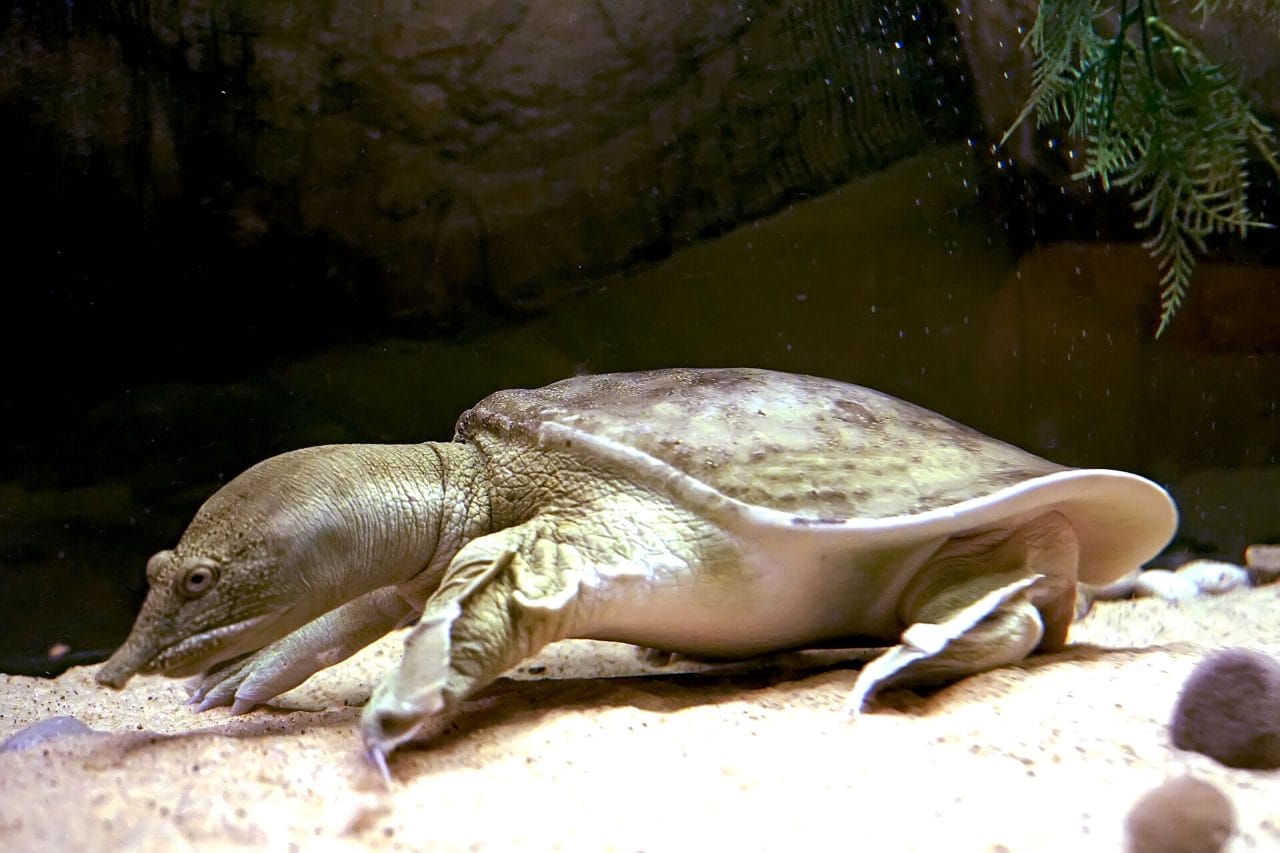
This is the epicenter. China is by far the largest consumer and producer of softshell turtle meat in the world.
The numbers are staggering. China’s softshell turtle farming industry produces around 300,000 metric tons per year, valued at nearly $14.2 billion and supporting over 2 million jobs. The main farming regions are in southern provinces like Guangdong, Guangxi, Hainan, and Zhejiang.
Japan has its Suppon tradition. Vietnam uses softshell turtle in soups and stews. Thailand serves it in curries and grilled dishes. In many parts of Southeast Asia, you’ll find softshell turtle at street markets and high-end restaurants alike.
United States
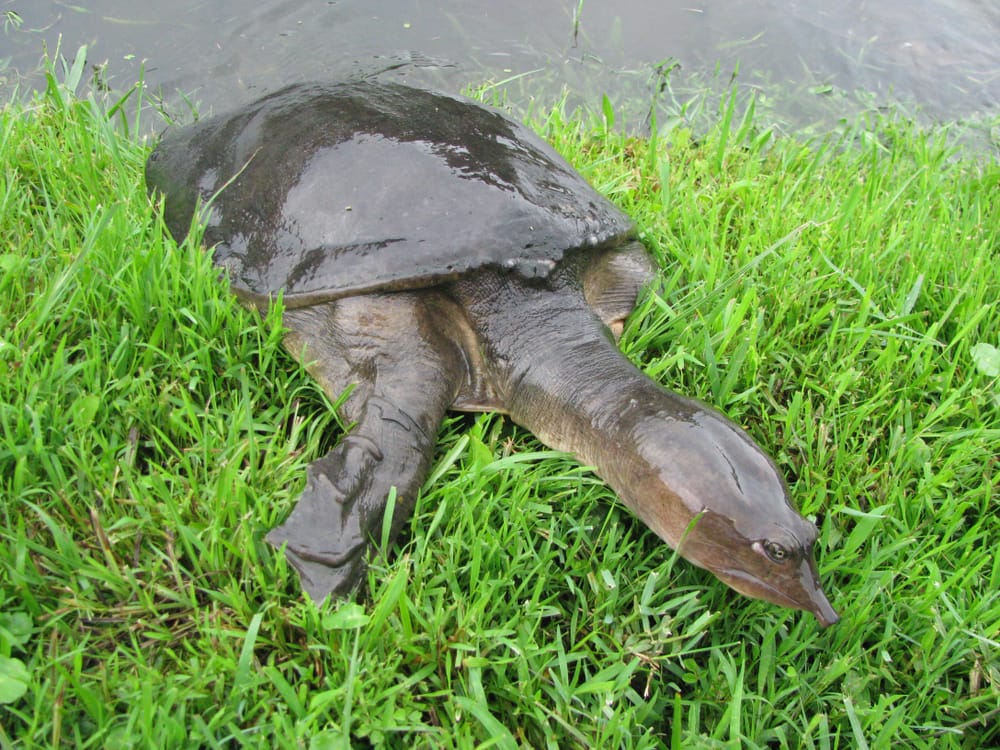
In the southern US, eating softshell turtle has a long history. States like Louisiana, Texas, Florida, and Georgia all have traditions of catching and cooking softshell turtles.
Fried softshell turtle and turtle soup are the most common preparations. Some restaurants in New Orleans and other southern cities still serve turtle soup as a signature dish.
Other Regions
Parts of Africa and the Middle East also consume softshell turtle, though on a smaller scale. The African softshell turtle (Trionyx triunguis) is eaten in some regions along the Nile and in West Africa.
Is It Legal to Catch and Eat Softshell Turtles?
This is where a lot of people get tripped up. The laws around harvesting softshell turtles vary wildly depending on where you live.
US State Regulations
There’s no single federal law that covers softshell turtle harvesting. It’s handled at the state level, and the rules are all over the place.
| State | Key Regulation |
|---|---|
| Florida | No softshell turtles may be taken from the wild May 1 – July 31 (nesting season). Commercial permits allow up to 100 annually |
| California | Softshells can be taken with a sportfishing license, but wild-caught natives cannot be sold |
| Georgia | No more than 10 freshwater turtles (any species combined) without a commercial permit |
| North Carolina | Commercial taking of softshell turtles is illegal |
| Minnesota | Requires a recreational turtle license |
| Texas | Recreational harvest allowed with limits; commercial harvest requires permits |
Always check your state’s wildlife agency website before catching any softshell turtle. Regulations change, and fines for illegal harvesting can be steep.
International Regulations
Several softshell turtle species are protected under CITES (Convention on International Trade in Endangered Species). International trade of certain species requires permits and documentation.
In many Asian countries, regulations exist on paper but enforcement varies. China has tightened its rules on turtle farming since the COVID-19 pandemic, requiring stricter licensing for farms.
How Does Eating Softshell Turtles Affect Wild Populations?
This is the part that bothers me the most, honestly.
Multiple softshell turtle species are endangered or critically endangered. The Yangtze giant softshell turtle (Rafetus swinhoei) has only two known individuals left alive. Two. The black softshell turtle (Nilssonia nigricans) was classified as Extinct in the Wild by the IUCN back in 2002.
And it’s not just the rare species taking the hit.
The Farming Problem
You might think farming solves everything. Grow them on a farm, leave the wild ones alone. Simple, right?
Not really. Here’s the issue.
Many turtle farms rely on wild-caught turtles as breeding stock. Farmers believe wild turtles produce stronger, healthier offspring. So they buy wild softshell turtles at premium prices, which gives poachers a financial incentive to keep catching them.
On top of that, farm-raised turtles sometimes escape into the wild. When they breed with wild populations, it can dilute the genetic diversity of local species. This is a real conservation concern that researchers have documented across multiple studies.
The Scale of the Problem
China’s softshell turtle farming industry went through explosive growth from the 1990s through the 2010s. At its peak, over 300 million turtles were being sold per year from farms alone.
But the industry has been declining since around 2012. Urbanization in key farming regions, stricter regulations, and shifting consumer preferences have all played a role. Still, the demand remains massive.
The pressure on wild populations hasn’t gone away. Wild-caught softshell turtles still fetch higher prices than farmed ones in many markets, and illegal poaching continues to be a problem.
How to Prepare Softshell Turtle (If You’re Going To)
I’m not going to pretend this section doesn’t exist. If you’re going to eat softshell turtle, at least do it safely.
Cleaning
- Remove the head (this is the part I can’t watch)
- Drain the blood completely
- Remove the internal organs
- Peel off the outer skin layer — softshell turtles have a leathery skin that needs to come off
- Wash the meat thoroughly under running water
- Some people soak the meat in salt water for 30 minutes to draw out any remaining blood
Popular Cooking Methods
Fried softshell turtle — Cut into chunks, simmer in salted water with a splash of vinegar for about an hour. Then batter and deep fry until golden. This is the classic southern US method.
Turtle soup — Slow-cook the meat with vegetables, herbs (thyme, rosemary, sage), and stock. The broth gets incredibly rich. This is probably the most popular preparation worldwide.
Grilled — Marinate in garlic, soy sauce, and ginger, then grill over medium heat. Common in Southeast Asian cooking.
Stir-fry — Cut into thin strips and stir-fry with vegetables. Quick and simple.
No matter which method you use, make sure the internal temperature reaches 165°F (74°C). No exceptions.
Should You Actually Eat Softshell Turtle?
Here’s my honest take.
Is softshell turtle good to eat? By all accounts, yes. The meat is lean, nutritious, and apparently delicious.
But should you? That’s a different question.
If you’re buying from a licensed, sustainable farm and you’re in a region where it’s legal, that’s your call. Just know what you’re supporting and where the meat comes from.
If you’re thinking about catching one from a local pond or river, check your state laws first. And think about whether that turtle is better off in the water than on your plate.
Several softshell species are fighting for survival right now. The Yangtze giant softshell turtle is basically functionally extinct. Others aren’t far behind. Every wild turtle taken out of the ecosystem is one less chance for those populations to recover.
I keep turtles. I’ve raised them. I’ve watched them grow from tiny hatchlings into full-grown adults with actual personalities. If you’d rather keep a softshell as a pet than eat one, here’s my guide on the best softshell turtles for pets. So yeah, I’m biased. But the conservation numbers don’t lie.
If you want to try softshell turtle, go for a farm-raised one from a reputable source. Leave the wild ones alone. They need all the help they can get.

About Author
Muntaseer Rahman started keeping pet turtles back in 2013. He also owns the largest Turtle & Tortoise Facebook community in Bangladesh. These days he is mostly active on Facebook.