When Do Snapping Turtles Lay Eggs? Timeline & Nesting Guide
This post was created with help from AI tools and carefully reviewed by a human (Muntaseer Rahman). For more on how we use AI on this site, check out our Editorial Policy.
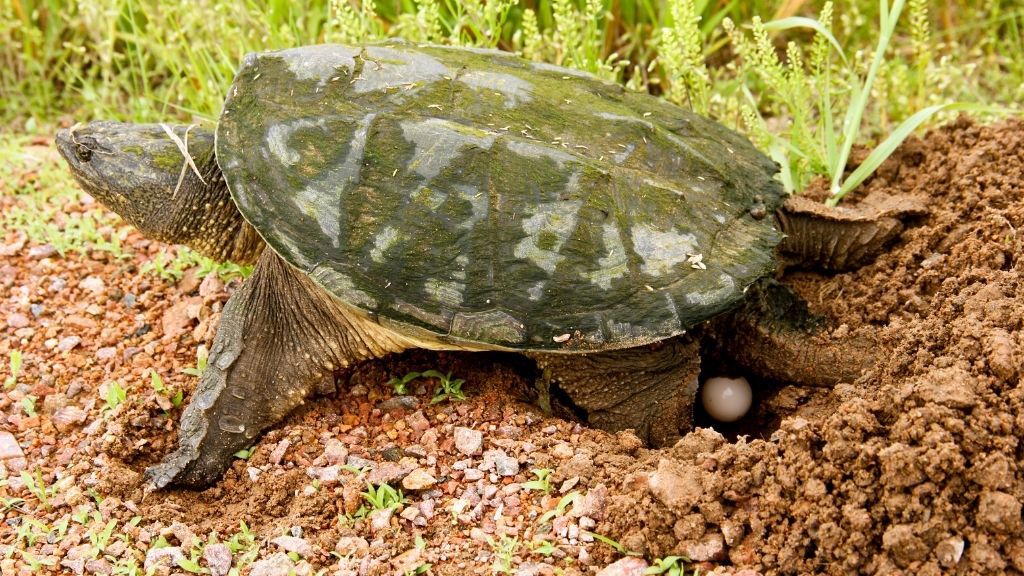
You spot a big, prehistoric-looking turtle hauling itself across your lawn in June, and you just know something is up.
She is not lost. She is house hunting.
Snapping turtles lay their eggs in late spring and early summer, mostly from late May through June. A female digs a nest in sandy or soft soil, drops a clutch of 20 to 40 eggs, covers it up, and walks away. The eggs then incubate on their own for about 75 to 95 days before the babies dig out in late summer or early fall.
That is the short version. Below is the full timeline, what the whole nesting process actually looks like, and exactly what to do if one of these dinosaurs picks your backyard.
Not sure when your turtle eggs will hatch? Try our free Turtle Egg Hatch Calculator for instant predictions!
When Do Snapping Turtles Lay Eggs?
Snapping turtles have one nesting season a year, and it lines up with the warmest stretch of the calendar.
In most of the United States, nesting runs from late May into June, with some activity spilling into early July. In the warmer South it can start as early as April. Up North, where spring drags its feet, it skews toward June.
The reason is simple. Turtles are cold-blooded, and so are their eggs.
The eggs need warm soil to develop, so the mother waits for the ground to heat up before she commits. Lay too early and a cold snap wipes out the clutch.
Mating happens a little earlier, usually from April through the start of summer, peaking in May and June. Here is the wild part.
A female snapping turtle can store sperm for up to three years. That means she can mate once and still lay fertile clutches for several summers in a row, without ever seeing a male again.
As for the time of day, snappers are not picky, but they lean toward early morning and evening. The light is low, the temperature is mild, and there are fewer people and predators around to bother her while she works.
At What Age Do Snapping Turtles Start Laying?
“When” is not always about the calendar. A lot of people really mean, “how old does a female have to be before she lays at all?”
The answer depends heavily on where she lives. Common snapping turtles reach breeding age anywhere from about 5 years in the warm South to 15 to 20 years in the cold North. Warmer water means faster growth, and a female cannot nest until she is big enough.
So a snapper is not a young animal by the time she starts nesting. And once she starts, she can keep laying a clutch a year for decades, since these turtles routinely live 30 to 50 years in the wild.
This Hilarious Turtle Book Might Know Your Pet Better Than You Do

Let’s be real—most turtle care guides feel like reading a textbook written by a sleep-deprived zookeeper.
This one’s not that.
Told from the snarky point of view of a grumpy, judgmental turtle, 21 Turtle Truths You’ll Never Read in a Care Guide is packed with sarcasm, sass, and surprisingly useful insights.
And hey—you don’t have to commit to the whole thing just yet.
Grab 2 free truths from the ebook and get a taste of what your turtle really thinks about your setup, your food choices, and that weird plastic palm tree.
It’s funny, it’s honest, and if you’ve ever owned a turtle who glares at you like you’re the problem—you’ll feel seen.
Snapping Turtle Nesting Timeline At A Glance
Here is the whole season boiled down to a quick reference.
| Stage | When it happens | What is going on |
|---|---|---|
| Mating | April to June (peaks May–June) | Males find females in the water; females can store sperm for years |
| Nesting / laying | Late May to June (April in the South, into July up North) | Female leaves the water, digs a nest, lays 20–40 eggs |
| Incubation | ~75 to 95 days | Eggs develop underground; nest temperature decides sex |
| Hatching | August to early October | Hatchlings break out and race for the nearest water |
Cooler summers push every stage later and stretch incubation out. A hot summer speeds the whole thing up.
How Do You Know A Snapper Is About To Lay?
The biggest giveaway is a large snapping turtle out of the water and on the move over land.
Adult snappers spend almost their whole lives submerged, so a female wandering across a road, a yard, or a gravel bank in June is almost always looking for a nest site.
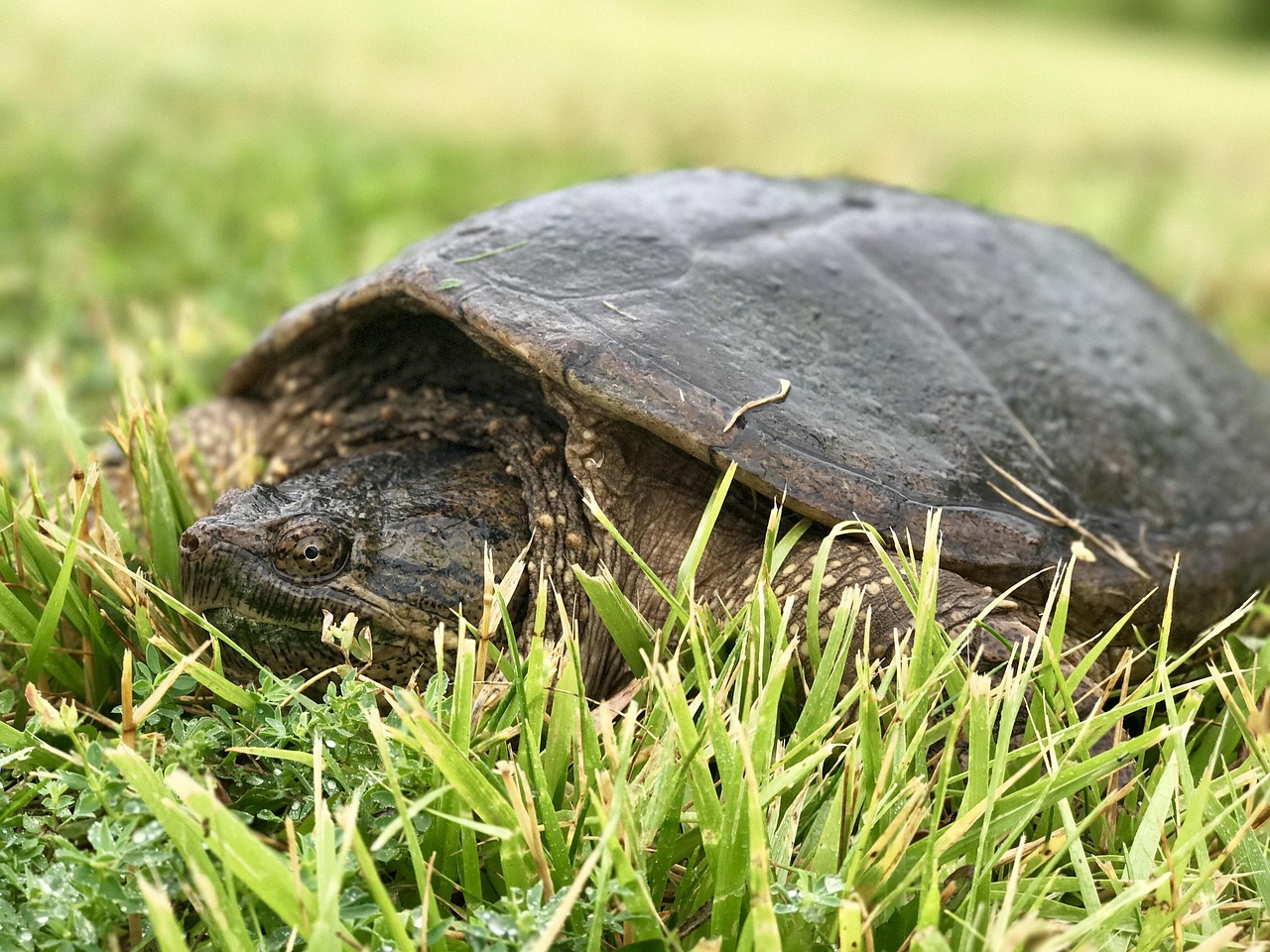
She will often test several spots, digging shallow trial holes before choosing the final one. Her pace looks slow and deliberate, and she may travel surprisingly far from water to find the right ground.
Once she settles on a spot, she gets to work with her hind legs and does not stop until the nest is dug, the eggs are laid, and everything is covered back up.
Where Do Snapping Turtles Lay Their Eggs?
Snapping turtles live in slow-moving water like ponds, marshes, swamps, lakes, and rivers. They spend most of their life buried in soft mud at the bottom.
But eggs cannot survive underwater. They need a steady supply of oxygen and stable warmth, so laying them in the water would drown the embryos.

That is why a female comes onto land to nest. She wants soft, well-drained soil or sand that is easy to dig and gets some sun to warm the eggs.
She usually digs 4 to 7 inches deep, deep enough to hide the clutch from sharp-nosed predators.
Snappers often nest along the bank near their home water. But if the bank does not feel safe, a female will travel up to a mile inland to find better ground.
This is why you sometimes find one nesting in your garden. Freshly turned soil, flower beds, and compost piles are easy digging, and she does not care whose yard it is.
If the dirt is too hard, she has a trick. She urinates on the spot to soften the soil before digging. Not glamorous, but it works.
Do Snapping Turtles Lay Eggs In The Same Place Every Year?
Often, yes.
Females tend to return to the same general nesting area year after year. Once a spot has proven it has the right soil, warmth, and drainage, there is no reason to gamble on somewhere new.
Some researchers also think females are drawn back to areas similar to where they themselves hatched. Either way, if a snapper nested in your yard last June, do not be shocked to see her again this June.
How Many Eggs Does A Snapping Turtle Lay?
A mature female lays one clutch per year, and that clutch usually holds 20 to 40 eggs. Big females can push past that, with some nests recorded holding 80 or more.
Clutch size comes down to body size. The bigger the turtle, the more eggs she can carry and lay.
Laying is not quick, either. A female can spend several hours digging, depositing eggs one by one, and burying the nest before she heads back to the water for good.
And she never comes back to check on them. From the moment she covers the nest, the eggs are entirely on their own.
That is exactly why she lays so many. Roughly 70 to 90 percent of snapping turtle nests are dug up and eaten every year by raccoons, foxes, skunks, dogs, snakes, and birds. Laying dozens of eggs is a numbers game, betting that a few survive.
What Do Snapping Turtle Eggs Look Like?
Snapping turtle eggs look almost exactly like ping-pong balls.
They are round, not oval like many other turtle eggs, with soft, leathery, creamy-white shells roughly 1 to 1.4 inches across. That perfectly spherical shape lets a female pack a lot of them into one nest.

The soft shell is great for fitting the clutch together, but it also makes each egg an easy meal for anything that digs one up.
What About Alligator Snapping Turtles?
So far we have been talking about the common snapping turtle, the one most people find in their yard. But “snapping turtle” also covers the alligator snapping turtle, and its schedule is a little different.

Alligator snappers nest earlier, roughly February through June depending on the region. Mating happens in early spring in Florida and later spring up in the Mississippi Valley.
A few other differences worth knowing:
- Clutch size: about 9 to 40 eggs, similar to the common snapper.
- Nest location: they dig much farther from water, often at least 50 yards inland, to keep the nest from flooding.
- Age to maturity: both sexes mature around 11 to 13 years.
- Incubation: longer than the common snapper, often 100 to 140 days, with hatchlings emerging in early fall.
Both species use the same temperature-based sex determination, which we get into below.
When Do The Eggs Hatch?
Give it about 75 to 95 days from laying to hatching, though the exact timing swings with the weather.
Warm nests hatch faster. Cool, shady, or northern nests take longer, sometimes pushing the babies out in late September or October.
For a deeper breakdown of the full incubation window and what affects it, see our guide on how long it takes for snapping turtle eggs to hatch.
When the time comes, each hatchling uses a tiny egg tooth to slice its way out of the shell. The whole nest may erupt on the same day, or babies may trickle out over several days.
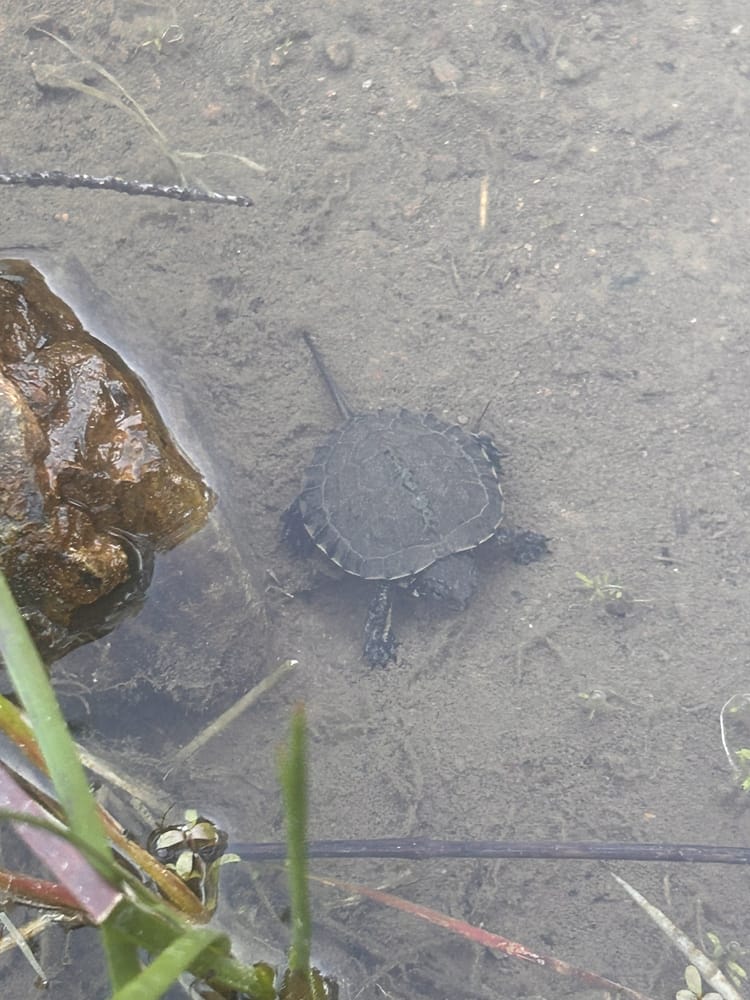
Newly hatched snappers have soft shells and zero armor, which makes the sprint to water the most dangerous trip of their lives. Plenty get picked off by predators before they ever reach it.
Surprise: The Nest Temperature Decides Boy Or Girl
Snapping turtles do not have sex chromosomes like we do. Instead, the temperature inside the nest decides whether each egg becomes male or female. This is called temperature-dependent sex determination.
Here is where a lot of turtle articles get it wrong, because snapping turtles do not follow the simple “cool equals male, hot equals female” rule that red-eared sliders do.
Snappers use what scientists call a Type II pattern, and it looks like this:
| Nest temperature | Likely sex of hatchlings |
|---|---|
| Cool (below ~70°F / 20°C) | Mostly females |
| Middle (~72 to 79°F / 22–26°C) | Mostly males |
| Warm (above ~84°F / 29°C) | Mostly females again |
So both the coldest and the hottest nests tend to produce females, while the moderate middle band produces males. The pivot for males sits right around 76°F (24.5°C).
That U-shaped pattern is why a single warm summer can skew a whole region’s hatchlings female. If you want the full rundown, we cover it in how to determine a snapping turtle’s gender.
What To Do If A Snapping Turtle Lays Eggs In Your Yard
First, do not panic, and do not try to grab the turtle.
Snapping turtles bite hard and fast, and a nesting female is stressed. Give her space and let her finish. She will leave on her own once the nest is done.
If you would rather not handle any of it, you can call your local animal control or a wildlife rehabber for advice. Otherwise, once she is gone, you have three real options for the nest.
One important note before you touch anything. In many states it is illegal to relocate a snapping turtle or dig up and move its eggs without a permit. When in doubt, call your state wildlife agency or a licensed rehabber first. Leaving the nest in place is almost always both the safest and the most legal choice.
Option 1: Leave The Nest Alone
If the nest is out of the way, the easiest and often best choice is to do nothing.
Let nature run its course. The eggs will incubate and the hatchlings will dig out and head for water on their own in a couple of months.
Option 2: Protect The Nest
Snapper numbers are slowly dropping, and most wild nests get raided. If you want to give this clutch a fighting chance, you can guard it.
Place a wire mesh cage or a fenced screen over the nest, anchored so a raccoon cannot flip it. Leave gaps at the bottom edge, or plan to remove it around day 80, so the hatchlings can escape toward water once they emerge.
Also skip the fertilizer and pesticides around the nesting area until the babies are gone. Those chemicals can kill developing eggs and hatchlings.
Option 3: Move The Eggs (Only If You Have To)
Sometimes a nest is in a spot that will not work, like the middle of a driveway or a garden bed you have to dig. Moving eggs is a last resort, and there is one rule you cannot break.
Never rotate or flip a turtle egg. Within a day or two of being laid, the embryo attaches to the top inside of the shell. Turn the egg and you tear it loose, which kills the baby.
Mark the top of each egg with a soft pencil before you touch it, move them one at a time keeping that mark up, and reset them the same way up in soft soil or a simple incubator. When in doubt, call a wildlife rehabber to move them for you.
If You Keep A Snapping Turtle, Watch For Nesting Behavior
Wild snappers get to pick their own nest site. A captive snapping turtle does not, and that can turn into a real problem.
A gravid female in a tank still needs somewhere to dig. If she is restless, pacing, going off her food, and trying to climb out in late spring, she may be carrying eggs and hunting for a place to lay.
Give her a nesting area: a large tub or box filled with 6 or more inches of slightly damp sand and soil that she can actually dig into. Warm it a little and keep it quiet.
Here is why this matters. If a female cannot find a spot to lay, she may hold the eggs too long and become egg-bound, a dangerous condition called dystocia.
Signs of an egg-bound turtle include straining with no eggs produced, sudden lethargy, swelling near the tail, or a female that clearly wants to nest but never does. This is a veterinary emergency. Get her to a reptile vet, who can help her pass the eggs or remove them surgically.
Even a female with no male around can become gravid and need to lay, so this applies whether or not she has ever bred.
Frequently Asked Questions
How long is a snapping turtle pregnant before laying eggs?
Turtles do not carry eggs the way mammals carry young. After mating, it takes roughly 4 to 6 weeks for the eggs to develop and shell up inside the female before she lays them. A female can also store sperm for years and delay laying fertile clutches.
Do snapping turtles lay eggs without a male?
A female can lay eggs without a recent mate, but they will only be fertile if she has stored sperm from an earlier mating. With no stored sperm, she can still drop a clutch, but those eggs are infertile and will never hatch.
How many times a year do snapping turtles lay eggs?
Once. Unlike some turtles that lay multiple clutches per season, a snapping turtle typically lays a single clutch each year, though that one clutch can hold dozens of eggs.
What month do snapping turtle eggs hatch?
Most hatch between August and early October, about 75 to 95 days after they were laid. Warmer nests hatch on the earlier end, cooler northern nests on the later end.
How can I tell if the eggs are fertile?
Give it a few days, then look for chalking. A fertile egg usually develops a bright white band around the middle as the embryo attaches, while an infertile egg stays translucent. You can also candle it by shining a small light through it in a dark room to look for veins. Our full turtle egg care guide walks through both tests in detail.
Should I move a snapping turtle nest in my yard?
Usually no. Leaving it alone gives the eggs the best odds. Only move a nest if it is in real danger, like a walkway or an area you must dig, and never rotate the eggs when you do.
The Bottom Line
If you see a snapping turtle on land in late May or June, she is almost certainly nesting.
She will lay 20 to 40 ping-pong-ball eggs in soft soil, cover them up, and leave them to incubate for about 75 to 95 days. By late summer, if predators do not find them first, a batch of tiny armored dinosaurs claws its way out and makes a run for the water.
Found a nest in your yard? The kindest move is almost always the simplest one: leave it be, keep pets and mowers away, and let the season do its thing.
Seen a snapper nesting near you? Tell us what month it happened and where you are, since nesting timing shifts a lot from North to South.

About Author
Muntaseer Rahman started keeping pet turtles back in 2013. He also owns the largest Turtle & Tortoise Facebook community in Bangladesh. These days he is mostly active on Facebook.