Why Is My Turtle Yawning? (And When You Should Worry)

This post was created with help from AI tools and carefully reviewed by a human (Muntaseer Rahman). For more on how we use AI on this site, check out our Editorial Policy.
Your turtle opening its mouth wide isn’t always a yawn – and it’s usually nothing to worry about. Most of the time, turtles “yawn” to get more oxygen, cool down while basking, or just stretch their jaw muscles.
But here’s the thing: sometimes that wide-open mouth means your turtle is struggling to breathe or dealing with mouth rot. The key is knowing the difference between normal yawning and signs of illness.
In this article, you’ll learn why turtles yawn, how to spot the difference between healthy and sick yawning, and exactly when you need to take action.
Quick Answer: Is Turtle Yawning Normal?
Normal yawning happens when:
- Your turtle is basking under heat lamps (my pick: heat lamp)
- It just woke up or seems tired
- The water temperature is warm (80-85°F)
- It happens occasionally, not constantly
Worry if you see:
- Yawning with mucus from nose or mouth
- Mouth stays open for long periods
- Your turtle stops eating
- Wheezing sounds or tilted swimming
See a vet immediately if:
- White or yellow stuff inside the mouth
- Breathing looks difficult or labored
- Your turtle is lethargic and won’t eat
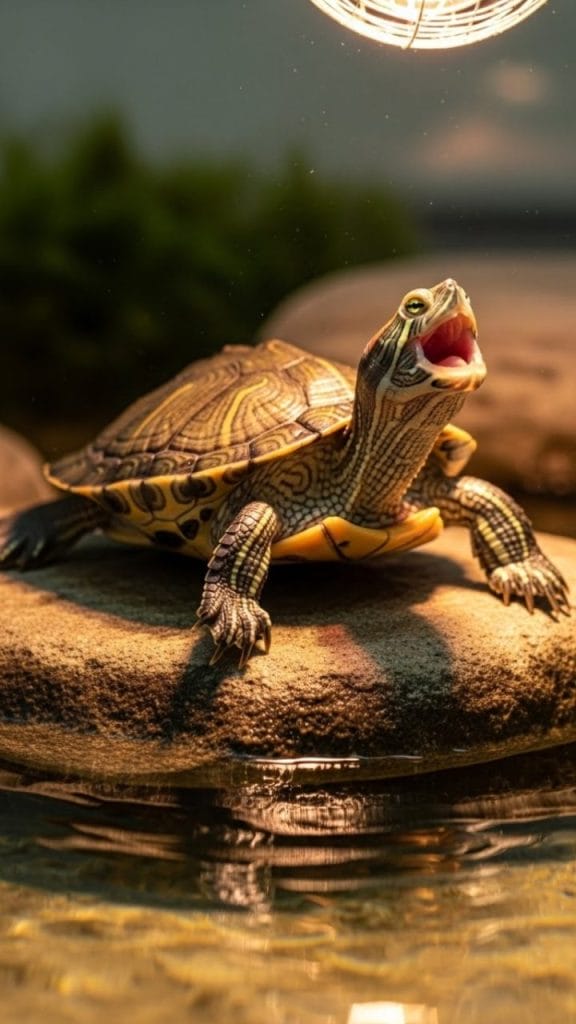
Why Do Turtles Yawn?
They Need More Oxygen
Turtles yawn for the same reason we do – to pull in a big gulp of air.
When they open their mouth wide, way more oxygen gets into their lungs compared to normal breathing. This is especially common after swimming or when they’re warming up on their basking spot.
Think of it like taking a deep breath after holding it underwater. Totally normal.
This is especially important for turtles because their fused ribcage prevents them from expanding their chest like mammals do, making those big yawning gulps the most efficient way to fill their lungs completely.
Hot Weather Makes Them Yawn More
Recent studies show that heat plays a bigger role in yawning than lack of oxygen.
You’ll notice your turtle yawns more when it’s basking under warm lights. The theory? Yawning brings in cool air to help regulate their brain temperature.
It’s like your turtle’s version of turning on a fan.
They’re Stretching Their Jaw
Just like you stretch your arms and neck, turtles stretch their mouth muscles.
In the wild, turtles needed flexible necks and jaws to catch prey quickly. Your pet still has that instinct, even if you’re hand-feeding them pellets.
A quick yawn helps keep those muscles limber.
Physical or Mental Exhaustion
A tired turtle is a yawning turtle.
If your turtle’s environment isn’t right – wrong water temperature, no proper basking area, or poor diet – they’ll get worn out faster. And yawning is one way that shows up.
What your turtle needs to avoid exhaustion:
- Water temperature: 80-85°F [link to water heater recommendations]
- Basking spot: 90-95°F with UVB (my pick: Zoo Med ReptiSun 10.0) lighting [link to basking platform (my pick: floating basking platform) setup]
- Easy access to a stable basking platform
- Quality diet with variety [link to turtle nutrition guide]
They’re Actually Scared (Not Yawning)
Sometimes what looks like yawning is actually gaping – a threat display.
If your turtle opens its mouth wide when you approach or pick it up, they’re saying “back off!” This is super common with new turtles who haven’t gotten used to you yet.
Give them time and consistent feeding schedules. They’ll chill out.
This gaping behavior is one of several defensive strategies turtles use when they can’t retreat into their shells, particularly common in species like snapping turtles that rely on aggressive displays rather than hiding.
This Hilarious Turtle Book Might Know Your Pet Better Than You Do

Let’s be real—most turtle care guides feel like reading a textbook written by a sleep-deprived zookeeper.
This one’s not that.
Told from the snarky point of view of a grumpy, judgmental turtle, 21 Turtle Truths You’ll Never Read in a Care Guide is packed with sarcasm, sass, and surprisingly useful insights.
And hey—you don’t have to commit to the whole thing just yet.
Grab 2 free truths from the ebook and get a taste of what your turtle really thinks about your setup, your food choices, and that weird plastic palm tree.
It’s funny, it’s honest, and if you’ve ever owned a turtle who glares at you like you’re the problem—you’ll feel seen.
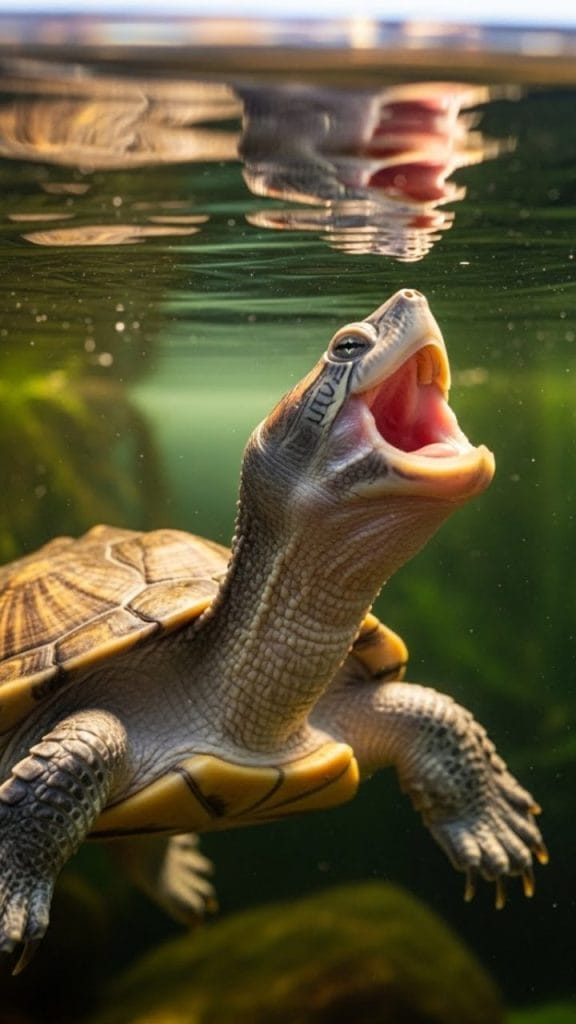
Why Is My Turtle Yawning Underwater?
It’s Probably Not Actually Yawning
Turtles don’t need to yawn underwater because they can’t breathe water through their mouths anyway.
What looks like yawning is usually your turtle drinking water or adjusting its buoyancy. Both involve opening the mouth wide, which is easy to mistake for a yawn.
They’re Begging for Food
Here’s something I see all the time: You walk into the room, your turtle “yawns” underwater while swimming toward you.
They’re not yawning. They’re begging.
Turtles are opportunistic eaters and they’ve figured out that you = food. That mouth-opening is their way of saying “feed me!”
Adjusting Buoyancy
Unlike fish, turtles don’t have swim bladders to control floating and sinking.
Instead, they swallow or release water to change how they float. When they gulp water with their mouth open, they lose a bit of air and can sink deeper.
It’s honestly pretty smart.
Respiratory Infection (This Is Serious)
If your turtle is yawning underwater AND showing other symptoms, it might be struggling to breathe.
Other warning signs to watch for:
- Mucus bubbles from the nose
- Swimming tilted to one side
- Floating when trying to dive
- Not eating for 2+ days
- Wheezing or clicking sounds
If you see these, get to a vet ASAP. Respiratory infections can kill turtles if left untreated.
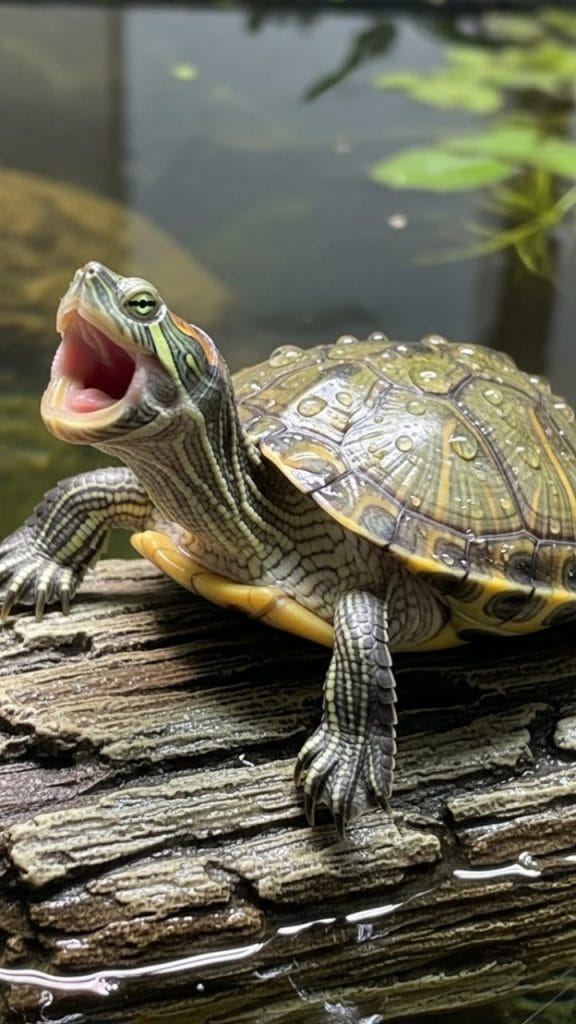
Why Does My Turtle Yawn While Basking?
This is actually the most normal time for turtles to yawn.
When your turtle is basking, its body needs more oxygen to heat up properly. Shallow breathing doesn’t cut it, so they take those big yawning breaths to fill their lungs.
Plus, yawning helps them regulate their body temperature while under those hot basking lights. It’s like their built-in cooling system.
Normal basking behavior:
- Occasional yawns (every few minutes)
- Mouth closes between yawns
- Turtle looks relaxed and alert
- No discharge or mucus
Not normal:
- Mouth stays open constantly
- Appears to be struggling or gasping
- Won’t close mouth even when you approach
- Discharge visible inside mouth
When Turtle Yawning Means Illness
Respiratory Infections
This is the big one you need to watch for.
Respiratory infections in turtles often start with what looks like frequent yawning. But really, your turtle is struggling to breathe properly.
These infections are usually caused by bacteria that thrive when turtles are deficient in vitamin A. Poor water quality and cold temperatures make it worse.
Early warning signs:
- Yawning way more than usual
- Thick mucus in or around the mouth
- Discharge from eyes and nose
- Loss of appetite
- Lethargic behavior
- Swimming lopsided or tilted
How to prevent respiratory infections:
- Feed high-quality turtle pellets (my pick: Mazuri Aquatic Turtle Diet) with vitamin A [link to recommended pellets]
- Add variety: feeder fish, crickets, mealworms 2-3x per week
- Include dark leafy greens (collard greens, kale) every other day
- Maintain proper water temperature (80-85°F)
- Clean tank regularly with good filtration
Never feed only iceberg lettuce. It’s 96% water and will cause nutritional deficiencies.
If you notice your turtle swimming lopsided, struggling to flip itself over, or unable to dive properly, these buoyancy issues combined with excessive yawning are strong indicators of respiratory infection requiring immediate veterinary care.
Mouth Rot (Ulcerative Stomatitis)
Mouth rot is exactly what it sounds like – an infection in your turtle’s mouth.
It happens when their immune system is weak from stress, poor diet, or bad tank conditions. You’ll see redness, swelling, dead tissue, and sometimes pus inside their mouth.
If your turtle is keeping its mouth open for long periods and not eating, mouth rot is likely the cause.
What mouth rot looks like:
- Red, inflamed gums
- White, yellow, or gray patches inside mouth
- Thick discharge from nose
- Refusing all food
- Keeping mouth open constantly
This needs a vet. Left untreated, mouth rot can destroy tissue and bone. In severe cases, part of the mouth may need to be surgically removed.
But caught early? A round of antibiotics usually clears it right up.
How Much Yawning Is Too Much?
Here’s the tricky part: every turtle is different.
The real question isn’t “how many yawns per day” – it’s whether your turtle’s behavior has changed.
Normal Yawning Pattern
A healthy turtle might yawn:
- A few times during basking sessions
- After swimming or diving
- When waking up from rest
- When they’re hungry and see you
This is fine. No action needed.
Abnormal Yawning Pattern
Red flags include:
- Yawning constantly (multiple times per minute)
- Mouth staying open between yawns
- New behavior that started suddenly
- Accompanied by other symptoms (mucus, lethargy, not eating)
- Seems distressed or uncomfortable
If you see these changes, it’s time to investigate.
What to Do If Your Turtle Yawns Too Much
Check Your Tank Setup First
Most yawning problems come from poor tank conditions.
Run through this checklist:
- Water temperature: Should be 80-85°F. Use a reliable aquarium heater (recommended: submersible aquarium heater). [link to heater recommendations]
- Basking spot temperature: Should be 90-95°F with UVB lighting. [link to basking lamp (my pick: Zoo Med PowerSun) setup]
- Basking platform: Must be stable and easy to climb. Floating platforms exhaust turtles.
- Water quality: Should be clear, filtered, and changed regularly. Dirty water = bacterial infections.
- Diet: Varied and nutritious with vitamin A sources. [link to feeding guide]
Fix these basics and watch for 3-5 days. Often, the yawning will go back to normal.
Monitor for Other Symptoms
Keep a close eye on your turtle for the next few days.
Write down:
- How many times they yawn per hour
- Whether they’re eating normally
- Any discharge from nose, eyes, or mouth
- Swimming behavior (tilted? floating weird?)
- Energy level
If nothing else changes and your turtle is eating and acting normal, you’re probably fine.
When to See a Vet
Don’t wait if you see:
- Mucus or discharge anywhere on your turtle
- Refusal to eat for 48+ hours
- Labored breathing or wheezing
- Mouth staying open constantly
- Visible sores or redness inside mouth
- Swimming problems or extreme lethargy
Real talk: a vet visit might cost $75-150, but treating advanced mouth rot or respiratory infection costs way more – and might not even save your turtle.
Early treatment with antibiotics is quick, cheap, and effective.
Common Mistakes Turtle Owners Make
Ignoring Tank Temperature
Cold water is the #1 cause of respiratory infections in turtles.
Your turtle might look fine, but if the water is below 75°F, they’re getting sick slowly. Their immune system can’t function properly in cold water.
Get a reliable thermometer and heater. This isn’t optional. [link to temperature control equipment]
Feeding Only Lettuce
Stop buying iceberg lettuce for your turtle. Just stop.
It has almost zero nutritional value. Turtles fed only lettuce develop vitamin A deficiency, which leads directly to respiratory infections and mouth rot.
Feed quality pellets as the base diet, then add variety with insects, fish, and dark leafy greens. [link to turtle diet guide]
Using Floating Basking Platforms
Those cheap floating platforms exhaust your turtle.
Every time they try to climb on, it tips and moves. They have to work way harder just to bask, which makes them tired and more prone to yawning.
Get a platform that’s anchored to the tank bottom or attaches firmly to the side. Your turtle will thank you.
Mistaking Hunger for Illness
Turtles are dramatic when they want food.
That underwater “yawning” when you walk in? That’s begging, not illness. Don’t panic every time your turtle opens its mouth.
Learn the difference between normal behavior and actual symptoms.
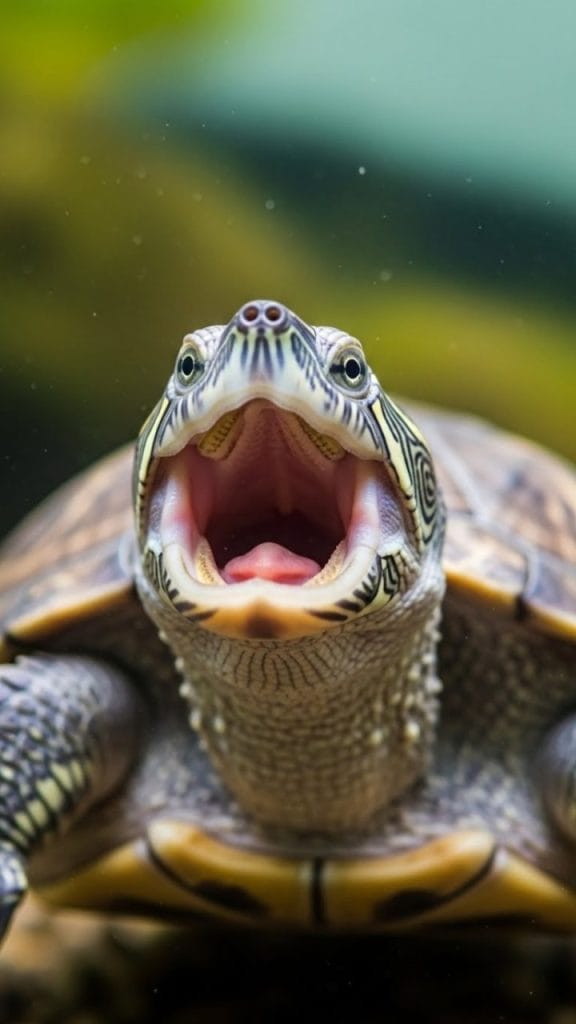
Frequently Asked Questions
Can turtles yawn from boredom?
Not really. Turtles aren’t complex enough emotionally to yawn from boredom like humans do. If your turtle is yawning frequently, it’s either normal physical behavior (stretching, getting oxygen) or a sign of environmental problems. Make sure their tank setup is correct first.
Do baby turtles yawn more than adults?
Baby turtles might seem to yawn more because they’re more active and growing rapidly. They need more oxygen for their metabolism. As long as your baby turtle is eating well and has no discharge or breathing issues, frequent yawning is usually normal.
Is yawning contagious in turtles?
No. Contagious yawning is a social behavior found in humans and some mammals. Turtles don’t yawn because they see another turtle yawn – they’re responding to their own physical needs.
Should I wake my turtle if it’s yawning while sleeping?
Definitely not. Yawning during sleep or right after waking is completely normal. Leave your turtle alone – disturbing their rest causes stress and can weaken their immune system.
Can too much heat cause yawning?
Yes. If your basking spot is too hot (over 100°F), your turtle might yawn excessively trying to cool down. Use a thermometer to check temps and adjust your heat lamp height if needed. The sweet spot is 90-95°F.
Bottom Line
Most turtle yawning is completely normal and nothing to worry about.
Your turtle needs to stretch, regulate temperature, and get oxygen – yawning does all three. As long as they’re eating normally, swimming straight, and showing no discharge or mucus, you’re good.
But don’t ignore changes in behavior. If your turtle suddenly starts yawning way more than usual or keeps its mouth open constantly, check your tank conditions and watch for other symptoms.
When in doubt, a quick vet visit beats months of treatment for advanced illness. Your turtle is counting on you to spot problems early.

About Author
Muntaseer Rahman started keeping pet turtles back in 2013. He also owns the largest Turtle & Tortoise Facebook community in Bangladesh. These days he is mostly active on Facebook.