Snapping Turtle In Yard? Here’s What To Do
This post was created with help from AI tools and carefully reviewed by a human (Muntaseer Rahman). For more on how we use AI on this site, check out our Editorial Policy.
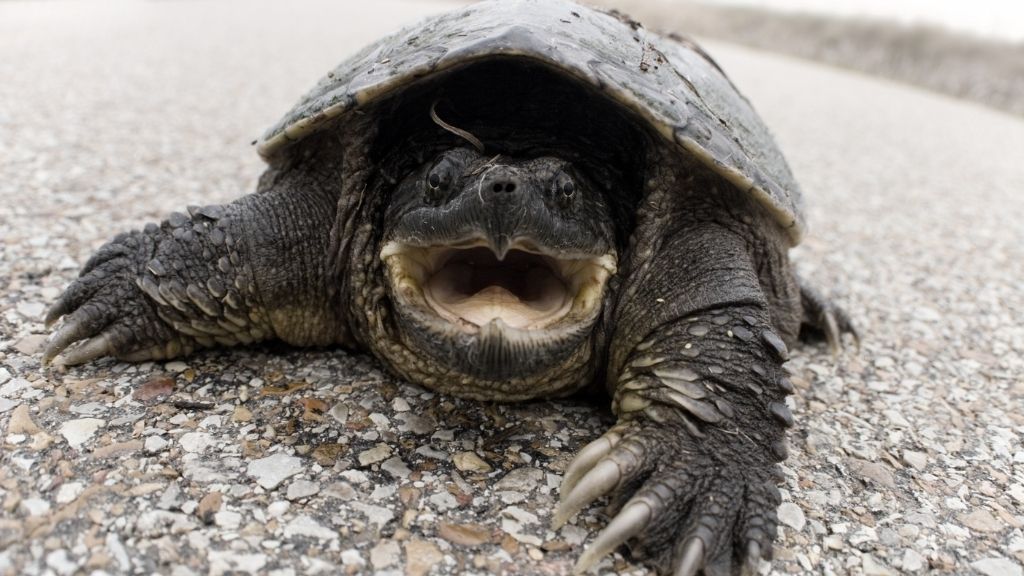
You’re sipping your morning coffee, glancing out the window, and there it is. A prehistoric-looking creature the size of a dinner plate just casually walking across your lawn like it pays rent.
That’s a snapping turtle. And if you live anywhere near a pond, lake, stream, or even a drainage ditch, this visit isn’t as rare as you’d think.
If you find a snapping turtle in your yard, the best thing to do is leave it alone. It will almost always leave on its own within a few hours. If it’s a nesting female, she’ll lay her eggs and head back to water. If the turtle is injured, call your local wildlife rescue.
But there’s a lot more to it than just “leave it alone.” You need to know how to keep your kids and pets safe, what to do if it lays eggs, and how to handle the turtle if you absolutely have to move it.
Let me walk you through everything.
Why Is There A Snapping Turtle In My Yard?
Before you panic, it helps to understand why the turtle showed up in the first place.
Snapping turtles are aquatic. They spend almost their entire lives in water. So when one shows up on dry land, there’s usually a specific reason.
She’s Looking For A Nesting Spot
This is the most common reason. Female snapping turtles leave the water between late May and late June to find a place to lay their eggs. They can travel surprisingly far from water, sometimes over a mile, searching for the perfect spot.
They want loose, sandy, or soft soil in a sunny area. Your garden bed, flower patch, or the edge of your lawn? Perfect real estate for a nesting snapper.
Once she finds a spot, she’ll dig a hole about 4 to 7 inches deep, deposit 25 to 80 eggs, cover them up, and head straight back to the water. The whole process takes about 1 to 3 hours.
After that, she’s gone. She won’t come back to check on the eggs. Ever.
He’s Traveling Between Water Sources
Male snapping turtles sometimes move between ponds, lakes, or streams, especially during spring and summer. Your yard might just be on the route. He’ll pass through and be gone before you know it.
The Turtle Is Lost Or Displaced
Heavy rains, flooding, or construction can push turtles out of their normal habitat. If there’s been recent development near a water source in your area, displaced turtles may wander through neighborhoods looking for a new home.
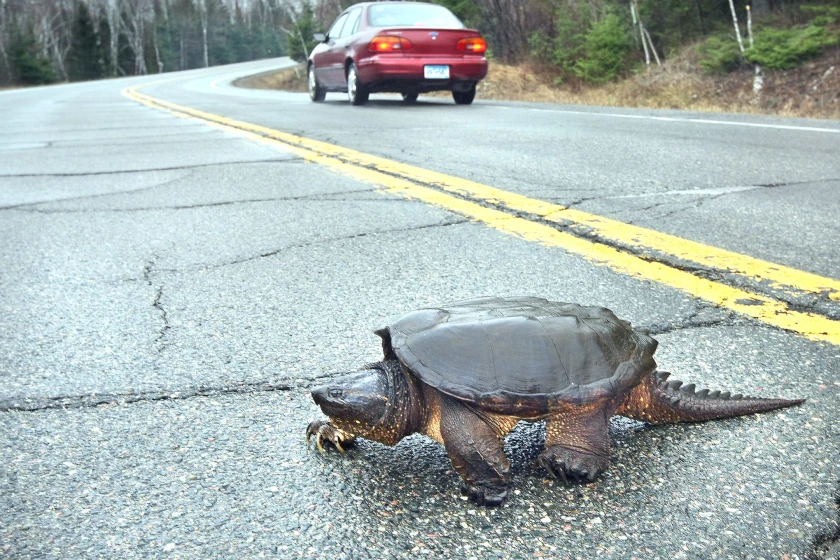
What To Do When You Find A Snapping Turtle In Your Yard
Here’s the step-by-step.
1. Stay Calm And Keep Your Distance
I know they look terrifying. That spiked tail, the massive head, those claws. But a snapping turtle in your yard is not hunting you. It’s not stalking your family. It wants absolutely nothing to do with you.
Snapping turtles do not attack humans unprovoked. On land, their first instinct is to get away, not to fight. They only snap when they feel cornered or threatened.
So don’t poke it with a stick. Don’t nudge it with your foot. Don’t try to flip it over for a photo. Just let it be.
In most cases, the turtle will move on within an hour or two. If it showed up in the evening, it might hang around until morning. That’s fine. It’s not setting up camp.
2. Bring Kids And Pets Inside
This is the part people forget.
A snapping turtle won’t come after your kid or your dog. But kids are curious, and dogs have a habit of investigating weird things with their face. A toddler trying to pet the “cool dinosaur” or a retriever shoving its nose at a snapper is a recipe for a trip to the ER or the vet.
Common snapping turtles have an average bite force of about 209 Newtons. That’s enough to cause serious lacerations, broken bones in fingers, and deep puncture wounds. They strike fast, and they don’t let go easily.
Keep everyone inside or at a safe distance until the turtle moves on.
3. Watch For Nesting Behavior
If it’s between late May and late June and the snapping turtle starts digging in your yard, she’s nesting. You’ll see her using her back legs to scoop out a hole in the soil.
Don’t interrupt her. This is one of the few times she’ll leave the water all year, and disturbing her can cause her to abandon the nest.
Let her finish, cover the eggs, and leave. Then move on to the next step.
4. Protect The Eggs If She Laid Any
After the mother leaves, go inspect the area. Look for a patch of loose, freshly disturbed soil. That’s the nest.
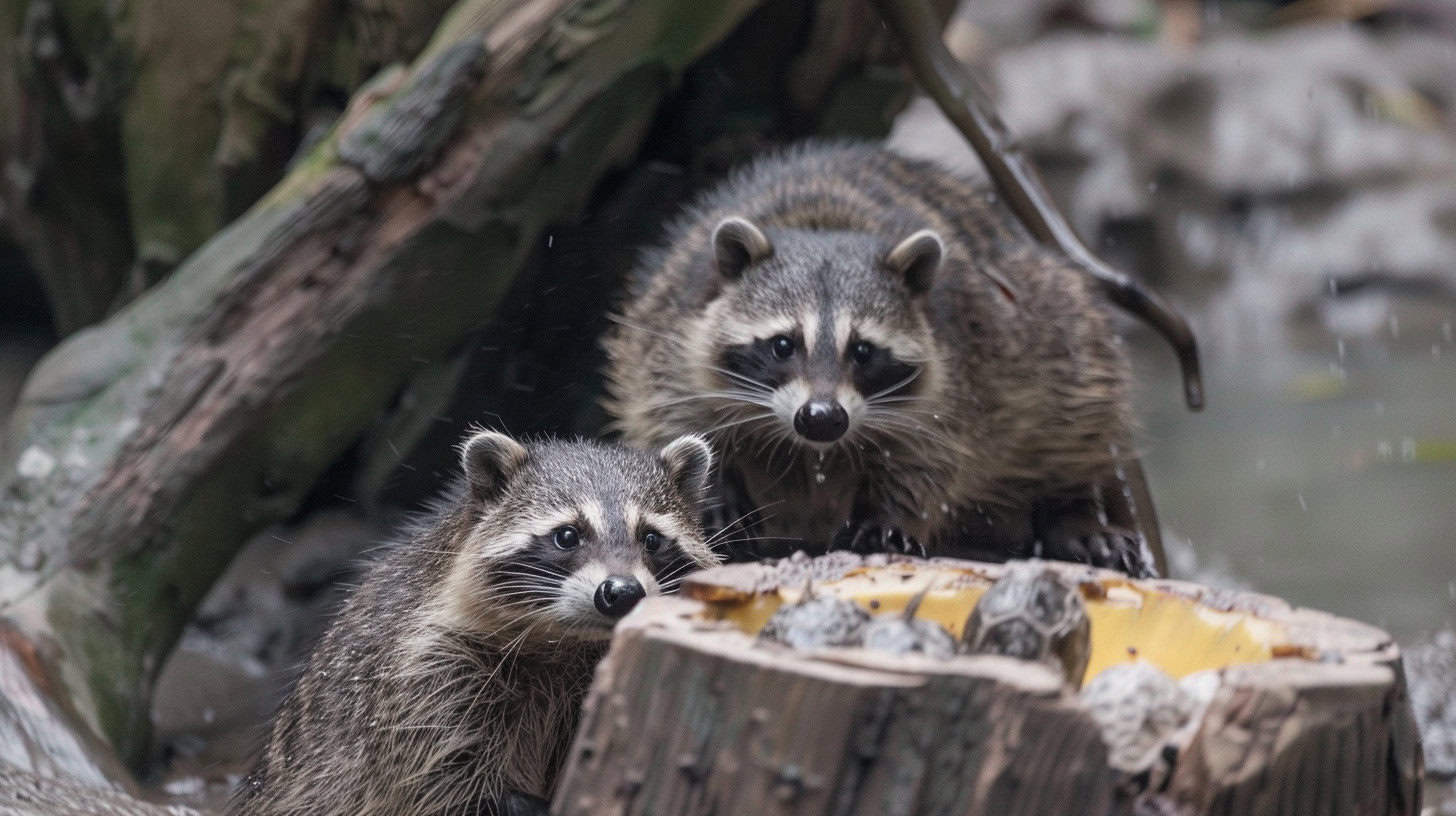
Here’s the thing about snapping turtle eggs. The survival rate is brutal. Raccoons, skunks, foxes, opossums, and crows raid turtle nests constantly. Some studies suggest that less than 1% of snapping turtle eggs survive to adulthood.
If you want to give those eggs a fighting chance, here’s what to do:
- Build a wire cage over the nest. Use chicken wire or hardware cloth to form a dome over the nest area. Bury the edges about 2 inches into the ground so predators can’t dig under it.
- Don’t move the eggs. Turtle eggs are extremely sensitive to rotation. Turning them even slightly can kill the developing embryo.
- Don’t use pesticides or fertilizers near the nest. Chemical runoff can seep into the soil and kill the eggs.
- Mark the area so nobody accidentally steps on it or mows over it.
Snapping turtle eggs incubate for about 55 to 90 days, depending on temperature. Hatchlings typically emerge between August and October. When they do, remove the wire cage and let them find their way to the nearest water source.
You just helped a bunch of baby turtles survive. That’s a good day.
5. Call Wildlife Rescue If The Turtle Is Injured
If the snapping turtle is bleeding, has a cracked shell, or isn’t moving normally, don’t try to play vet. Call your local wildlife rehabilitation center or state wildlife agency.
Most areas have volunteers who will come pick up injured turtles. Some vets also treat wildlife for free or at reduced cost.
If you need to keep the turtle contained while waiting for help, place a large plastic bin or laundry basket over it (weighted down so it can’t push it off). Don’t try to put the turtle IN the container unless you know how to handle it safely.
This Hilarious Turtle Book Might Know Your Pet Better Than You Do

Let’s be real—most turtle care guides feel like reading a textbook written by a sleep-deprived zookeeper.
This one’s not that.
Told from the snarky point of view of a grumpy, judgmental turtle, 21 Turtle Truths You’ll Never Read in a Care Guide is packed with sarcasm, sass, and surprisingly useful insights.
And hey—you don’t have to commit to the whole thing just yet.
Grab 2 free truths from the ebook and get a taste of what your turtle really thinks about your setup, your food choices, and that weird plastic palm tree.
It’s funny, it’s honest, and if you’ve ever owned a turtle who glares at you like you’re the problem—you’ll feel seen.
What If Your Dog Finds The Snapping Turtle?
This deserves its own section because it happens way more than people think.
Dogs are curious animals. They see something weird moving across the yard, and their first instinct is to go investigate with their face. That’s exactly the wrong body part to lead with when a snapping turtle is involved.
Snapping turtle bites on dogs are most common on the nose, lips, and paws. The injuries can range from minor cuts to deep puncture wounds that need stitches.
If Your Dog Gets Bitten
- Stay calm and pull your dog away. If the turtle is still latched on, don’t yank. Submerging the turtle’s head in water (if available) can encourage it to release. Otherwise, wait. They do let go.
- Assess the wound. Look for deep punctures, heavy bleeding, or signs of broken bones.
- Apply pressure with a clean cloth to stop bleeding.
- Get to a vet. Even if the wound looks minor, snapping turtle bites are prone to infection. Your vet will clean the wound, likely prescribe antibiotics, and check for deeper damage.
Prevention
- Keep your dog on a leash near ponds, lakes, or streams, especially from mid-May through early July during nesting season.
- Supervise yard time if you live near water. A quick scan before letting your dog out can save you a vet bill.
- Train a solid recall command. If your dog sees a turtle before you do, being able to call them back is everything.
How To Safely Move A Snapping Turtle
Sometimes you can’t just wait it out. Maybe the turtle is in your driveway and you need to leave for work. Maybe it’s near a busy road. Whatever the reason, here’s how to move a snapping turtle without losing a finger.
The Right Way
- Approach from behind. Snapping turtles have excellent peripheral vision and can sense vibrations. Move slowly and quietly.
- Grab the back of the shell. Place both hands on the rear edge of the carapace (top shell), behind the back legs. Get a firm grip.
- Lift and carry low. Keep the turtle close to the ground. They’re heavier than they look, and if you drop one from waist height, you can injure it.
- Point the head away from your body. Snapping turtles have incredibly flexible necks. They can reach surprisingly far back. Keep your arms extended.
- Move the turtle in the direction it was heading. Snapping turtles have a strong sense of direction. If you move it the opposite way, it’ll just turn around and cross your yard again.
What NOT To Do
- Never grab a snapping turtle by the tail. This can dislocate their vertebrae and cause permanent spinal damage. I see people recommend this all the time online. Don’t do it.
- Don’t pick it up by the sides of the shell near the head. Their neck is long enough to reach your hands.
- Don’t use a shovel to scoop it up. You’ll hurt the turtle and probably make it angrier.
If the turtle is too big for you to handle safely, slide a large flat object (like a piece of plywood or a car floor mat) under it and drag it to safety. Or just call animal control.
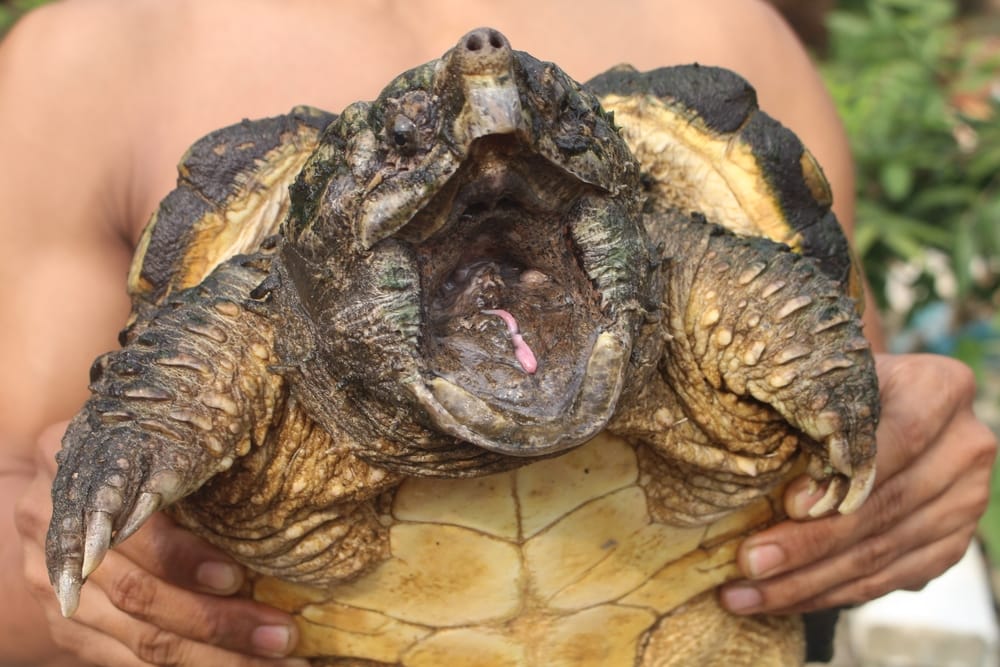
Common Snapping Turtle vs. Alligator Snapping Turtle
A lot of people mix these up like they’re the same animal. They’re not. And knowing the difference matters because their behavior is very different.
| Feature | Common Snapping Turtle | Alligator Snapping Turtle |
|---|---|---|
| Range | Most of eastern North America, from Canada to Central America | Southeastern US only |
| Size | Up to 35 lbs typically | Can exceed 200 lbs |
| Shell | Relatively smooth | Large spikes and ridges |
| Bite force | ~209 Newtons average | ~158 Newtons average, but larger specimens bite much harder |
| Behavior on land | Will hiss, lunge, and try to flee | Almost never leaves water (except nesting females) |
| Likelihood in your yard | Common | Extremely rare |
If you found a snapping turtle in your yard, it’s almost certainly a common snapping turtle. For a deeper dive into the differences, check out my full common vs alligator snapping turtle comparison. Alligator snappers are rare, protected in many states, and almost never venture far from water. They’re also massive. We’re talking about a turtle that can weigh more than a large dog.
How To Keep Snapping Turtles Out Of Your Yard
If snapping turtles keep showing up (usually because you live near water), there are a few things you can do to make your yard less attractive.
Fencing
A simple fence around your property or garden is the most effective solution. Use fine mesh fencing at least 3 feet tall, buried about 6 inches into the ground. Snapping turtles aren’t great climbers, but they can dig.
Remove Attractants
- No standing water features. Bird baths, decorative ponds, and fountains with moving water can attract turtles.
- Keep compost bins sealed. Rotting food attracts insects and worms, which attract turtles.
- Clean up fallen fruit from trees if you have them.
Landscape Adjustments
Snapping turtles prefer soft, loose soil for nesting. If you have sandy garden beds near water, consider replacing them with gravel or compacted soil that’s harder to dig in. Steep, rocky banks along property edges near water sources can also discourage turtles from entering.
Are Snapping Turtles Actually Dangerous?
Let’s clear this up because the internet loves to exaggerate.
Snapping turtles are not aggressive animals. They’re defensive animals. There’s a big difference.
In water, a snapping turtle will swim away from you every single time. They only snap on land because they feel exposed. Unlike other turtles, snapping turtles can’t fully retract into their shells. Their plastron (bottom shell) is too small. So their only defense on land is their bite.
Think of it this way. If you couldn’t hide and you were surrounded by giants 50 times your size, you’d probably bite too.
The stories about snapping turtles biting off fingers are mostly exaggerated. A common snapping turtle bite can cause serious cuts and bruising, but clean finger amputations are extremely rare. Alligator snapping turtles have stronger bites at large sizes and could theoretically cause more damage, but you’re almost never going to encounter one on land.
The real risk is to small pets and curious children who get too close. As long as you keep your distance, a snapping turtle in your yard is about as dangerous as a grumpy cat. It wants to be left alone.
Should You Call Animal Control?
In most cases, no. The turtle will leave on its own. But here are situations where you should make the call:
- The turtle is injured (cracked shell, bleeding, not moving)
- It’s been in the same spot for more than 24 hours and isn’t nesting
- It’s in a dangerous location like a busy road, parking lot, or pool
- You have an alligator snapping turtle (protected species in many states, should not be handled)
- You’re genuinely afraid to go outside and can’t wait it out
Most state wildlife agencies have hotlines for exactly this kind of thing. You can also search for turtle rescue organizations in your area.
Wrapping Up
Snapping turtles have been around for about 90 million years. They were here before us, and they’ll probably be here after us. When one shows up in your yard, it’s not an invasion. It’s just a turtle being a turtle.
If she’s nesting, consider it a compliment. She picked your yard because it felt safe enough to leave her babies there.
The best thing you can do is give the turtle space, protect any eggs she might have laid, keep your pets inside, and let her go back to the water on her own schedule.
No drama needed.

About Author
Muntaseer Rahman started keeping pet turtles back in 2013. He also owns the largest Turtle & Tortoise Facebook community in Bangladesh. These days he is mostly active on Facebook.