Safe Plants for Russian Tortoises: The Complete Feeding List
This post was created with help from AI tools and carefully reviewed by a human (Muntaseer Rahman). For more on how we use AI on this site, check out our Editorial Policy.
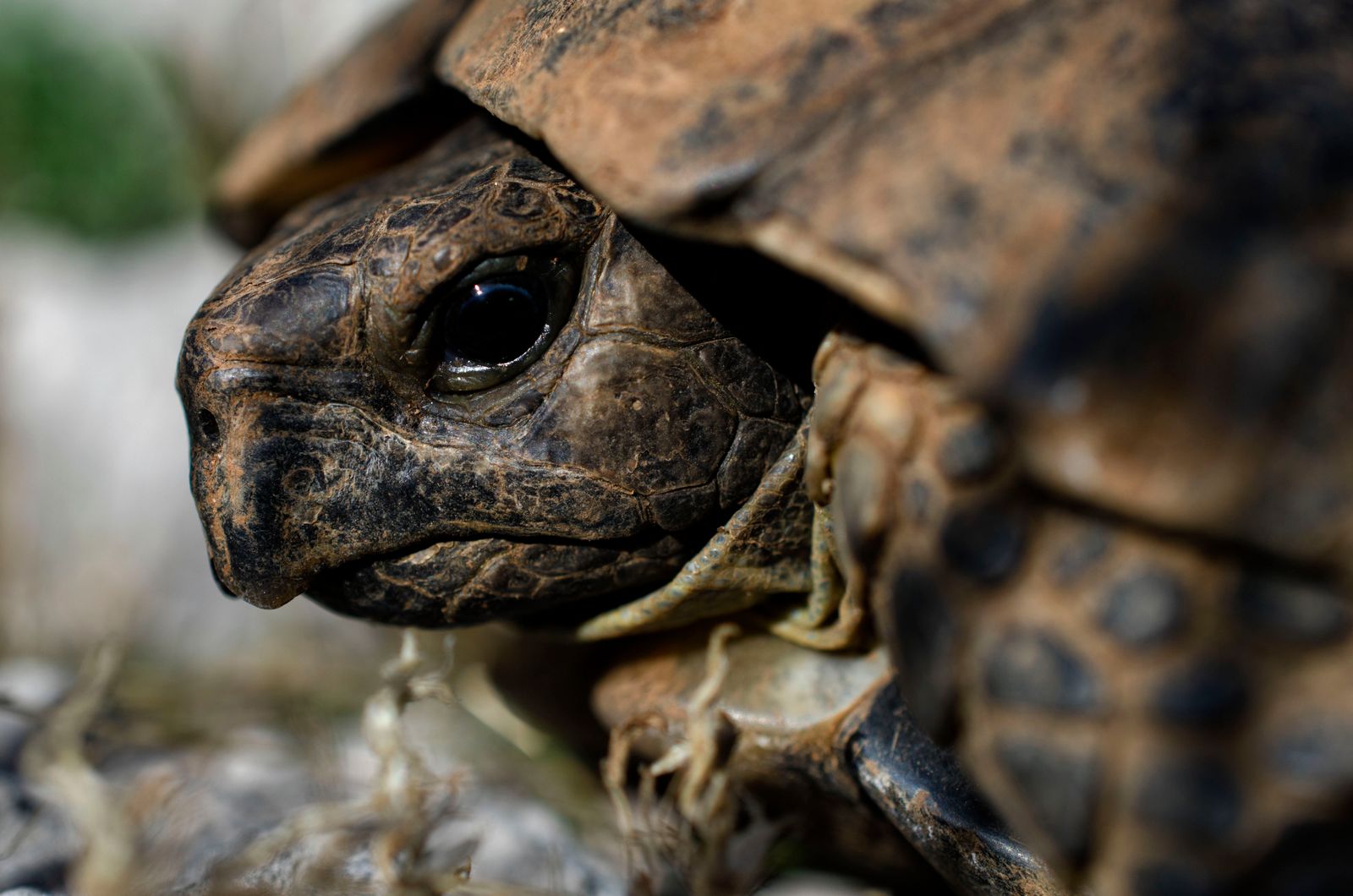
Here is the thing nobody warns you about with a Russian tortoise.
This little steppe muncher will happily bite into almost any green thing you set down, then stare at you like it wants seconds.
That sounds cute until you realize it has zero ability to tell a safe weed from one that will wreck its liver.
A dog sniffs something suspicious and backs off. A Russian tortoise walks straight over and takes a bite.
So your job is to be the brain your tortoise does not have. This is the full safe-plant list for your Russian (also called the Horsfield tortoise), plus the stuff you should keep far away.
Worried a plant might be toxic? Use our free Tortoise Plant Safety Checker to find out instantly.
What a Russian Tortoise Diet Actually Looks Like
Here is the mistake most new keepers make. They treat a Russian tortoise like a grass-eating Sulcata. It is not.
Russians come from the dry steppes and rocky hills of Central Asia. Out there they are broadleaf browsers, not grass grazers.
That one fact controls the whole diet. They want weeds, leafy plants, and flowers, not a lawn.
The golden rule is simple. High fiber, low protein, low sugar, and plenty of calcium.
Get that wrong and you get a lumpy, bumpy shell called pyramiding, plus long-term kidney and liver strain. Too much protein and too much fruit are the two big killers of a good Russian diet.
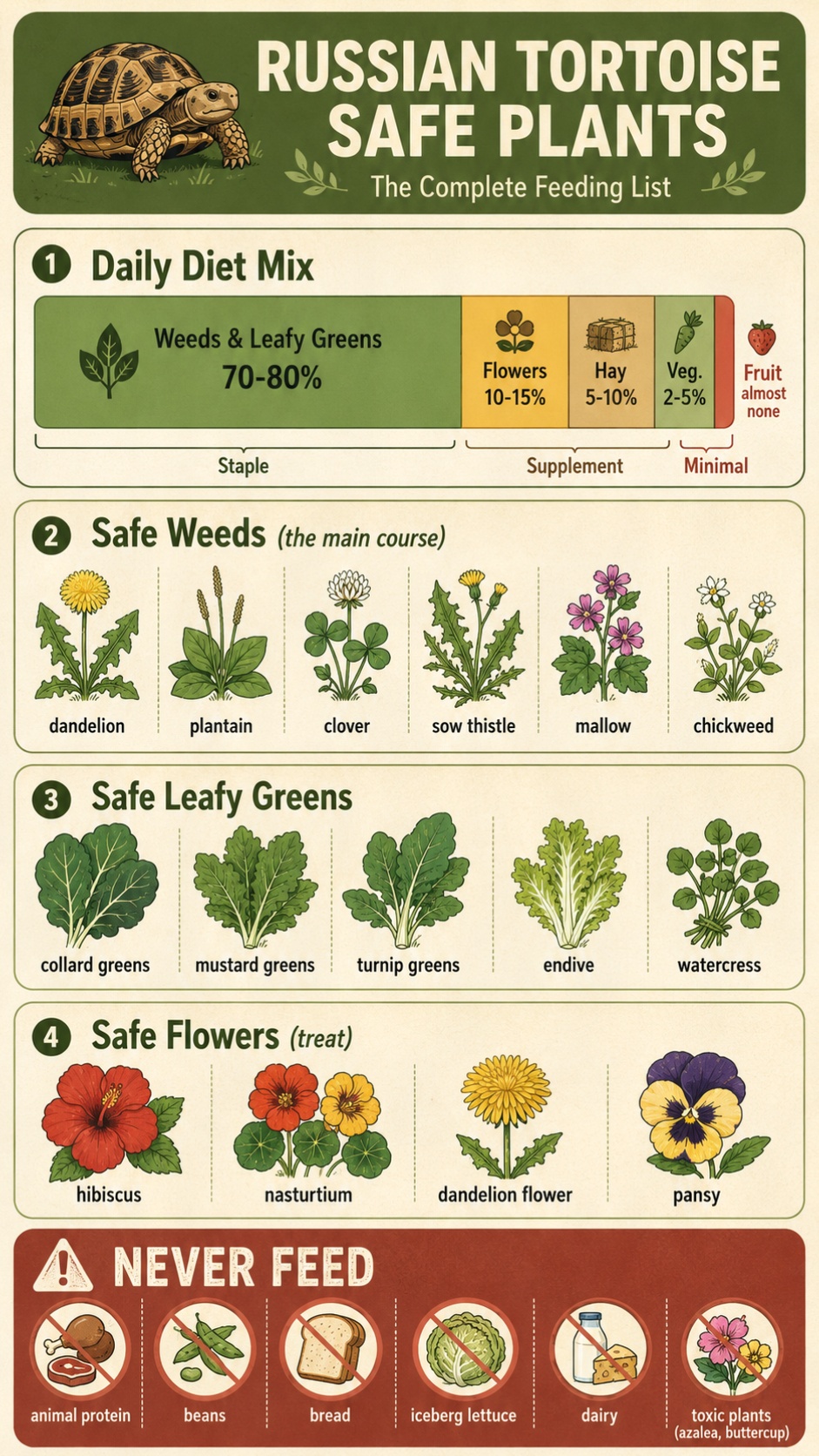
Here is the rough breakdown to aim for.
| Food group | How much of the diet | How often |
|---|---|---|
| Weeds and broadleaf plants | 70 to 80% | Every day |
| Leafy greens | Part of that daily base | Most days |
| Edible flowers | Small amount | A few times a week |
| Grass and hay | Minor, for fiber | Available, not forced |
| Vegetables | Tiny portion | Occasional |
| Fruit | Almost none | Rare treat only |
If you want the full care picture beyond food, our Russian tortoise care guide covers habitat, heating, and hibernation too.
Safe Weeds and Broadleaf Plants (The Main Course)
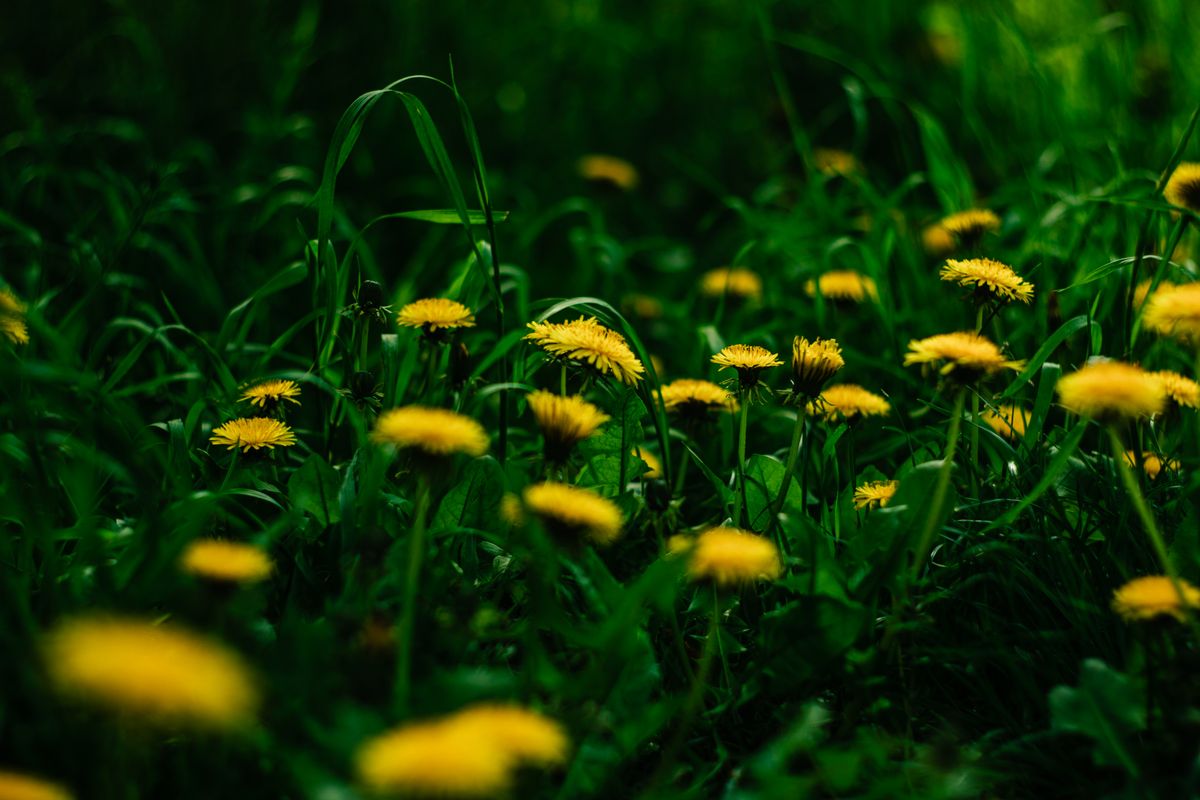
This is the foundation for a Russian. A tortoise grazing on a weedy, chemical-free patch of yard is a healthy tortoise.
Weeds are basically free tortoise food (my pick: Zoo Med Grassland Tortoise food), and most Russians go nuts for them.
Just pull them from a spot with no pesticides, no road runoff, and no dog traffic.
These are the safe, keeper-approved staples.
- Dandelion (leaves and flowers)
- Plantain weed (the Plantago kind, not the banana)
- Clover (in moderation)
- Sow thistle
- Chickweed
- Mallow
- Cat’s ear
- Hawkbit
- Dead nettle and henbit
- Bramble and grape leaves
- Mulberry leaves
Dandelion is the all-star here. It is loaded with calcium, easy to find, and Russians treat it like candy.
If you can build your feeding routine around dandelion and plantain, you are already winning.
This Hilarious Turtle Book Might Know Your Pet Better Than You Do
Let’s be real—most turtle care guides feel like reading a textbook written by a sleep-deprived zookeeper.
This one’s not that.
Told from the snarky point of view of a grumpy, judgmental turtle, 21 Turtle Truths You’ll Never Read in a Care Guide is packed with sarcasm, sass, and surprisingly useful insights.
And hey—you don’t have to commit to the whole thing just yet.
Grab 2 free truths from the ebook and get a taste of what your turtle really thinks about your setup, your food choices, and that weird plastic palm tree.
It’s funny, it’s honest, and if you’ve ever owned a turtle who glares at you like you’re the problem—you’ll feel seen.
Safe Leafy Greens (Your Grocery-Store Backup)
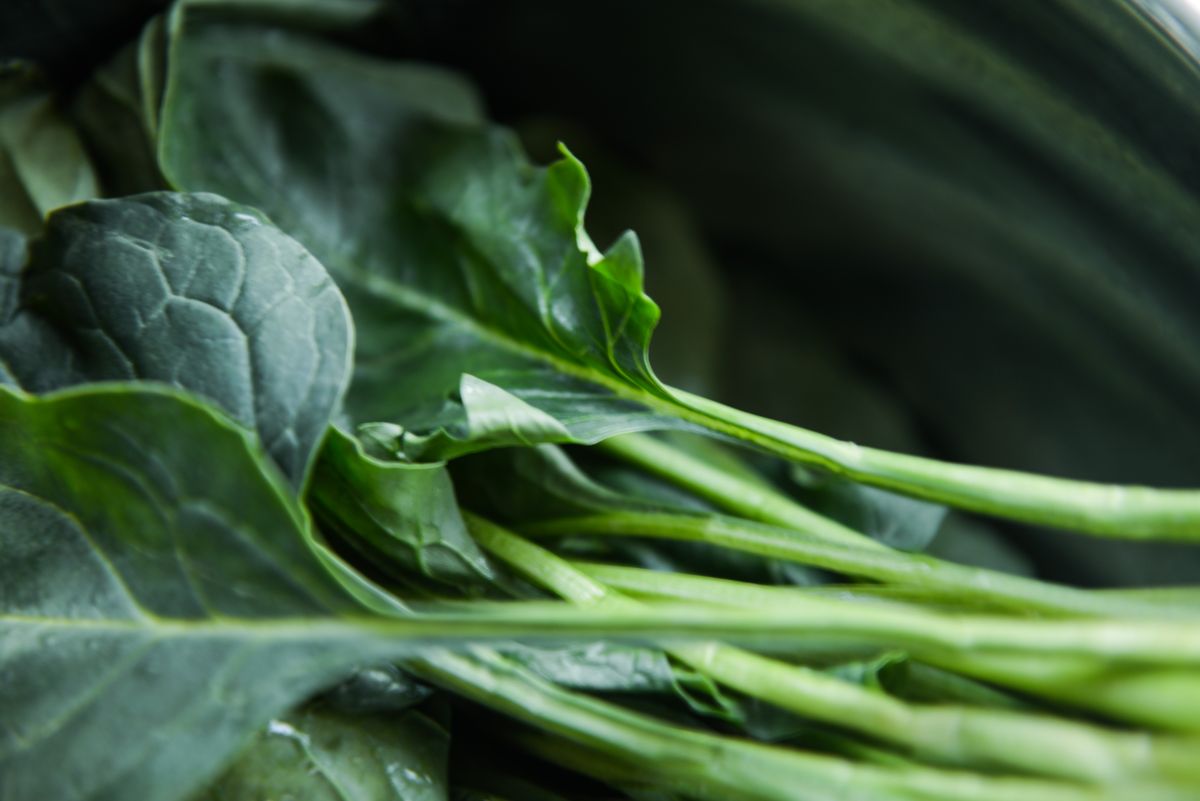
Weeds are ideal, but nobody has a perfect weed patch year round.
When the yard runs dry, leafy greens from the store fill the gap.
Good options include:
- Collard greens
- Mustard greens
- Turnip greens
- Endive and escarole
- Chicory and radicchio
- Watercress
- Romaine (low nutrition, use sparingly)
Rotate a few of these so your tortoise gets variety instead of the same leaf every day.
Skip the pale, watery stuff like iceberg. It is basically crunchy water with no real value.
Safe Flowers (The Fun Part)
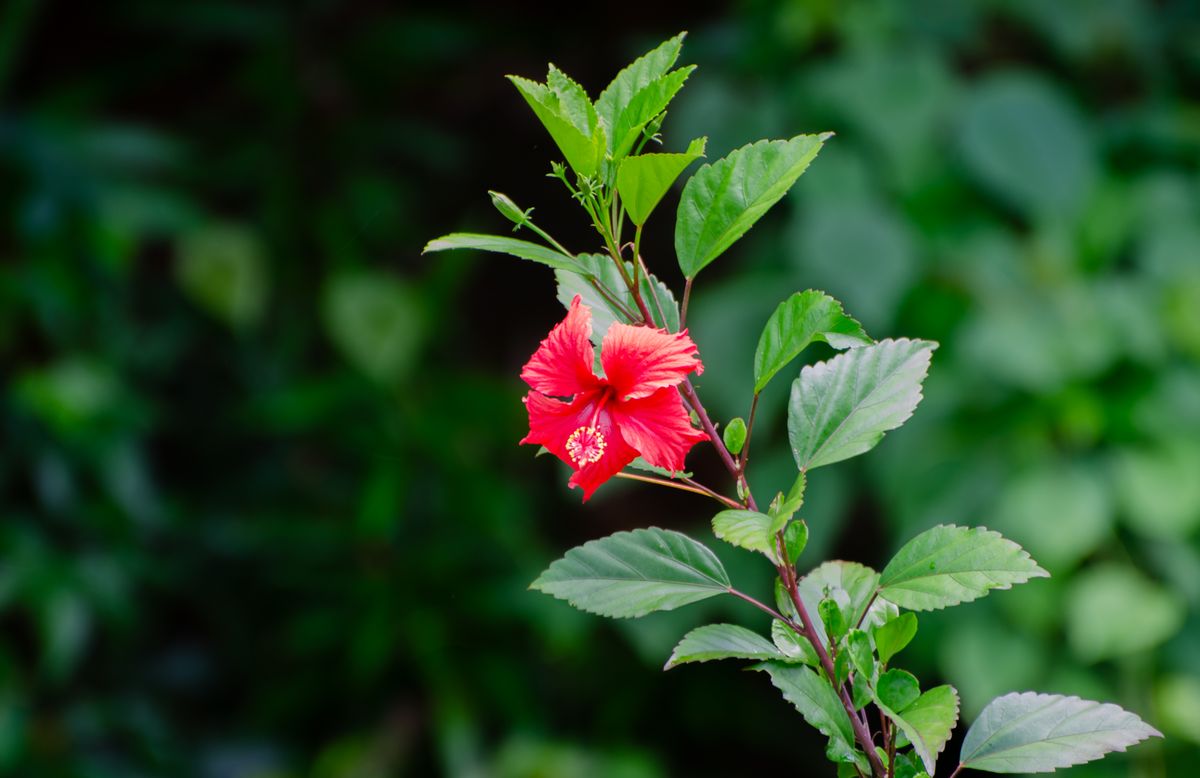
Yes, your Russian can eat flowers, and watching one chomp a hibiscus bloom is one of the small joys of this hobby.
Flowers are not a main food. Think of them as a healthy garnish a few times a week.
| Safe flower | Notes |
|---|---|
| Hibiscus | Flowers and leaves both safe, a big favorite |
| Dandelion flowers | High calcium, totally safe |
| Nasturtium | Whole plant is edible |
| Petunia | Safe and easy to grow |
| Viola and pansy | Pretty and harmless |
| Rose petals | Pesticide-free only |
| Hollyhock | Safe flowers and leaves |
| Geranium | Safe in small amounts |
Grow a few of these in a chemical-free pot and you have a fresh treat supply all season.
A Little Grass and Hay (Not the Main Event)
Here is where Russians split from grazing tortoises.
They will nibble grass and hay, but it is never the base of the meal like it is for a Sulcata.
A handful of timothy, orchard, or meadow hay left in the enclosure is great for fiber, especially in winter when fresh weeds are gone.
Do not stress if your Russian ignores it most days. That is normal for a browser.
For a deeper species-by-species view, our master list of tortoise safe plants for feeding is the pillar guide to bookmark.
Safe Vegetables (Small Side Dish Only)
Store-bought veggies are convenient, but they are not a Russian’s natural food.
Use them as a small supplement, not the base. Weeds and greens still rule.
You can offer tiny amounts of:
- Shredded carrot
- Pumpkin or winter squash
- Bell pepper
- Green beans (rare, higher protein)
Keep these to a small side portion. A pile of vegetables is not a Russian tortoise meal.
Not sure about a random plant in your garden? Run it through our free tortoise safe plant checker before you risk it.
What to Limit (Safe in Small Doses, Bad in Bulk)
Some plants are fine as a rare bite but cause real problems if they become a habit.
Goitrogenic vegetables can mess with thyroid function when fed often. Keep these occasional at most:
- Kale
- Broccoli
- Cabbage
- Bok choy
- Brussels sprouts
High-oxalate greens bind calcium and can lead to shell and bone issues. Go easy on:
- Spinach
- Parsley
- Beet greens
- Swiss chard
Fruit is the sneaky one. Russians are dry-climate animals, and sugary fruit upsets their gut and can trigger diarrhea and parasite blooms.
A tiny sliver of melon once in a blue moon is the most I would ever offer. Honestly, most Russians never need fruit at all.
What to Never Feed a Russian Tortoise
Some things are flat-out off the menu. No exceptions.
- Animal protein of any kind (meat, dog food, cat food, insects)
- Beans, peas, and bean sprouts (too much protein, pyramiding risk)
- Bread, pasta, and grains
- Iceberg lettuce and celery (basically water, zero value)
- Dairy of any kind
Animal protein is the worst offender. It causes that bumpy, deformed shell and can cut years off your tortoise’s life.
Then there are the genuinely toxic plants. Azalea, rhododendron, oleander, buttercup, daffodil, foxglove, and ivy can poison a tortoise fast.
Since a Russian will not avoid these on its own, learn them cold. Our guide to toxic plants for tortoises lists more than 40 dangerous ones with photos.
Do Not Forget Calcium
A diet full of weeds and greens still needs a calcium boost, especially for growing tortoises and egg-laying females.
The easiest fix is leaving a cuttlebone (my pick: natural cuttlefish bone) in the enclosure for your Russian to nibble whenever it wants.
Many keepers also dust the greens with a calcium supplement (my pick: Rep-Cal Calcium with D3) a couple of times a week.
Calcium only works if your tortoise gets proper UVB (my pick: Zoo Med ReptiSun 10.0) lighting to process it. Natural sun is best, and a quality UVB bulb covers you indoors.
The Simple Rule to Remember
If you forget this whole list, hang onto one idea.
A Russian tortoise is a weed muncher of the steppe, not a fruit bat and not a lawnmower.
Build the diet around weeds and leafy greens, add flowers as a treat, keep hay around for fiber, and skip the fruit and protein.
Do that and your Russian can live 40 years or more with a smooth shell and zero diet drama.
Now go take a walk around your yard. Half of what is growing out there might be free tortoise food, and the other half might be on the toxic list. Better to know which is which today.

About Author
Muntaseer Rahman started keeping pet turtles back in 2013. He also owns the largest Turtle & Tortoise Facebook community in Bangladesh. These days he is mostly active on Facebook.