10 Baby Turtle Tank Setup Ideas (Hatchling-Safe & Beginner-Friendly)
This post was created with help from AI tools and carefully reviewed by a human (Muntaseer Rahman). For more on how we use AI on this site, check out our Editorial Policy.
So you brought home a turtle the size of a bottle cap. Congratulations, and also, slight panic, right?
Here’s the thing nobody at the pet store tells you. A baby turtle tank is NOT just a smaller version of an adult tank.
Babies drown in water that adults swim through without thinking. They get pinned by filter currents that adults ignore. They hide constantly because in the wild, literally everything wants to eat them.
I learned this the hard way with my first hatchling. I set up a gorgeous deep tank, and the poor thing spent two weeks clinging to the basking ramp like it was a life raft.
So before you copy an adult setup from YouTube, let’s go through 10 baby turtle tank ideas that actually work for hatchlings. There’s something here for every budget, from a $20 plastic tub to a planted showpiece.
The 3 Rules Every Baby Turtle Tank Must Follow
Whatever setup you pick from this list, these three rules are non-negotiable.
Rule 1: Shallow water.
Keep the depth around 1.5 to 2 times your hatchling’s shell length. For a 2-inch baby, that’s roughly 3 to 4 inches of water. Deep enough to swim, shallow enough that a tired baby can push off the bottom and breathe.
Rule 2: Easy exits.
A baby turtle should be able to climb out of the water without a gym membership. Gentle ramps, sloped stones, or a low floating dock.
Rule 3: Gentle water flow.
Hatchlings are weak swimmers. A strong filter output will pin a baby in a corner and exhaust it. Use a sponge filter or baffle the outflow.
Warmth matters too. Keep the water at 78-82°F for hatchlings (warmer than adult tanks) with a submersible heater (recommended: submersible aquarium heater), and the basking spot around 90-95°F. I cover the temperature side in detail in my guide on the perfect temperature for pet turtles.
Got the rules? Good. Now the fun part.
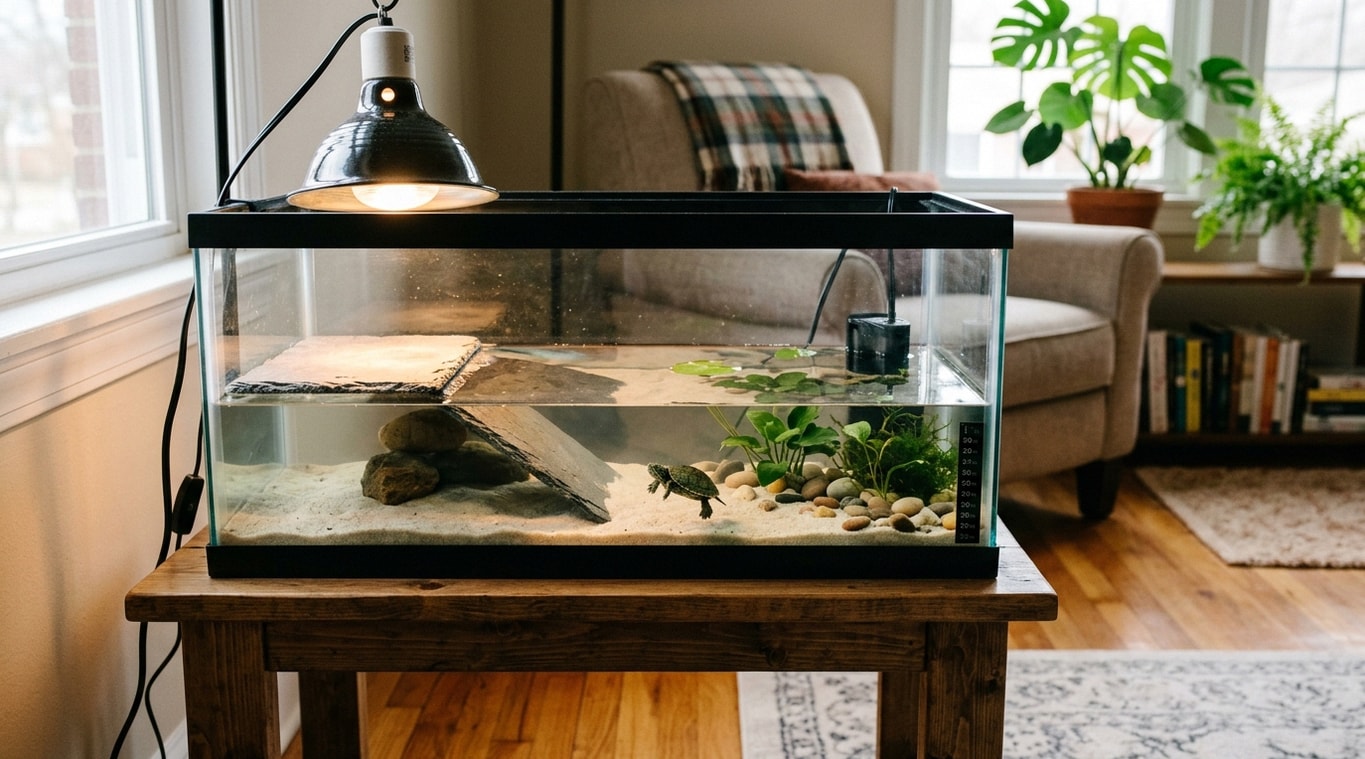
1. The 20-Gallon Long Starter Tank
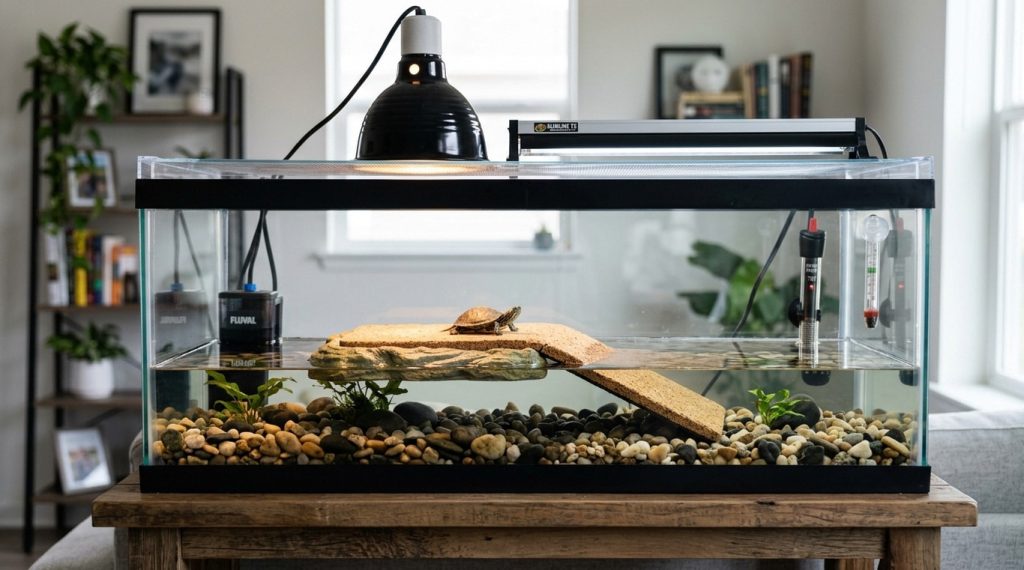
This is the classic for a reason. A 20-gallon long tank is wide and shallow instead of tall and deep, which is exactly the footprint a hatchling needs.
Fill it with 3-4 inches of water, add a basking platform (my pick: floating basking platform) with a gentle ramp, clip a UVB light (my pick: Zoo Med ReptiSun 10.0) and heat lamp (my pick: heat lamp) overhead, and you’re done.
Why it works: Cheap, available at every pet store, and big enough that you won’t need an upgrade for the first year or so.
Cost: Around $150-200 with all equipment.
The “longer, not taller” rule is the entire trick here. A tall 20-gallon hexagon tank looks cool and is basically a turtle drowning machine.
This Hilarious Turtle Book Might Know Your Pet Better Than You Do

Let’s be real—most turtle care guides feel like reading a textbook written by a sleep-deprived zookeeper.
This one’s not that.
Told from the snarky point of view of a grumpy, judgmental turtle, 21 Turtle Truths You’ll Never Read in a Care Guide is packed with sarcasm, sass, and surprisingly useful insights.
And hey—you don’t have to commit to the whole thing just yet.
Grab 2 free truths from the ebook and get a taste of what your turtle really thinks about your setup, your food choices, and that weird plastic palm tree.
It’s funny, it’s honest, and if you’ve ever owned a turtle who glares at you like you’re the problem—you’ll feel seen.
2. The Plastic Tub Nursery
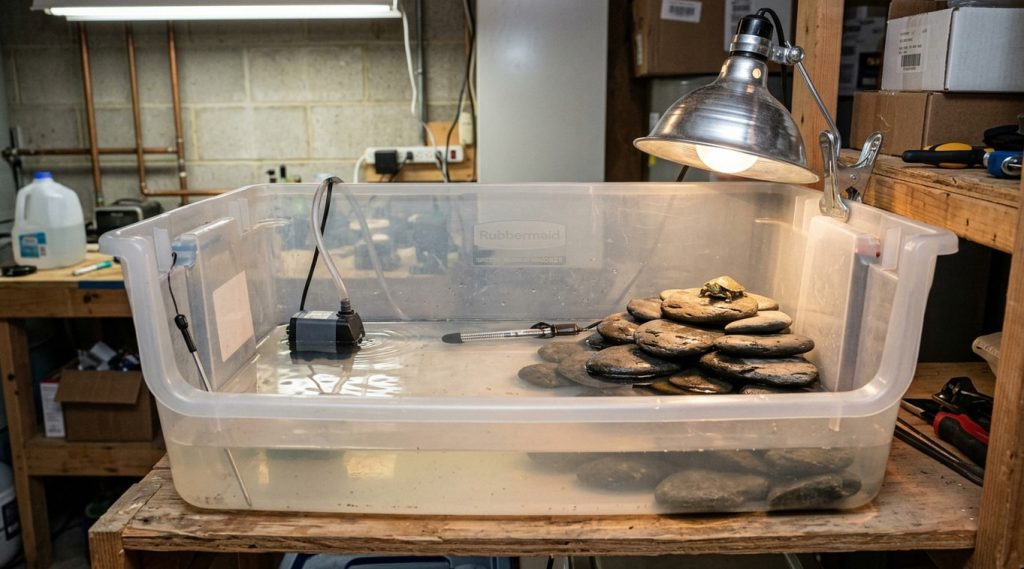
Not glamorous. Extremely effective.
A large plastic storage tote with 3 inches of water, a stack of flat river stones for basking, and lamps clamped to the rim. Breeders raise thousands of hatchlings exactly like this.
Why it works: Costs almost nothing, easy to dump and clean, and the opaque walls actually reduce stress. Babies freak out less when they can’t see giant humans walking past.
Cost: $20-30 for the tub, plus lighting.
This is also the perfect first-month setup while you save up for the bigger tank. No shame in the tub game. I built an entire turtle habitat from recycled materials once, and the turtle never complained about the decor budget.
3. The Planted Hatchling Jungle
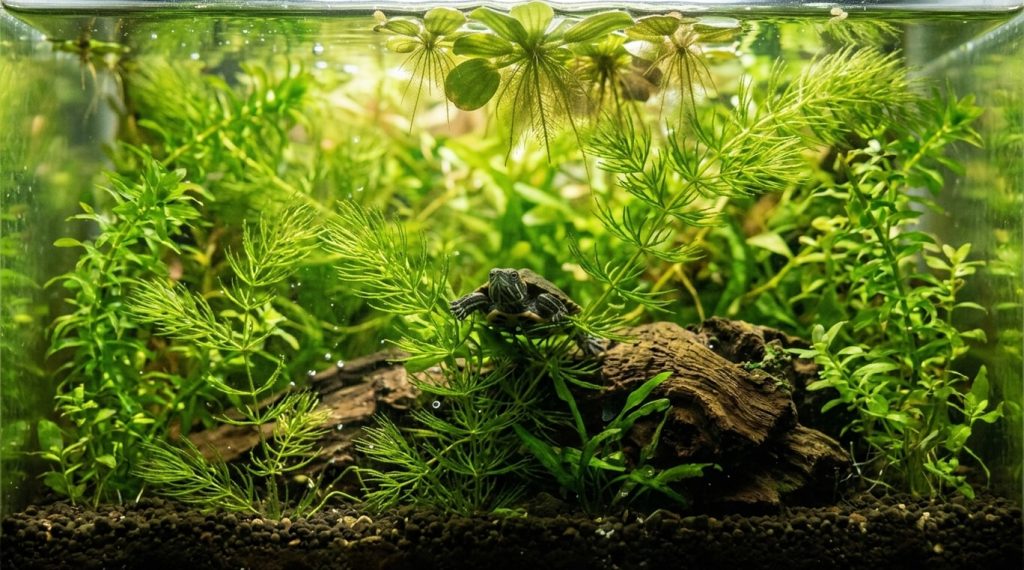
In the wild, a baby turtle’s survival strategy is simple: hide, hide, and also hide.
This setup leans into that. Fill the tank with live plants like anacharis, hornwort, and water lettuce. Add a piece of driftwood. Let it get a little wild.
Why it works: Cover makes hatchlings feel safe, and a baby that feels safe eats better, basks more, and grows faster. Bonus: the plants eat some of the waste, so your water stays cleaner between changes.
Cost: $30-50 in plants on top of a basic tank.
Fair warning: your baby will eventually taste-test every plant. Anacharis is cheap for exactly this reason.
4. The Bare-Bottom Easy-Clean Tank
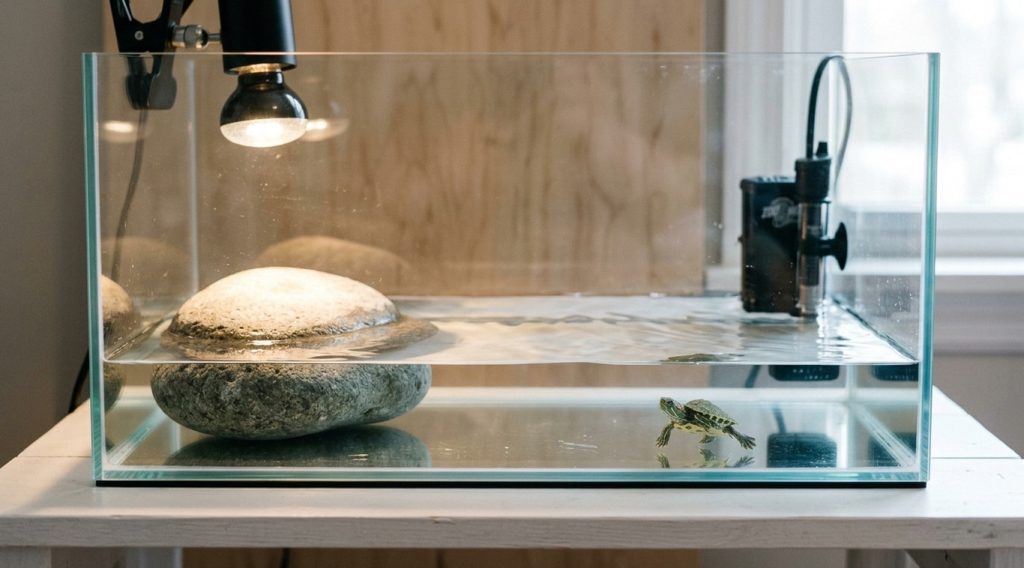
No substrate. No gravel. Just glass.
I know, it looks unfinished. But hear me out, because this is what a lot of vets and breeders quietly run at home.
Why it works: Baby turtles will swallow gravel, and swallowed gravel can cause impaction, which can kill them. A bare bottom removes that risk completely and makes poop cleanup a 30-second siphon job.
Cost: Free. You’re literally not buying something.
If bare glass hurts your soul, use stones bigger than your turtle’s head. Too big to swallow is the only safe size.
5. The Shoreline Beach Setup
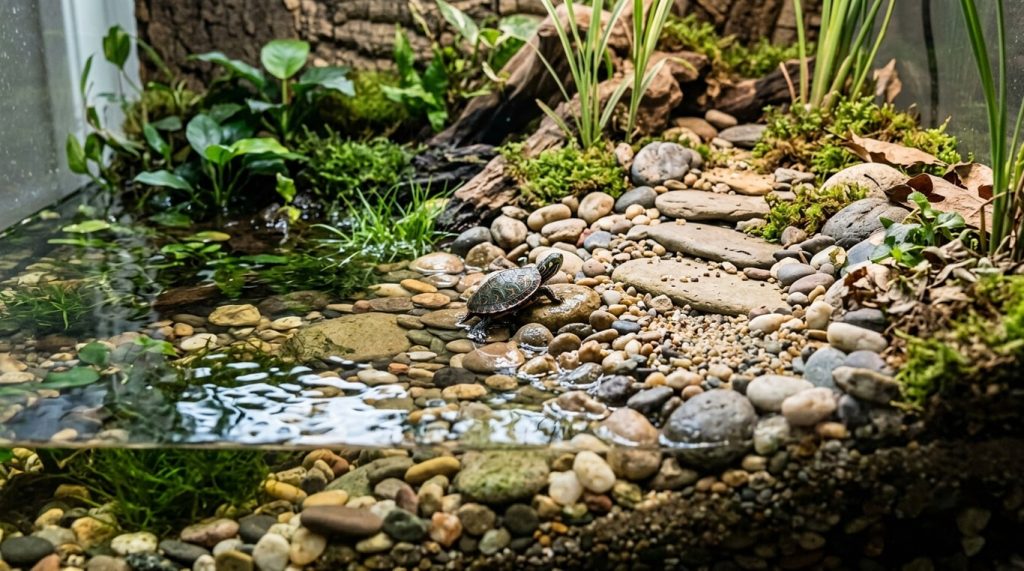
This one mimics a pond edge. Stack substrate or flat stones higher on one side so the tank slopes from a dry beach down into 3-4 inches of water.
Your hatchling can walk out of the water gradually instead of hauling itself up a ramp.
Why it works: It’s the most natural exit possible, which matters for weak or clumsy babies. It also gives painted turtle and slider hatchlings the warm shallows they’d cruise in the wild.
Cost: $20-40 in stone on top of a basic tank.
One warning: sloped builds eat up swimming space fast. Use at least a 30-gallon footprint or the water zone gets cramped.
6. The Grow-With-Me 40-Gallon Breeder
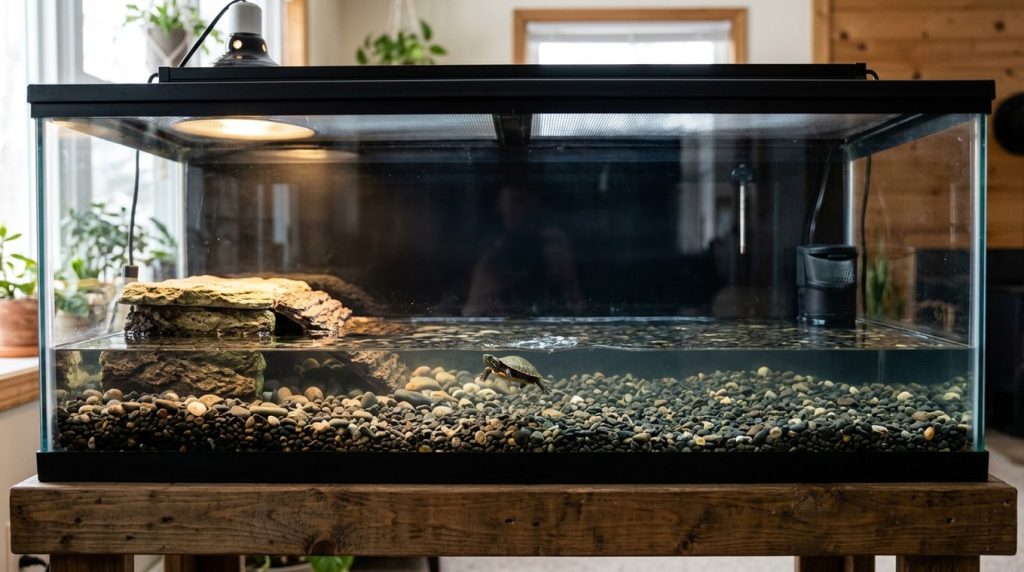
Here’s a money-saving cheat: buy the adult-ish tank now, but only fill it 4 inches deep.
A 40-gallon breeder has a huge floor area. With shallow water, it’s a hatchling paradise. As your turtle grows, you just add water. Same tank, deeper pool, zero upgrade costs for years.
Why it works: You skip the 20-gallon middle stage entirely. Buy once, cry once.
Cost: $200-300 with equipment, but it’s the last tank you’ll buy for a long while.
When your turtle hits adult size, you can graduate to a full aquatic turtle tank setup, one of these DIY turtle tank ideas, or even an outdoor pond.
7. The Sponge Filter Shrimp-Tank Style
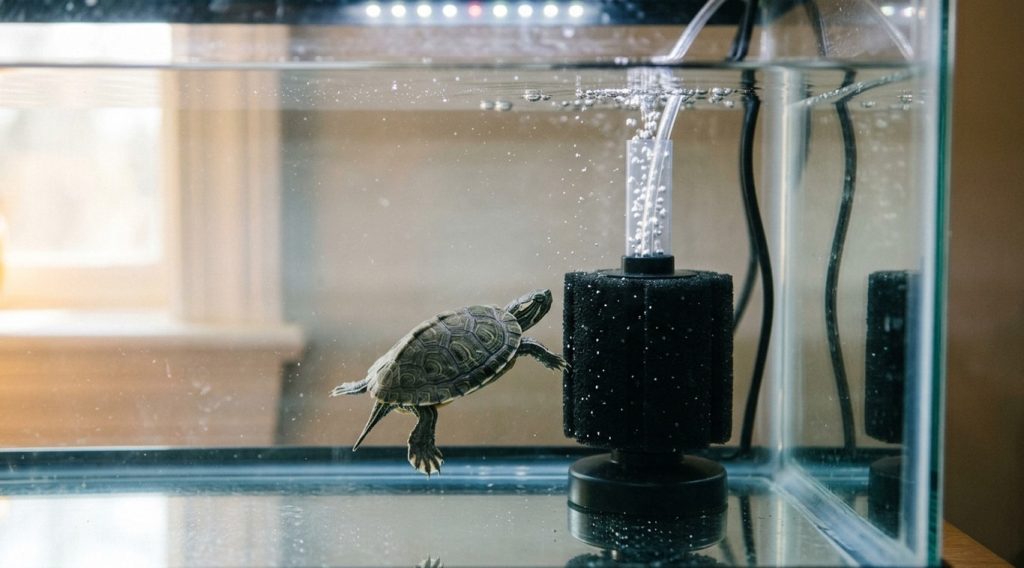
Borrowed straight from the shrimp-keeping hobby. A simple air-driven sponge filter in the corner, gentle bubbles, almost zero current.
Why it works: Sponge filters physically cannot pin or trap a hatchling. The flow is so gentle a baby can swim against it without effort, and the sponge surface grows biofilm that some hatchlings actually graze on.
Cost: $15-25 for the filter and air pump.
The trade-off is that sponge filters are weaker, so you’ll do more frequent water changes. For a baby producing tiny amounts of waste, that’s a fair deal.
8. The Divided Sibling Tank
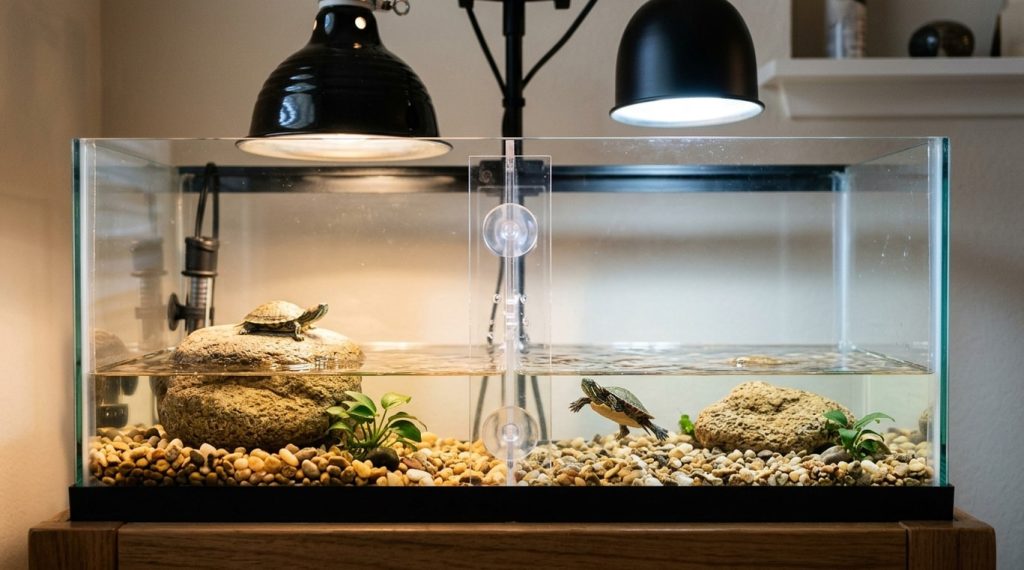
Got two hatchlings? Do not just toss them in together and hope for friendship.
A tank divider splits one tank into two territories. Each side gets its own basking spot and feeding zone.
Why it works: Even baby turtles nip at tank mates’ tails and toes, and the smaller one usually gets bullied away from food and basking. A divider gives you one tank to maintain with none of the violence.
Cost: $15-30 for a divider, or DIY with egg crate.
I’ve written a full guide on keeping two turtles in one tank if you’re determined to try cohabitation later. Spoiler: separate is almost always safer.
9. The Indoor Tub Pond
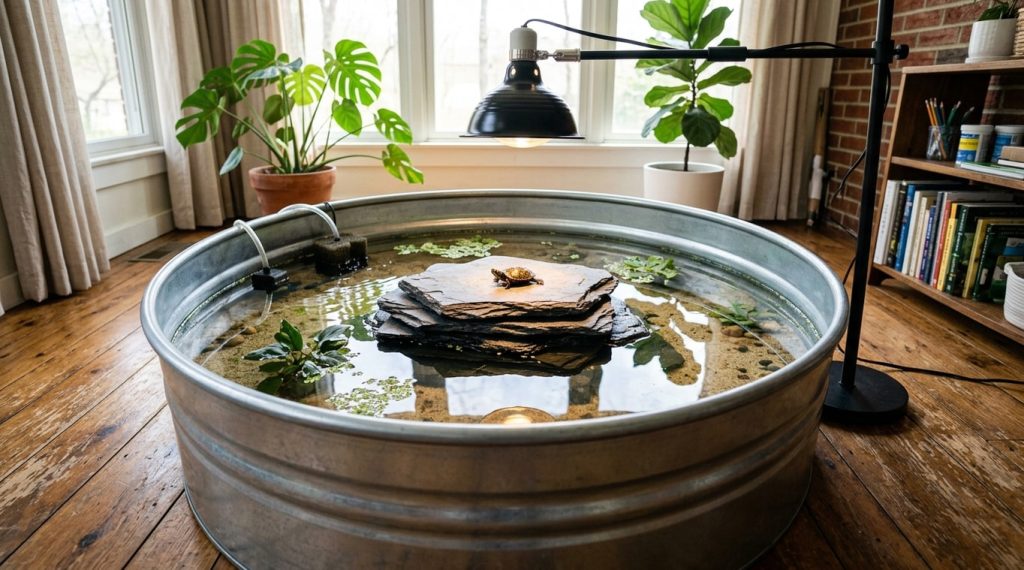
Take a low, wide stock tank or a rigid pond liner (my pick: 10x15 FT 20 Mil HDPE pond liner), set it on the floor, and build a shallow indoor pond.
Lamps go on stands above it. A stack of slate makes the basking island.
Why it works: The footprint is massive compared to a glass tank at the same price, and floor placement means no stand to buy. Viewing from above is also how your turtle’s wild cousins see the world, so they often act more naturally.
Cost: $80-150 depending on the tub.
If this idea hooks you, my indoor turtle pond ideas post has 17 bigger versions to grow into.
10. The Quarantine-First Hospital Tank
Boring name, possibly the most important setup on this list.
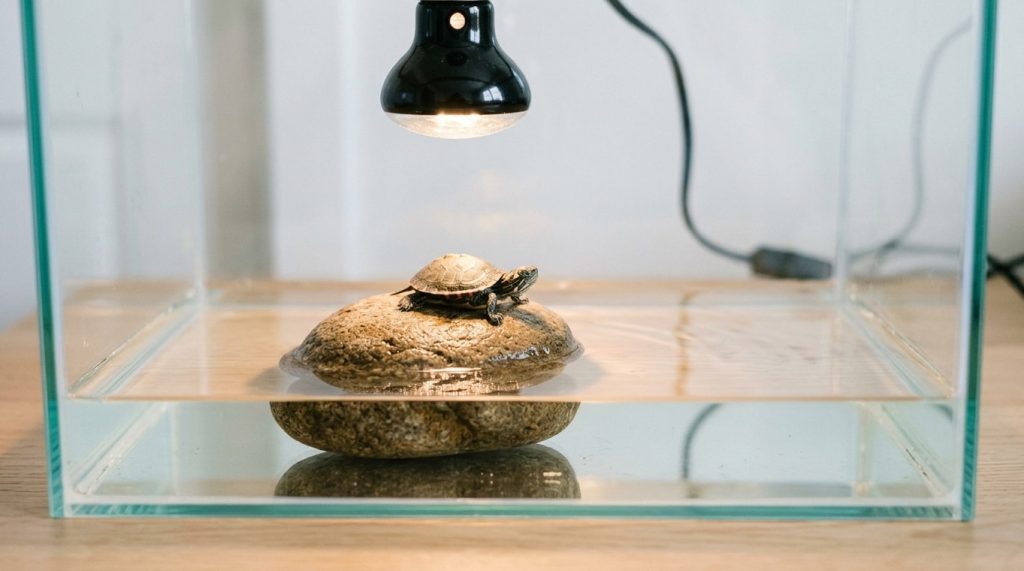
A simple 10-gallon tank with 2-3 inches of water, a basic basking rock, heat, and UVB. No substrate, minimal decor.
Why it works: New hatchlings, especially online or pet-store babies, often arrive with parasites, fungus, or respiratory bugs. Thirty days in a simple quarantine tank lets you spot soft shells, swollen eyes, or wheezing before the turtle moves into its forever setup. If you spot any of those, find a reptile-savvy vet near you.
Cost: $60-80 all in.
Keep it running afterward as a hospital tank or feeding tank. Feeding a messy baby in a separate tub keeps your main tank water cleaner for weeks longer.
Quick Comparison: Which Setup Fits You?
| Setup | Best For | Cost | Effort |
|---|---|---|---|
| 20-Gallon Long | First-time owners | $150-200 | Low |
| Plastic Tub Nursery | Tight budgets | $20-30 + lights | Low |
| Planted Jungle | Shy, stressed babies | +$30-50 | Medium |
| Bare-Bottom | Easy cleaning | Free | Lowest |
| Shoreline Beach | Natural look | +$20-40 | Medium |
| 40-Gallon Breeder | Buy-once planners | $200-300 | Low |
| Sponge Filter | Weak swimmers | $15-25 | Low |
| Divided Tank | Two hatchlings | +$15-30 | Medium |
| Indoor Tub Pond | Big floor space | $80-150 | Medium |
| Quarantine Tank | Every new turtle | $60-80 | Low |
Equipment Every Baby Tank Needs (No Matter Which Idea You Pick)
The setups change. The gear list doesn’t.
- UVB light: 10-12 hours daily. Without it, babies can’t process calcium and develop soft, deformed shells.
- Heat lamp: Basking spot at 90-95°F.
- Submersible heater: Water at 78-82°F, with a guard so the baby can’t wedge behind it.
- Gentle filter: Sponge filter or a baffled hang-on-back.
- Basking platform: Low, with an easy ramp.
- Water conditioner (recommended: reptile water conditioner): Tap water chlorine irritates hatchling eyes and skin.
- Calcium: Cuttlebone (my pick: natural cuttlefish bone) floating in the water doubles as a snack and a beak trimmer.
Feed daily at this age, mostly protein. Quality turtle pellets (my pick: Mazuri Aquatic Turtle Diet) are the backbone, and my baby turtle feeding guide breaks down the full menu by age.
5 Mistakes That Hurt Baby Turtles (Don’t Do These)
Deep water on day one. The number one killer. Babies exhaust themselves and drown in water adults handle fine.
Strong filter current. If your hatchling keeps getting pushed around, the filter wins every swim. Baffle it.
Small gravel substrate. Looks nice, gets swallowed, causes impaction. Bare bottom or big stones only.
Skipping UVB. The damage is invisible for months, and then suddenly the shell is soft and bumpy. By then it’s hard to undo.
Decor with trap spots. Any gap a baby can wedge into underwater is a drowning hazard. Test decor with your fingers before it goes in.
And if you’re setting up in the cold months, read my guide on taking care of a baby turtle in the winter because hatchlings handle temperature drops much worse than adults.
Baby Turtle Tank Setup: FAQs
How much water should a baby turtle tank have?
About 1.5 to 2 times the shell length. For a typical 2-inch hatchling, that’s 3-4 inches of water. Increase the depth gradually as your turtle grows and gets stronger.
What size tank does a baby turtle need?
A 20-gallon long is the sweet spot for one hatchling. Bigger is fine as long as the water stays shallow and exits stay easy. The old “10 gallons per inch of shell” rule kicks in more as they grow.
Can baby turtles live in deep water?
Not safely. Hatchlings are weak swimmers and can drown from exhaustion. Wait until your turtle is around 4 inches and swimming confidently before going deep. Species matters too, so check your specific turtle. Sliders get there faster than, say, baby softshells.
Do baby turtles need a filter?
Yes, but a gentle one. A sponge filter is the safest choice. Whatever you use, the current should be weak enough that your baby swims against it easily.
How warm should a baby turtle tank be?
Water at 78-82°F, basking spot at 90-95°F. Babies need it a few degrees warmer than adults because they’re more fragile and digest better when warm.
How often should I clean a baby turtle tank?
Partial water changes of about 25-30% weekly, with a full clean monthly. Shallow water fouls faster than deep water, so don’t skip weeks.
Start Simple, Upgrade Later
Here’s my honest advice after raising more hatchlings than I can count.
Your baby turtle does not care about aquascaping awards. It cares about warm shallow water, an easy place to bask, somewhere to hide, and food showing up daily.
Pick the setup that matches your budget today. The tub nursery grows into the 20-long, the 20-long grows into the 40 breeder, and one day you’ll be browsing turtle habitat design ideas for a turtle that no longer fits in your palm.
They grow fast. Annoyingly fast. Set up safe and shallow now, and enjoy the bottle-cap phase while it lasts.

About Author
Muntaseer Rahman started keeping pet turtles back in 2013. He also owns the largest Turtle & Tortoise Facebook community in Bangladesh. These days he is mostly active on Facebook.