What To Do With Infertile Turtle Eggs?
This post was created with help from AI tools and carefully reviewed by a human (Muntaseer Rahman). For more on how we use AI on this site, check out our Editorial Policy.
If your turtle has laid a clutch that will never hatch, you are not stuck with a useless pile of eggs. Infertile eggs still have real value, and dealing with them is simple once you know your options.
You can feed infertile turtle eggs to reptile pets like snakes and lizards, crush the shells into a calcium supplement (my pick: Rep-Cal Calcium with D3), or compost them as a mineral-rich garden fertilizer. They are also fine to leave outdoors or throw away. Eating them is legal in some places but not recommended, as turtle eggs can carry parasites and heavy metals.
New to turtle eggs in general? Start with our complete turtle eggs guide.
Not sure when your turtle eggs will hatch? Try our free Turtle Egg Hatch Calculator for instant predictions!
Key Takeaways
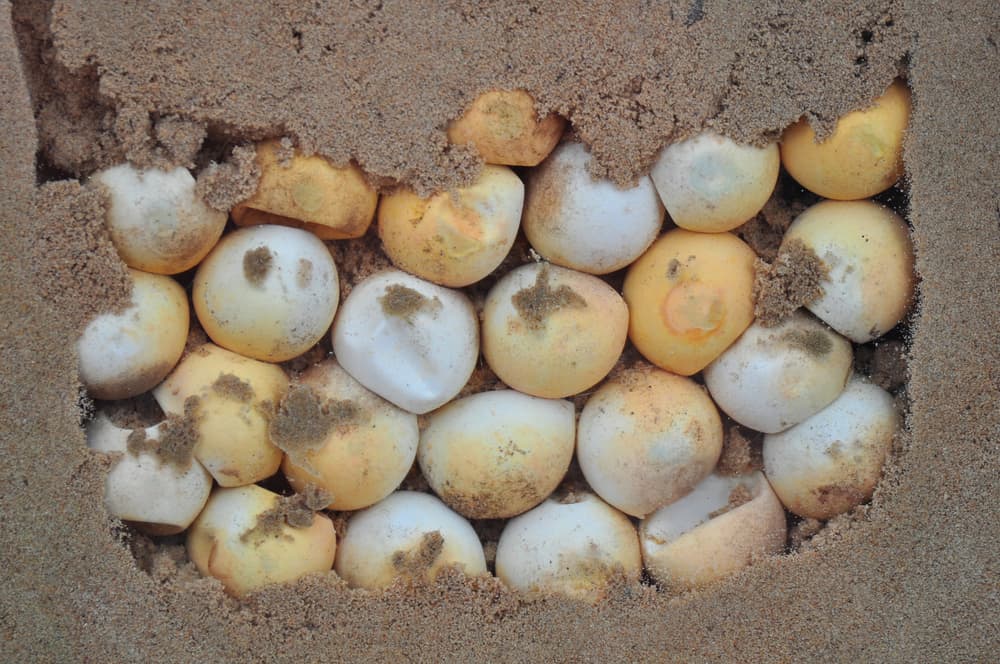
- Infertile eggs are yellow or white, never develop veins or chalking, and will not hatch.
- Reptile pets such as snakes, skinks, and monitor lizards can eat them, but boil the eggs first.
- Dried, crushed shells make a simple calcium supplement, and whole eggs break down into mineral-rich fertilizer.
- If you have no use for them, leaving them outdoors or binning them is perfectly fine.
4 Ways to Handle Infertile Turtle Eggs
Infertile eggs might look like a problem to throw out, but most of them are easy to put to good use. Here is what I do with mine.
1. Feed Them to Other Pets
Infertile eggs are a natural, nutrient-dense food for many carnivorous and omnivorous reptiles.
Hognose snakes, corn snakes, blue tongue skinks, monitor lizards, and tegus will all happily eat turtle eggs.
The yolk and white are rich in protein, while the shell supplies calcium that supports strong bones and shells.
Even turtles will eat eggs, so you can offer them back to your own animals. Turtles do eat eggs without any trouble.
Dry the empty shells, crush them, and sprinkle the powder over meals as a simple calcium boost.
Used this way, the shells act as a supplement for your other reptiles.
One important note: always boil the eggs first. Raw eggs can carry bacteria like Salmonella, so cooking them keeps your pets safe.

2. Are They Safe to Eat?
Turtle eggs are eaten as a delicacy in several parts of the world, which leads a lot of people to ask whether infertile ones are fair game.
Eating fertile turtle eggs is restricted in most regions for conservation reasons. Infertile eggs sit in a grayer area legally, but I still would not recommend eating them.
Turtle eggs can accumulate parasites and heavy metals such as mercury, which are linked to kidney and liver problems.
The old belief that turtle eggs boost virility or extend your lifespan has no scientific support, so there is no real upside to weigh against the risk.
For most keepers, eating them simply is not worth it.
3. Turn Them Into Fertilizer
Because they are packed with minerals, infertile eggs make an excellent soil amendment.
I bury mine in the garden, where they break down and feed the soil with calcium, phosphorus, and nitrogen.
Crushed shells work the same way and are especially good for calcium-loving plants like tomatoes and peppers.
4. Return Them to Nature or Discard Them
If you would rather do nothing at all, that is a fine choice too.
You can leave the eggs in the nest outdoors and let scavengers and the weather take care of them.
Or simply seal them in a bag and put them in the trash. Since they will never hatch, there is nothing to feel bad about.
This Hilarious Turtle Book Might Know Your Pet Better Than You Do

Let’s be real—most turtle care guides feel like reading a textbook written by a sleep-deprived zookeeper.
This one’s not that.
Told from the snarky point of view of a grumpy, judgmental turtle, 21 Turtle Truths You’ll Never Read in a Care Guide is packed with sarcasm, sass, and surprisingly useful insights.
And hey—you don’t have to commit to the whole thing just yet.
Grab 2 free truths from the ebook and get a taste of what your turtle really thinks about your setup, your food choices, and that weird plastic palm tree.
It’s funny, it’s honest, and if you’ve ever owned a turtle who glares at you like you’re the problem—you’ll feel seen.
Why Do Turtles Lay Infertile Eggs?
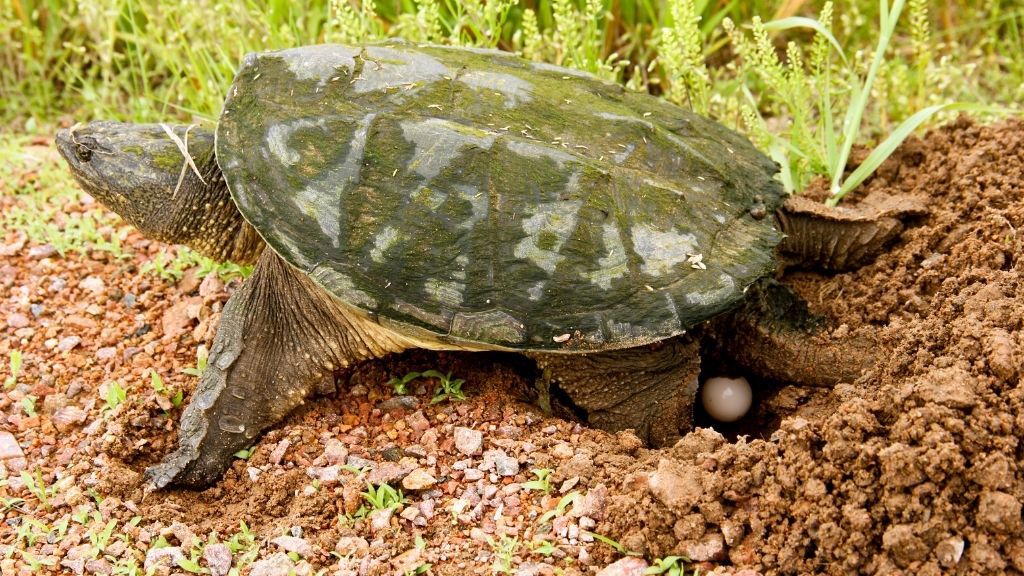
It catches many new keepers off guard, but a female turtle does not need a mate to lay eggs.
Turtles can also store sperm from a past mating for months or even years, then fertilize eggs later. The longer that gap stretches, the more likely a clutch comes out infertile.
That ability to lay eggs without mating explains a lot of unexpected clutches.
More often, though, a lone female simply produces eggs as she matures, with no male involved at all.
Once those eggs form, she cannot reabsorb them. So she lays them whether or not they were ever fertilized, and you end up with an infertile clutch. This is completely normal and happens every season.

How Can You Tell the Eggs Are Infertile?
A few simple checks will tell you whether a clutch has any chance of hatching.
- Color: fertile eggs often show a pink or red tint soon after laying, from visible blood vessels. Infertile eggs stay plain white or yellow.
- Candling: shine a flashlight through the shell. A fertile egg reveals a small dark spot and a web of veins. An infertile egg looks empty and uniform.
- Chalking: within a couple of weeks, fertile eggs develop a white, opaque band as the shell calcifies. Infertile eggs never chalk, and any discoloration is usually bacteria or mold.
How Long Before Infertile Eggs Go Bad?
Infertile eggs do not last forever. Left in a warm, humid nest, they usually start to rot within two to four weeks.
A sour, rotten smell is the clearest sign a clutch has gone off. Remove and discard the eggs at that point to avoid attracting pests and bacteria.
If you ever have fertile eggs you do not want to hatch, freezing them before disposal is the most humane option.
Before You Go
Not sure whether your clutch is fertile in the first place? This guide walks through every sign to look for.
How To Tell If Tortoise Eggs Are Fertile?

About Author
Muntaseer Rahman started keeping pet turtles back in 2013. He also owns the largest Turtle & Tortoise Facebook community in Bangladesh. These days he is mostly active on Facebook.