Leatherback Sea Turtle: The Ocean’s Ancient Gentle Giants

This post was created with help from AI tools and carefully reviewed by a human (Muntaseer Rahman). For more on how we use AI on this site, check out our Editorial Policy.
Picture a turtle the size of a small car diving deeper than a nuclear submarine while eating nothing but jellyfish.
That’s a leatherback sea turtle, and honestly, they’re way more impressive than they look in pictures.
These guys have been cruising the oceans for 100 million years—they literally swam with dinosaurs and somehow survived whatever killed the T-Rex. Now we’re watching them disappear in real-time, and yeah, we’d be idiots to let that happen.

What Makes Leatherbacks Different From Other Sea Turtles?
First off, they don’t even have a real shell.
While every other sea turtle is walking around with hard, bony armor like medieval knights, leatherbacks said “nah” and evolved a soft, rubbery skin instead. It feels like a leather jacket mixed with a wetsuit—hence the name.
Under that leathery skin sits a flexible matrix of tiny bone pieces called osteoderms. Think of it like chainmail made of bone fragments, all connected by joints that let the whole thing compress and expand when they dive thousands of feet deep.
Track A Real Sea Turtle With Each Bracelet!

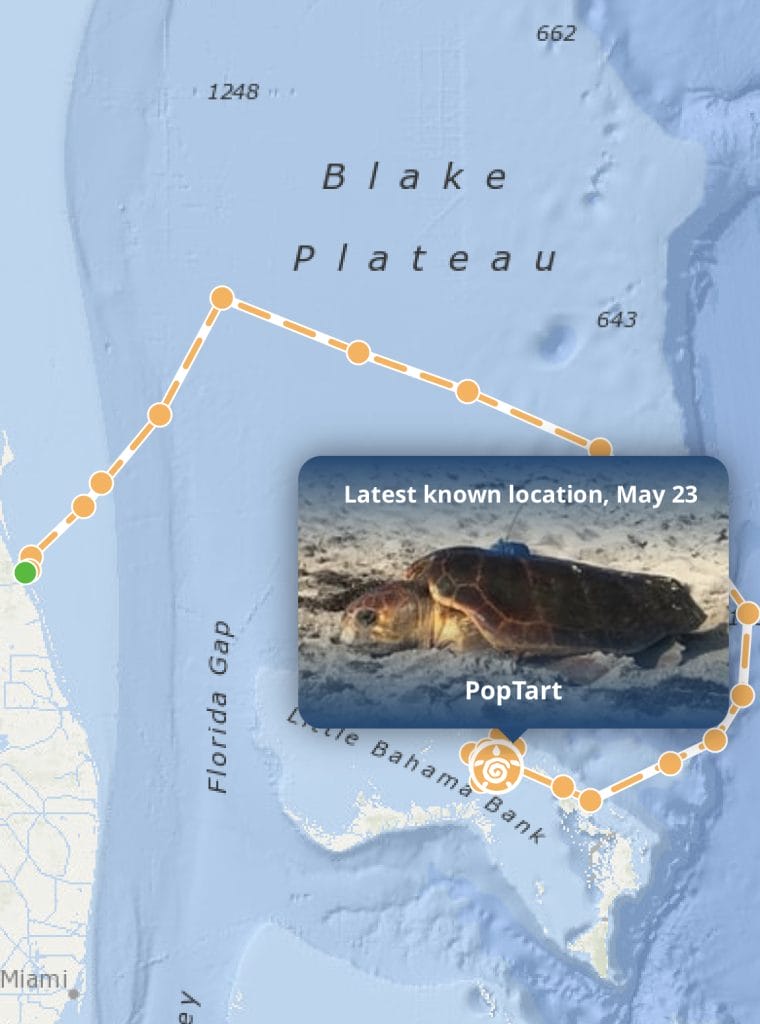
Learn Name
You get to learn your sea turtle’s name, size, age. Also a picture!
Enjoy Stories
Enjoy the story of your sea turtle, where it came from, where is it going?
Follow Me
You get to follow the sea turtle’s journey on an interactive tracking map!
Click Here & Use Coupon Code: THETURTLEHUB20 For A 20% Discount!
How Big Do Leatherback Sea Turtles Actually Get?
They’re Absolutely Massive
Your average leatherback is somewhere between 4-6 feet long and weighs around 600-1,000 pounds. But “average” doesn’t really capture how big these things can get.
The largest verified leatherback was found on a beach in Pakistan weighing 1,433 pounds and measuring almost 7 feet long. That’s heavier than a grand piano.
Some males can hit 1,000 pounds while females usually stick around 800 pounds—which is still more than a male grizzly bear, just to put things in perspective.
What They Look Like
Imagine someone took a torpedo, made it out of leather, and added ridges down the back.
Their bodies are teardrop-shaped and built for speed—they’ve got the most hydrodynamic design of any sea turtle. Seven ridges run down their back from head to tail, narrowing to a point at the end.
Their flippers are huge. Like, disproportionately huge.
Front flippers can span up to 8.9 feet on big individuals—longer than most people are tall. It’s like having arms that could touch both walls in most hallways at the same time.
Color-wise, they’re mostly slate black or dark blue-black on top with white or pale pink spots scattered around. No two leatherbacks have the same spot pattern, which is handy for researchers trying to identify individuals.
Their undersides are a patchwork of black and white that looks like someone spilled paint. And here’s something wild—when they get too hot, they actually turn pinkish as blood rushes to their skin to cool down. It’s like a built-in mood ring for overheating.
Baby Leatherbacks Start Tiny
Hatchlings are adorable little 2-3 inch things that weigh about as much as a golf ball.
They’ve got distinctive white or yellow racing stripes down their backs and flippers—which fade as they grow up. Within 7-13 years, these tiny things balloon up to 600+ pounds, making them one of the fastest-growing turtle species on the planet.
It’s like watching a hamster grow into a horse in a decade.

This Hilarious Turtle Book Might Know Your Pet Better Than You Do

Let’s be real—most turtle care guides feel like reading a textbook written by a sleep-deprived zookeeper.
This one’s not that.
Told from the snarky point of view of a grumpy, judgmental turtle, 21 Turtle Truths You’ll Never Read in a Care Guide is packed with sarcasm, sass, and surprisingly useful insights.
And hey—you don’t have to commit to the whole thing just yet.
Grab 2 free truths from the ebook and get a taste of what your turtle really thinks about your setup, your food choices, and that weird plastic palm tree.
It’s funny, it’s honest, and if you’ve ever owned a turtle who glares at you like you’re the problem—you’ll feel seen.
Leatherback Sea Turtles Eating Jellyfish: A Diet That Makes No Sense
They Basically Only Eat Jellyfish
Here’s where things get weird.
Leatherbacks are massive animals that need tons of calories to survive. So naturally, they eat almost nothing but jellyfish—which is 95% water and contains about 5 calories per serving.
That’s like trying to fuel a semi-truck with lettuce. It should not work.
But somehow, it does.
The Math Is Absolutely Bonkers
Scientists stuck cameras on leatherback shells to watch them eat. What they found was insane.
These turtles consume 73% of their body weight in jellyfish every single day during feeding season. For a 1,000-pound turtle, that’s 730 pounds of jellyfish daily—roughly 261 individual jellyfish.
Some overachievers were recorded eating up to 840 kilograms (about 1,850 pounds) of jellyfish in a single day, packing in around 16,000 calories. That’s like eating 32 large pizzas, except imagine the pizzas are 95% water and kinda gross.
They’re basically spending all day every day just shoveling jellyfish into their mouths like it’s an eating contest.
What Jellyfish Do They Prefer?
Leatherbacks aren’t super picky, but they’ve got favorites:
- Lion’s mane jellyfish (the big, hairy-looking ones)
- Moon jellyfish (the transparent UFO-looking ones)
- Sea nettles (the stingy boys)
- Barrel jellyfish (exactly what it sounds like)
They’ll also eat other squishy stuff like tunicates (sea squirts), salps, and the occasional fish or seaweed if it gets in the way.
How Their Mouths Are Built For This
Leatherbacks have sharp, pointed cusps on both their upper and lower jaws—basically like two pairs of daggers for stabbing slippery jellyfish. For bigger prey, they can scissor their jaws to slice jellies into bite-sized pieces.
But the really cool part is what’s inside their throat.
Running from their mouth all the way down to their stomach are these backward-pointing spines called papillae. Picture those anti-theft spikes in parking garages that let you drive in but destroy your tires if you try to back out.
That’s exactly what these do to jellyfish. Once a jelly goes down, it’s not coming back up.
These spines also squeeze out excess seawater as the jellyfish passes through—which is crucial because swallowing that much saltwater would actually poison them. It’s like a built-in juicer for jellyfish.
They Can’t Get Stung Because They’re Basically Armored
You’re probably wondering how they eat jellyfish without getting absolutely wrecked by stings.
The answer is their scales. Leatherback scales are made of keratin—the same stuff as your fingernails—and they overlap like roof shingles all over their body. Jellyfish stingers can’t penetrate that.
Combined with those throat spines, leatherbacks can safely munch on jellyfish that would kill most other animals. They’re basically immune to jellyfish venom, which is a pretty handy superpower when your entire diet is venomous floating blobs.
Why This Actually Matters For The Ocean
By eating literal tons of jellyfish, leatherbacks keep jellyfish populations from exploding.
This is more important than it sounds. Jellyfish eat massive amounts of baby fish (larvae), so when jellyfish populations boom, commercial fish populations crash. Leatherbacks are basically protecting our fishing industry just by doing their thing.
They’re like the ocean’s pest control, except the “pests” are venomous and the pest control weighs 1,000 pounds.
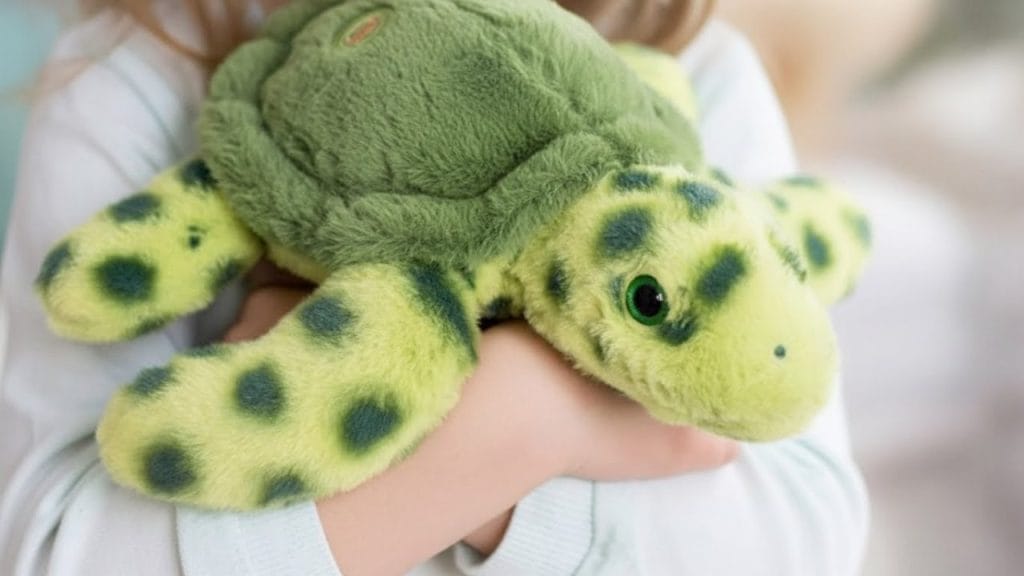
Snuggle a Plush. Track a Turtle.
🧸 + 🌊 = 🐢 A toy that connects you to real sea turtles in the wild.


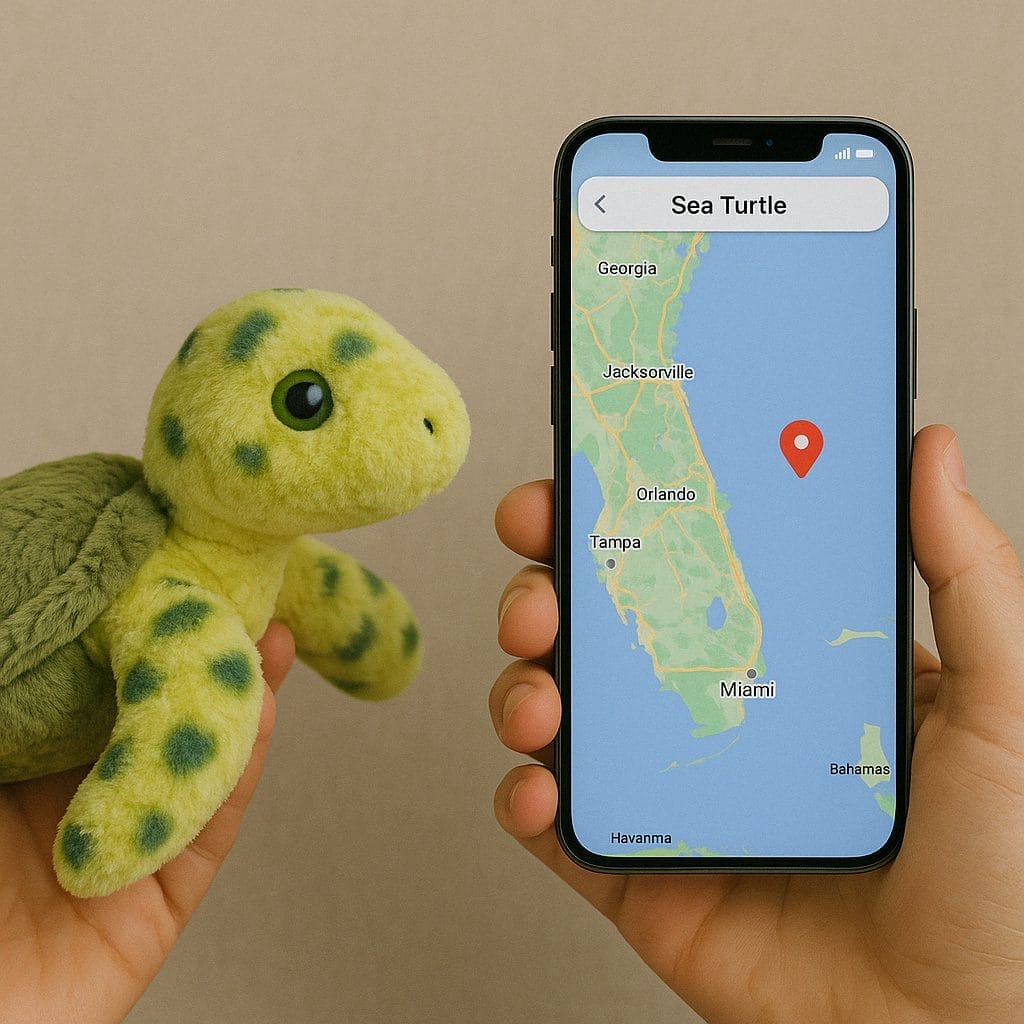
Meet Your Turtle
Scan the tag to meet your real sea turtle. Learn its name, species, and see a real photo!
Follow the Journey
Watch your turtle swim across the ocean using the 3D tracking map. It’s like a sea adventure in your pocket.
Support Wildlife
Every plush supports turtle conservation efforts through the Sea Turtle Conservancy.
Click Here & Use Coupon Code: THETURTLEHUB20 For A 20% Discount! (Your hug helps a turtle.)
Where Leatherback Sea Turtles Actually Live
They’re Basically Everywhere
Leatherbacks have the most insane range of any reptile on the planet.
They swim in every major ocean except the Arctic and Antarctic—though honestly, they get pretty close to both. They’ve been spotted as far north as Alaska and Norway and as far south as New Zealand and the southern tip of Africa.
The secret to their global domination is their ability to stay warm in cold water. Most sea turtles are stuck in tropical and subtropical zones because they’re cold-blooded. Leatherbacks basically said “watch this” and evolved a way to maintain their body heat even in freezing ocean water.
Where They Hunt For Food
Unlike other sea turtles that hang out near reefs and coastlines, leatherbacks spend most of their lives in the open ocean. They’re following jellyfish blooms across thousands of miles like nomadic hunters.
Major feeding hotspots include:
- Waters off Nantucket, Massachusetts (huge jellyfish buffet)
- Long Island Sound (might be accidental, might be intentional—scientists aren’t totally sure)
- Between Cape Hatteras and Delaware Bay (another jellyfish hotspot)
- California coast (where Pacific leatherbacks gorge themselves)
- Gulf of Saint Lawrence, Canada (cold water = lots of jellies)

Where They Lay Eggs
Leatherbacks nest on tropical and subtropical beaches around the world. The biggest nesting sites are:
Atlantic Ocean:
- Gabon, Africa (Mayumba National Park hosts possibly the world’s largest population—nearly 30,000 females nest there every year)
- Trinidad and Tobago
- Suriname, Guyana, and French Guiana
- Florida, USA
- U.S. Virgin Islands
Pacific Ocean:
- Indonesia (Bird’s Head Seascape)
- Papua New Guinea
- Solomon Islands
- Costa Rica
- Mexico
Indian Ocean:
- Sri Lanka
- Andaman and Nicobar Islands
The Pacific populations are in serious trouble compared to Atlantic ones, which we’ll get into later.
The Insane Things Leatherback Sea Turtles Can Do
They Dive Deeper Than Nuclear Submarines
Leatherbacks can dive to depths of over 4,000 feet (1,200 meters).
That’s deeper than any other turtle and deeper than most marine mammals. For perspective, most scuba divers tap out around 100 feet. Navy submarines typically operate around 800 feet.
These turtles are casually swimming around at depths where the pressure would crush a human like a soda can. They can stay down there for up to 85 minutes without coming up for air, though most dives last 3-8 minutes.
Their soft, flexible shell is specifically designed to handle this. The connected bone fragments can compress and expand like an accordion as their lungs change size during diving—think of it like biological crush-proof packaging.
They’re Basically Warm-Blooded (Sort Of)
This is where leatherbacks get really weird.
Sea turtles are reptiles, which means they’re supposed to be cold-blooded. Leatherbacks looked at that rule and decided it was more of a suggestion.
They can maintain their body temperature 18°F warmer than the surrounding water. That lets them hunt in water as cold as 40°F where no other sea turtle can survive.
Here’s how they pull it off:
Counter-Current Heat Exchange: Their blood vessels are arranged so warm blood from their heart passes right next to cold blood returning from their flippers. The heat transfers between them, warming up the cold blood before it reaches vital organs. It’s like having a built-in heat recovery system.
Fat Insulation: They’ve got a thick layer of blubber under their skin, basically like whale blubber. This traps heat inside their body.
Massive Size: Being huge helps them retain heat better than small animals—think about how a giant pot of water stays hot way longer than a cup.
Dark Color: Their dark skin absorbs heat from sunlight, giving them a little extra warmth boost.
The whole system is so good they can hunt in Arctic waters where other sea turtles would literally die. It’s like having a biological wetsuit that never comes off.
They Migrate Farther Than Most Animals
Leatherbacks take migration to a whole new level.
They average 3,700 miles each way between nesting beaches and feeding grounds. Some Pacific leatherbacks travel 6,000-10,000 miles across the entire Pacific Ocean—from Indonesia to California and back.
That’s not random wandering either. Scientists have tracked them and found they follow specific routes, timing their journeys to hit jellyfish blooms at exactly the right time. It’s like they’ve got a mental map of where the jellyfish parties are happening across thousands of miles of ocean.
They’re The Fastest Aquatic Reptiles
Pacific leatherbacks can hit speeds up to 22 mph in short bursts.
For comparison, Olympic swimmers max out around 5-6 mph. Michael Phelps would get absolutely dusted by a leatherback in a race.
They typically cruise around 35 kilometers per day during migration, which is like walking from downtown to the suburbs—except they’re doing it in the ocean while eating their body weight in jellyfish.

How Leatherback Sea Turtles Make More Leatherbacks
They Take Forever To Grow Up
Leatherbacks don’t reach sexual maturity until they’re about 16-25 years old.
That’s a long time to wait before you can start making babies, especially when only 1 in 1,000 hatchlings even survives to adulthood. This slow maturity rate is one reason why population recovery is so difficult—you can’t quickly bounce back when it takes decades to make new adults.
Scientists think leatherbacks can live 30-90 years, maybe longer. We don’t really know for sure because studying something that lives that long and spends all its time in the ocean is… challenging.
The Nesting Process Is A Whole Production
Female leatherbacks have this crazy navigation ability where they return to the exact same beach where they hatched—sometimes decades later.
Males never leave the ocean after hatching. They’re out there somewhere, doing their thing, and we know almost nothing about them because they never come to shore.
Females only nest every 2-3 years, but when they do, they go all in. They’ll lay 4-7 clutches in a single season, with about 10-14 days between each one.
Here’s what the nesting process looks like:
- Crawl onto the beach at night (because daytime would be too hot and too exposed to predators)
- Dig a body pit with their flippers
- Dig an egg chamber about 2-3 feet deep using only their rear flippers
- Drop about 80-100 eggs (each one the size of a billiard ball)
- Cover everything with sand
- Mess up a bigger area to confuse predators about where the actual nest is
- Drag themselves back to the ocean
The whole thing takes 1-2 hours and looks exhausting. These 800-pound animals are basically doing construction work on land where they can barely move.
The Eggs Are Left Completely Alone
Sea turtles don’t guard their nests or raise their young.
Mom lays the eggs, covers them, and peaces out. The babies are on their own from day one.
The eggs incubate for about 60-70 days. What happens during that time determines whether you get boys or girls.
Temperature Decides If You’re Male Or Female
This is one of the weirder things about sea turtles.
The gender isn’t determined by genetics like in humans—it’s determined by how hot the sand gets during incubation.
- Warmer than 85.1°F = mostly females
- Cooler than 85.1°F = mostly males
- Right around 85.1°F = mix of both
This is becoming a huge problem with climate change. Beaches are getting hotter, which means we’re getting way more female leatherbacks and way fewer males. Eventually, you run out of males and… well, that’s not great for making more turtles.
Hatching Is A Nightmare
After two months buried in sand, the baby leatherbacks dig their way out—usually at night when it’s cooler and there are fewer predators.
Then they have to make a desperate sprint across the beach to the ocean.
This is where things get brutal. On their way to the water, hatchlings get picked off by:
- Ghost crabs
- Sea birds (gulls, frigatebirds, herons)
- Raccoons, foxes, dogs
- Snakes
- Monitor lizards
If they make it to the water (big if), they still have to deal with:
- Sharks
- Large fish
- More birds diving from above
Only 1 in 1,000 leatherback hatchlings makes it to adulthood. That’s the worst survival rate of all seven sea turtle species.
Think about that. A mother might lay 500 eggs in a season. Statistically, maybe half of one baby from all those eggs will survive long enough to have its own babies.
The “Lost Years” Mystery
Once baby leatherbacks hit the water, they vanish.
We call this the “lost years” because we have no idea where they go or what they do. Most sea turtle species hang out in nearshore habitats as juveniles, but not leatherbacks—they head straight for the open ocean and disappear.
Some might be bobbing around in floating mats of seaweed. Some might be diving deep. We just don’t know. It’s like they enter witness protection for the first few years of their lives.

Leatherback Sea Turtle Conservation: Why We’re Losing Them
The Numbers Are Bad. Really Bad.
Leatherbacks are listed as Vulnerable globally, but that’s the nice way of saying “in serious trouble.”
Different populations are doing… differently bad:
Critically Endangered (one step from extinct):
- West Pacific: Down 80%
- East Pacific: Down 97%
- Southwest Atlantic
- Southwest Indian Ocean
Endangered:
- Northwest Atlantic (the least terrible situation, which isn’t saying much)
We Don’t Even Know How Bad It Is:
- Southeast Atlantic
- Northeast Indian Ocean
Global populations have crashed by 40% in just three generations. The Pacific situation is a complete disaster—Eastern Pacific leatherbacks went from tens of thousands to fewer than 1,000 nesting females.
In Malaysia, they went from 10,000 nests per year in 1953 to less than two nests per year since 2003. That’s basically local extinction happening in real-time.
What’s Killing Them
1. Fishing Gear Is The Biggest Killer
Leatherbacks get tangled in fishing gear and drown.
They need to surface to breathe, but when they’re stuck underwater in a net or wrapped in longline gear, they can’t. It’s basically like drowning in slow motion, and it’s happening to thousands of them every year.
The gear that kills them includes:
- Drift gillnets
- Longline hooks
- Trawl nets
- Lobster and crab pot lines
Some fisheries have started using Turtle Excluder Devices (TEDs), which are basically escape hatches built into nets. The problem is these don’t work as well for leatherbacks because they’re so big—they don’t always fit through the escape routes designed for smaller turtles.
2. People Keep Stealing Their Eggs
Even though it’s illegal in most places, leatherback eggs are still being harvested.
In some cultures, the eggs are considered a delicacy. In others, people think they’re aphrodisiacs (they’re not). Some places use them in traditional medicine.
Asian egg collection has been identified as a major factor in Pacific population collapses. Thailand and Malaysia used to have thriving leatherback populations—now they’re basically gone because people took too many eggs for too long.
It doesn’t matter how many turtles survive in the ocean if we keep stealing their babies before they hatch.
3. Plastic Is Literally Killing Them
Remember how leatherbacks eat jellyfish?
Plastic bags floating in the ocean look exactly like jellyfish to a turtle. So do balloons. So does plastic sheeting.
When leatherbacks eat plastic, bad things happen:
- Their stomachs get blocked
- They starve because their gut is full of indigestible trash
- Toxins from the plastic poison them
- Sharp plastic edges cause internal damage
About 34% of dead leatherbacks examined by scientists had plastic blockages. Some had up to 11 pounds of plastic in their stomachs.
In the Pacific, an estimated one-third of all adult leatherbacks have eaten plastic. That’s not sustainable.
Every plastic bag that ends up in the ocean is potentially a death sentence for a leatherback.
4. Beach Development Is Destroying Nesting Sites
Coastal development is wrecking the beaches where leatherbacks need to nest:
- Construction eliminates nesting areas
- Artificial lights confuse hatchlings (they head toward lights instead of the ocean)
- Beach armoring and sea walls block access
- People on beaches disturb nesting females
- Beach pollution contaminates nests
- Vehicle traffic crushes eggs and hatchlings
Leatherbacks are creatures of habit—females return to the same beaches where they were born. If that beach becomes a condo development, they’re out of luck.
5. Climate Change Is A Slow-Motion Disaster
Rising temperatures are hitting leatherbacks from multiple angles:
- Feminization: Warmer sand = more females, fewer males. Eventually you run out of males entirely and the population collapses.
- Beach Erosion: Stronger storms wash away beaches and flood nests.
- Sea Level Rise: Higher seas inundate nesting areas.
- Food Shifts: Jellyfish distribution is changing with ocean temperature, messing up migration routes that have worked for millions of years.
- More Extreme Weather: Hurricanes, typhoons, and storms destroy nests and kill turtles.
The climate that leatherbacks evolved in over 100 million years is changing faster than they can adapt.
6. Boats Hit Them
Large ships strike and kill leatherbacks, especially in busy shipping lanes that overlap with migration routes.
A 1,000-pound turtle is tough, but it’s not tougher than a cargo ship. These collisions often go unnoticed by ship crews but are fatal for the turtles.

Conservation Efforts That Are Actually Working
Despite all the bad news, some people are fighting hard to save leatherbacks—and they’re having success.
NOAA’s Species in the Spotlight
In 2015, NOAA made Pacific leatherbacks a top priority. They’re throwing resources at:
- Research on population dynamics
- International partnerships for beach protection
- Modified fishing gear to reduce bycatch
- Protecting critical feeding and migration habitat
- Public awareness campaigns
The goal is simple: prevent extinction. They’re working with Pacific nations to coordinate conservation across the turtles’ entire range.
The Leatherback Project (Panama and Ecuador)
This organization is getting results:
- 86 square kilometers protected through wildlife refuges
- 300+ leatherback nests monitored
- 6,494 hatchlings protected
- 118 nesting females ID-tagged for tracking
- 40 fishers trained in safe bycatch release
- Advanced Rights of Nature legislation (giving legal rights to ecosystems)
They’re working directly with local communities, which is crucial. Conservation only works when the people living near turtles are invested in protecting them.
Indonesia Conservation Programs
NOAA, World Wildlife Fund, and Indonesian partners are working on Buru and Kei Islands to:
- Monitor key nesting beaches
- Work with communities to stop egg harvesting
- Create alternative income through ecotourism
- Implement the National Plan of Action for sea turtles
This is working. Local communities that used to harvest eggs and turtles are now protecting them. There’s a cultural shift happening where protecting leatherbacks is becoming a source of pride.
What’s Actually Improving
- Atlantic populations are stable or increasing (not amazing, but better than crashing)
- Community-led conservation has dramatically reduced egg harvesting in targeted areas
- Marine Protected Areas give leatherbacks safe places to feed
- Satellite tracking helps identify critical habitats that need protection
- International cooperation is increasing for this highly migratory species
Legal Protections
Leatherbacks are protected by:
- U.S. Endangered Species Act (Endangered status)
- Convention on International Trade in Endangered Species (CITES)
- Inter-American Convention for the Protection and Conservation of Sea Turtles
- National laws in most countries where they live
The laws exist. The challenge is enforcing them, especially on the open ocean and in countries with limited resources.
Albino Leatherback Sea Turtles: Even Rarer Than You Think
True Albinos Are Insanely Rare
Albino leatherbacks exist, but you’re probably never going to see one.
Albinism is a genetic mutation that prevents melanin production—meaning instead of dark blue-black, you get white or pale pink. It’s already super rare in most animals, but in leatherbacks it’s basically a unicorn situation.
There are a few photos floating around online of pale leatherback hatchlings, but true albinos are exceptionally rare.
Life Is Extra Hard For Albino Leatherbacks
Remember how only 1 in 1,000 normal leatherback hatchlings survives? Albino hatchlings have it way worse:
They’re Super Visible: That pale coloration makes them stand out like a neon sign to predators during the sprint from nest to ocean. It’s like wearing a “please eat me” sign.
UV Damage: No melanin = no sun protection. Their skin gets damaged by UV rays way faster than normal turtles.
Temperature Problems: Dark coloration helps leatherbacks absorb heat. Without it, albinos might struggle to maintain proper body temperature—which is already challenging for a reptile trying to stay warm in cold water.
Vision Issues: Albinism often messes with eye development. Poor vision is a death sentence when you need to find jellyfish and avoid predators.
Given these challenges, basically no albino leatherbacks are believed to survive to adulthood. They’re dealing with the same brutal odds as normal hatchlings plus a bunch of extra handicaps.
Leucism Is More Common (But Still Rare)
There’s a similar condition called leucism where turtles have partial loss of pigmentation—white patches but still some normal coloring and dark eyes (not the pink/red eyes of albinos).
Leucistic leatherbacks have better survival odds than true albinos, but they’re still dealing with increased visibility to predators. It’s like having a target painted on part of your body instead of your whole body.
Why We Still Care About Rare Color Morphs
Even though albino and leucistic leatherbacks rarely survive, they’re scientifically interesting.
They provide information about genetic diversity in the population. Plus, when people see photos of a pale baby leatherback, it gets them interested in turtle conservation—and we’ll take any awareness boost we can get.
How You Can Actually Help Save Leatherback Sea Turtles
Things You Can Do Right Now
Cut The Plastic
Every plastic bag in the ocean is a potential turtle killer.
Here’s what actually helps:
- Stop using single-use plastic bags (get reusable bags and actually use them)
- No balloons at beach parties (they end up in the ocean looking exactly like jellyfish)
- Skip the plastic straws (turtles eat these too)
- Join beach cleanups (or just pick up trash when you see it)
- Properly dispose of plastic (don’t let it blow away or wash into storm drains)
- Support plastic bans (vote for politicians who back single-use plastic legislation)
If you think “one person won’t make a difference”—remember that one-third of Pacific leatherbacks have eaten plastic. Every piece you keep out of the ocean matters.
Eat Sustainable Seafood (Or Less Seafood)
The fishing industry is the #1 killer of leatherbacks.
You can help by:
- Choosing seafood from turtle-safe fisheries (look for certification labels)
- Asking restaurants about their sourcing (make them think about it)
- Eating less seafood overall (you don’t need fish every meal)
- Supporting sustainable fishing practices (with your wallet)
When you buy cheap shrimp caught with destructive methods, you’re indirectly paying for dead sea turtles.
Protect Nesting Beaches If You Visit Them
If you’re lucky enough to be near a nesting beach:
- Turn off lights visible from the beach during nesting season (May-October in most places)
- Stay off the dunes (that’s where they nest)
- Fill in any holes you dig (hatchlings fall in and get trapped)
- Never touch or disturb nesting turtles (it stresses them and they might abandon the nest)
- Never touch hatchlings (they need to make the journey on their own)
- Report injured turtles immediately (most beaches have a hotline)
Choose Responsible Ecotourism
If you want to see sea turtles:
- Use tour operators with certified best practices (not random guys with boats)
- Maintain proper distance (no touching, no chasing)
- Never ride or grab turtles (yes, people do this, and it’s awful)
- Support communities doing conservation work (spend money there)
Bad tourism stresses turtles. Good tourism funds their protection. Choose good tourism.
Fight Climate Change
Climate change is feminizing leatherback populations and destroying nesting beaches.
What helps:
- Reduce your carbon footprint (drive less, fly less, consume less)
- Support renewable energy (solar, wind, whatever works locally)
- Vote for climate action (policy matters more than individual action)
- Support organizations addressing climate (money talks)
You’re not going to solve climate change personally, but you can add your voice and vote to the collective push for change.
Support Organizations Actually Doing The Work
If you’ve got money to spare, these groups are fighting hard for leatherbacks:
- The Leatherback Trust (research and conservation)
- The Leatherback Project (Panama and Ecuador programs)
- World Wildlife Fund (global conservation)
- Sea Turtle Conservancy (research and advocacy)
- Oceanic Society (marine conservation)
- NOAA Fisheries conservation programs (government research and protection)
Even $20/month to one of these organizations does more than most people realize. They need sustained funding to maintain protection programs.
Spread The Word
Most people don’t know leatherbacks are in trouble.
Share information on social media. Talk about it with friends. Contact your representatives about marine protection. Public awareness drives policy changes and conservation funding.
You don’t need to be a marine biologist to help save leatherbacks—you just need to give a damn and do something about it.
10 Mind-Blowing Leatherback Sea Turtle Facts
1. They’re Living Fossils
Leatherbacks have looked basically the same for 100 million years. They swam with dinosaurs and somehow survived whatever killed everything else.
2. They Dive Deeper Than Submarines
Nearly 4,000 feet deep. That’s deeper than most marine mammals and way deeper than any other turtle. At that depth, the pressure is about 1,800 pounds per square inch.
3. They’re Speed Demons
Pacific leatherbacks can hit 22 mph in short bursts—making them the fastest aquatic reptiles on the planet. Michael Phelps tops out around 6 mph, for comparison.
4. Their Appetite Is Ridiculous
They eat up to 73% of their body weight daily during feeding season. That’s like a 200-pound person eating 146 pounds of food every day. Except it’s all jellyfish.
5. They’re Ultra-Marathon Swimmers
Some migrate over 10,000 miles annually between nesting and feeding grounds. That’s roughly the distance from New York to Tokyo.
6. They Can Stay Warm In Freezing Water
They maintain body temps 18°F above ambient water, allowing them to hunt in 40°F water where other sea turtles would die.
7. The Biggest One Ever Found Was Massive
The largest verified leatherback weighed 1,433 pounds and measured almost 7 feet long—heavier than a grand piano and longer than most people are tall.
8. They Have No Teeth But Don’t Need Them
Instead of teeth, they have sharp, pointed cusps for gripping and backward-pointing throat spines that look like something from a horror movie.
9. Their Shell Isn’t Actually A Shell
It’s leathery skin over a flexible arrangement of tiny bone pieces. It can compress and expand during deep dives like biological bubble wrap.
10. They’re Ecosystem Engineers
By eating massive amounts of jellyfish, they prevent jellyfish blooms that would otherwise decimate fish populations. They’re basically protecting our seafood supply just by existing.
How Leatherbacks Stack Up Against Other Sea Turtles
Size Comparison (They’re Huge)
Leatherbacks make other sea turtles look like toys:
| Species | Average Length | Average Weight |
|---|---|---|
| Leatherback | 4-6 feet | 600-1,500 lbs |
| Green Sea Turtle | 3-4 feet | 300-400 lbs |
| Loggerhead | 2.5-3.5 feet | 200-350 lbs |
| Hawksbill | 2-3 feet | 100-150 lbs |
| Kemp’s Ridley | 2 feet | 75-100 lbs |
| Olive Ridley | 2-2.5 feet | 75-100 lbs |
| Flatback | 3 feet | 150-200 lbs |
What They Eat (Leatherbacks Are Weird)
Different sea turtles have completely different diets:
- Leatherback: Almost exclusively jellyfish and soft stuff (gelatinivores)
- Green: Basically vegetarians—seagrass and algae
- Loggerhead: Carnivores—crabs, mollusks, hard-shelled prey
- Hawksbill: Sponge specialists (and somehow immune to sponge toxins)
- Kemp’s Ridley: Carnivores—crabs, fish, some jellyfish
- Olive Ridley: Omnivores—jellyfish, algae, shrimp, whatever
- Flatback: Carnivores—sea cucumbers, jellyfish, mollusks
The Shell Situation (Leatherbacks Are Unique)
This is the big difference.
All other sea turtles have hard, bony shells covered in scutes (those plate-looking things). Their shells are basically permanent armor that doesn’t bend.
Leatherbacks said “nah” and evolved soft, leathery skin over flexible bone fragments instead. This lets them compress their bodies during deep dives—which is great for diving 4,000 feet but probably terrible for defense against predators.
It’s a trade-off: diving ability versus protection. Leatherbacks chose diving.
Scientific Classification (For The Nerds)
- Kingdom: Animalia (they’re animals, duh)
- Phylum: Chordata (they have a spine)
- Class: Reptilia (they’re reptiles)
- Order: Testudines (they’re turtles)
- Suborder: Cryptodira (hidden-neck turtles)
- Family: Dermochelyidae (this family has exactly one living member)
- Genus: Dermochelys (also just one living member)
- Species: Dermochelys coriacea (the leatherback)
Here’s what makes this interesting: Leatherbacks are the only surviving member of their entire family.
They split off from other sea turtles about 49-70 million years ago. All their closest relatives went extinct. They’re basically the lone survivor of an ancient lineage—which makes letting them go extinct even more tragic.
All other living sea turtles belong to the family Cheloniidae (the hard-shelled crew). Leatherbacks are in their own category entirely.
Questions People Actually Ask About Leatherback Sea Turtles
How long do leatherback sea turtles live?
Honestly, we’re not totally sure. Estimates range from 30 to 90+ years, maybe longer. They live their entire lives in the ocean and are hard to track, so getting accurate lifespan data is tough. What we do know is they live long enough that studying their full life cycle is basically a career-long commitment.
Why are they called leatherback turtles?
Their shell is covered with tough, leathery skin instead of hard scutes like other turtles. It literally feels like leather. Not very creative naming, but it makes sense.
Can you keep a leatherback sea turtle as a pet?
Absolutely not. They’re endangered and protected by international law. Even if it were legal (it’s not), they need the entire ocean, dive thousands of feet deep, eat hundreds of pounds of jellyfish daily, and grow to over 1,000 pounds. You couldn’t keep one in captivity even if you wanted to.
Do leatherback sea turtles have any predators?
Adult leatherbacks are so big they don’t have many natural predators—mostly just sharks and killer whales. But their eggs and babies are a different story. Everything eats those: crabs, birds, raccoons, snakes, fish, bigger turtles. It’s brutal.
How do leatherback turtles sleep?
They can rest underwater by slowing their metabolism and surfacing every once in a while to breathe. Some might sleep while slowly swimming or floating at the surface. We don’t really know the details because, again, they live in the open ocean and are hard to study.
What’s the difference between Pacific and Atlantic leatherbacks?
Pacific leatherbacks are generally larger and genetically distinct from Atlantic populations. More importantly, Pacific populations are in way worse shape—down 80-97% depending on which group you’re looking at. Atlantic populations are more stable.
Can leatherback turtles breathe underwater?
Nope. They’re reptiles and need to surface to breathe air, just like whales and dolphins. They can hold their breath for up to 85 minutes during deep dives, but they still need air eventually.
Why are they endangered if they’ve been around for 100 million years?
Because humans showed up and wrecked everything in about 50 years. Fishing gear kills them, we steal their eggs, plastic pollution looks like food, we build on their nesting beaches, and climate change is throwing off the whole system. They survived whatever killed the dinosaurs but might not survive us.

About Author
Muntaseer Rahman started keeping pet turtles back in 2013. He also owns the largest Turtle & Tortoise Facebook community in Bangladesh. These days he is mostly active on Facebook.