Green Sea Turtle: The Ocean’s Vegetarian Giant (That’s Not Actually Green)
This post was created with help from AI tools and carefully reviewed by a human (Muntaseer Rahman). For more on how we use AI on this site, check out our Editorial Policy.
Here’s something wild: green sea turtles aren’t named for their shells.
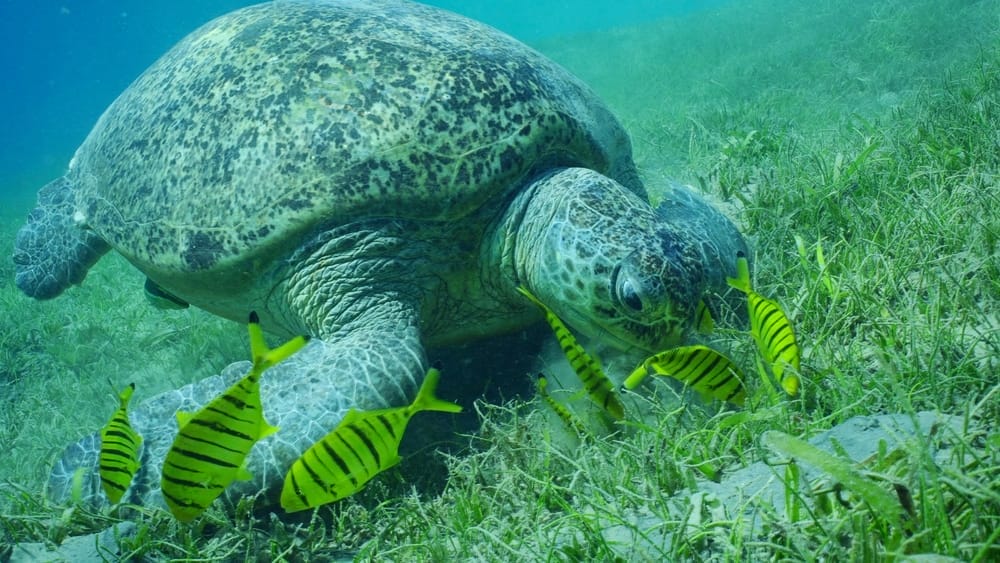
Their shells are brown, olive, sometimes nearly black. So where does “green” come from? Their fat is literally green because they eat so much seagrass and algae.
Think about that for a second. You literally are what you eat, and these turtles took that saying way too seriously.
What Makes Green Sea Turtles So Special?
Green sea turtles (Chelonia mydas) are the largest hard-shelled sea turtles on the planet.
We’re talking 300-500 pounds of pure ocean-going herbivore. That’s heavier than a motorcycle, and they glide through water like it’s nothing.
But here’s the crazy part: they’re the only sea turtle that went full vegetarian as adults. Every other sea turtle species eats jellyfish, crabs, sponges – these guys? Straight-up salad bar.

Track A Real Sea Turtle With Each Bracelet!

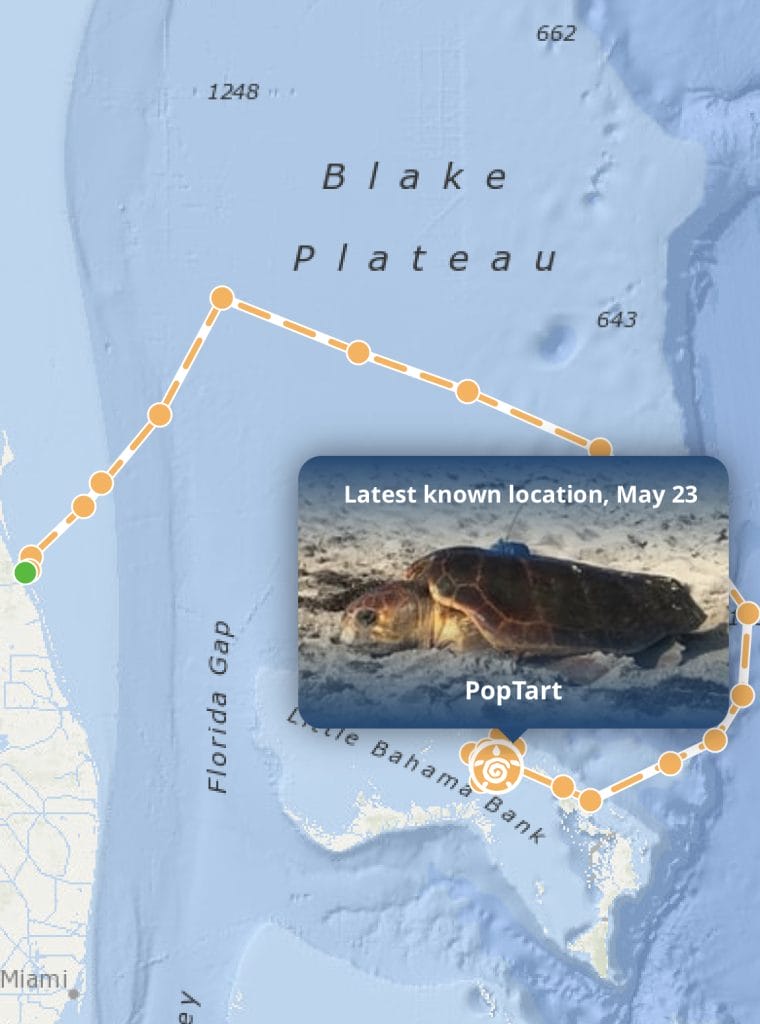
Learn Name
You get to learn your sea turtle’s name, size, age. Also a picture!
Enjoy Stories
Enjoy the story of your sea turtle, where it came from, where is it going?
Follow Me
You get to follow the sea turtle’s journey on an interactive tracking map!
Click Here & Use Coupon Code: THETURTLEHUB20 For A 20% Discount!
The Size Factor (They’re Huge)
Adult green sea turtles can reach 3-5 feet in length.
Males are slightly bigger than females and sport longer tails. Their shells have a distinctive tear-drop or heart shape that looks smooth compared to other sea turtles.
Despite their massive size, they can hit speeds up to 35 mph in short bursts when they need to escape danger. That’s faster than most people can drive in a school zone.
This Hilarious Turtle Book Might Know Your Pet Better Than You Do

Let’s be real—most turtle care guides feel like reading a textbook written by a sleep-deprived zookeeper.
This one’s not that.
Told from the snarky point of view of a grumpy, judgmental turtle, 21 Turtle Truths You’ll Never Read in a Care Guide is packed with sarcasm, sass, and surprisingly useful insights.
And hey—you don’t have to commit to the whole thing just yet.
Grab 2 free truths from the ebook and get a taste of what your turtle really thinks about your setup, your food choices, and that weird plastic palm tree.
It’s funny, it’s honest, and if you’ve ever owned a turtle who glares at you like you’re the problem—you’ll feel seen.
The Diet That Literally Turns Them Green
Remember how I said they’re herbivores? Here’s what makes that interesting.
Baby green sea turtles are actually omnivores. They’ll munch on jellyfish, small crabs, sponges, and anything protein-rich they can find.
But somewhere around the time they recruit to coastal waters (roughly when their shell reaches 17 inches), something clicks. They switch to a plant-based diet that would make any vegan jealous: seagrass, algae, and seaweed.
This dietary shift isn’t just about preference. Their jaw structure changes too – they develop finely serrated edges that work like a saw, perfect for tearing seagrass and scraping algae off rocks.
And that green fat? It’s not just for show. Scientists believe the compounds in their veggie diet literally pigment their cartilage and fat tissue greenish.

Snuggle a Plush. Track a Turtle.
🧸 + 🌊 = 🐢 A toy that connects you to real sea turtles in the wild.
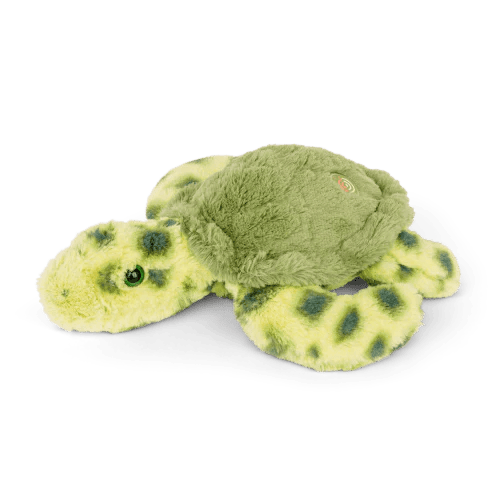
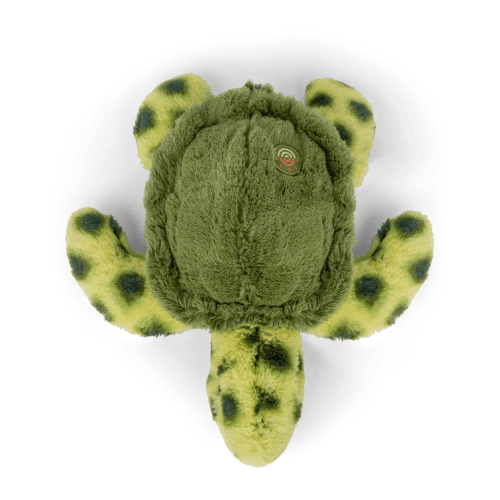
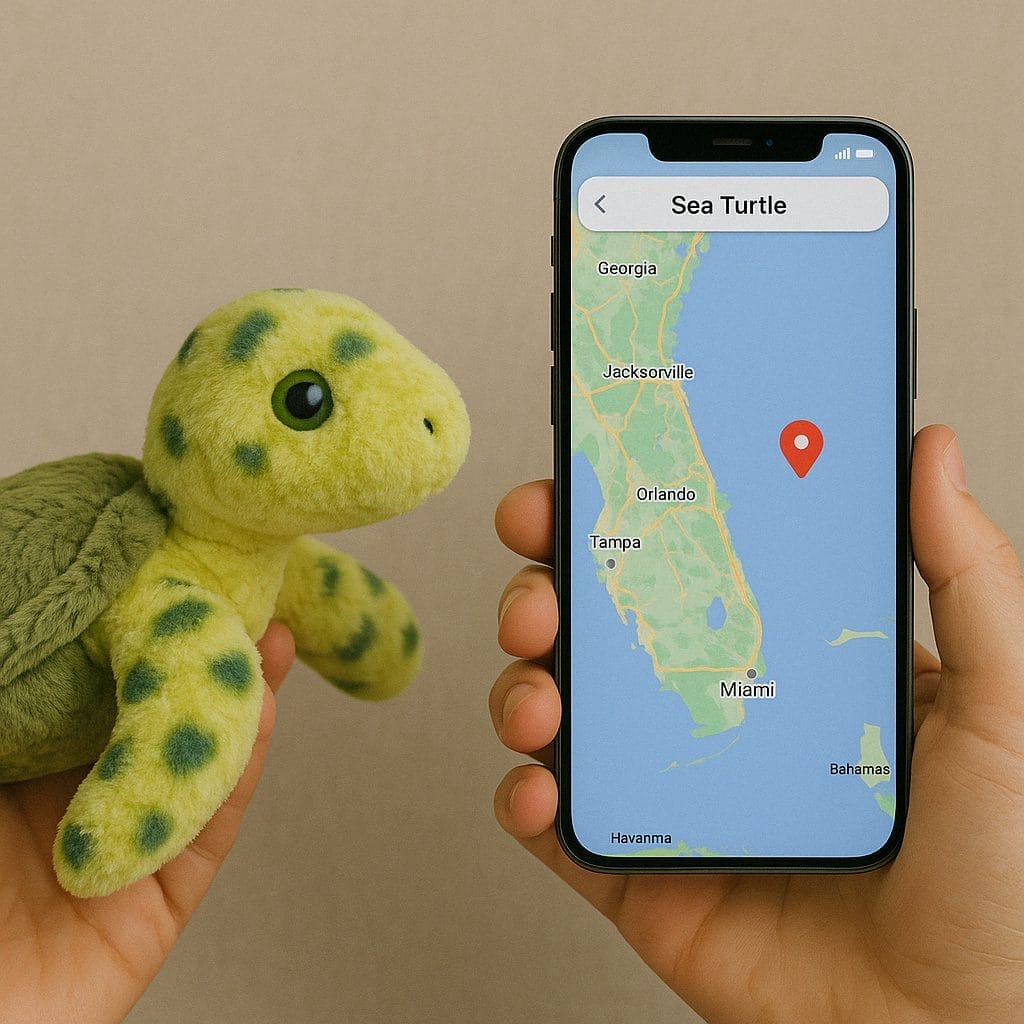
Meet Your Turtle
Scan the tag to meet your real sea turtle. Learn its name, species, and see a real photo!
Follow the Journey
Watch your turtle swim across the ocean using the 3D tracking map. It’s like a sea adventure in your pocket.
Support Wildlife
Every plush supports turtle conservation efforts through the Sea Turtle Conservancy.
Click Here & Use Coupon Code: THETURTLEHUB20 For A 20% Discount! (Your hug helps a turtle.)
Ecosystem Heroes (Yes, Really)
Green sea turtles aren’t just eating seagrass for fun.
They’re basically the lawn mowers of the ocean. By grazing on seagrass beds, they prevent the grass from growing too long and suffocating itself.
Healthy, well-maintained seagrass beds are nurseries for countless fish species, carbon sinks that help fight climate change, and oxygen factories for the ocean.
Without green turtles doing their thing? Those seagrass meadows would become overgrown, die off, and entire ecosystems would collapse.
Pretty important job for a creature that looks like it’s just vibing in the water.
Migration: The Ultimate Road Trip (Except It’s Water)
Green sea turtles are serious travelers.
They can migrate over 2,600 kilometers (1,615 miles) between feeding grounds and nesting sites. Some individuals have been tracked going even farther.
One migration from Chagos to Somalia clocked in at 3,979 km (2,472 miles). That’s like swimming from New York to London.
How do they navigate? They use Earth’s magnetic field like a built-in GPS system. Hatchlings imprint on the magnetic signature of their birth beach, and decades later – even after traveling thousands of miles – they can find their way back.
It’s like if you moved away from home when you were a baby and then, 30 years later with no map or phone, you could walk straight back to your childhood bedroom. Wild.
The Natal Homing Phenomenon (Mind-Blowing Navigation)
Female green sea turtles have this insane ability called natal homing.
They return to the exact same beach where they hatched to lay their own eggs. Not just the same country or coastline – the same beach.
They reach sexual maturity somewhere between 20-50 years old (usually around 25-35 years), which means they’re remembering and navigating back to a place they left as a tiny hatchling decades ago.
Scientists think they use multiple navigation cues: magnetic fields, ocean currents, visual landmarks, even chemical signatures in the water. It’s like they have every navigation app running simultaneously.
Breeding Season: When Ancient Rituals Meet Modern Threats
Every 2-4 years, female green sea turtles make the journey back to their nesting beaches.
They mate in shallow waters offshore, then the females haul themselves onto the beach at night. Using their flippers, they dig a pit in the sand and lay 100-200 eggs per clutch.
Here’s the thing: they don’t just nest once. A single female will lay multiple clutches (2-8 times) in one season, with about two weeks between each nesting event.
After covering the eggs with sand, she returns to the sea and that’s it. No parental care, no checking in – those eggs are on their own.
Temperature Decides Everything (And Climate Change Is Messing It Up)
Whether a baby turtle becomes male or female depends entirely on sand temperature during incubation.
Warmer than 29.1°C (84.4°F)? You get females. Cooler? Males.
This is where things get scary. As global temperatures rise, nest temperatures are skewing heavily toward female production.
In the northern Great Barrier Reef, researchers found that females outnumber males by at least 116 to 1. That’s not a typo. 116 females for every single male.
If we don’t get climate change under control, we could end up with populations that are almost entirely female, making breeding increasingly difficult.
The Hatchling Death Run
After about 60 days of incubation, baby turtles use a special “egg tooth” to break out of their shells.
They emerge at night (usually) and immediately face one of nature’s most brutal gauntlets: the race from nest to ocean.
Birds, crabs, wild dogs, lizards – everything wants to eat them. Even in the water, fish and larger marine predators are waiting.
Only about 1 in 1,000 hatchlings survives to adulthood. Those odds are worse than most lottery tickets.
The survivors spend their first few years floating in the open ocean, feeding on plankton and small invertebrates before eventually migrating to coastal feeding grounds.
Breathing Underwater (Sort Of)
Green sea turtles breathe air like us, but they’ve mastered the art of holding their breath.
When resting, they can stay underwater for up to 5 hours without surfacing. The human record? Less than 25 minutes.
When they’re actively feeding or traveling, they pop up every 3-5 minutes for a quick breath before diving back down.
They even sleep underwater, which honestly sounds both amazing and terrifying.
The Basking Behavior (Unique to Certain Populations)
Most sea turtles only come ashore to nest.
But green sea turtles in Hawaii have this quirky habit: they bask on beaches during the day, just chilling in the sun like they’re on vacation.
This behavior is pretty rare among sea turtles. Scientists think it helps them regulate body temperature, conserve energy, and maybe even digest food better.
So if you see a green turtle sunbathing in Hawaii, it’s not lost or sick – it’s just doing its thing.
The “Crying” Turtles
Ever see photos of sea turtles with tears running down their faces?
They’re not sad. They’re just excreting excess salt through special glands near their eyes.
Living in saltwater means constantly taking in salt through food and water. These salt glands filter the extra sodium from their blood and excrete it as super-concentrated tears.
It’s like having built-in desalination plants behind your eyes. Pretty cool solution to a salty problem.
Lifespan: The Centenarians of the Sea
Green sea turtles can live 70-100+ years in the wild.
The oldest known green turtle is named Myrtle, living at the New England Aquarium since 1970. She’s estimated to be around 90 years old.
They take their time with life. Sexual maturity at 25-50 years. Slow growth. Long migrations. It’s like they know they’ve got time to spare.
Unless, of course, humans or climate change cuts that short.
Ancient Survivors (Older Than Dinosaurs)
Green sea turtles have been around for 110+ million years.
Let that sink in. They existed during the age of dinosaurs, survived the mass extinction event that wiped out T. rex and friends 65 million years ago, and are still here today.
They’re living fossils, basically unchanged for millions of years. While dinosaurs came and went, turtles kept swimming.
The Big Conservation Win of 2025
For over 40 years (since 1982), green sea turtles were listed as Endangered by the IUCN.
But in 2025, they were reclassified to Least Concern globally. This is HUGE.
Decades of conservation work – protecting nesting beaches, reducing bycatch, fighting poaching, restoring habitats – actually worked.
That said, some regional populations are still endangered, and threats remain. The work isn’t over, but this is proof that conservation efforts can succeed.
Still Facing Major Threats
Just because they’re not globally endangered anymore doesn’t mean they’re safe.
Climate change is cooking nests and creating gender imbalances. Plastic pollution kills turtles who mistake bags for jellyfish (even though adults don’t eat jellyfish, they still sometimes eat plastic by accident).
Fishing nets trap thousands of turtles every year – they drown because they can’t reach the surface to breathe. Boat strikes injure or kill turtles in busy coastal waters.
Habitat destruction from coastal development wipes out nesting beaches. And in some places, poaching for meat, shells, and eggs still happens.
Light pollution near beaches disorients hatchlings, sending them toward streetlights instead of the ocean.
The Fibropapillomatosis Problem
Green sea turtles are prone to a disease called fibropapillomatosis – basically tumor disease.
It causes large, cauliflower-like tumors to grow on their skin, eyes, internal organs, and shells. These tumors can be debilitating or fatal.
The exact cause isn’t fully understood, but it’s linked to a herpesvirus and may be worsened by pollution, habitat degradation, and stress.
It’s one of those cruel reminders that even these ancient survivors have vulnerabilities.
Where You Can Find Them
Green sea turtles nest in over 80 countries and live in coastal waters of more than 140 countries.
The biggest nesting populations are in Costa Rica (especially Tortuguero) and Australia (Great Barrier Reef).
In the U.S., they’re common in Hawaii, Florida, Puerto Rico, and the U.S. Virgin Islands.
They prefer tropical and subtropical waters, but you can spot them as far north as Canada and as far south as Argentina.
Why They Matter
Green sea turtles are more than just cool animals.
They’re keystone species – their presence or absence reshapes entire ecosystems. Remove them, and seagrass beds die. Coral reefs get choked with algae. Fish nurseries disappear.
They’re also indicators of ocean health. If green turtle populations are struggling, it’s a sign that the whole marine ecosystem is in trouble.
Plus, they’ve been here for 110 million years. We’d be idiots to let them vanish now.
Final Thoughts
Green sea turtles are vegetarian ocean giants with green fat, magnetic navigation systems, and a survival story that spans millions of years.
They’re proof that conservation works when we actually commit to it.
But they’re also a reminder that the work isn’t done. Climate change, plastic, fishing nets, habitat loss – these threats are all human-caused, which means they’re human-solvable.
Next time you see a green sea turtle, remember: you’re looking at millions of years of evolution packed into one graceful, ancient creature that decided salad was the way to go.
And honestly? That’s way more impressive than they look.

About Author
Muntaseer Rahman started keeping pet turtles back in 2013. He also owns the largest Turtle & Tortoise Facebook community in Bangladesh. These days he is mostly active on Facebook.