Do Turtles Sleep? [How Long, Where, How]

This post was created with help from AI tools and carefully reviewed by a human (Muntaseer Rahman). For more on how we use AI on this site, check out our Editorial Policy.
Your turtle hasn’t moved in three hours. It’s just sitting there at the bottom of the tank, completely still, eyes closed.
Is it dead? Is it sick? Is it just… vibing?
Relax. It’s sleeping.
Yes, turtles sleep. And their sleeping habits are honestly one of the wildest things about them. Some sleep underwater for hours without drowning. Some breathe through their butt while they do it. And some can slow their heart rate down to one beat every nine minutes.
Let’s get into all of it.
The Short Answer
Most turtles sleep 4 to 7 hours per night. They also take naps during the day, especially while basking.
But that number swings wildly depending on species, age, and environment. Baby turtles might sleep 10+ hours. Green sea turtles can log up to 11 hours a day. Giant Aldabra tortoises? Up to 18 hours.
Here’s a quick breakdown:
| Turtle Type | Average Sleep Time | Where They Sleep |
|---|---|---|
| Aquatic turtles (sliders, maps, musk) | 4-7 hours at night + daytime naps | Underwater, bottom of tank/pond |
| Box turtles | 4-8 hours at night | Under leaves, logs, or burrowed in soil |
| Sea turtles | 4-11 hours total | Underwater, wedged under rocks/coral |
| Giant tortoises | Up to 18 hours | On land, wherever they stopped walking |
| Baby turtles (any species) | 8-12+ hours | Varies by species |
Now let’s dig deeper.
How Do Turtles Sleep?
Turtle sleep is nothing like human sleep.
When you fall asleep, you cycle through deep sleep stages including REM (rapid eye movement), which is when dreaming happens. Turtles don’t do that. At least, not in any way scientists have been able to confirm for sure.
Do Turtles Dream?
This is actually a hot topic in neuroscience.
In 2016, researchers at the Max Planck Institute for Brain Research discovered that bearded dragon lizards, which are close reptilian relatives to turtles, show both REM-like and slow-wave sleep states. Their sleep cycles switch between these two states roughly every 80 seconds, far faster than the 60-90 minute cycles in humans.
This finding suggested that the basic architecture of mammalian sleep might date back over 300 million years to the common ancestor of reptiles, birds, and mammals.
However, when scientists specifically studied turtle brains, the results were less clear. Most turtle sleep studies found only one sleep state, more like a deep rest than the complex cycling seen in lizards or mammals.
So do turtles dream? Probably not the way we do. But their brains are doing more during sleep than just shutting off.
What Turtle Sleep Actually Looks Like
A sleeping turtle will:
- Stop moving completely. No swimming, no walking, no head movement.
- Close its eyes. Turtles have eyelids just like us. Closed eyes are the easiest sign of sleep.
- Tuck into its shell. Many species pull their head and legs in for protection. (Softshell turtles and sea turtles can’t do this because of their shell shape.)
- Pick a sheltered spot. In the wild, this means under rocks, logs, coral, or burrowed in mud. In a tank, it means the darkest, quietest corner.
One thing that catches new owners off guard is that aquatic turtles will surface briefly every 45 to 60 minutes to take a breath, then sink back down to continue sleeping. It looks like they’re waking up, but they’re basically sleepwalking to the surface and back.
This Hilarious Turtle Book Might Know Your Pet Better Than You Do

Let’s be real—most turtle care guides feel like reading a textbook written by a sleep-deprived zookeeper.
This one’s not that.
Told from the snarky point of view of a grumpy, judgmental turtle, 21 Turtle Truths You’ll Never Read in a Care Guide is packed with sarcasm, sass, and surprisingly useful insights.
And hey—you don’t have to commit to the whole thing just yet.
Grab 2 free truths from the ebook and get a taste of what your turtle really thinks about your setup, your food choices, and that weird plastic palm tree.
It’s funny, it’s honest, and if you’ve ever owned a turtle who glares at you like you’re the problem—you’ll feel seen.
How Do Turtles Sleep Underwater Without Drowning?
This is the question everyone asks, and the answer is genuinely impressive.
When a turtle falls asleep underwater, its body shifts into low-power mode. The metabolism drops. The heart rate plummets. And the oxygen demand falls to a fraction of what it needs while awake.
The Numbers Are Crazy
According to research on diving sea turtles, their heart rate during sleep can drop to as low as 1 beat per minute. A study on leatherback sea turtles showed heart rates declining from 27 beats per minute at the surface to 3.6 beats per minute during a dive.
At that metabolic rate, the oxygen stored in their lungs, blood, and muscles can last for hours. Sea turtles regularly sleep underwater for 4 to 7 hours between breaths. The longest recorded submersion by a wild sea turtle was a loggerhead in Greece that stayed underwater for 7 hours while overwintering.
And Yes, Some Turtles Breathe Through Their Butt
I’m not going to sugarcoat this. It’s called cloacal respiration, and it’s exactly what it sounds like.
The cloaca is a multi-purpose opening turtles use for reproduction and waste. Some species, particularly painted turtles and some sea turtles, can absorb small amounts of oxygen from water through blood vessels concentrated around the cloaca.
This isn’t enough to sustain a fully active turtle. But for a sleeping turtle with a rock-bottom metabolism, it can supplement regular breathing and extend the time they stay submerged.
During winter brumation, painted turtles can survive months underwater using cloacal respiration. Months. Without surfacing to breathe a single time.
Where Do Different Turtles Sleep?
It depends entirely on the species and the situation.
Aquatic Turtles
Red-eared sliders, map turtles, musk turtles, mud turtles, and painted turtles all prefer to sleep underwater.
They’ll settle on the bottom of the tank, wedge themselves under driftwood or decorations, or tuck into a quiet corner. Some float near the surface with just their nose poking out.
In the wild, freshwater turtles sleep on the bottom of ponds, under submerged logs, or buried in mud.
Land Turtles and Tortoises
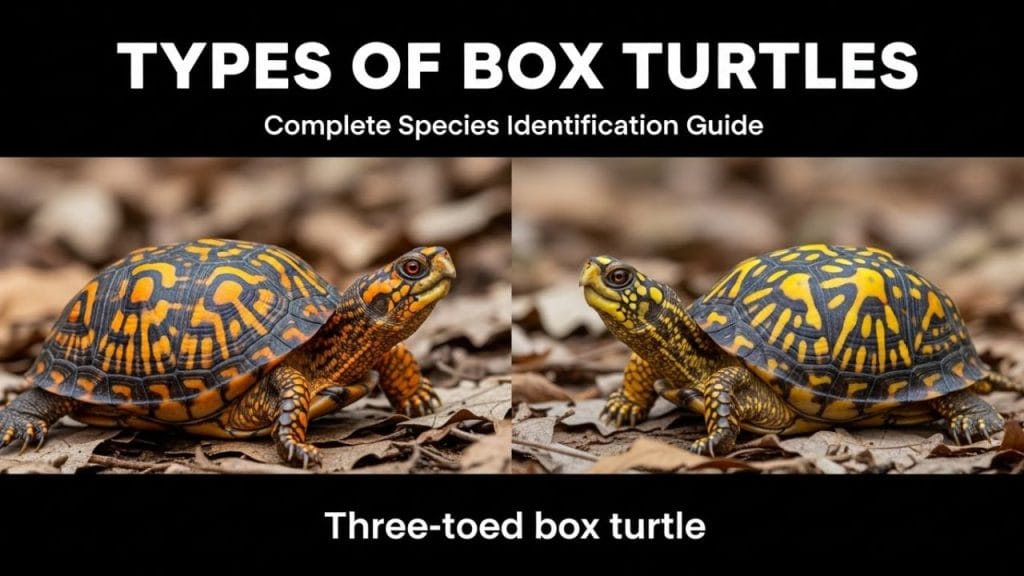
Box turtles, Russian tortoises, and other terrestrial species sleep on land.
They look for sheltered spots. Under leaf litter, inside logs, burrowed into moist soil, or tucked under rocks. Anywhere that feels hidden and protected from predators.
This burrowing instinct is the same drive behind why turtles dig holes — sleeping, brumation, and predator avoidance are all connected.
Giant Galapagos and Aldabra tortoises are famous for sleeping pretty much wherever they feel like it. They’ll stop mid-path and just go to sleep. No hiding. No burrowing. When you weigh 400 pounds and have a shell like a tank, you sleep wherever you want.
Sea Turtles
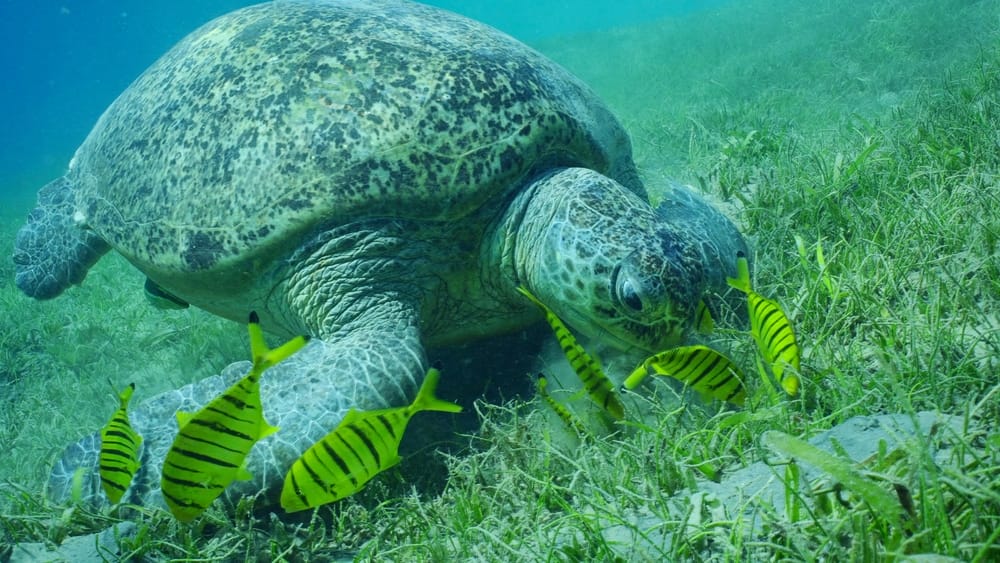
Sea turtles sleep in the ocean, usually wedged under rocks or coral overhangs for protection. Hatchlings tend to float near the surface, while adults sleep in deeper water.
They do not sleep on land. The only time sea turtles come ashore is to lay eggs.
When Do Turtles Sleep?
Most turtles are diurnal, meaning they’re active during the day and sleep at night. This applies to the vast majority of pet turtle species.
A few exceptions exist. Alligator snapping turtles and some Asian turtle species are nocturnal or crepuscular (active at dawn and dusk). These guys sleep during the day and come alive after dark.
All turtles, regardless of their main sleep schedule, also take naps while basking. If you see your turtle lounging on the basking platform (my pick: floating basking platform) with its eyes closed and legs spread out, it’s grabbing a quick power nap under the heat lamp (my pick: heat lamp). This is totally normal and actually a sign of a comfortable, healthy turtle.
Where Do Turtles Sleep In Winter?
Winter sleep is a whole different level.
When temperatures drop below about 50°F (10°C), many turtle species enter brumation, the reptile version of hibernation. Their metabolism slows to almost nothing. They stop eating. They barely move.
Here’s where different species brumate:
| Species Type | Winter Sleep Location |
|---|---|
| Freshwater aquatic turtles | Bottom of ponds, buried in mud below the ice |
| Box turtles | Burrowed into soil or leaf litter, below the frost line |
| Snapping turtles | Mud, muskrat tunnels, under submerged logs |
| Desert tortoises | Underground dens |
| Sea turtles | Some brumate underwater in shallow coastal areas |
Painted turtles survive being literally frozen under ice by switching entirely to cloacal respiration and reducing their metabolism to almost zero. They can stay buried in mud under a frozen pond for the entire winter without surfacing.
If you have a pet turtle indoors with proper heating and lighting, brumation shouldn’t happen. But if your outdoor turtle starts getting sluggish in the fall, it’s not sick. It’s preparing for its winter shutdown.
Before brumation, you’ll often see your turtle digging deeper into the substrate — that’s their way of finding the right depth below the frost line where temperatures stay stable.
How Long Do Baby Turtles Sleep?
Baby turtles sleep more than adults. A lot more.
Most baby turtles need 8 to 12 hours of sleep per day, and some hatchlings may rest even longer. Their bodies are growing fast, and they burn a lot of energy when they’re awake because they tend to be much more active than adults.
Baby aquatic turtles can hold their breath for decent stretches but not as long as adults. Make sure your tank has easy ramp access to the surface so hatchlings can breathe without struggling. A tired baby turtle that can’t easily reach air is a drowning risk.
What Affects A Turtle’s Sleep?
Several things can mess with your turtle’s sleep cycle.
Light Cycle
This is the biggest one. Turtles rely on light to know when it’s day and when it’s night.
Indoor turtles don’t get natural sunlight cues, so you need to provide them. Run your UVB (my pick: Zoo Med ReptiSun 10.0) and basking lights on a timer, 12 hours on and 12 hours off. This mimics a natural day/night cycle and keeps your turtle’s internal clock on track.
If you leave the lights on 24/7, your turtle won’t know when to sleep. If you leave them off all day, it won’t know when to be active. Both situations lead to stress and health problems.
Temperature
Turtles are ectotherms. Their activity level is directly tied to the temperature of their environment.
Too cold and they’ll sleep more than they should, potentially triggering an unintended brumation. Too hot and they might become restless and unable to settle down.
Keep water temperature in the mid-70s°F for most aquatic species (babies prefer 75-80°F). Basking spot should be around 85-90°F. Land turtles generally need ambient temps of 75-85°F.
Tank Setup
Turtles need a place to feel safe while sleeping. Without proper hides and shelter, they’ll feel exposed and stressed, which disrupts their sleep.
For aquatic turtles, add driftwood, caves, and plants that provide cover underwater. For land turtles, provide a hide box and soft, diggable substrate they can burrow into.
Make sure there are no strong filter currents that could push a sleeping turtle around. And check for any gaps behind equipment where a turtle could get wedged and drown.
My Turtle Is Sleeping Too Much. Should I Worry?
If your turtle is sleeping 4 to 10 hours a day and seems healthy, active, and eating well when awake, you’re fine.
But if your turtle is sleeping significantly more than usual, check these things first:
- Temperature. This is the number one culprit. A too-cold environment will make your turtle sluggish. Check your water heater and basking lamp (my pick: Zoo Med PowerSun).
- Water quality. High ammonia or nitrite levels irritate turtles and make them lethargic. Test your water and do a partial change.
- UVB bulb. These bulbs lose their UV output before they actually burn out. If your bulb is over 6 months old, it might need replacing even if it still looks fine.
- Illness. If excessive sleeping comes with swollen eyes, wheezing, open-mouth breathing, lopsided floating, or refusal to eat, get to a reptile vet. These are signs of respiratory infection or other health issues. Excessive sleeping can also indicate emotional distress or depression in turtles, especially if the environment lacks stimulation or has recently changed.
Sleeping vs. Sick: How To Tell The Difference
This is the question that keeps new turtle owners up at night (pun intended).
| Sign | Sleeping | Sick |
|---|---|---|
| Eyes | Closed, relaxed | Swollen, crusty, or shut all day |
| Posture | Tucked in, stable position | Lopsided floating, tilted |
| Breathing | Slow, quiet | Wheezing, bubbling, open-mouth |
| Response to touch | Wakes up, reacts | Barely responds or doesn’t react |
| Appetite | Normal when awake | Refuses food |
| Duration | 4-10 hours/day | Excessive, won’t wake for feeding |
A sleeping turtle will wake up if you gently tap near it or move the water. A sick turtle might not respond at all, or will respond weakly.
When in doubt, check the temperature first. Then check water quality. If everything looks fine and your turtle is still abnormally inactive, a vet visit is the move.
Final Thoughts
Turtles are world-class sleepers. They sleep underwater without drowning. They breathe through their butt when they need to. They slow their heart to nearly nothing. And some of them can stay asleep under a frozen pond for an entire winter.
For pet owners, the takeaway is simple. Give your turtle a proper light cycle, the right temperature, clean water, and some good hiding spots. Do that, and your turtle will sleep soundly, wake up hungry, and be the active, healthy pet you want it to be.
And the next time you see your turtle sitting motionless at the bottom of the tank at 2 AM, don’t panic. It’s just doing what turtles have been doing for 250 million years.
Sleeping like a pro.

About Author
Muntaseer Rahman started keeping pet turtles back in 2013. He also owns the largest Turtle & Tortoise Facebook community in Bangladesh. These days he is mostly active on Facebook.