25 DIY Box Turtle Habitat Ideas & Inspirations For Beginners

This post was created with help from AI tools and carefully reviewed by a human (Muntaseer Rahman). For more on how we use AI on this site, check out our Editorial Policy.
Pet store box turtle kits are usually too small, too dry, and too expensive for what you get. A DIY build gives you full control over size, humidity, and lighting, and lets you match your turtle’s species and age properly instead of settling for whatever is on the shelf.
Before you pick an idea from the list, keep these minimums in mind. An adult box turtle needs at least 4 by 4 feet of floor space indoors, and bigger is always better outdoors. The substrate should be deep enough to burrow in, usually 4 to 6 inches of coconut fiber, topsoil, or a mix of both.
You also need a temperature gradient so your turtle can thermoregulate. Aim for a basking spot around 85 to 88°F on one end and a cool side near 70°F on the other. Humidity should sit in the 60 to 80% range, and a UVB (my pick: Zoo Med ReptiSun 10.0) tube running the length of the enclosure is non-negotiable for proper shell and bone development. A shallow water dish big enough for soaking rounds out the essentials.
With those basics covered, you can pick any of the 25 ideas below as a starting point and adapt it to your space and budget.
Top 25 DIY Box Turtle Habitat Ideas
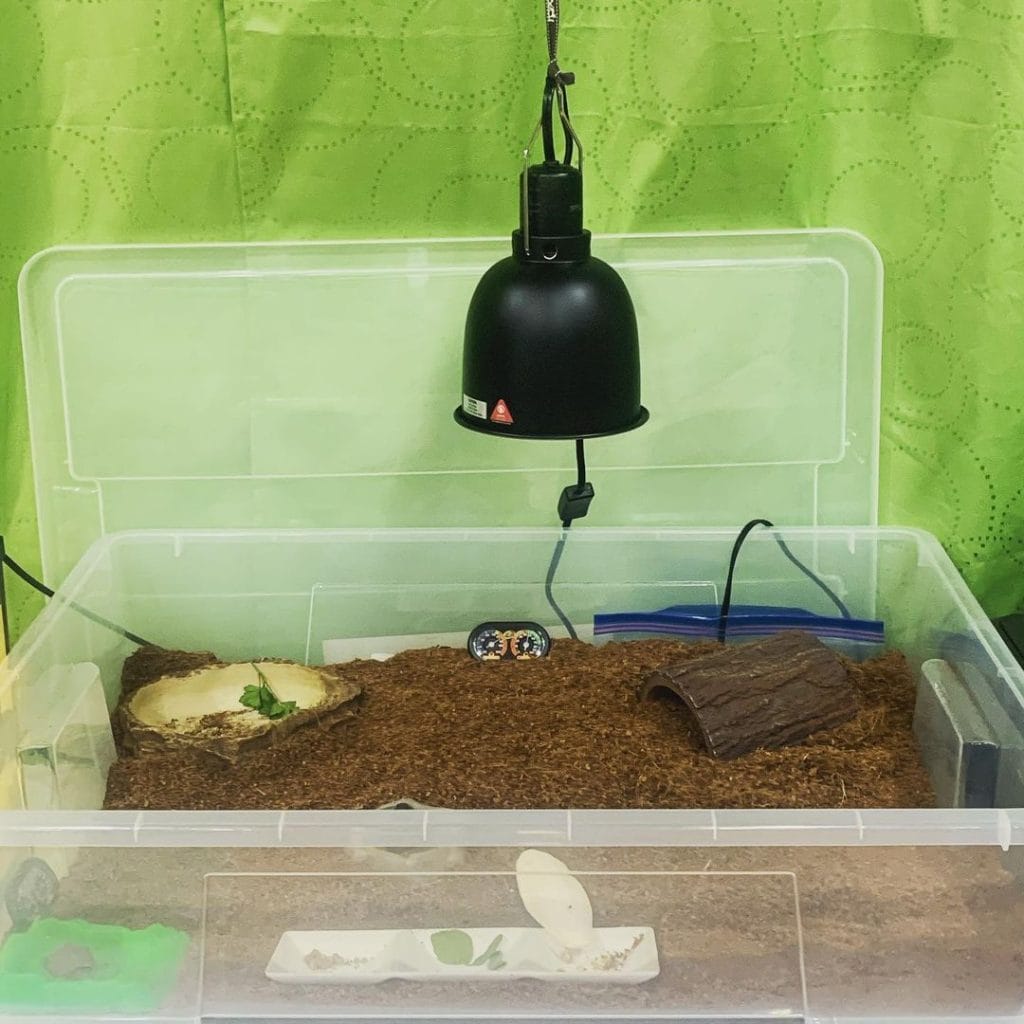
1. Plastic Container box turtle Habitat
| Materials | Coconut fiber and soil, log, water, thermometer, lamp, etc. |
| Difficulty level | easy |
Consider using a plastic container filled with soil and a coconut fiber combination as a substrate for beginners. Add a shallow water dish, a thermometer, a hygrometer, and a hollow log for hiding. To give your turtle the appropriate heat, place a light directly over the container.
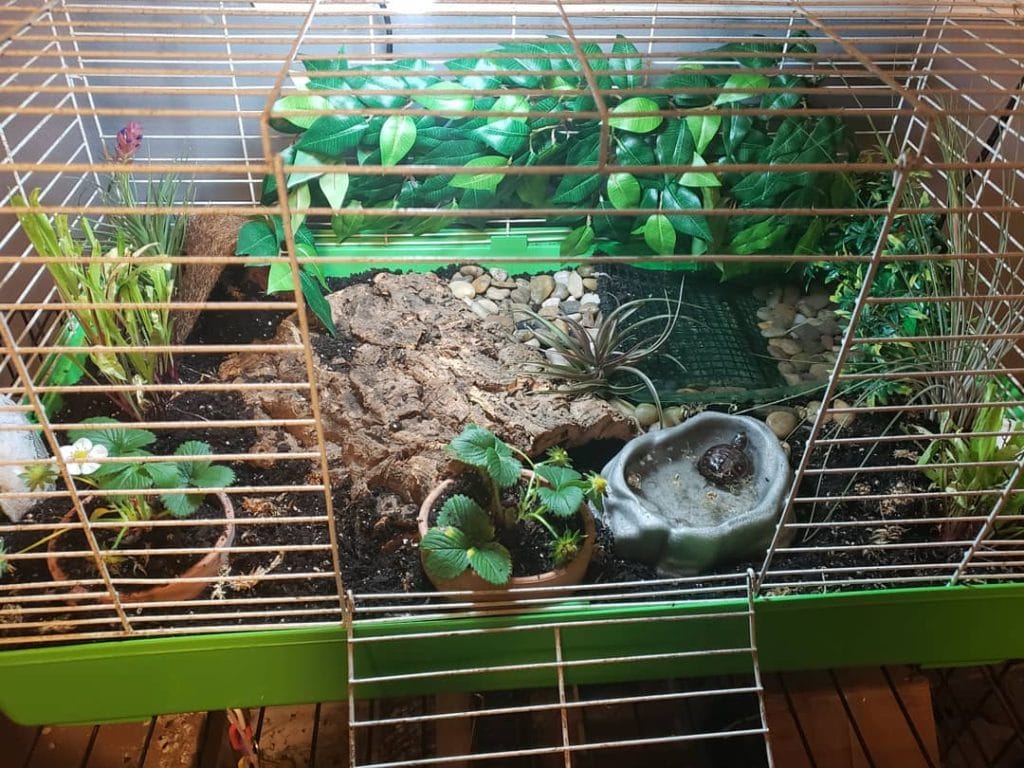
2. Grilled Cage box turtle Habitat
| Materials | Organic soil, pebbles, stone, plants, etc. |
| Difficulty level | Challenging |
A grilled cage filled with organic soil and colorful plants like strawberries and alfalfa can improve the habitat of your box turtle.
Make a cozy hiding area, decorate the ground with pebbles and huge stones, and set up a shallow water dish on one side. Install a basking lamp (my pick: Zoo Med PowerSun) on a timer so the turtle gets a proper day and night cycle.
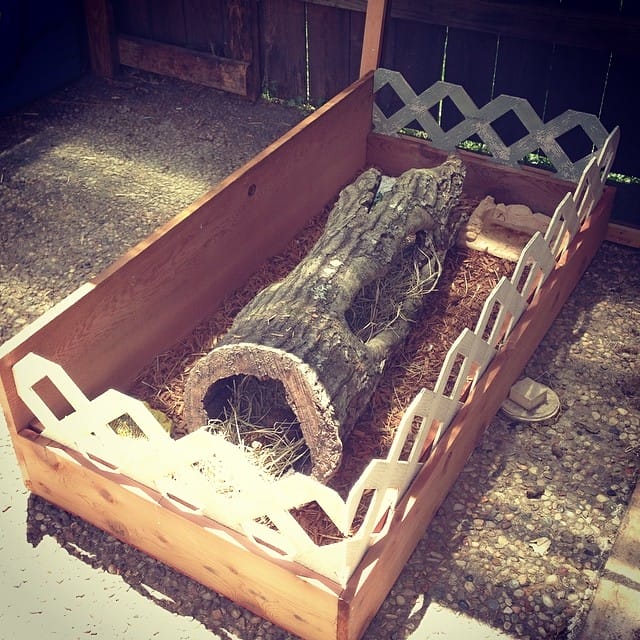
3. Hollow Trunk box turtle Habitat
| Materials | Large hollow trunk, straws, water container, etc. |
| Difficulty level | Easy |
By surrounding a sizable hollow trunk with a wooden fence, you can build a natural-looking habitat for box turtles. Place a shallow water dish on one side and line the ground with a mix of loose soil and dried leaves for substrate.
Carefully selected plants may add a touch of greenery. Also, make sure a thermometer is present so you can keep an eye on the temperature.
Perfect Wooden Box Turtle House For Outdoor & Indoor!
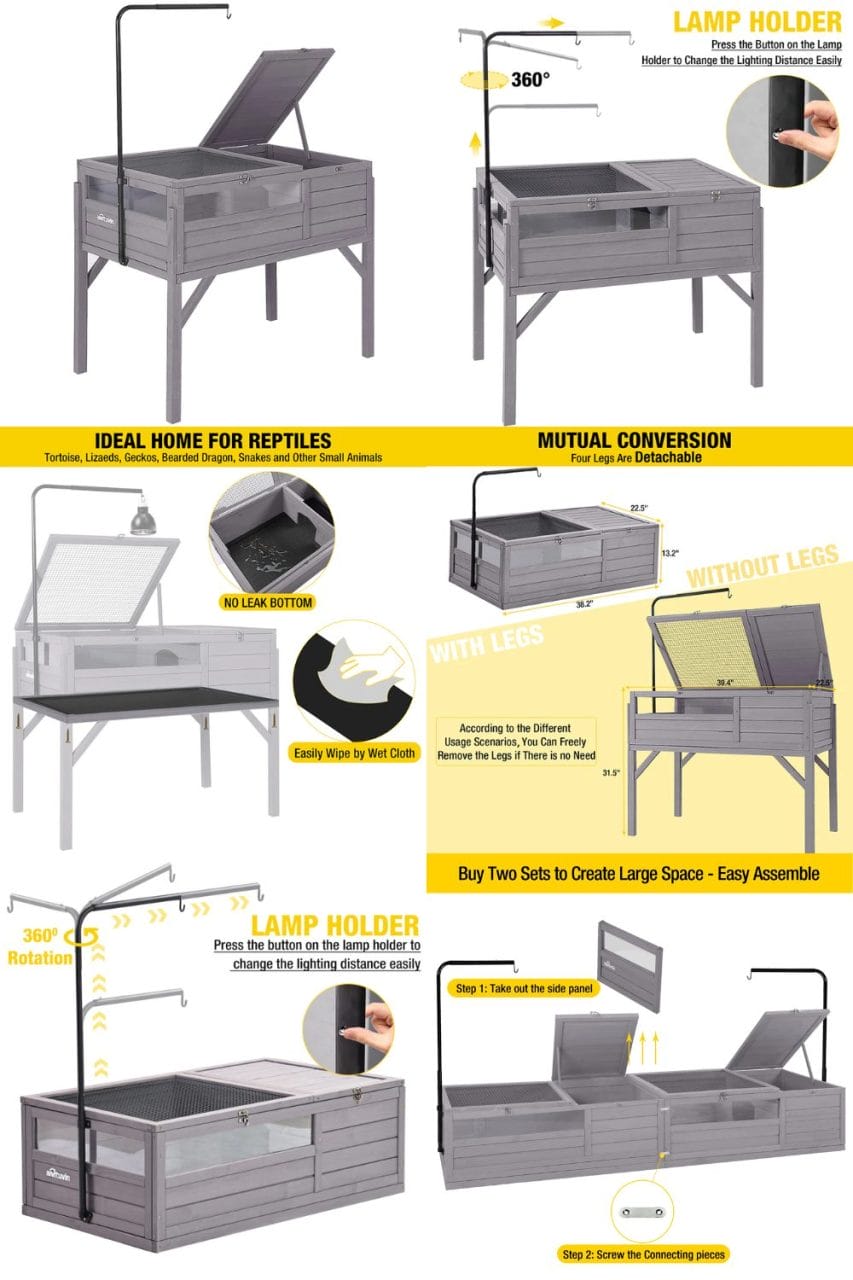
This enclosure isn’t cheap — but it’s built like a tank, and your box turtle will thank you for it.
The Aivituvin Large Wooden Habitat gives your box turtle a cozy hideout, a sunny basking spot, and a waterproof base that’s easy to clean.
Whether you use it indoors or out, the raised design keeps things dry and draft-free.
If you don’t want to build your own enclosure, this is the best pre-made home I’ve found for box turtles.
👉 Check out the Aivituvin Habitat here — they’re even running a $10 off deal right now.
4. Backyard Box Turtle Habitat
| Materials | Wood, large stones, pebbles, water, container, plants, etc. |
| Difficulty level | Challenging |
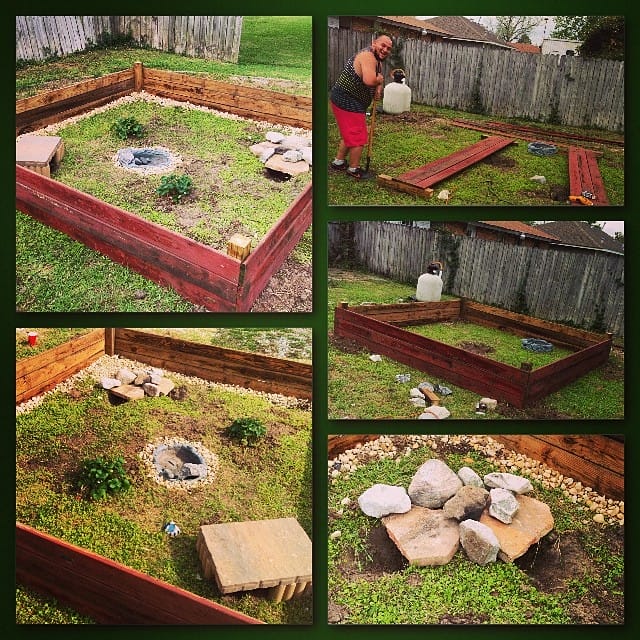
With a wooden fence surrounding a sizable 10×10 square foot space, you can build a spacious outdoor backyard box turtle habitat (my pick: Aivituvin Wooden Box Turtle Habitat). Place a shallow water dish in the middle and dig a partial trench into the earth to create an underground shelter. Create a resting dock, strawberry and alfalfa plants, decorative pebbles around the fence and other habitat-enhancing features.
5. Brick Wall box turtle Habitat
| Materials | Bricks, soil, net lid, plants, etc |
| Difficulty level | Easy |
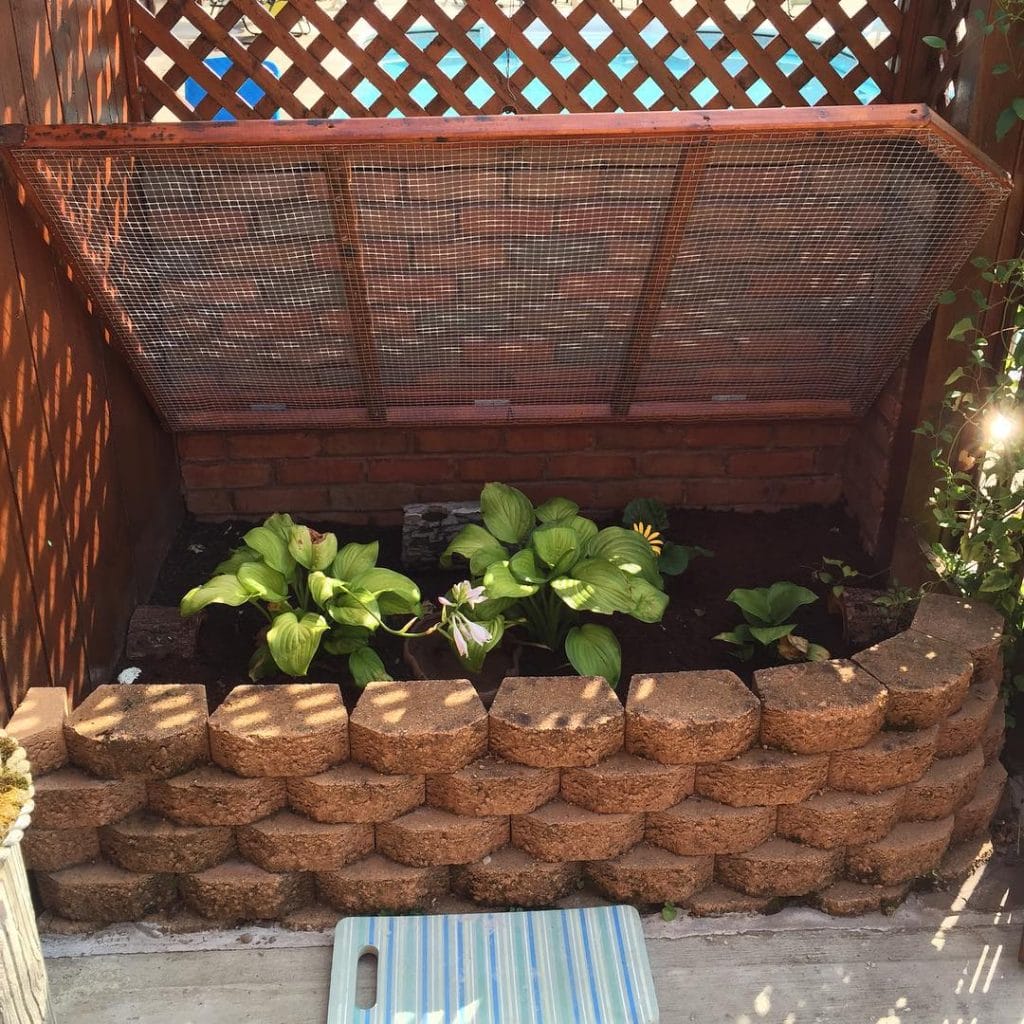
Build a box turtle habitat with organic soil as the substrate and square bricks stacked as the perimeter wall.
Plant stunning flowers like plantain lilies to spruce up the area, and cover the screen with a net to provide protection at night. For easy hydration, put a water container in one of the corners.
6. Coconut Chip Substrate box turtle Habitat
| Materials | Coconut chip, pot, plants, fern, ivy, pebbles, log, stone, etc |
| Difficulty level | Easy |
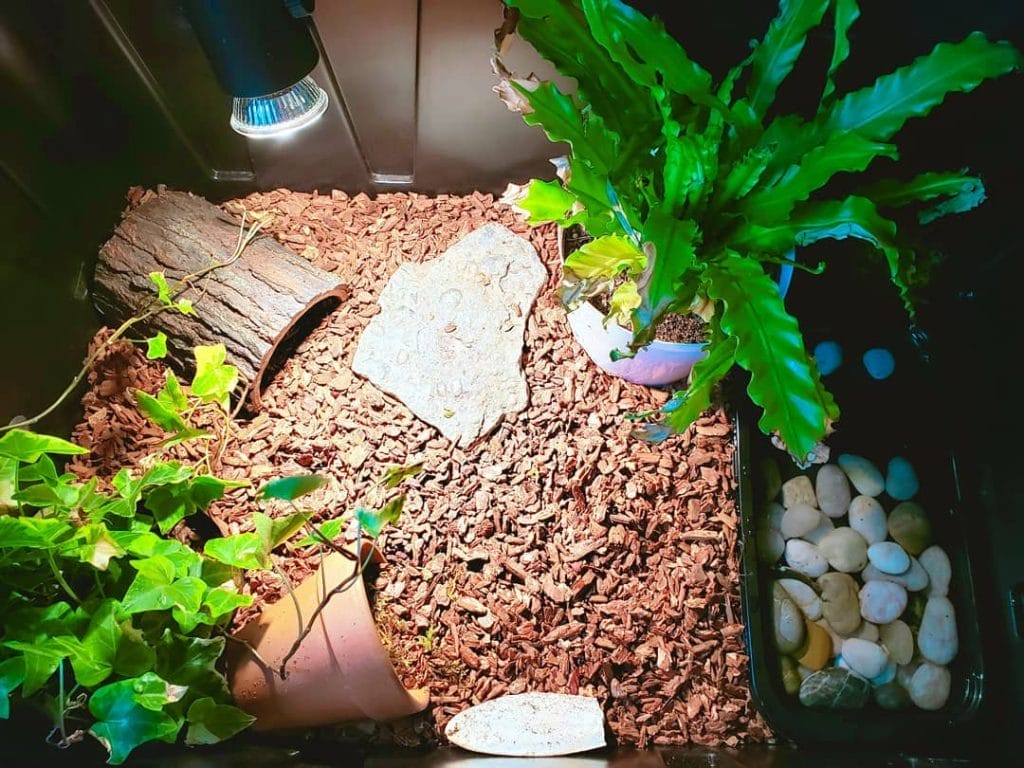
With a substrate made of coconut chips, you can build a natural-looking environment for box turtles. As hiding places, including a hollow log and an empty pot.
For a refreshing touch, create a tiny pond out of a plastic container and smooth stones. Adding ferns, common ivy, a flat stone for resting, and a lamp placed overhead for warmth can improve the environment even more.
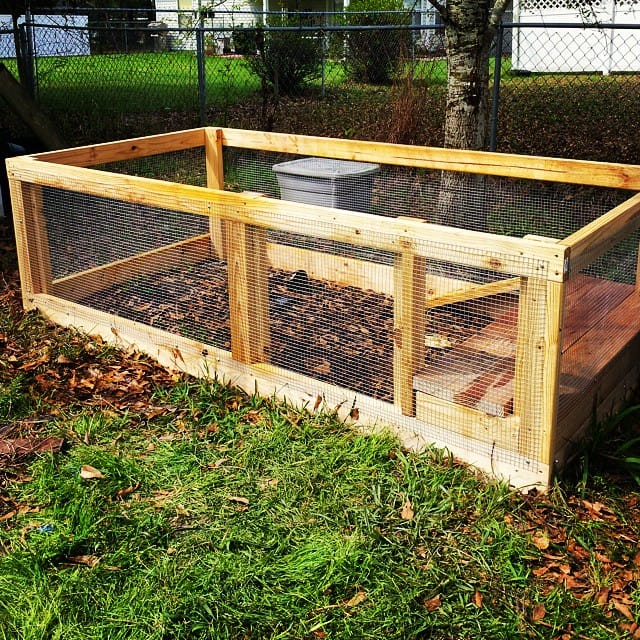
7. Outdoor Wire Net box turtle Enclosure
| Materials | Wood, wire net, dried leaf, plants, branches, water container, pebbles, etc. |
| Difficulty level | Moderate |
For your box turtle’s outside home, construct a wire mesh cage with a wooden border. Create a substrate out of dried leaves and coconut chips to accentuate the area and add a wooden dock with a hiding place below it.
To complete the enclosure’s natural appearance, add a water container and a few carefully chosen plants.
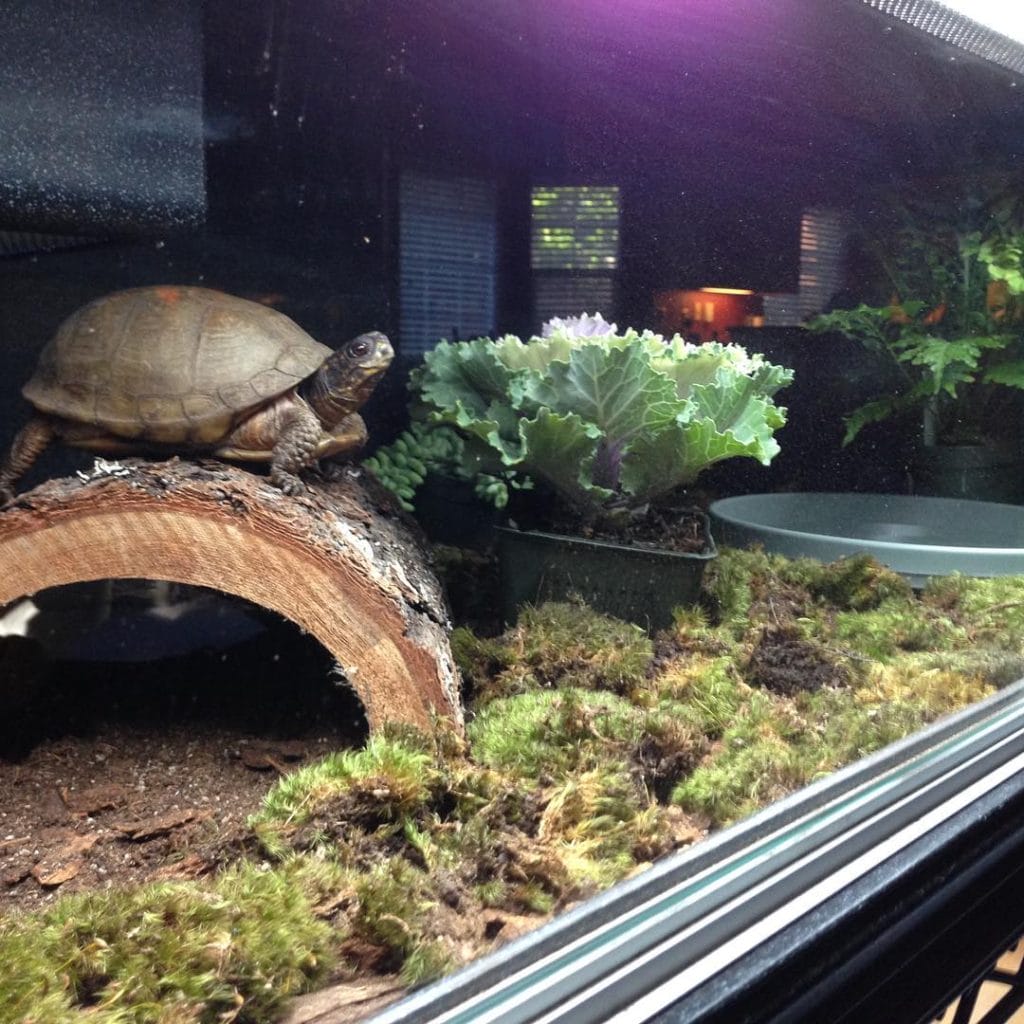
8. Aquarium box turtle Habitat
| Materials | 40+ gallon glass tank, coconut fiber, hollow log, shallow water dish, UVB lamp, thermometer, etc. |
| Difficulty level | Easy |
A 40-gallon (or larger) glass aquarium works as a starter setup for a juvenile box turtle. Fill it with 3 to 4 inches of moist coconut fiber so the turtle can burrow, and tuck a hollow log into one corner for a humid hide.
Add a shallow water dish big enough for the turtle to soak in, plus a UVB lamp and a basking spot around 85 to 88°F on one end. Plan to upgrade once your turtle outgrows the tank. Adult box turtles need a much larger footprint, not a taller tank.
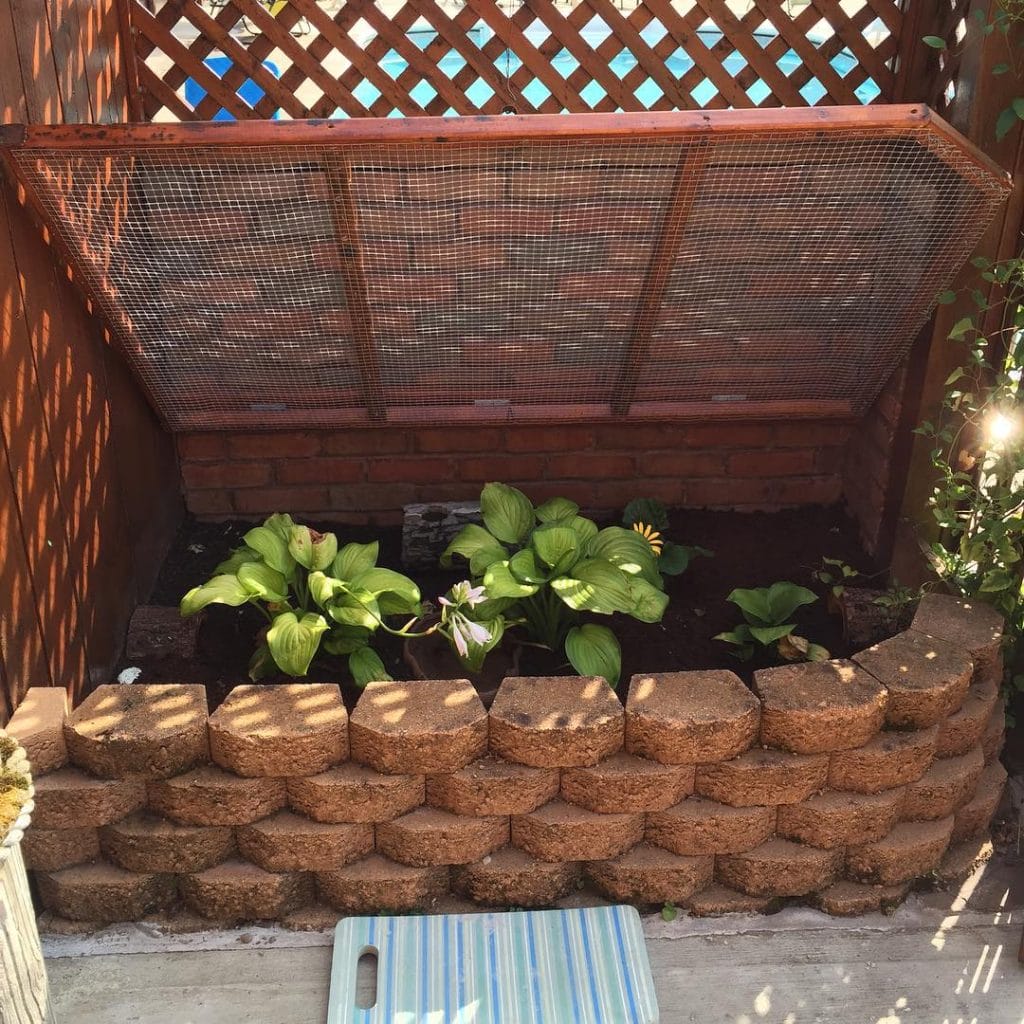
9. Outdoor Grill Cage box turtle Habitat
| Materials | Concrete blocks, grills, water container, logs, etc. |
| Difficulty level | Challenging |
Use large concrete blocks and heavy gauge grill panels to build an outdoor enclosure that stops both predators and escapes. Bury the bottom of the perimeter at least 6 inches into the ground. Box turtles are surprisingly strong diggers and will tunnel straight out of a wall that only sits on the surface. Make sure the enclosure has a shaded section, full access to sunlight in another section, a shallow water dish, plenty of hides, and live plants the turtle can graze on and move through.
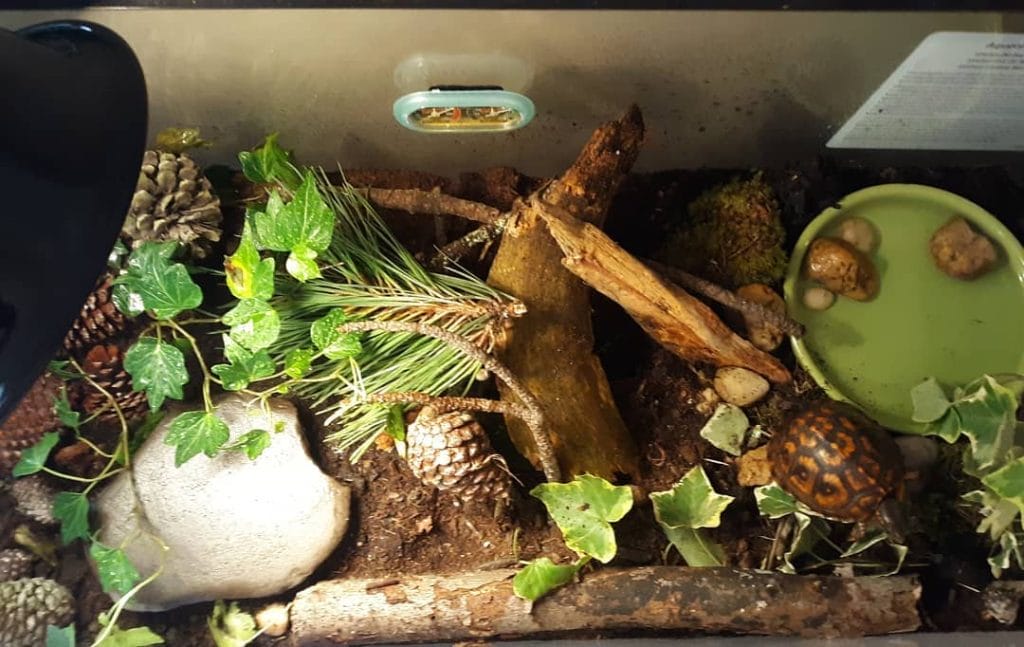
10. Serene box turtle Sanctuary
| Materials | Soil, ivy, water, stones, lamp, etc. |
| Difficulty level | Moderate |
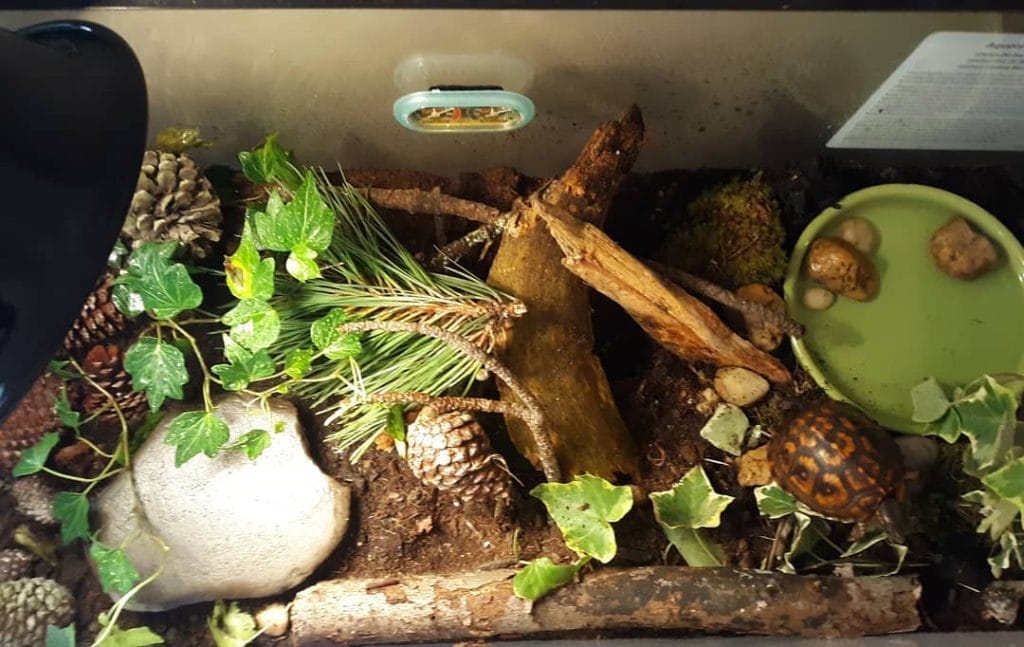
With a glass tank and cosy organic soil as a substrate, create a compelling box turtle home. For a more natural appearance, scatter logs, large smooth stones, branches, and pebbles.
Place some pine cones for enrichment and a water container for hydration on one side. To add some greenery, plant some common ivy.
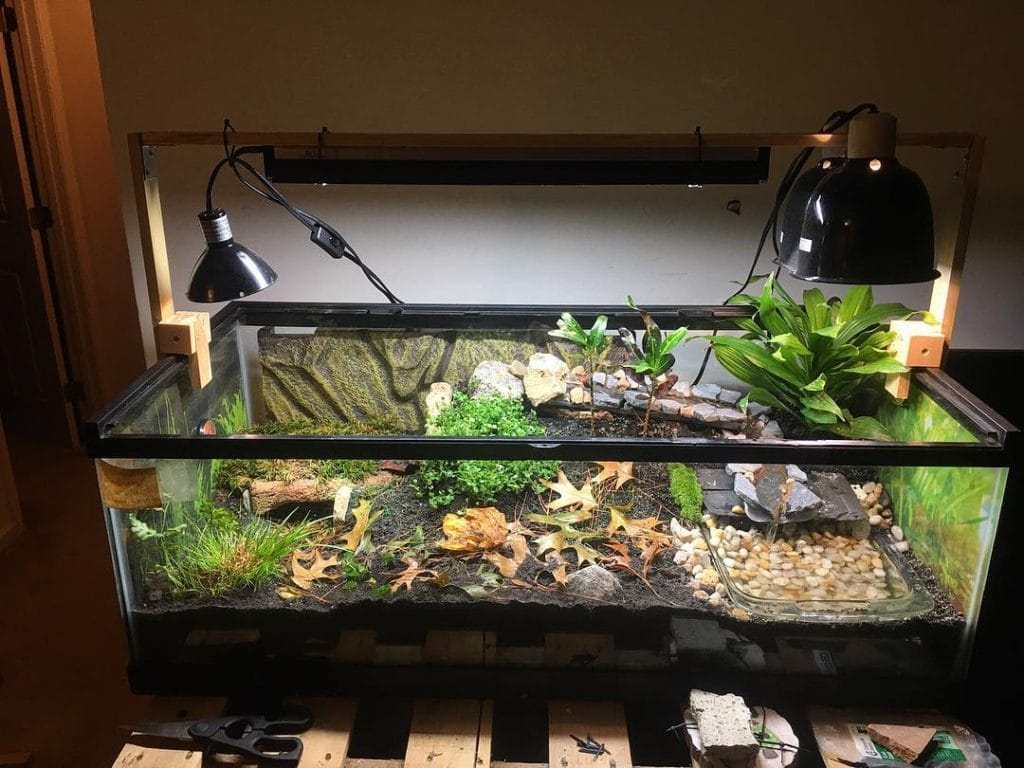
11. Luxurious Retreat for Box Turtles
| Materials | Soil, water, pebbles, filter, pump, plants, moss, etc. |
| Difficulty level | challenging |
Build a multi-level box turtle habitat with a small flowing water feature or shallow waterfall, a pump, and a filtration system. Include a mix of five to seven plant species to create a layered, dense landscape, and add a sheltered cave for hiding. For additional natural beauty, decorate the tank with pebbles, moss, and leaves.
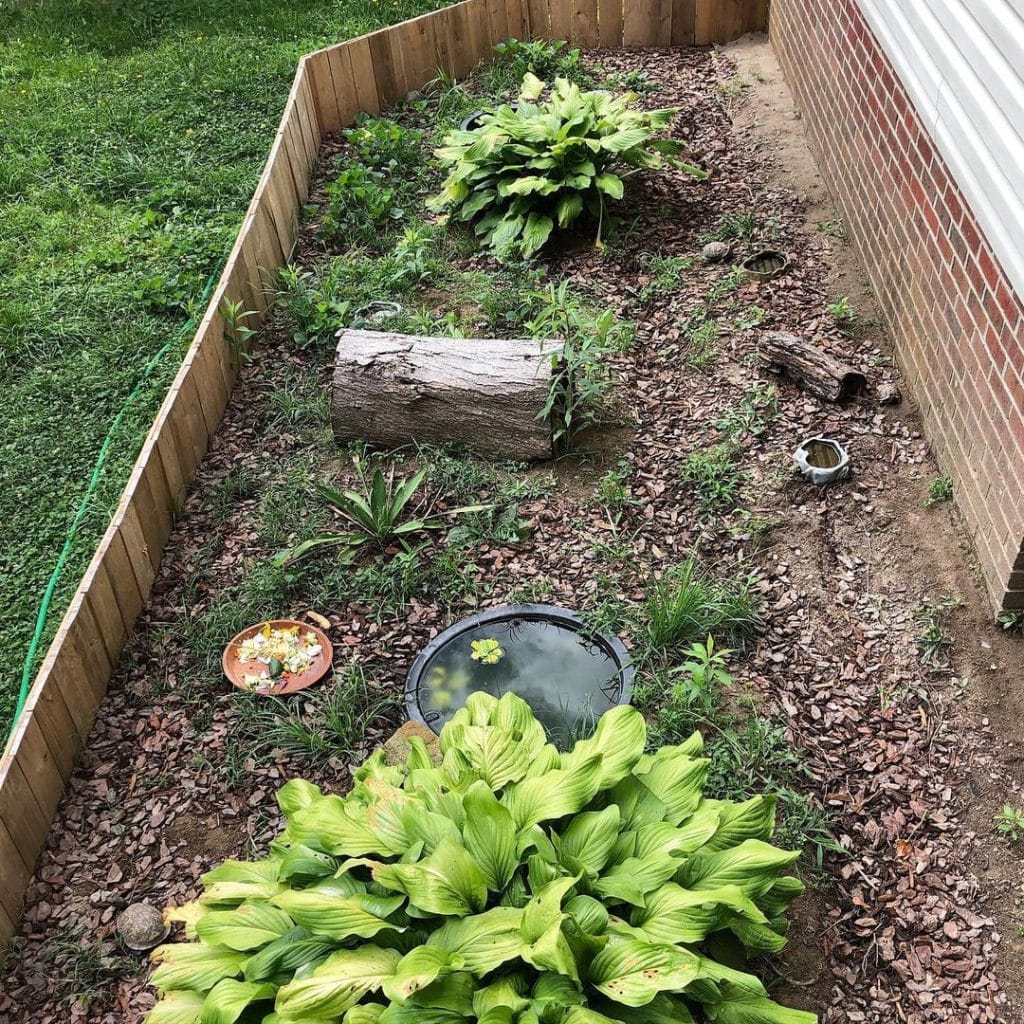
12. House-Side box turtle Habitat
| Materials | Coconut chips, water containers, logs, plants, etc. |
| Difficulty level | moderate |
Utilize the side of your home and build a proper box turtle enclosure using a combination of walls and a wooden fence.
Improve the environment by adding a substrate of coconut chips and dirt, many water containers, branches, and a large hollow log for hiding and resting. provide stunning huge plantain lilies to the setting to provide a sense of rustic charm.
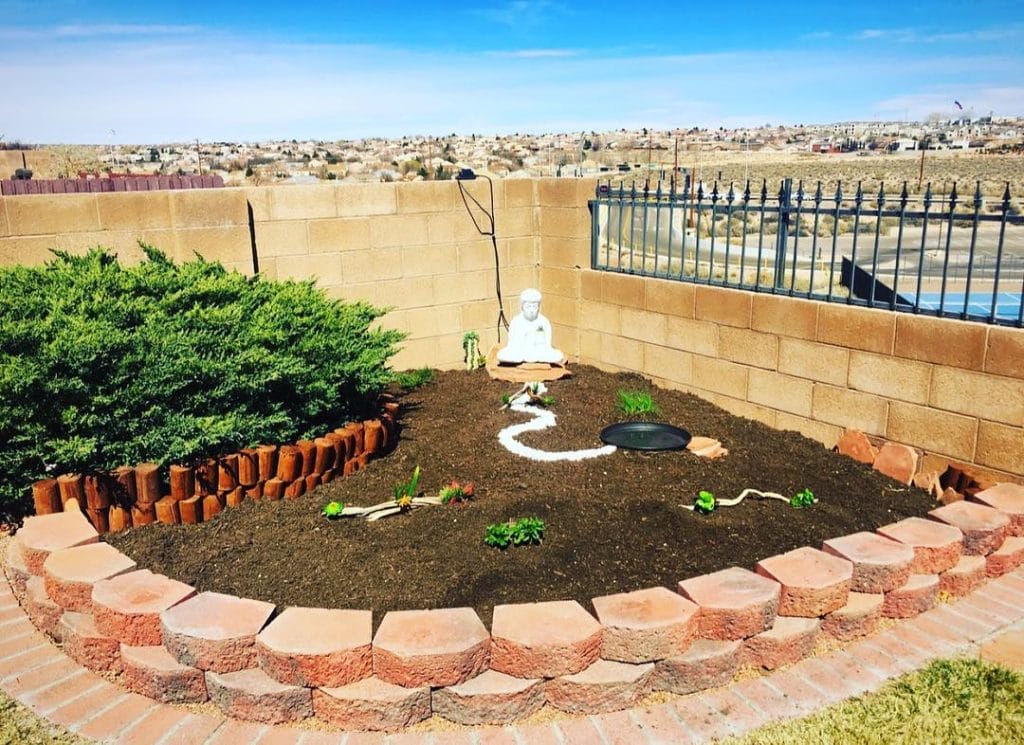
13. Backyard Corner box turtle Habitat
| Materials | Soil, coconut fiber, blocks, plants, etc. |
| Difficulty level | Challenging |
Convert a corner of your garden into a triangular box turtle habitat bordered by semicircular brick blocks.
Use a base made of dirt and coconut fiber and decorate it with lovely strawberry or ivy plants. A tranquil Buddha statue may add to the atmosphere, and your turtle will appreciate having access to necessary water sources and hiding places.
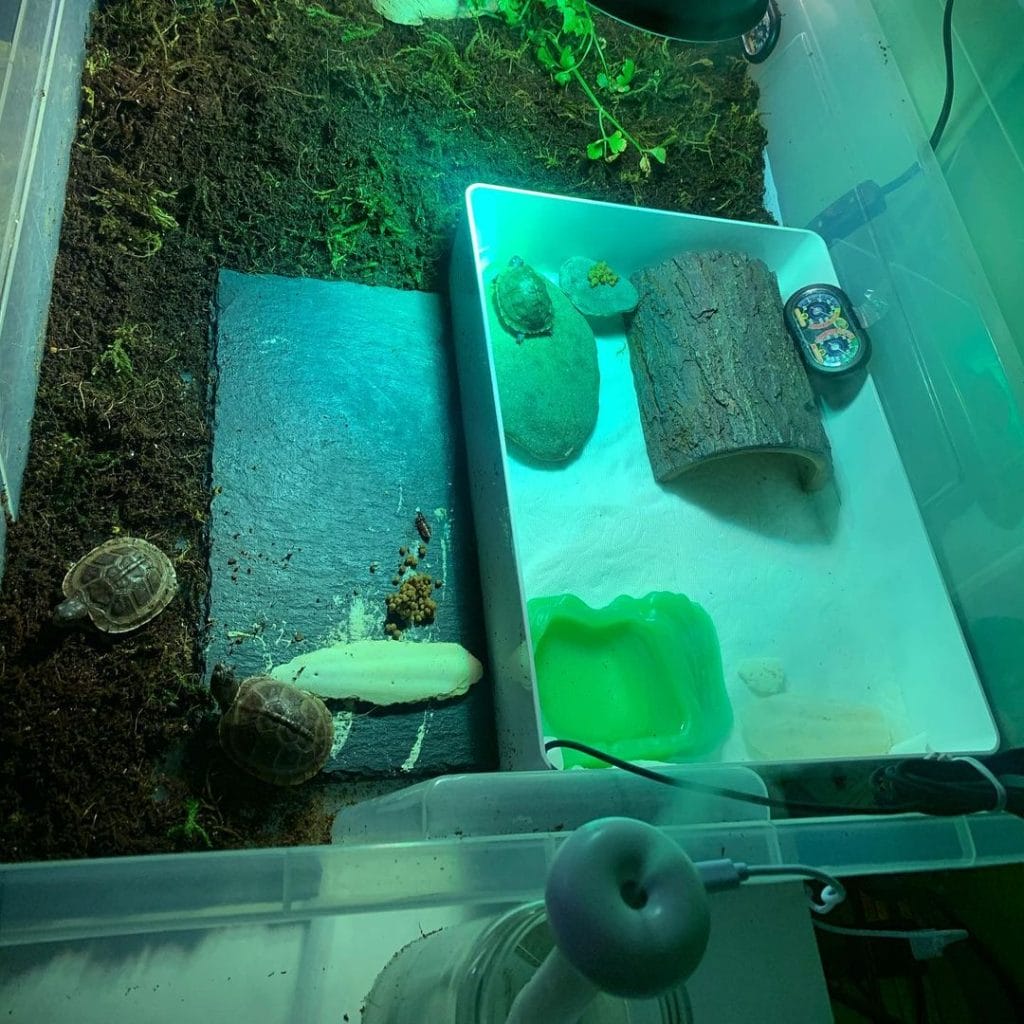
14. Indoor Baby Box Turtle Habitat
| Materials | Coconut chip substrate, plastic tub, hollow log, Flat stone, Lamp, water container, food bowl, etc. |
| Difficulty level | Easy |
Make a full haven for box turtles that provides the necessities for their life. To enable them to burrow and securely brumate throughout the winter, use loose coconut chips. Include a hollow log as a hiding place to give your turtles the food, water, and shelter they require all year long.
15. Baby Box Turtle Habitat In A cage
| Materials | Rocks, dirt, stones, water bowl, flower plants, log, etc. |
| Difficulty level | Moderate |
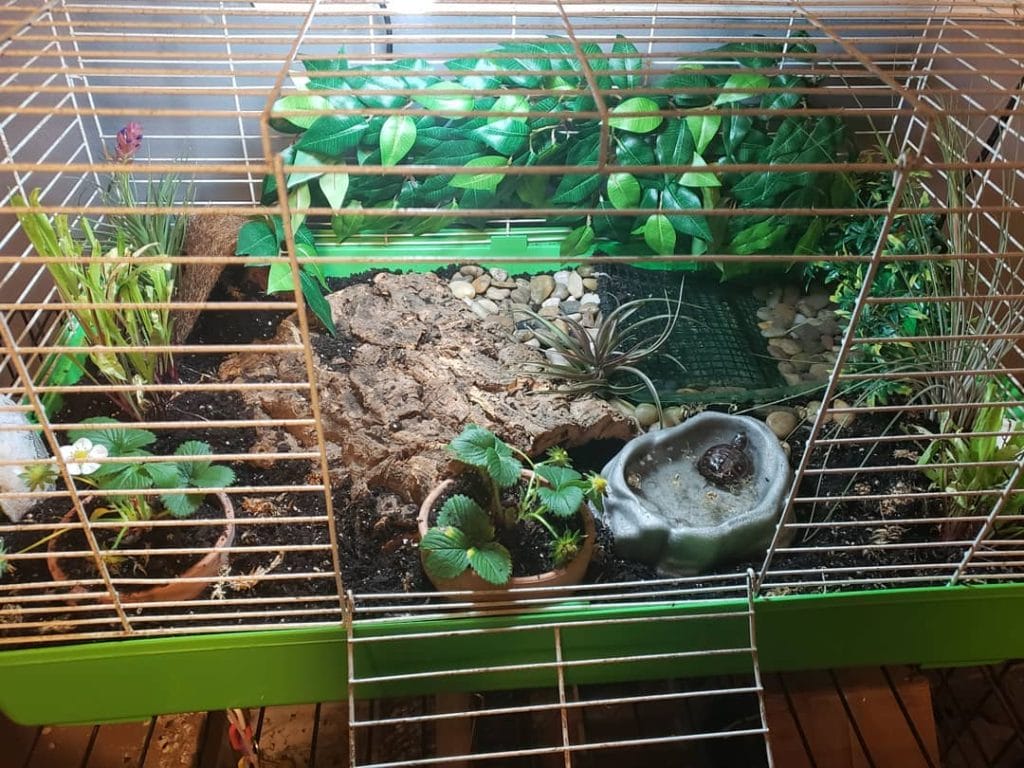
Layer pebbles, soil, and a soft substrate blend of dirt and coconut fiber to create a barrel-style home for your box turtle.
Plants with vivid flowers may beautify the perimeter. A food and drink bowl, as well as a hollow log for concealment, are necessities. Put wire netting over the top to protect your turtle.
16. Natural Retreat For Box Turtles
| Materials | Wood, water container, pebbles, stones, plants, wire net, etc. |
| Difficulty level | moderate |
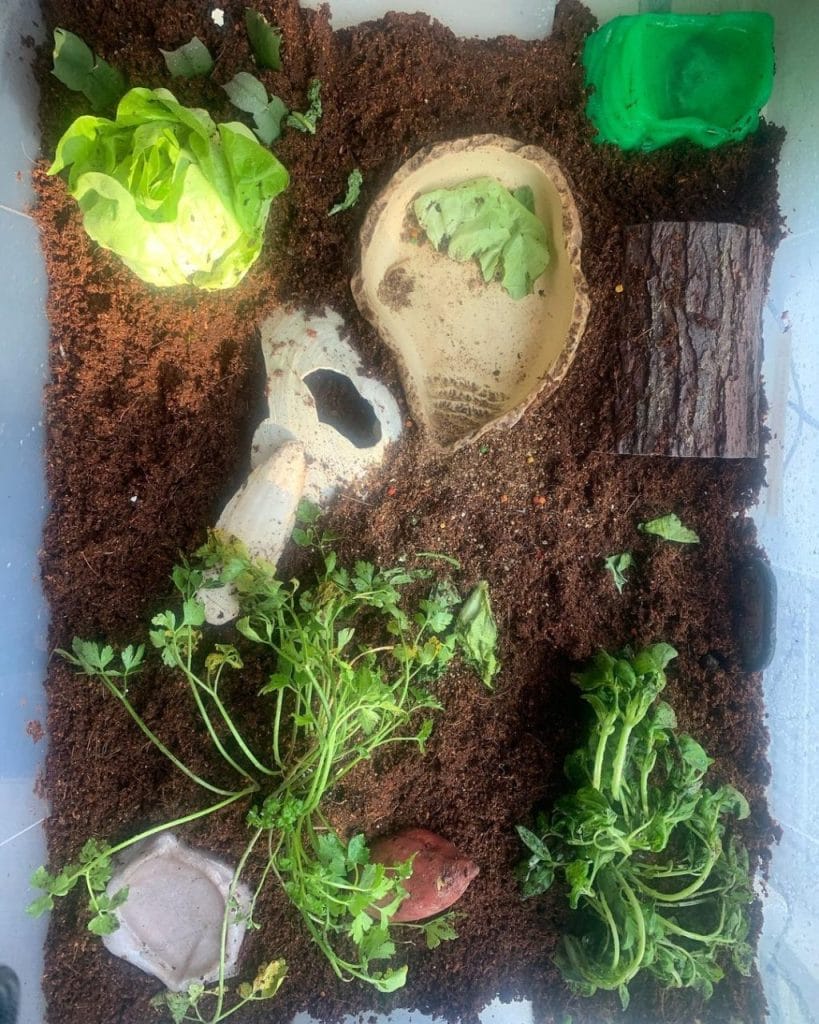
Create a safe cage for your box turtle out of wood, with a cover on one side for a cozy hiding place. As a substrate, use coconut fiber and chips, then add pebbles to one side for more texture.
Add a hollow wood, a medium-sized water container with smooth pebbles, and the fun addition of berry bushes to improve the habitat. Build a wire net cover to provide protection.
17. box turtle Habitat with branches & dried leaves
| Materials | wooden barrier, dried leaves, branches, barks, stones, water puddles, aquatic plants, etc. |
| Difficulty level | Challenging |
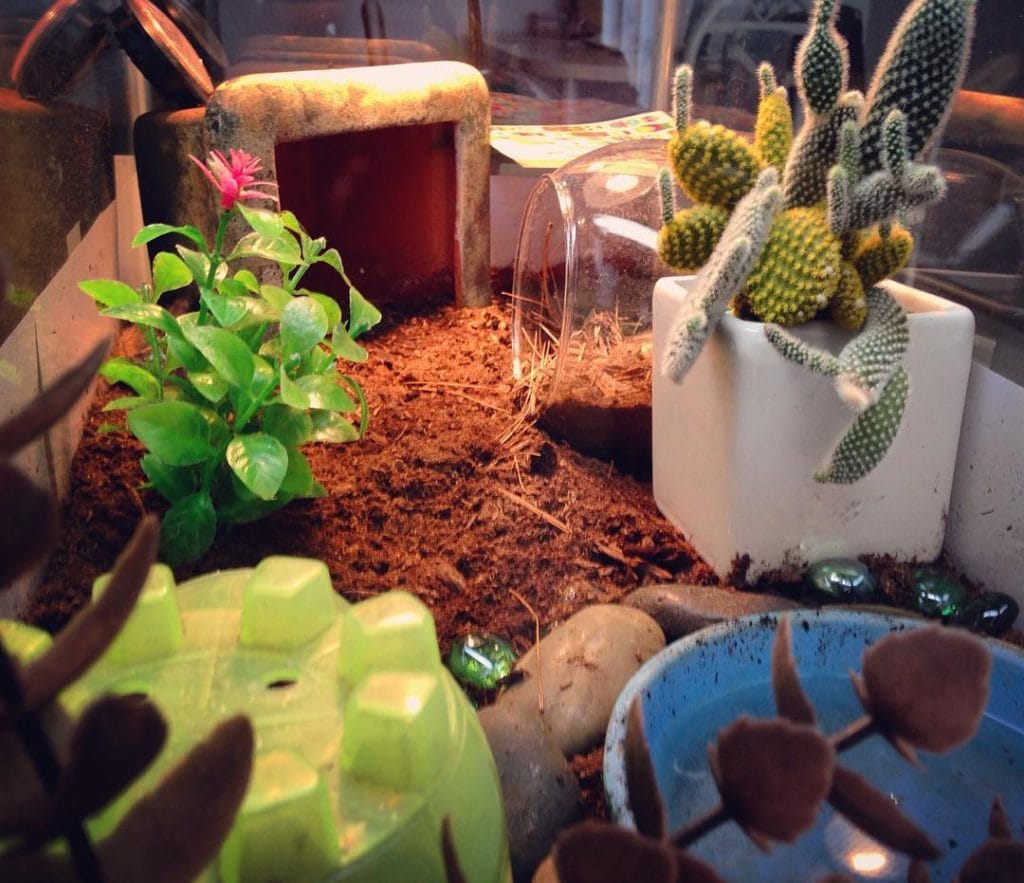
Build a four-section box turtle home divided by low wooden fences. Add a layer of dried leaves to the substrate to enhance it, then decorate each compartment with stones, branches, and bark.
Add water puddles for hydration, aquatic plants for a peaceful ambiance, and a wire net lid to provide a covering.
18. Cozy Box Turtle Habitat With Hollow Log & Pot
| Materials | wooden box, loose soil, hollow log, pot, water bowl, etc. |
| Difficulty level | Easy |
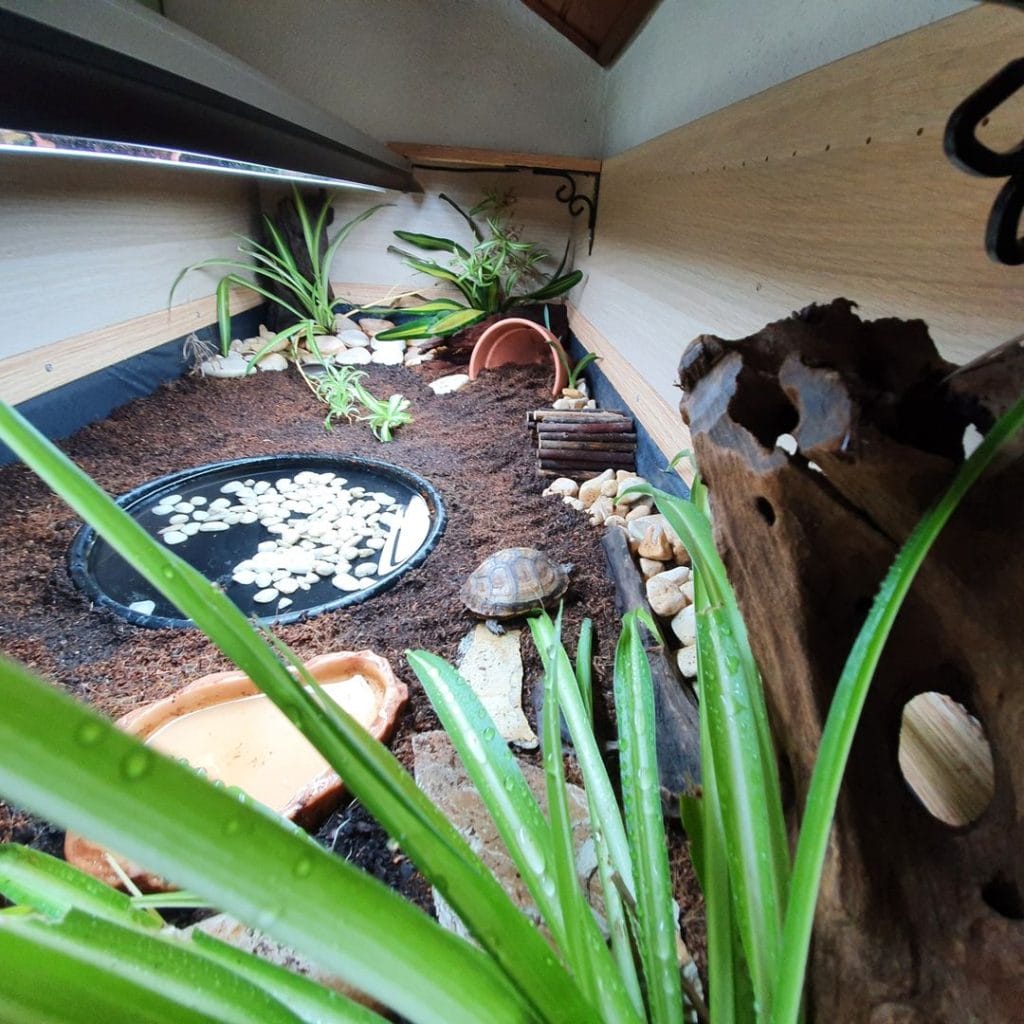
Fill an oval plastic tub with loose soil substrate to build a simple box turtle environment. For concealing places, place a hollow log and an empty pot.
On one side, spread some dry leaves. Provide a ground-level water dish for hydration while enhancing the environment with plantain lilies and other types of plants. Install a cover made of wired mesh as protection.
19. Indoor Box Turtle Habitat
| Materials | Organic soil, sand, pebbles, duckweed, plants, stone, etc. |
| Difficulty level | Challenging |
Use a wide plastic tub filled with organic soil and tilt one corner down slightly to create a proper box turtle habitat. Line that lower corner with smooth river stones and a pool liner to make a shallow pond-like soaking area. Skip coral or crushed shell. Those are marine materials and raise the pH of the water, which is not what box turtles need.
The habitat should be enhanced with colorful strawberries, Roman lettuce, and parsley plants on the soil, floating duckweed in the water, and a hollow log for a secure hiding place.
20. Grass Substrate box turtle outdoor Habitat
| Materials | Natural grass turf, wooden or brick perimeter, shade plants, shallow water dish, weatherproof hide, etc. |
| Difficulty level | Moderate |
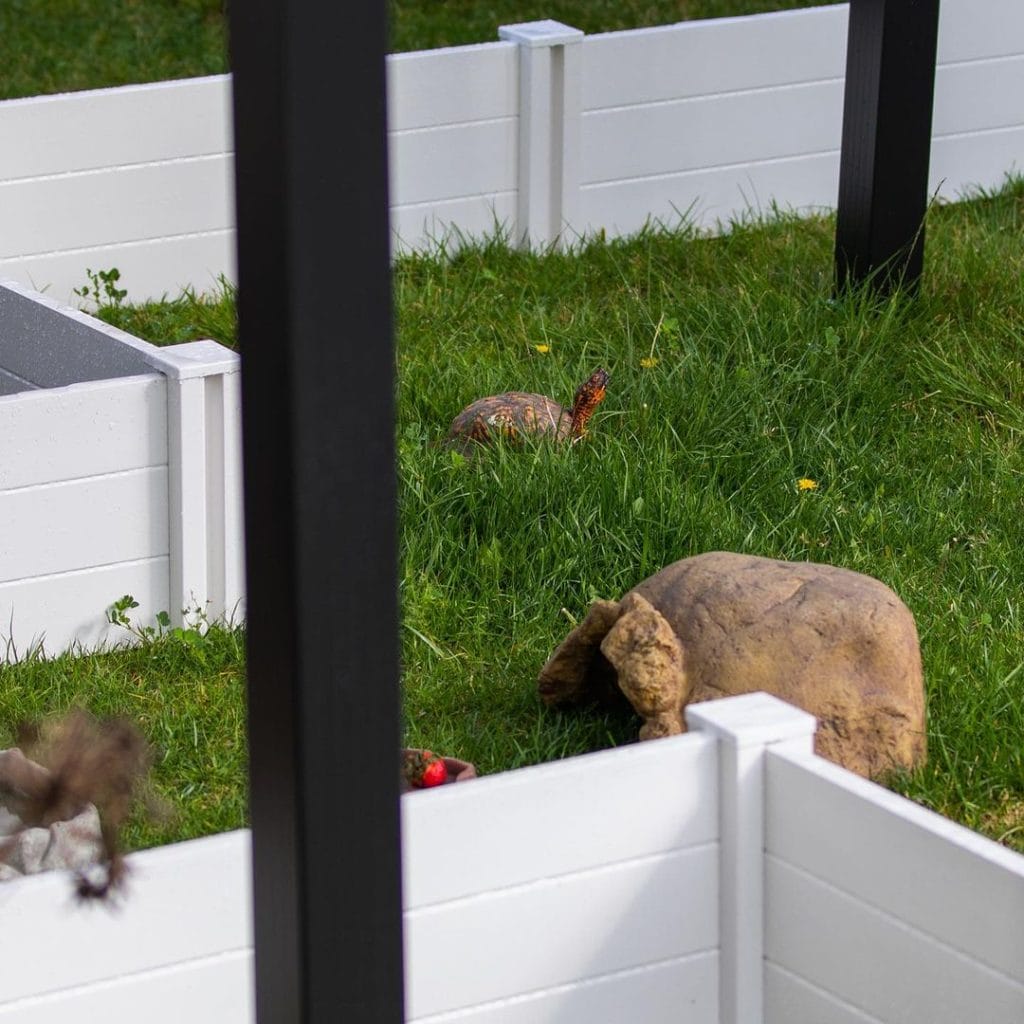
Natural grass makes one of the best outdoor substrates for box turtles. It holds moisture, gives them cover to graze and hide in, and looks a lot more natural than bare soil. Pick a partially shaded spot in the yard and build a perimeter at least 12 inches tall, with 6 inches or more buried in the ground to block digging escapes.
Add low shade plants like hostas or ferns, a shallow water dish sunk flush with the ground for easy access, and at least one weatherproof hide. Make sure part of the enclosure stays shaded through the whole day. Box turtles overheat quickly in direct sun, especially when they can’t retreat into cool soil.
21. Box Turtle Habitat With Moss, Fern, & Soil
| Materials | Sphagnum moss, fern, hollow log, organic soil, water bowl, dried leaves, lamp, etc. |
| Difficulty level | Easy |
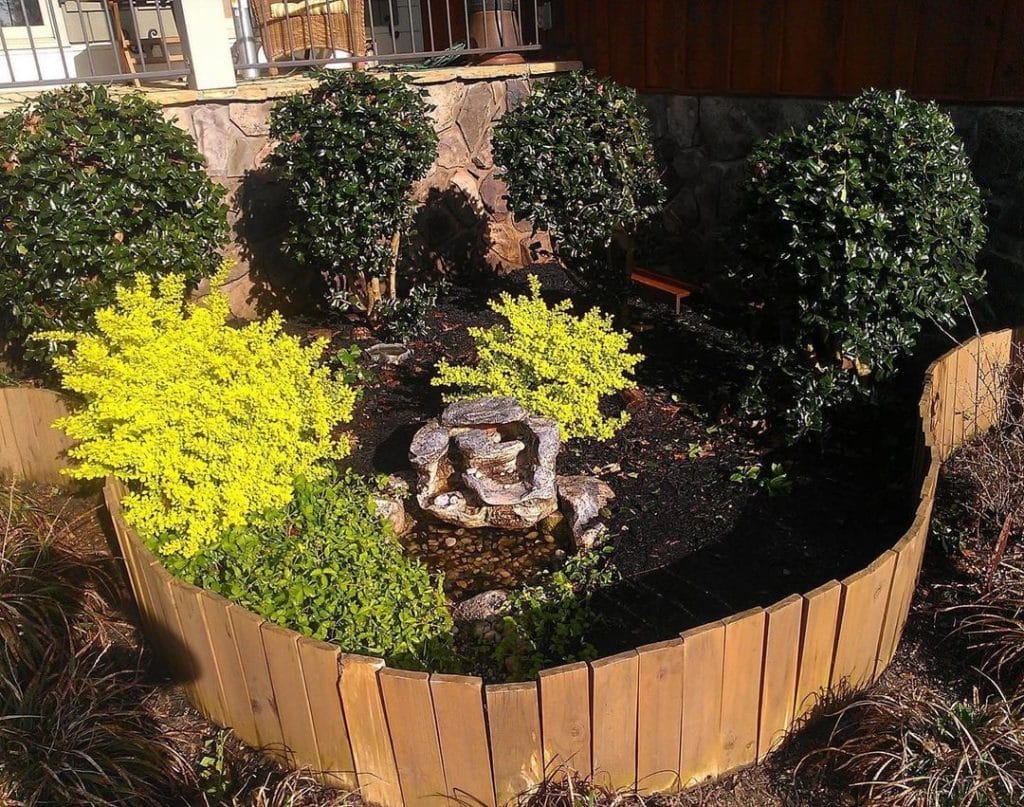
Fill a black plastic tub with organic soil to build a simple turtle home. Skip raw manure in indoor setups. It holds bacteria and makes the substrate smell. If you want nutrients, use composted, bagged potting soil instead.
Add some character to the area with a hollow wood in a corner covered with sphagnum moss. Place a shallow water dish on the side and add a few live ferns for ground cover. Use a UV lamp to create the best lighting conditions for the welfare of your turtle.
22. Terrarium Style Box Turtle Habitat
| Materials | Coconut bedding, terrarium, lamp, thermometer, hollow log, etc. |
| Difficulty level | Moderate |
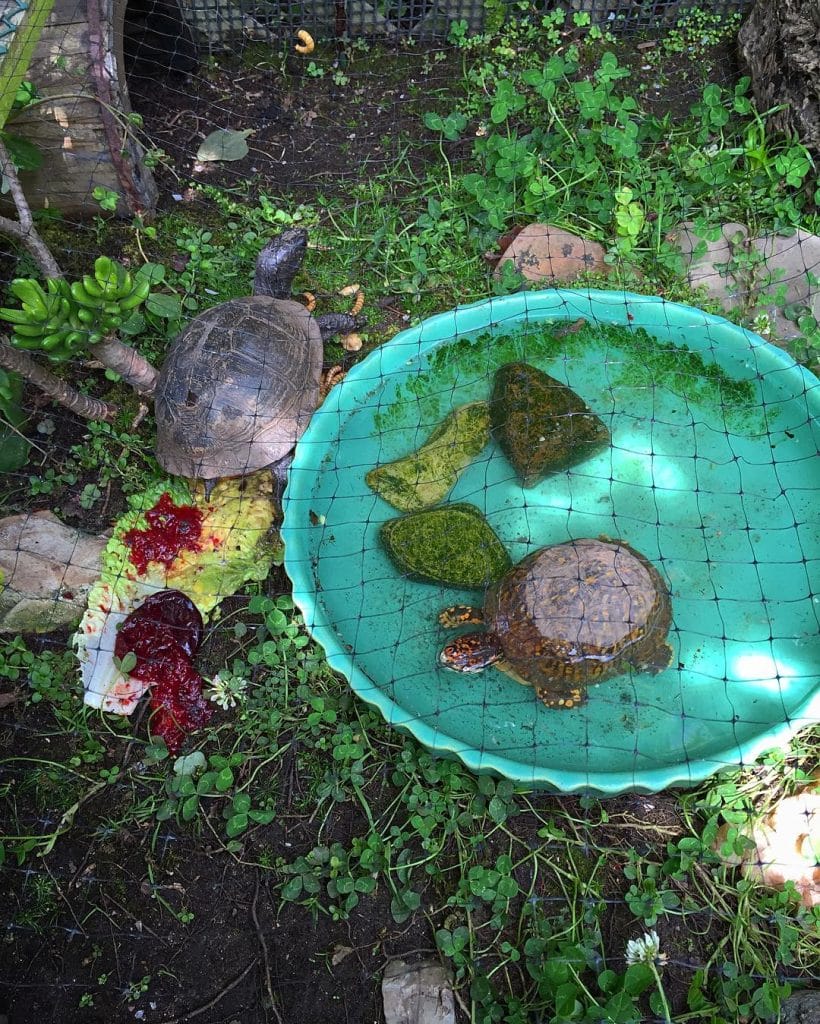
Use coconut matting as the substrate to build a simple terrarium for your turtle. To give the necessary rays, place a UV lamp right over the basking area.
Use a digital thermometer to maintain appropriate temperatures. Include a water bowl for hydration, and tuck a cozy hiding space under the hollow log with damp sphagnum moss.
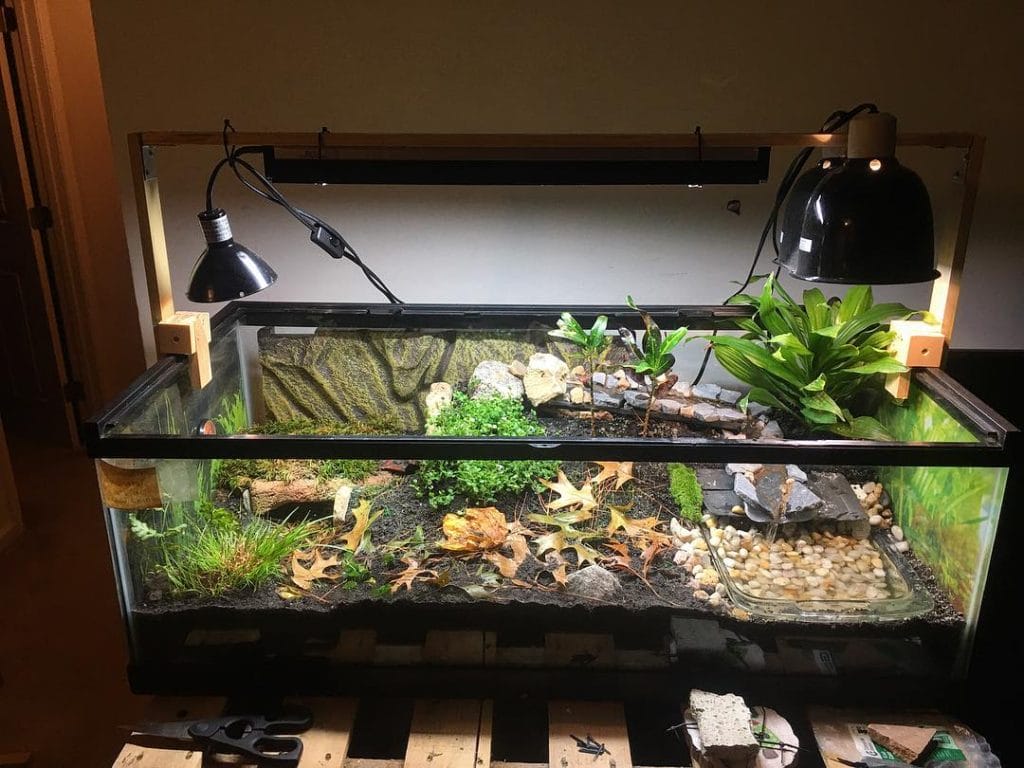
23. Indoor Box Turtle Habitat With Natural Leaf Litter
| Materials | Large wooden enclosure, coconut fiber, dried leaves, flat basking stone, hollow log, shallow water dish, UVB lamp, etc. |
| Difficulty level | Moderate |
This indoor setup uses a wide wooden enclosure lined with a thick bed of coconut fiber topped with dried leaves. That leaf litter mimics what box turtles burrow into in the wild, and it also helps hold humidity, which matters indoors where heating dries things out fast.
Place a flat stone under the UVB lamp for basking, a shallow soaking dish at ground level, and a hollow log hide on the opposite side from the heat. Aim for a warm side around 85°F and a cool side around 70°F so your turtle can thermoregulate on its own.
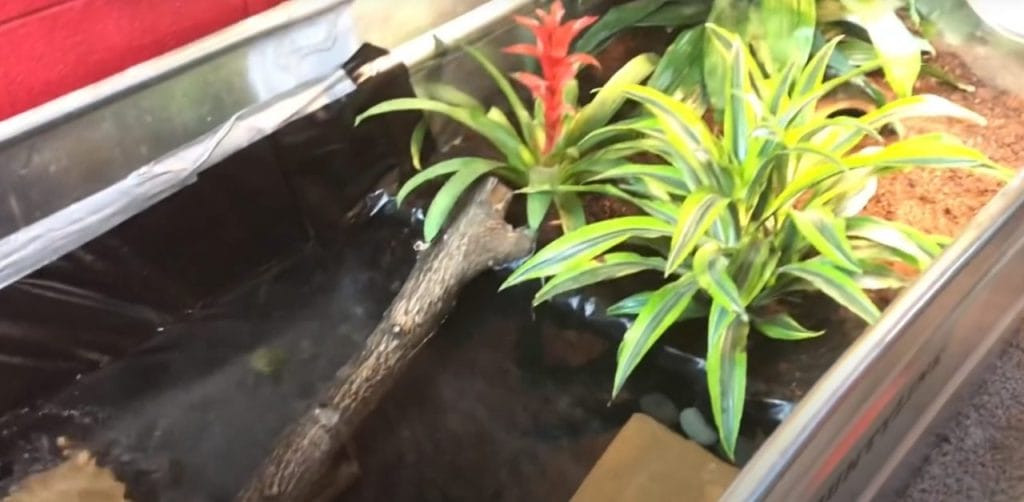
24. Box Turtle Paludarium
| Materials | Sphagnum moss, money plant, water, lamp, etc. |
| Difficulty level | challenging |
Make a roomy metal oval tub that is separated into two areas: one for a pond and one for dry land. To make entry easier, arrange logs, branches, and tilted dirt.
Pebbles and pond lining should be used to line the pond, and organic soil and big turtle-safe plants should be used in the dry area. Create hiding places and shelter using hollow logs to provide your turtle with the ideal home.
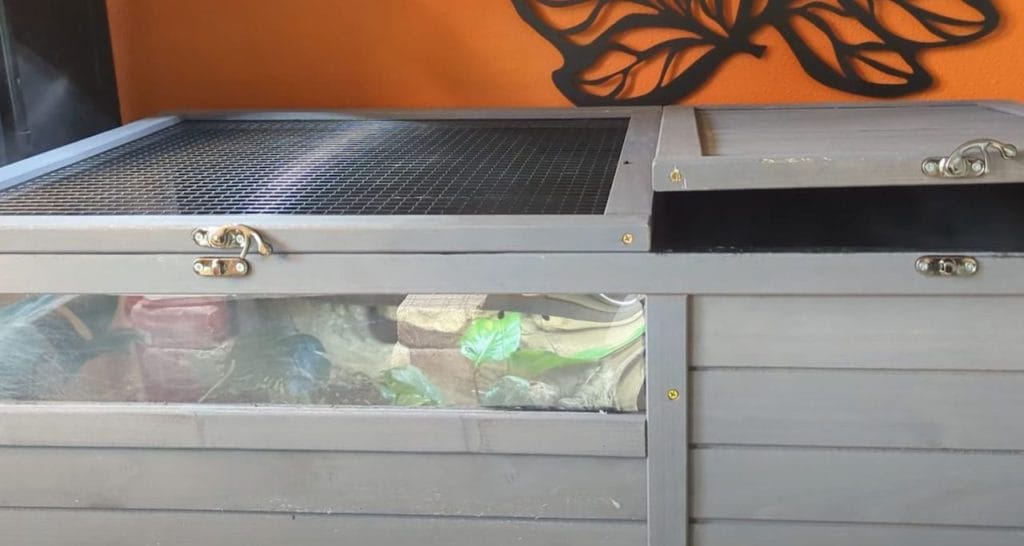
25. Grey Wooden box turtle Enclosure
| Materials | Wood, wire net, soil, dried leaves, water bowl, cave, cuttlebone (my pick: natural cuttlefish bone), lamp, etc. |
| Difficulty level | Challenging |
Build a square wooden box with a lid that is partially covered and has wire netting to allow UV light exposure. Use organic soil as the substrate, then tuck a bowl of water and some dried leaves beneath the side of the lid that is completely covered.
Bricks and a flat stone can be used to create a cozy hiding place. In the corner, place a cuttlebone to help with calcium intake.
Frequently Asked Questions
How big should a DIY box turtle habitat be?
For a single adult, aim for at least 4 by 4 feet of floor space indoors, or 4 by 8 feet if you can swing it. Outdoor enclosures should be larger, ideally 8 by 8 feet or more. Hatchlings can live in smaller setups temporarily, but they grow fast and a cramped enclosure leads to stress and poor health.
Can box turtles live outside full time?
Yes, if your climate matches their natural range and the enclosure is predator-proof. You need a buried perimeter to stop digging, a covered top to stop raccoons and birds, a shaded section, and a weatherproof hide. In cold winters, most keepers bring them indoors or let them brumate in a controlled setup.
What is the best substrate for a box turtle?
A 50/50 mix of coconut fiber and organic topsoil works for most setups. It holds humidity, is safe if accidentally eaten, and stays deep enough for burrowing. Add a layer of dried leaves on top for enrichment. Check our full substrate guide for species-specific recommendations.
Do box turtles need UVB lighting?
Yes, unless your turtle gets several hours of direct unfiltered sunlight outdoors each day. Indoor turtles need a UVB tube (not a compact bulb) running at least two-thirds the length of the enclosure, replaced every 6 to 12 months. See our turtle basking light guide for specific bulb recommendations.
How much does it cost to build a DIY box turtle habitat?
A basic indoor setup using a plastic tub or stock tank runs $50 to $150 including substrate, a hide, water dish, and basic lighting. A full tortoise-table style wooden build with UVB, a ceramic heater, and decor runs $200 to $400. Outdoor pens cost less in materials if you already have a yard, often under $100 for the perimeter and hides.
This Hilarious Turtle Book Might Know Your Pet Better Than You Do

Let’s be real—most turtle care guides feel like reading a textbook written by a sleep-deprived zookeeper.
This one’s not that.
Told from the snarky point of view of a grumpy, judgmental turtle, 21 Turtle Truths You’ll Never Read in a Care Guide is packed with sarcasm, sass, and surprisingly useful insights.
And hey—you don’t have to commit to the whole thing just yet.
Grab 2 free truths from the ebook and get a taste of what your turtle really thinks about your setup, your food choices, and that weird plastic palm tree.
It’s funny, it’s honest, and if you’ve ever owned a turtle who glares at you like you’re the problem—you’ll feel seen.
Before You Go…
Any of these 25 builds can work as long as you nail the core essentials: floor space, temperature gradient, humidity, UVB, and a deep burrowing substrate. Start simple, watch how your turtle actually uses the space, and upgrade as you learn what works in your climate and home.
If you want a species-specific rundown next, read our three-toed box turtle care guide, or check our step-by-step post on building the perfect indoor box turtle habitat.

About Author
Muntaseer Rahman started keeping pet turtles back in 2013. He also owns the largest Turtle & Tortoise Facebook community in Bangladesh. These days he is mostly active on Facebook.