Can You Put Turtles & Fish In The Same Tank?

This post was created with help from AI tools and carefully reviewed by a human (Muntaseer Rahman). For more on how we use AI on this site, check out our Editorial Policy.
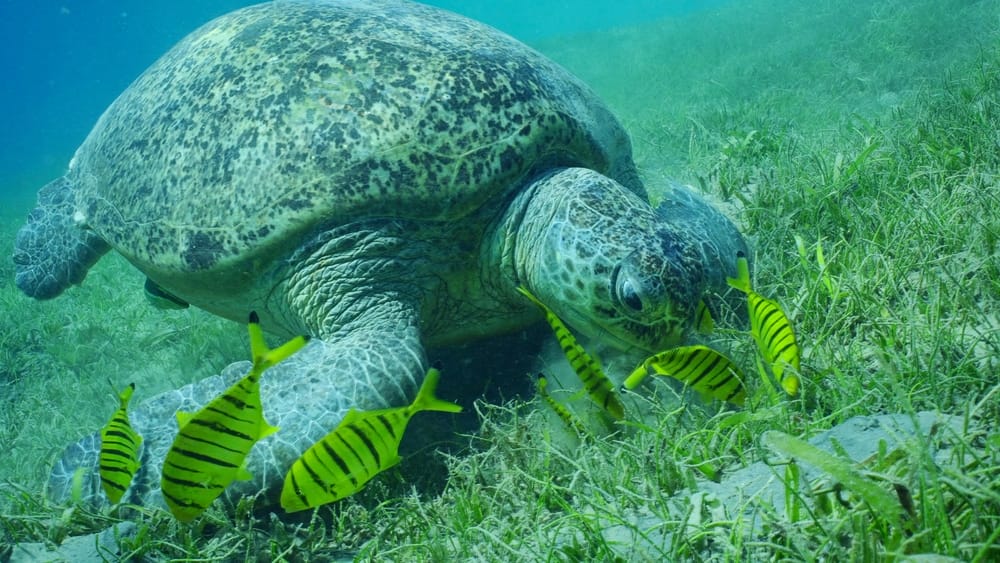
Yes, turtles and fish can share a tank — but only if you plan it right. Turtles are natural predators with a strong instinct to chase and eat anything that moves. Without the right setup, your fish are basically living on borrowed time.
You need the right tank size, the right fish species, heavy-duty filtration, and a turtle that’s already well-fed before introductions happen.
Get any of those wrong, and your “community tank” becomes a buffet.
In this article, I’ll walk you through exactly how to make it work — what fish survive, what turtles are safest, and the mistakes that kill fish overnight.
Key Takeaways
- Most turtles will try to eat any fish that fits in their mouth. That’s not aggression — it’s instinct.
- You need at least a 75-80 gallon tank to even attempt this setup.
- Fish need to be fast, large enough to avoid becoming a snack, and tolerant of the warm water turtles need.
- Goldfish are one of the worst choices despite being the most popular pick. They’re slow, messy, and contain an enzyme called thiaminase that destroys vitamin B1 in your turtle.
- A canister filter (my pick: Penn-Plax Cascade) rated for double your tank volume is non-negotiable. Turtles produce roughly 5 times more waste than fish.
- Even with perfect planning, expect some losses. This is always a calculated risk.

Do Turtles Eat Fish?
Short answer — yes. Almost all pet turtles are omnivores, and fish are a natural part of their diet in the wild.
Red-eared sliders, painted turtles, and cooters are all opportunistic feeders. If something moves and fits in their mouth, they’ll take a shot at it.
Here’s the thing most people miss though: juvenile turtles are way more aggressive hunters than adults. Baby and young turtles eat mostly protein because they’re growing fast. Adults shift toward a more plant-heavy diet.
So a baby red-eared slider in a tank with fish? That’s basically a tiny, relentless hunting machine.
An adult slider that’s been well-fed with turtle pellets (my pick: Mazuri Aquatic Turtle Diet) and vegetables? Much more likely to leave fish alone. Not guaranteed — just more likely.
This predatory instinct is part of a turtle’s broader survival toolkit — in the wild, turtles face a long list of predators of their own, which is why they’re such opportunistic hunters.
This Hilarious Turtle Book Might Know Your Pet Better Than You Do

Let’s be real—most turtle care guides feel like reading a textbook written by a sleep-deprived zookeeper.
This one’s not that.
Told from the snarky point of view of a grumpy, judgmental turtle, 21 Turtle Truths You’ll Never Read in a Care Guide is packed with sarcasm, sass, and surprisingly useful insights.
And hey—you don’t have to commit to the whole thing just yet.
Grab 2 free truths from the ebook and get a taste of what your turtle really thinks about your setup, your food choices, and that weird plastic palm tree.
It’s funny, it’s honest, and if you’ve ever owned a turtle who glares at you like you’re the problem—you’ll feel seen.
Why Goldfish Are A Terrible Choice (Even Though Everyone Picks Them)
This is the most common mistake in the hobby, and I see it constantly.
People throw goldfish in with their turtles because they’re cheap, easy to find, and seem like the “obvious” tank mate. But goldfish are actually one of the worst fish you can pair with turtles. Here’s why:
They’re slow swimmers. Goldfish, especially fancy varieties, move like they’re underwater parade floats. Your turtle will catch them without breaking a sweat.
They prefer cold water. Goldfish thrive at 65-72°F (18-22°C), while most pet turtles need water at 75-82°F (24-28°C). That mismatch stresses the goldfish and slowly weakens their immune system.
They’re waste factories. Goldfish produce a ridiculous amount of ammonia. Combine that with a turtle — which already produces 5 times more waste than a typical fish — and your water quality tanks fast.
They contain thiaminase. This is the one most people don’t know about. Goldfish contain an enzyme called thiaminase that breaks down vitamin B1 (thiamine) in your turtle’s body. If your turtle regularly eats goldfish, it can develop a thiamine deficiency that leads to neurological problems — loss of coordination, tremors, blindness, and in severe cases, death.
This isn’t some rare edge case either. Thiaminase-related deficiency has been documented across aquatic turtles, garter snakes, and even wild salmon populations.
Bottom line: skip the goldfish. Your turtle and your wallet will thank you.

What Fish Can Actually Live With Turtles?
The fish that survive in a turtle tank all share a few traits: they’re fast, too large to swallow whole, and tough enough to handle warm, slightly messy water.
Here’s a breakdown of the best and worst options:
Best Fish For A Turtle Tank
| Fish | Why It Works | Things To Watch |
|---|---|---|
| Bristlenose Plecos | Armored body, algae eater, stays at the bottom, grows to 4-6 inches | Avoid common plecos — they grow over 12 inches and need 150+ gallon tanks |
| African Cichlids | Fast, semi-aggressive, can hold their own, compatible water temps (76-82°F) | Too many cichlids can gang up on your turtle during feeding or breeding |
| Tiger Barbs | Extremely quick, schooling fish, tolerate warm water up to 82°F | Can be nippy with other fish; keep in groups of at least 5-6 |
| Giant Danios | Active swimmers, too fast for most turtles, decent size | Need groups; a lone danio gets stressed |
| Rosy Red Minnows | Cheap, fast breeders, self-replenishing population | Your turtle will eat some — that’s expected and fine |
| Convict Cichlids | Tough, territorial, won’t back down from a turtle | Can be aggressive toward other fish in the tank |
| Striped Raphael Catfish | Sharp spines make them nearly impossible for turtles to eat, nocturnal bottom dwellers | Spines can be a choking hazard if a turtle actually manages to grab one |
Worst Fish For A Turtle Tank
| Fish | Why It Fails |
|---|---|
| Goldfish | Slow, cold-water fish, high waste, contain thiaminase that destroys vitamin B1 |
| Guppies | Too small, will become snacks within days |
| Bettas | Slow with flowing fins — basically a turtle appetizer |
| Fancy-Tailed Fish | Any fish with long, flowing fins is asking for trouble. Turtles love to nip at fins. |
| Shrimp | Ghost shrimp, cherry shrimp — turtles treat these like popcorn |
| Crayfish | Will pinch your turtle, can cause injuries, and turtles will still try to eat them |
| Lobsters | Aggressive, territorial, incompatible water needs, and your turtle will try to eat them anyway |
Tank Size: Bigger Is Always The Answer
This is where most turtle-and-fish setups fail before they even start.
The standard rule for aquatic turtles is 10 gallons of water for every inch of shell length. A 6-inch red-eared slider needs at minimum 60 gallons just for itself.

Now add fish to that equation, and you need even more room.
For one adult turtle and a small group of fish, aim for at least 75-80 gallons. Two turtles? You’re looking at 100-120 gallons minimum.
Here’s a quick reference:
| Turtle Size | Minimum Tank (Turtle Only) | Minimum Tank (With Fish) |
|---|---|---|
| 4 inches | 40 gallons | 55-60 gallons |
| 6 inches | 60 gallons | 75-80 gallons |
| 8 inches | 80 gallons | 100 gallons |
| 10-12 inches | 100-120 gallons | 120-150 gallons |
Cramming a turtle and fish into a 20 or 30 gallon tank is a death sentence for the fish. The turtle will be stressed, the water will turn toxic fast, and you’ll be doing water changes every other day just to keep things alive.
If you can’t afford or fit a 75+ gallon tank, honestly? Just keep the turtle by itself. It’ll be happier, and you won’t be flushing dead fish every week.
Filtration: You Need Way More Than You Think
Here’s a fact that surprises most new turtle owners: turtles produce roughly 5 times more waste than fish of comparable size.
They’re messy eaters. They poop constantly. And when you add fish to the mix, the bioload goes through the roof.
A standard hang-on-back filter that works fine for a fish-only tank is not going to cut it here. You need a canister filter rated for at least double your tank volume.
So if you have an 80-gallon tank, get a canister filter rated for 150-160 gallons.
Why canister filters specifically? They provide mechanical, chemical, and biological filtration all in one unit. They sit outside the tank so they don’t take up swimming space. And they can handle the heavy waste load that turtles create.
Even with a good filter, you still need to do weekly water changes of 25-30%. There’s no filter on the planet that eliminates the need for regular maintenance.
An air stone and pump for extra aeration is also a solid addition. More oxygen in the water means healthier fish and a more stable nitrogen cycle.
Setting Up The Tank: Step By Step
Getting the setup right from the start saves you a ton of headaches down the road. Here’s how to do it:
Step 1: Get The Tank Cycled First
Before any living thing goes in, you need to cycle the tank for 4-6 weeks. This builds up the beneficial bacteria that convert ammonia into less harmful compounds.
If you skip this step, ammonia will spike as soon as you add animals, and both your turtle and fish will suffer.
Step 2: Set Up The Basking Area
Turtles need a dry basking spot with a heat lamp (my pick: heat lamp) (85-90°F / 29-32°C) and a UVB light (my pick: Zoo Med ReptiSun 10.0) running 10-12 hours per day.
Without UVB, your turtle can’t produce vitamin D3, which means it can’t absorb calcium. That leads to metabolic bone disease — a slow, painful condition that softens the shell and deforms the skeleton.
This is non-negotiable. No UVB light = no turtle. Period.
Step 3: Create Hiding Spots
This is where a lot of people cut corners, and it’s a mistake.
Fish need places to escape. Driftwood, PVC pipes, dense artificial or live plants, rock caves — all of these give fish somewhere to hide when the turtle gets curious.
A bare tank with nothing in it is basically a hunting ground. The turtle has clear line of sight to every fish, and there’s nowhere for the fish to break line of sight.
More hiding spots = more surviving fish. It’s that simple.
Step 4: Add Fish First
Put the fish in the tank before the turtle. Let them get comfortable, learn the hiding spots, and establish their own territory for a few days.
When you introduce the turtle, feed it a full meal right before. A turtle with a full stomach is much less likely to immediately start chasing fish.

Step 5: Monitor Everything For The First Two Weeks
The first two weeks are critical. Watch for signs of aggression, stress, or water quality issues.
If the turtle is actively hunting fish and won’t stop, or if fish are showing signs of stress (clamped fins, hiding constantly, not eating), you may need to separate them.
Not every turtle-fish combination works. Some individual turtles are just more predatory than others, regardless of species.
What Other Animals Can Live With Turtles?
Fish aren’t the only option. Here’s a quick look at other potential tank mates:
Other Turtles
Water turtles like painted turtles, sliders, and cooters can live together peacefully — if they’re similar in size. A large slider will absolutely bully a smaller turtle.
Never house these species together:
- Common snapping turtles
- Alligator snapping turtles
- Softshell turtles
These species are aggressive even toward their own kind. Putting them with other turtles (or fish) is guaranteed to end badly.
Housing multiple turtles is a whole topic on its own — territorial fights, gender pairing, and tank sizing all matter. See our full guide on how to keep two turtles in one tank without fights.
Snails
Mystery snails and apple snails can work in a turtle tank. They eat leftover food and algae, which helps with tank maintenance.
The catch? If the snail is small enough, your turtle might eat it. Larger adult snails tend to be left alone, but babies and juveniles are fair game.
Ghost Shrimp
Ghost shrimp are cheap and can survive in a turtle tank — if there are tons of hiding spots. But let’s be real: your turtle is going to eat some of them. Maybe most of them.
Think of ghost shrimp as a “sometimes snack” rather than a permanent tank mate.
The Thiaminase Problem: What Nobody Talks About
This deserves its own section because it’s a genuinely dangerous issue that most turtle care guides gloss over.
Thiaminase is an enzyme found in certain fish species that destroys vitamin B1 (thiamine). If your turtle regularly eats fish that contain thiaminase, it can develop a deficiency that affects the nervous system.
Symptoms of thiamine deficiency in turtles include loss of coordination and balance, head tremors and twitching, blindness, weakness and lethargy, inability to right themselves if flipped, and in severe cases, death.
- Fish high in thiaminase: goldfish, minnows (some species), smelt, shad, and certain saltwater fish.
- Fish low in or free of thiaminase: livebearers (guppies, mollies, platies), tilapia, and most cichlids.
This doesn’t mean your turtle will die from eating one goldfish. But if goldfish are a regular part of the diet — or if your turtle is hunting and eating tank mate goldfish consistently — the risk adds up over time.
The fix is simple: don’t use goldfish as feeder fish, and don’t keep them as tank mates. Use rosy red minnows or livebearers instead if you want a self-replenishing fish population.
Which Turtles Are Best For A Community Tank?
Not all turtles are equal when it comes to cohabiting with fish. Some are way more chill than others.
Good Candidates
- Red-Eared Sliders — The most popular pet turtle for a reason. Adults shift toward a plant-heavy diet and are less likely to actively hunt fish. They need at least a 75-gallon tank as adults since they grow to 10-12 inches.
- Painted Turtles — Generally less aggressive than sliders. Can coexist with faster fish species like rosy red minnows, mollies, and endler’s livebearers.
- Cooters (River and Florida) — These are among the most herbivorous pet turtles. Adults eat mostly plants, making them one of the safest choices for a community tank.
Terrible Candidates
- Snapping Turtles — Common and alligator snappers are pure predators. They will eat every fish in the tank and potentially injure you during maintenance. Never, ever put fish with a snapping turtle.
- Softshell Turtles — Fast, aggressive hunters. They can catch fish that most other turtles can’t.
- Map Turtles — While they look harmless, many map turtle species are highly carnivorous and will actively hunt fish.
- Musk Turtles — Small, but they’re surprisingly aggressive. They can coexist with fish in very large tanks, but it’s hit-or-miss.
Snapping turtles are especially dangerous as community tank residents — their jaws are powerful enough to bite a human finger off, so imagine what they’d do to a fish.
Common Mistakes That Kill Fish Fast
Let me save you some grief. Here are the mistakes I see most often:
- Using feeder fish to “train” the turtle, then adding tank mates. If you’ve been hand-feeding your turtle live fish, it now associates fish with food. Introducing “permanent” fish after that is just introducing more food.
- Overcrowding. More fish does not mean “safety in numbers.” It means more waste, more stress, and a turtle with more targets.
- Skipping the basking setup. A turtle that can’t bask properly gets sick. A sick turtle becomes more aggressive and erratic. The fish pay the price.
- Ignoring water temperature. Mixing cold-water fish (goldfish) with warm-water turtles creates a situation where someone is always uncomfortable. Stick to tropical fish that thrive at 75-82°F.
- No hiding spots. A bare tank is a death trap for fish. You need cover, period.
- Forgetting to feed the turtle separately. If the turtle is hungry during feeding time and the fish are right there, it’s going to go after the fish. Feed your turtle a full meal of pellets and vegetables before the fish even know dinner is happening.
Water Quality Cheat Sheet
Keeping the water healthy for both turtles and fish means hitting these parameters:
| Parameter | Target Range |
|---|---|
| Water Temperature | 75-82°F (24-28°C) |
| Basking Temperature | 85-90°F (29-32°C) |
| pH | 7.0-7.5 |
| Ammonia | 0 ppm |
| Nitrite | 0 ppm |
| Nitrate | Below 40 ppm |
| Water Changes | 25-30% weekly |
| Filter Rating | 2x tank volume minimum |
If ammonia or nitrite reads anything above zero, do an immediate partial water change. Those compounds are toxic to both fish and turtles even at low levels.

Fish That Help Keep Your Turtle Tank Clean
One of the best reasons to add fish to a turtle tank is the cleanup factor. Some species earn their keep:
- Bristlenose Plecos — Hands down the best algae eater for a turtle tank. They stick to the bottom, eat algae off glass and decor, and their armored body makes them tough to eat. They top out at about 5-6 inches, which is a manageable size.
- Mollies — They eat algae, they’re fast, they breed easily, and they tolerate the warm water turtles need. Solid all-around choice.
- Rosy Red Minnows — They’ll eat leftover food and small bits of debris. Plus they breed like crazy, so even if the turtle picks off a few, the population recovers.
Just remember: no fish replaces proper filtration and water changes. They help, but they’re not a substitute.
Frequently Asked Questions
Can I put goldfish and a turtle together?
Technically yes, but I really don’t recommend it. Goldfish prefer colder water (65-72°F) than turtles need (75-82°F), they produce massive amounts of waste, and they contain thiaminase — an enzyme that breaks down vitamin B1 and can make your turtle seriously sick over time. If the turtle doesn’t eat them, the temperature mismatch will stress them out anyway.
Can I put a moss ball in my turtle tank?
Yep, marimo moss balls are perfectly safe for turtles. They help absorb small amounts of nitrates, add a natural look to the tank, and turtles generally leave them alone. Place them in an area with medium indirect light and they’ll do fine.
Are turtles and lobsters compatible?
Not at all. Turtles will try to eat lobsters, and lobsters will pinch and injure turtles. It’s a lose-lose situation. Keep them in separate tanks.
Do turtles eat fish?
Almost all pet turtles are omnivores and will eat fish when given the chance. Species like red-eared sliders, painted turtles, and especially snapping turtles are known fish hunters. Juvenile turtles are more aggressive about it than adults since they need more protein to grow.
What fish keep a turtle tank clean?
Bristlenose plecos are the gold standard — they eat algae and stay out of the turtle’s way. Mollies and rosy red minnows also help by eating leftover food. But don’t rely on fish alone for cleaning. You still need proper filtration and regular water changes.
How many fish can I put in a turtle tank?
Less is more. For a 75-80 gallon tank with one adult turtle, a small group of 4-6 compatible fish is a safe starting point. Adding too many increases the bioload, stresses the turtle, and makes water quality harder to manage. You can always add more later once you see how the tank stabilizes.
Should I feed my turtle before adding fish to the tank?
Absolutely. A well-fed turtle is significantly less likely to immediately hunt new fish. Give your turtle a full meal of pellets, leafy greens, and maybe some turtle-safe treats about an hour before introducing new fish.
Final Thoughts
Can you put turtles and fish in the same tank? Yes — but it takes real effort.
You need the right tank size, the right species combinations, serious filtration, plenty of hiding spots, and a commitment to monitoring the situation closely.
Even then, some fish will probably get eaten. That’s just the reality of keeping a predator with potential prey in the same enclosed space.
But if you go in with realistic expectations — a big enough tank, smart fish choices, and a well-fed turtle — it can absolutely work. Plenty of people run successful turtle-and-fish setups for years.
Just please, for the love of everything, skip the goldfish.

About Author
Muntaseer Rahman started keeping pet turtles back in 2013. He also owns the largest Turtle & Tortoise Facebook community in Bangladesh. These days he is mostly active on Facebook.