What Happens If A Tortoise Gets Too Cold? Signs, Safe Temps & Rescue Steps

This post was created with help from AI tools and carefully reviewed by a human (Muntaseer Rahman). For more on how we use AI on this site, check out our Editorial Policy.
Your tortoise hasn’t moved all day. The room feels chilly, the heat lamp (my pick: Zoo Med Repti Basking Spot Lamp 100W) might have died overnight, and you’re standing there poking a shell and wondering if you’re looking at a nap, a hibernation, or a funeral.
Let’s get you an answer fast, then let’s fix it.
A tortoise that gets too cold shuts down in stages. Below 70°F digestion slows, below 60°F it stops eating, below 50°F it slides into a dormant state and starts burning through its reserves, and at or below 32°F (0°C) its tissues actually begin to freeze, which causes permanent eye damage and death. The safe hibernation window is a narrow band of 37 to 45°F (3 to 7°C), ideally 39 to 41°F. Anything colder than that band is dangerous, and anything below freezing can kill in a single night.
Notice what that does not say. It does not say a tortoise dies at 37°F. That number gets repeated all over the internet, and this article used to repeat it too. It’s wrong, and I’d rather correct it than keep it.
37°F is the floor of the safe hibernation range, not the temperature of death. Death comes at freezing. But dropping below 37°F still means your setup has lost control, and losing control is how tortoises end up at freezing.
Here’s everything that happens in between, and what to do about it.
Tortoise Temperature Cheat Sheet
Pin this to the wall next to the enclosure. Every number below is for an active, non-hibernating tortoise unless stated otherwise.
| Temperature | What’s happening to your tortoise |
|---|---|
| 95-100°F (35-38°C) | Basking spot. Correct. This is where digestion and immune function actually run. |
| 80-85°F (27-29°C) | Warm side of the enclosure during the day. Correct. |
| 70-75°F (21-24°C) | Cool end during the day. Correct. Also a fine overnight temperature. |
| 60-70°F (16-21°C) | Acceptable at night for most species. Too cold as an all-day temperature. Digestion crawls. |
| 50-60°F (10-16°C) | Danger zone. Appetite gone, immune system dropping, respiratory infection risk climbing. |
| 45-50°F (7-10°C) | The tortoise starts going dormant but is not properly hibernating. It burns reserves and gets nothing back. |
| 37-45°F (3-7°C) | The only safe hibernation band. Target 39-41°F. Only for healthy, prepared, hibernating species. |
| 32-37°F (0-3°C) | Too cold even for hibernation. You have lost your safety margin. |
| Below 32°F (0°C) | Tissue freezing. Eye damage, blindness, organ damage, death. Can happen overnight. |
The single most useful thing on that chart is the gap between 45°F and 50°F. That narrow strip is where “my tortoise is hibernating” quietly turns into “my tortoise is slowly starving in a cold box.” More on that below.
The 6 Stages Of A Tortoise Getting Too Cold
Tortoises are ectothermic, which is the polite way of saying they have no internal furnace. Their body temperature is whatever the room decides it should be, and every single biological process they run is priced in degrees.
So the cold doesn’t hit them all at once. It takes things away one at a time, in a fairly predictable order.
Stage 1: Long Naps And Late Mornings
The first sign is boring, which is exactly why people miss it.
Your tortoise sleeps in. It comes out later, goes back to the hide earlier, and spends more of the day tucked away doing nothing.
At night this is completely normal, and a cooler night is actually good for them. But if you’re seeing it at 2pm under a running basking lamp (my pick: Zoo Med PowerSun), your ambient temperature has drifted down and you should check it with a real thermometer rather than a hand wave.
Stage 2: Sluggishness And Slow Movement
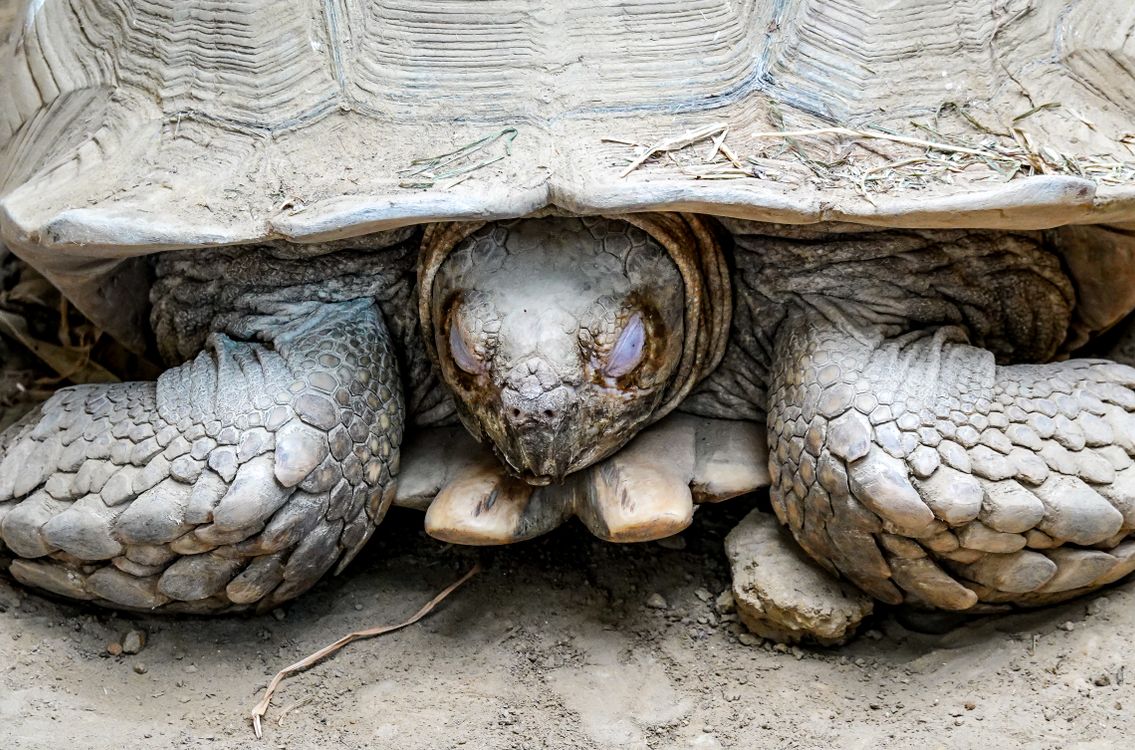
Below roughly 65-70°F, a tortoise gets visibly slow. Movements get deliberate and heavy, like everything costs more effort than it used to.
That’s because it does. The tortoise has switched to conserving stored energy instead of spending it, and walking laps of the enclosure is the first thing on the cut list.
If you’re seeing this and your temperatures look fine, there are other reasons a tortoise becomes inactive worth ruling out.
Stage 3: The Food Strike
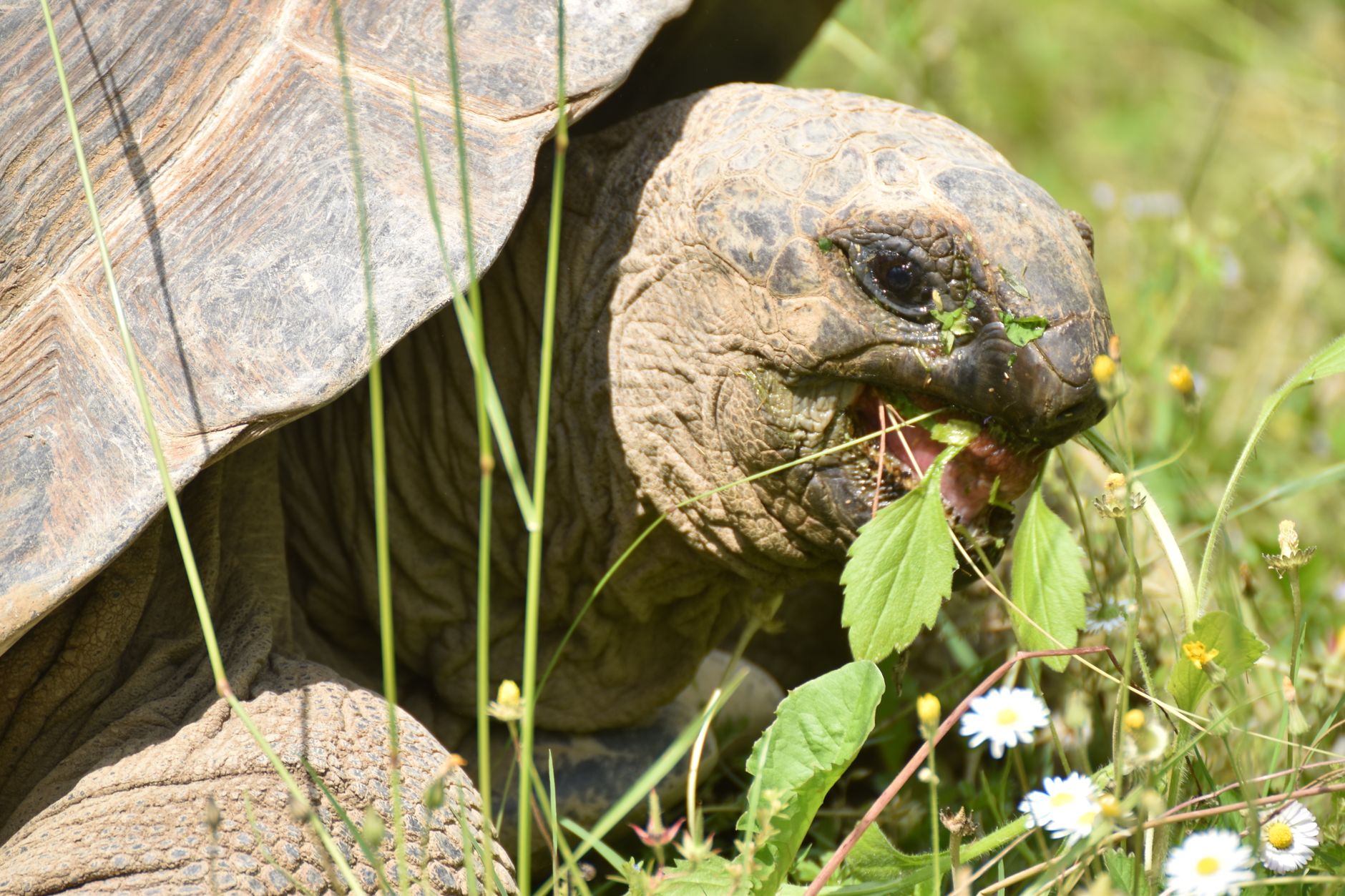
Cold slows metabolism, and a slow metabolism can’t process a meal. So the tortoise stops accepting one.
This is where it stops being an inconvenience and starts being a medical problem, and here’s the part most articles skip.
Food already in the gut does not vanish when the tortoise goes cold. It sits there and rots. A tortoise that goes cold with a full stomach can end up with fermenting, gas-producing material in its digestive tract, and that can turn septic and kill an otherwise healthy animal.
This is the entire reason the hibernation fasting period exists, and it’s why a surprise cold snap is more dangerous than a planned hibernation. Planned means empty. Surprise means full.
If your tortoise has gone off food and the temperature isn’t the cause, our guide on why a Sulcata tortoise stops eating covers the other suspects.
Stage 4: The Immune System Clocks Out
Reptile immune function is temperature dependent. A cold tortoise is not just a sleepy tortoise, it’s a tortoise with the security system switched off.
This is where respiratory infection sneaks in, and cold plus damp is far worse than cold plus dry. A chilly, humid, badly ventilated enclosure is basically an incubator for the thing that’s about to make your tortoise sick.
Watch for a runny nose, clear discharge that turns thick and yellow, bubbles at the nostrils, wheezing or clicking sounds, gaping the mouth open to breathe, and swelling or discharge around the eyes.
Any of those means an exotics vet, not a heat lamp and hope. Respiratory infections in tortoises respond well to early treatment and badly to waiting.
Stage 5: Uncontrolled Dormancy
Somewhere below 50°F, the tortoise gives up on being awake and shuts down into a dormant state.
If this is a planned hibernation with the right prep and the right temperature, that’s fine and natural. If it’s an accident, it is not hibernation. It’s a cold animal running down its batteries with none of the protective preparation that makes real brumation survivable.
A dormant tortoise at 48°F is losing weight, losing hydration, and gaining nothing. It’s the worst of both worlds: too cold to function, too warm to properly power down.
Stage 6: Freezing
At or below 32°F (0°C), the water inside the tortoise starts to become ice, and the damage stops being reversible.
The most common outcome in tortoises that survive a freeze is loss of vision. The lenses and retinas are especially vulnerable, and the result ranges from partial sight damage to total blindness. Keepers describe a frost-damaged tortoise as one that won’t eat, walks in aimless circles, and bumps into things it should be able to see.
The Tortoise Trust is blunt about how little margin there is here: at just -1°C to -3°C, tortoises will freeze to death or suffer sight damage. That’s a few degrees below freezing, for one night, in an unheated garage.

This Hilarious Turtle Book Might Know Your Pet Better Than You Do
Let’s be real—most turtle care guides feel like reading a textbook written by a sleep-deprived zookeeper.
This one’s not that.
Told from the snarky point of view of a grumpy, judgmental turtle, 21 Turtle Truths You’ll Never Read in a Care Guide is packed with sarcasm, sass, and surprisingly useful insights.
And hey—you don’t have to commit to the whole thing just yet.
Grab 2 free truths from the ebook and get a taste of what your turtle really thinks about your setup, your food choices, and that weird plastic palm tree.
It’s funny, it’s honest, and if you’ve ever owned a turtle who glares at you like you’re the problem—you’ll feel seen.
How Long Can A Tortoise Survive In The Cold?
This is the question people actually type in at 11pm, and it deserves a straight answer instead of “it depends.”
It depends on how cold, so here’s the breakdown.
| Temperature | Realistic survival window | What kills it |
|---|---|---|
| 60-70°F | Weeks, but declining the whole time | Appetite loss, weight loss, infection creeping in |
| 50-60°F | Days to about two weeks | Gut contents fermenting, respiratory infection, dehydration |
| 40-50°F | Days, and dangerous immediately if unprepared | Undigested food, reserves burning with no true hibernation |
| 32-40°F | Survivable only as a controlled hibernation in a healthy, fasted tortoise | Everything above, plus no safety margin left |
| Below 32°F | Hours. A single night can do it | Tissue freezing, eye damage, organ damage |
The honest summary: a healthy adult tortoise that gets chilly for one night will almost certainly be fine. A tortoise that sits at 55°F for two weeks because the heater failed in November is in genuine trouble even though it never got anywhere near freezing.
Slow cold is underrated as a killer. It doesn’t look like an emergency, which is exactly why it wins.
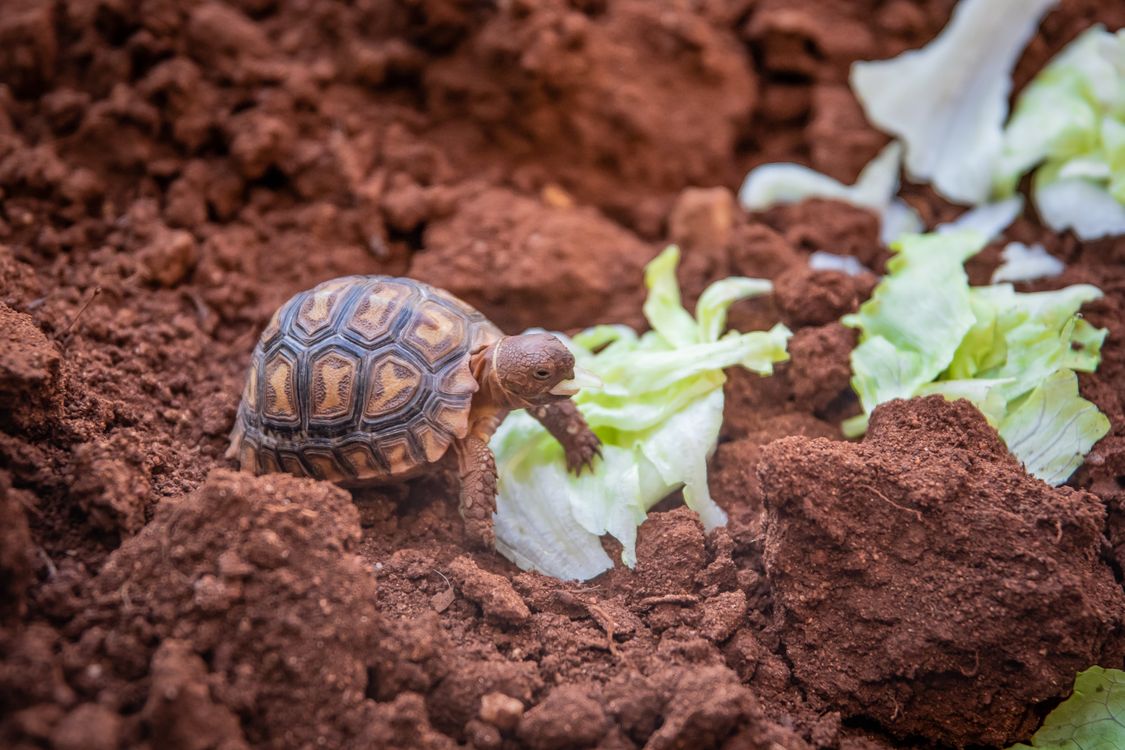
Age matters too. A healthy adult has fat reserves and hydration to spend. Hatchlings, juveniles under a year, elderly tortoises, and any animal already sick or underweight have almost no buffer at all.
Perfect Wooden Tortoise House (my pick: Aivituvin Wooden Tortoise Habitat) For Outdoor & Indoor!
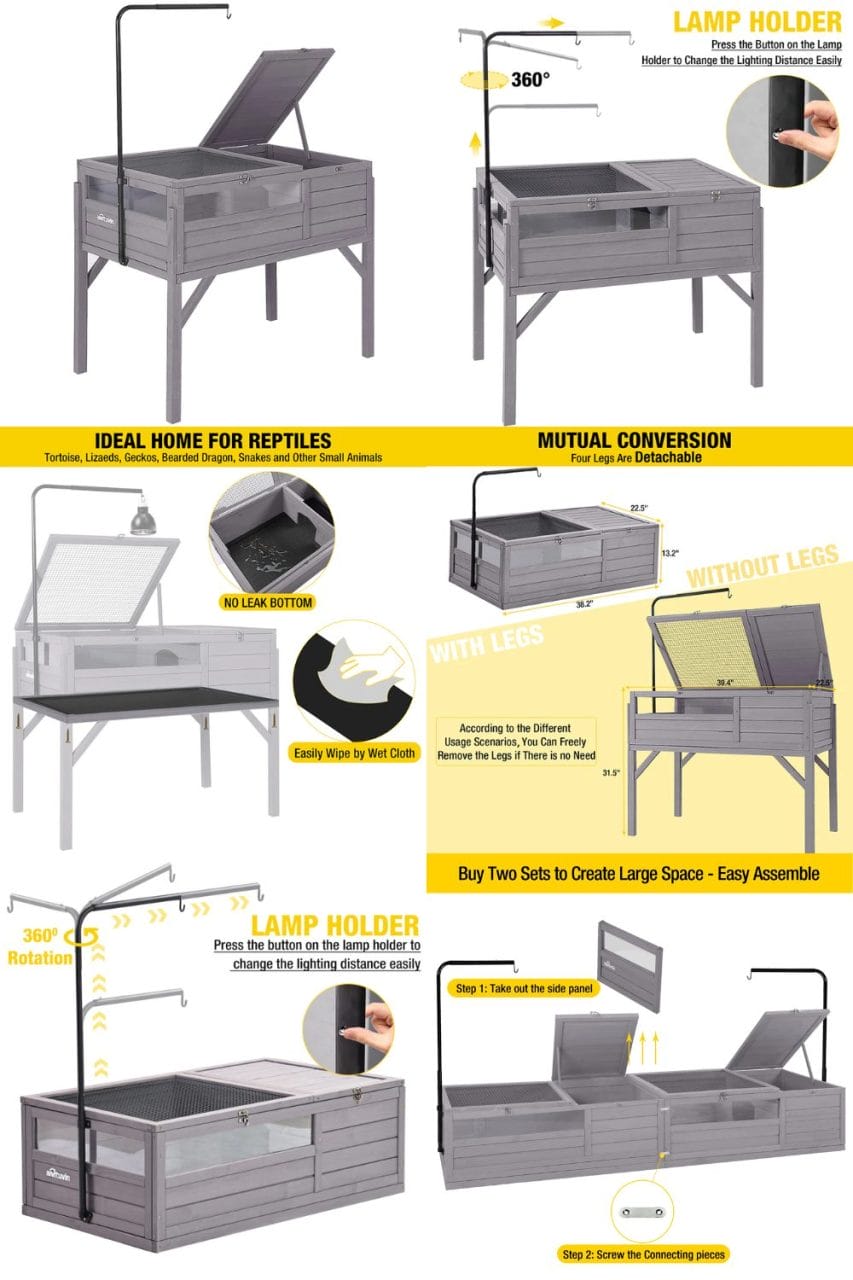
This tortoise house isn’t cheap — but that’s because it’s not your average wooden box.
Built with durable wood, a waterproof liner, and smart design features like a sunbathing area and a hideout zone, the Aivituvin Large Wooden Habitat is made to last.
It’s perfect for tortoises or box turtles, indoors or out. And yep, it even has detachable legs.
If you’re serious about giving your tortoise a safe, comfy home without building one from scratch, this is the one.
👉 Grab the Aivituvin Tortoise House here — it’s currently $10 off.
Signs Your Tortoise Is Too Cold: The Checklist
Run through this list right now if you’re worried.
- Not moving during the warmest part of the day
- Hiding or burrowing constantly instead of coming out to bask
- Refusing food it normally attacks
- No droppings for an unusually long stretch
- Skin feels genuinely cool to the touch, not just room temperature
- Eyes closed or swollen when it should be alert
- Gaping mouth, wheezing, clicking, or whistling breathing
- Runny nose, bubbles at the nostrils, or discharge around the eyes
- Limbs hanging limp instead of being tucked in with any muscle tone
- Walking in circles or bumping into things, which points to cold-related sight damage
The last four are vet visits, not thermostat (my pick: Inkbird ITC-306T Thermostat) adjustments.
What To Do Right Now If Your Tortoise Is Too Cold
If you’ve found a cold, floppy, unresponsive tortoise, here is the order of operations. Do not skip the boring first step.
- Move it indoors to a normal room, around 68 to 77°F (20-25°C). Not the boiler room, not next to a radiator, not the oven. A regular warm room.
- Wait an hour or two. Let its core temperature come up gradually on its own. This is the step people rush, and rushing it is what turns recoverable cold damage into permanent damage.
- Then offer a shallow, lukewarm bath. Water around 86-90°F (30-32°C), no deeper than the tortoise’s shoulders, head and nostrils clear of the water, for 20 to 30 minutes. Top it up as it cools. This rehydrates as well as warms.
- Move it into a properly heated enclosure with the basking spot back at the normal species range and UVB (my pick: Zoo Med ReptiSun 10.0) running for a full day cycle.
- Offer water again, but don’t push food for the first day. Let digestion come back online before you ask it to do work.
- Watch for 24 to 48 hours. A tortoise that’s genuinely recovering will be alert, moving, and interested in its surroundings within that window.
Call an exotics vet if: it isn’t active and alert after 48 hours, it shows any respiratory symptom, its eyes are swollen or cloudy, it’s circling or seems unable to see, or it was exposed to freezing temperatures at all. Freeze exposure is a vet visit even if the tortoise looks okay, because eye damage isn’t always obvious on day one.
Never do these: hot water, a hair dryer, a heat pad turned up, a radiator, or any attempt to warm it fast. Rapid rewarming of cold-damaged tissue makes the damage worse, not better.
Cold, Hibernating, Or Dead? How To Tell The Difference
A hibernating tortoise and a dead one look uncomfortably similar, and a dangerously cold one looks like both.
The short version: a hibernating tortoise still has muscle tone and will show a faint response if you gently move a limb or touch near the eye or nostril. A dangerously cold one is limp and floppy with no resistance at all. Dead is limp, cool, and completely unresponsive, and eventually smells like it.
That check deserves more than a paragraph, so we wrote a full one: how to tell if a tortoise is dead or hibernating walks through seven specific tests.
Which Tortoises Should Never Hibernate
This is the most important section in this article, and the old version of this post didn’t have it at all.
Tropical tortoise species do not hibernate in the wild and must never be hibernated in captivity. Putting one through hibernation is not a natural process for them, it’s a slow death.
| Species | Hibernates? | Notes |
|---|---|---|
| Hermann’s tortoise | Yes | The most cold-hardy of the common pets |
| Greek / spur-thighed (Testudo graeca) | Yes | Ibera subspecies is hardy, North African graeca is far more delicate |
| Russian / Horsfield’s tortoise | Yes | Strong hibernator, arid species, keep hibernation humidity lower |
| Marginated tortoise | Yes | Hardy, handles a European-style winter well |
| Desert tortoise (Gopherus) | Yes | Brumates naturally in burrows |
| Sulcata / African spurred | No | Tropical. Needs heat year round |
| Leopard tortoise | No | Tropical. Needs heat year round |
| Red-footed and yellow-footed | No | Tropical rainforest species |
| Indian and Burmese star | No | Tropical, and humidity-sensitive |
| Pancake, elongated, radiated | No | Tropical, keep warm all winter |
If your tortoise is on the bottom half of that table and it’s gone cold and still, that is not hibernation. That’s an emergency. Warm it using the steps above and call a vet.
Sulcata keepers specifically should read our Sulcata winter care guide, because a full-grown Sulcata in a northern winter is a genuine heating project, not a lamp on a timer.
How To Hibernate A Tortoise Without Freezing It
If you have a species that should hibernate, here’s how to do it so the cold works for you instead of against you.
Before Anything: The Wind-Down
Never hibernate a tortoise that isn’t 100% healthy. Get a pre-hibernation vet check, especially for eyes, nose, mouth, and weight.
Then fast it. Depending on size, that’s 2 to 6 weeks with no food while keeping the lights and heat on so the gut can finish emptying, then gradually reducing light and heat over the final weeks.
Bathe it regularly during the wind-down so it goes under hydrated. Weigh it and write the number down, because that number is your entire safety system for the next three months.
The reason for all of this is the fermenting-gut problem from Stage 3. An empty tortoise hibernates. A full one rots.
How Long, By Age
| Age | Maximum hibernation length |
|---|---|
| Under 1 year | Do not hibernate |
| 1 year | About 3 weeks |
| 2 years | About 6 weeks |
| 3 years | About 10 weeks |
| Adult | 12 weeks maximum |
Longer is not more natural. Longer is more weight loss and more risk.

Method 1: The Fridge (Best Control)
A dedicated fridge, not the one with your food in it, is the most reliable method available to a home keeper.
- Target 40°F (5°C), and only trust the fridge if it holds that within about 2 degrees either way over a test run of several days before the tortoise goes anywhere near it.
- Put the tortoise in a ventilated box with a suitable substrate, and put that box in the fridge.
- Fill empty fridge space with sealed water bottles to stabilise the temperature, without blocking airflow.
- Open the door for a minute or two at least three times a week for fresh air.
- Keep the fridge in a temperature-controlled room. A fridge in a cold garage can’t hold its own temperature.
- Use a min/max thermometer (my pick: Vodolo Digital Thermometer and Hygrometer) inside the box, and check it every time you open the door.
Method 2: The Box (Less Control, Still Workable)
A smaller box inside a larger one, with the gap packed with insulating material, then stored somewhere cool and stable.
The catch is that you’re now relying on the room to hold 37-45°F, and most rooms don’t. Garages and sheds swing with the weather, and a hard frost outside becomes a hard frost inside.
If you use this method, a min/max thermometer isn’t optional, and you need a plan for what you do when the forecast says the temperature is dropping.
Method 3: Outdoors, Naturally
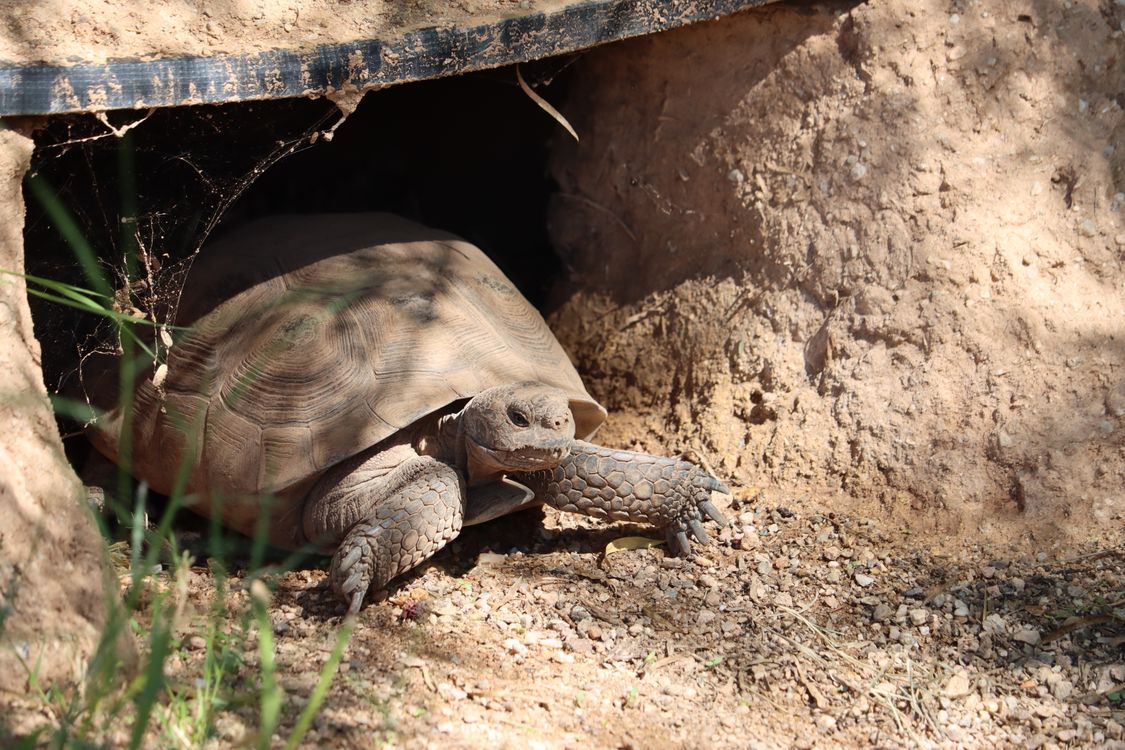
Honest answer: this works for wild tortoises and for keepers in genuinely mild climates with a deep, well-drained, protected burrow site.
For most captive keepers it’s a gamble against flooding, predators, and a cold snap you didn’t see coming. The fridge method exists because this one kills tortoises.
The Weight Rule That Ends A Hibernation
Weigh the tortoise before hibernation and at least every few weeks during it.
A tortoise can safely lose about 1% of its body weight per month. If it’s losing more than that, wake it up, warm it up, and do not put it back under. Losing weight faster than that means it isn’t properly dormant, and continuing is how a hibernation becomes a fatality.
Waking Up
Move the box to a warm room for an hour, then give a warm shallow bath, then put it under a basking lamp and UVB with the temperature back to normal species range.
It should start eating within a week of waking. If it hasn’t eaten after a week, that’s a vet call. Post-hibernation anorexia is common and treatable early, and dangerous when ignored.
Check the eyes carefully at this stage. Swelling, cloudiness, or a tortoise that seems unable to find food are all signs something went wrong down in the cold.
Keeping A Non-Hibernating Tortoise Warm All Winter
For tropical species, and for anyone who has decided to skip hibernation entirely, which is a completely valid choice, the job is just to hold the temperature.
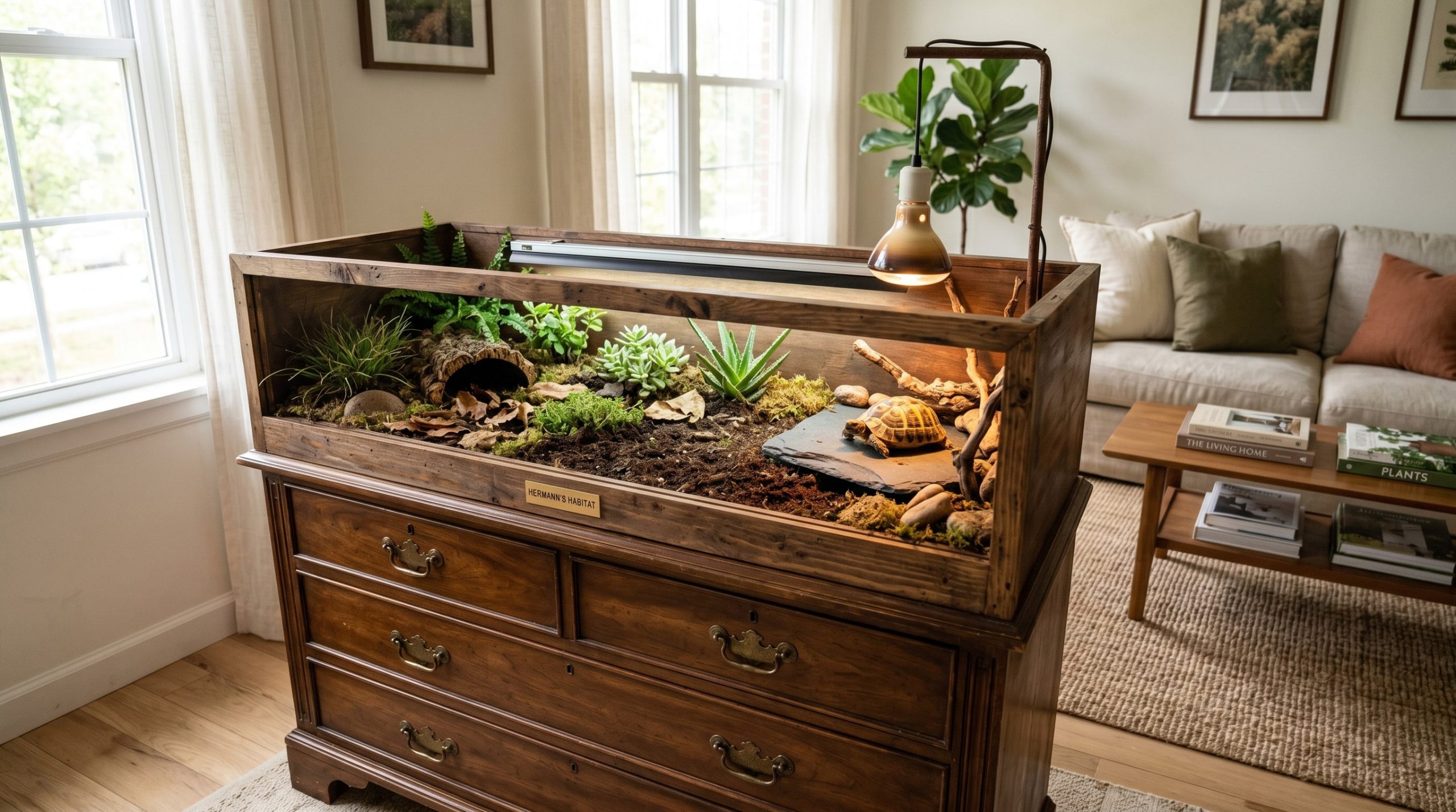
Indoors is the easy mode. A basking lamp over the warm end, an ambient heat source for the room or enclosure if your house gets cold overnight, and a UVB source running the full day cycle. Whether you need overnight heat depends on your house, and our guide on whether a tortoise needs a heat lamp at night covers when it’s necessary and when it’s just an expensive nightlight.
Outdoors takes more work. A heated, insulated shed or house with the heat source thermostat-controlled, the structure raised off the ground so it doesn’t flood, a ramp so the tortoise can get in and out, open ground in front for daytime sun, and a roof that keeps rain off. Cold and wet together is the combination that causes respiratory infections.
Two rules that matter more than the equipment you pick:
Everything gets a thermostat. An unregulated heat source is a fire risk and a burn risk, and it will cook an enclosure on a mild day just as happily as it warms one on a cold day.
No heat rocks. They’re still sold, and they still cause serious burns to the plastron and limbs because a tortoise doesn’t reliably feel that it’s being burned until damage is done. Overhead heat, thermostat-controlled, every time.
For the full numbers on every zone in the enclosure, our tortoise temperature guide has the complete breakdown, and if you’re building the setup on a budget, 15 tips for a tortoise habitat on a budget will save you some money.
Your Winter Power Cut Plan
Heaters fail. Storms take the power out. It always happens at 3am in February.
Have this ready before you need it:
- A min/max thermometer in the enclosure so you know what actually happened overnight, not what you assume happened.
- Hot water bottles wrapped in towels, packed around an insulated box with the tortoise inside. Never in direct contact with the shell or skin.
- Blankets and insulation, and the warmest room in the house identified in advance.
- A backup heat source that doesn’t need mains power if you live somewhere that loses it regularly.
- The number for an exotics vet saved in your phone now, not looked up during an emergency.
A tortoise in an insulated box surrounded by wrapped hot water bottles in the warmest room of the house will comfortably ride out a night without power. A tortoise left in a cold conservatory will not.
Four Cold Weather Myths Worth Killing
“Below 37°F they freeze to death instantly.” No. Freezing happens at 32°F and below. 37°F is the bottom of the safe hibernation band. This article used to say otherwise, and it was wrong.
“A still, cold tortoise is just hibernating.” Only if it’s a hibernating species, it was properly prepared, and it’s in the right temperature range. Otherwise it’s a cold tortoise, and the difference matters enormously.
“All tortoises hibernate.” Roughly half the common pet species must never hibernate. Check the table above before you do anything.
“The garage will be fine.” Unheated garages track outdoor temperature with a lag. A garage is fine right up until the night it isn’t.
Frequently Asked Questions
How cold is too cold for a tortoise at night?
For an active, non-hibernating tortoise, don’t let it drop below 60°F (16°C) overnight. A cool night is natural and healthy, a cold one is not.
Can a tortoise freeze to death?
Yes. At or below 32°F (0°C) its tissues begin to freeze. Even a few degrees below freezing for one night can cause permanent eye damage or death.
Will a tortoise recover from being too cold?
Usually yes, if it was chilled rather than frozen and you rewarm it gradually. Watch for respiratory symptoms for the following two weeks, because that’s the classic delayed consequence.
Is my tortoise cold or sick?
Fix the temperature first, then reassess after 48 hours at correct temperatures. A tortoise that’s still lethargic and off its food once it’s properly warm has a problem that isn’t the thermostat.
Do tortoises need heat in the summer?
Yes. A basking lamp isn’t a winter accessory, it’s how the tortoise digests food and runs its immune system year round.
How cold can a Sulcata tortoise tolerate?
Sulcatas are tropical and struggle below 50°F. Give them a heated hide holding at least 55 to 60°F overnight, and warmer is better. They do not hibernate.
Can baby tortoises get too cold faster than adults?
Much faster. Hatchlings and juveniles have almost no reserves, dehydrate quickly, and should never be hibernated under a year old.
Before You Go
The thing to take away from all of this: the temperature that kills tortoises usually isn’t the dramatic one.
It’s the boring 55°F that sat there for three weeks while a heater quietly failed and everyone assumed the tortoise was just being sleepy. Buy the thermometer, check it, and you’ve already avoided the most common way this goes wrong.
And if your tortoise is currently cold and still and you’re not sure what you’re looking at, start here next: How To Tell If A Tortoise Is Dead Or Hibernating.

About Author
Muntaseer Rahman started keeping pet turtles back in 2013. He also owns the largest Turtle & Tortoise Facebook community in Bangladesh. These days he is mostly active on Facebook.