Sulcata Tortoise Growth Rate: Size & Age Chart By Year

This post was created with help from AI tools and carefully reviewed by a human (Muntaseer Rahman). For more on how we use AI on this site, check out our Editorial Policy.
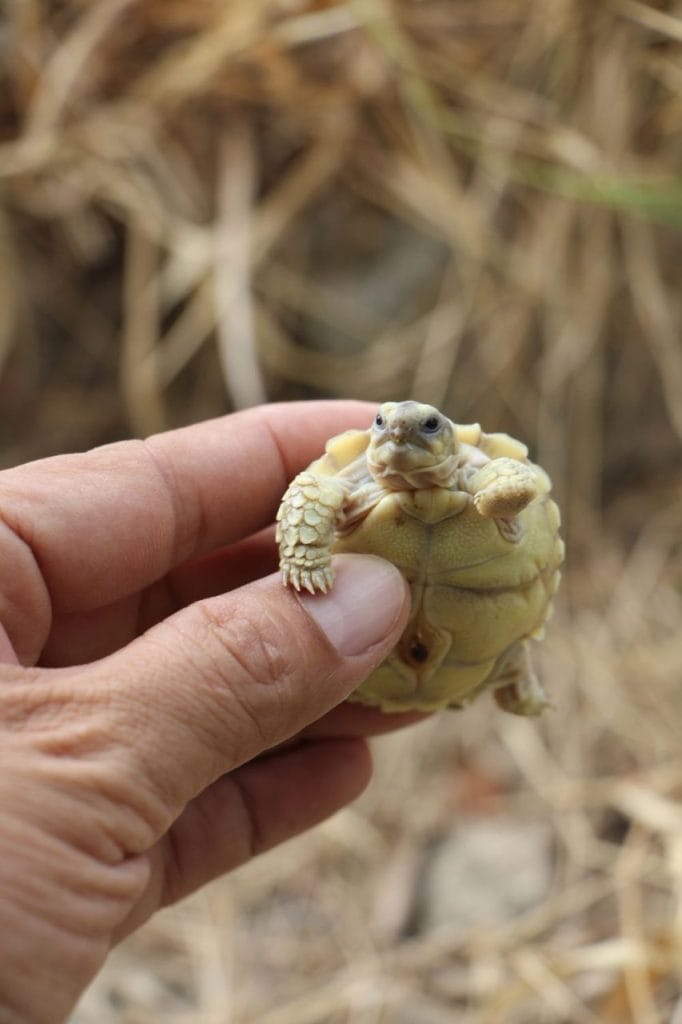
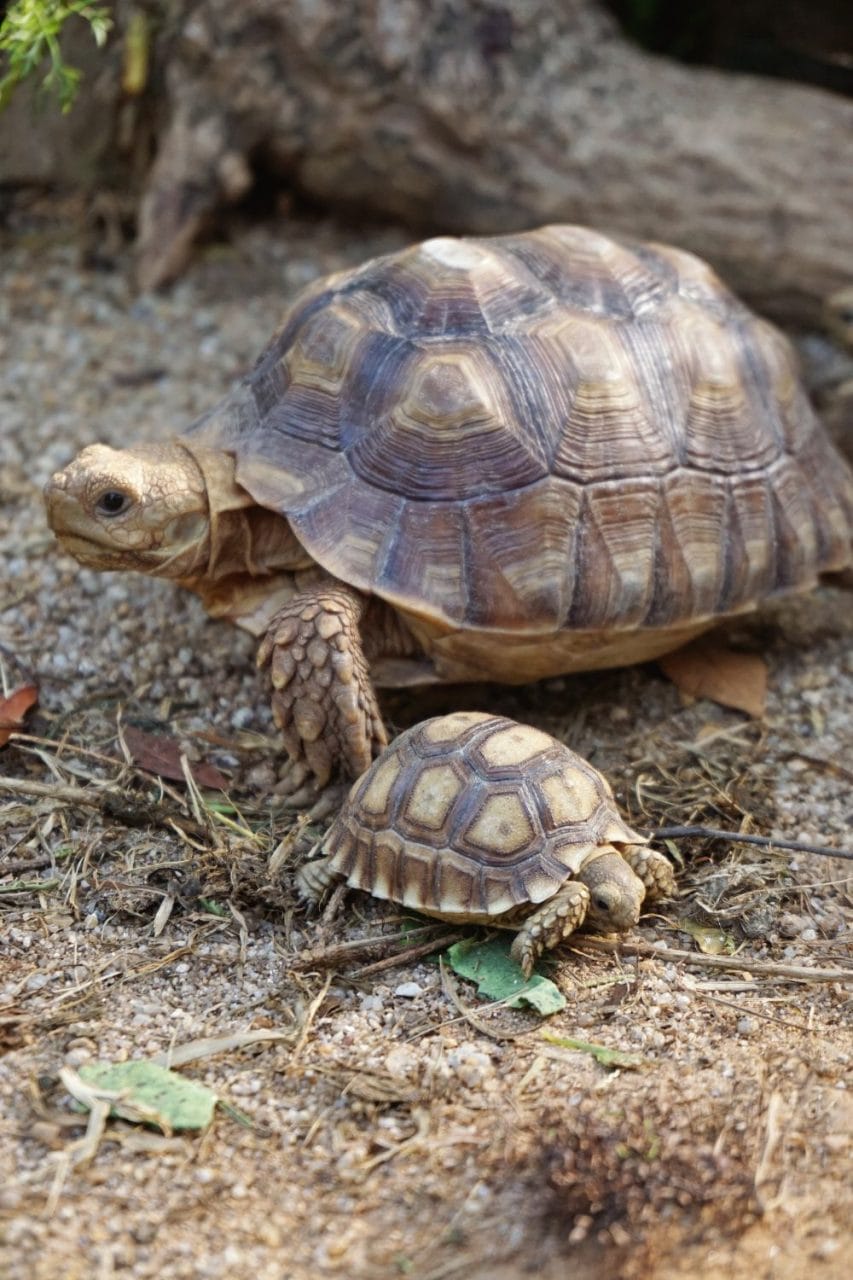
A Sulcata tortoise hatchling fits in your palm at 2 inches. Fifteen years later it can weigh more than your dog and push through a garden fence.
That gap is why growth rate matters. You are not buying the tortoise in front of you, you are buying the one it becomes.
A Sulcata tortoise grows 1.25 to 2.1 inches per year in captivity. Hatchlings start at 1.5 to 2 inches and 25 to 40 grams. By the end of year one they reach 6 to 8 inches and 700 grams to 1 kg. They keep growing until 15 to 20 years of age, finishing at 24 to 30 inches and 70 to 100 pounds, with large males reaching 33 inches and 150 to 200 pounds.
This guide covers the full picture: the year by year size chart, what a Sulcata weighs at every stage, when it stops growing, and how to estimate the age of a Sulcata you did not raise from a hatchling.
How Fast Does A Sulcata Tortoise Grow?
The growth rate of a Sulcata tortoise is 1.25 to 2.1 inches per year in captivity, and 1 to 1.5 inches per year in the wild. Growth is fastest in the first 5 to 10 years, when a Sulcata can multiply its hatchling length more than ten times over.
The Sulcata is the third largest tortoise species on earth, and the largest that lives on the mainland rather than an island.
It is also one of the fastest growing. A 2 inch hatchling can pass 10 inches in under 18 months with good husbandry.
After the juvenile surge, growth slows down. Once the tortoise hits sexual maturity, its body diverts energy into reproduction instead of length.
Captive Sulcatas usually outgrow wild ones. Food is constant, water is always there, and there is no drought to sit out.
| Environment | Average Growth Rate |
|---|---|
| Wild | 1 to 1.5 inches per year |
| Captive | 1.25 to 2.1 inches per year |
Faster is not automatically better. A Sulcata pushed hard on protein grows quickly and pyramids while doing it, which is permanent.
Sulcata Tortoise Growth Chart: Size And Weight By Age
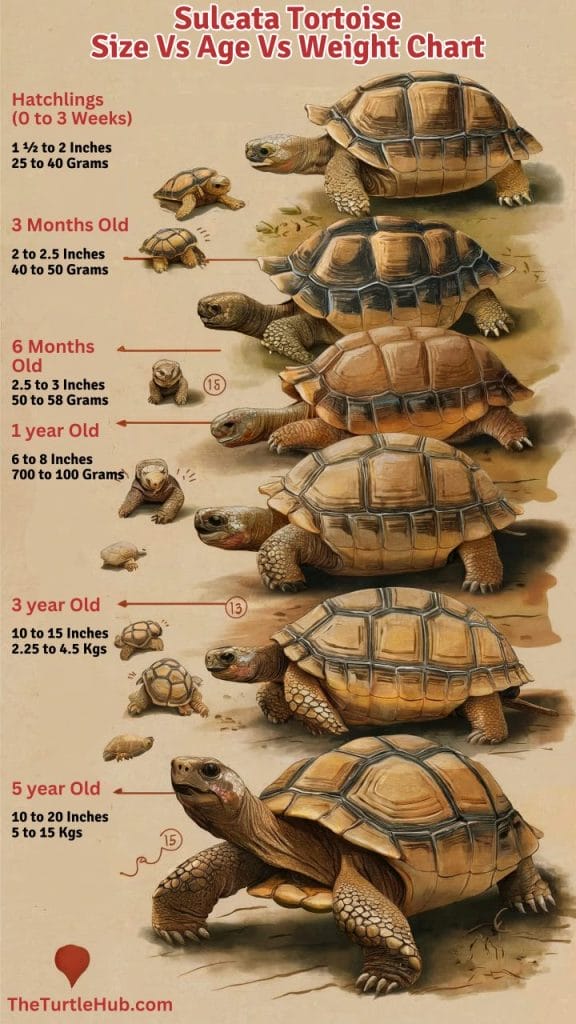
There is no official Sulcata tortoise size chart, because growth varies too much between individuals. The chart below is an estimate assembled from breeder records, keeper forums, and research papers.
Use it as a range, not a target. A tortoise sitting outside these numbers is not automatically sick.
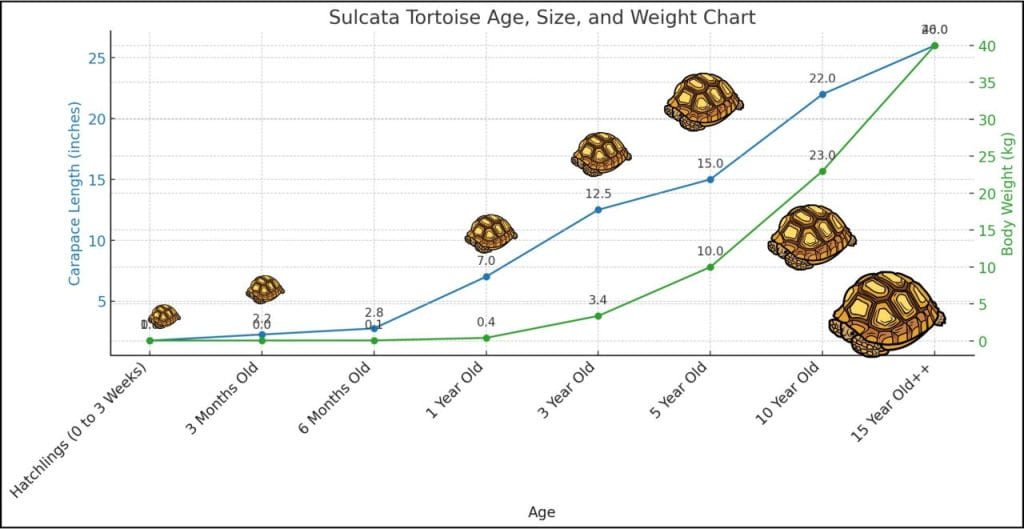
Sulcata Tortoise Age, Size & Weight Chart
| Sulcata Tortoise Age | Carapace Length | Body Weight |
|---|---|---|
| Hatchling (0 to 3 Weeks) | 1.5 to 2 Inches | 25 to 40 Grams |
| 3 Months Old | 2 to 2.5 Inches | 40 to 50 Grams |
| 6 Months Old | 2.5 to 3 Inches | 50 to 58 Grams |
| 1 Year Old | 6 to 8 Inches | 700 to 1000 Grams |
| 3 Years Old | 10 to 15 Inches | 2.25 to 4.5 Kgs (5 to 10 lbs) |
| 5 Years Old | 10 to 20 Inches | 5 to 15 Kgs (11 to 33 lbs) |
| 10 Years Old | 20 to 24 Inches | 15 to 31 Kgs (33 to 68 lbs) |
| 15 Years Old and up | 24 to 30 Inches | 32 to 45 Kgs (70 to 100 lbs) |
| Large adult male | Up to 33 Inches | 70 to 90 Kgs (150 to 200 lbs) |
Note: This is not an ideal development chart for your Sulcata tortoise. Your pet may have a different growth curve and still be perfectly healthy.
Notice how wide the ranges get after year three. That spread is the honest part of the chart.
A 16 inch Sulcata could be a fast growing 5 year old or a slow growing 10 year old. Size alone cannot separate them.
This Hilarious Turtle Book Might Know Your Pet Better Than You Do

Let’s be real—most turtle care guides feel like reading a textbook written by a sleep-deprived zookeeper.
This one’s not that.
Told from the snarky point of view of a grumpy, judgmental turtle, 21 Turtle Truths You’ll Never Read in a Care Guide is packed with sarcasm, sass, and surprisingly useful insights.
And hey—you don’t have to commit to the whole thing just yet.
Grab 2 free truths from the ebook and get a taste of what your turtle really thinks about your setup, your food choices, and that weird plastic palm tree.
It’s funny, it’s honest, and if you’ve ever owned a turtle who glares at you like you’re the problem—you’ll feel seen.
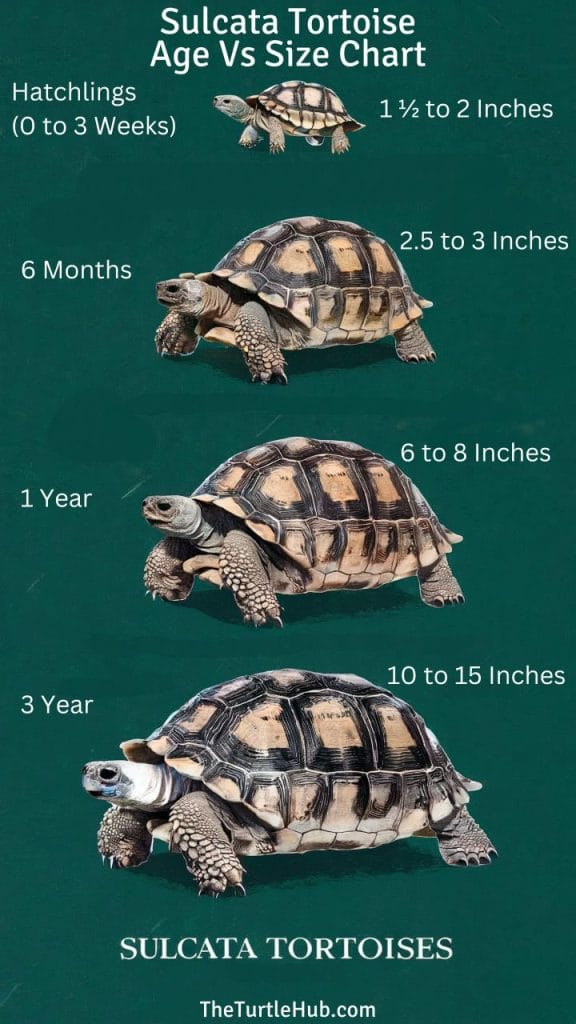
How Big Is A 1 Year Old Sulcata Tortoise?
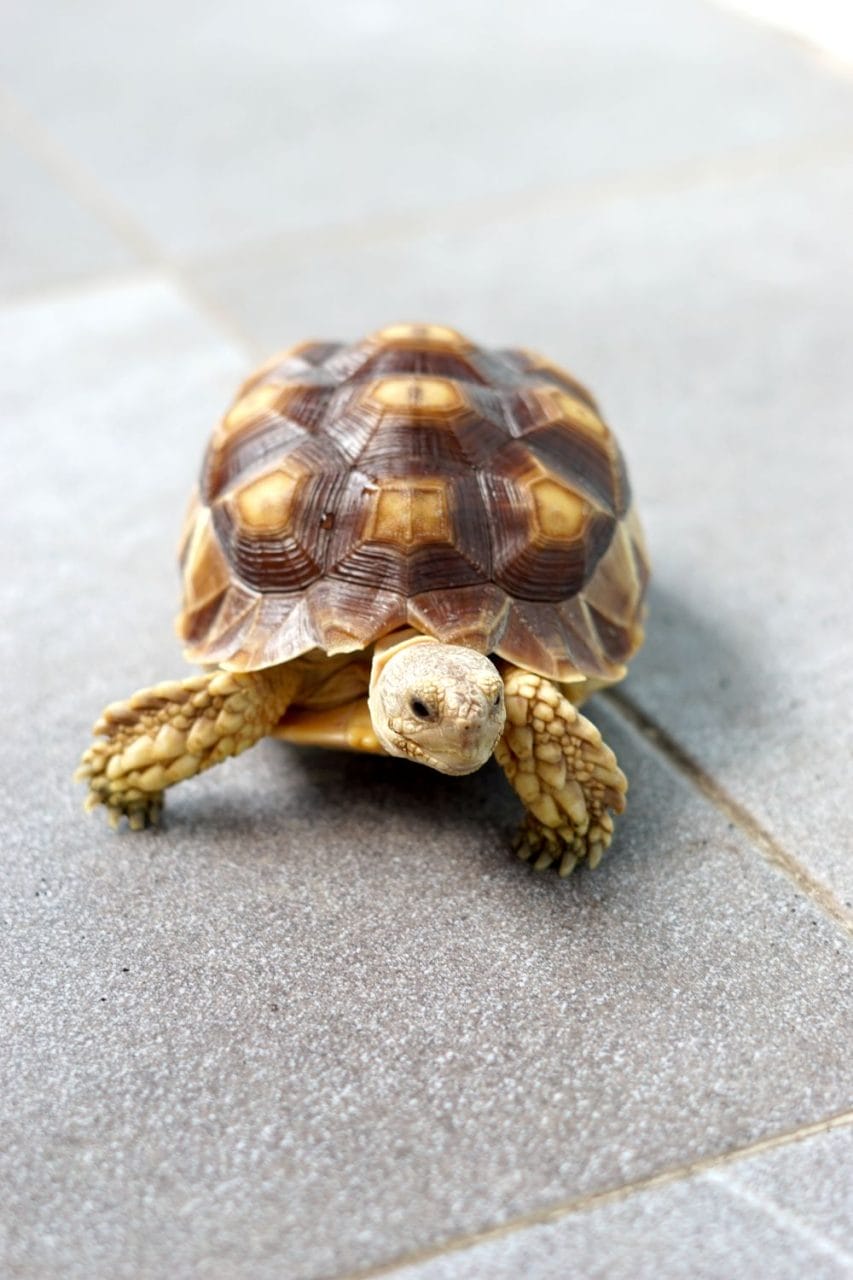
A 1 year old Sulcata tortoise measures 6 to 8 inches and weighs 700 grams to 1 kg. Most land closer to 5.5 to 7 inches at the 10 to 12 month mark.
Year one is the steepest climb in a Sulcata’s life. It leaves the egg at 2 inches and quadruples in length before its first birthday.
Do not expect a full 8 inches. That is the top of the range, not the average.
If your baby is eating well and active, a smaller number is fine. If it has stalled and looks lethargic, take it to a vet.
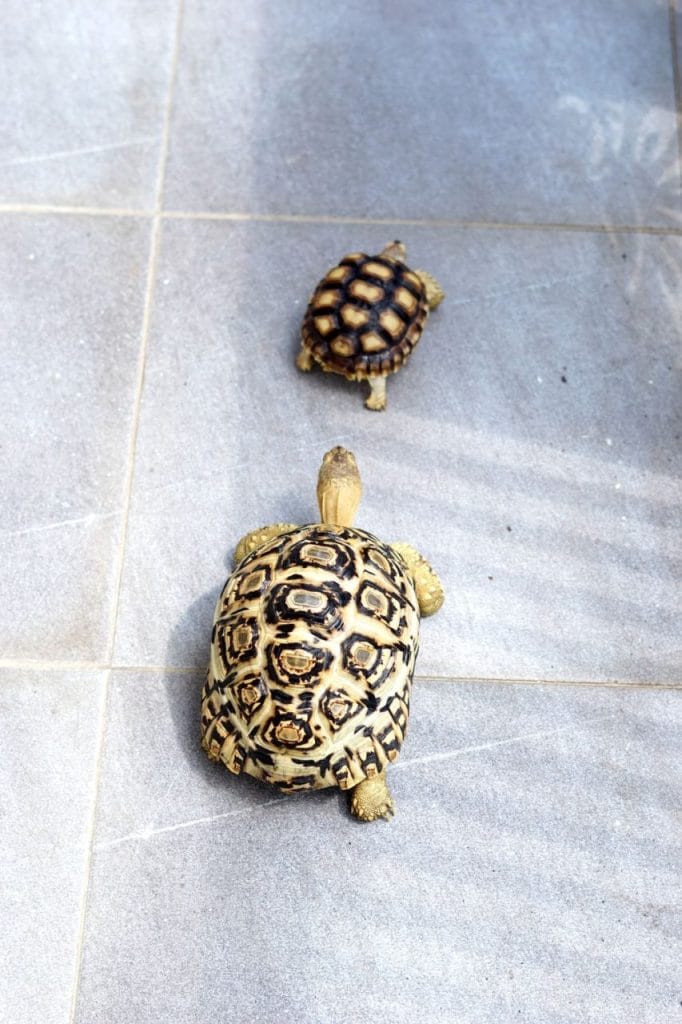
How Big Should A 3 Year Old Sulcata Tortoise Be?
A healthy 3 year old Sulcata tortoise measures 10 to 15 inches and weighs 2.25 to 4.5 kgs (5 to 10 pounds).
By age two, many Sulcatas already pass 18 inches. Others are still under 6 inches at three.
I have talked to owners panicking because their 3 year old barely reached 3.5 to 5 inches. In most of those cases the tortoise was healthy, just slow.
Genetics set the ceiling. Husbandry decides whether the tortoise gets near it.
How Big Is A 5 Year Old Sulcata Tortoise?
A 5 year old Sulcata tortoise typically measures 10 to 20 inches and weighs 5 to 15 kgs (11 to 33 pounds). The average sits near 10 inches and 5 pounds.
Age five is where the spread gets dramatic. A 5 year old Sulcata can land anywhere from 1 to 80 pounds, at 4 to 25 inches long.
That is not an error in the data. That is genuinely how much variation this species carries.
Your tortoise running well past the average is usually not a problem. Running well under it, while lethargic and off its food, is worth a vet visit.
By age 7, a Sulcata may already weigh 30 pounds or more. Most owners are still calling it a baby at that point.
How Big Do Sulcata Tortoises Get When Full Grown?
A full grown Sulcata tortoise measures 24 to 30 inches on average. Large males reach 33 inches, and exceptional individuals have been recorded near 36 inches.
The African spurred tortoise, as it is also known, is beaten only by the Galapagos and Aldabra giants.
Most pet Sulcatas will not touch 33 inches. The realistic adult range is 24 to 30 inches.
Females finish shorter than males. A healthy adult male can hit 20 inches within 5 to 10 years and keep going.
Plan your enclosure for a 30 inch, 100 pound animal from day one. The tortoise will get there whether or not your setup is ready, and it is the one that suffers if you guessed small.

How Much Does A Full Grown Sulcata Tortoise Weigh?
A full grown Sulcata tortoise weighs 70 to 100 pounds (32 to 45 kg) on average. Large males reach 150 to 200 pounds (70 to 90 kg).
You will see wildly different weights quoted for this species, and both ends are true. The difference is which tortoise you are describing.
| Sulcata Type | Adult Weight |
|---|---|
| Average adult female | 70 to 90 lbs (32 to 41 kg) |
| Average adult male | 80 to 100 lbs (36 to 45 kg) |
| Large adult male | 150 to 200 lbs (70 to 90 kg) |
The 200 pound figure is a ceiling, not an expectation. It describes big Sudanese males, not the median pet.
Weight is also the most useful number you can track. Length changes slowly enough to feel like nothing is happening, but a monthly weigh in catches problems early.
Sulcatas grow big compared to most other types of tortoises, which is exactly why so many get surrendered at year five.
At What Age Is A Sulcata Tortoise Fully Grown?
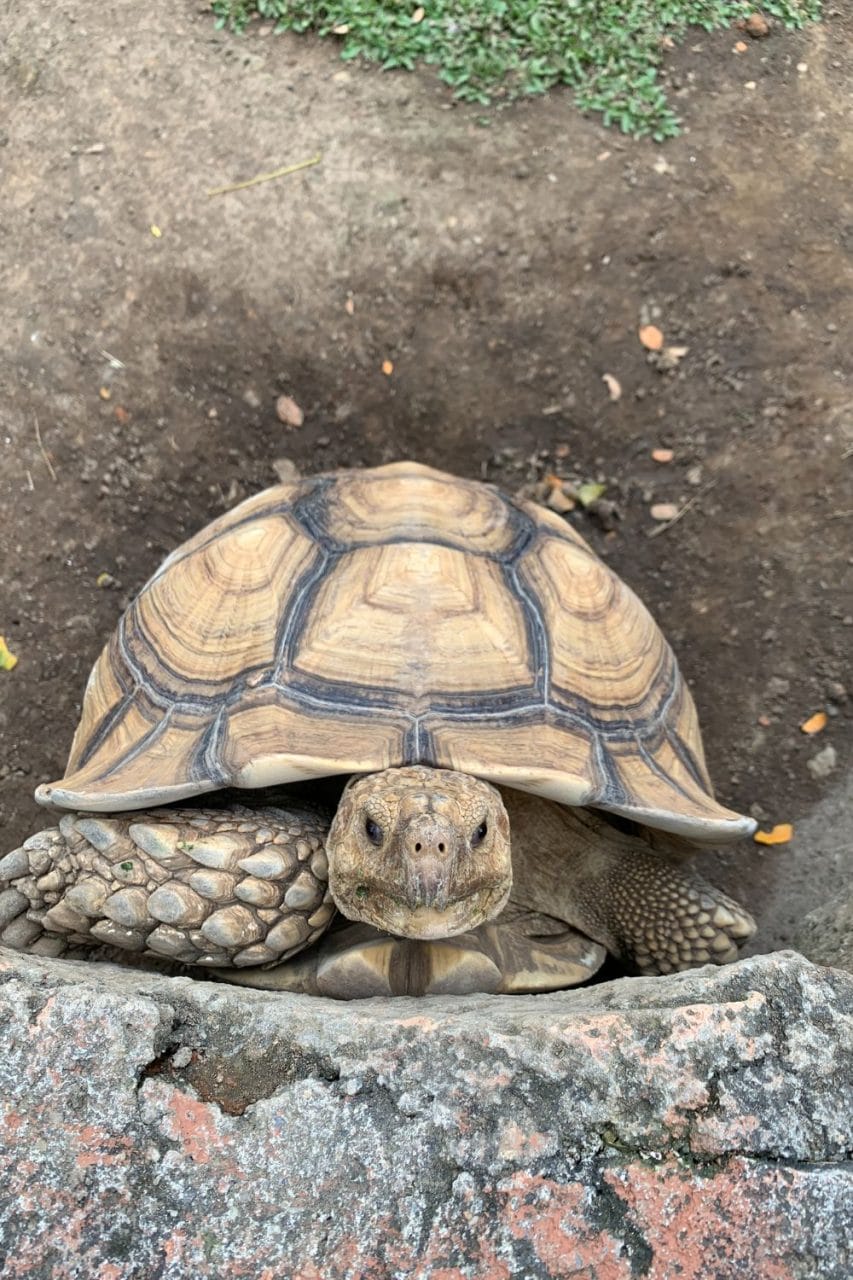
A Sulcata tortoise is fully grown between 15 and 20 years of age. It stops gaining meaningful length around year 15, though weight can still creep up afterward.
These tortoises stay manageable until roughly age 7. That is the trap.
By 7 a Sulcata may already be 30 pounds, and it has another decade of growing left.
Sexual maturity arrives before full size, the same as it does in humans. A Sulcata can breed years before it finishes growing.
At What Age Do Sulcata Tortoises Breed?
Female Sulcata tortoises reach breeding age at 12 to 15 years. Males mature earlier, often from around 5 years or once they pass roughly 14 inches.
Size predicts breeding readiness better than age does in this species.
A male that mounts and mates is telling you he is somewhere in the 5 to 15 year band. That is a wide window, but it beats guessing.
Once breeding starts, growth slows noticeably. Energy that went into shell now goes into eggs and courtship.
How To Tell The Age Of A Sulcata Tortoise?
There is no reliable way to know a Sulcata tortoise’s exact age unless you owned it from hatching. Measuring the carapace and reading the size chart backwards is the closest estimate you will get.
Run a measuring tape from the front edge of the shell to the back edge, in a straight line rather than over the dome.
Then match the number against the chart above. A 20 inch Sulcata is probably around 10 years old, though it could be a fast growing 5 year old.
Two signals are specific to Sulcatas and narrow the estimate:
- Shell hardness: hatchlings are born soft and the shell begins hardening at about 6 months. A soft shell means the tortoise is likely under 6 months. Be careful with this one, because a soft shell can also signal a calcium or vitamin D3 deficiency at any age.
- Sexual maturity: females become sexually active at 12 to 15 years and males a few years sooner. A breeding Sulcata sits in the 5 to 15 year range.
The other methods are not Sulcata specific and each carries heavy caveats. Counting scute rings has been debunked as an exact measure, and blood tests or skeletochronology need an expert.
All of them are covered properly in how to tell the age of a tortoise.
Male vs Female Sulcata Tortoise Growth
Sexual dimorphism is real in this species. Male Sulcatas end up larger and heavier than females.
During the hatchling and juvenile stages, both sexes grow at the same pace. The split shows up later, when males keep climbing.
| Sulcata Tortoise Gender | Average Growth Rate |
|---|---|
| Male | 1.5 to 2.1 inches per year |
| Female | 1.25 to 1.75 inches per year |
This is also why you cannot sex a Sulcata by size early on. The difference only becomes obvious near maturity.
Signs Of Healthy vs Poor Growth In Sulcata Tortoises
Forget the chart for a second. These four signs tell you more about your tortoise’s development than any measurement.
| Growth | Optimal Signs | Inadequate Signs |
|---|---|---|
| Weight Gain | Consistent weight gain each month. | Little to no weight gain, or weight loss over time. |
| Shell Shape | Smooth dome shape with no bumps or ridges. | Pyramiding (bumpy, pointed scutes) caused by poor lighting or diet. |
| Activity Level | Alert and active, foraging for food each day. | Lethargic, rarely leaving shelter or exercising. |
| Appetite | Eagerly eats appropriate amounts of a varied diet. | Lack of interest towards feeding. |
A slow growing Sulcata with a smooth shell and a good appetite is fine. A fast growing Sulcata with a pyramided shell is not.
What Affects A Sulcata Tortoise’s Growth Rate?
Nine factors drive how fast a Sulcata grows. You control most of them.
1. Genetics
Egg size and maternal investment set the starting point. Larger eggs produce larger hatchlings, and large hatchlings tend to stay large.
The link between egg size and adult growth rate is real but loose. It is a nudge, not a guarantee.
Incubation temperature matters too, shaping development both inside the shell and after hatching. In captivity that is the breeder’s responsibility, not yours.
2. Gender
Males grow faster and finish bigger. See the comparison table above.
3. Diet
Diet is the single biggest lever you hold. It is also the one most owners get wrong.
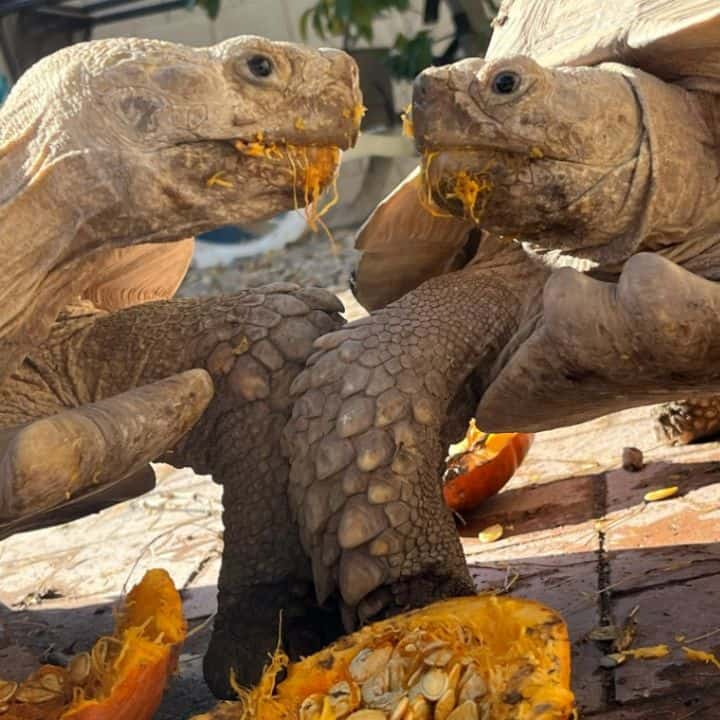
Sulcatas are herbivores in the wild and in captivity. Roughly 80% of a Sulcata tortoise’s diet should be grasses and hay, with the rest made up of greens like kale, collard, dandelion, and turnip.
High protein and high carb vegetables cause obesity in Sulcata tortoises. Overfeeding protein leads to pyramiding and other permanent deformities. Excess fruit upsets the stomach and creates further health issues.
Sulcatas store excess fat in the neck and limbs, exactly where they need mobility. An obese Sulcata cannot move properly.
The right meal is high fiber and low protein. Grasses, weeds, and leafy greens.
Feeding frequency follows age. Hatchlings eat daily, juveniles every other day, and adults about three times a week.
For portion size, the 15 minute rule works: offer what the tortoise can eat in 15 minutes. Ignore the shell rule, which tells you to match food volume to shell size and reliably overfeeds.
The baby tortoise diet guide covers the hatchling stage in more detail.
4. Calcium Intake
Calcium builds bone and shell. Without enough of it, a Sulcata will never reach its full length.
Lack of calcium leads to metabolic bone disease and shell softening.
Wild Sulcatas get calcium from plants growing in mineral rich soil. Captive ones cannot.
Sprinkle supplements on meals, and leave a cuttlebone (my pick: natural cuttlefish bone) or calcium powder (my pick: Rep-Cal Calcium with D3) bowl in the enclosure.
5. Lighting
Calcium is useless without UVB (my pick: Zoo Med ReptiSun 10.0). This is the connection most new owners miss.
Without UVB there is no vitamin D3, and without D3 the tortoise cannot absorb the calcium it eats. A Sulcata with perfect genetics and inadequate UVB will still develop shell deformities.
UVA keeps the tortoise active and alert. UVB drives the vitamin D3 synthesis.
The sun does this for free in the wild. Indoors you need UV lamps running 10 to 12 hours a day, positioned at the right distance and replaced on schedule, since output fades long before the bulb dies.

6. Enclosure
An 18 x 18 x 12 enclosure works for a hatchling and a 1 to 2 year old juvenile. After that you are upgrading, repeatedly.
A cramped Sulcata is a stressed Sulcata, and stress slows growth.
Adults need outdoor space. A 30 inch tortoise that burrows and pushes is not an indoor animal.
7. Hydration
Sulcatas are not big drinkers and they do not swim. They still need a water source to drink from and wet their shell.
Chronic dehydration causes health problems that stall growth. Soaking young Sulcatas regularly helps.
8. Environment
This species comes from arid Africa. It wants heat and low humidity.
A cold, damp enclosure invites fungal infection, appetite loss, and fatigue in Sulcata tortoises.
A tortoise fighting its environment is not growing in it.
9. Health
Sulcatas handle harsh weather well but are still vulnerable to specific conditions:
- Respiratory infection
- Pneumonia
- Pyramiding
- Shell deformation
- Metabolic bone disease
- Fungal infection
A sick tortoise does not grow like a healthy one. Watch for the signs of illness in a Sulcata and act early.
Sulcatas kept in optimal conditions with constant access to food and water grow faster than previously thought. Some juveniles have been measured gaining over 3 inches in a single year.
Growth Rate Is Mostly An Equipment Problem
Look back at the nine factors. Genetics and gender are fixed the day you bring the tortoise home.
Everything else traces back to your setup.
| Growth Factor | Equipment Connection |
|---|---|
| Lighting | UVB quality and positioning |
| Environment | Heating and humidity monitoring |
| Calcium intake | UVB enables absorption |
| Health | Proper equipment prevents illness |
| Enclosure | Size planning for rapid growth |
A Sulcata with average genetics and proper equipment grows healthy. A Sulcata with perfect genetics and bad equipment pyramids.
Equipment is the variable you actually control. Here is the complete tortoise owner essentials list.
How Can I Make My Sulcata Tortoise Grow Faster?
To help a Sulcata tortoise grow properly, provide a high fiber and low protein diet with calcium supplements, correct UVB lighting, a spacious enclosure, a warm and dry habitat, and regular vet check ups.
Honest answer first: you should not be trying to speed this up.
Every tortoise has its own pace, and often genetics are behind a smaller size. Pushing growth produces pyramiding and stress, not a better tortoise.
What you can do is remove whatever external factor is holding it back:
- Measure carapace length and weight, then compare against the chart above to see the actual gap.
- Check the enclosure. It should be big enough for the tortoise to walk and roam, not just turn around.
- Monitor temperature and humidity, and replicate arid African conditions as closely as you can.
- Audit the diet. High fiber, low protein, mostly grasses and hay.
- Add calcium and vitamin supplements, which are non negotiable for captive tortoises.
- Replace the UVB bulb if you cannot remember when you last did.
- Re-measure every other week and track whether anything changed.
How Long Do Sulcata Tortoises Live?
Sulcata tortoises live 50 to 150 years. Captive individuals commonly pass 70 years, and the species regularly outlives the owner who bought it.
Growth takes up the first 15 to 20 years. That leaves decades of adult tortoise afterward.
This is the part people skip past when they buy a palm sized hatchling. A Sulcata is an estate planning decision.
Full species by species numbers and record holders are in the tortoise lifespan guide.
Frequently Asked Questions
Do Sulcata Tortoises Ever Stop Growing?
Yes. A Sulcata stops gaining meaningful carapace length between 15 and 20 years of age.
Weight can still shift after that, up or down, depending on diet and health. Length is essentially fixed.
What Is The Biggest Sulcata Tortoise On Record?
Exceptional Sulcatas have been recorded near 36 inches and over 200 pounds. These are outliers, almost always large males in long term captive care.
The species average is 24 to 30 inches and 70 to 100 pounds.
How Fast Do Tortoises Grow In General?
Growth rate varies by species, but it is normal for baby tortoises to gain 1 inch or more per year until maturity. Growth slows once they mature.
You should see a visible change every 6 months in a young tortoise. Species by species numbers are in the tortoise growth rate guide.
How Long Does It Take For A Tortoise To Grow Fully?
Most tortoises reach maturity and full body size in 5 to 10 years. Sulcatas sit at the long end of that, needing 15 to 20 years.
The leopard tortoise is among the fastest growers in the group.
Can You Tell A Sulcata Tortoise’s Age By Its Size?
Only roughly. A 5 year old Sulcata can be anywhere from 4 to 25 inches, so size gives you a range rather than an age.
Combine the chart with shell hardness and breeding behavior for a better estimate.
Why Is My Sulcata Tortoise Not Growing?
Check UVB first, then diet, then temperature. Those three account for most stalled growth in captive Sulcatas.
If the tortoise is alert, eating, and holding weight, slow growth is probably just genetics. If it is lethargic and losing weight, see a vet.

About Author
Muntaseer Rahman started keeping pet turtles back in 2013. He also owns the largest Turtle & Tortoise Facebook community in Bangladesh. These days he is mostly active on Facebook.