How to Make a Turtle Nesting Box: DIY Step-by-Step Guide

This post was created with help from AI tools and carefully reviewed by a human (Muntaseer Rahman). For more on how we use AI on this site, check out our Editorial Policy.
Your female turtle is pacing, digging at the tank floor, and ignoring her food. She is not sick. She is looking for somewhere to lay her eggs, and she cannot find it.
To make a turtle nesting box, fill a deep 25 to 40 gallon container with 6 to 12 inches of moist, sandy topsoil, keep it warm and private, and place your gravid female inside. She digs, lays, and covers. That is the whole idea in one sentence.
The details are where turtles get picky, and a picky turtle that refuses to lay is a turtle in danger. This guide walks you through every part of it, from reading the signs to building a box she will actually use.
Not sure when your turtle eggs will hatch? Try our free Turtle Egg Hatch Calculator for instant predictions!
What Is a Turtle Nesting Box (And Why She Needs One)
A nesting box is just a container of deep, diggable substrate where a female turtle can excavate a nest and deposit her eggs. In the wild she would walk onto land and dig into soft soil. In captivity, you have to hand her that soil.
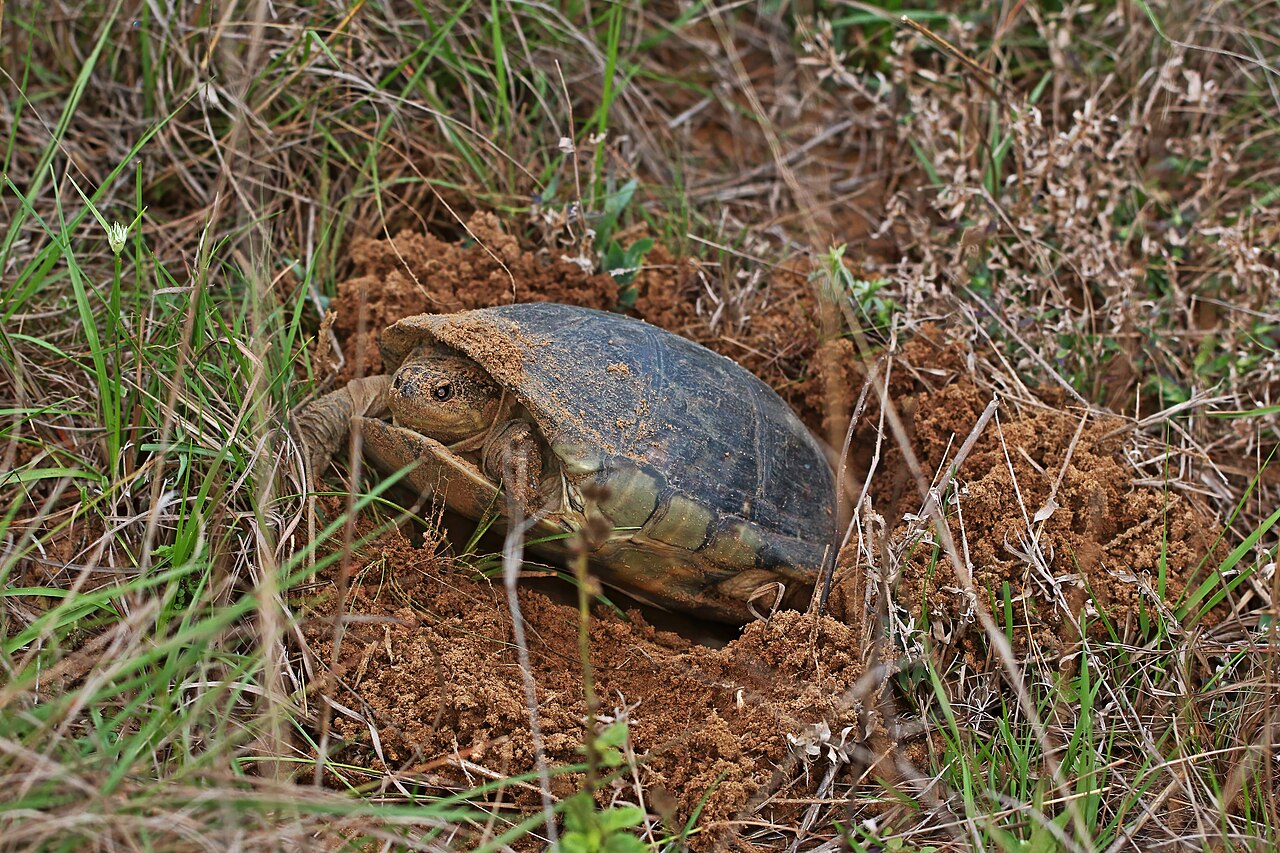
Here is why this matters more than most keepers realize. A gravid female who cannot find an acceptable nesting site will simply hold her eggs.
Held eggs are dangerous. If she retains them too long they can become stuck, a condition called egg binding or dystocia.
Egg binding can lead to shell-bound eggs breaking internally, infection, and a female that needs surgery or hormone injections to survive. A five dollar tub of soil prevents a several hundred dollar vet emergency.
And no, she does not need a mate for this. Females lay infertile eggs on their own, so a nesting box is a requirement for any mature female, not just breeders. If eggs appeared with no male around, that is normal, and I explain it in whether turtles can lay eggs without mating.
Signs Your Turtle Is Ready to Lay Eggs
Set the box up before you think you need it. A female can go from calm to frantic in a day, and you want the nest waiting for her.
Watch for these behavioral changes:
- Restlessness and pacing. She swims laps, climbs the glass, and seems agitated for no clear reason.
- Loss of appetite. A turtle that normally attacks her food suddenly ignores it. This is one of the most reliable signs.
- Digging and scratching. She paws at the tank bottom, the basking platform (my pick: floating basking platform), or the corners, testing for anywhere soft. This is the big one, and I cover the full range of reasons in why turtles dig holes.
- Leaving the water. Aquatic females spend far more time out of the water and on the basking area than usual.
An experienced keeper can gently feel for eggs by pressing the soft skin in front of the rear legs, but this is risky. Press too hard and you can crack an egg inside her, so skip it unless a vet has shown you how.
If you want to confirm before building, the signs overlap heavily with pregnancy in land species, which I break down in how to tell if a tortoise is pregnant.
This Hilarious Turtle Book Might Know Your Pet Better Than You Do

Let’s be real—most turtle care guides feel like reading a textbook written by a sleep-deprived zookeeper.
This one’s not that.
Told from the snarky point of view of a grumpy, judgmental turtle, 21 Turtle Truths You’ll Never Read in a Care Guide is packed with sarcasm, sass, and surprisingly useful insights.
And hey—you don’t have to commit to the whole thing just yet.
Grab 2 free truths from the ebook and get a taste of what your turtle really thinks about your setup, your food choices, and that weird plastic palm tree.
It’s funny, it’s honest, and if you’ve ever owned a turtle who glares at you like you’re the problem—you’ll feel seen.
What You Will Need
Nothing here is expensive or hard to find. Most of it you may already own.
- A large container. A 25 to 40 gallon plastic or rubber storage tub, tall enough that the substrate can be deep and she still cannot climb out.
- Substrate. A 30 to 40 pound bag of chemical-free premium topsoil, plus play sand to mix in. Avoid anything with fertilizer, perlite, or manure.
- A spray bottle. For keeping the soil evenly moist without soaking it.
- A partial lid or cover. Cardboard, a towel, or a piece of the tub lid to shade about three quarters of the box and make her feel hidden.
- A heat source (optional). A basking lamp (my pick: Zoo Med PowerSun) or heat mat if the room runs cool, since a cold box discourages digging.
How to Make a Turtle Nesting Box: Step by Step
- Add the substrate. Pour your soil and sand mix into the container and level it out. It needs to be deep enough for her to dig a full nest chamber, which for most pet turtles means at least 6 inches and often more (see the depth table below).
- Moisten it evenly. Mist the surface with your spray bottle until the soil holds its shape when squeezed but does not drip. Never dump water in, that turns it to mud and she will reject it. It should feel like a wrung-out sponge.
- Warm and shade the box. Place it in a quiet, warm spot and cover about 75 percent of the top. The dark, private feel is what convinces her it is safe to dig.
- Introduce your turtle. Gently set the gravid female on the substrate and walk away. An audience makes her nervous and a nervous turtle will not lay.
- Check quietly, keep it moist. Look in every hour or so and re-mist if the top has dried out. Repeat two or three times through the day.
- Do not leave her too long. If she has not started after about two hours, return her to her enclosure and try again the next day. Being stuck in a box she dislikes only stresses her further.
Choosing the Right Substrate
The substrate is where most nesting boxes fail. Too loose and the tunnel collapses. Too hard and she gives up. Too wet and she will not touch it.
The goal is a mix that holds a shape like packed sand at the beach. Here are the common options and how they perform:
| Substrate | How it holds up | Best mix |
|---|---|---|
| Topsoil + play sand | The gold standard, holds a burrow well | 60% soil / 40% sand |
| Coconut coir + sand | Great moisture control, clean | 50% coir / 50% sand |
| Play sand only | Fine for sea and softshell types, collapses for others | Dampen heavily |
| Potting soil | Avoid, often has fertilizer and perlite | Not recommended |
For most pet turtles and tortoises, a roughly 60/40 topsoil-to-sand blend, kept lightly damp, is the safest all-around choice.
How Deep and How Big Should the Box Be?
Depth is not optional. A turtle digs a flask-shaped chamber and if she hits the hard bottom before it is done, she abandons the site.
As a rule, the substrate should be at least as deep as the length of the turtle’s shell, and deeper is better. Use this as a starting point:
| Turtle type | Substrate depth | Container size |
|---|---|---|
| Small aquatic (musk, mud) | 5 to 6 inches | 20 to 25 gallon |
| Sliders, painted, cooters | 7 to 10 inches | 25 to 40 gallon |
| Box turtles | 6 to 8 inches | 25 to 30 gallon |
| Medium tortoises | 8 to 12 inches | 40+ gallon |
When in doubt, go deeper and wider than you think. A box that is too small is the single most common reason a female refuses to lay.
Indoor vs. Outdoor Nesting Setups
The tub method above is your indoor setup, and it works for any keeper with a female living inside.
If your turtle lives in a yard or pen, you have an easier job. Build a raised nesting mound in a sunny corner using the same soil and sand mix, at least a foot deep.
Sun on the mound is important. Females often choose the warmest, most open patch of ground, which is exactly why outdoor pens need a dedicated dig zone. I cover building one properly in the outdoor box turtle habitat guide.
How to Connect the Nesting Box to the Enclosure
If you would rather not hand-carry your turtle back and forth, you can attach the box to her tank so she wanders in on her own schedule. This is the hands-off version, and it means you just check for eggs each morning.

- Position the box. Set it beside the enclosure, slightly higher than the tank rim. A shelf or stack of books under it works fine.
- Cut a doorway. Cut an opening in the side of the tub, wide enough for her to pass through comfortably and at least an inch above the soil line so substrate does not spill out.
- Build a ramp. Make a gentle bridge from cork bark, a wood plank, or textured plastic. It must be grippy enough that she will not slip.
- Secure both ends. Anchor one end in the enclosure and the other at the doorway, and add low side rails so she cannot topple off climbing up.
What to Do After She Lays Her Eggs
Once she has laid and covered the nest, your job shifts from nesting to incubation. Handle the eggs carefully and quickly.
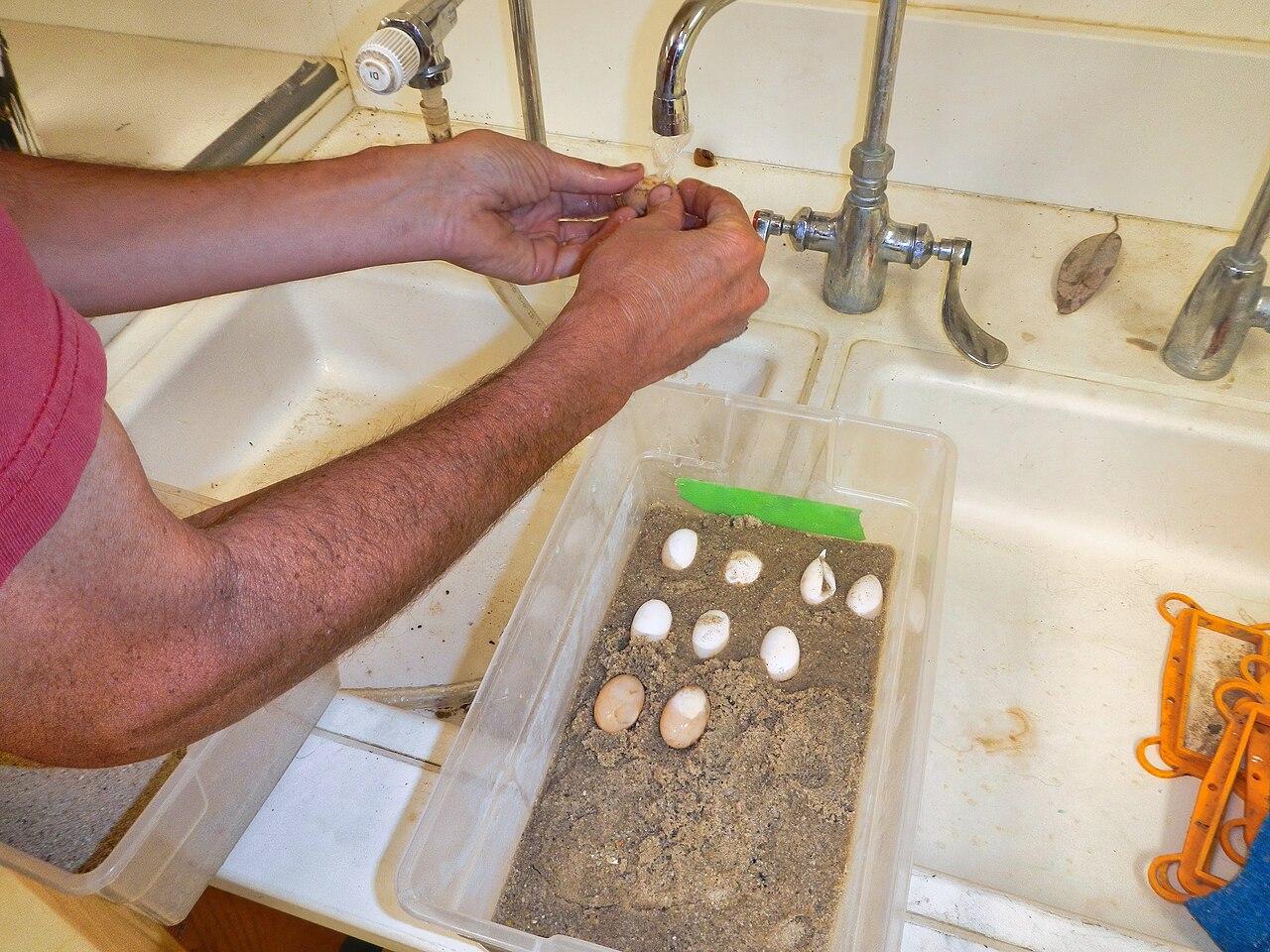
- Do not rotate the eggs. After a few hours the embryo attaches to the top of the shell. Turning an egg can drown it. Mark the top with a soft pencil before you move it.
- Move them to an incubator. Transfer the eggs to moist vermiculite (my pick: coarse horticultural vermiculite) at the right temperature for your species. My setup recommendation is in the turtle egg incubator guide.
- No incubator? You have options. A stable, warm indoor method can work in a pinch, which I walk through in hatching turtle eggs without an incubator.
For the full picture from freshly laid clutch through hatchling care, read the complete guide to caring for turtle eggs.
Curious how long the wait will be? Get a quick estimate with our turtle egg hatch calculator.
Troubleshooting: She Won’t Use the Box
A refused box almost always comes down to one of a handful of fixable problems. Run through this list before assuming something is wrong with her.
- Substrate too shallow. The most common issue by far. Add several more inches.
- Too wet or too dry. Aim for that wrung-sponge feel. Mud gets rejected, dust collapses.
- Too cold. A chilly box reads as a bad nesting season to her. Warm the room or add a basking lamp.
- Not private enough. Too much light, noise, or foot traffic. Cover more of the top and move it somewhere quiet.
- Wrong substrate. Slick sand-only or hard-packed potting soil. Switch to the soil and sand blend.
When to Call a Vet
If you have offered a good box and she still refuses to lay after several days, do not keep waiting. A female showing egg-laying signs who cannot pass her eggs may be egg bound, and that is an emergency.
Warning signs that need a reptile vet include straining with no result, lethargy, weakness in the back legs, or any tissue protruding from the vent. That last one can be a prolapse and needs care right away.
A vet can confirm retained eggs with an X-ray and treat with calcium, oxytocin, or surgery if needed. When in doubt, make the call.
Frequently Asked Questions
Do all female turtles need a nesting box?
Any sexually mature female can produce eggs, with or without a male, so yes. If she lives somewhere she cannot dig a proper nest, she needs a box to avoid egg binding.
How long does a turtle take to lay eggs in the box?
Once she commits to digging, laying and covering usually takes one to three hours. Finding the right spot can take much longer, sometimes across several days, which is why you leave the box available.
Can I use sand instead of soil?
Pure sand works for sea turtles and softshells but collapses too easily for most pet species. A soil and sand blend holds a burrow far better and is the safer default.
What temperature should the nesting box be?
Keep it warm, roughly 75 to 85 degrees Fahrenheit. A cold box signals the wrong season and she will hold her eggs rather than lay.
How deep do turtles bury their eggs?
Most pet turtles dig 4 to 8 inches down, and larger species and tortoises go deeper. That is why the substrate needs to be deeper than you would guess, so she can finish the chamber.
The Bottom Line
A turtle nesting box is one of the cheapest and most important things you can build for a mature female. Deep, damp, warm, and private is the whole formula.
Get it set up before she needs it, watch for the restless digging, and you turn a potential medical emergency into a quiet morning of egg collecting. That is a trade worth making every single season.

About Author
Muntaseer Rahman started keeping pet turtles back in 2013. He also owns the largest Turtle & Tortoise Facebook community in Bangladesh. These days he is mostly active on Facebook.