Can Box Turtles Swim? 5 Critical Safety Rules to Prevent Drowning
This post was created with help from AI tools and carefully reviewed by a human (Muntaseer Rahman). For more on how we use AI on this site, check out our Editorial Policy.
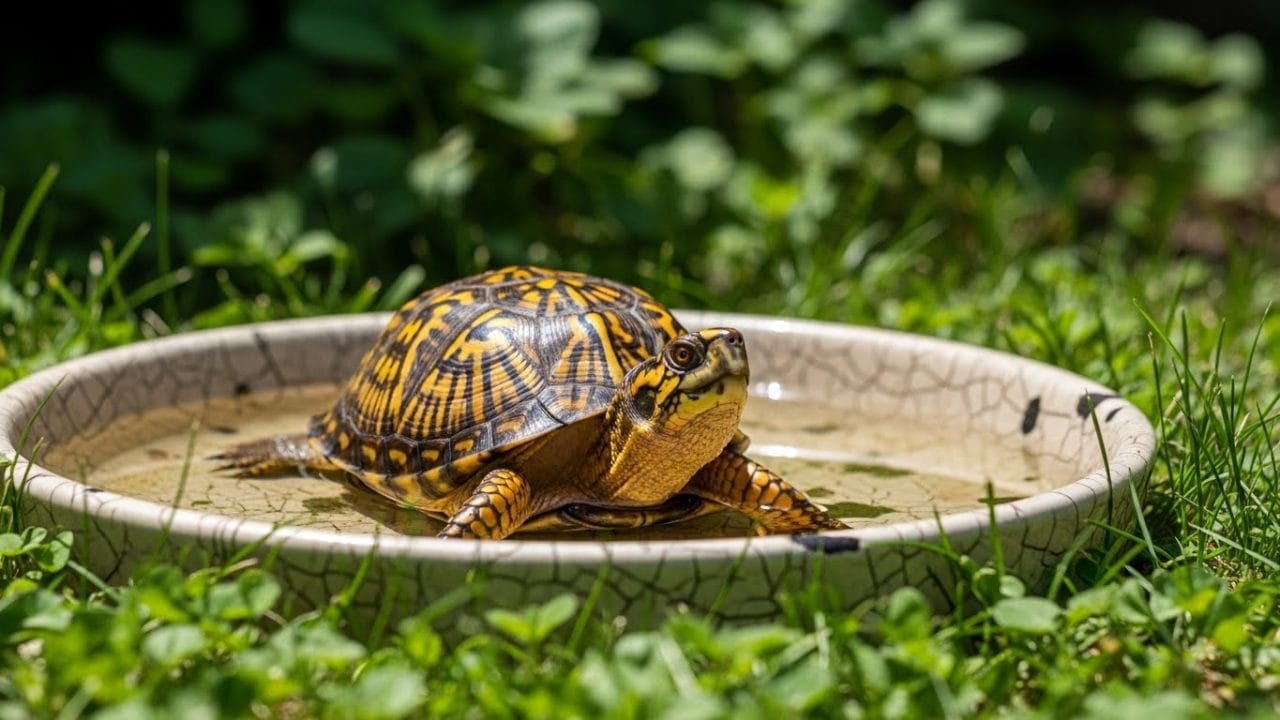
Yes, box turtles can swim, but they’re not very good at it. They paddle awkwardly at the surface and tire out quickly because they don’t have webbed feet like aquatic turtles.
Box turtles are land dwellers who spend most of their time on solid ground. Their high-domed shells and individual toes (not webbed feet) make them clumsy swimmers who can easily drown in deep water.
In this guide, you’ll learn exactly how box turtles swim, what water depth is safe, how to prevent drowning, and what to do if your box turtle falls into deep water.
Quick Answer: Box Turtles and Swimming
- Box turtles CAN swim but only in shallow water
- They’re NOT good swimmers and tire out fast
- Deep water is a drowning risk
- Safe water depth: 1.5-2 inches (half their shell height)
- They love to soak but hate deep swimming
How Do Box Turtles Actually Swim?
Box turtles don’t really “swim” the way you’d expect.
They mostly float and doggie-paddle. Because they lack webbed feet (they have individual toes instead), they can’t propel themselves efficiently through water.
Think of it like trying to swim with regular shoes on instead of flippers. You can do it, but it’s exhausting and you won’t get far.
Most box turtles will paddle around on the surface for maybe 20-30 minutes before they get tired. If they can’t find a way out of the water at that point, they’ll sink to the bottom and potentially drown.
Some species are slightly better swimmers than others. Eastern box turtles tend to be more comfortable in water than three-toed box turtles, but none of them are Olympic swimmers.
This Hilarious Turtle Book Might Know Your Pet Better Than You Do

Let’s be real—most turtle care guides feel like reading a textbook written by a sleep-deprived zookeeper.
This one’s not that.
Told from the snarky point of view of a grumpy, judgmental turtle, 21 Turtle Truths You’ll Never Read in a Care Guide is packed with sarcasm, sass, and surprisingly useful insights.
And hey—you don’t have to commit to the whole thing just yet.
Grab 2 free truths from the ebook and get a taste of what your turtle really thinks about your setup, your food choices, and that weird plastic palm tree.
It’s funny, it’s honest, and if you’ve ever owned a turtle who glares at you like you’re the problem—you’ll feel seen.
Why Are Box Turtles Bad Swimmers?
Their bodies just weren’t built for it.
The shell problem
Box turtles have high, domed shells that create a lot of drag in the water. Aquatic turtles have streamlined, flat shells that slice through water easily.
The feet problem
Instead of webbed feet like red-eared sliders or painted turtles, box turtles have short legs with individual toes. These work great for walking on land but terrible for paddling.
The stamina problem
Box turtles are land animals. Their muscles and bodies are designed for digging and walking, not swimming. They tire out way faster than aquatic species.
The result? A box turtle in deep water will struggle, panic, and eventually run out of energy.
Can Box Turtles Drown?
Yes, absolutely.
Box turtles can and do drown if they can’t reach shallow water or get out. This is one of the biggest dangers for pet box turtles.
Here’s what happens: The turtle gets tired from swimming, tries to rest, and sinks to the bottom. Unlike fish, turtles have lungs and need to breathe air.
If a box turtle gets stuck underwater for more than a few minutes, it will drown.
The American Animal Hospital Association actually lists tanks and deep pools as major drowning risks for box turtles. That’s how serious this is.
Common drowning situations:
- Falling into a swimming pool
- Water dish that’s too deep
- Getting flipped upside down in water
- Stuck under a decoration or ramp
- Exhaustion in moving water
Baby box turtles are especially at risk because they’re weaker and tire out even faster.
Do Box Turtles Swim Underwater?
Not really.
Box turtles stay on the surface when they swim. If they get tired and sink, they just sit on the bottom until they drown or somehow make it back up.
They don’t dive for food or explore underwater like aquatic turtles do. They can hold their breath for a few minutes if forced underwater, but it’s not natural for them and they’re not comfortable doing it.
The one exception is the Coahuilan box turtle (more on that in a second).
The One Box Turtle That Actually Swims
The Coahuilan box turtle (also called the aquatic box turtle) is the weird one in the family.
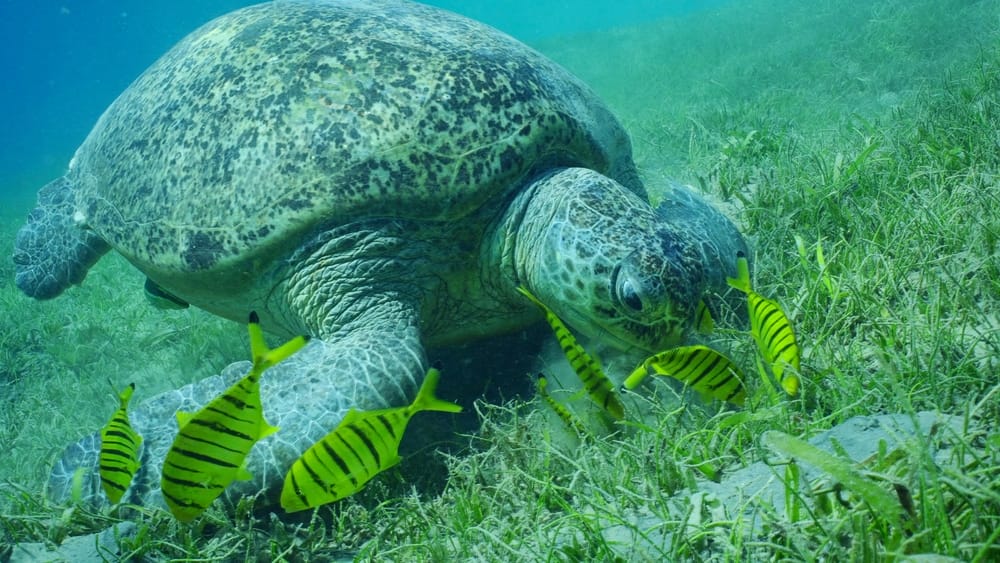
This species spends about 90% of its life in water. They actually CAN swim underwater, dive for food, and they’re way more comfortable in deep water than other box turtles.
But here’s the thing: Coahuilan box turtles are critically endangered and only live in one tiny area in Mexico (the Cuatro Ciénegas wetlands). You won’t have one as a pet unless you’re part of a special breeding program.
For every other box turtle species (Eastern, three-toed, ornate, Florida, etc.), the rule stays the same: shallow water only.
What’s the Safe Water Depth for Box Turtles?
Keep it shallow.
The basic rule
Water should be no deeper than half your box turtle’s shell height. For most adult box turtles, that’s about 1.5-2 inches deep.
For baby box turtles
Even shallower. Maybe an inch or less. Babies dehydrate quickly and need daily soaking, but they’re also more likely to drown.
Your box turtle should be able to stand flat on the bottom with its head completely above water. No swimming required, just soaking.
What good soaking water looks like:
- Turtle can touch the bottom with all four feet
- Head stays above water when standing normally
- Easy to walk in and out without climbing
- No steep sides or slippery ramps
Some box turtles love water more than others. If yours is a frequent soaker, you can go slightly deeper (maybe 2-3 inches), but only if there’s an easy exit.
How to Set Up Safe Water for Your Box Turtle
Choose the right container:
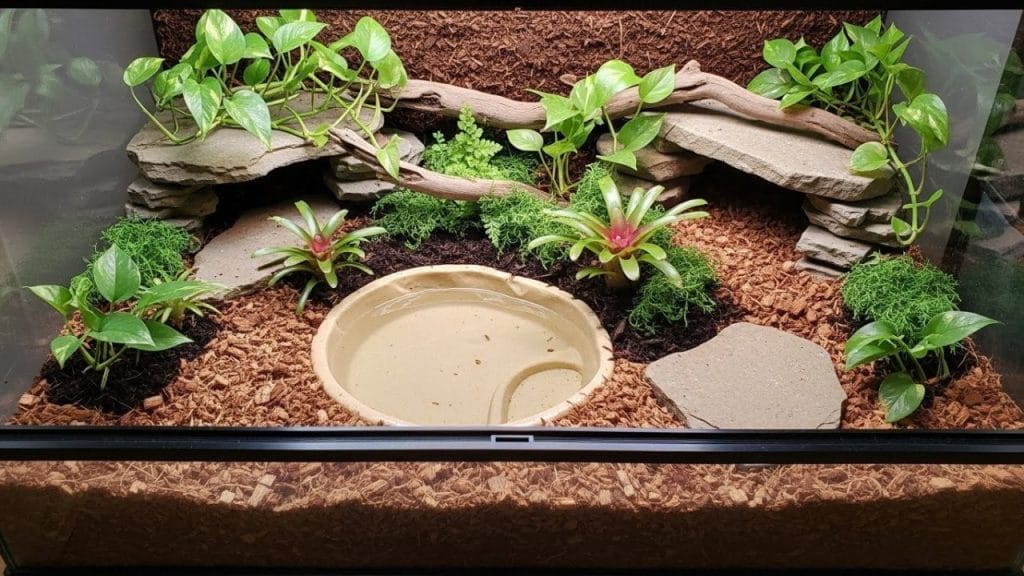
Use a heavy, shallow dish that your turtle can’t tip over. A large plant saucer or a paint tray works great. Some people use dog water bowls.
The key is that your turtle should be able to walk right in and out. No climbing, no jumping.
Location matters:
Sink the water dish into the substrate so it’s level with the ground. This makes it way easier for your turtle to access.
If you can’t sink it, use a ramp. But make sure the ramp isn’t slippery or too steep.
Water quality:
Box turtles poop in their water. A lot.
You’ll need to change the water daily and scrub the bowl. Clean water prevents shell rot and keeps your turtle healthy.
Don’t use tap water straight from the faucet. The chlorine can irritate your turtle’s eyes and leave white spots on the shell. Use spring water, bottled water, or tap water that’s been dechlorinated.
Temperature check:
The water should be lukewarm, not cold. Box turtles can’t regulate their own body temperature, so cold water can make them lethargic.
Room temperature or slightly warm water is perfect.
What NOT to Do With Box Turtle Water
Never put your box turtle in any of these:
Deep aquarium tanks:
Box turtles are not aquatic. A full water tank will stress them out and they’ll drown.
Swimming pools:
Chlorine is toxic to box turtles. Plus, the depth is way too dangerous. If your turtle falls in a pool, get it out immediately.
Moving water:
Streams with current, waterfalls, or anything flowing. Box turtles can’t swim against currents and will get swept away.
Bath tubs unsupervised:
Even if the water is shallow, never leave your turtle alone in a tub. They can flip over or get stuck.
Water without an exit:
If your turtle gets in, it needs to be able to get back out easily. No steep walls, no smooth surfaces they can’t grip.
Do Box Turtles Need a Swimming Area?
Not exactly.
They need water access, but it’s for soaking and drinking, not swimming. Think of it as a bath rather than a pool.
In the wild, box turtles live near shallow water sources like puddles, marshes, and creek edges. They’ll wade in to cool off, hydrate, and drink.
But they don’t spend hours swimming laps. They get in, soak for a bit, and get back out.
What your box turtle actually needs:
- A shallow water dish they can soak in
- Fresh water changed daily
- Easy access in and out
- Humidity in their enclosure (misting helps)
Some owners report their box turtles spend a lot of time in water, almost like they’re swimming. That’s fine if the water is shallow and there’s an easy exit, but it’s soaking behavior, not true swimming.
What If Your Box Turtle Falls Into Deep Water?
Get it out immediately.
Step 1: Remove the turtle from the water as fast as possible.
Step 2: Check if it’s breathing. Look for movement, check if the head and limbs respond.
Step 3: If water came out of the mouth or nose, hold the turtle with its head pointed down. Gently extend and push in the front legs (like CPR) to help expel water. Do NOT do this if the turtle is moving normally.
Step 4: Keep the turtle warm and dry. Put it in a quiet, temperature-controlled area.
Step 5: Watch for these danger signs over the next 24-48 hours:
- Labored breathing
- Bubbles from the nose or mouth (on land)
- Lethargy or weakness
- Refusing to eat
- Shell becoming soft or discolored
Step 6: If you see any danger signs, get to a vet ASAP. Turtles can develop pneumonia after drowning.
Real talk: If your box turtle was underwater for more than a few minutes and seems weak, don’t wait. Call a reptile vet right away.
Common Mistakes Box Turtle Owners Make
Mistake 1: Using a water dish that’s too deep
Just because your turtle can technically climb into a 4-inch deep bowl doesn’t mean it’s safe. Stick to 1.5-2 inches.
Mistake 2: Assuming all turtles are good swimmers
Box turtles and aquatic turtles (like red-eared sliders) are totally different. What works for a slider will drown a box turtle.
Mistake 3: Leaving the turtle unsupervised in water
Even in shallow water, things can go wrong. Your turtle could flip over, get stuck, or panic.
Mistake 4: Using slippery ramps
If your turtle can’t grip the ramp to get out, it’s a death trap. Use textured surfaces or add grip tape.
Mistake 5: Thinking a little swim is cute
It’s not. Box turtles don’t enjoy swimming. If yours is frantically paddling, it’s stressed and trying to escape, not having fun.
How Different Box Turtle Species Handle Water
Eastern Box Turtles:
These guys are the best swimmers of the bunch (which still isn’t saying much). They’re found near ponds and streams and will cross shallow water when needed.
Three-Toed Box Turtles:
Not good swimmers at all. They prefer water that barely reaches the top of their legs. They do love to soak though, sometimes for longer than other species.
Ornate Box Turtles:
Found in grasslands and drier areas, so they’re less interested in water overall. Keep their soaking dish shallow.
Florida Box Turtles:
These live in marshes and swamps, but they don’t actually swim much. They just sit in shallow water.
Gulf Coast Box Turtles:
Comfortable around water and enjoy soaking in shallow areas with consistent water levels.
Again, except for the endangered Coahuilan box turtle, none of these species are true swimmers.
Box Turtles vs Aquatic Turtles: Key Differences
| Feature | Box Turtles | Aquatic Turtles |
|---|---|---|
| Feet | Individual toes | Webbed feet |
| Shell | High and domed | Flat and streamlined |
| Swimming ability | Poor, tire quickly | Excellent swimmers |
| Time in water | Occasional soaking | Most of their life |
| Water depth needs | 1.5-2 inches | 12+ inches |
| Drowning risk | High in deep water | Very low |
Box turtles are not just “bad” aquatic turtles. They’re a different type of turtle entirely.
Understanding these differences extends to behavior too — aquatic turtles display a completely different set of fascinating behaviors including dietary shifts, underwater eating mechanics, and surprising intelligence.
Humidity vs Swimming: What Box Turtles Really Need
Here’s what people get confused about: box turtles need a humid environment, but that doesn’t mean they need a swimming pool.
The right way to provide humidity:
- Mist the enclosure 2-3 times per day
- Use moisture-retaining substrate (like coconut coir)
- Provide a shallow soaking dish
- Keep humidity around 60-80%
You’re trying to mimic the damp forest floor where they naturally live, not a pond.
If your box turtle’s enclosure is too dry, they’ll soak more often to compensate. But the solution isn’t deeper water, it’s better humidity in the enclosure itself.
When to See a Vet
Call a reptile vet immediately if:
- Your turtle was underwater and you don’t know for how long
- You see bubbles coming from the nose or mouth (on land)
- Your turtle is breathing with its mouth open
- It seems weak, lethargic, or won’t move
- The turtle refuses food for more than 2 days after a water incident
- You notice any shell softening or discoloration
Don’t wait to see if things get better. Respiratory infections in turtles can turn fatal fast.
Can You Teach a Box Turtle to Swim?
No, and you shouldn’t try.
Box turtles aren’t going to improve their swimming skills with practice. Their body structure prevents them from ever being good swimmers.
Forcing them to swim for “exercise” is just stressing them out and risking drowning.
If you want to give your box turtle enrichment, focus on things they actually enjoy: digging areas, hiding spots, varied terrain, and puzzle feeders alongside appropriate soaking water.
Frequently Asked Questions
How long can a box turtle hold its breath underwater?
Only a few minutes. Box turtles aren’t adapted for underwater breathing like aquatic species. If they’re stuck underwater for more than 5-10 minutes, they’ll likely drown.
Can I put my box turtle in the bathtub to swim?
You can let it soak in very shallow water (1-2 inches), but never leave it unsupervised. Make sure the turtle can stand with its head above water, and watch it the entire time. Don’t fill the tub deep thinking it’ll swim.
Why does my box turtle spend so much time in its water dish?
It’s probably trying to stay hydrated or cool down. Check your enclosure humidity (should be 60-80%) and temperature. If those are off, your turtle will soak more to compensate. Also make sure the water dish isn’t the only humid spot in the enclosure.
Will a box turtle drown in a pond?
Yes, if the pond is deep or if the turtle can’t find an easy way out. Box turtles sometimes fall into backyard ponds and drown. If you have both a pond and box turtles, make sure there are shallow areas and easy exits, or fence off the pond.
Do baby box turtles need different water depth than adults?
Yes. Babies should have even shallower water, around 1 inch or less. They’re weaker swimmers and dehydrate faster, so they need daily soaking but in minimal depth. As they grow, you can gradually increase to 1.5-2 inches.
Conclusion
Box turtles can swim, but calling them swimmers is a stretch.
They’re land turtles who occasionally wade into shallow water to drink, cool off, and soak. Deep water is dangerous for them, and drowning is a real risk if you’re not careful.
Keep your box turtle’s water shallow (1.5-2 inches), make sure there’s an easy exit, and never leave them unsupervised in water. That’s all they need to stay healthy and happy.
If you focus on proper humidity, a good soaking dish, and understanding that your turtle is a land animal first, you’ll avoid the most common water-related problems box turtle owners face.

About Author
Muntaseer Rahman started keeping pet turtles back in 2013. He also owns the largest Turtle & Tortoise Facebook community in Bangladesh. These days he is mostly active on Facebook.