Are Turtles Good Pets for Beginners? Here’s What Nobody Tells You
This post was created with help from AI tools and carefully reviewed by a human (Muntaseer Rahman). For more on how we use AI on this site, check out our Editorial Policy.
Turtles can be good pets for beginners, but only if you’re ready for the commitment. They’re not low-maintenance like many people think—they need big tanks, special lighting, weekly water changes, and can live 20-40 years.
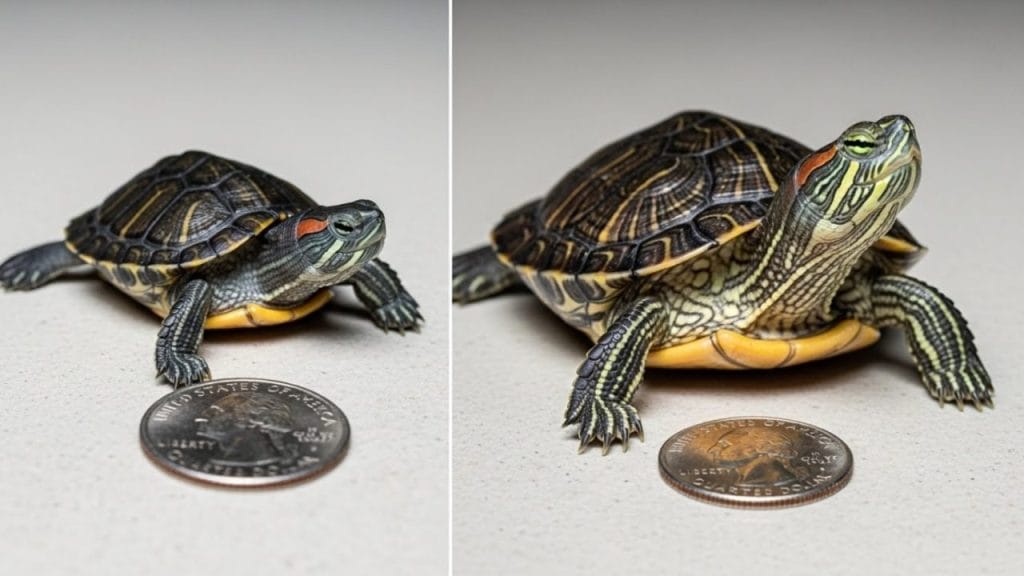
Here’s the thing: pet stores love to show you those cute quarter-sized babies in plastic containers. What they don’t tell you is that your adorable hatchling will grow to 8-12 inches and need a 75-gallon tank minimum.
In this article, you’ll learn exactly what turtle care really involves, which species work best for first-timers, the honest costs (hint: it’s more than you think), and whether you’re actually ready for a turtle. You can also plan your setup with our free turtle care tools.
Quick Answer: Should You Get a Turtle as Your First Pet?
Get a turtle if you:
- Have $500-1,000 for initial setup costs
- Can commit to 20-40+ years of care
- Have space for a large tank (75+ gallons)
- Can do weekly water changes and maintenance
- Want a pet to watch, not cuddle
Skip turtles if you:
- You’re looking for a low-maintenance pet
- You want something your kids can handle frequently
- You don’t have space for a large aquarium
- Your budget is tight
- You want immediate interaction and bonding
The Truth About Turtles as Beginner Pets
Let me be real with you: turtles aren’t the “easy starter pets” pet stores make them out to be.
Most people think you can just stick a turtle in a small tank with a plastic palm tree and call it a day. Wrong.
Turtles need way more care than goldfish but less than dogs. They’re somewhere in the middle—which makes them tricky for beginners who aren’t prepared.
What Makes Turtles Challenging
The biggest surprise for new owners? The water quality issue.
Since turtles eat, poop, and live in the same water, it gets dirty fast. We’re talking about changing 25% of the water every single week, plus running a filter designed for tanks twice the size of yours.
And that’s just one part of turtle care.
What Makes Turtles Rewarding
But here’s what veterans love about turtles: they recognize you.
After a few months, your turtle will actually swim up to the glass when you approach. They learn feeding schedules and show distinct personalities—some are bold and curious, others are shy and chill.
Plus, they’re quiet, don’t need walks, and won’t destroy your furniture.
This Hilarious Turtle Book Might Know Your Pet Better Than You Do

Let’s be real—most turtle care guides feel like reading a textbook written by a sleep-deprived zookeeper.
This one’s not that.
Told from the snarky point of view of a grumpy, judgmental turtle, 21 Turtle Truths You’ll Never Read in a Care Guide is packed with sarcasm, sass, and surprisingly useful insights.
And hey—you don’t have to commit to the whole thing just yet.
Grab 2 free truths from the ebook and get a taste of what your turtle really thinks about your setup, your food choices, and that weird plastic palm tree.
It’s funny, it’s honest, and if you’ve ever owned a turtle who glares at you like you’re the problem—you’ll feel seen.
The Real Cost of Keeping a Turtle
Let’s talk money because this is where beginners get blindsided. I wrote a full cost breakdown for pet turtles that goes even deeper, but here’s the summary.
Initial Setup Costs
Here’s what you’ll actually spend upfront:
- The turtle itself: $20-100 for common species like red-eared sliders
- Tank (minimum 75 gallons): $300-500
- Filter system: $50-300 (get one rated for 2x your tank size)
- UVB (my pick: Zoo Med ReptiSun 10.0) lighting and fixtures: $50-150
- Basking platform (my pick: floating basking platform) and decor: $30-100
- Water heater: $20-50
- Substrate and supplies: $30-50
- Initial vet check-up: $50-100
Total startup cost: $500-1,350
And that’s for a basic setup. Want nicer equipment or a larger species? Add another few hundred.
Monthly Costs
- Food: $25-40/month for pellets, veggies, and occasional protein
- Electricity: $10-50/month (those heat lamps (my pick: heat lamp) run 12+ hours daily)
- Water treatment and filter supplies: $10-20/month
- Replacement bulbs: $15-30 every 6 months
Average monthly cost: $50-100
Annual Veterinary Care
This is the part nobody warns you about.
Turtles need yearly vet visits with a specialized reptile veterinarian (called a herp vet). Not all vets treat turtles, so you’ll need to find one in your area first.
- Routine check-up: $50-100
- Fecal testing: $20-50
- Emergency visits: $100-500+
Set aside at least $500 for unexpected vet bills because respiratory infections, shell rot, and other issues can pop up even with good care.
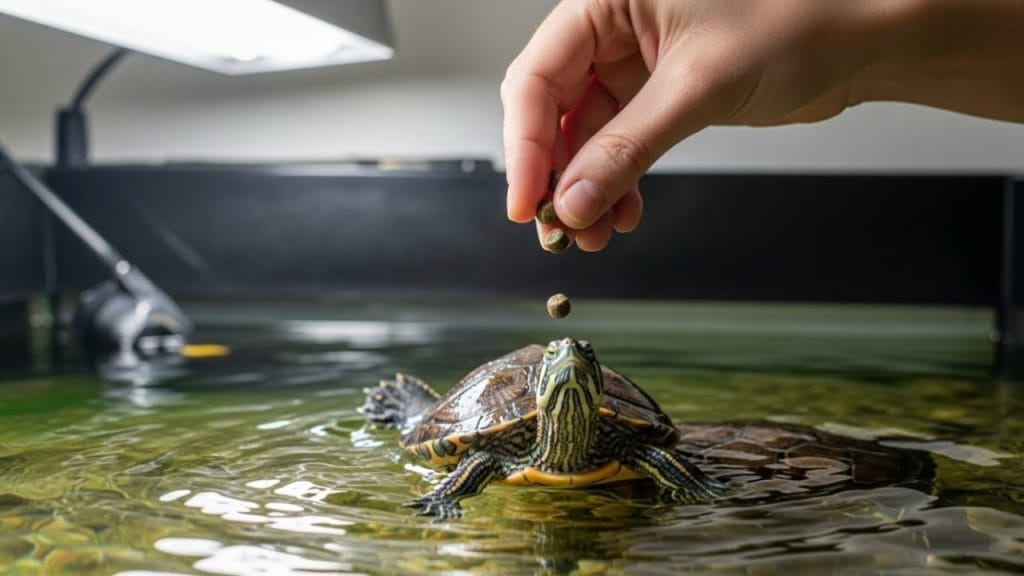
Best Turtle Species for Beginners
Not all turtles are created equal for first-time owners.
Once you have picked one, you can adopt a turtle near you instead of buying from a pet store.
Red-Eared Slider
The most popular pet turtle in the US, but that doesn’t mean it’s the easiest. I’ve answered the 25 most common red-eared slider questions if you want the full picture on this species.
They’re active, fun to watch, and readily available. But they grow to 8-12 inches and need massive tanks (think 75-100 gallons minimum).
- Best for: People with space and budget who want an interactive turtle
- Size: 8-12 inches
- Lifespan: 30-40 years
- Tank size: 75-100 gallons
Painted Turtle
Smaller than red-ears and absolutely gorgeous with their colorful shell patterns. There are actually four different types of painted turtles, each with a different look and personality.
Males stay around 5-6 inches, females get to 10 inches. They’re calmer than sliders and don’t need quite as much space.
- Best for: Beginners who want something more manageable
- Size: 5-10 inches
- Lifespan: 25-30 years
- Tank size: 50-75 gallons
Musk Turtle (Common or Razorback)
Here’s the actual beginner-friendly option most people should consider.
Musk turtles stay small (4-5 inches) and spend most of their time underwater, so they don’t need elaborate basking areas. They’re less demanding on tank size and equipment. If you’re torn between a musk and a mud turtle, here’s my full comparison of mud turtles vs musk turtles.
- Best for: True beginners on a budget
- Size: 4-5 inches
- Lifespan: 20-30 years
- Tank size: 40 gallons
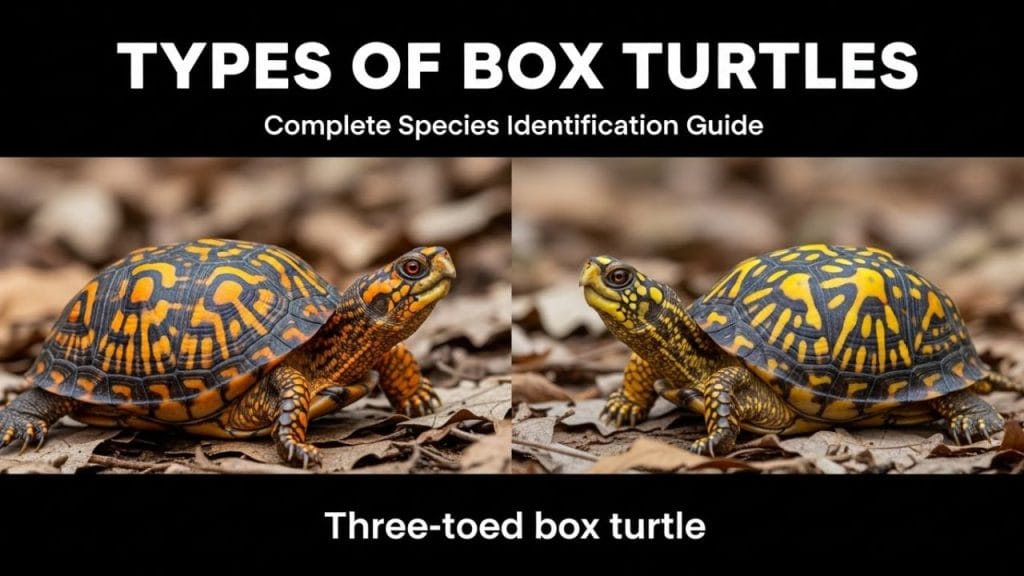
Eastern Box Turtle
A land turtle, not aquatic—completely different care requirements.
Box turtles need an outdoor enclosure or a large terrarium with soil for digging. They’re escape artists and need specific humidity levels.
- Best for: People with outdoor space and patience
- Size: 4-6 inches
- Lifespan: 40-50 years (some hit 100!)
- Setup: Outdoor pen or 40+ gallon terrarium
What Turtle Care Actually Involves
Let’s break down what you’ll be doing weekly, monthly, and yearly.
Daily Tasks
Morning routine:
- Turn on heat and UVB lights (these run 10-12 hours daily)
- Feed your turtle (juveniles daily, adults every other day)
- Quick check for any health issues
Evening routine:
- Turn off lights
- Remove any uneaten food after 15-20 minutes
Total daily time: 10-15 minutes
Weekly Tasks
Water changes: Replace 25% of the water every week. For a 75-gallon tank, that’s about 18 gallons.
You’ll need to treat the new water with conditioner to remove chlorine before adding it.
Filter maintenance: Rinse the filter media in old tank water (never tap water—it kills the beneficial bacteria).
Total weekly time: 45-60 minutes
Monthly Tasks
Deep cleaning: Every 2-3 weeks, you’ll need to do a more thorough tank cleaning. This includes scrubbing algae off the glass, cleaning decorations, and checking all equipment.
Replace UVB bulbs: Every 6 months, even if they still look fine. UVB output decreases over time, and your turtle needs it for proper calcium absorption.
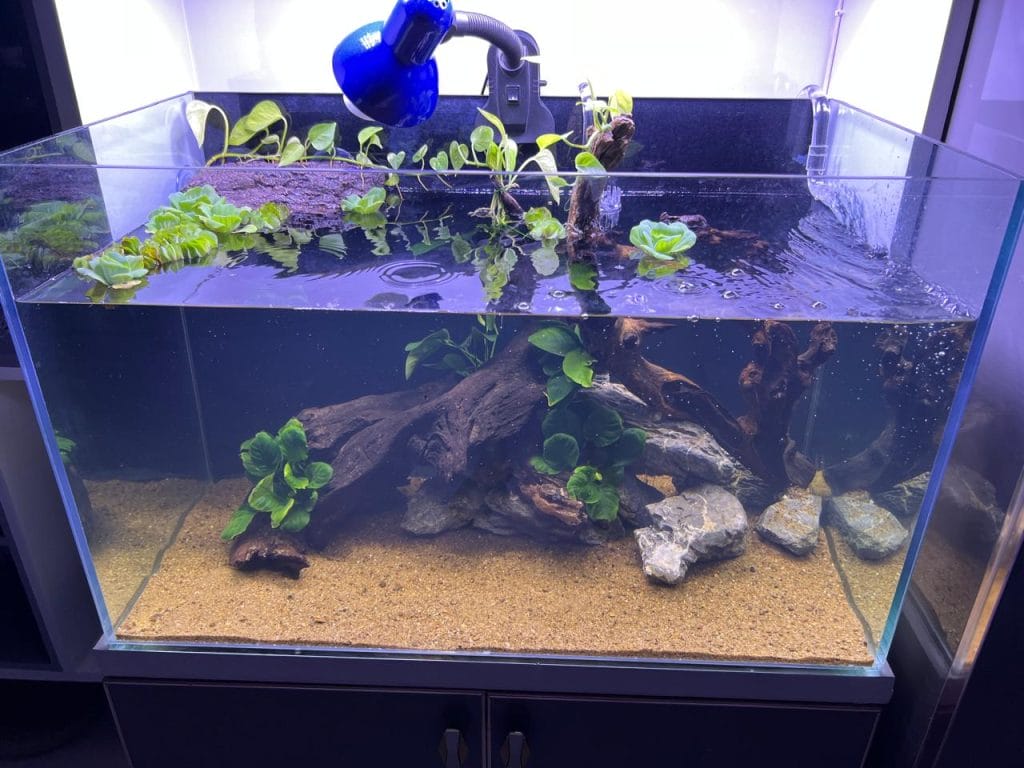
The Habitat Setup Process
Setting up a turtle tank properly is crucial.
Step 1: Get a tank that’s at least 10 gallons per inch of your turtle’s shell length. For an 8-inch turtle, that’s 80 gallons minimum.
Step 2: Install a powerful filter rated for 2x your tank volume. Turtles are messy, and a filter rated for your exact tank size won’t cut it.
Step 3: Add a basking platform that’s completely dry and positioned so your turtle can climb on easily.
Step 4: Position your heat lamp 12-18 inches above the basking spot to create a temperature of 85-95°F.
Step 5: Install UVB lighting running the length of the tank. This is non-negotiable—turtles need UVB for bone and shell health.
Step 6: Add a water heater to maintain water temperature at 75-80°F.
Step 7: Let everything run for 24 hours before adding your turtle to make sure temperatures are stable.
Common Beginner Mistakes to Avoid
These mistakes kill more turtles than anything else.
Mistake #1: Buying Too Small a Tank
That 10-gallon tank at the pet store? It’s only suitable for a hatchling and only for a few months.
Most turtles are sold as babies, but they grow fast. Plan for their adult size from day one, or you’ll be upgrading tanks multiple times.
Mistake #2: Skipping UVB Lighting
“Can’t I just put the tank near a window?”
No. Glass blocks UVB rays, and your turtle will develop metabolic bone disease without proper UVB exposure.
This causes soft shells, deformed bones, and can be fatal. UVB bulbs cost $20-50 and last 6 months—just buy them.
Mistake #3: Overfeeding
Turtles are beggars. They’ll act hungry even when they’re not.
Overfeeding leads to obesity, shell pyramiding, and water quality problems. Feed juveniles daily (only what they can eat in 5-10 minutes) and adults every other day.
Mistake #4: Using Tap Water Without Conditioner
Chlorine and chloramine in tap water can harm your turtle and kill the beneficial bacteria in your filter.
Always use water conditioner (recommended: reptile water conditioner) before adding new water to the tank. It’s like $10 and lasts months.
Mistake #5: Not Finding a Reptile Vet First
Don’t wait until your turtle is sick to find a vet.
Most regular vets don’t treat reptiles. Research herp vets in your area before getting a turtle, and take your new turtle for a check-up within the first month.
Mistake #6: Handling Too Much
Turtles aren’t puppies. They’re prey animals that get stressed when handled frequently.
Excessive handling can weaken their immune system and make them sick. Keep handling to a minimum—mainly for tank maintenance and vet visits.
Health Issues to Watch For
Turtles hide illness until they’re really sick, so you need to spot problems early.
Respiratory Infections
Symptoms:
- Wheezing or whistling sounds
- Bubbles from nose or mouth
- Swimming lopsided
- Lethargy and loss of appetite
What to do: This is an emergency. Get to a reptile vet within 24-48 hours for antibiotics.
Prevention: Maintain proper water temperature (75-80°F) and basking temperature (85-95°F).
Shell Rot
Symptoms:
- Soft spots on the shell
- White, gray, or red spots
- Foul smell
- Pieces of shell flaking off
What to do: Mild cases can be treated at home with daily betadine soaks. Severe cases need vet attention.
Prevention: Keep water clean with weekly changes and a good filter.
Vitamin A Deficiency
Symptoms:
- Swollen, puffy eyelids
- Difficulty opening eyes
- Not eating
What to do: See a vet for vitamin A injections or supplements.
Prevention: Feed a varied diet including dark leafy greens rich in vitamin A.
When to See a Vet Immediately
Don’t wait if you notice:
- Not eating for more than a week
- Swimming lopsided or unable to dive
- Any breathing problems
- Severe shell damage or injury
- Prolapse (tissue coming out of the vent)
- Extreme lethargy
Can You Actually Handle Your Turtle?
Short answer: yes, but not as much as you think.
Turtles aren’t cuddly pets. They can recognize you and may even seem to “greet” you at feeding time, but they don’t enjoy being held the way a dog or cat does.
Best practices for handling:
- Always wash your hands before and after (salmonella risk is real)
- Support the entire shell with both hands
- Keep sessions brief—5-10 minutes max
- Never flip them upside down (it’s extremely stressful and can damage organs)
- Watch for signs of stress: struggling, trying to escape, hissing
Some turtles are chill about handling. Others will bite, scratch with their claws, or release a foul-smelling musk.
It’s totally normal, and it doesn’t mean your turtle hates you—it means they’re doing what comes naturally.
Time Commitment: What to Expect
Let’s be honest about the time investment.
- Daily: 10-15 minutes for feeding and light checks
- Weekly: 45-60 minutes for water changes and filter maintenance
- Monthly: 1-2 hours for deep cleaning and equipment checks
- Yearly: 1-2 hours for vet visits
Total: About 1 hour per week on average.
But here’s the catch: you can’t skip weeks. Miss water changes for two weeks and you’ll have a sick turtle and a tank that smells like death.
Are Turtles Good with Kids?
This deserves its own section because parents always ask.
The reality: Turtles are NOT good pets for young children to care for independently.
Kids love the idea of a turtle, but they get bored quickly when they realize turtles don’t want to play. Plus, young children can’t handle the weekly maintenance or understand the health risks.
Salmonella concerns:
All reptiles carry salmonella bacteria. It’s not always a problem, but young children (under 5), elderly people, and immunocompromised individuals are at higher risk for serious infection.
This is why selling turtles with shells under 4 inches is illegal in the US—they’re a documented health hazard for young children.
If you have kids:
Make it clear YOU are the turtle’s primary caretaker. The kids can watch and help with supervised tasks, but you’re responsible for the daily care, weekly maintenance, and health monitoring.
Pros and Cons at a Glance
Pros of Pet Turtles
- Quiet and don’t smell (with proper care)
- Don’t need walks or training
- Long lifespan means less heartbreak
- Fascinating to watch
- Learn to recognize their owners
- No fur or dander (good for allergies)
- Each has a unique personality
Cons of Pet Turtles
- Expensive initial setup ($500-1,000+)
- Need large tanks (75+ gallons)
- Weekly water changes are mandatory
- Live 20-40+ years (huge commitment)
- Require specialized vet care
- Can’t be handled frequently
- Carry salmonella bacteria
- Grow much larger than most people expect
- Daily care can’t be skipped
How to Know If You’re Ready
Before you bring home a turtle, ask yourself these questions honestly:
- Space: Do you have room for a 75+ gallon tank and all the equipment?
- Budget: Can you afford $500-1,000 upfront and $50-100 monthly?
- Time: Can you commit to weekly water changes for the next 30 years?
- Emergency fund: Do you have $500 set aside for unexpected vet bills?
- Lifestyle: Are you okay with a pet you can watch but not cuddle?
- Living situation: Does your lease allow aquariums? What happens if you move?
- Long-term: Where will you be in 10, 20, or 30 years? Can your turtle come with you?
If you answered “no” or “I’m not sure” to more than two questions, you’re probably not ready for a turtle yet.
And that’s okay. Better to wait than to get a turtle you can’t care for properly.
Alternatives to Consider
If you love the idea of a reptile but turtles seem like too much, consider these options:
Leopard Gecko: Smaller setup, easier care, and can be handled more. They live 10-20 years and need a 20-gallon tank.
Crested Gecko: Great for beginners, needs a vertical tank, and eats commercial diet (no live insects required).
Bearded Dragon: More interactive than turtles, loves to be handled, but needs larger setup and live food.
Fish: If you want an aquatic pet without the intensive care, consider a betta fish or small community tank.
Frequently Asked Questions
Do turtles recognize their owners?
Yes! Turtles have good hearing and vision and can definitely recognize their keepers. After a few months, your turtle will start swimming to the front of the tank when you approach, especially around feeding time. They won’t bond like a dog would, but they do know who you are.
Can I keep my turtle in a small tank temporarily?
Technically yes, but it’s a bad idea. Small tanks get dirty faster, are harder to maintain stable temperatures, and stress out your turtle. If you can’t afford the proper setup right now, wait until you can. Your turtle will be healthier and happier, and you’ll save money on vet bills.
What if I can’t care for my turtle anymore?
Never release your turtle into the wild—it’s illegal and harmful to local ecosystems. Contact a turtle rescue center near you, reach out on reptile forums, or ask your vet for rehoming resources. Many areas have reptile rescues that will take surrendered turtles.
Do turtles need a companion?
No. Turtles are solitary animals and do fine alone. In fact, housing multiple turtles together can lead to aggression, competition for food, and stress. Plus, you’d need to double your tank size for each additional turtle. Unless you’re an experienced keeper, stick to one turtle per tank.
How often do turtles eat?
Juveniles (under 2 years) should eat daily. Adults can eat every other day or even every 3 days. Feed only what your turtle can consume in 5-10 minutes to avoid overfeeding and water quality issues. If your turtle is still begging for food after eating, they’re just being opportunistic—don’t fall for it.
Final Thoughts
So, are turtles good pets for beginners?
They can be—but only if you understand what you’re getting into.
Turtles aren’t the “easy, low-maintenance” pets that pet stores advertise. They need proper equipment, consistent care, and a decades-long commitment.
But if you’ve got the space, budget, and dedication, turtles can be incredibly rewarding pets. Watching your turtle grow from a quarter-sized baby to a full-grown adult over the years creates a unique bond.
Just remember: do your research first, set up the proper habitat before bringing your turtle home, and find a reptile vet in your area.
Your turtle is depending on you to get it right.

About Author
Muntaseer Rahman started keeping pet turtles back in 2013. He also owns the largest Turtle & Tortoise Facebook community in Bangladesh. These days he is mostly active on Facebook.