Can Turtles Eat Bananas?
This post was created with help from AI tools and carefully reviewed by a human (Muntaseer Rahman). For more on how we use AI on this site, check out our Editorial Policy.
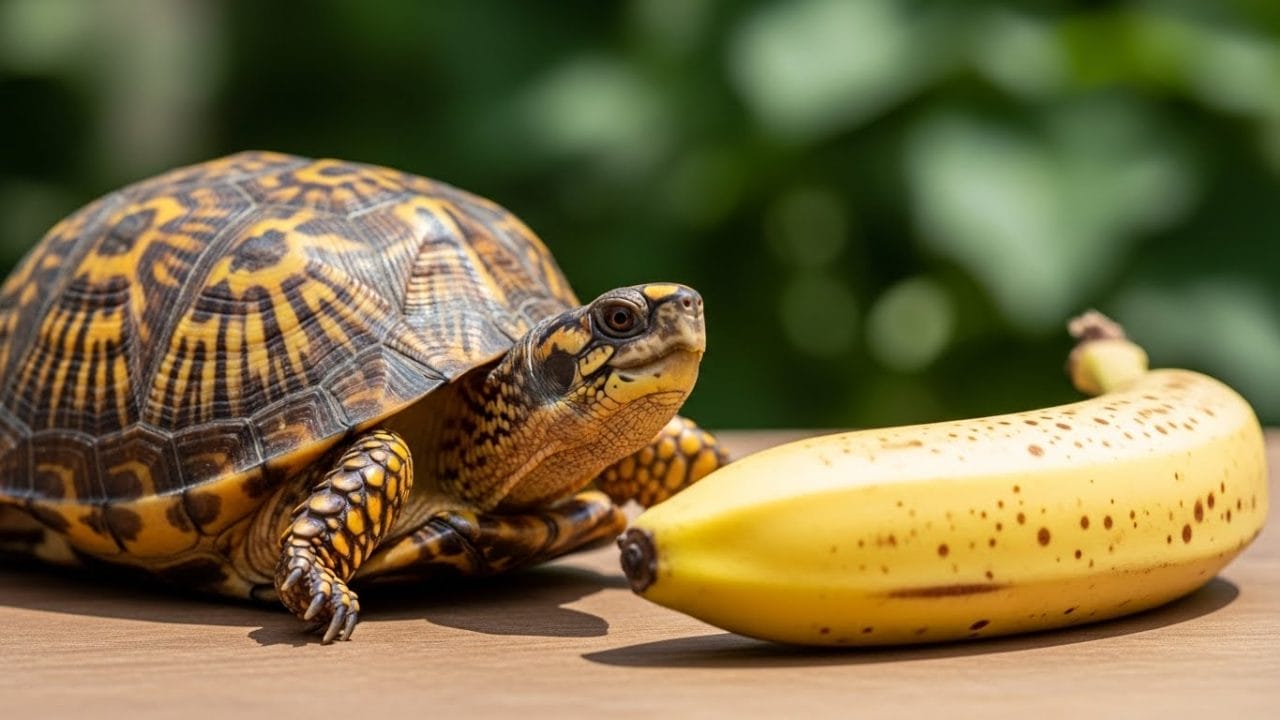
Yes, turtles can eat bananas safely, but only in small amounts as an occasional treat. Bananas are packed with sugar, and too much can lead to obesity and digestive problems in your turtle.
Here’s the thing: just because your turtle loves something doesn’t mean they should have it all the time. Bananas should make up no more than 10% of your turtle’s diet, or about 1-2 small pieces once or twice a month.
In this guide, you’ll learn exactly how to feed bananas safely, what portion sizes work best, and which mistakes to avoid so your turtle stays healthy and happy.
Quick Answer: The Banana Basics
- Safe in moderation – 1-2 times per month max
- Small portions only – Piece the size of their head or smaller
- Remove the peel first – Peels can have pesticides and are hard to digest
- Not a staple food – Should be less than 10% of total diet
- Watch for addiction – Turtles may refuse other foods if they get hooked
Why Can Turtles Eat Bananas?
Bananas aren’t toxic to turtles. They contain vitamins and minerals like potassium, vitamin B6, and vitamin C that can benefit your turtle’s health.
But bananas are basically turtle candy. They’re high in natural sugars that give turtles a quick energy boost, which sounds great until you realize your turtle doesn’t need that much energy sitting in a tank all day.
Wild turtles occasionally stumble upon fallen fruit, so their bodies can handle small amounts. The problem is that pet turtles don’t forage for miles like their wild cousins do, so all that sugar just turns into extra weight.
This Hilarious Turtle Book Might Know Your Pet Better Than You Do
Let’s be real—most turtle care guides feel like reading a textbook written by a sleep-deprived zookeeper.
This one’s not that.
Told from the snarky point of view of a grumpy, judgmental turtle, 21 Turtle Truths You’ll Never Read in a Care Guide is packed with sarcasm, sass, and surprisingly useful insights.
And hey—you don’t have to commit to the whole thing just yet.
Grab 2 free truths from the ebook and get a taste of what your turtle really thinks about your setup, your food choices, and that weird plastic palm tree.
It’s funny, it’s honest, and if you’ve ever owned a turtle who glares at you like you’re the problem—you’ll feel seen.
The Nutrition Breakdown
Let’s look at what’s actually in a banana.
For every 100 grams of banana, you’re getting about 89 calories, 23 grams of carbs, and 12 grams of sugar. That might not sound like much, but remember your turtle’s stomach is way smaller than yours.
Bananas do offer some good stuff like potassium (358mg per 100g), which helps with muscle and heart function. They also contain fiber, vitamin C, and vitamin E.
However, bananas are seriously low in calcium and vitamin A, which are the two nutrients turtles need most for healthy shells and eyes. So while bananas aren’t harmful, they’re not pulling their weight nutritionally.
How Much Banana Should You Feed Your Turtle?
Size matters here.
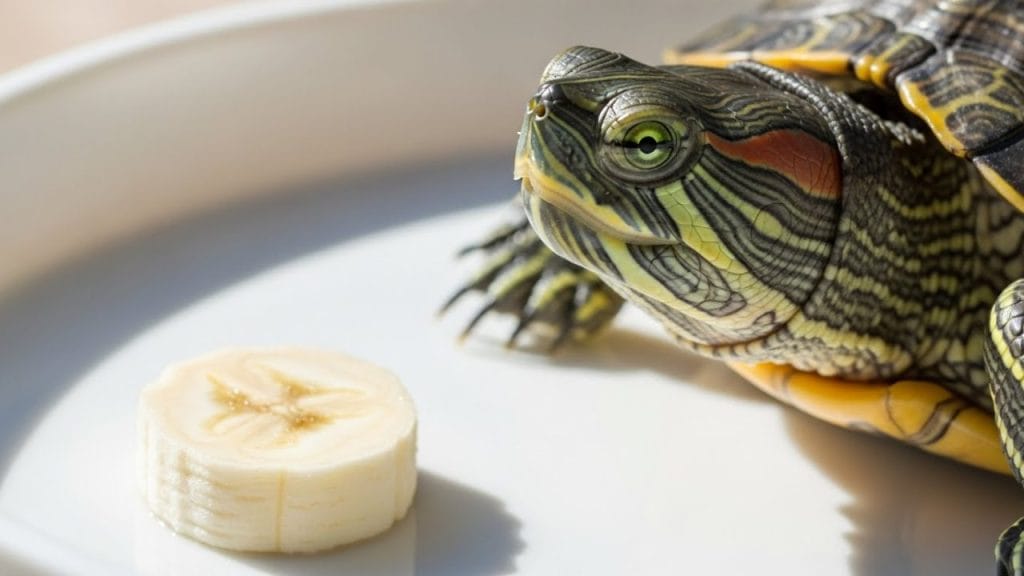
For small turtles (under 4 inches), a piece no bigger than your pinky fingernail is plenty. For larger turtles, you can offer a chunk about the size of their head.
I’ve seen too many turtle owners get generous with treats and end up with overweight turtles who refuse their pellets. Don’t be that person.
Frequency is just as important as portion size.
Once or twice a month is the sweet spot. Some experts say once a week is okay, but honestly, less is more with sugary fruits.
Think of it this way: if you ate dessert every single day, you’d probably gain weight and start craving sweets over healthy food, right? Same deal with your turtle.
Step-by-Step: How to Feed Bananas Safely
Ready to give your turtle a banana treat? Here’s how to do it right.
Step 1: Choose a ripe banana
Yellow bananas with a few brown spots are perfect. Avoid green (too starchy) or super mushy black bananas.
Step 2: Peel it completely
This is important. Banana peels are sprayed with pesticides and preservatives to extend shelf life. Even if you buy organic, the peel is tough to digest and can cause bowel problems.
Step 3: Cut into tiny pieces
Chop the banana into bite-sized chunks. Remember, no bigger than the space between your turtle’s eyes or the size of their head.
Step 4: Mix with vegetables
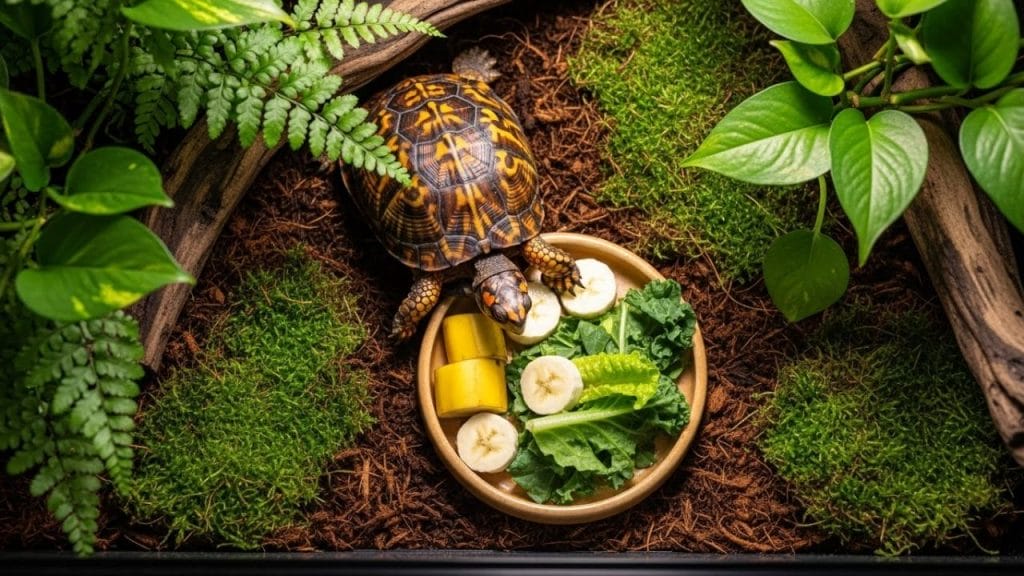
Here’s a pro tip: chop up the banana and mix it with their regular vegetables. This prevents your turtle from picking out only the banana and ignoring the nutritious stuff.
Step 5: Offer in a clean dish
Use a shallow feeding dish that won’t tip over. Remove any uneaten banana after 30 minutes so it doesn’t spoil in the tank.
Step 6: Watch for reactions
The first time you offer banana, observe your turtle for the next few hours. Look for signs of digestive upset like bloating or unusual behavior.
What NOT to Do With Bananas
Let’s talk about the mistakes that can seriously mess up your turtle’s health.
Don’t feed banana peels.
I know some articles say the peels are fine, but most veterinary sources disagree. Commercial bananas are treated with chemicals, and the peels are difficult for turtles to digest.
Don’t make it a daily thing.
Your turtle will probably love bananas so much they’ll beg for more. Resist those adorable eyes. Too much fruit throws off their nutritional balance.
Don’t replace vegetables with fruit.
Vegetables should make up 80-90% of the plant matter in your turtle’s diet. Fruit is the side dish, not the main course.
Don’t feed whole bananas.
A whole banana is way too much for any turtle. We’re talking about animals with stomachs roughly the size of their eyeball.
Don’t ignore pickiness.
If your turtle starts refusing their pellets or vegetables after getting banana, stop the banana immediately. Some turtles become ridiculously picky and will literally hold out for treats.
The Dreaded Banana Addiction Problem
Real talk: some turtles get completely obsessed with bananas.
I’ve read stories from turtle owners whose pets literally went on hunger strikes, refusing to eat anything except bananas. One person’s box turtle wouldn’t touch her regular food for weeks after discovering banana.
If this happens to you, go cold turkey. Stop offering banana entirely and keep presenting their normal diet. A healthy turtle won’t starve themselves, but it might take a few days before they give in and eat their veggies again.
Mix banana with less appealing foods to prevent this. Chop it super small and blend it in so they can’t pick it out.
Other Fruits Turtles Can Eat
Want to mix up your turtle’s treat rotation? Here are some other safe fruit options.
Berries like strawberries, blueberries, and raspberries are great choices. They’re lower in sugar than bananas and packed with antioxidants.
Melons including watermelon and cantaloupe are mostly water, which makes them a safer fruit option. Just remove all seeds first.
Apples and pears work well if you cut them into tiny pieces and remove the core and seeds. Offer these raw.
Figs are actually one of the best fruits for turtles because they’re high in calcium. If you can find them, these are worth offering occasionally.
Mango, peaches, and kiwis are all safe in small amounts. Same rules apply: tiny portions, remove any peels or pits, and offer sparingly.
What Turtles Should Actually Be Eating
Let’s get real about what should be in your turtle’s food bowl every day.
Dark, leafy greens like collard greens, mustard greens, dandelion greens, and kale should be the star of the show. These are packed with calcium and vitamin A.
Other vegetables including carrots, squash, bell peppers, and green beans add variety and nutrition. Avoid iceberg lettuce because it’s basically crunchy water with no nutritional value.
Protein sources are important, especially for younger turtles. This includes commercial turtle pellets (my pick: Mazuri Aquatic Turtle Diet), earthworms, crickets, and occasionally cooked chicken or fish.
Commercial pellets should make up about 25% of an adult turtle’s diet. Look for high-quality brands formulated specifically for your turtle species.
The basic formula: 50% vegetables and greens, 25% pellets, 25% protein sources, and less than 10% fruit.
When to Worry: Signs Something’s Wrong
How do you know if bananas (or any food) is causing problems?
Watch for digestive issues. Diarrhea, bloating, or constipation after eating banana means it’s not agreeing with your turtle. Stop offering it immediately.
Check their appetite. If your turtle suddenly loses interest in their regular food after getting banana, you’ve got a problem. They’re holding out for more treats.
Monitor weight gain. Turtles can get fat, and overweight turtles have shorter lifespans. If your turtle’s shell looks swollen or their limbs are chubby, cut back on treats entirely.
Look at their shell. Soft spots, pyramiding (raised scutes), or abnormal growth can indicate nutritional imbalances. Too much fruit and not enough calcium-rich foods causes this.
Notice behavior changes. Lethargy, refusing to eat, or unusual aggression can signal health issues related to poor diet.
When to See a Vet
Most healthy turtles can handle the occasional banana without issues. But sometimes you need professional help.
Your turtle has diarrhea lasting more than 24 hours after eating banana. This could indicate digestive distress or an underlying issue.
Your turtle refuses all food for more than a week. While pickiness happens, complete food refusal needs medical attention.
You notice weight loss despite regular feeding. Something’s not right with their nutrition or health.
Their shell becomes soft or deformed. This screams calcium deficiency, which needs immediate treatment.
They show signs of vitamin A deficiency like swollen eyes, breathing problems, or lethargy. This requires vitamin A injections from a vet.
Frequently Asked Questions
Can baby turtles eat bananas?
Yes, but even less frequently than adults. Baby turtles need way more protein than fruit, so their diet should be about 70% protein sources. Offer banana only once a month max, and make pieces super tiny to prevent choking.
Are banana peels safe for turtles?
No. Despite what some sources claim, banana peels carry pesticide residue and are extremely difficult for turtles to digest. Always remove the peel completely before offering banana to your turtle.
How often is too often for feeding bananas?
More than twice a month is pushing it. Once a month is ideal for most turtles. Daily or even weekly banana feeding will lead to obesity, nutritional imbalances, and picky eating habits.
Can aquatic turtles like red-eared sliders eat bananas?
Absolutely. The same rules apply to aquatic turtles as box turtles. Small amounts, infrequent offerings, and always mixed with more nutritious foods. Place the banana in their feeding dish in the water.
What if my turtle won’t eat anything but bananas?
Stop offering banana immediately and only provide their regular diet. They might go a few days without eating, but a healthy turtle won’t starve. Be patient and don’t give in, or you’ll reinforce the pickiness.
The Bottom Line on Turtles and Bananas
Bananas are safe for turtles in moderation. The key word there is moderation.
Your turtle’s health depends on you making smart feeding choices, even when they’re giving you those adorable “please feed me” vibes. Stick to the 10% fruit rule, prioritize dark leafy greens and quality protein, and save bananas for special occasions.
Remember, your turtle doesn’t know what’s good for them. They just know bananas taste way better than collard greens. It’s your job to be the responsible one and keep their diet balanced.
If you’re ever unsure about what to feed your turtle, talk to a reptile vet. They can give you specific guidance based on your turtle’s species, age, and health status.
Now go mix up a proper turtle salad with maybe one tiny piece of banana as a treat. Your turtle will thank you with years of healthy, happy shell-time.

About Author
Muntaseer Rahman started keeping pet turtles back in 2013. He also owns the largest Turtle & Tortoise Facebook community in Bangladesh. These days he is mostly active on Facebook.