Galapagos Tortoise: The Complete Guide to the World’s Largest Tortoises
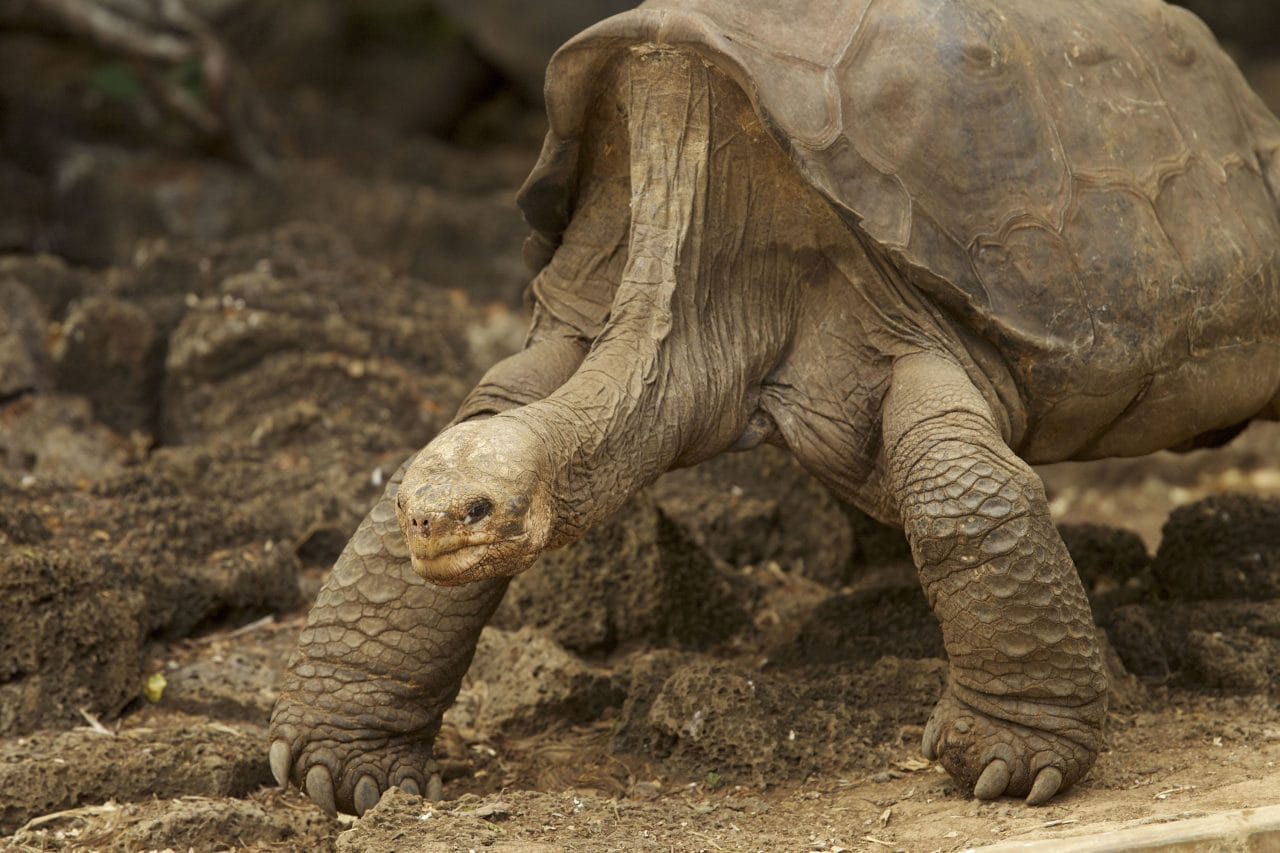
This post was created with help from AI tools and carefully reviewed by a human (Muntaseer Rahman). For more on how we use AI on this site, check out our Editorial Policy.
The Galapagos tortoise is so iconic that an entire island chain was named after it.
Seriously.
When Spanish explorers arrived in 1535, they found so many giant tortoises that they called the islands “Insulae de los Galápagos,” which means “Islands of the Tortoises.”
These gentle giants have been around for 2-3 million years, inspired Charles Darwin’s theory of evolution, and can live well past 100 years old.
But here’s the sad part: we’ve managed to reduce their population from 250,000 to just 20,000-25,000 in a few centuries.
Let’s dive into everything you need to know about these magnificent creatures.
Quick Facts: Galapagos Giant Tortoise At a Glance
| Feature | Details |
|---|---|
| Scientific Name | Chelonoidis niger |
| Other Names | Galapagos giant tortoise, tortuga Galapagos, Galapagos turtle |
| Size | Up to 1.8 m (6 ft) long |
| Weight | Males: 272-417 kg (600-919 lbs), Females: 136-181 kg (300-400 lbs) |
| Lifespan | 100+ years (oldest recorded: 175 years) |
| Species | 12 living species (3 extinct) |
| Population | 20,000-25,000 individuals |
| Conservation Status | Vulnerable to Critically Endangered (varies by species) |
| Location | Galapagos Islands, Ecuador |
What Makes Galapagos Tortoises Special?
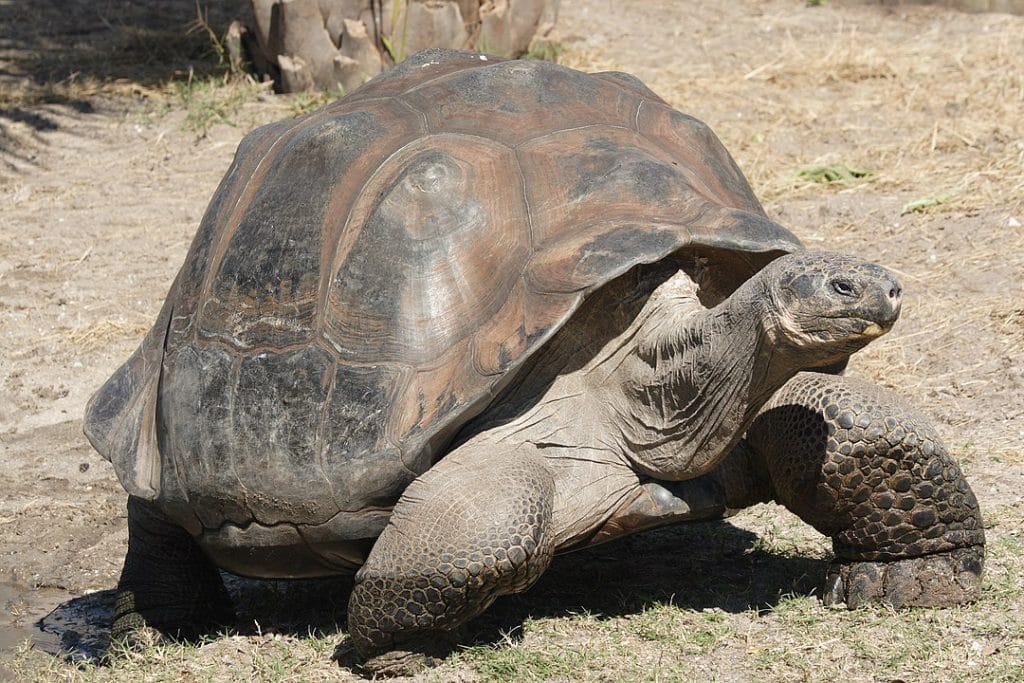
These are the largest living tortoises on Earth.
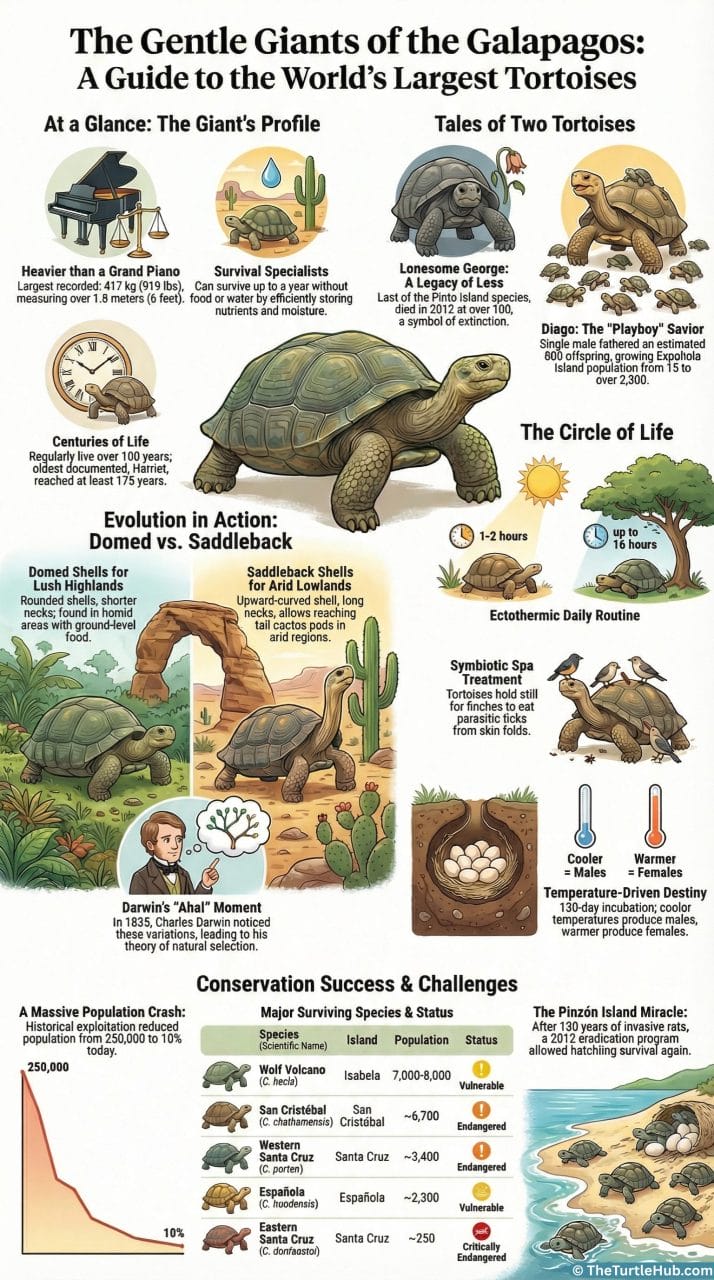
The biggest recorded individual weighed 417 kg (919 lbs) and measured over 1.87 meters (6 feet) long.
To put that in perspective, that’s heavier than a grand piano.
But size isn’t everything that makes them special.
Galapagos tortoises are also among the longest-lived vertebrates on the planet.
The oldest documented Galapagos tortoise was a female named Harriet who lived at the Australia Zoo.
She was at least 175 years old when she died in 2006.
Some scientists believe these tortoises could potentially live 200 years or more under ideal conditions.
Their slow metabolism is the secret.
They can survive up to a year without food or water because their bodies are incredibly efficient at storing nutrients and moisture.
This ability was actually terrible news for the tortoises historically.
Sailors discovered they could stack live tortoises in ship holds, where they’d stay alive for months, providing fresh meat on long voyages.
This Hilarious Turtle Book Might Know Your Pet Better Than You Do

Let’s be real—most turtle care guides feel like reading a textbook written by a sleep-deprived zookeeper.
This one’s not that.
Told from the snarky point of view of a grumpy, judgmental turtle, 21 Turtle Truths You’ll Never Read in a Care Guide is packed with sarcasm, sass, and surprisingly useful insights.
And hey—you don’t have to commit to the whole thing just yet.
Grab 2 free truths from the ebook and get a taste of what your turtle really thinks about your setup, your food choices, and that weird plastic palm tree.
It’s funny, it’s honest, and if you’ve ever owned a turtle who glares at you like you’re the problem—you’ll feel seen.
Two Shell Types: Domed vs Saddleback
Here’s where it gets interesting.
Galapagos tortoises come in two distinct shell shapes, and this variation is what caught Charles Darwin’s attention.
Domed Tortoises
Found on islands with humid highlands and abundant vegetation.
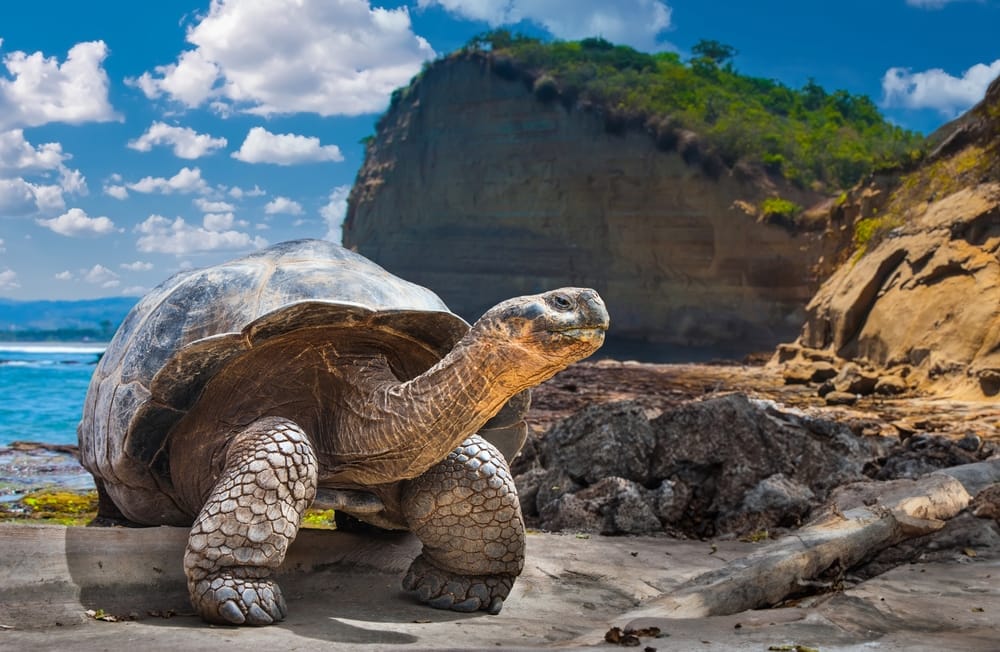
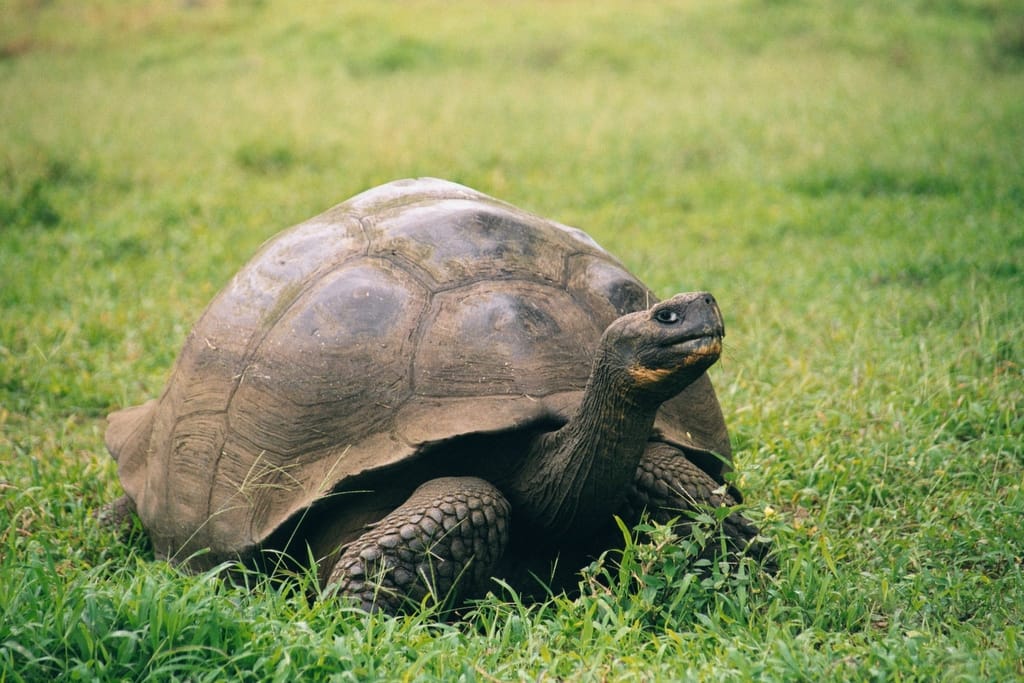
These are the larger tortoises with rounded, dome-shaped shells.
They have shorter necks and legs because they don’t need to reach high for food.
Everything they eat grows close to the ground.
Saddleback Tortoises
Found on drier, lowland islands with sparse vegetation.
Their shells have an upward curve at the front, resembling a horse saddle.
This shape allows them to stretch their necks up to reach cactus pads and other vegetation growing higher off the ground.
They’re generally smaller with longer necks and legs.
| Feature | Domed Tortoises | Saddleback Tortoises |
|---|---|---|
| Shell Shape | Rounded, dome-like | Curved upward in front |
| Size | Larger | Smaller |
| Neck Length | Shorter | Longer |
| Habitat | Humid highlands | Dry lowlands |
| Food Source | Ground vegetation | Tall cacti, bushes |
| Clutch Size | 20-25 eggs | 2-7 eggs |
The saddleback shape probably evolved independently several times on different islands.
It’s a perfect example of convergent evolution, where similar environments produce similar adaptations.
The 12 Living Species
There were originally 14-15 species of Galapagos tortoises.
Three are now extinct.
A 2025 genetic study actually confirmed that these populations are 13 genetically distinct species, not subspecies of a single species as was previously thought.
Here’s what we know about each surviving species:
| Species | Island/Location | Population | Status |
|---|---|---|---|
| Wolf Volcano (C. becki) | Isabela | 7,000-8,000 | Vulnerable |
| Western Santa Cruz (C. porteri) | Santa Cruz | ~3,400 | Endangered |
| Volcán Alcedo (C. vandenburghi) | Isabela | ~3,000 | Vulnerable |
| Sierra Negra (C. guntheri) | Isabela | ~700 | Endangered |
| Santiago (C. darwini) | Santiago | ~1,100 | Vulnerable |
| San Cristóbal (C. chathamensis) | San Cristóbal | ~6,700 | Endangered |
| Española (C. hoodensis) | Española | ~2,300 | Vulnerable |
| Pinzón (C. duncanensis) | Pinzón | ~500 | Vulnerable |
| Volcán Darwin (C. microphyes) | Isabela | ~1,000 | Vulnerable |
| Cerro Azul (C. vicina) | Isabela | ~700 | Endangered |
| Eastern Santa Cruz (C. donfaustoi) | Santa Cruz | ~250 | Critically Endangered |
| Fernandina (C. phantasticus) | Fernandina | 0-5? | Critically Endangered |
The Eastern Santa Cruz tortoise wasn’t even recognized as a separate species until 2015.
Scientists discovered that the tortoises on different parts of Santa Cruz Island were actually two completely different species.
And the Fernandina tortoise? That’s a wild story.
It was thought to be extinct until 2019, when a female was discovered on the remote volcanic island.
She’s been nicknamed “Fernanda,” and researchers are still searching for a male.
The Tortoises That Changed Science
In 1835, a young naturalist named Charles Darwin arrived in the Galapagos on the HMS Beagle.
He was just 26 years old.
What he saw would change the world.
Darwin noticed that tortoises on different islands had distinctly different shell shapes.
The locals could even tell which island a tortoise came from just by looking at it.
Nicholas Lawson, the English Vice-Governor, told Darwin he could “pronounce with certainty from which island it has been brought” just by examining a tortoise’s shell.
This observation, combined with his studies of finches and other animals, planted the seeds for Darwin’s theory of evolution by natural selection.
The idea that species could change and adapt to their environment was revolutionary.
It challenged everything Victorian society believed about creation.
Darwin published his findings in “On the Origin of Species” in 1859, and the scientific world was never the same.
Here’s the ironic part: Darwin himself didn’t collect tortoise specimens for science.
He ate them instead.
Conservation wasn’t a thing in 1835.
Darwin spent two days camping with tortoise hunters on Santiago Island, feasting on tortoise meat roasted on the breastplate and fried in tortoise fat.
He called the soup made from young tortoises “capital.”
Within 10 years of Darwin’s visit, tortoises were extinct on Floreana Island.
Lonesome George: The Rarest Creature in the World
The story of Lonesome George is one of the saddest in conservation history.
George was the last known Pinta Island tortoise (Chelonoidis abingdonii).
His entire species had been wiped out by whalers, sailors, and introduced goats that destroyed their food supply.
In 1971, Hungarian scientist József Vágvölgyi was studying snails on Pinta Island when he spotted something incredible: a giant tortoise.
Against all odds, one individual had survived.
George was brought to the Charles Darwin Research Station on Santa Cruz Island in 1972 for protection.
For 40 years, scientists tried desperately to find him a mate.
They searched zoos around the world.
They offered a $10,000 reward for anyone who could find a female Pinta tortoise.
They introduced George to females from related species, hoping he would breed.
George wasn’t interested.
He became known as “Lonesome George” after the American comedian George Gobel, who also went by that nickname.
On June 24, 2012, George’s caretaker Fausto Llerena found him stretched out near his water hole, lifeless.
He was over 100 years old.
With his death, the Pinta Island tortoise went extinct.
George’s preserved body was displayed at the American Museum of Natural History before returning to the Galapagos in 2017.
He now rests at the Fausto Llerena Breeding Center on Santa Cruz Island, a permanent reminder of what we’ve lost.
Diego: The Playboy Who Saved His Species
Not all tortoise stories are sad.
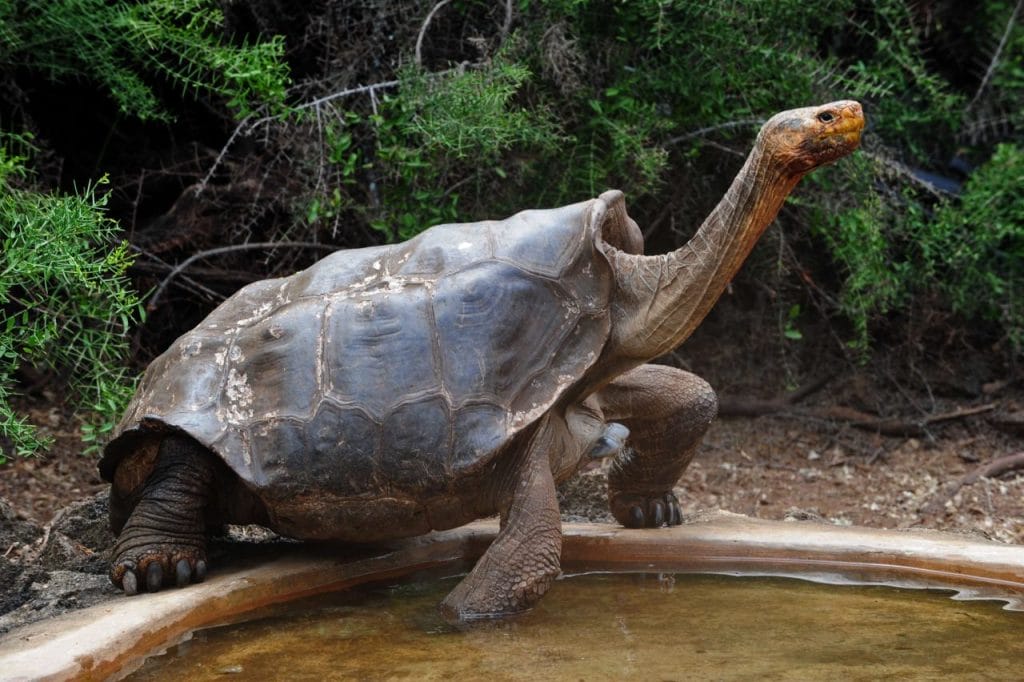
Meet Diego, the tortoise who single-handedly saved his species from extinction.
In the 1960s, the Española Island tortoise (Chelonoidis hoodensis) was nearly gone.
Only 15 individuals remained: 12 females and 3 males.
Diego had been living at the San Diego Zoo since the 1930s.
In 1977, he was returned to the Galapagos to join the breeding program.
And boy, did he breed.
Over the next 40+ years, Diego fathered an estimated 800 offspring.
That’s roughly 40% of the entire Española tortoise population.
Scientists estimate that Diego, along with two other males, are responsible for most of the 2,300+ tortoises now living on Española Island.
In June 2020, Diego was finally allowed to retire.
At around 100 years old, he was released back to Española Island to live out his remaining years in the wild.
He’d spent 86 years away from his native island.
The headlines called him the “Playboy Tortoise” and the “Sex-crazed Centenarian.”
Whatever you call him, Diego is proof that conservation can work.
Behavior and Daily Life
Galapagos tortoises live remarkably simple lives.
They spend about 16 hours a day resting.
The rest of their time is spent eating, basking in the sun, or wallowing in muddy pools.
Temperature Regulation
As ectotherms (cold-blooded animals), they rely on external heat to regulate their body temperature.
After sunrise, they spend 1-2 hours basking to warm up before becoming active.
At night, they partially bury themselves in mud, vegetation, or shallow water to stay warm.
Their dark shells act as solar panels, absorbing heat from the sun.
Feeding Habits
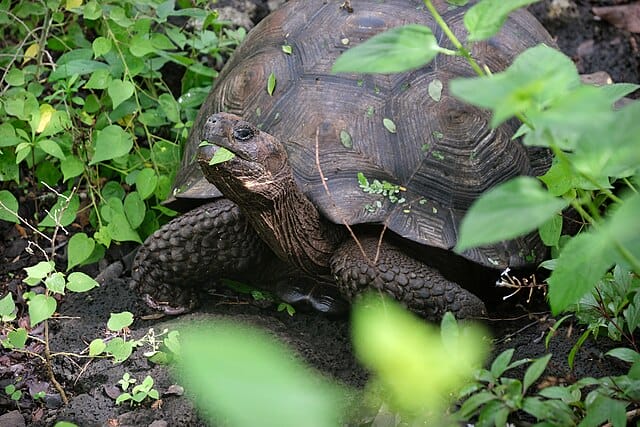
These are herbivores with an impressive menu.
They eat over 50 different plant species including:
- Grasses and sedges
- Prickly pear cactus (a favorite)
- Cactus pads
- Fruits and berries
- Leaves and woody shrubs
- Even a poisonous apple tree (they’re immune)
Because of their slow metabolism, it takes them 1-3 weeks to fully digest a meal.
They get most of their water from the plants they eat, which is how they survive up to a year without drinking.
When water is available, they’ll drink large amounts and store it in their bladder.
Symbiotic Relationships
Here’s a fun fact: Galapagos tortoises have a special relationship with finches.
When a tortoise spots a finch, it will stretch out its neck and legs and hold perfectly still.
The finch then hops around the tortoise, picking ticks and parasites from the folds of its skin.
Both animals benefit.
The tortoise gets a free cleaning, and the finch gets a meal.
Reproduction
Galapagos tortoises are slow at everything, including growing up.
They reach sexual maturity at 20-25 years old.
Some sources say it can take up to 40 years.
Mating Season
Breeding primarily occurs during the hot, wet season (January to August), though mating can happen any time of year.
Males become aggressive during breeding season.
When two males encounter each other, they engage in a dominance display by stretching their necks as high as possible.
The tortoise who reaches higher wins.
The loser pulls his head in with a hiss and retreats.
Once a male finds a female, he chases her down and corners her.
Mating can last several hours, and the male makes loud roaring or grunting sounds throughout.
Nesting
After mating, females migrate several kilometers to dry, sandy coastal areas to nest.
They dig a hole about 30 cm (12 inches) deep using only their back legs, which is a completely blind process.
A female lays 2-25 eggs depending on the species (saddlebacks lay fewer eggs than domed tortoises).
Each egg is roughly the size of a tennis ball and weighs 82-157 grams.
The female seals the nest with mud made from soil and urine, presses it flat with her plastron, and leaves.
Incubation
The eggs incubate for about 130 days, warmed only by the sun.
Temperature determines the sex of the hatchlings:
- Cooler temperatures (lower elevations) = more males
- Warmer temperatures (higher elevations) = more females
When hatchlings emerge, they must dig their way to the surface, which can take up to a month.
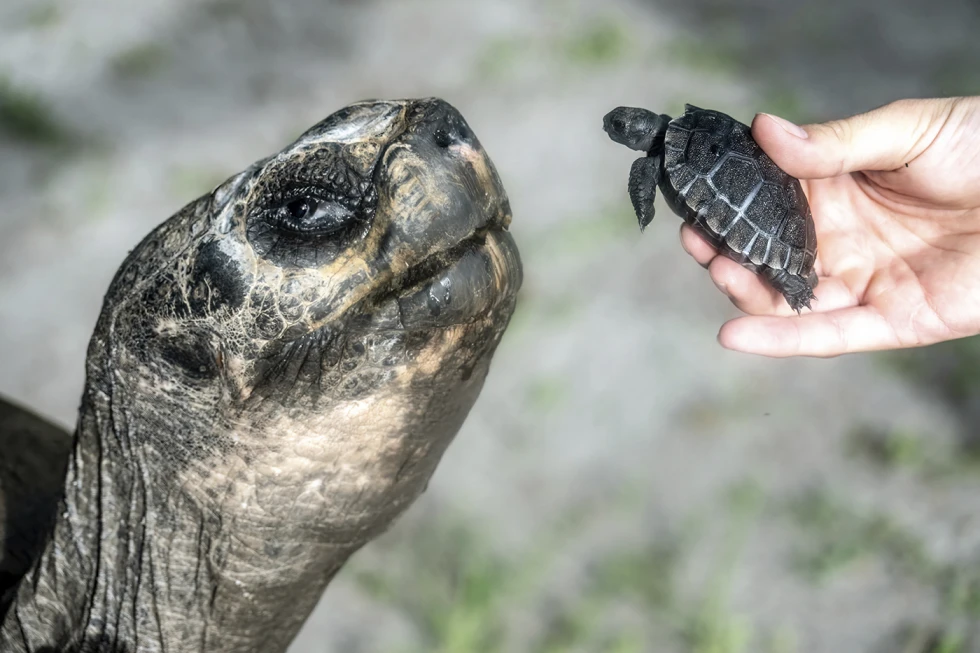
They weigh only about 50 grams (1.8 oz) and measure 6 cm (2.4 inches) long.
That’s less than 1/1000th of an adult’s weight.
From day one, they’re completely on their own.
Threats to Survival
Historical Exploitation
Between the 17th and 19th centuries, an estimated 100,000-200,000 tortoises were killed.
Pirates, whalers, and fur sealers treated the tortoises as a convenient food source.
The tortoises could be stacked alive in ship holds, where they’d survive for months without food or water, providing fresh meat on long voyages.
They were also killed for their oil, which was used to fuel lamps.
Some sailors split and dried the meat into “tortoise bread” for extended storage.
Introduced Species
When humans arrived, they brought animals that wreaked havoc on tortoise populations:
| Introduced Species | Threat |
|---|---|
| Black rats | Eat eggs and hatchlings |
| Pigs | Destroy nests, eat eggs |
| Feral dogs | Attack adults and young |
| Feral cats | Prey on hatchlings |
| Goats | Compete for food, destroy habitat |
| Cattle and horses | Trample nests |
| Fire ants | Attack hatchlings |
On Pinzón Island, black rats ate every single hatchling for over 100 years.
The only reason the population survived was that adult tortoises live so long.
Modern Threats
Today’s tortoises face additional challenges:
- Habitat loss from agriculture and development
- Farmland fencing that blocks migration routes
- Roads that fragment their habitat
- Climate change affecting nesting success and sex ratios
- Poaching (still happens despite being illegal)
- Disease from contact with livestock
Conservation Success Stories
The Galapagos tortoise is one of conservation’s greatest success stories, even if there’s still work to do.
The Breeding Program
Since 1965, the Charles Darwin Research Station has been collecting tortoise eggs from the wild and incubating them in protected facilities.
Young tortoises are raised until they’re large enough to survive predators, then released to their native islands.
Over 9,000 tortoises have been bred in captivity and released to the wild.

Española Island Recovery
Remember those 15 surviving Española tortoises?
Thanks to Diego and the breeding program, the population is now over 2,300 individuals.
In 2020, the 15 original breeding adults were returned to their native island after decades in captivity.
The population is now naturally reproducing without human intervention.
Pinzón Island Miracle
For over a century, no tortoise hatchlings survived on Pinzón due to rats.
In 2012, an aggressive rat eradication program finally eliminated the pests.
By 2013, baby tortoises were emerging from nests for the first time in over 100 years.
The population is now self-sustaining.
Current Population
Today’s population of 20,000-25,000 tortoises is still only about 10% of historical numbers.
But it’s a massive improvement from the low of around 15,000 in the 1970s.
Where to See Galapagos Tortoises
If you want to see these incredible animals in person, here are the best spots:
| Location | What You’ll See |
|---|---|
| Santa Cruz Highlands | Large domed tortoises in the wild |
| Charles Darwin Research Station (Santa Cruz) | Breeding center, Lonesome George’s body |
| Alcedo Volcano (Isabela) | Largest wild population |
| Española Island | Recovered saddleback population |
| San Cristóbal Highlands | Wild tortoises and breeding center |
The Santa Cruz highlands are the most accessible for tourists.
You can walk among wild tortoises as they graze in the misty grasslands.
Just remember: never touch, feed, or approach tortoises too closely.
It’s illegal and harmful to the animals.
FAQs About Galapagos Tortoises
How long do Galapagos tortoises live?
Galapagos tortoises typically live over 100 years in the wild. The oldest documented individual, Harriet, lived to at least 175 years old. Some scientists believe they could potentially live 200+ years under optimal conditions.
What’s the difference between a Galapagos tortoise and a Galapagos turtle?
“Galapagos tortoise” is the correct name. These are land-dwelling animals with domed shells and elephantine feet. “Galapagos turtle” is technically incorrect, as turtles are aquatic. However, many people use the terms interchangeably.
Can Galapagos tortoises swim?
No, Galapagos tortoises cannot swim. They’re strictly terrestrial animals. However, they can float and may drift on ocean currents. Scientists believe this is how their ancestors originally reached the islands 2-3 million years ago.
What do Galapagos tortoises eat?
They’re herbivores that eat grasses, cacti, fruits, berries, and leaves. Prickly pear cactus is a particular favorite. They can eat over 50 different plant species, including some that are poisonous to other animals.
How big do Galapagos tortoises get?
Males can reach 1.8 meters (6 feet) long and weigh 272-417 kg (600-919 lbs). Females are smaller, typically 136-181 kg (300-400 lbs). The largest recorded individual weighed 417 kg (919 lbs).
Are Galapagos tortoises endangered?
Yes. All 12 living species are listed as Vulnerable, Endangered, or Critically Endangered on the IUCN Red List. The Eastern Santa Cruz tortoise is the most endangered, with only about 250 individuals remaining.
How many Galapagos tortoises are left?
Current population estimates range from 20,000-27,000 individuals across all species. This is still only about 10% of the historical population of 250,000.
Why did sailors eat Galapagos tortoises?
Tortoises could survive up to a year without food or water, making them perfect “living larders” for long sea voyages. They were stacked alive in ship holds and provided fresh meat for months. An estimated 100,000-200,000 tortoises were killed this way.
What happened to Lonesome George?
Lonesome George, the last Pinta Island tortoise, died on June 24, 2012 at over 100 years old. Despite 40 years of breeding attempts, he never produced offspring. His preserved body is now on display at the Fausto Llerena Breeding Center in the Galapagos.
How did tortoises reach the Galapagos Islands?
Scientists believe tortoises drifted on vegetation rafts or floated on their own from mainland South America about 2-3 million years ago. The journey of about 1,000 km (600 miles) was possible because tortoises can survive without food or water for extended periods.
How You Can Help
Galapagos tortoises have made a remarkable comeback, but they still need our help.
Here’s what you can do:
Support Conservation Organizations
- Galapagos Conservancy
- Charles Darwin Foundation
- Galapagos Conservation Trust
Visit Responsibly
- Follow all park rules
- Never touch or feed tortoises
- Stay on designated trails
- Don’t introduce any foreign materials
Spread Awareness
- Share what you’ve learned
- Support sustainable tourism
- Advocate for habitat protection
These ancient giants have survived for millions of years.
With continued conservation efforts, they’ll be around for millions more.

About Author
Muntaseer Rahman started keeping pet turtles back in 2013. He also owns the largest Turtle & Tortoise Facebook community in Bangladesh. These days he is mostly active on Facebook.